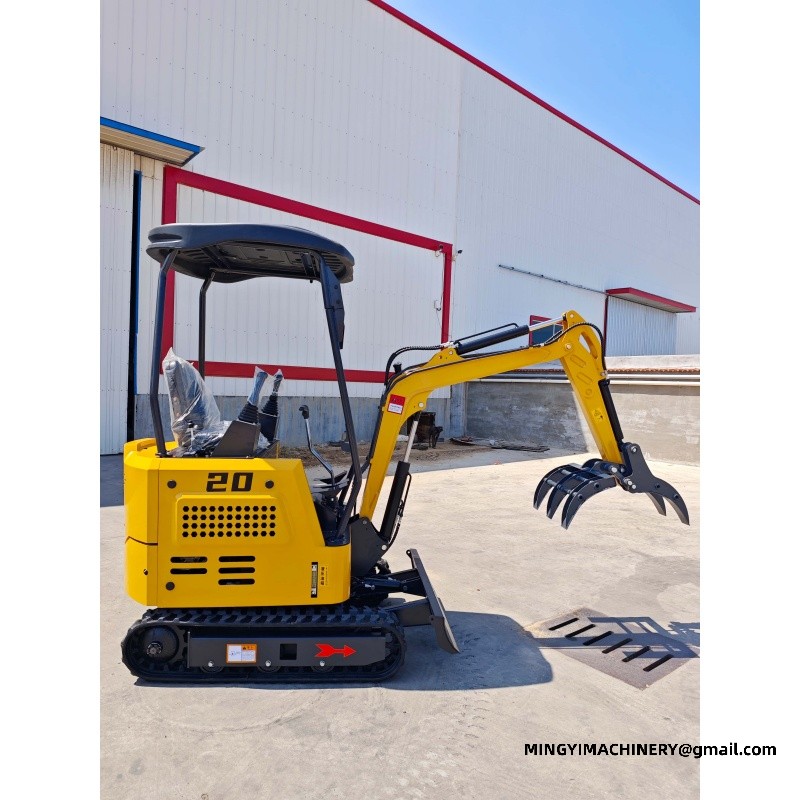
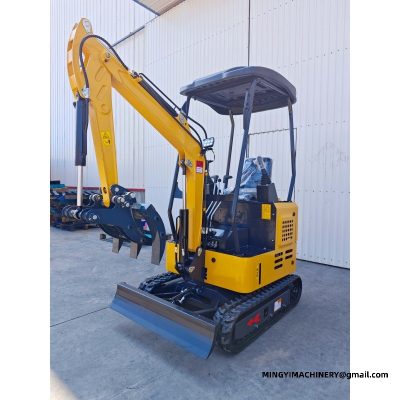
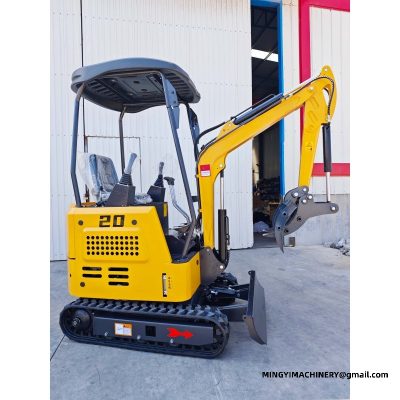
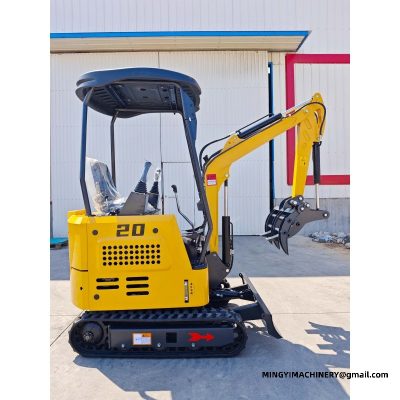
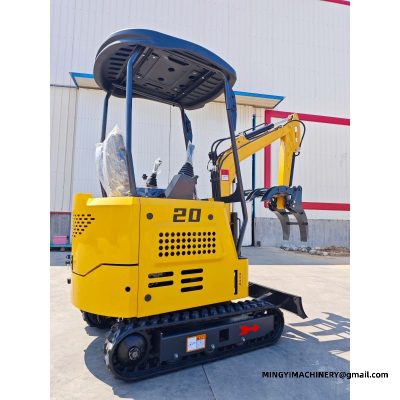
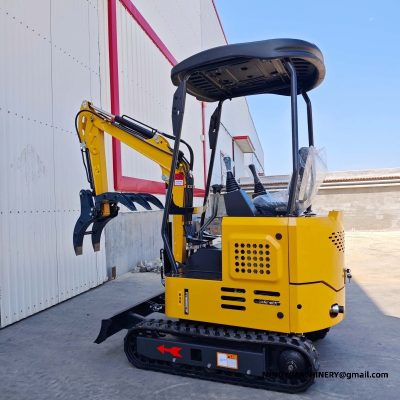
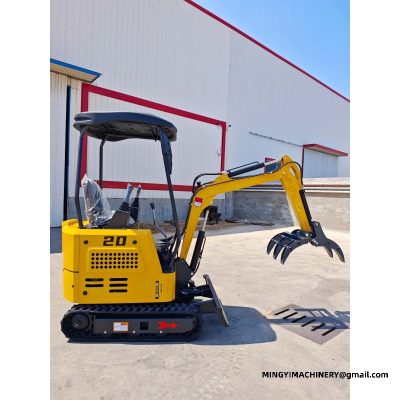
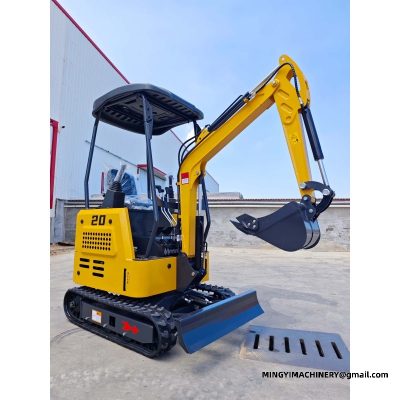
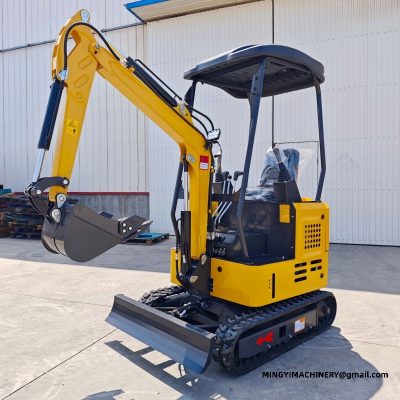
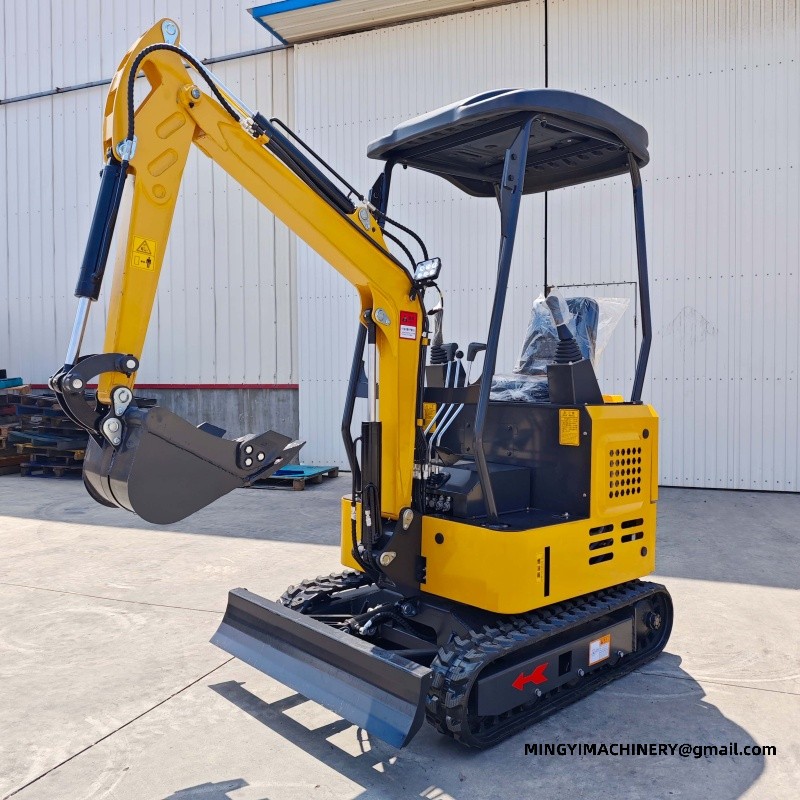
The excavator keeps the rear of the machine inside the width of the tracks as it turns. That design suits work beside walls, fences and traffic, where a standard machine would swing its counterweight into obstacles.
MINGYI builds compact crawler excavators with zero and short tail swing for buyers whose work is constrained by the space around the machine. The format is chosen to suit the site the machine will work on.
Working beside walls with zero tail swing
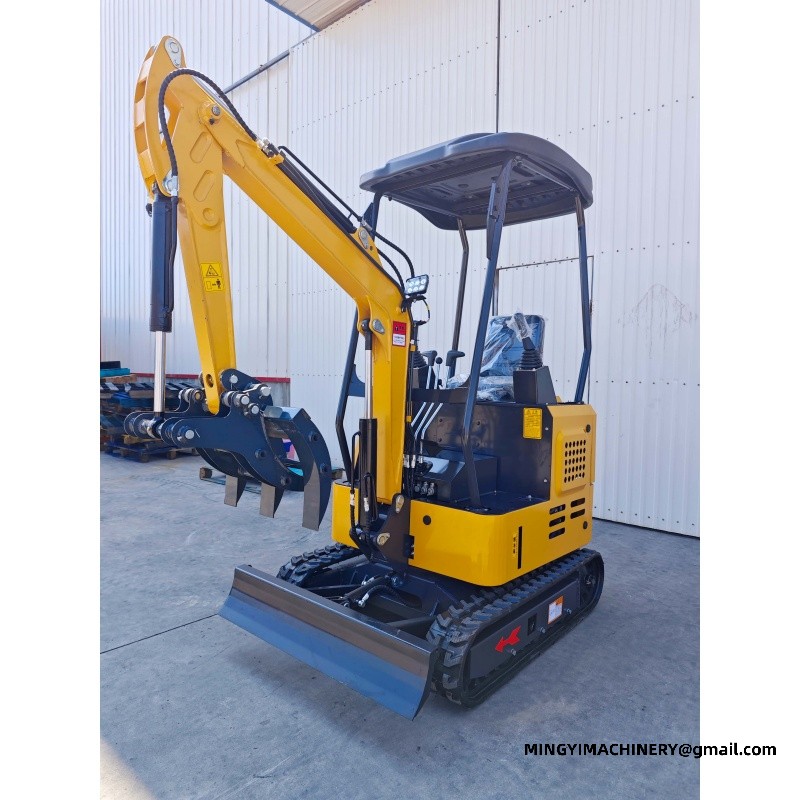
In a yard or a garden the space behind the machine is often more limited than the space in front. A zero tail swing unit can rotate within its own footprint, so the operator can reposition without the counterweight striking a wall or a parked vehicle.
The benefit is greatest in repeated turning. A machine that digs, swings and loads in a tight area turns many times an hour, and each turn made without a collision is time saved on the job.
Roadside and kerbside digging
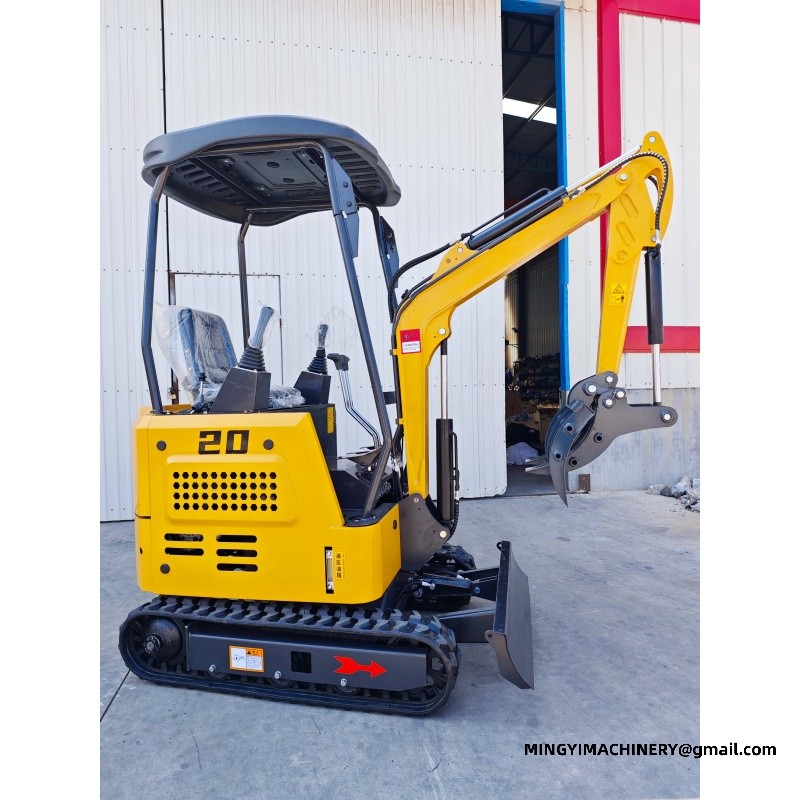
Roadside work adds traffic to the problem of limited space. A machine that stays within its tracks is easier to keep inside a coned area and less likely to intrude into a live lane while it turns.
Zero tail swing also helps where the machine must work from a narrow verge. The operator can follow the trench or the kerb line without swinging the rear over the road or into the hedge behind.
Zero tail swing is specified for the site, not for the machine. Where the work is hemmed in by structures or traffic, a machine that turns inside its own footprint is the one that can keep working.
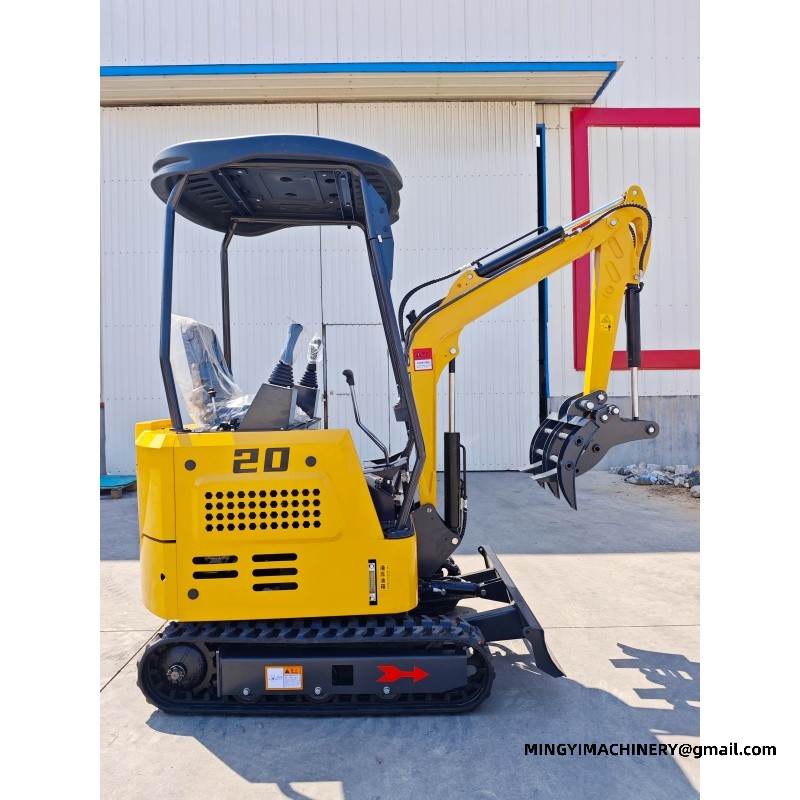
Boom configuration for zero tail swing excavator A swing boom lets the machine dig parallel to its tracks without repositioning, which is what makes trenching beside a wall or a fence practical. On this class of machine this is often the option that decides whether a job is possible at all. Detachable boom sections are used where transport length matters. The unit in daily use that has to travel on a standard trailer can be built so the arm comes off for the road and goes back on at the site. Attachments that turn zero tail swing excavator into several machines The base machine is a carrier; the tool on the end of the arm decides the task. A machine of this size fitted with a toothed bucket digs, and the same machine with a breaker, an auger or a grab does work that would otherwise need a second unit on site. Most of the daily variety on the equipment on site comes from the attachment rack rather than from the machine itself. Bucket, breaker, auger, ripper, rake and grab cover the large majority of the work a contractor will see. Lifting and material handling with a zero tail swing excavator Lifting with a machine built to dig needs a plan. The load, the radius and the ground under the model in question all matter, and the safe figure is the one on the chart rather than the one that looks possible. Stability changes with reach. A load the machine itself handles close in becomes a different proposition at full extension, so the working radius belongs in the plan before the lift rather than during it. Export packing and shipping of zero tail swing excavator Machines leave the factory prepared for container or flat rack shipment. The machine in that duty is normally shipped with the attachment set and the spare parts list agreed in advance so the container is planned once. Buyers who import regularly plan the spare parts with the machine. The unit on the job ordered with a wearing-parts kit arrives ready to work rather than ready to wait for the first service interval. Municipal and public works with zero tail swing excavator Drainage repair, tree planting, footway reconstruction and cemetery work are all within the range of a machine built for the work. The jobs are small individually and continuous across the year. Noise and surface protection matter on public work. The equipment in service on rubber tracks across paving, with a sealed cab for the operator, suits the conditions better than a larger tracked machine. Daily checks and maintenance on zero tail swing excavator Track tension is the item most often neglected. The excavator run with slack tracks wears the undercarriage and can throw a track on a turn; run too tight, the same components wear from the other direction. Greasing is the second item. The slew ring, the boom and arm pins and the bucket linkage on this class of machine take grease daily in dusty work, and the intervals shorten further when the machine is used in water or mud. Trenching work with the unit in daily use Service trenches are the most common reason a machine of this size is hired. Water, sewage, cable and gas runs are narrow, shallow and often close to existing services, which is exactly the work a full-size machine cannot do safely. Depth control matters more on service work than speed. The equipment on site working beside live services is chosen because it can be placed precisely and stopped instantly, which is what the job actually requires. OEM and fleet customisation of the machine itself Distributors and rental fleets usually need the machine to look like theirs. Paint, decals, seat colour and attachment branding can be specified on the model in question at build time rather than applied after import. Customisation also covers the specification sheet. A fleet buyer may want every machine in that duty delivered with the same coupler, the same engine and the same tool kit so training and parts stock stay simple. Acceptance checks when the unit on the job arrives Delivery day is the best time to find a problem. Checking the specification against the order, the fluid levels, the fasteners and any transport damage while the equipment in service is still on the trailer is faster than claiming later. Documentation should arrive with the machine. Parts list, service schedule and any certificates for a machine built for the work are what the workshop needs later, and they are much easier to obtain at delivery than in month six. Noise, dust and working near occupied buildings Work near housing or occupied premises brings constraints that open sites do not. Start times, exhaust condition and how often the excavator needs to reverse are the practical limits that neighbours notice. Enclosure and machine condition both reduce noise. This class of machine with intact panels, sound mounts and a maintained exhaust is measurably quieter than the same machine with loose guards, and the difference matters on restricted sites. Working the unit in daily use through the seasons Weather decides which days are productive. Rain turns some ground unusable and cold changes how a machine of this size starts and warms up, so planning the wet months around maintenance is more useful than planning around output. Heat and dust are as limiting as rain. Air intake condition and cooling cleanliness decide how the equipment on site behaves in a dry season, and both are checked in a minute rather than repaired later. Canopy or enclosed cab on the machine itself A canopy keeps the machine light and the operator aware of the surroundings, which suits short jobs in warm weather. A fully enclosed cab is specified where rain, dust or cold are part of the working year, and it can be added to the model in question as a retrofit rather than only at build time. The cab decision follows the climate and the hours. Operators working a full shift in the machine in that duty benefit from a sealed cab with wipers and heating; operators stepping on and off every few minutes usually prefer the canopy for the visibility and the quick exit. Specification data for the unit on the job The figures below are the factory figures for the models most often matched to a machine built for the work. They are the numbers to check against the site: the depth the work needs, the reach from one position, and the width of the narrowest point on the route in. Every value shown is as built for the equipment in service; options such as cab, side swing or a telescopic undercarriage change the transport dimensions and are confirmed at order stage. Undercarriage selection is a ground question, not a preference question. The excavator running on finished paving needs rubber; the same machine on demolition rubble or rock wears rubber quickly, so steel with rubber blocks becomes the better answer over a full season. Track type changes what the machine can cross and what it leaves behind. Buyers specify rubber for lawns, driveways and municipal work, and steel with rubber blocks for sites where sharp material would cut a rubber belt in a week.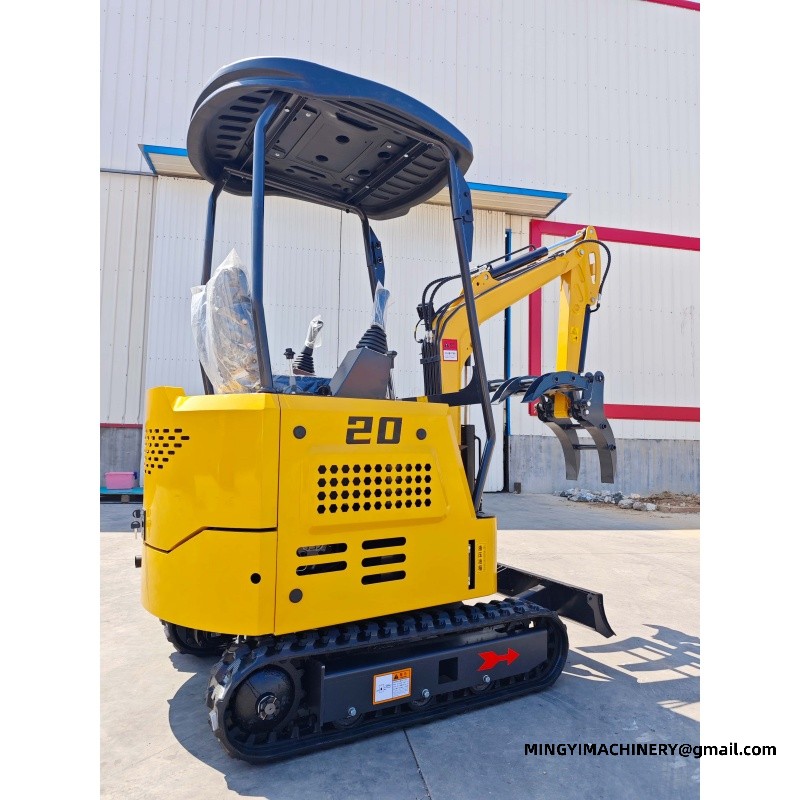
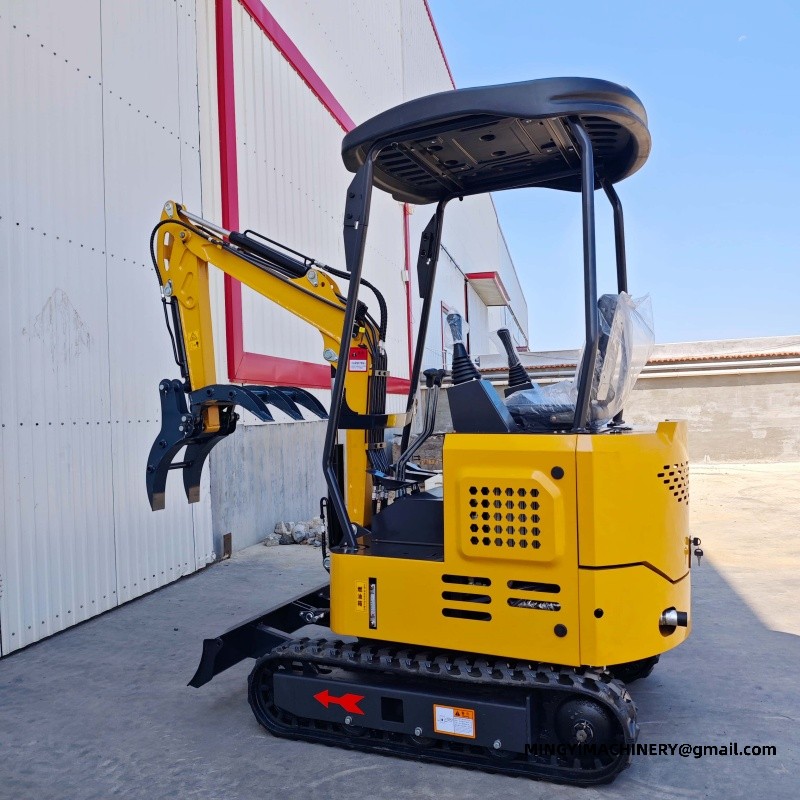
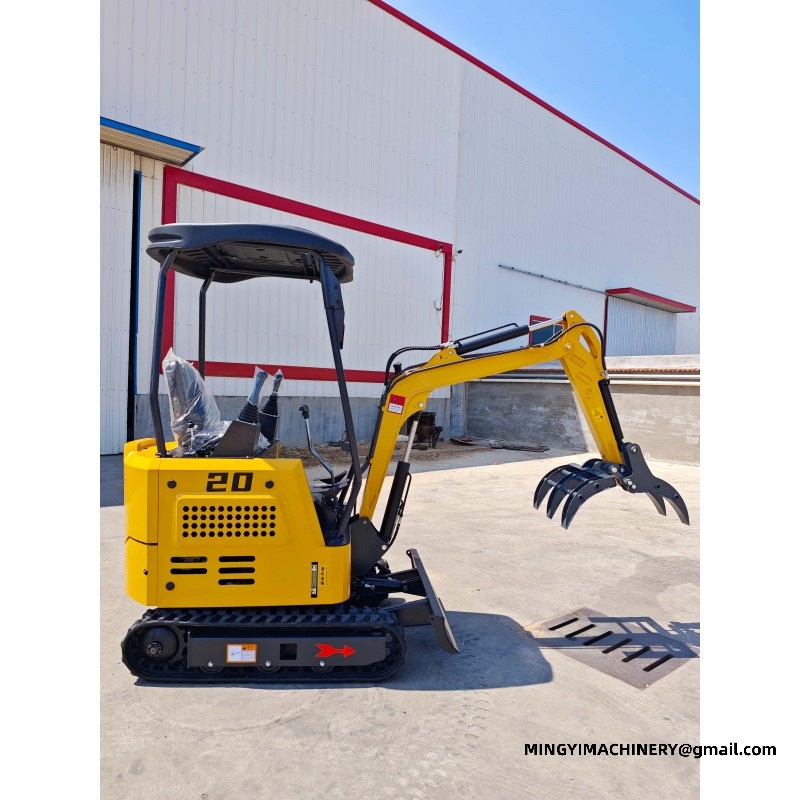
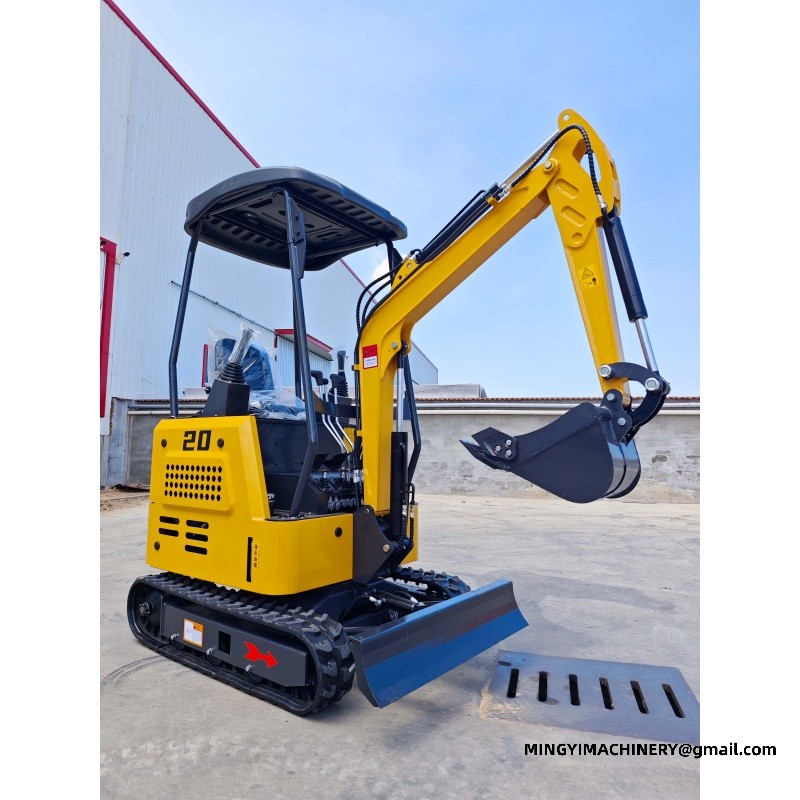
Reference specification — mini excavator range 13W 15W 09L 12L Operating weight 1300 kg (2866.01 lb) 1400 kg (3086.47 lb) 1100 kg (2425.08 lb) 1200 kg (2645.55 lb) Transport size (L×W×H) 2200 × 930 × 2250 mm 2200 × 930 × 2250 mm 2300 × 720 × 1870 mm 2200 × 930 × 2250 mm Max digging depth 1630 mm (64.17 in) 1630 mm (64.17 in) 1400 mm (55.12 in) 1700 mm (66.93 in) Max digging height 2750 mm (108.27 in) 2750 mm (108.27 in) 2800 mm (110.24 in) 2600 mm (102.36 in) Max dumping height 1960 mm (77.17 in) 1960 mm (77.17 in) 1880 mm (74.02 in) 1800 mm (70.87 in) Max digging radius 2900 mm (114.17 in) 2900 mm (114.17 in) 2490 mm (98.03 in) 2900 mm (114.17 in) Max digging distance 2100 mm (82.68 in) 2100 mm (82.68 in) 2000 mm (78.74 in) 2300 mm (90.55 in) Minimum turning radius 1300 mm (51.18 in) 1300 mm (51.18 in) 1400 mm (55.12 in) 1450 mm (57.09 in) Travel speed 3 km/h (1.86 mph) 3 km/h (1.86 mph) 3 km/h (1.86 mph) 3 km/h (1.86 mph) Gradeability 30° 30° 30° 30° Fuel consumption 1-1.3 L/h (0.264—0.343 gal) 1-1.3 L/h (0.264—0.343 gal) 1-1.3 L/h (0.264—0.343 gal) 1-1.3 L/h (0.264—0.343 gal) Fuel tank capacity 10 L (2.64 gal) 10 L (2.64 gal) 8 L (2.11 gal) 10 L (2.64 gal) Hydraulic oil tank 16 L (4.23 gal) 16 L (4.23 gal) 16 L (4.23 gal) 16 L (4.23 gal) Dozer blade lift height 180 mm (7.09 in) 180 mm (7.09 in) 180 mm (7.09 in) 180 mm (7.09 in) Dozer blade drop depth 210 mm (8.27 in) 210 mm (8.27 in) 210 mm (8.27 in) 210 mm (8.27 in)
Q. What is this class of machine?
A. Access decides whether a compact excavator is on the job at all: gates, doorways, basements, elevator rooms and rows between benches set hard limits on width and tail radius. Measure the doorway, gate or stairwell first, then match the machine to the gap - the smallest classes pass where a wheelbarrow would struggle. Read the unit in daily use together with the engine, track and attachment pages: jobs around zero tail swing are decided by how those choices line up, not by any single number on the sheet.
Q. What can such a small digger actually do?
A. More than its size suggests: inside a basement or behind a boundary it digs footings, breaks floors and grades the sub-base at rates hand digging cannot touch. The limit is reach and lift, not willingness.
Q. Can I see the machine before it ships?
A. Inspection is arranged at the factory, in person or by a scheduled video walk-around - the same session covers paint, decals and attachment fitment for the zero tail swing specification, so the machine inspected is the machine that ships.
Packing, loading and shipment of a machine of this size
Container loading is a planning exercise. The overall dimensions and the operating weight of the equipment on site decide whether it ships whole, partly disassembled or with the attachment removed, and that decision is made before the booking.
Keeping a service record for the machine itself
Service history also protects the warranty position. Evidence that the model in question was maintained at the specified intervals and with the specified fluids settles questions that would otherwise be argued.
E-mail : sales@mingycn.com
LINE ( ID ): mingyicn
Related pages
zero tail mini excavator · steel track mini excavator · Wheel Loader Series: Three Frame Tiers and 21 Documented Builds · Mini Excavators









