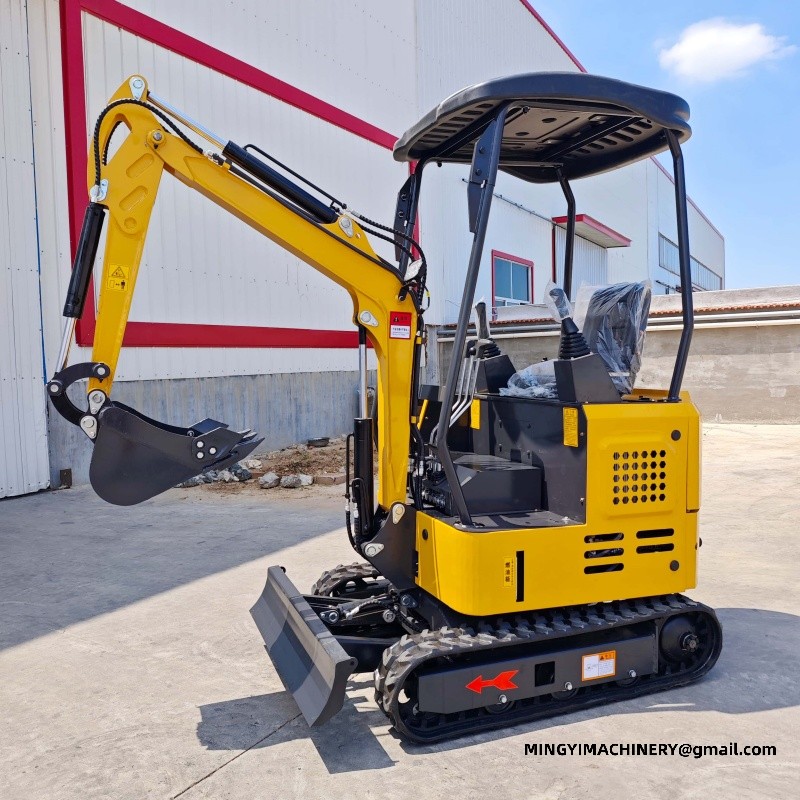
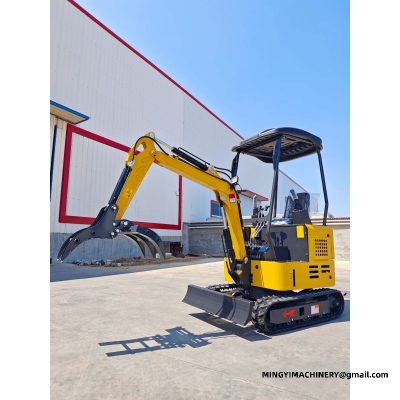
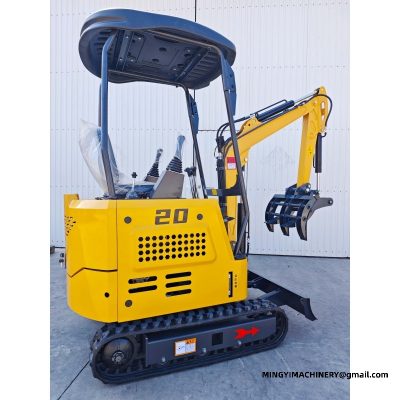
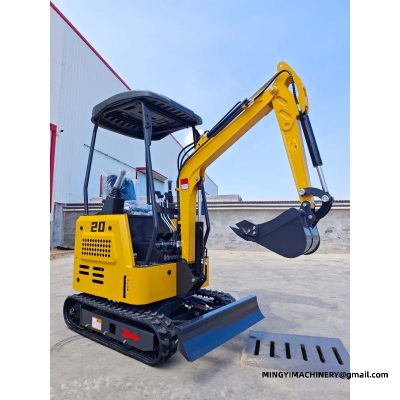
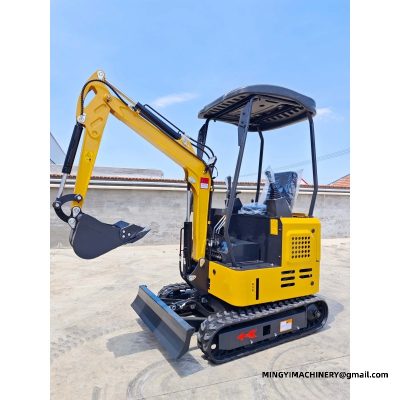
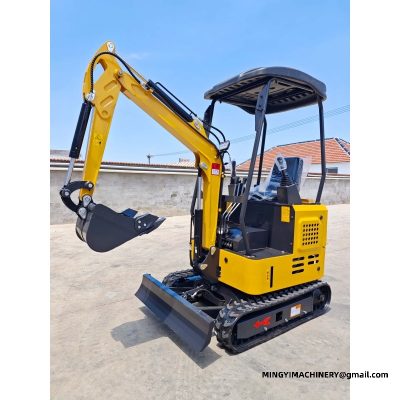
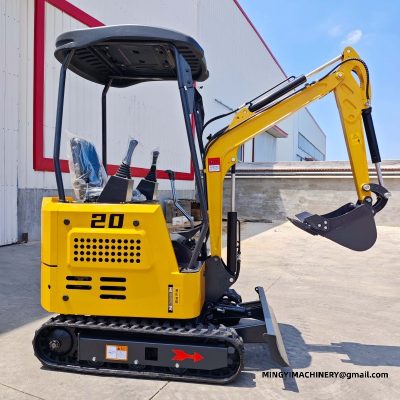
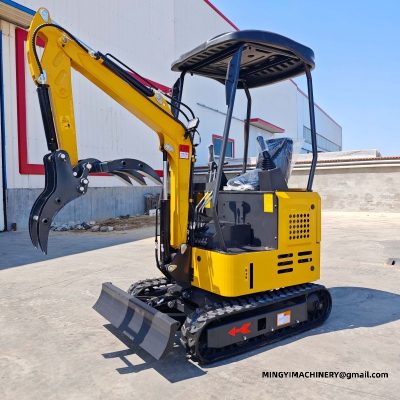
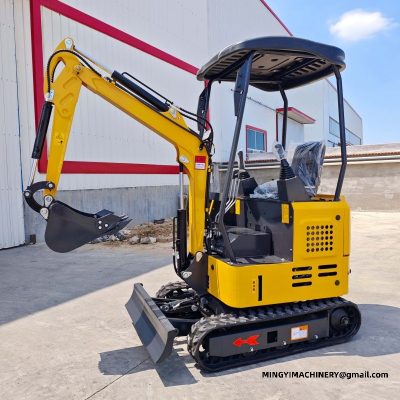
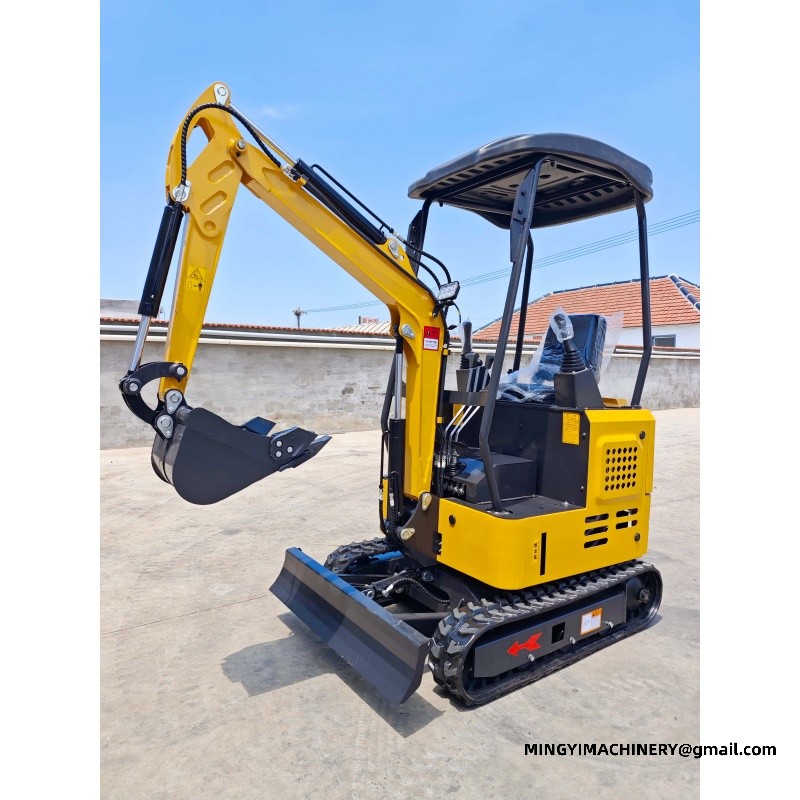
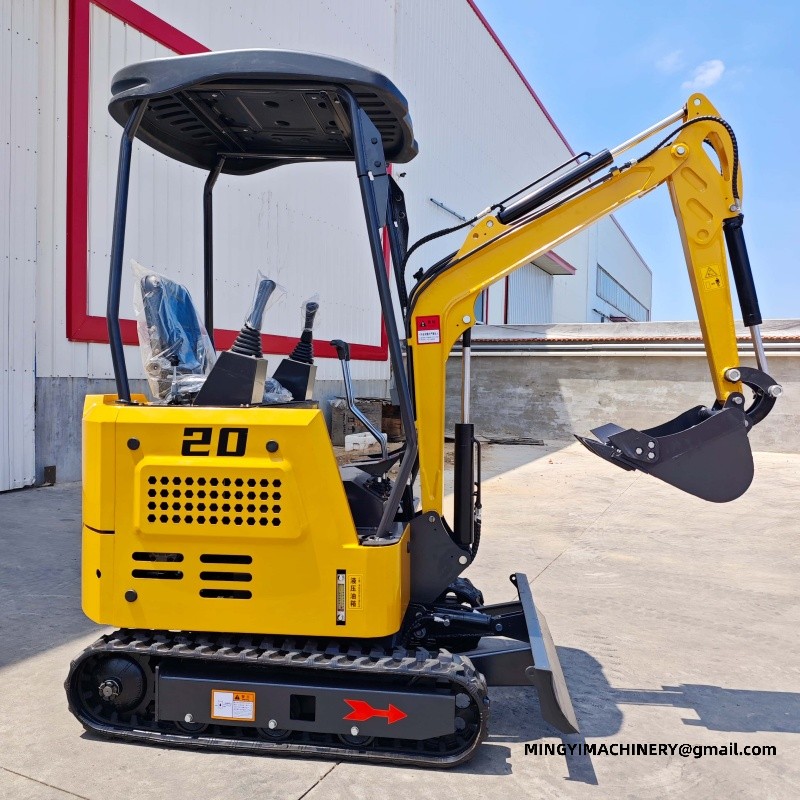
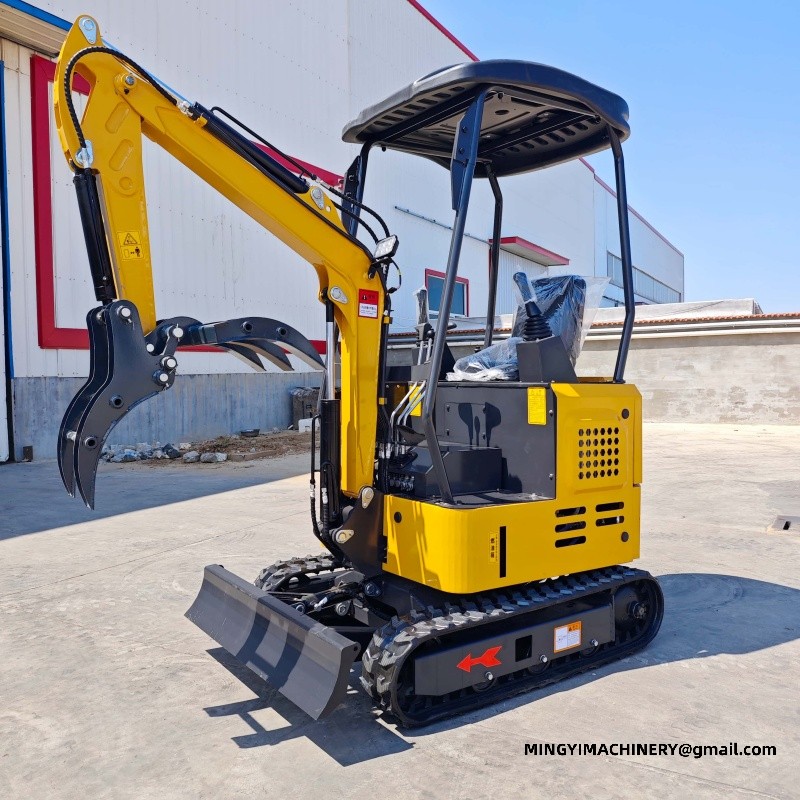
The excavator is built for ground that punishes rubber. Where the working surface is rock, rubble or wet clay, steel links resist abrasion and hold their edge far longer than a rubber belt, and they keep grip when the machine works on a slope.
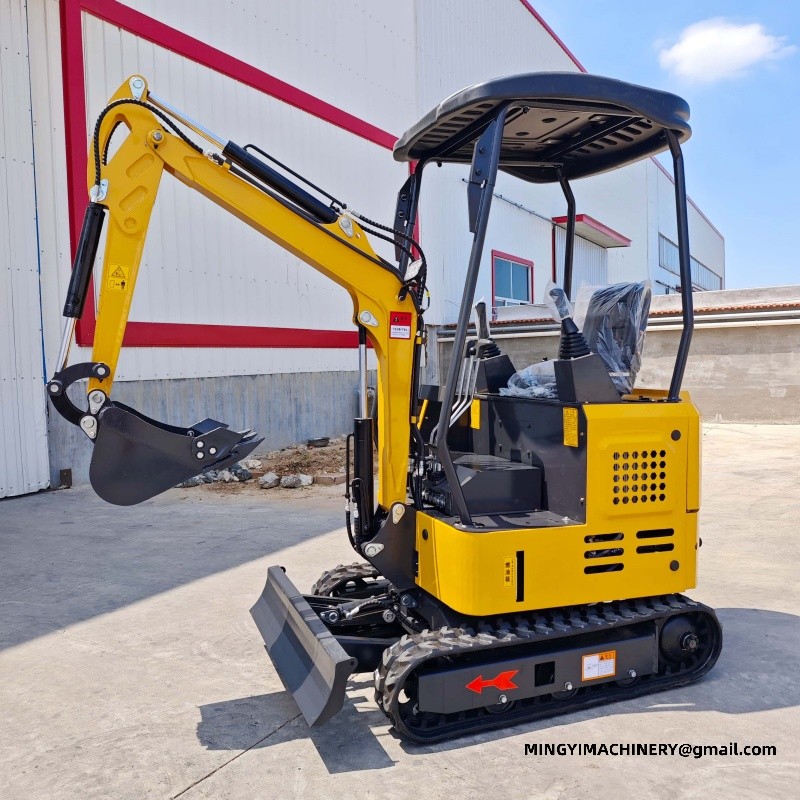
MINGYI fits steel tracks with rubber blocks to its compact crawler machines, so the track keeps its bite on soft or loose ground while the pads reduce marking when the machine crosses a paved surface. The undercarriage is chosen at the ordering stage.
Choosing steel tracks for a compact excavator
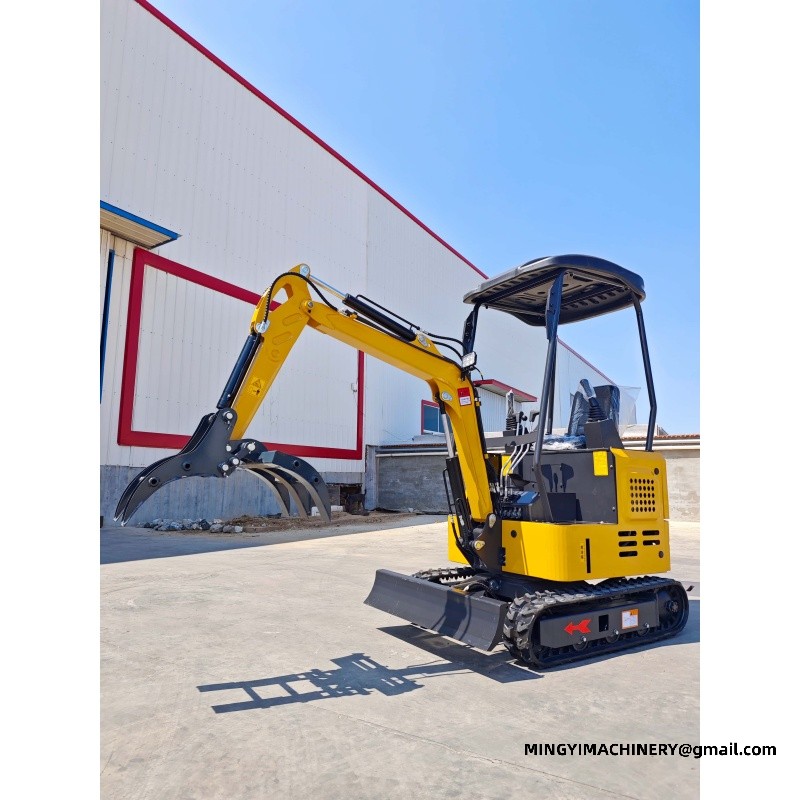
The decision turns on the ground the machine will cross rather than the work it will do. Farms, demolition sites and forestry edges all push a compact excavator onto rough ground where a rubber belt would wear quickly or lose its grip.
Steel tracks also add stability, because the links are heavier and the footprint is firmer. That helps when the machine digs from an edge or lifts a loaded bucket to one side, where a light undercarriage would rock.
Steel track upkeep and machine matching
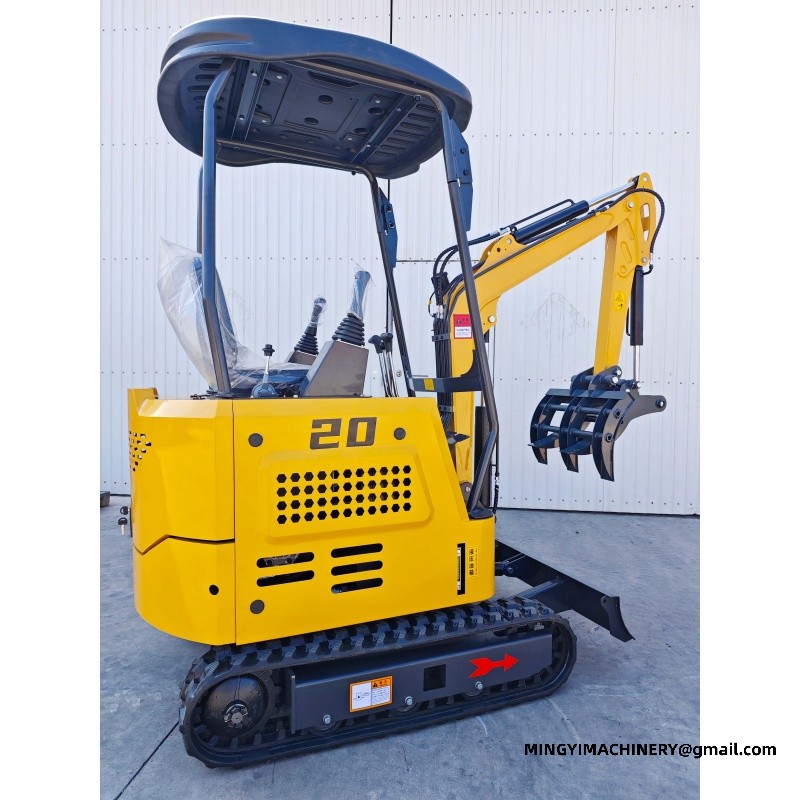
Steel undercarriages reward attention: track tension, roller condition and pad wear all affect how the machine tracks and how long the components last. Keeping the tension to the figure recorded for the machine protects the final drive.
Buyers should match the track type to the attachments as well. A machine running a breaker hammer on rock puts different loads through the undercarriage than one mainly running a bucket and a tiller.
For buyers working on abrasive or uneven ground, this class of machine with rubber pads is the practical compromise between traction and surface protection. Naming the undercarriage at the ordering stage keeps the machine matched to the site.
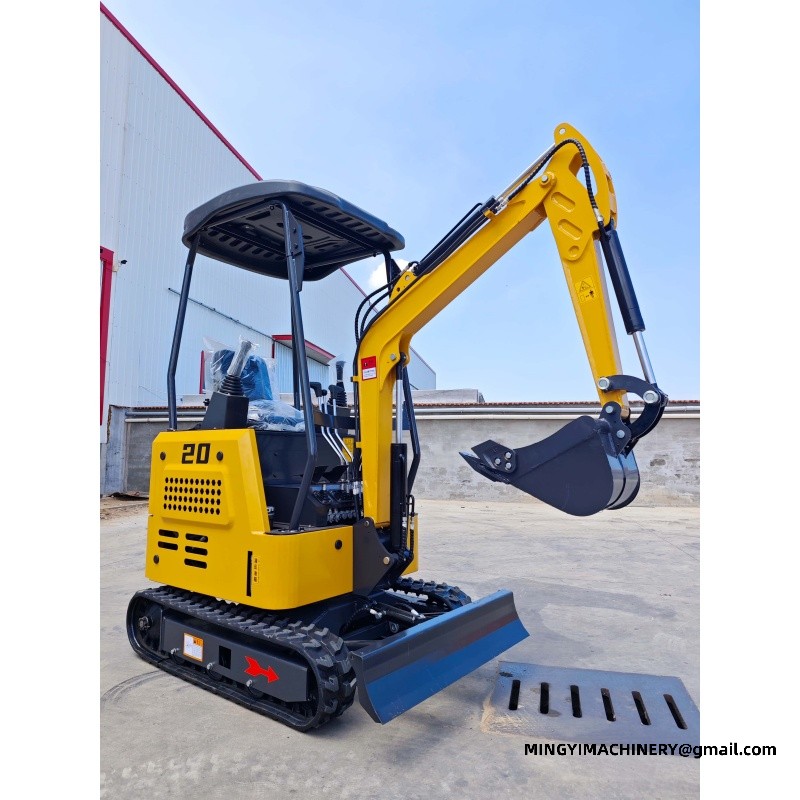
What owners should plan for beyond the steel track mini excavator Purchase decision is the visible part of the effort. Fuel, filters, tracks or tyres, the operator and the transport between sites are the items that decide what the unit in daily use actually demands over a few seasons, and they are worth listing before the order. Downtime is the hidden line item. A machine of this size waiting on a part earns nothing while it stands, so parts availability and service access belong in the plan as much as fuel does. Canopy or enclosed cab on a steel track mini excavator The cab decision follows the climate and the hours. Operators working a full shift in the equipment on site benefit from a sealed cab with wipers and heating; operators stepping on and off every few minutes usually prefer the canopy for the visibility and the quick exit. Enclosure also changes noise and dust exposure. A sealed cab on the machine itself keeps dust out on dry sites and lets the machine work through weather that would otherwise stop a canopy machine for the day. Orchard, vineyard and farm use of steel track mini excavator Orchard and vineyard work is carried out between rows. The model in question with a narrow chassis and a swing boom works down the row without damaging the trees, which is the reason a full-size machine is not used at all. Farms also use the machine in that duty for general maintenance - clearing a watercourse, repairing a track, loading a spreader. One carrier with a few attachments covers most of the jobs that would otherwise wait for a contractor. Interior and light demolition with steel track mini excavator Interior demolition is an access and a weight question. The unit on the job that fits through a doorway and works on a suspended floor does jobs that would otherwise be done by hand or by a larger machine that cannot enter. Dust, debris clearance and floor loading all argue for a compact machine indoors. A machine built for the work spreads its weight over a wider track footprint than a wheeled machine of similar capacity. Landscaping and ground care with steel track mini excavator Landscape contractors use the equipment in service for planting holes, pond excavation, grading and retaining work. The machine is light enough to cross finished lawn and narrow enough to work between established trees. Grass cutting heads, rakes and tillers extend the excavator into ground care. The same carrier that digs a border in spring can cut and clear the same area later in the season. Trenching work with steel track mini excavator Trench quality depends on the bucket width and the operator, not on machine size. This class of machine with a narrow bucket and a swing boom cuts a clean run along a boundary without disturbing the ground either side of it. Depth control matters more on service work than speed. The unit in daily use working beside live services is chosen because it can be placed precisely and stopped instantly, which is what the job actually requires. Working a machine of this size in confined spaces Confined sites are decided by dimensions. Overall width, tail swing and the space needed to work the arm are what let the equipment on site operate inside a building, between walls or in a courtyard. Ventilation is the other indoor constraint. Running the machine itself inside a closed structure needs air movement, and that is a planning item rather than something to discover after the first hour. Parts, service and support for the model in question Support after delivery is a parts question. Wearing items for the machine in that duty - filters, belts, track components, bucket teeth and pins - are the items a buyer should plan to hold before the first service interval. Engine parts availability usually drives the engine choice. The unit on the job built with an engine the local network already carries is serviced from stock rather than from an international order. Matching a machine built for the work to ground conditions Hard and abrasive ground reverses the specification. On rock, demolition rubble or sharp gravel, steel tracks with rubber blocks on the equipment in service survive conditions that cut a rubber belt quickly. Mixed sites are common and argue for a compromise specification. Most buyers choose rubber for the excavator and accept the wear, unless the majority of the work is on material that will damage it. Municipal and public works with this class of machine Municipal crews work on streets, footpaths and parks where the public is present. The unit in daily use is specified because it occupies little space, works inside a small exclusion zone and can be moved on a standard trailer. Drainage repair, tree planting, footway reconstruction and cemetery work are all within the range of a machine of this size. The jobs are small individually and continuous across the year. Export packing and shipping of the equipment on site Machines leave the factory prepared for container or flat rack shipment. The machine itself is normally shipped with the attachment set and the spare parts list agreed in advance so the container is planned once. Export documentation, decals and paint are settled before packing. Asking for them with the model in question order avoids a second handling session and keeps the machine on the booked vessel. Lifting and material handling with the machine in that duty Lifting with a machine built to dig needs a plan. The load, the radius and the ground under the machine built for the work all matter, and the safe figure is the one on the chart rather than the one that looks possible. Ground condition under the machine is part of every lift. Soft or uneven support is the common factor in handling incidents, and checking it takes less time than recovering the unit on the job that has settled. Specification data for the equipment in service Where the excavator is being specified for a job list, the table below gives the factory figures that matter most: what the machine weighs, how deep and how far it works, and what it measures on a trailer. These are the reference figures for this class of machine. MINGYI confirms the final build sheet, including engine and attachment choices, against the destination and the job list before production. Output on a compact machine comes from placement rather than power. An experienced operator keeps the unit in daily use working inside the swing arc, positions once and digs a full run instead of repositioning for every bucket. The second habit is tool discipline. Running a machine of this size with the right bucket width for the trench means less spoil, less reinstatement and a cleaner job than a wide bucket and a lot of trimming.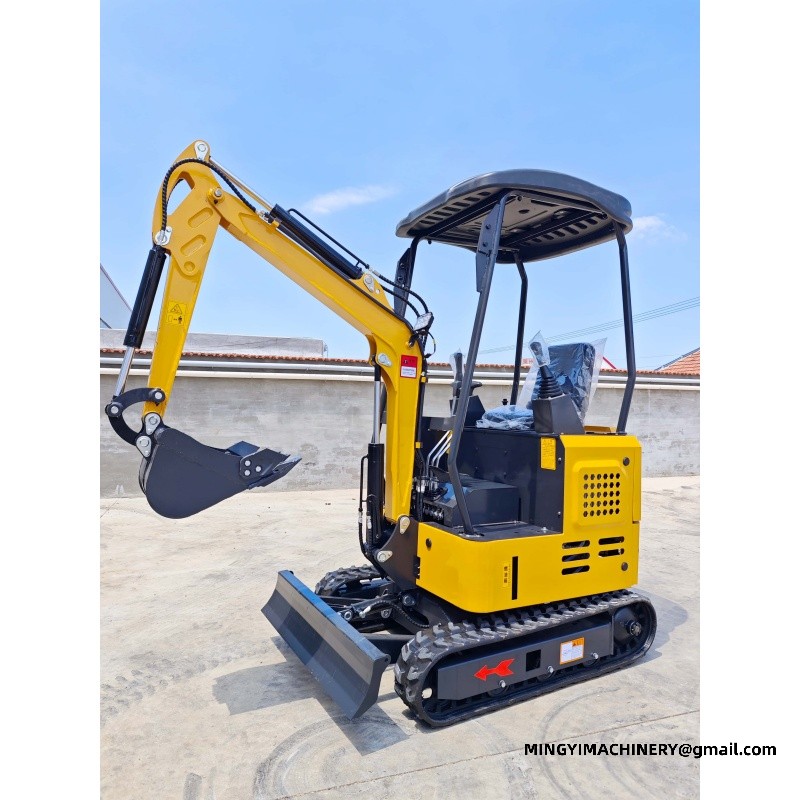
Reference specification — mini excavator range 09W 30-2W 12L 15L Operating weight 1100 kg (2425.08 lb) 2700 kg (5952.48 lb) 1200 kg (2645.55 lb) 1400 kg (3086.47 lb) Transport size (L×W×H) 1800 × 750 × 1970 mm 3000 × 1100 × 2700 mm 2200 × 930 × 2250 mm 2200 × 930 × 2250 mm Max digging depth 1250 mm (49.21 in) 2200 mm (86.61 in) 1700 mm (66.93 in) 1700 mm (66.93 in) Max digging height 2800 mm (110.24 in) 3000 mm (118.11 in) 2600 mm (102.36 in) 2750 mm (108.27 in) Max dumping height 1700 mm (66.93 in) 2000 mm (78.74 in) 1800 mm (70.87 in) 1960 mm (77.17 in) Max digging radius 2570 mm (101.18 in) 3800 mm (149.61 in) 2900 mm (114.17 in) 2900 mm (114.17 in) Max digging distance 1869 mm (73.58 in) 3050 mm (120.08 in) 2300 mm (90.55 in) 2300 mm (90.55 in) Minimum turning radius 1000 mm (39.37 in) 1750 mm (68.9 in) 1450 mm (57.09 in) 1450 mm (57.09 in) Travel speed 3 km/h (1.86 mph) 7 km/h (4.35 mph) 3 km/h (1.86 mph) 3 km/h (1.86 mph) Gradeability 30° 30° 30° 30° Fuel consumption 1-1.3 L/h (0.264—0.343 gal) 2-3 L/h (0.528—0.793 gal) 1-1.3 L/h (0.264—0.343 gal) 1-1.3 L/h (0.264—0.343 gal) Fuel tank capacity 8 L (2.11 gal) 16 L (4.23 gal) 10 L (2.64 gal) 10 L (2.64 gal) Hydraulic oil tank 16 L (4.23 gal) 20 L (5.28 gal) 16 L (4.23 gal) 16 L (4.23 gal) Dozer blade lift height 180 mm (7.09 in) 230 mm (9.06 in) 180 mm (7.09 in) 180 mm (7.09 in) Dozer blade drop depth 210 mm (8.27 in) 280 mm (11.02 in) 210 mm (8.27 in) 210 mm (8.27 in)
Q. Who chooses the equipment on site?
A. Track type sets ground pressure, grip and how the site looks when the machine leaves - the trade-off between rubber and steel is what the track decision comes down to. Tension checks and a walk-around for wrapped debris are the whole of daily track care, and they protect the part of the digger that is hardest to put right. MINGYI builds the 08, 12 and 18 models covering the 0.8 to 6 tonne class, and the machine itself is where that range meets steel track.
Q. How much maintenance do tracks need?
A. A daily tension check and a walk-around for stones, wire and debris wrapped in the idlers. Keep the tension right and the undercarriage - the most lengthy part of a compact digger - lasts the machine out.
Q. Can I see the machine before it ships?
A. Inspection is arranged at the factory, in person or by a scheduled video walk-around - the same session covers paint, decals and attachment fitment for the steel track specification, so the machine inspected is the machine that ships.
Cold weather and winter care for the model in question
Cold exposes weak batteries, thick oil and water in the fuel. Preparing the machine in that duty for winter means the right grade of oil, a battery in good condition and fuel that will not wax in the tank overnight.
Moving the unit on the job between sites
Loading is where most damage happens. Ramps, angle of approach and the condition of the ground under them matter more than the machine when a machine built for the work is being loaded, and a careful driver is worth more than a fast one.
Storage and long idle periods for the equipment in service
A stored machine should be brought back carefully. Before the excavator returns to work the fluids, the brakes and the controls are checked, because months of standing change more than a weekend does.
E-mail : sales@mingycn.com
LINE ( ID ): mingyicn
Related pages
rubber track digger for sensitive ground · small tracked excavator · Front End Loader: Frame Tiers, Attachments and Duty Selection · Mini Excavators









