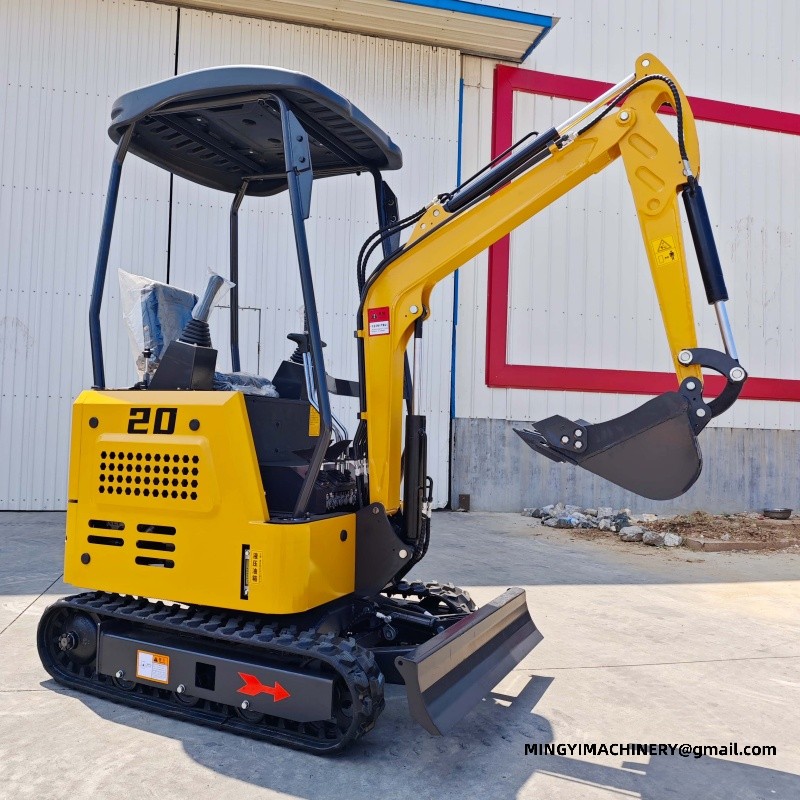
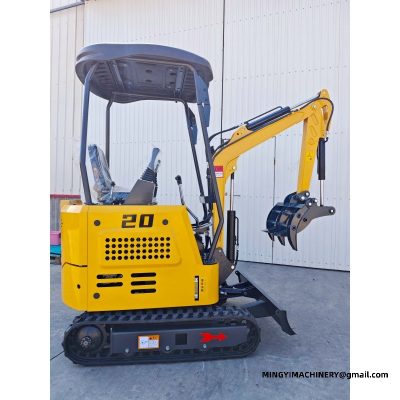
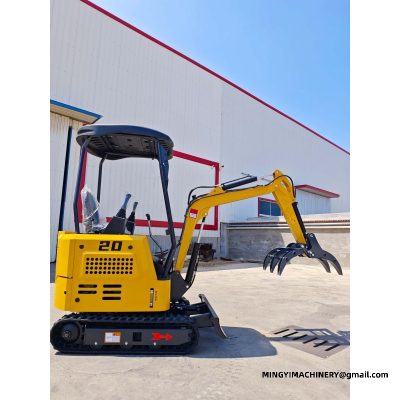
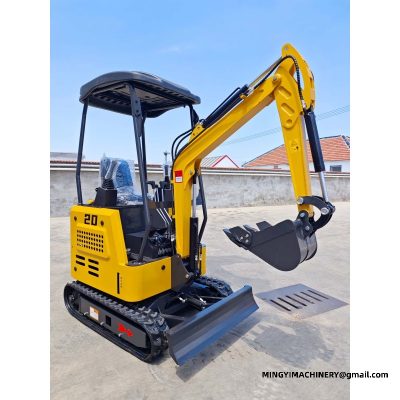
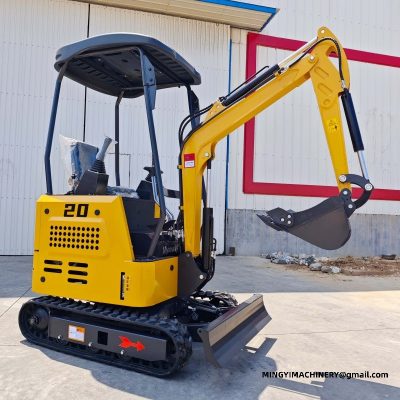
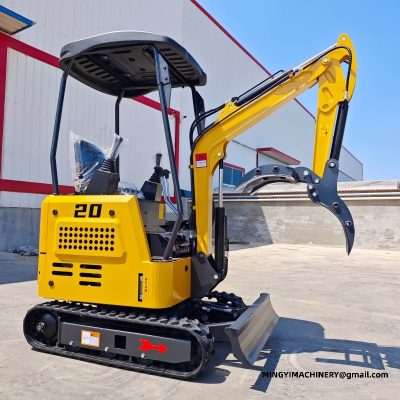
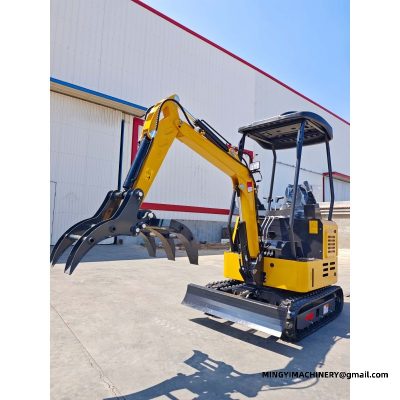
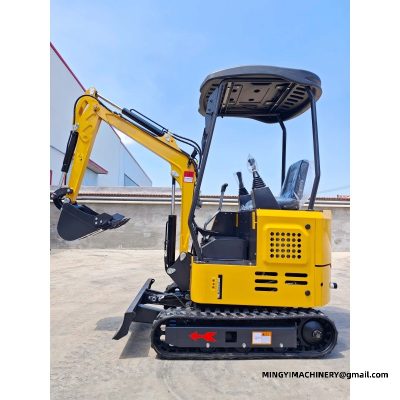
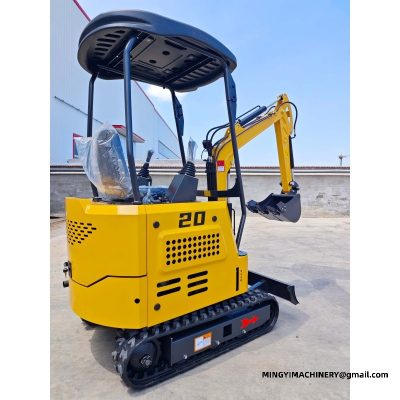
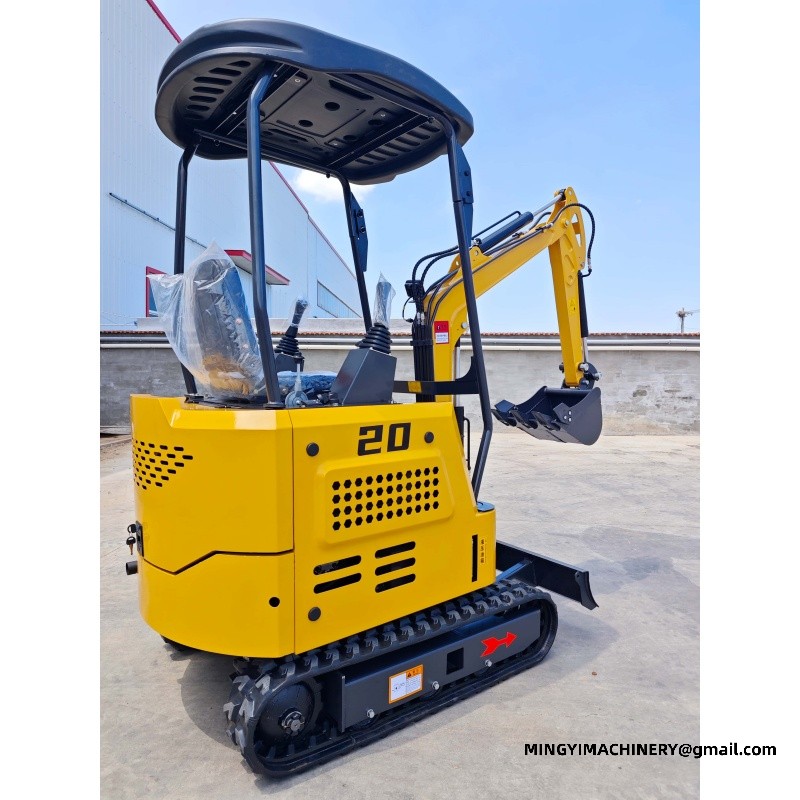
Rubber track mini excavators are the default choice for work that crosses finished surfaces. The tracks spread load over a wide area, so the machine travels over paving, kerbs and lawns without cutting the marks a steel undercarriage would leave.
On a compact crawler machine the undercarriage sets the limits for everything else. Track width, ground pressure and turning radius decide which gates it can pass and which lawns it can cross.
Choosing rubber tracks for sensitive ground
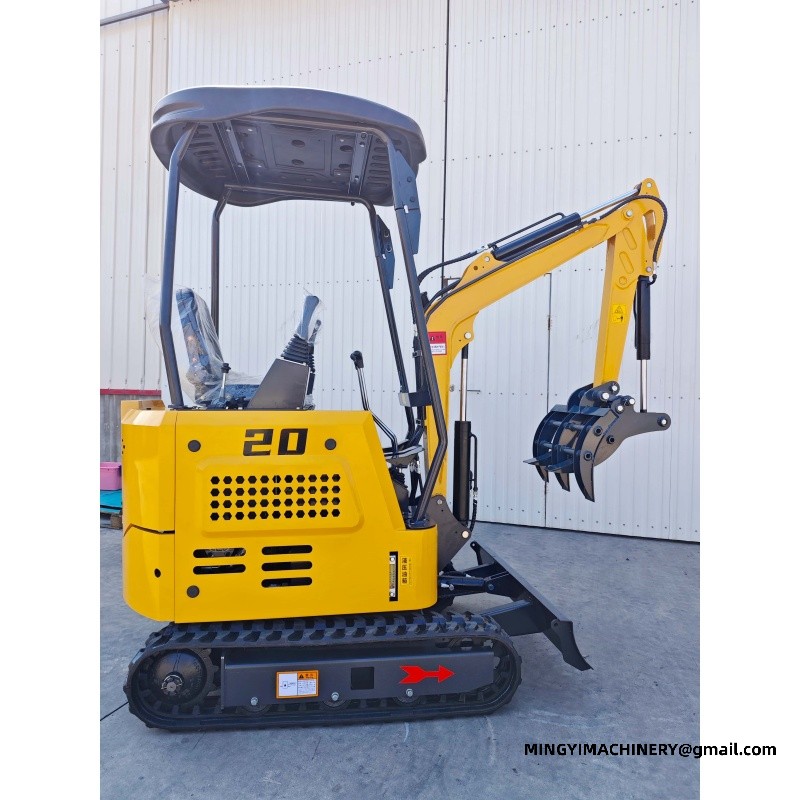
A rubber undercarriage is specified when the machine has to move between paved areas and soft ground on the same day. The flexible track conforms to small steps and kerb edges, which keeps the machine stable as it climbs onto a trailer or crosses a drainage channel.
Ground pressure rises when a heavy attachment is carried at full reach, so track type is considered with the counterweight and boom length. Rubber tracks suit municipal, landscaping and residential work; steel tracks with rubber blocks take over on abrasive ground.
Matching the rubber track machine to municipal work
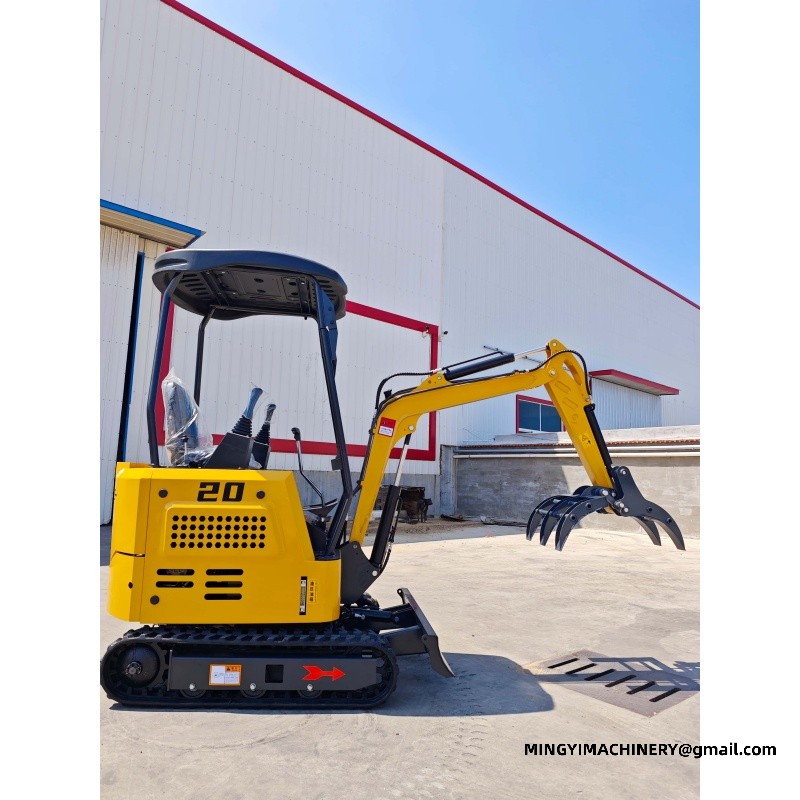
Municipal maintenance crews use these machines for footpath repairs, post installation and small drainage jobs. The rubber track lets the operator pull up beside a finished path, dig and backfill without a separate ground protection mat.
Attachment choice follows the same logic: a breaker hammer for concrete edges, an auger for posts, a tilting bucket for shaping a trench floor. Because the machine is built to order, the attachment set and the hydraulic lines can be agreed at the ordering stage.
A rubber track mini excavator is bought for the surfaces it crosses as much as for the depth it reaches. Confirm the track type, the attachment set and the transport method before ordering.
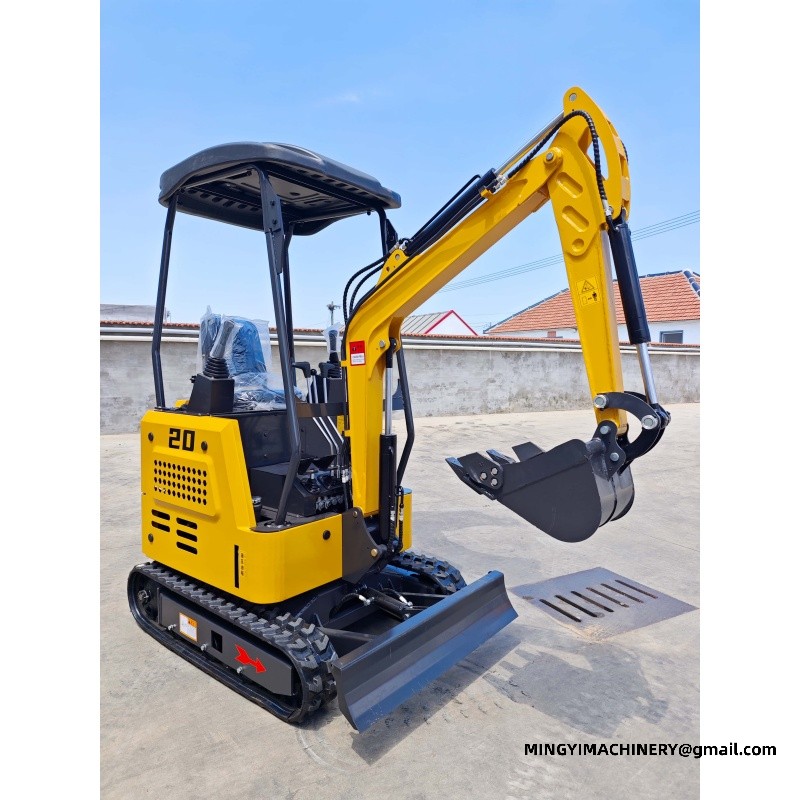
Working a rubber track digger for sensitive ground in confined spaces Clearance above matters as much as around. Door heights, pipework and overhead services set the limit for the excavator indoors, and measuring them first avoids a machine that arrives and cannot be used. Ventilation is the other indoor constraint. Running this class of machine inside a closed structure needs air movement, and that is a planning item rather than something to discover after the first hour. Boom configuration for rubber track digger for sensitive ground A swing boom lets the machine dig parallel to its tracks without repositioning, which is what makes trenching beside a wall or a fence practical. On the unit in daily use this is often the option that decides whether a job is possible at all. Extended and offset boom configurations change reach and working range. A machine of this size with a longer arm reaches further but lifts less at full extension, so the specification is set against the deepest and furthest point on the job list. Landscaping and ground care with rubber track digger for sensitive ground Landscape contractors use the equipment on site for planting holes, pond excavation, grading and retaining work. The machine is light enough to cross finished lawn and narrow enough to work between established trees. On soft landscape work the surface is the constraint. The machine itself on rubber tracks crosses turf without stripping it, which is why the same jobs are not given to a wheeled machine. Quick coupler practice on rubber track digger for sensitive ground Couplers are specified early because they affect the arm and the hydraulic kit. Adding one to the model in question after delivery means new pins, new hoses and a fitment session; adding it at build time is a line on the sheet. For a fleet that shares attachments between machines, a common coupler standard matters more than the coupler brand. The machine in that duty that picks up the same tools as the larger machines keeps the rack usable across the yard. Parts, service and support for rubber track digger for sensitive ground Engine parts availability usually drives the engine choice. The unit on the job built with an engine the local network already carries is serviced from stock rather than from an international order. Remote support is handled by video. A machine built for the work fault can often be diagnosed on a walk-around call with the panel open, which is faster than waiting for a visit and avoids shipping a part that is not needed. Working a rubber track digger for sensitive ground through the seasons Weather decides which days are productive. Rain turns some ground unusable and cold changes how the equipment in service starts and warms up, so planning the wet months around maintenance is more useful than planning around output. Seasonal planning smooths the workload. Machines that are busy for a few months and idle for the rest benefit from a service slot in the quiet period, and the excavator prepared in the off-season starts the busy months reliably. Acceptance checks when this class of machine arrives Delivery day is the best time to find a problem. Checking the specification against the order, the fluid levels, the fasteners and any transport damage while the machine of this size is still on the trailer is faster than claiming later. A function check before the machine goes to work is worth the hour. Running through the controls, the travel and the attachment circuit on the unit in daily use confirms it is set up as specified and ready for the site. Engine options behind the equipment on site Power unit selection is settled against the service network the buyer already uses. MINGYI offers Kubota D722, Kubota D902, YANMAR, Changchai, Laidong, Runtong, YARMAX, Youpu 2V80 and Youpu 195, so a fleet running one brand of engine can keep the same filters, the same parts supplier and the same mechanic. Two buyers can order the same the machine itself and receive different engines. The decision is rarely about peak power; it is about which parts counter is closest to the site and which engine the local mechanic already knows. OEM and fleet customisation of the model in question Customisation also covers the specification sheet. A fleet buyer may want every unit on the job delivered with the same coupler, the same engine and the same tool kit so training and parts stock stay simple. Documentation can be prepared to suit the importer. Manuals, parts books and decal sets for the machine in that duty can be supplied with the buyer's own branding where the order size justifies it. Orchard, vineyard and farm use of a machine built for the work Ditching, fertilising and drainage on farmland suit the equipment in service because the work is spread over a large area in short bursts. The machine travels behind a pickup and works where it stops. Farms also use the excavator for general maintenance - clearing a watercourse, repairing a track, loading a spreader. One carrier with a few attachments covers most of the jobs that would otherwise wait for a contractor. Matching this class of machine to ground conditions Soft ground is a flotation problem, not a power problem. The unit in daily use on wide rubber tracks crosses lawn, sand and cultivated soil that would stop a narrower machine or a wheeled unit of the same capacity. Hard and abrasive ground reverses the specification. On rock, demolition rubble or sharp gravel, steel tracks with rubber blocks on a machine of this size survive conditions that cut a rubber belt quickly. Specification data for the equipment on site The figures below are the factory figures for the models most often matched to the machine itself. They are the numbers to check against the site: the depth the work needs, the reach from one position, and the width of the narrowest point on the route in. These are the reference figures for the model in question. MINGYI confirms the final build sheet, including engine and attachment choices, against the destination and the job list before production. The choice follows the hours. Work that fills a few weeks a year is usually better hired, while the machine in that duty that would be on site most weeks starts to justify ownership once the transport and booking time is counted. Availability is part of the decision. Owning the unit on the job means it is there on the day the ground is ready; hiring means competing for the same machine at the same time as everyone else in the season.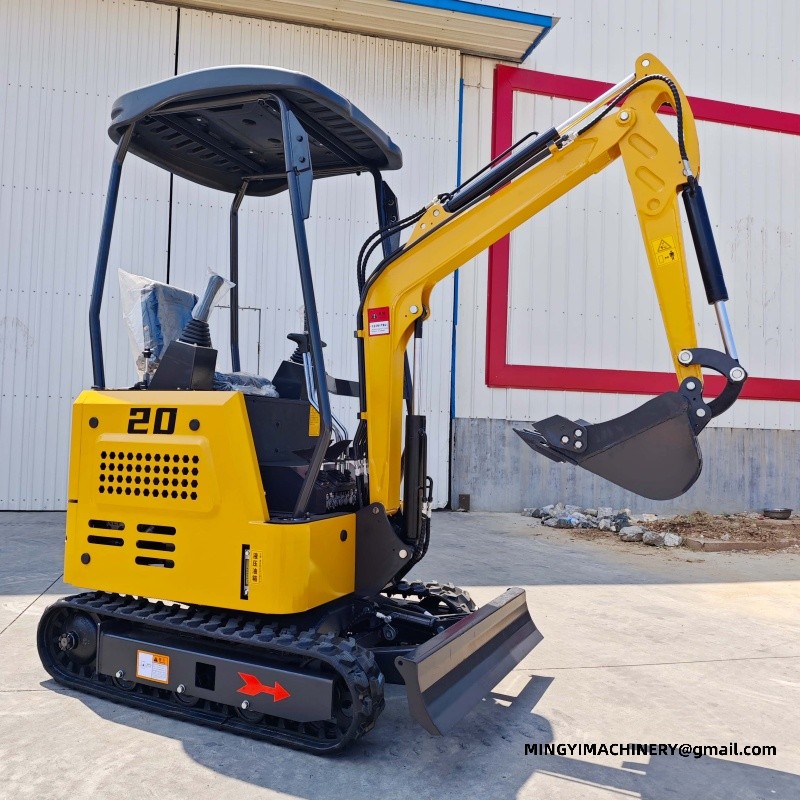
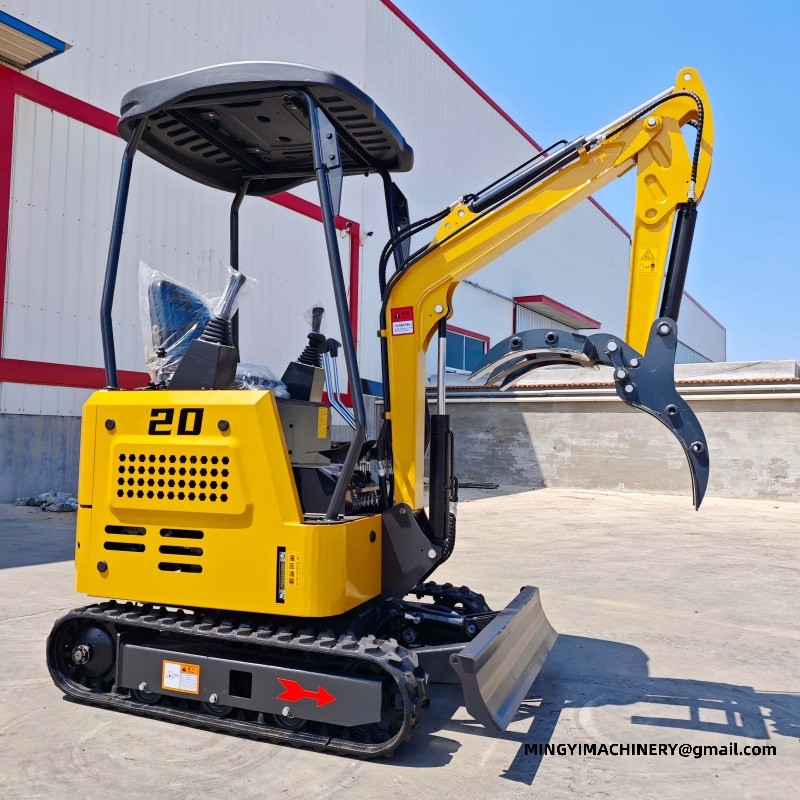
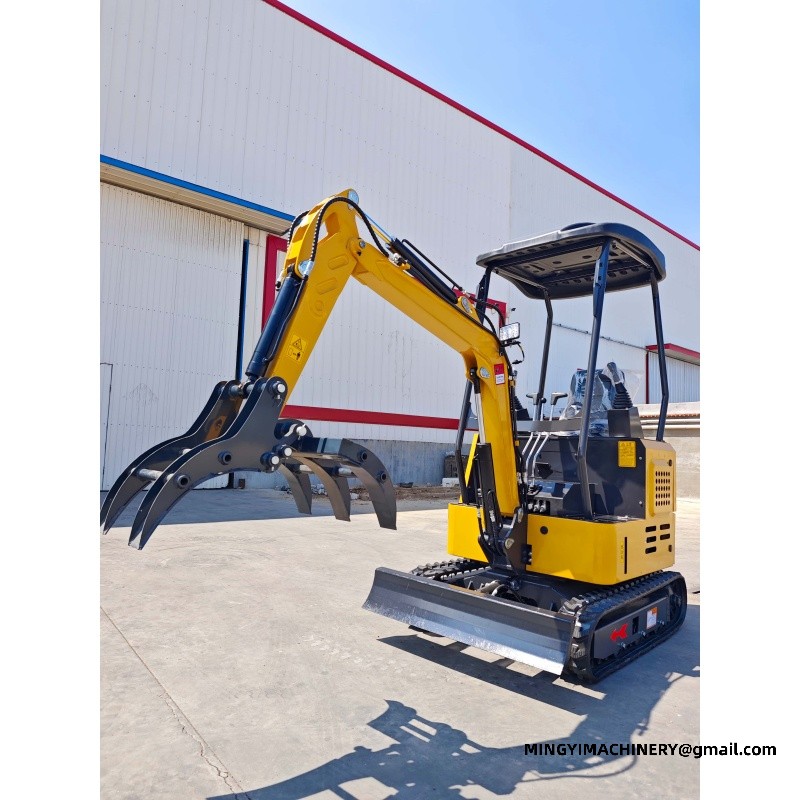
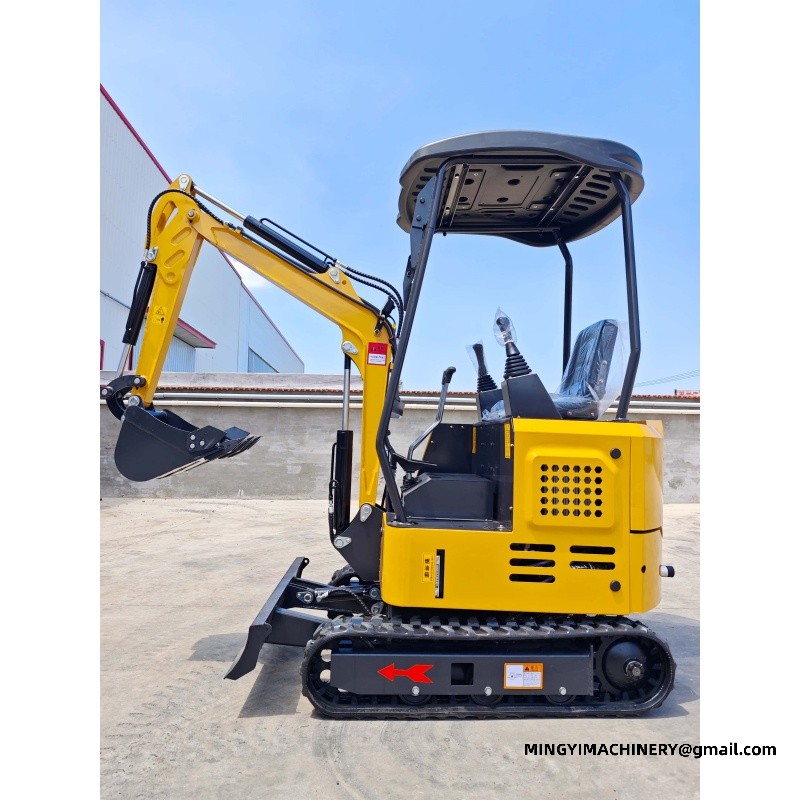
Reference specification — mini excavator range 20-1W 20-3W 09L 25L Operating weight 1800 kg (3968.32 lb) 1900 kg (4188.78 lb) 1100 kg (2425.08 lb) 2200 kg (4850.17 lb) Transport size (L×W×H) 2550 × 1100 × 2200 mm 2550 × 1100 × 2200 mm 2300 × 720 × 1870 mm 3000 × 1300 × 2700 mm Max digging depth 1800 mm (70.87 in) 1800 mm (70.87 in) 1400 mm (55.12 in) 2300 mm (90.55 in) Max digging height 2820 mm (111.02 in) 2820 mm (111.02 in) 2800 mm (110.24 in) 3100 mm (122.05 in) Max dumping height 2050 mm (80.71 in) 2050 mm (80.71 in) 1880 mm (74.02 in) 2050 mm (80.71 in) Max digging radius 3050 mm (120.08 in) 3050 mm (120.08 in) 2490 mm (98.03 in) 3900 mm (153.54 in) Max digging distance 2300 mm (90.55 in) 2300 mm (90.55 in) 2000 mm (78.74 in) 3100 mm (125.05 in) Minimum turning radius 1450 mm (57.09 in) 1450 mm (57.09 in) 1400 mm (55.12 in) 1800 mm (70.87 in) Travel speed 5 km/h (3.11 mph) 5 km/h (3.11 mph) 3 km/h (1.86 mph) 7 km/h (4.35 mph) Gradeability 30° 30° 30° 30° Fuel consumption 2-3 L/h (0.528—0.793 gal) 2-3 L/h (0.528—0.793 gal) 1-1.3 L/h (0.264—0.343 gal) 2-3 L/h (0.528—0.793 gal) Fuel tank capacity 16 L (4.23 gal) 16 L (4.23 gal) 8 L (2.11 gal) 16 L (4.23 gal) Hydraulic oil tank 18 L (4.76 gal) 18 L (4.76 gal) 16 L (4.23 gal) 18 L (4.76 gal) Dozer blade lift height 180 mm (7.09 in) 180 mm (7.09 in) 180 mm (7.09 in) 230 mm (9.06 in) Dozer blade drop depth 210 mm (8.27 in) 210 mm (8.27 in) 210 mm (8.27 in) 280 mm (11.02 in)
Q. Who chooses a machine built for the work?
A. Tracks decide where a compact excavator is allowed to work: rubber runs quiet and kind over lawns and paving, steel takes the abuse of gravel, rubble and slopes. Tension checks and a walk-around for wrapped debris are the whole of daily track care, and they protect the part of the digger that is hardest to put right. For sensitive ground applications the practical route is to send the job list to the factory and let the build sheet answer it - which is exactly what this page invites.
Q. How much maintenance do tracks need?
A. A daily tension check and a walk-around for stones, wire and debris wrapped in the idlers. Keep the tension right and the undercarriage - the most lengthy part of a compact digger - lasts the machine out.
Q. Can I see the machine before it ships?
A. Inspection is arranged at the factory, in person or by a scheduled video walk-around - the same session covers paint, decals and attachment fitment for the sensitive ground specification, so the machine inspected is the machine that ships.
Hot, humid and dusty conditions around the equipment in service
Heat and dust shorten service intervals rather than machine life. In these conditions the filters on the excavator need attention more often, and the cooling surfaces need to be kept clear to hold the working temperature.
Moving this class of machine between sites
Loading is where most damage happens. Ramps, angle of approach and the condition of the ground under them matter more than the machine when the unit in daily use is being loaded, and a careful driver is worth more than a fast one.
E-mail : sales@mingycn.com
LINE ( ID ): mingyicn
Visibility and blind spots around rubber track digger for sensitive ground
Mirrors, cameras and a signal person cover what the seat cannot. Walk the route before the first load and mark the corners where sight is lost.
A machine working in a yard with people on foot needs a rule about who moves first, agreed before the shift rather than during it.
Glass, wipers and mirrors are safety items rather than comfort items, and they belong on the daily walk-around with the lights and the horn.
Related pages
small tracked excavator · narrow mini excavator · Hydraulic Wheel Loader: Cylinders, Pumps and Circuit Options · Mini Excavators









