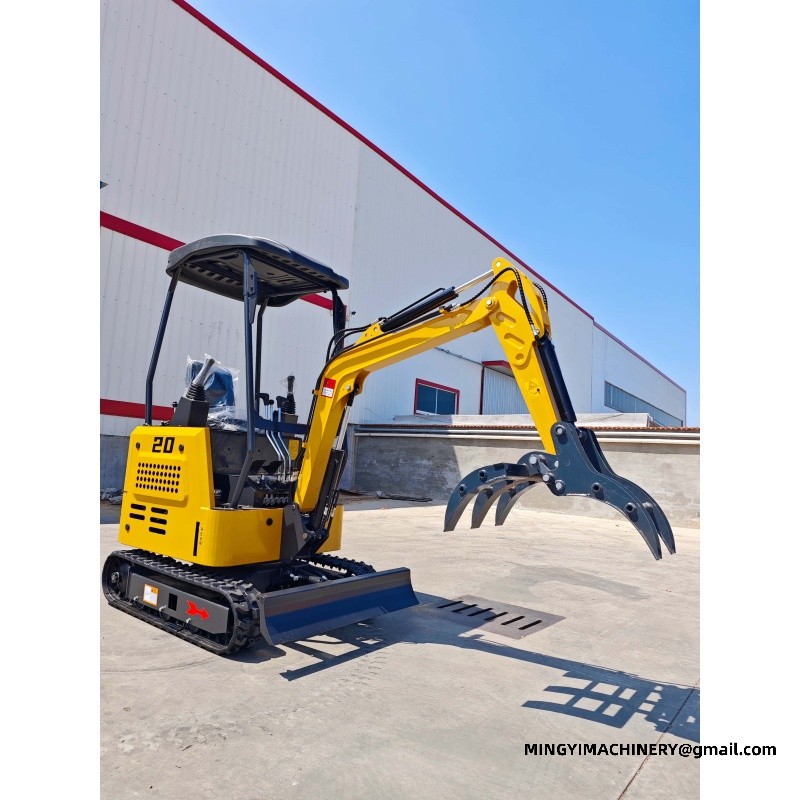
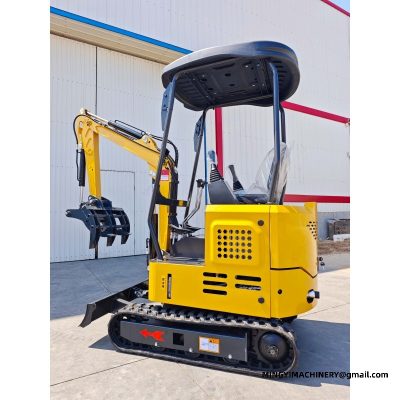
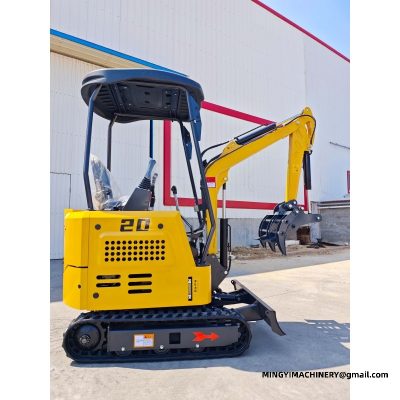
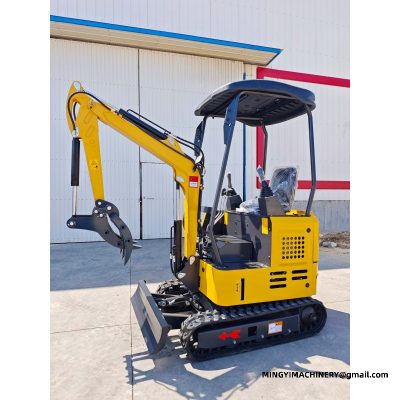
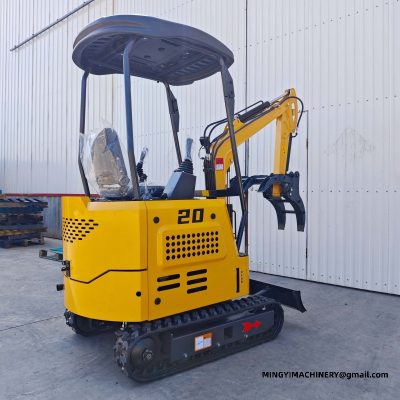
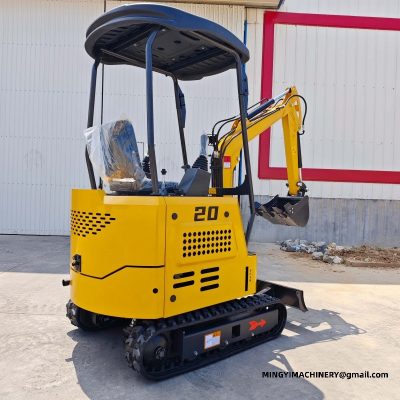
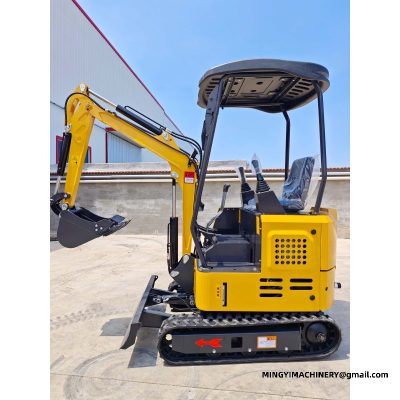
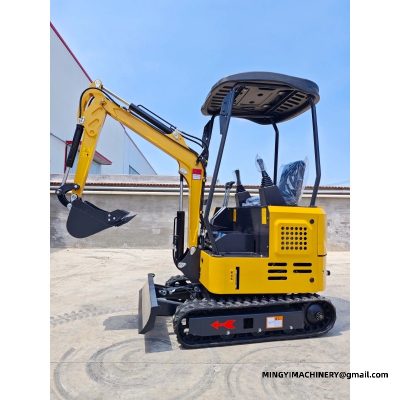
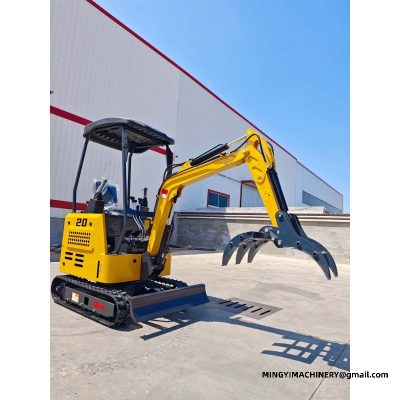
Width decides whether a digger reaches the job at all. Gates, alleyways, rows of trees and corridors between structures set a limit no amount of digging force can argue with, which is why the excavator is often the only machine to consider.
MINGYI builds narrow machines across the small classes, including variants with retractable undercarriages that travel narrow and dig wide. The width limit of the buyer's sites is written into the specification before the machine is built.
Places a narrow digger fits and works
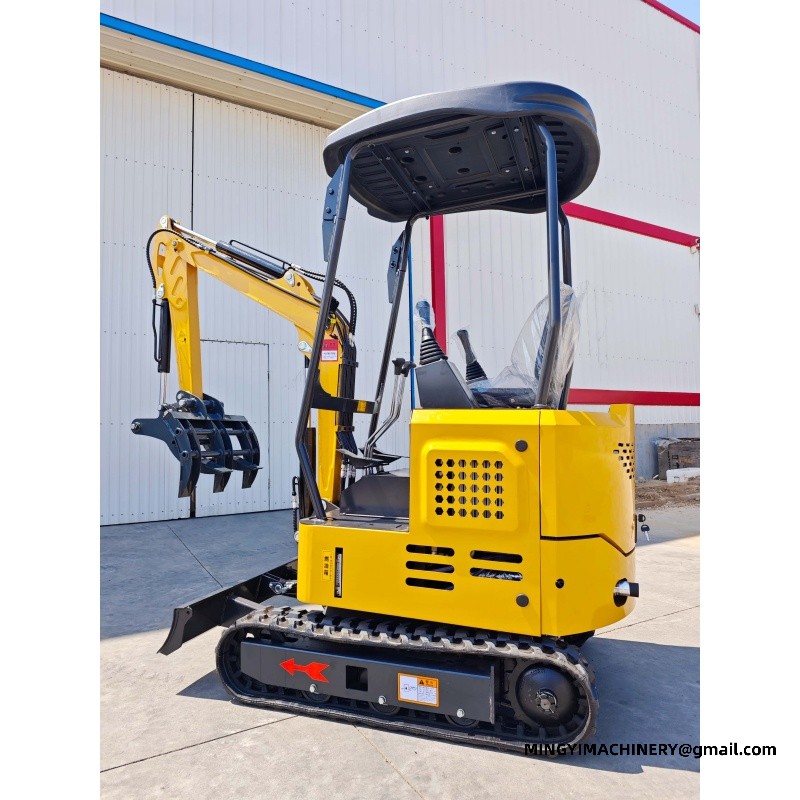
The list is long: backyard side gates, orchard and vineyard rows, gaps between farm buildings, kerbside trenches with traffic alongside, and interiors of structures being renovated. In each case the machine enters, works and is recovered without dismantling anything.
Retractable undercarriage variants are the practical answer where both access and stability matter: the tracks draw in to pass the opening, then extend for digging, giving the operator a steadier platform than a permanently narrow machine of the same class.
Working productively at narrow width
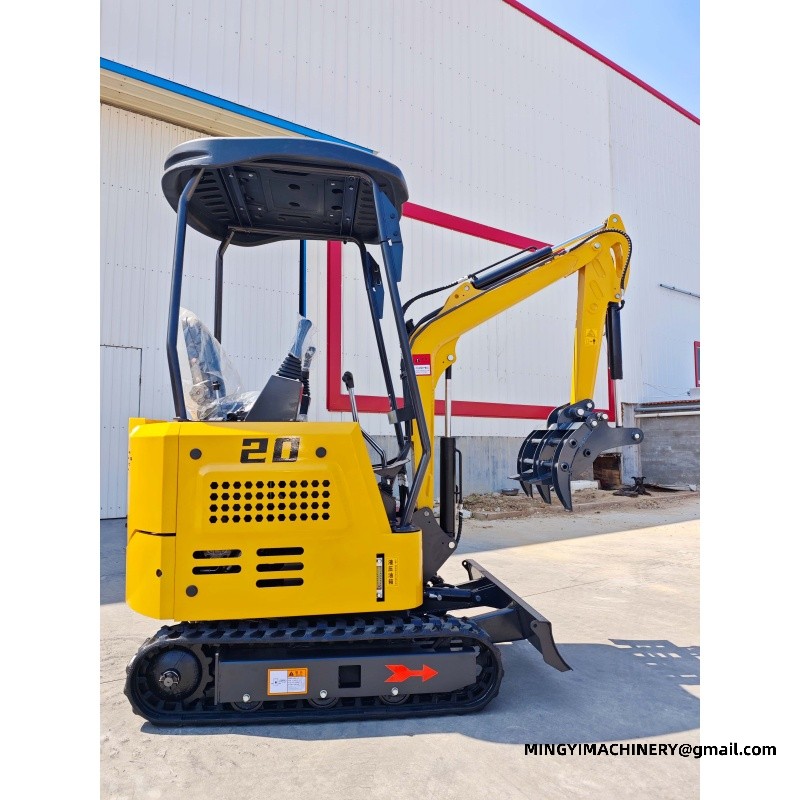
A swing or offset boom recovers reach that a narrow stance gives away, letting the bucket dig beside walls and over fences while the tracks stay on firm footing. Short tail swing complements it by keeping rotation inside tight surroundings.
Ordering starts with measurement: the narrowest passage, the narrowest gatepost spacing and any overhead limits. From those numbers the class, undercarriage and canopy height are fixed, and bucket widths chosen to match the trenches being dug.
A narrow excavator is bought for the places it reaches. MINGYI builds to the measurements you supply, so the machine passes the gate on delivery day just as it will on every working day after it.
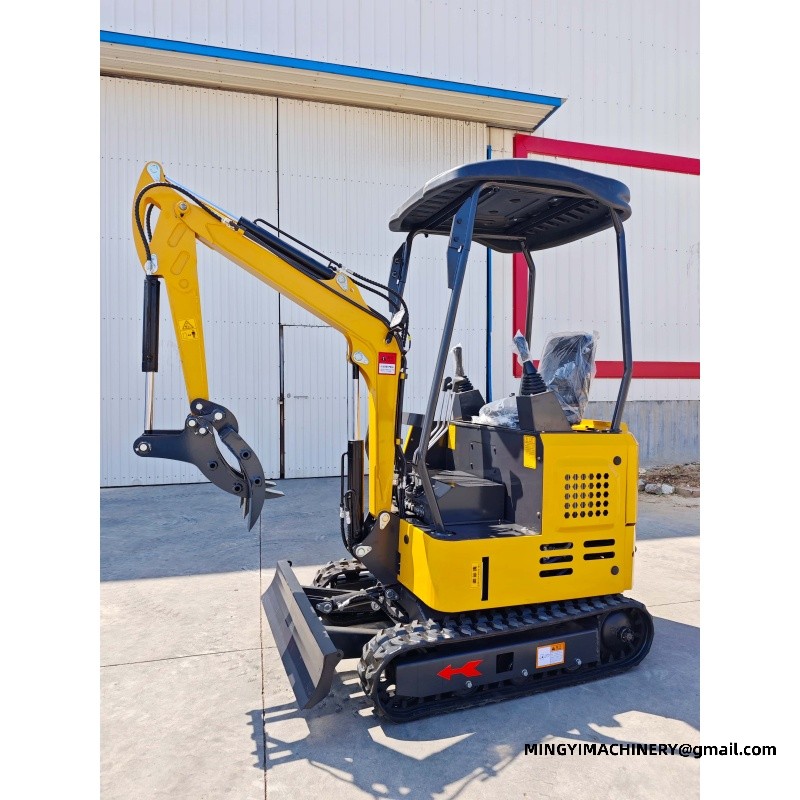
Noise, dust and working near occupied buildings Work near housing or occupied premises brings constraints that open sites do not. Start times, exhaust condition and how often this class of machine needs to reverse are the practical limits that neighbours notice. Dust control is often part of the same conversation. Water, timing and work sequence reduce what leaves the site, and agreeing them in advance keeps the unit in daily use working rather than stopped after a complaint. Daily checks and maintenance on narrow mini excavator Track tension is the item most often neglected. A machine of this size run with slack tracks wears the undercarriage and can throw a track on a turn; run too tight, the same components wear from the other direction. Greasing is the second item. The slew ring, the boom and arm pins and the bucket linkage on the equipment on site take grease daily in dusty work, and the intervals shorten further when the machine is used in water or mud. Trailering and moving narrow mini excavator Loading practice matters as much as the numbers. The machine itself is driven up ramps under its own power with the boom lowered and the tracks aligned, and secured at the points the manufacturer specifies. Detachable components reduce transport length. The model in question built with a removable arm section or a folding step fits a shorter trailer and may avoid an oversize movement permit. Boom configuration for narrow mini excavator Extended and offset boom configurations change reach and working range. The machine in that duty with a longer arm reaches further but lifts less at full extension, so the specification is set against the deepest and furthest point on the job list. Detachable boom sections are used where transport length matters. The unit on the job that has to travel on a standard trailer can be built so the arm comes off for the road and goes back on at the site. Working a narrow mini excavator in confined spaces Confined sites are decided by dimensions. Overall width, tail swing and the space needed to work the arm are what let a machine built for the work operate inside a building, between walls or in a courtyard. Clearance above matters as much as around. Door heights, pipework and overhead services set the limit for the equipment in service indoors, and measuring them first avoids a machine that arrives and cannot be used. Landscaping and ground care with narrow mini excavator Grass cutting heads, rakes and tillers extend the excavator into ground care. The same carrier that digs a border in spring can cut and clear the same area later in the season. On soft landscape work the surface is the constraint. This class of machine on rubber tracks crosses turf without stripping it, which is why the same jobs are not given to a wheeled machine. Matching the unit in daily use to ground conditions Soft ground is a flotation problem, not a power problem. A machine of this size on wide rubber tracks crosses lawn, sand and cultivated soil that would stop a narrower machine or a wheeled unit of the same capacity. Mixed sites are common and argue for a compromise specification. Most buyers choose rubber for the equipment on site and accept the wear, unless the majority of the work is on material that will damage it. Operator technique for the machine itself Output on a compact machine comes from placement rather than power. An experienced operator keeps the model in question working inside the swing arc, positions once and digs a full run instead of repositioning for every bucket. Stability is the third. The machine in that duty working across the tracks rather than over the corners keeps the machine steady and the undercarriage loaded evenly, which shows up as track life at the end of the season. Working on slopes and uneven ground with the unit on the job Slope work is a stability question before it is a traction question. Knowing the gradient a machine built for the work is rated for, and working across rather than straight up where the ground allows, removes most of the risk. Planning the direction of travel helps. Working so that the equipment in service is stable under load and not required to turn on a slope is a decision made before the job starts, not a correction made during it. Acceptance checks when the excavator arrives A function check before the machine goes to work is worth the hour. Running through the controls, the travel and the attachment circuit on this class of machine confirms it is set up as specified and ready for the site. Documentation should arrive with the machine. Parts list, service schedule and any certificates for the unit in daily use are what the workshop needs later, and they are much easier to obtain at delivery than in month six. Canopy or enclosed cab on a machine of this size A canopy keeps the machine light and the operator aware of the surroundings, which suits short jobs in warm weather. A fully enclosed cab is specified where rain, dust or cold are part of the working year, and it can be added to the equipment on site as a retrofit rather than only at build time. The cab decision follows the climate and the hours. Operators working a full shift in the machine itself benefit from a sealed cab with wipers and heating; operators stepping on and off every few minutes usually prefer the canopy for the visibility and the quick exit. Interior and light demolition with the model in question Interior demolition is an access and a weight question. The machine in that duty that fits through a doorway and works on a suspended floor does jobs that would otherwise be done by hand or by a larger machine that cannot enter. Breaking out a floor slab, a wall footing or a concrete step is routine work for the unit on the job with a breaker. The machine is small enough to work inside and heavy enough to run the tool at a practical rate. Specification data for a machine built for the work Where the equipment in service is being specified for a job list, the table below gives the factory figures that matter most: what the machine weighs, how deep and how far it works, and what it measures on a trailer. These are the reference figures for the excavator. MINGYI confirms the final build sheet, including engine and attachment choices, against the destination and the job list before production. Road repair generates short, interrupted jobs - a patch, a drainage connection, a kerb line. This class of machine is economical here because it travels on a small trailer and starts working minutes after arriving. Patching and reinstatement favour a machine that can work in a lane closure. The unit in daily use occupies less road than a full-size excavator, which reduces the traffic management needed and the length of the closure.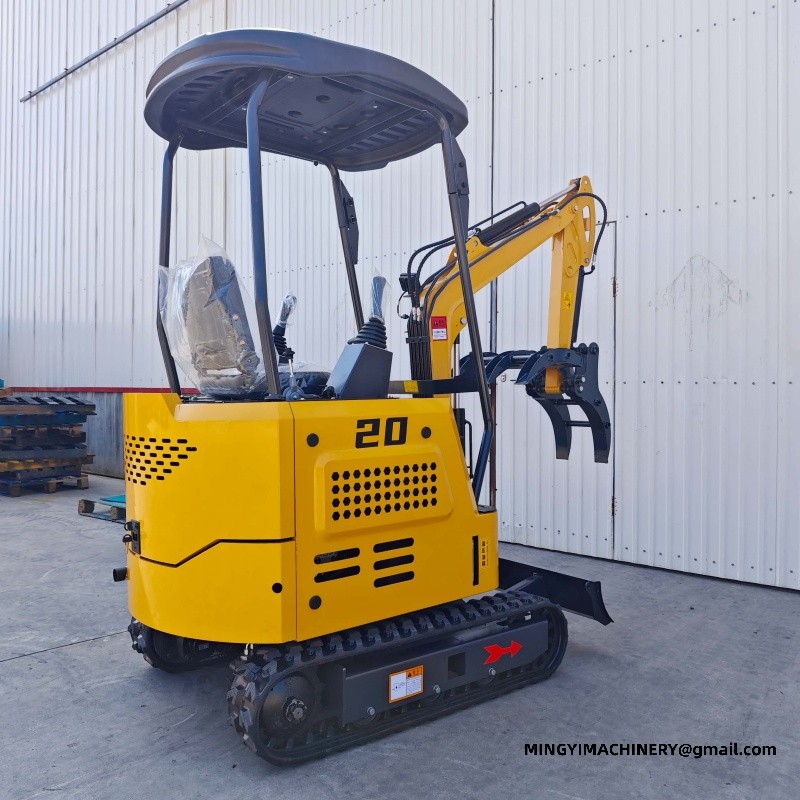
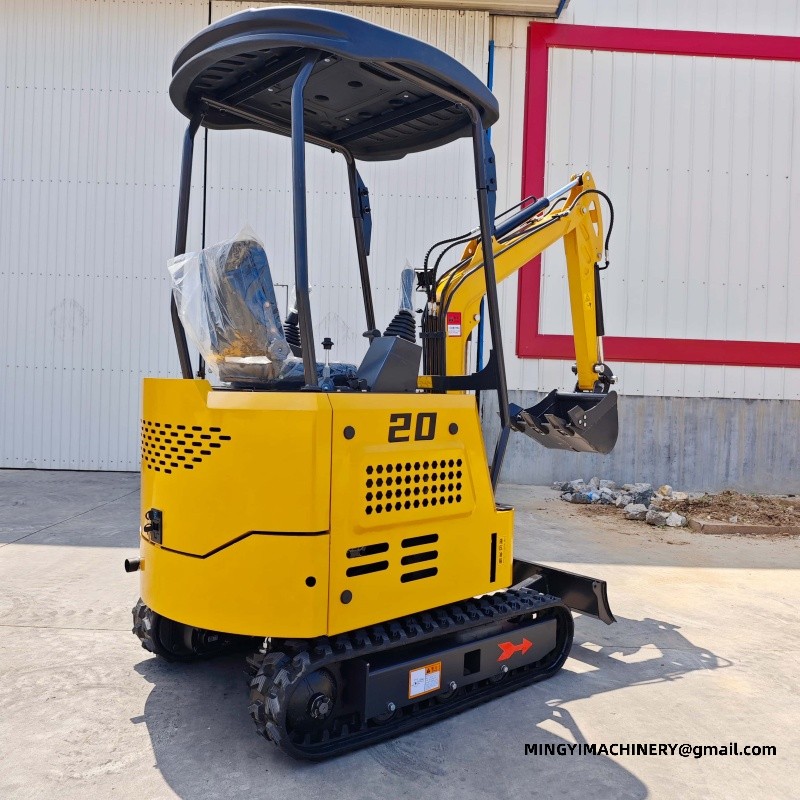
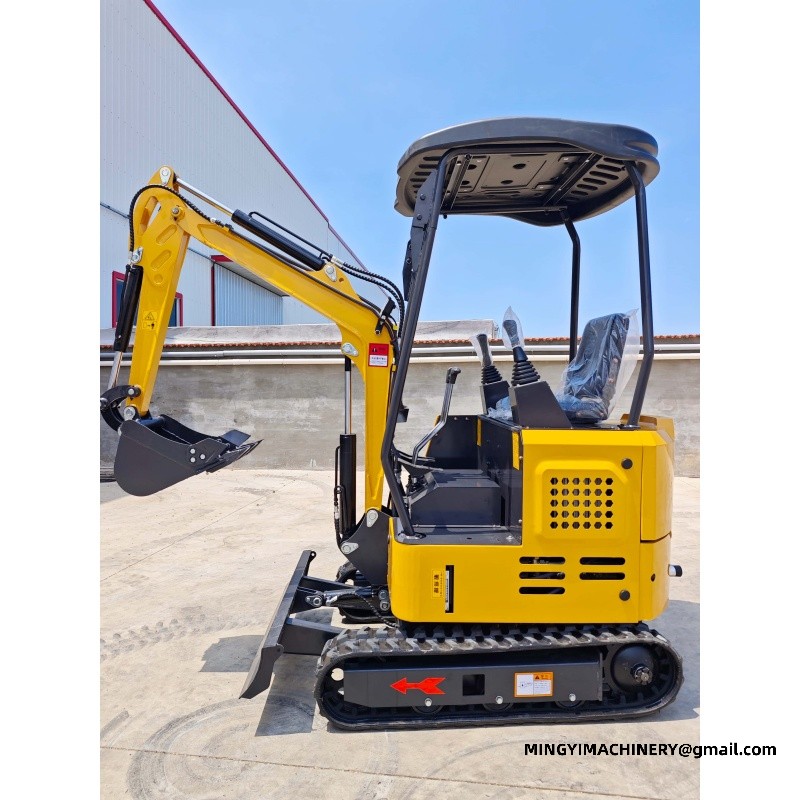
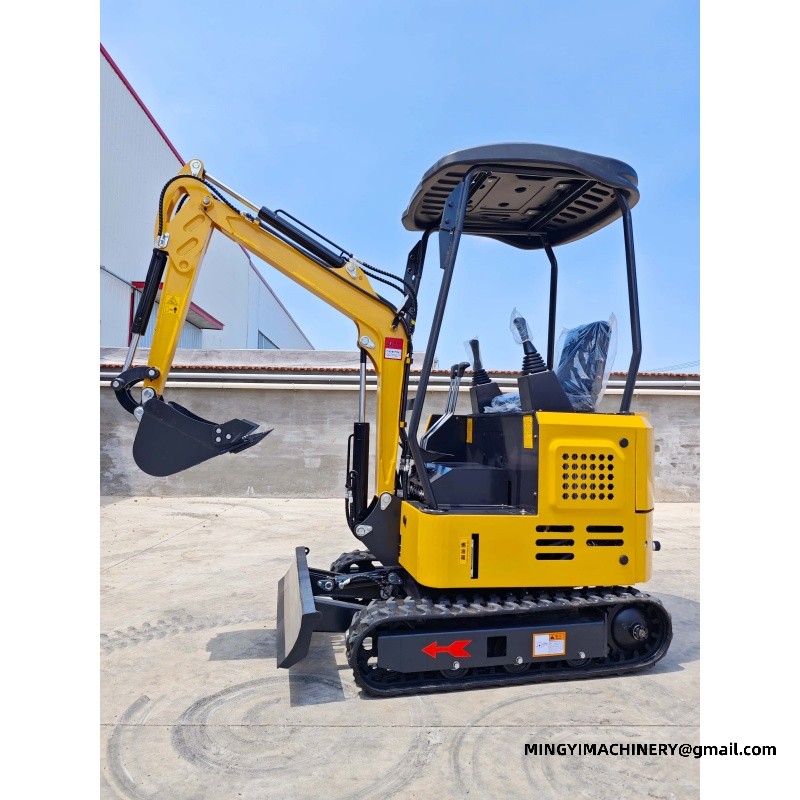
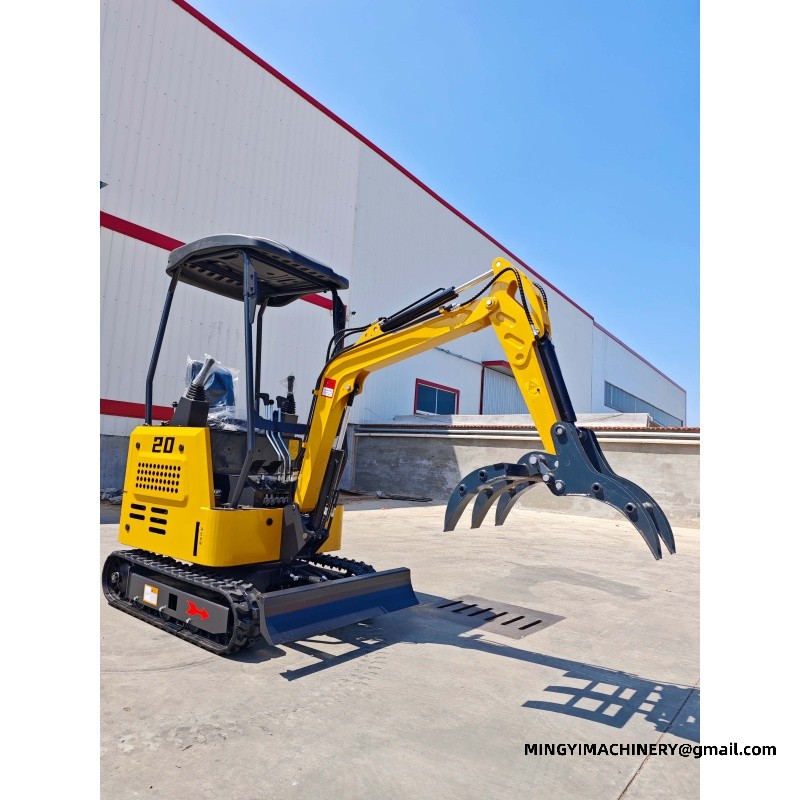
Reference specification — mini excavator range 20-1W 20-1WL 20-3W 25L Operating weight 1800 kg (3968.32 lb) 1900 kg (4188.78 lb) 1900 kg (4188.78 lb) 2200 kg (4850.17 lb) Transport size (L×W×H) 2550 × 1100 × 2200 mm 2550 × 1100 × 2200 mm 2550 × 1100 × 2200 mm 3000 × 1300 × 2700 mm Max digging depth 1800 mm (70.87 in) 1800 mm (70.87 in) 1800 mm (70.87 in) 2300 mm (90.55 in) Max digging height 2820 mm (111.02 in) 2820 mm (111.02 in) 2820 mm (111.02 in) 3100 mm (122.05 in) Max dumping height 2050 mm (80.71 in) 2050 mm (80.71 in) 2050 mm (80.71 in) 2050 mm (80.71 in) Max digging radius 3050 mm (120.08 in) 3050 mm (120.08 in) 3050 mm (120.08 in) 3900 mm (153.54 in) Max digging distance 2300 mm (90.55 in) 2300 mm (90.55 in) 2300 mm (90.55 in) 3100 mm (125.05 in) Minimum turning radius 1450 mm (57.09 in) 1450 mm (57.09 in) 1450 mm (57.09 in) 1800 mm (70.87 in) Travel speed 5 km/h (3.11 mph) 5 km/h (3.11 mph) 5 km/h (3.11 mph) 7 km/h (4.35 mph) Gradeability 30° 30° 30° 30° Fuel consumption 2-3 L/h (0.528—0.793 gal) 2-3 L/h (0.528—0.793 gal) 2-3 L/h (0.528—0.793 gal) 2-3 L/h (0.528—0.793 gal) Fuel tank capacity 16 L (4.23 gal) 16 L (4.23 gal) 16 L (4.23 gal) 16 L (4.23 gal) Hydraulic oil tank 18 L (4.76 gal) 18 L (4.76 gal) 18 L (4.76 gal) 18 L (4.76 gal) Dozer blade lift height 180 mm (7.09 in) 180 mm (7.09 in) 180 mm (7.09 in) 230 mm (9.06 in) Dozer blade drop depth 210 mm (8.27 in) 210 mm (8.27 in) 210 mm (8.27 in) 280 mm (11.02 in)
Q. What is a machine of this size?
A. The whole point of the smallest classes is presence - a digging machine that reaches work nothing bigger can enter. Measure the doorway, gate or stairwell first, then match the machine to the gap - the smallest classes pass where a wheelbarrow would struggle. For narrow applications the practical route is to send the job list to the factory and let the build sheet answer it - which is exactly what this page invites.
Q. Is a micro machine still worth buying?
A. If the work is behind a single gate or down a stairwell, yes - it is the only machine that reaches the job at all. Pair it with the attachment set and it specifications like a bigger machine on small sites.
Q. What support follows the sale?
A. Spare-part kits, wear items and service documentation ship with the programme, and the parts team works from the serial plate to match components exactly. Warranty and support terms for the narrow order are confirmed in writing before the machine leaves.
Moving the equipment on site between sites
Loading is where most damage happens. Ramps, angle of approach and the condition of the ground under them matter more than the machine when the machine itself is being loaded, and a careful driver is worth more than a fast one.
Keeping a service record for the model in question
Patterns show up in the record before they show up in the machine. Rising oil consumption or a filter that keeps blocking on the machine in that duty is obvious on paper long before it becomes a failure on site.
Reading the early symptoms on the unit on the job
Operators notice things first because they hear the machine every day. Encouraging the person on a machine built for the work to report small changes, and acting on them, is the most effective maintenance programme there is.
E-mail : sales@mingycn.com
LINE ( ID ): mingyicn
Related pages
compact mini crawler excavator · ultra mini excavator for tight access · Small Wheel Loader: Where the Compact Builds Earn Their Keep · Mini Excavators









