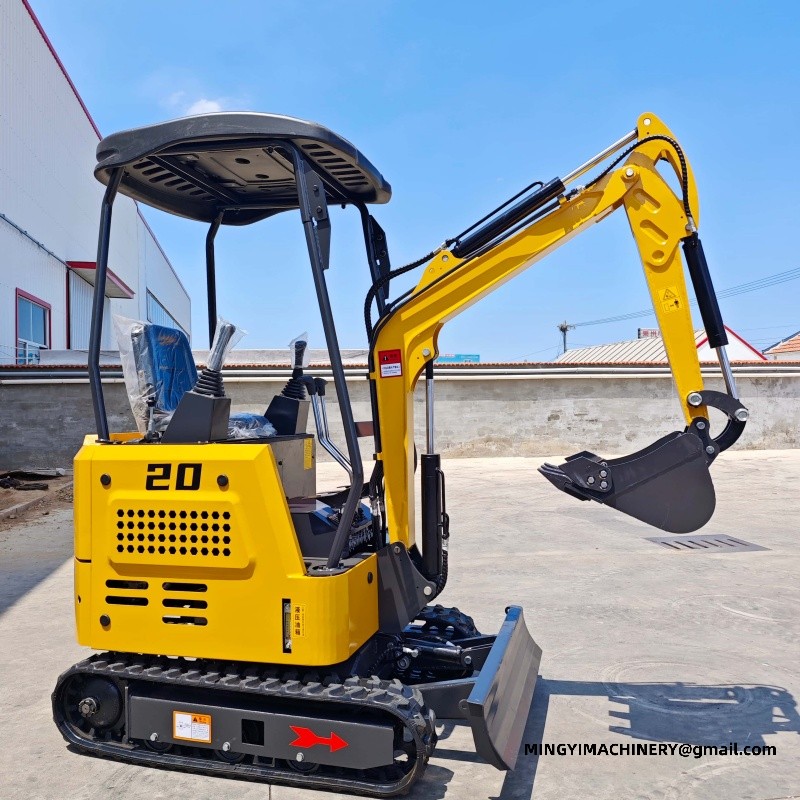
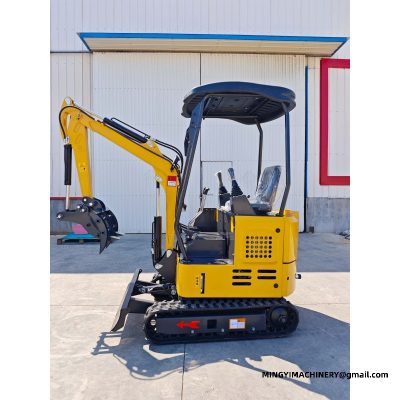
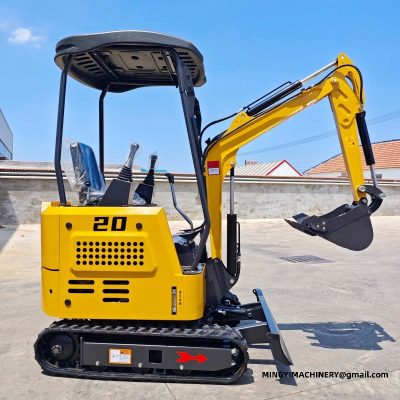
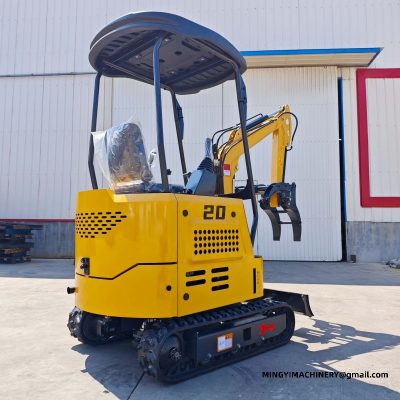
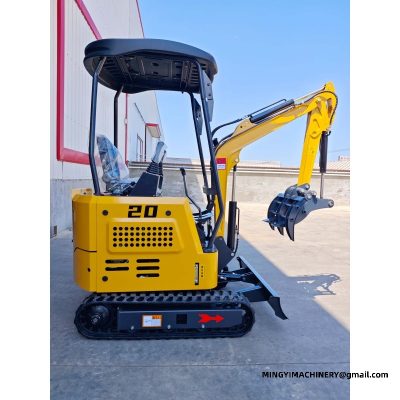
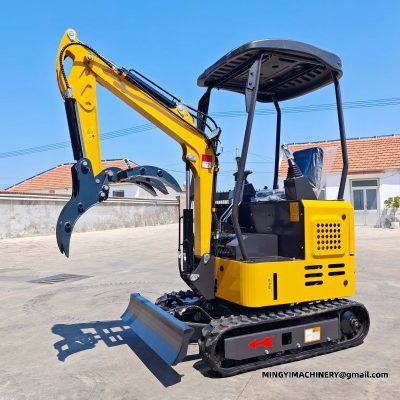
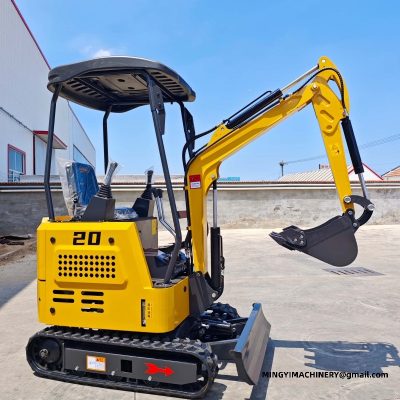
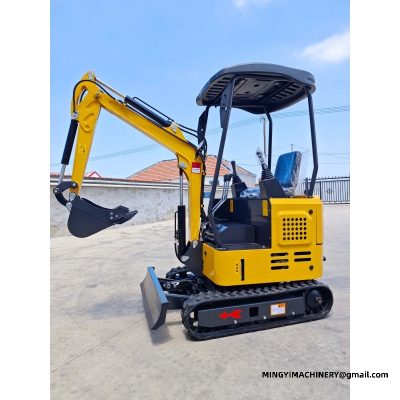
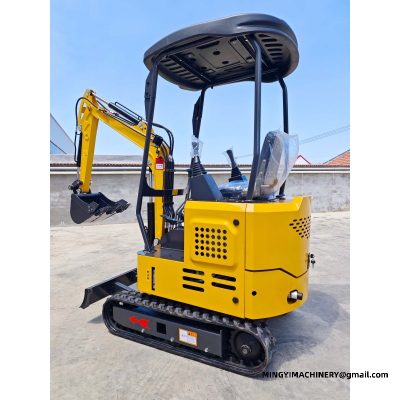
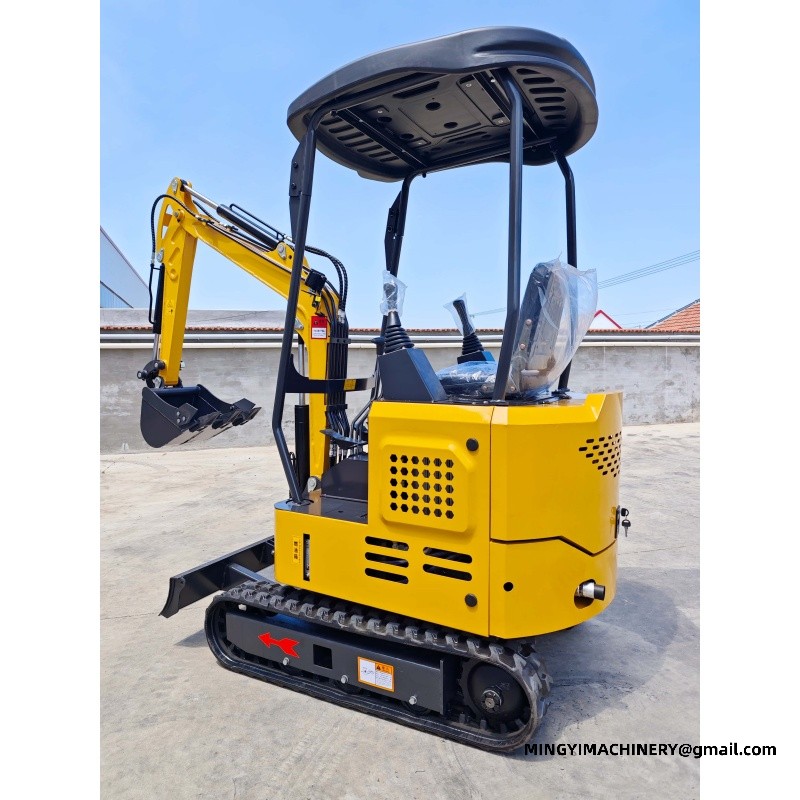
Some work happens through gaps: side gates, rear courtyards, doorways and the spaces between buildings that no ordinary machine can enter. The ultra mini excavators in the MINGYI range, at the smallest end of the 0.8 to 6 tonne class, exist for these jobs.
An ultra mini machine trades reach and lifting force for the ability to be where the work is. Bought for access rather than output, it digs inside buildings, under canopies and along boundary walls where the only alternative is a shovel crew.
Work that needs the smallest class
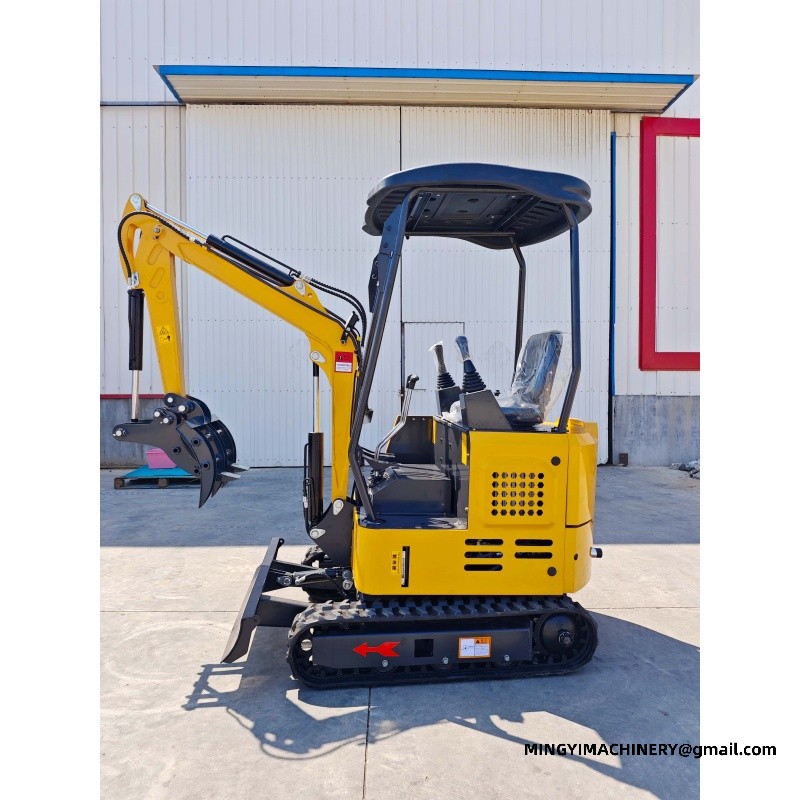
Interior demolition and floor removal in occupied buildings, basement and crawlspace digging, trenching in gardens reached only through a gate and pool repair in walled courtyards define this work. The machine must pass the same opening the crew passes.
Short or zero tail swing configurations let the upper structure turn within its own footprint, so the machine works close to walls without striking them. Retractable undercarriages narrow the tracks for the passage and widen them for stability once inside.
Ordering an ultra mini excavator
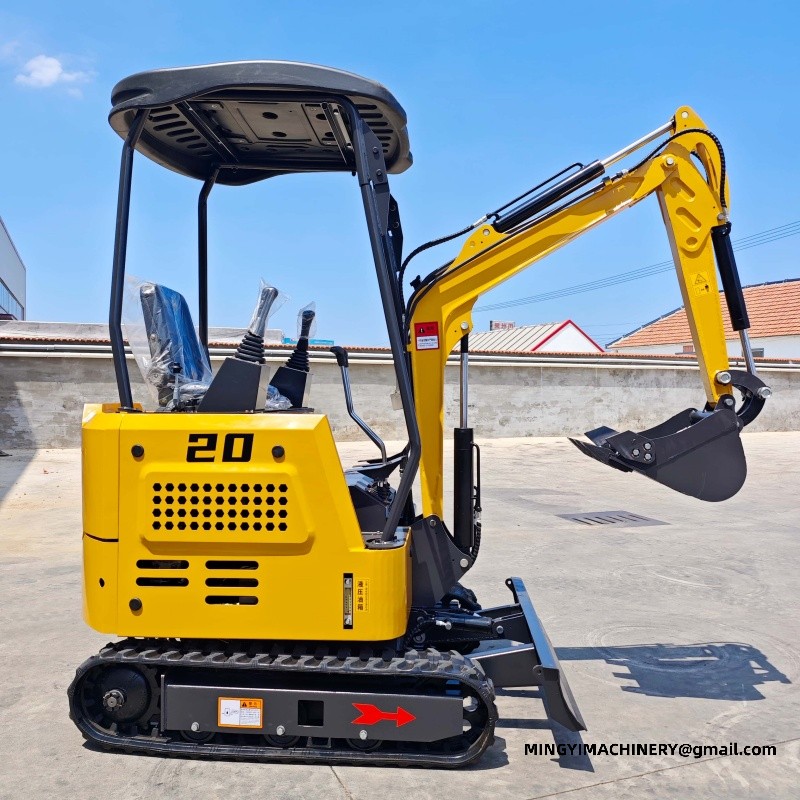
Because access is the defining requirement, buyers should measure the tightest passage the machine must clear and state it during ordering, and the build is matched to it. Rubber tracks are the usual choice for finished floors along the way.
Engine options for the smallest class include the Kubota D902 and Youpu 2V80, chosen with local support in mind, and every decision is recorded on the build sheet. Spare parts and service information ship with each unit.
When the question is whether a machine can reach the work at all, the ultra mini class answers yes. Specify the opening, and the build fits through it.
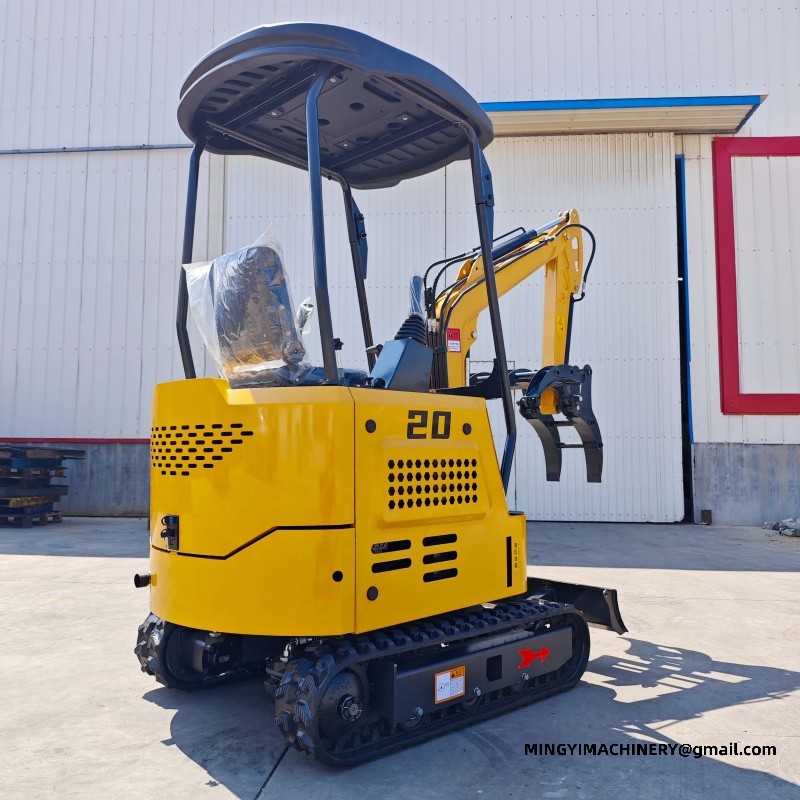
Road and paving work for ultra mini excavator for tight access Patching and reinstatement favour a machine that can work in a lane closure. The excavator occupies less road than a full-size excavator, which reduces the traffic management needed and the length of the closure. Breaking out a failed slab and backfilling the same hole in one visit is normal work for this class of machine. The breaker and the bucket come off the same coupler, so the road is reopened the same day. Attachments that turn ultra mini excavator for tight access into several machines The base machine is a carrier; the tool on the end of the arm decides the task. The unit in daily use fitted with a toothed bucket digs, and the same machine with a breaker, an auger or a grab does work that would otherwise need a second unit on site. Attachment lists are best written before delivery. Specifying a machine of this size with the tools the job list needs avoids the work and delay of adding hydraulics later, and a quick coupler makes the swap a few minutes instead of a workshop job. Specifying ultra mini excavator for tight access against a job list Buyers who skip this step either over-buy or under-buy. The equipment on site specified only from machine size tends to arrive without the coupler, the circuits or the track type the work actually needs. Useful information to send with an enquiry includes working width, required digging depth, ground conditions and the attachment set. Those four items let the factory specify the machine itself that fits rather than a generic build. Landscaping and ground care with ultra mini excavator for tight access Landscape contractors use the model in question for planting holes, pond excavation, grading and retaining work. The machine is light enough to cross finished lawn and narrow enough to work between established trees. Grass cutting heads, rakes and tillers extend the machine in that duty into ground care. The same carrier that digs a border in spring can cut and clear the same area later in the season. Matching ultra mini excavator for tight access to ground conditions Soft ground is a flotation problem, not a power problem. The unit on the job on wide rubber tracks crosses lawn, sand and cultivated soil that would stop a narrower machine or a wheeled unit of the same capacity. Hard and abrasive ground reverses the specification. On rock, demolition rubble or sharp gravel, steel tracks with rubber blocks on a machine built for the work survive conditions that cut a rubber belt quickly. Working a ultra mini excavator for tight access in confined spaces Clearance above matters as much as around. Door heights, pipework and overhead services set the limit for the equipment in service indoors, and measuring them first avoids a machine that arrives and cannot be used. Ventilation is the other indoor constraint. Running the excavator inside a closed structure needs air movement, and that is a planning item rather than something to discover after the first hour. OEM and fleet customisation of this class of machine Customisation also covers the specification sheet. A fleet buyer may want every machine of this size delivered with the same coupler, the same engine and the same tool kit so training and parts stock stay simple. Documentation can be prepared to suit the importer. Manuals, parts books and decal sets for the unit in daily use can be supplied with the buyer's own branding where the order size justifies it. Acceptance checks when the equipment on site arrives Delivery day is the best time to find a problem. Checking the specification against the order, the fluid levels, the fasteners and any transport damage while the model in question is still on the trailer is faster than claiming later. A function check before the machine goes to work is worth the hour. Running through the controls, the travel and the attachment circuit on the machine itself confirms it is set up as specified and ready for the site. Canopy or enclosed cab on the machine in that duty A canopy keeps the machine light and the operator aware of the surroundings, which suits short jobs in warm weather. A fully enclosed cab is specified where rain, dust or cold are part of the working year, and it can be added to the unit on the job as a retrofit rather than only at build time. Enclosure also changes noise and dust exposure. A sealed cab on a machine built for the work keeps dust out on dry sites and lets the machine work through weather that would otherwise stop a canopy machine for the day. Parts, service and support for the equipment in service Support after delivery is a parts question. Wearing items for the excavator - filters, belts, track components, bucket teeth and pins - are the items a buyer should plan to hold before the first service interval. Engine parts availability usually drives the engine choice. This class of machine built with an engine the local network already carries is serviced from stock rather than from an international order. Trailering and moving the unit in daily use Transport weight and width decide whether a machine needs a specialist haulier. A machine of this size sized to travel on a standard plant trailer behind a suitable vehicle moves with the crew rather than on a scheduled low loader. Loading practice matters as much as the numbers. The equipment on site is driven up ramps under its own power with the boom lowered and the tracks aligned, and secured at the points the manufacturer specifies. Specification data for the machine itself Buyers comparing the model in question usually start from four numbers - weight, digging depth, reach and transport width - because those are the ones that decide whether the machine can be delivered and whether it can do the job once it is there. These are the reference figures for the machine in that duty. MINGYI confirms the final build sheet, including engine and attachment choices, against the destination and the job list before production. Purchase decision is the visible part of the effort. Fuel, filters, tracks or tyres, the operator and the transport between sites are the items that decide what the unit on the job actually demands over a few seasons, and they are worth listing before the order. Downtime is the hidden line item. A machine built for the work waiting on a part earns nothing while it stands, so parts availability and service access belong in the plan as much as fuel does.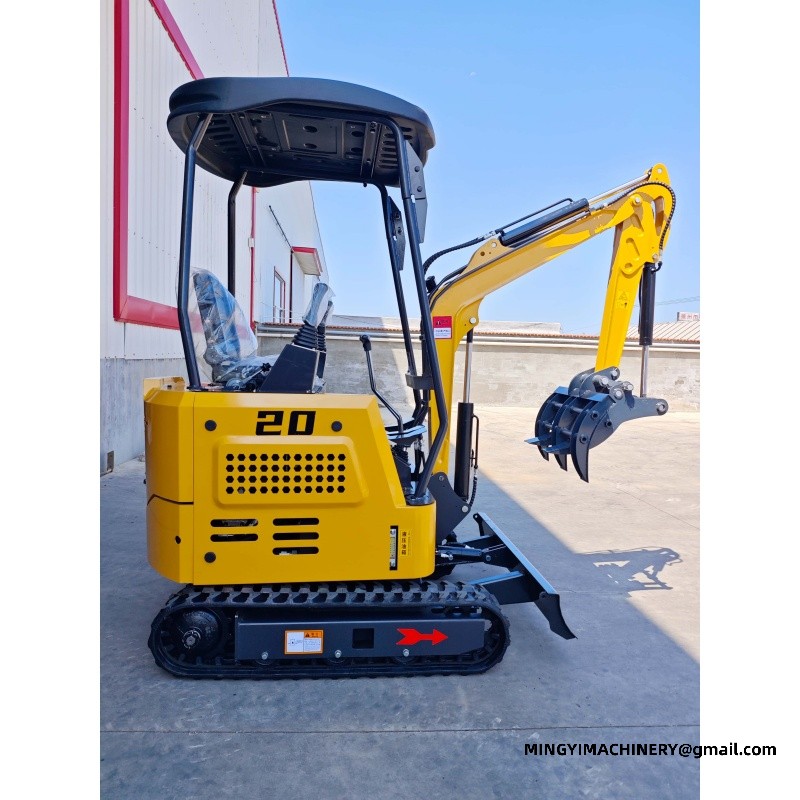
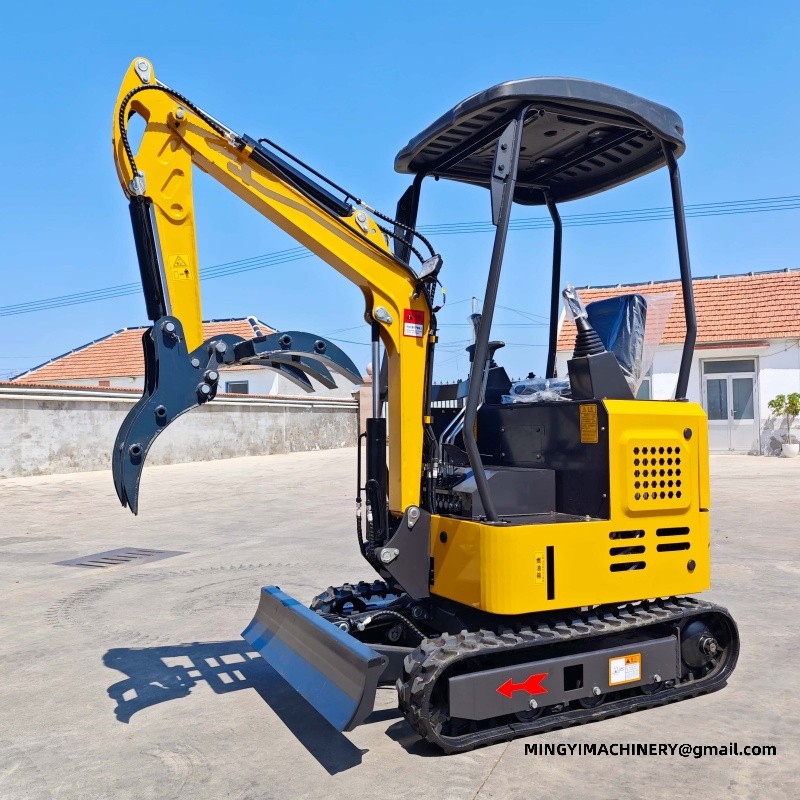
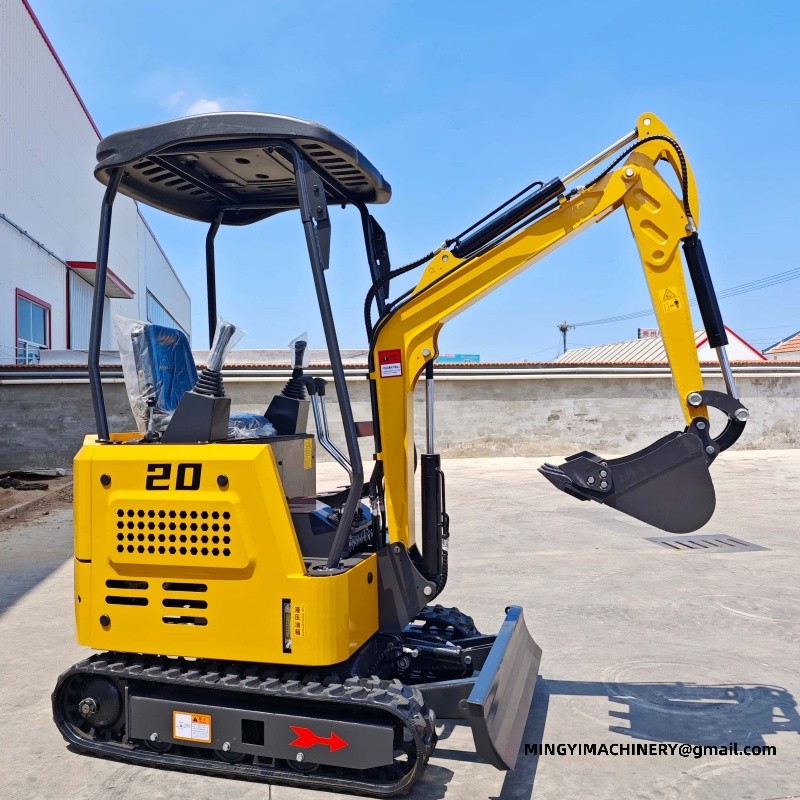
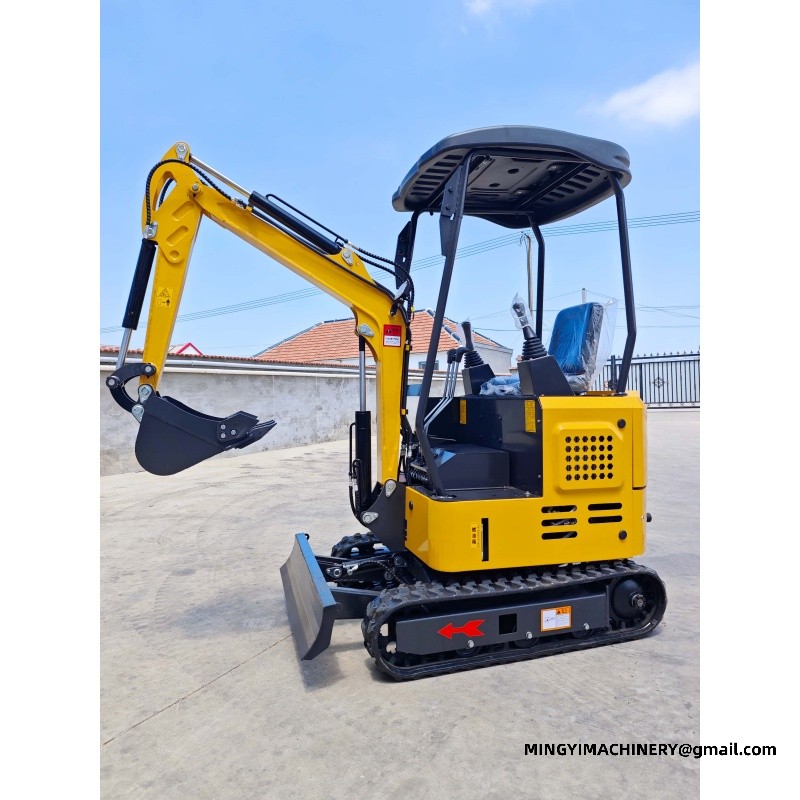
Reference specification — mini excavator range 13W 20-3W 25L 30-2L Operating weight 1300 kg (2866.01 lb) 1900 kg (4188.78 lb) 2200 kg (4850.17 lb) 2400 kg (5291 lb) Transport size (L×W×H) 2200 × 930 × 2250 mm 2550 × 1100 × 2200 mm 3000 × 1300 × 2700 mm 2800 × 1500 × 2500 mm Max digging depth 1630 mm (64.17 in) 1800 mm (70.87 in) 2300 mm (90.55 in) 2200 mm (86.61 in) Max digging height 2750 mm (108.27 in) 2820 mm (111.02 in) 3100 mm (122.05 in) 2900 mm (114.17 in) Max dumping height 1960 mm (77.17 in) 2050 mm (80.71 in) 2050 mm (80.71 in) 2100 mm (82.68 in) Max digging radius 2900 mm (114.17 in) 3050 mm (120.08 in) 3900 mm (153.54 in) 3330 mm (131.1 in) Max digging distance 2100 mm (82.68 in) 2300 mm (90.55 in) 3100 mm (125.05 in) 2700 mm (106.3 in) Minimum turning radius 1300 mm (51.18 in) 1450 mm (57.09 in) 1800 mm (70.87 in) 1555 mm (61.22 in) Travel speed 3 km/h (1.86 mph) 5 km/h (3.11 mph) 7 km/h (4.35 mph) 7 km/h (4.35 mph) Gradeability 30° 30° 30° 30° Fuel consumption 1-1.3 L/h (0.264—0.343 gal) 2-3 L/h (0.528—0.793 gal) 2-3 L/h (0.528—0.793 gal) 2-3 L/h (0.528—0.793 gal) Fuel tank capacity 10 L (2.64 gal) 16 L (4.23 gal) 16 L (4.23 gal) 16 L (4.23 gal) Hydraulic oil tank 16 L (4.23 gal) 18 L (4.76 gal) 18 L (4.76 gal) 18 L (4.76 gal) Dozer blade lift height 180 mm (7.09 in) 180 mm (7.09 in) 230 mm (9.06 in) 230 mm (9.06 in) Dozer blade drop depth 210 mm (8.27 in) 210 mm (8.27 in) 280 mm (11.02 in) 280 mm (11.02 in)
Q. Who chooses the equipment in service?
A. Zero tail swing, retractable frames and short-radius booms exist for one reason: to put a real digging machine through a gap and let it work at full rate on the other side. Inside a basement or behind a boundary the machine digs footings, breaks floors and grades the sub-base at rates hand work cannot touch. For tight access applications the practical route is to send the job list to the factory and let the build sheet answer it - which is exactly what this page invites.
Q. How does the machine get through a narrow opening?
A. Retractable or variable-width frames narrow for the passage then widen for stability, and zero tail swing keeps the counterweight inside the track line. Measure the gap first, then match the class - the smallest machines pass where a wheelbarrow would struggle.
Q. Does MINGYI supply attachments with the machine?
A. Yes - buckets, breakers, augers, rakes and the rest of the working set ship with the carrier, matched to the hydraulic flow and the coupler. For tight access the package is confirmed on the build sheet, so machine and tools arrive together and start work together.
Cold weather and winter care for the excavator
A cold start is easier when the machine is prepared the night before. The routine that keeps this class of machine working through winter is mostly a matter of fuel, battery and patience in the first ten minutes of the day.
Planning the season around the unit in daily use
The calendar decides more than the specification does. Planning when a machine of this size will be working, when it will be serviced and when it can be spared keeps the maintenance out of the weeks that matter.
E-mail : sales@mingycn.com
LINE ( ID ): mingyicn
Electrical system and battery care on ultra mini excavator for tight access
Jump starting is a recovery rather than a repair, and the reason for the flat battery is worth finding the same day.
Additional wiring for work lamps, beacons or a radio should be fused and routed away from hot and moving parts.
Connector seals and dielectric grease on exposed plugs keep moisture out through a wet season.
Related pages
micro mini excavator · mini excavator export from china · Wheel Loader Manufacturer: What the Factory Should Publish · Mini Excavators









