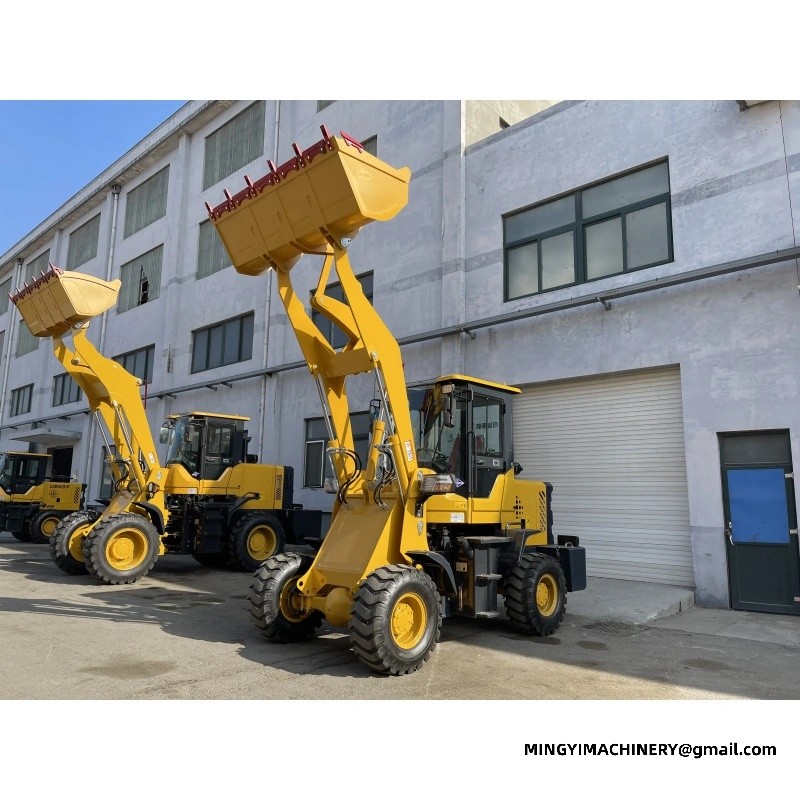
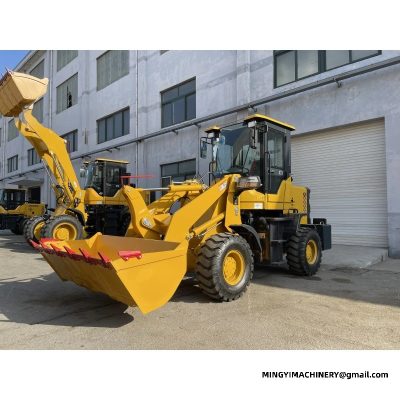
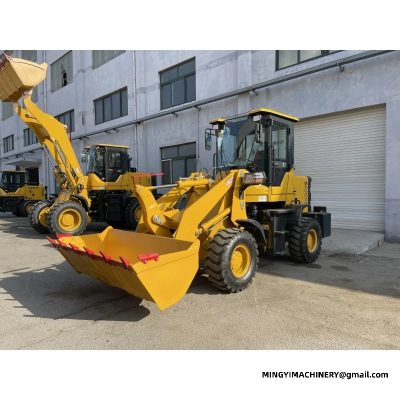
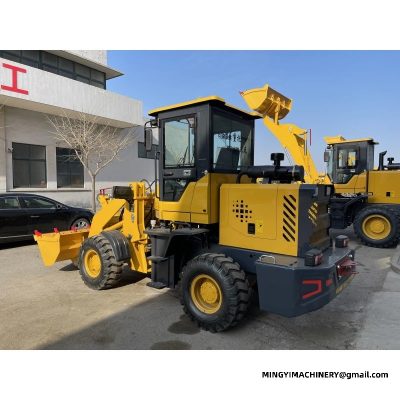
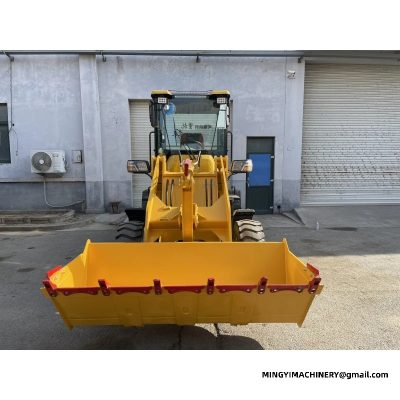
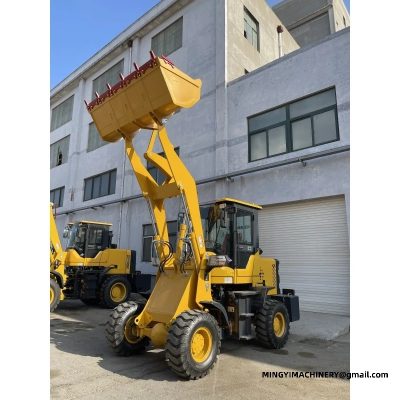
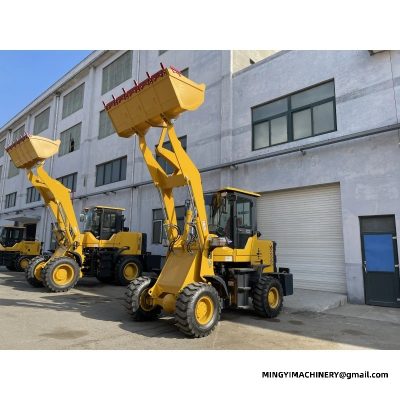
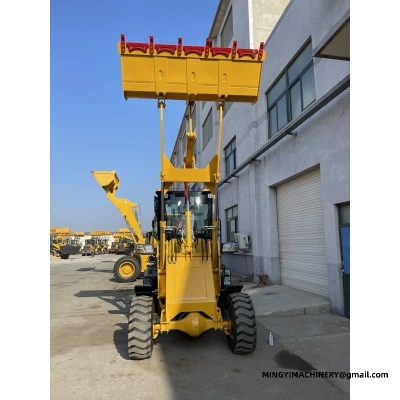
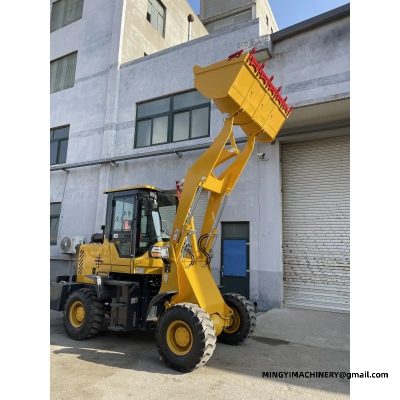
There are two ways to buy a small wheel loader: from the brochure, or from the numbers that decide whether it works. This page is the second. Bucket 0.38 m³ to 0.4 m³. Dump height 4.2 m to 4.5 m. Boom 3.15 m long, 370 mm wide and 25 mm thick on the lighter build; 3.15 m, 500 mm and 25 mm on the heavier one. Cylinders centre cylinder 45 / side cylinder 40 against centre cylinder 45 / side cylinder 45, pumps 40 pump (490 engine); 1045 pump (4102 turbo engine) against 40 pump (490 engine); 1045 pump (4102 turbo engine), radiators 4100 core (490 engine); 4105 core (4102T engine) against 4100 core (490 engine); 4105 core (4102T engine). Each figure is explained below in terms of what it does on site.
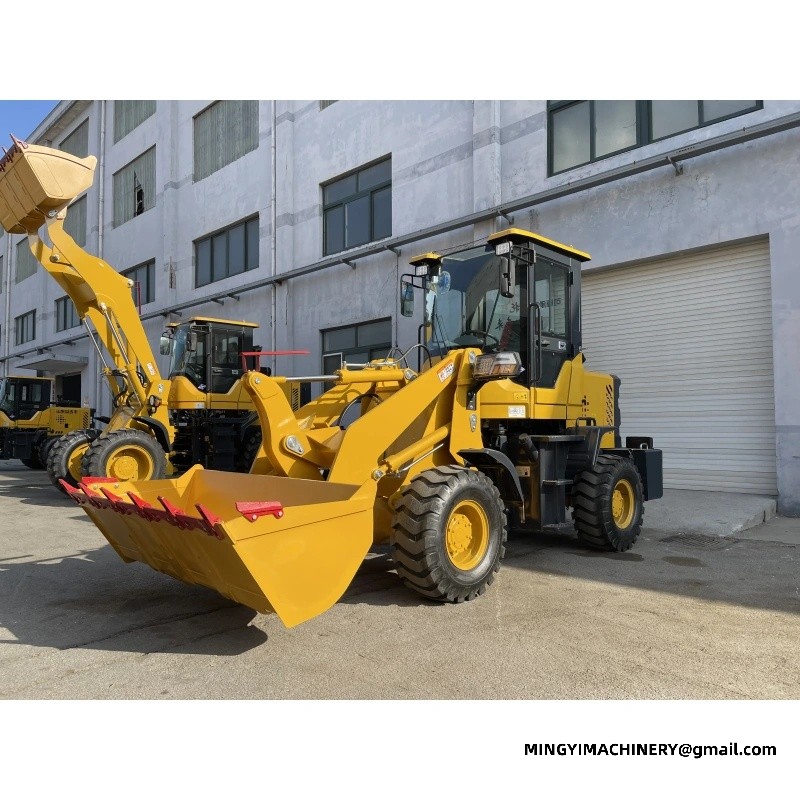
The useful way to read a range is as three decisions: how high, how heavy, and how wide. How high is dump height, 4.2 m against 4.5 m. How heavy is the steel, cross-member 45 mm against 45 mm and rear frame 300 mm high x 800 mm wide against 300 mm high x 800 mm wide. How wide is track, 1.6 m against 1.6 m.
Once those three are settled, the bucket follows from the material and the boom from the height: 0.65 m³ on a 3.16 m arm here, 0.65 m³ on 3.35 m there. Reading it in that order means the specification is decided by the work rather than by whichever machine happened to be in stock.
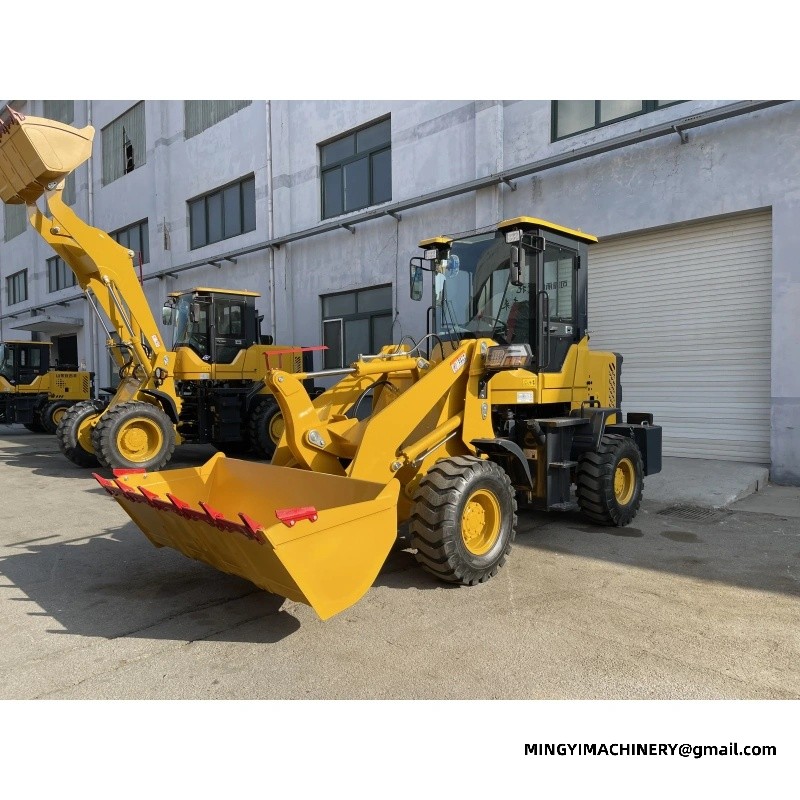
Cooling capacity is sized to the engine's heat rejection, so it appears in the table as a specification rather than a choice: 4100 core (490 engine); 4105 core (4102T engine) on the light-duty 4.2 m small-frame wheel-side reduction wheel loader, 4105 core on the heavy-duty 3.5 m medium-frame wheel-side reduction wheel loader. Where the build offers two engines — the 490 with a 4100 core, the 4102 turbo with a 4105 raised core — the raised core is the one for hot climates, high altitude and any site where fine material hangs in the air.
Practical advice that takes nothing: blow the core out at the end of every shift in dusty work, in the reverse direction to airflow, and check the cap seat before blaming the radiator. On the light-duty 4.2 m small-frame wheel-side reduction wheel loader the 4100 core (490 engine); 4105 core (4102T engine) core sits behind a 280 mm high x 800 mm wide rear frame with limited airflow at low engine speed; on the heavy-duty 3.5 m medium-frame wheel-side reduction wheel loader the 4105 core core is served by the same 25 pump driven circuit. Neither is difficult to keep clean, and both will lose a season to neglect.
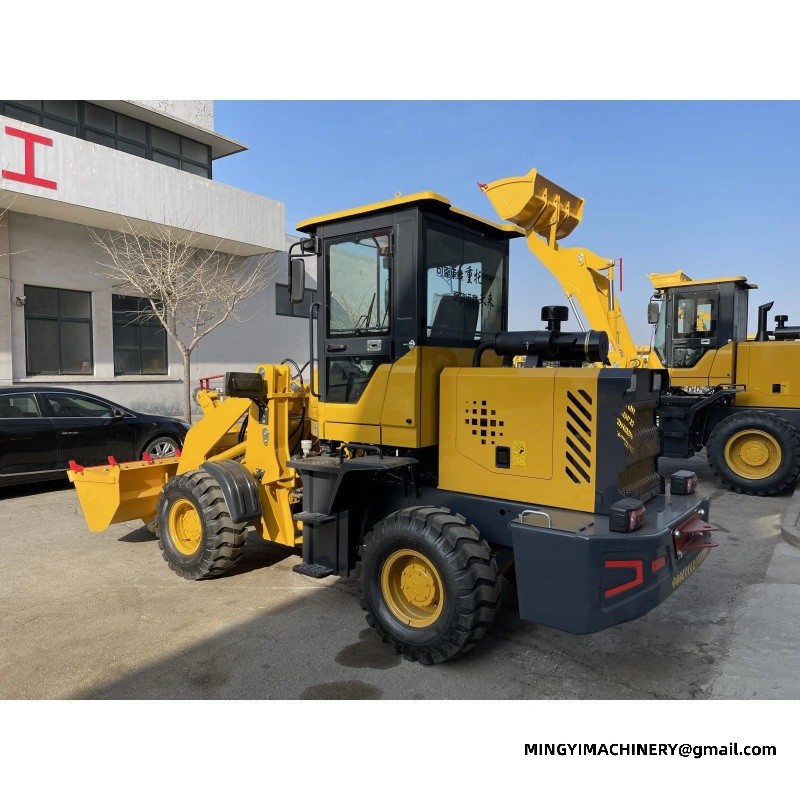
Frames do not usually fail at the boom. They fail at the hinge plates and the cross-member that ties them together, because that is where the articulated joint concentrates every steering and breakout load. On the heavy-duty 4.5 m small-frame wheel-side reduction wheel loader those figures are 30 mm front, 20 mm rear and 30 mm across; on the heavy-duty 4.5 m medium-frame wheel-side reduction wheel loader they are 45 mm, 30 mm and 45 mm. The rear frame sections are 280 mm high x 800 mm wide and 300 mm high x 800 mm wide.
Why the rear plate is the one to watch even though it is the thinner of the two: the front hinge sees the boom loads, which are predictable and largely vertical; the rear sees articulation loads, which are sideways, repeated and often shock-loaded when an operator turns while breaking out. A machine specified with a 30 mm rear plate and a 45 mm cross-member will still be tight at year three in reverse-loading cycles where a 20 mm plate has started to ovalise its pin bores. If your fleet keeps machines past warranty, this is the row of the table to read twice.
| Sample build from the range — standard 2.8 m low-profile wheel loader | |
|---|---|
| Bucket capacity | 0.3 m³ |
| Dump height | 2.8 m |
| Track width | 1.2 m (Isuzu axle); 1.3 m (wheel-side reduction axle) |
| Boom arm thickness | 20 mm |
| Boom arm width | 300 mm |
| Boom arm length | 2.05 m |
| Boom arm centre distance | 680 mm |
| Cross-member thickness | 16 mm |
| Front hinge plate thickness | 16 mm |
| Rear hinge plate thickness | 16 mm |
| Rear frame section | 200 mm high x 750 mm wide |
| Hydraulic cylinders | centre cylinder 45 / side cylinder 40 |
| Fuel tank | 30.8 L (48# large tank, 20.5/70-16 tyres); 24.6 L (48# small tank, 8.25-16 tyres) |
| Battery | 45 Ah (24 V) |
| Front wheel to counterweight | 3.5 m |
| Radiator | 4100 core |
| Work pump | 32 pump |
| Travel pump | 316 pump |
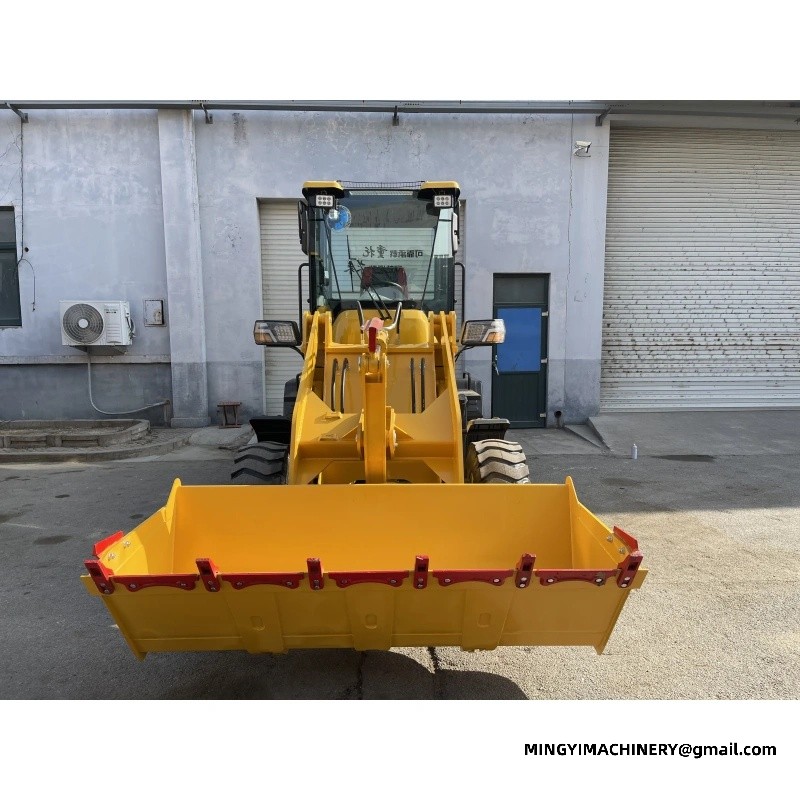
Operators describe a good machine as tight and a tired one as loose, and they are describing the hinge pins. New, the geometry is set by the plates: 45 mm forward, 30 mm aft. After a few thousand hours the geometry is set by how much those plates have allowed the pins to move, which is a function of thickness and of the 45 mm cross-member behind them.
This is why the figures are worth asking for rather than assuming. On the heavy-duty 4.5 m medium-frame wheel-side reduction wheel loader the same two numbers are 45 mm and 30 mm. A machine that will spend its life on short cycles — many steering inputs per hour — should be bought on these figures rather than on bucket capacity, because capacity is simple to add and hinge life is not.
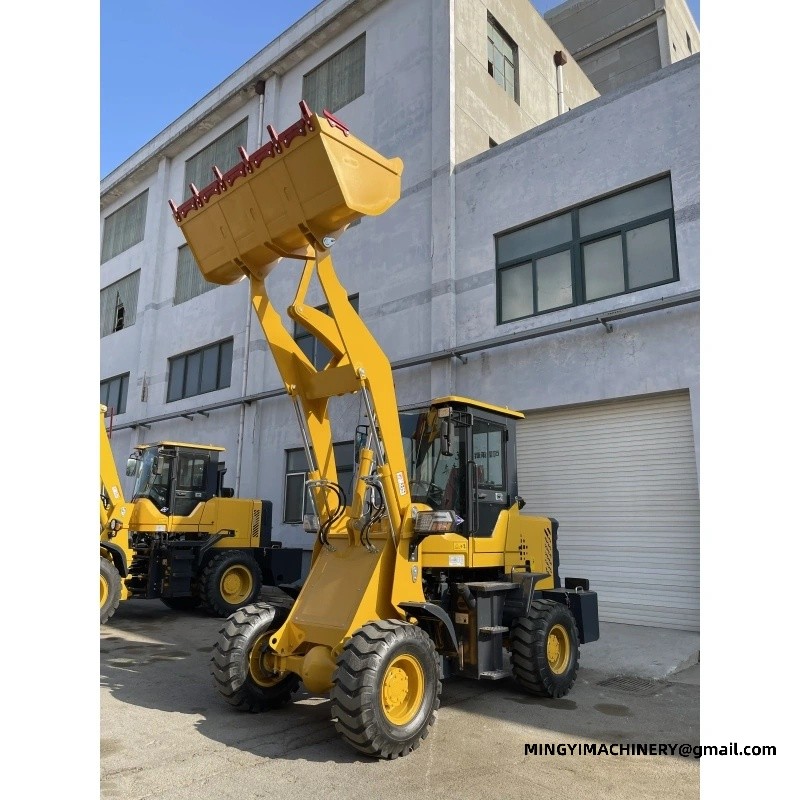
Fleet effort is driven by the size of the spares bin, and that is decided at purchase. Machines sharing an engine share a pump, 2063 pump, a radiator, 4105 core, and a battery rating, 80 Ah. Machines sharing a frame share cylinder sizes, centre cylinder 60 / side cylinder 50, and hinge geometry. Buy within one frame family and the bin halves.
The figures to compare are the ones that differ: bucket 0.65 m³ against 0.65 m³, dump height 3.5 m against 3.8 m, track 1.6 m against 1.6 m. Where those differ, the wearing parts behind them usually differ too. Where they match, one part number covers both machines.
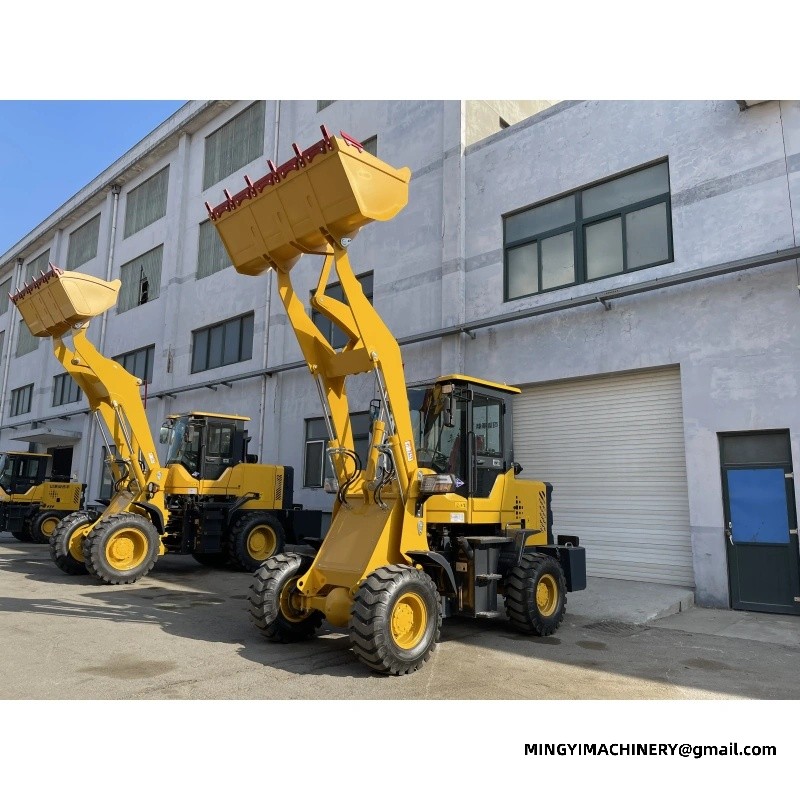
Model names are marketing; build codes are what the shop floor works from. Two machines with the same name can leave the factory with different hinge steel, and the difference is invisible until something wears. On this range the differences are published: 30 mm of cross-member against 45 mm, 30 mm of front hinge plate against 45 mm.
Specify the machine the way you would specify a pump: by the numbers. Bucket 0.4 m³, dump height 3.2 m, cylinders centre cylinder 45 / side cylinder 45, track 1.5 m (wheel-side reduction axle); 1.45 m (Isuzu axle). Write those into the order and the confirmation, and the machine that arrives is the machine you compared. Anything else relies on a name meaning the same thing to two people.
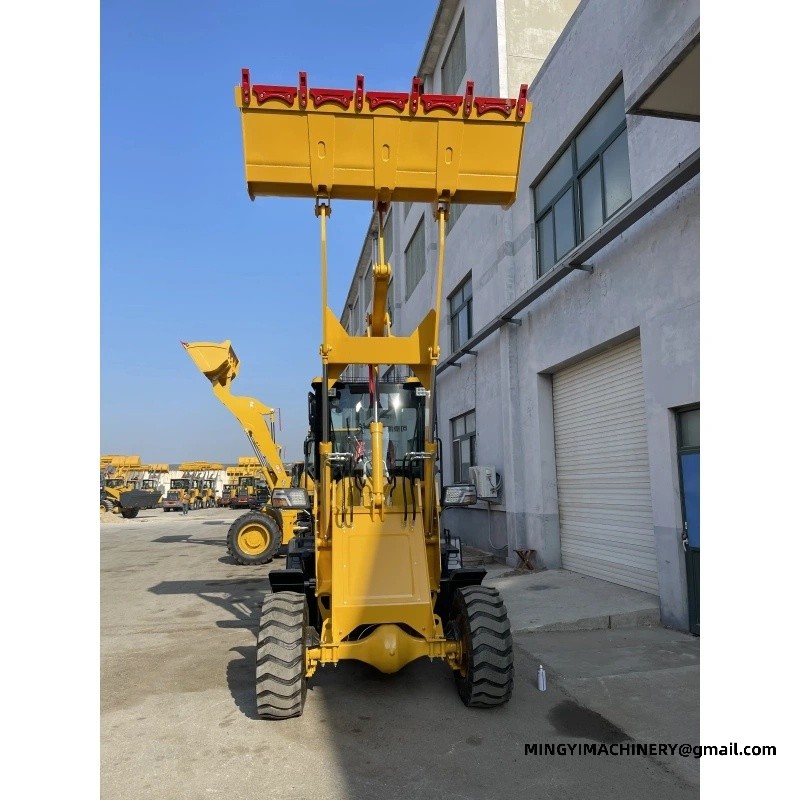
Articulated steering lets a loader turn inside its footprint, and every one of those turns is carried by two plates. Front hinge 16 mm, rear hinge 16 mm. The rear is the heavier because it carries the counterweight and the whole rear frame through every steering input.
Short wheelbase machines articulate harder and more often, which is why plate thickness matters more on a compact build, not less. At 3.5 m front wheel to counterweight and 1.2 m (Isuzu axle); 1.3 m (wheel-side reduction axle) of track, this machine will spend its life turning in tight spaces; a 16 mm cross-member is what keeps those plates in line while it does.
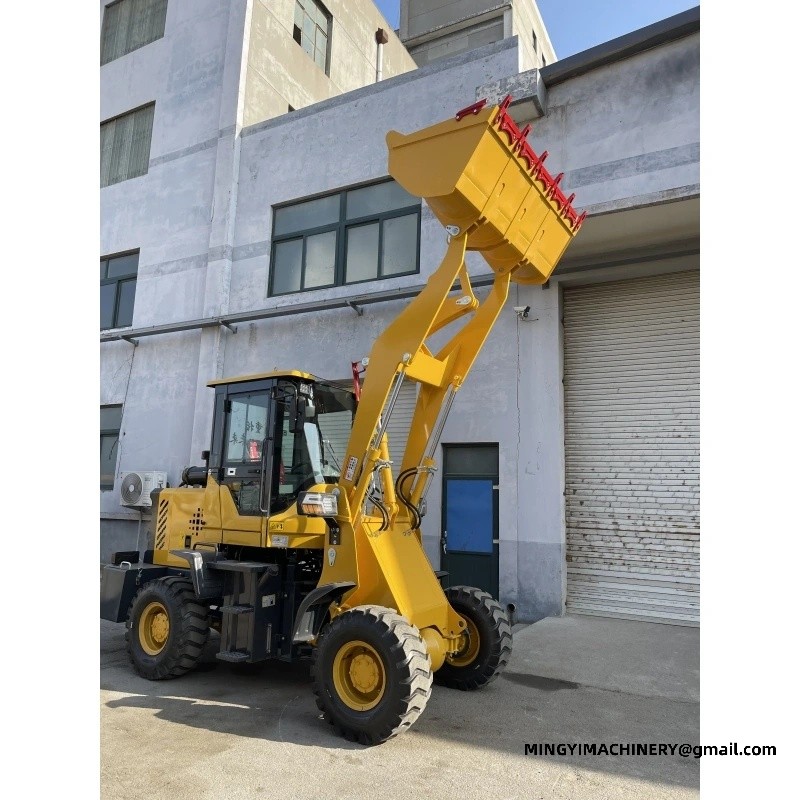
A starter spares box for the heavy-duty 3.2 m low-profile wheel loader is short: filters to match the 4100 core (490 engine); 4105 core (4102T engine) cooling package and the engine, a hose set for the centre cylinder 45 / side cylinder 45 cylinders, a pin and bush kit for the 890 mm boom mounts, and a cutting edge. On the heavy-duty 4.5 m small-frame wheel-side reduction wheel loader the same list applies with centre cylinder 45 / side cylinder 45, 890 mm and the 4100 core (490 engine); 4105 core (4102T engine) package.
Beyond that, stock by consequence. A failed hose stops the machine for a day; a failed pump stops it for a week; a failed hinge plate stops it for a season. Filters and hoses are simple and universal enough to keep on site. Pumps — 40 pump (490 engine); 1045 pump (4102 turbo engine) and 316 pump on the heavy-duty 3.2 m low-profile wheel loader, 40 pump (490 engine); 1045 pump (4102 turbo engine) and 316 pump on the heavy-duty 4.5 m small-frame wheel-side reduction wheel loader — are worth one spare per fleet, not per machine.
Can a small wheel loader take a quick coupler?
Yes, if the coupler is built for the boom section and centre distance — 370 mm wide on 890 mm spacing for the light-duty 4.2 m small-frame wheel-side reduction wheel loader.
How is a small wheel loader prepared for export?
Knock-down: booms and counterweights packed loose, tanks removed, batteries boxed and disconnected. Rear frame sections stay between 280 mm high x 800 mm wide and 300 mm high x 800 mm wide.
What is the fuel tank capacity of a small wheel loader?
64.7 L (75# small tank) on the heavy-duty 4.5 m small-frame wheel-side reduction wheel loader and 70 L (75# large tank) on the heavy-duty 3.8 m medium-frame wheel-side reduction wheel loader, both sized for a full shift at working throttle without a mid-day refuel.
What does a small wheel loader need to run a grapple?
A grapple sized to the 300 mm boom section and a hydraulic third circuit. The 32 pump work pump is specified per build, so order the circuit with the machine.
How much reach does the boom of a small wheel loader give?
Boom length is 3.15 m on the light-duty 4.2 m small-frame wheel-side reduction wheel loader and 2.3 m on the heavy-duty 3.2 m low-profile wheel loader. Length buys reach and takes stability, so match it to the height you actually have to clear.
What is the smallest small wheel loader in the range?
The entry low-profile builds: a 0.4 m³ bucket at 3.2 m, 1.5 m (wheel-side reduction axle); 1.45 m (Isuzu axle) track and a 4.1 m front-to-counterweight length for indoor and nursery work.
Where is the extra steel in a heavier small wheel loader?
Boom wall 25 mm against 30 mm, front hinge 30 mm against 45 mm, rear hinge 20 mm against 30 mm, cross-member 30 mm against 45 mm.
Models, options and container plans are stated per order against the actual mix. Send the application, the material and the receiving body height, and we will specify the small wheel loader — axle, radiator, bucket and third circuit — in one pass.
Fuel, oil and fluid quality for Small Wheel Loader: Where the Compact Builds Earn Their Keep
Most engine trouble starts with what went into the tank. Clean fuel, stored properly and filtered before it reaches Small Wheel Loader: Where the Compact Builds Earn Their Keep, prevents more downtime than any other single habit an owner can adopt.
Documents that travel with Small Wheel Loader: Where the Compact Builds Earn Their Keep
The machine is only half of what arrives. The parts book, the service schedule and the declarations that come with Small Wheel Loader: Where the Compact Builds Earn Their Keep are what let the owner register, insure and maintain it without a second round of emails.
Reading the early symptoms on Small Wheel Loader: Where the Compact Builds Earn Their Keep
Machines rarely fail without warning. A change in sound, a slower function or a new leak on Small Wheel Loader: Where the Compact Builds Earn Their Keep is the machine saying something early, and listening then takes a fraction of the time that waiting does.
Pre-delivery inspection before Small Wheel Loader: Where the Compact Builds Earn Their Keep leaves the shop
What the customer sees on arrival is decided before departure. The walk-around given to Small Wheel Loader: Where the Compact Builds Earn Their Keep covers the same points the operator will check on day one, so there are no surprises when the crate is opened at the destination.
Contact MINGYI Machinery for the current wheel loader lineup, configuration options and a formal specification for your market. E-mail: sales@mingycn.com | LINE (ID): mingyicn
Wheel Loader for Sale: How to Read a Specification Before You Sign · Wheel Loader Manufacturer: What the Factory Should Publish · OEM Wheel Loader Manufacturer: Repeating a Build Exactly · Loaders









