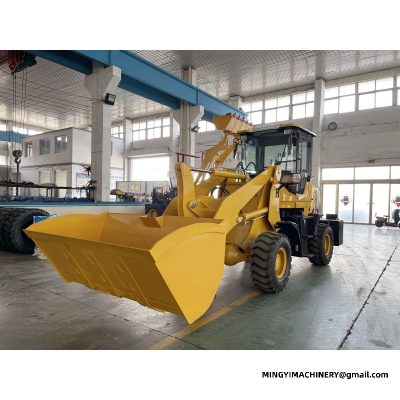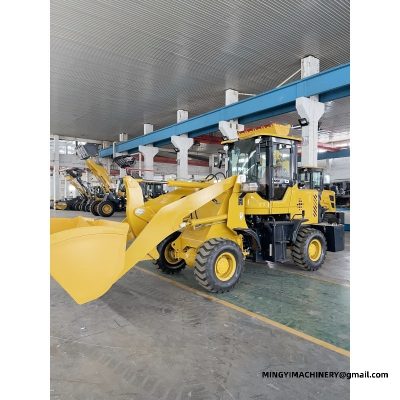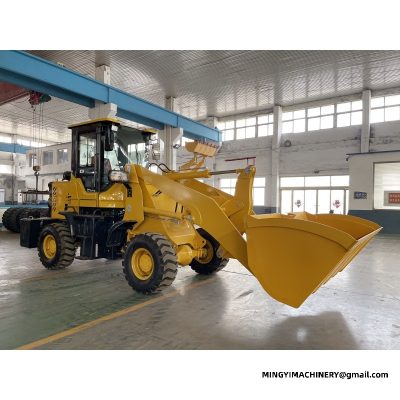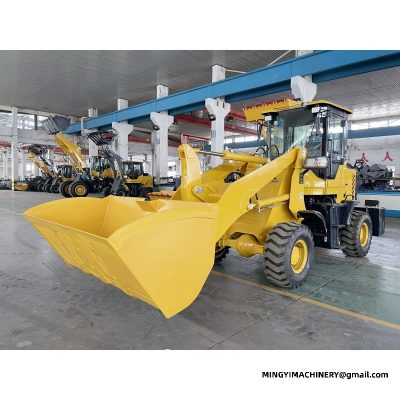
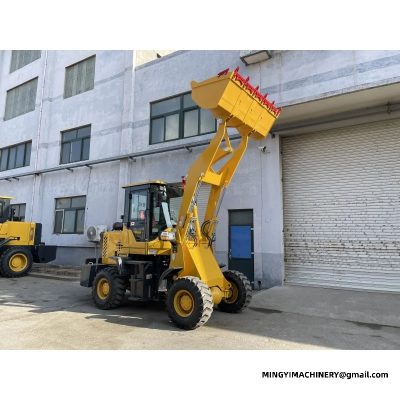
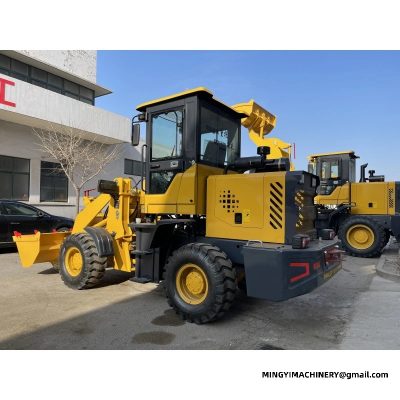
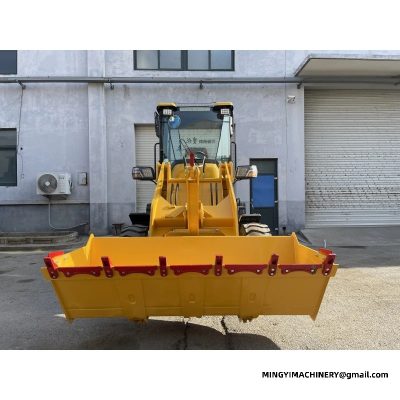
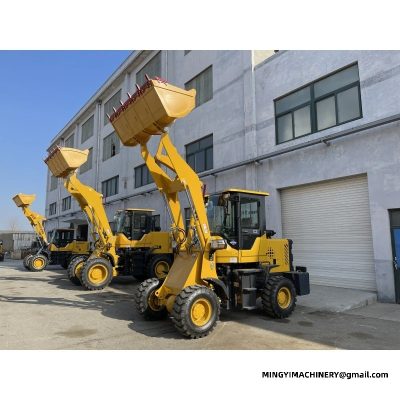
Every wheel loader for sale enquiry comes down to three numbers: how much the bucket holds, how high it dumps, and how much steel sits behind the hinge. The rest of a specification sheet is consequence. On this range the first two run from 0.52 m³ on the light-duty 3.8 m medium-frame wheel-side reduction wheel loader to 0.52 m³ on the light-duty 4.2 m medium-frame wheel-side reduction wheel loader, and the third is published per build — 45 mm front and 30 mm rear hinge plates over a 45 mm cross-member. This page sets out how those figures are chosen, what they predict about behaviour on site, and where each build in the range fits.
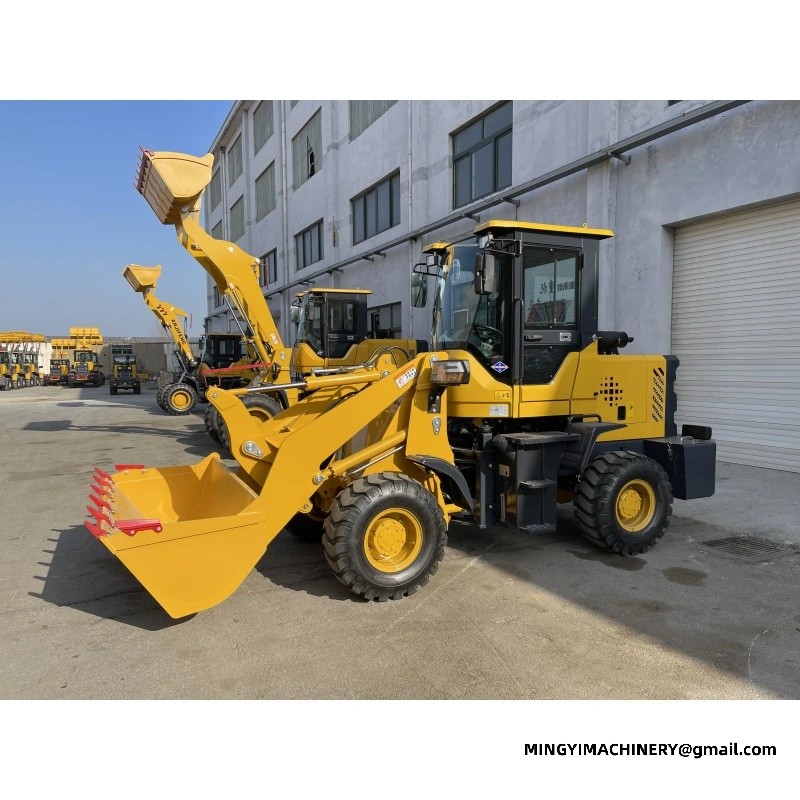
Attachments are specified against the carrier, not against the machine's size class. The figures that matter are the boom section and the hinge geometry: 370 mm on the light-duty 3.2 m low-profile wheel loader against 430 mm on the light-duty 3.8 m medium-frame wheel-side reduction wheel loader, and centre distance 890 mm against 900 mm. Two loaders of the same rated capacity from different frame families will not share a fork frame.
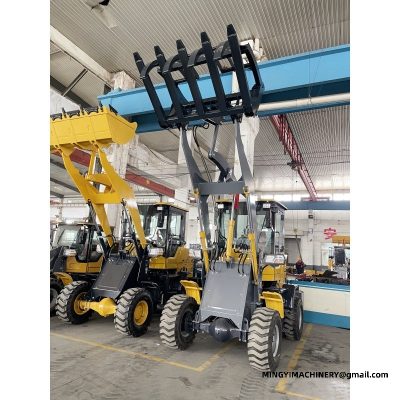
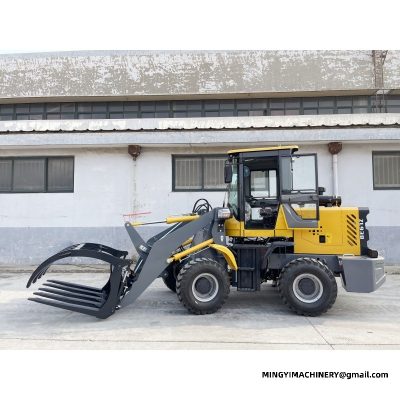
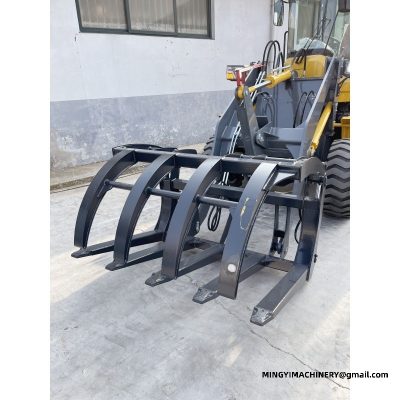
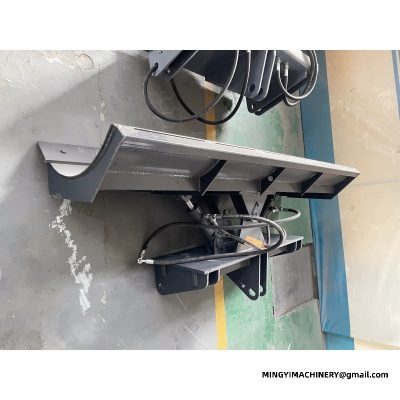
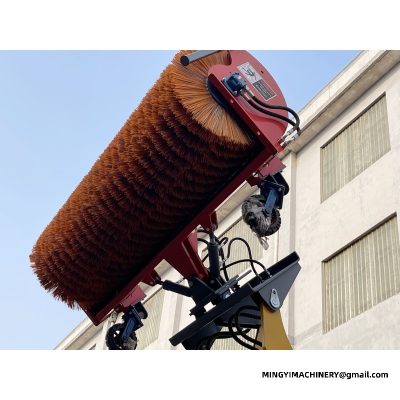
Within one frame family the section and spacing match, so a single tool set covers the light and heavy builds of that frame — a genuine advantage for a mixed fleet. Across families it does not work. If you intend to run hydraulically actuated tools, a grapple, a four-in-one bucket or a hydraulic snow blade, order the third circuit at build time; the 40 pump (490 engine); 1045 pump (4102 turbo engine) and 2063 pump circuits are specified per build and plumbing added later is the most common source of field leaks.
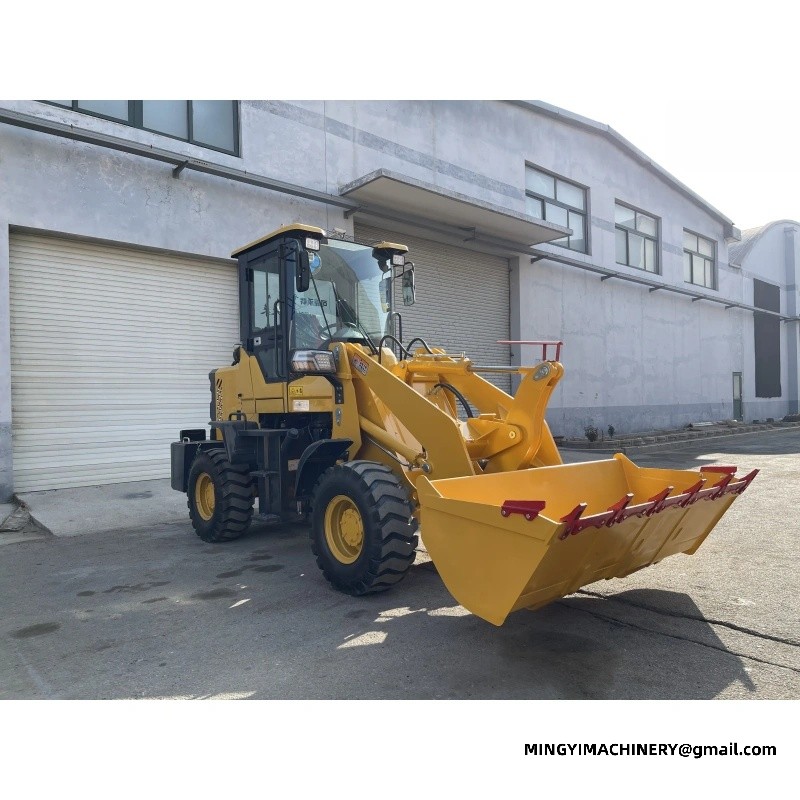
Airborne dust is the hardest thing a cooling system has to deal with, because it blocks the fin passages from the outside while the engine keeps producing heat. Core size is the buffer: 4105 core here against 4105 core on the light-duty 4.5 m medium-frame wheel-side reduction wheel loader. Screen area and access for cleaning matter as much as volume, so ask how the core is mounted before asking how big it is.
Work pumps generate heat too, not only the engine. This build runs 2063 pump alongside 25 pump, and sustained hydraulic work in a hot climate adds load that the radiator was not sized for on a temperate machine. Where the duty is continuous rather than intermittent — a stockpile that never stops rather than a site that loads three trucks an hour — specify the larger core even if the engine is the same.
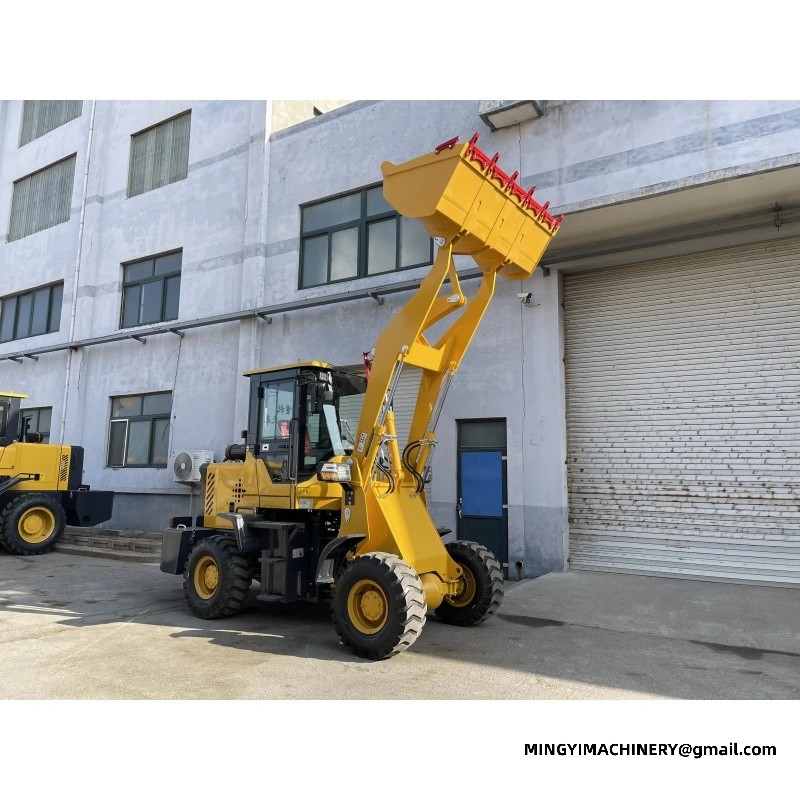
The battery is specified against the engine it has to crank: 80 Ah on the light-duty 3.8 m medium-frame wheel-side reduction wheel loader and 80 Ah on the light-duty 4.2 m medium-frame wheel-side reduction wheel loader. Where a build lists two figures, they belong to two engine options — a smaller capacity for the naturally aspirated unit, a larger one for the turbo — and the difference is starting torque in cold weather rather than anything you would notice in July.
For fleets shipping to cold markets, specify the larger capacity and a battery isolator; machines shipped knock-down arrive with batteries boxed and disconnected, and a machine that has sat for six weeks at anchor will not crank on a marginal battery. Check the rest of the electrical package at the same time — the 2063 pump and 25 pump circuits on the light-duty 3.8 m medium-frame wheel-side reduction wheel loader share the same harness, and a poor earth there presents as slow hydraulics rather than as an electrical fault.
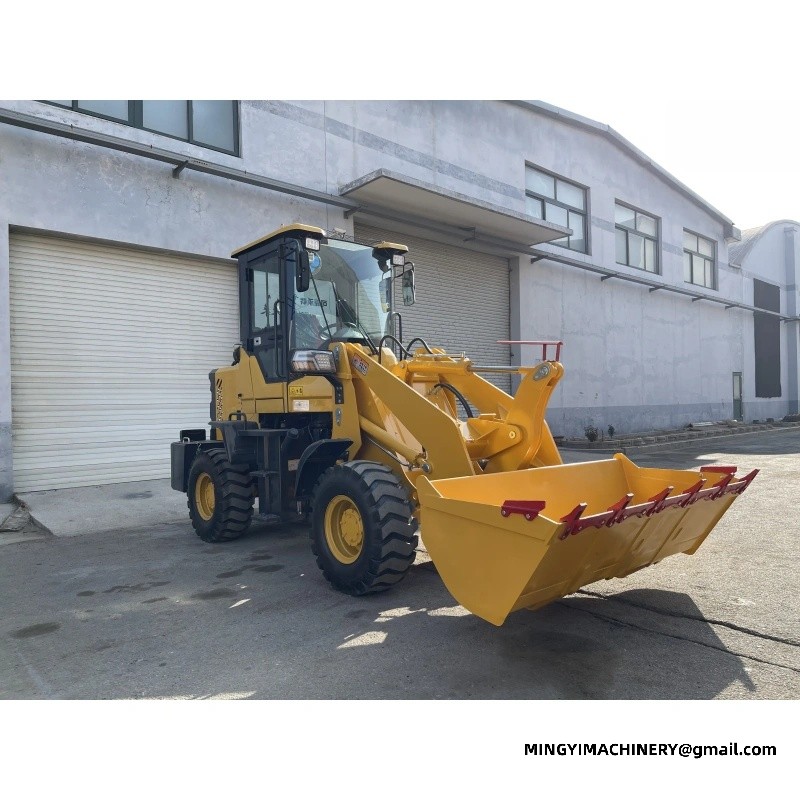
| Reference specification — light-duty 3.8 m medium-frame wheel-side reduction wheel loader | |
|---|---|
| Bucket capacity | 0.52 m³ |
| Dump height | 3.8 m |
| Track width | 1.6 m |
| Boom arm thickness | 30 mm |
| Boom arm width | 430 mm |
| Boom arm length | 2.9 m |
| Boom arm centre distance | 900 mm |
| Cross-member thickness | 45 mm |
| Front hinge plate thickness | 45 mm |
| Rear hinge plate thickness | 30 mm |
| Rear frame section | 280 mm high x 800 mm wide |
| Hydraulic cylinders | centre cylinder 60 / side cylinder 50 |
| Fuel tank | 70 L (75# large tank) |
| Battery | 80 Ah |
| Front wheel to counterweight | 4.3 m |
| Radiator | 4105 core |
| Work pump | 2063 pump |
| Travel pump | 25 pump |
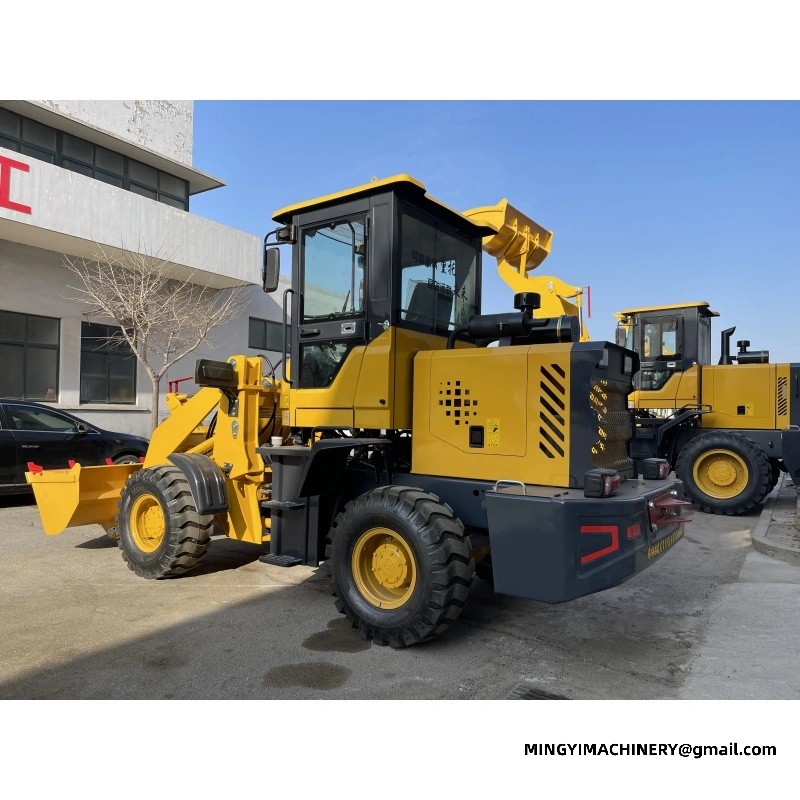
Purchase decision is the smallest of the three numbers that matter; the other two are downtime and residual value, and both are decided by the frame. A machine built with 16 mm rear hinge plates and a 16 mm cross-member, as on the standard 2.4 m low-profile wheel loader, will be tight at year three in light duty. A machine with 14 mm and 25 mm, as on the light-duty 3.2 m small-frame wheel-side reduction wheel loader, will still be tight in heavy duty.
Fuel, tyres and filters are the predictable takes, and they scale with duty rather than with capacity. A 0.3 m³ bucket working a short cycle on a 30.8 L (48# large tank, 20.5/70-16 tyres); 24.6 L (48# small tank, 8.25-16 tyres) tank takes less per day than a 0.38 m³ bucket on 64.7 L (75# small tank) working a long one — and moves less material. The honest comparison is effort per tonne moved, which needs your cycle, not a brochure.
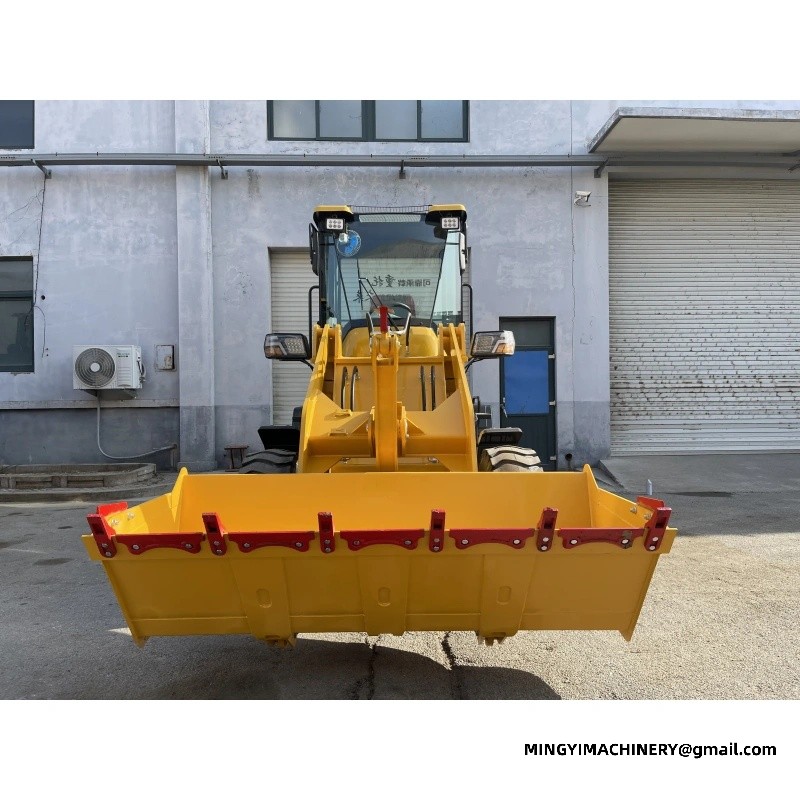
Fuel is visible and downtime is not, which is why fleets optimise the wrong one. A machine with a 30.8 L (48# large tank, 20.5/70-16 tyres); 24.6 L (48# small tank, 8.25-16 tyres) tank works a full shift without a refuel stop; that is worth a fraction of what a single day lost to a failed pump takes, and the pump is identified on the sheet as 32 pump.
The parts worth specifying against downtime are the ones that cannot be improvised: the battery rating, 45 Ah (24 V), the radiator, 4100 core, and the cylinders, centre cylinder 40 / side cylinder 40. All three are simple at build and lengthy in a field, and all three are listed. Read them as an availability decision rather than as a comfort one.
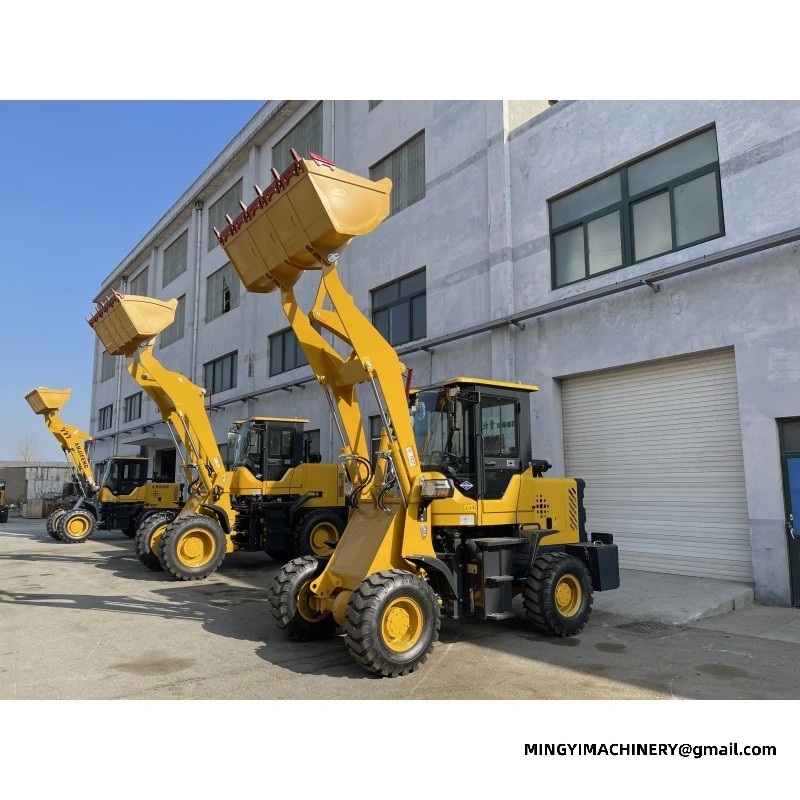
Parts are matched to a build, and the build is identified by its hydraulics and its engine long before its name. Specification centre cylinder 45 / side cylinder 40 and 40 pump (490 engine); 1045 pump (4102 turbo engine) and the pump is identified; specification 4100 core (490 engine); 4105 core (4102T engine) and the engine is identified; specification 60 Ah (490 engine); 80 Ah (4102 turbo engine) and the electrical specification is identified.
Frame parts are identified by the steel: 25 mm front plate, 14 mm rear plate, 25 mm cross-member, 280 mm high x 800 mm wide rear section. Sending those four with an enquiry removes the usual round of photographs and gets the right part on the first shipment.
A machine that wanders on the road and feels vague in the turn has worn hinge pins. The plates are 25 mm front and 14 mm rear over a 25 mm cross-member; when the pin bores ovalise, the geometry the frame was built to hold is gone, and no amount of steering adjustment brings it back.
Check it by loading the bucket, holding the machine on a slope and watching the joint while an operator rocks the steering. Movement there is wear; movement at the rear, over the 280 mm high x 800 mm wide section, is a different and more serious problem. Catching the first case takes a set of pins; missing it takes a frame.
A loader standing idle while a truck reverses is the most common waste on a site, and it is usually a layout problem rather than a machine problem. What the machine contributes is turn radius and visibility, and both come out of the dimensions: 3.8 m from front wheel to counterweight, 1.5 m (wheel-side reduction axle); 1.45 m (Isuzu axle) of track, and a rear frame section of 280 mm high x 800 mm wide. A shorter machine turns inside its own length and works a tighter bay.
The other half is dump geometry. With 3.2 m of clearance and a 2.3 m arm, the light-duty 3.2 m small-frame wheel-side reduction wheel loader can stand back from the body and still place material where the driver wants it, which is safer than crowding the board. The light-duty 3.8 m small-frame wheel-side reduction wheel loader reaches 3.8 m with a 2.61 m arm; on a narrow bay the shorter of the two may be the faster machine even if it holds less.
Can a wheel loader for sale be built with a non-standard bucket?
Yes, provided the volume suits the frame: the 0.38 m³ bucket on the light-duty 3.5 m small-frame wheel-side reduction wheel loader and the 0.52 m³ bucket on the light-duty 3.8 m medium-frame wheel-side reduction wheel loader are the engineered sizes, and heavier material means a smaller bucket.
What is the difference between the two hinge plates on a wheel loader for sale?
The front plate carries boom loads, which are mostly vertical; the rear carries articulation, which is sideways and shock-loaded. Hence 25 mm front against 14 mm rear.
How many hours a day can a wheel loader for sale run?
As many as the cooling and fuel allow: a 30.8 L (48# large tank, 20.5/70-16 tyres); 24.6 L (48# small tank, 8.25-16 tyres) tank on the standard 2.4 m low-profile wheel loader and a 4100 core radiator. In dusty work the radiator, not the tank, is usually what sets the limit.
What is the largest wheel loader for sale in the range?
The medium-frame heavy builds: a 0.52 m³ bucket at 4.2 m on a 2.9 m boom with centre cylinder 60 / side cylinder 50 cylinders.
What separates a light build from a heavy build of a wheel loader for sale?
Cross-member and rear hinge plate: 25 mm and 14 mm on the light-duty 3.2 m small-frame wheel-side reduction wheel loader, against 25 mm and 14 mm on the light-duty 3.2 m low-profile wheel loader. Boom wall and cylinder bore follow.
Which wheel loader for sale build suits quarry or stockpile work?
The heavy build with the raised core: a 0.52 m³ bucket, 30 mm rear hinge plate, 45 mm cross-member and the 4105 core radiator for fines and dust.
How many units of a wheel loader for sale fit one container?
Two to three, loaded knock-down. Rear frame sections stay between 280 mm high x 800 mm wide and 300 mm high x 800 mm wide across the range, so a forty-foot box takes a mixed pair or trio.
Five figures settle any wheel loader for sale enquiry: dump height, track width, boom wall, rear hinge plate and cross-member. On the light-duty 4.2 m medium-frame wheel-side reduction wheel loader those are 4.2 m, 1.6 m, 30 mm, 30 mm and 45 mm. Send us yours and we will tell you which build meets them.
Cold weather and winter care for Wheel Loader for Sale: How to Read a Specification Before You Sign
A cold start is easier when the machine is prepared the night before. The routine that keeps Wheel Loader for Sale: How to Read a Specification Before You Sign working through winter is mostly a matter of fuel, battery and patience in the first ten minutes of the day.
Handover and getting familiar with Wheel Loader for Sale: How to Read a Specification Before You Sign
The first day with a new machine sets the pattern for the next five years. Handover for Wheel Loader for Sale: How to Read a Specification Before You Sign covers the control layout, the daily check points and the limits the operator needs to know before the first real load is lifted or carried.
Commissioning Wheel Loader for Sale: How to Read a Specification Before You Sign on site
The first hour on site should be slow. Before Wheel Loader for Sale: How to Read a Specification Before You Sign is put to work the fluid levels are rechecked after transport, the fasteners are gone over and the machine is run light so that anything loosened in transit shows up early.
Moving Wheel Loader for Sale: How to Read a Specification Before You Sign between sites
A machine that works on one site still has to reach the next. The overall dimensions and the operating weight of Wheel Loader for Sale: How to Read a Specification Before You Sign decide what trailer or truck is needed, and that decision belongs before the job is booked.
Contact MINGYI Machinery for the current wheel loader lineup, configuration options and a formal specification for your market. E-mail: sales@mingycn.com | LINE (ID): mingyicn
Wheel Loader Manufacturer: What the Factory Should Publish · Wheel Loader Supplier: Spares, Lead Times and Container Plans · China Wheel Loader Factory Supplier: Repeat Orders and Spares · Loaders