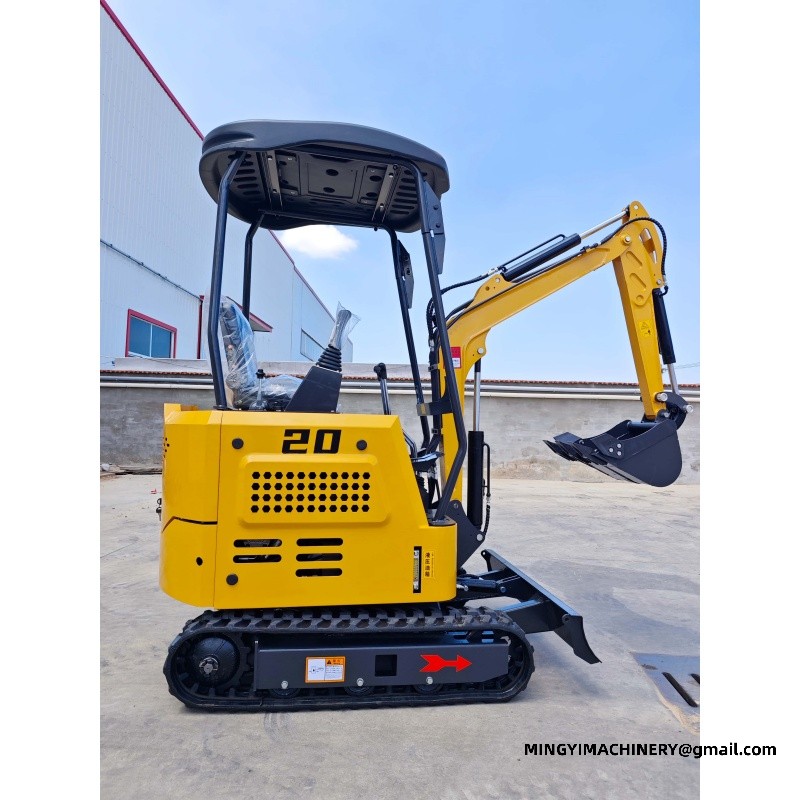
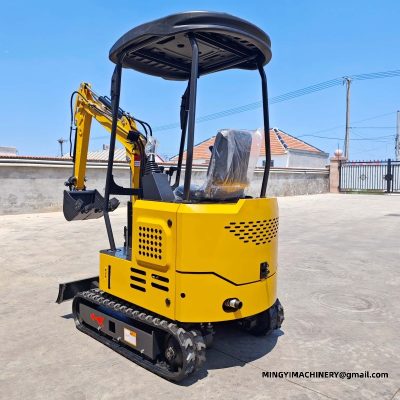
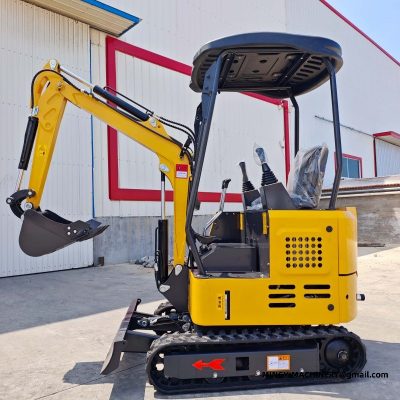
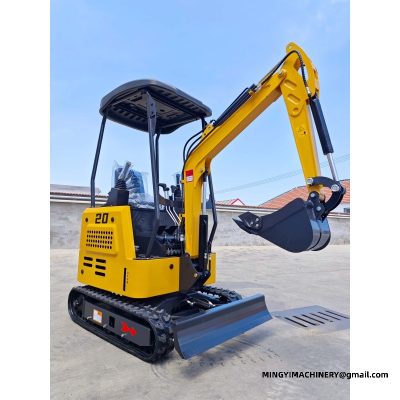
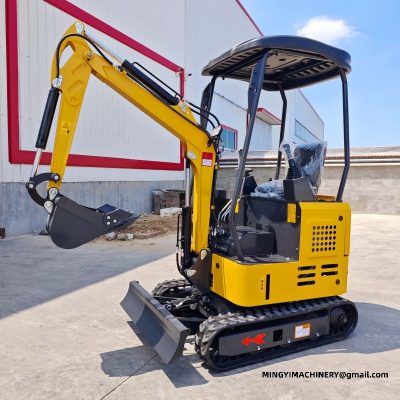
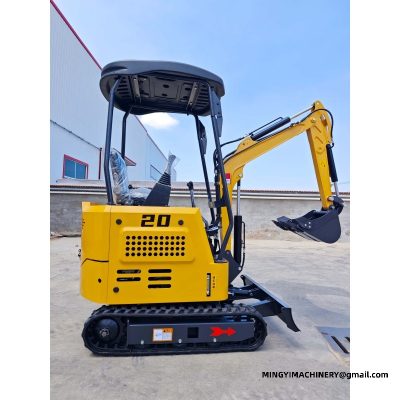
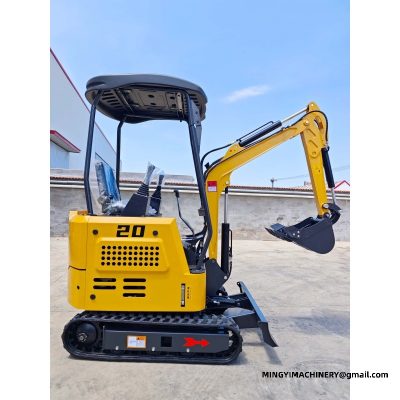
Landscaping work mixes digging, shaping and clearing, often on ground that has to be left presentable. A mini excavator suits that combination because it is compact enough to work between features and light enough not to destroy them.
MINGYI supplies compact crawler excavators for landscaping contractors, with the tracks, the tail swing and the attachments set to the kind of gardens and grounds the machine will work in.
Landscaping tasks for a mini excavator
A landscaping excavator is used for more than digging holes. Shaping beds and banks, cutting drainage, moving soil and stone, lifting plants and clearing timber are all part of a season of work, and each one asks something different of the machine.
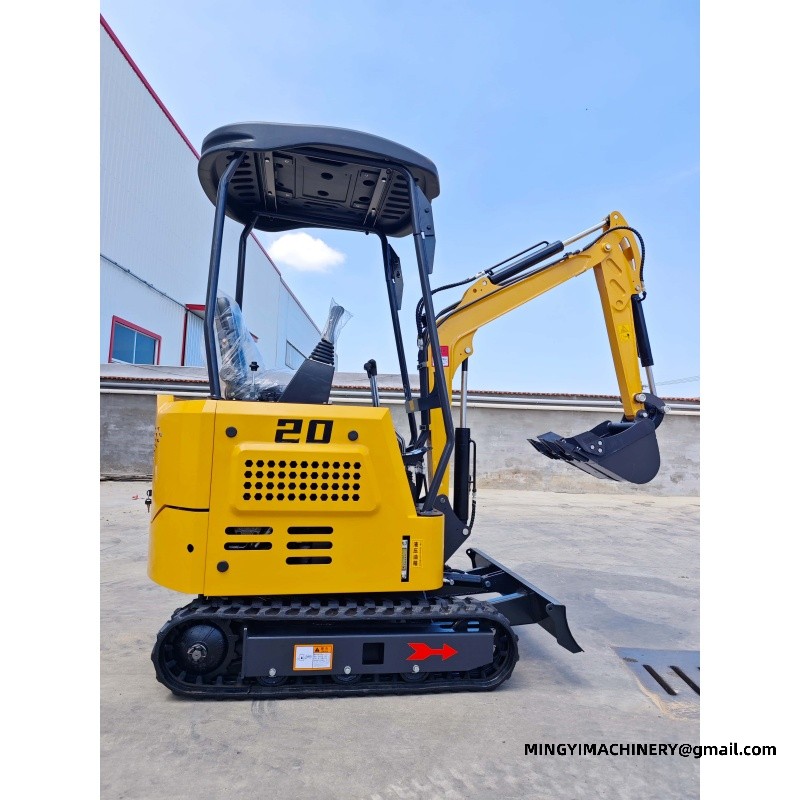
The attachment list follows those tasks. A tilting bucket for shaping, a rake for clearing, an auger for planting holes and a grab for handling stone cover most of what a landscaper needs from one machine.
Protecting lawns and finished surfaces
In a garden the state of the ground after the machine has left is part of the job. Rubber tracks spread the weight and reduce marking, so a unit can cross a lawn or a paved drive without leaving ruts or scuffing the surface.
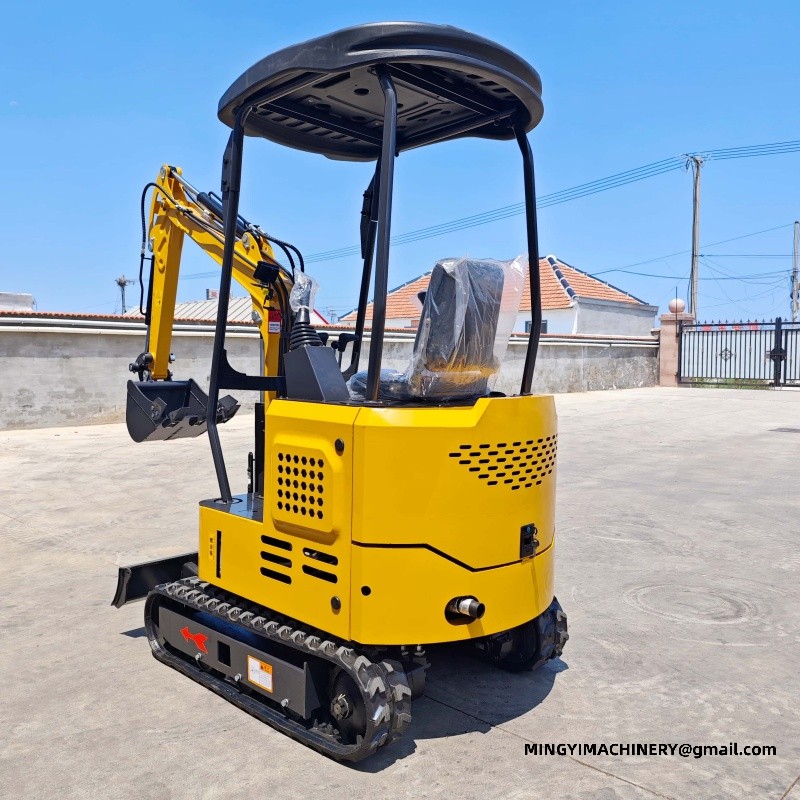
A compact machine also reaches places a larger one cannot. Between a house and a boundary, or behind an established border, a small excavator can work without demolishing the planting that surrounds it.
Landscaping rewards a machine that is versatile and careful. Matching the excavator, its tracks and its attachments to the way a garden is built keeps the finished work looking as though the machine was never there.
Matching mini excavator for lawn care to ground conditions Soft ground is a flotation problem, not a power problem. The excavator on wide rubber tracks crosses lawn, sand and cultivated soil that would stop a narrower machine or a wheeled unit of the same capacity. Hard and abrasive ground reverses the specification. On rock, demolition rubble or sharp gravel, steel tracks with rubber blocks on this class of machine survive conditions that cut a rubber belt quickly. What owners should plan for beyond the mini excavator for lawn care Purchase decision is the visible part of the effort. Fuel, filters, tracks or tyres, the operator and the transport between sites are the items that decide what the unit in daily use actually demands over a few seasons, and they are worth listing before the order. The useful comparison is demand per working hour, not demand per machine. A machine of this size that works more hours a year spreads its standing takes over more output, which is why utilisation usually matters more than the invoice figure. Daily checks and maintenance on mini excavator for lawn care Track tension is the item most often neglected. The equipment on site run with slack tracks wears the undercarriage and can throw a track on a turn; run too tight, the same components wear from the other direction. Greasing is the second item. The slew ring, the boom and arm pins and the bucket linkage on the machine itself take grease daily in dusty work, and the intervals shorten further when the machine is used in water or mud. Getting mini excavator for lawn care through a narrow gap The first question on most job lists is whether the machine can reach the work at all. The model in question is chosen against the narrowest point on the route - a garden gate, a doorway, a gap between two walls - because a machine that arrives and then cannot pass loses a day, not an hour. Access decides the machine before output does. With the machine in that duty the limiting dimension is usually the widest point on the way in, so measuring the gate, the corridor and the turning space first saves a wasted delivery and a second visit. Working a mini excavator for lawn care in confined spaces Clearance above matters as much as around. Door heights, pipework and overhead services set the limit for the unit on the job indoors, and measuring them first avoids a machine that arrives and cannot be used. Ventilation is the other indoor constraint. Running a machine built for the work inside a closed structure needs air movement, and that is a planning item rather than something to discover after the first hour. Road and paving work for mini excavator for lawn care Road repair generates short, interrupted jobs - a patch, a drainage connection, a kerb line. The equipment in service is economical here because it travels on a small trailer and starts working minutes after arriving. Breaking out a failed slab and backfilling the same hole in one visit is normal work for the excavator. The breaker and the bucket come off the same coupler, so the road is reopened the same day. Boom configuration for this class of machine A swing boom lets the machine dig parallel to its tracks without repositioning, which is what makes trenching beside a wall or a fence practical. On the unit in daily use this is often the option that decides whether a job is possible at all. Detachable boom sections are used where transport length matters. A machine of this size that has to travel on a standard trailer can be built so the arm comes off for the road and goes back on at the site. Engine options behind the equipment on site Power unit selection is settled against the service network the buyer already uses. MINGYI offers Kubota D722, Kubota D902, YANMAR, Changchai, Laidong, Runtong, YARMAX, Youpu 2V80 and Youpu 195, so a fleet running one brand of engine can keep the same filters, the same parts supplier and the same mechanic. Two buyers can order the same the machine itself and receive different engines. The decision is rarely about peak power; it is about which parts counter is closest to the site and which engine the local mechanic already knows. OEM and fleet customisation of the model in question Distributors and rental fleets usually need the machine to look like theirs. Paint, decals, seat colour and attachment branding can be specified on the machine in that duty at build time rather than applied after import. Customisation also covers the specification sheet. A fleet buyer may want every unit on the job delivered with the same coupler, the same engine and the same tool kit so training and parts stock stay simple. Canopy or enclosed cab on a machine built for the work The cab decision follows the climate and the hours. Operators working a full shift in the equipment in service benefit from a sealed cab with wipers and heating; operators stepping on and off every few minutes usually prefer the canopy for the visibility and the quick exit. Enclosure also changes noise and dust exposure. A sealed cab on the excavator keeps dust out on dry sites and lets the machine work through weather that would otherwise stop a canopy machine for the day. Quick coupler practice on this class of machine Couplers are specified early because they affect the arm and the hydraulic kit. Adding one to the unit in daily use after delivery means new pins, new hoses and a fitment session; adding it at build time is a line on the sheet. For a fleet that shares attachments between machines, a common coupler standard matters more than the coupler brand. A machine of this size that picks up the same tools as the larger machines keeps the rack usable across the yard. Specification data for the equipment on site Buyers comparing the machine itself usually start from four numbers - weight, digging depth, reach and transport width - because those are the ones that decide whether the machine can be delivered and whether it can do the job once it is there. Figures are factory figures and are confirmed on the build sheet for the model in question. Where a job sits between two models, the larger machine usually takes less time than the smaller one spends on rework. Interior demolition is an access and a weight question. The machine in that duty that fits through a doorway and works on a suspended floor does jobs that would otherwise be done by hand or by a larger machine that cannot enter. Dust, debris clearance and floor loading all argue for a compact machine indoors. The unit on the job spreads its weight over a wider track footprint than a wheeled machine of similar capacity.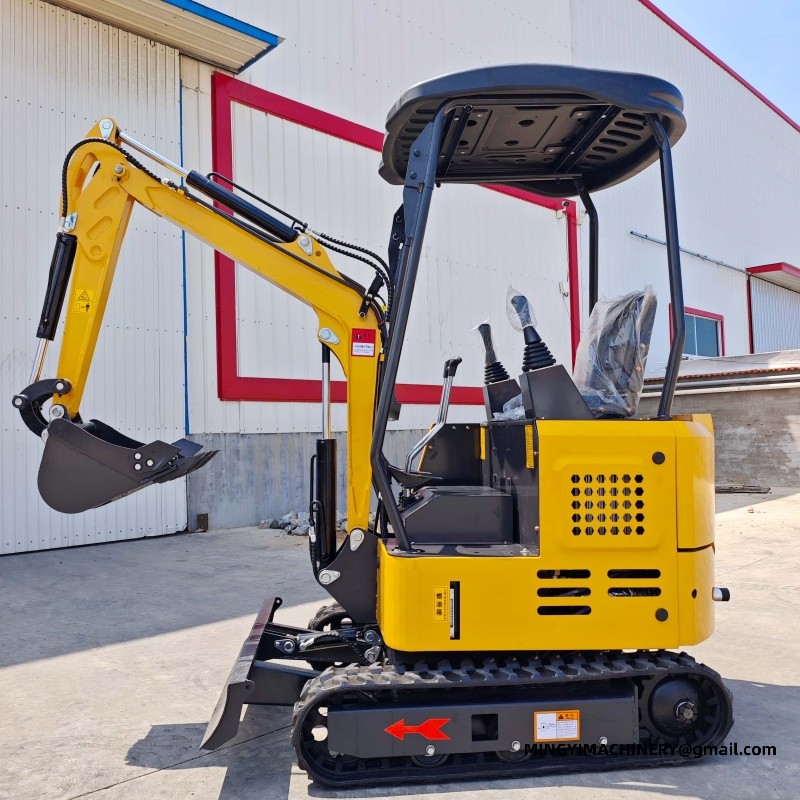
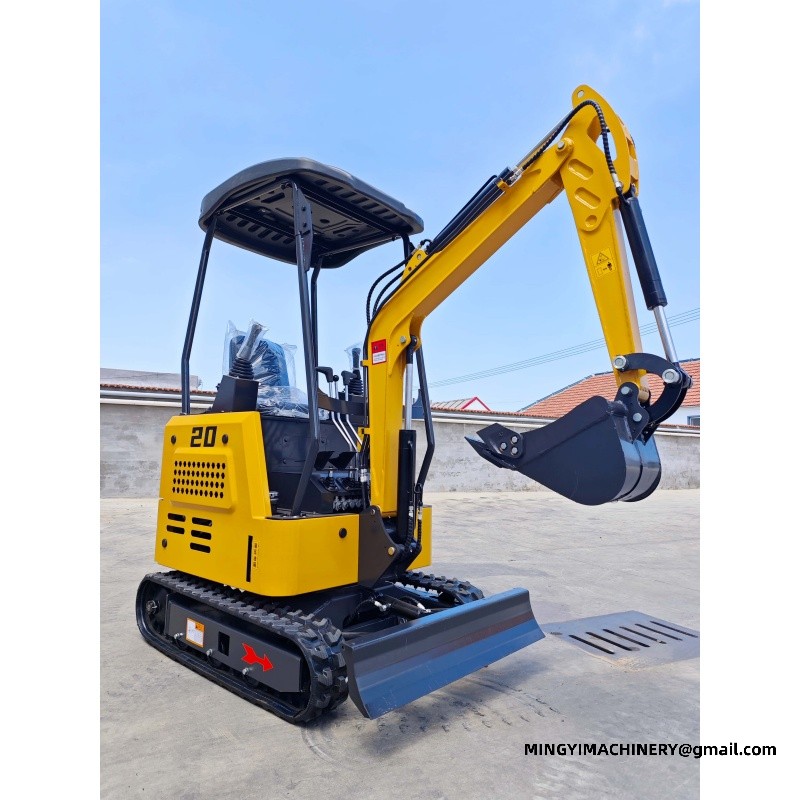
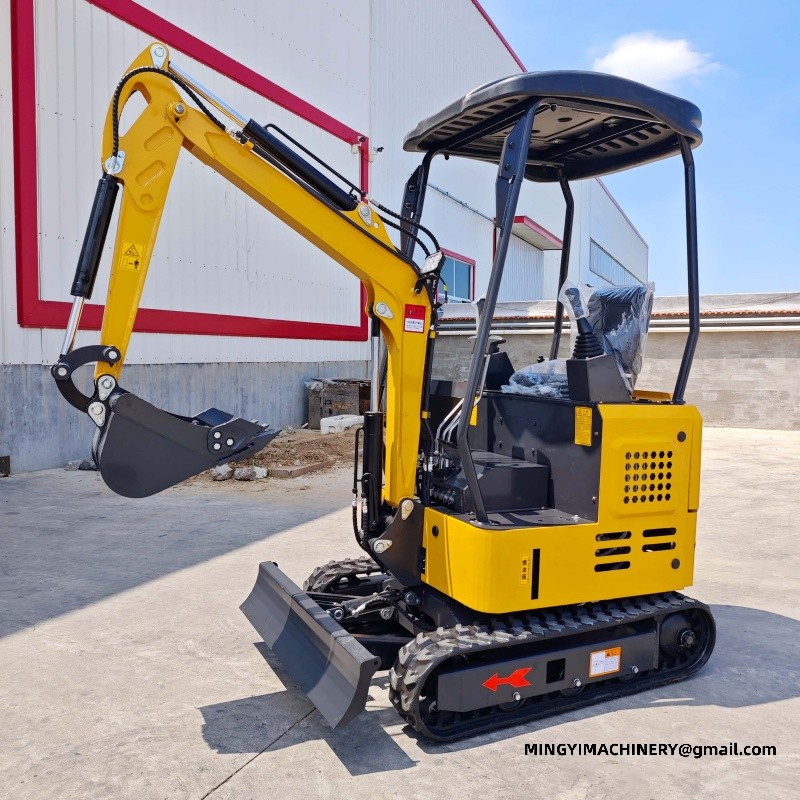
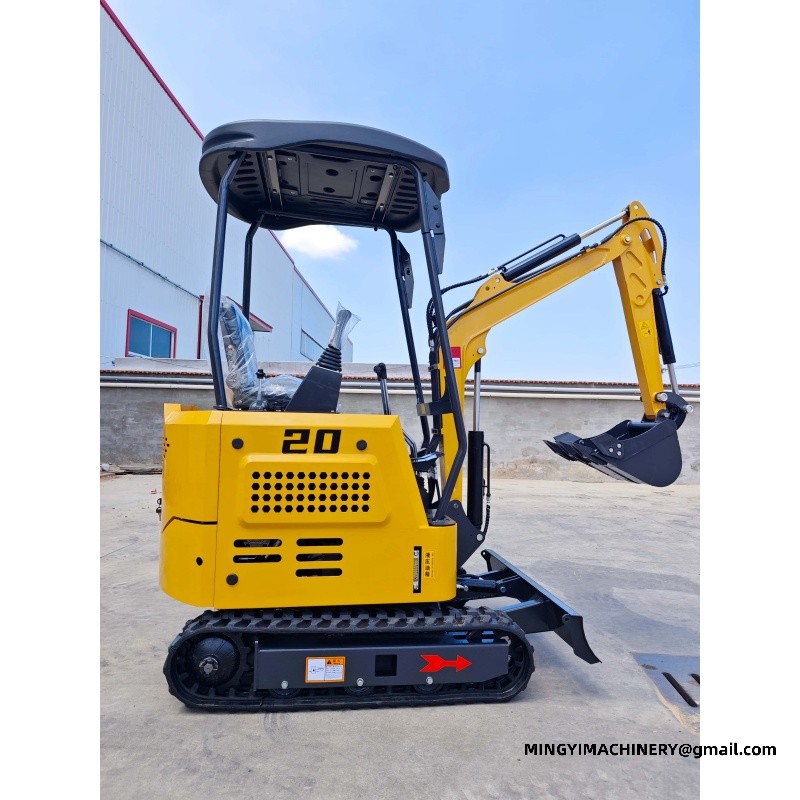
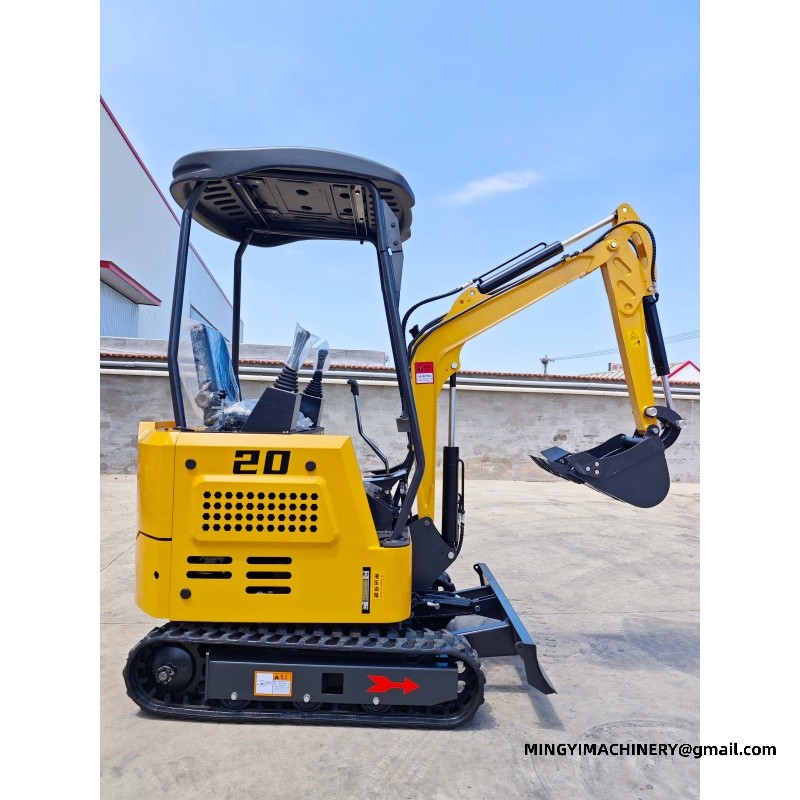
Reference specification — mini excavator range 09W 15W 20-1WL 12L Operating weight 1100 kg (2425.08 lb) 1400 kg (3086.47 lb) 1900 kg (4188.78 lb) 1200 kg (2645.55 lb) Transport size (L×W×H) 1800 × 750 × 1970 mm 2200 × 930 × 2250 mm 2550 × 1100 × 2200 mm 2200 × 930 × 2250 mm Max digging depth 1250 mm (49.21 in) 1630 mm (64.17 in) 1800 mm (70.87 in) 1700 mm (66.93 in) Max digging height 2800 mm (110.24 in) 2750 mm (108.27 in) 2820 mm (111.02 in) 2600 mm (102.36 in) Max dumping height 1700 mm (66.93 in) 1960 mm (77.17 in) 2050 mm (80.71 in) 1800 mm (70.87 in) Max digging radius 2570 mm (101.18 in) 2900 mm (114.17 in) 3050 mm (120.08 in) 2900 mm (114.17 in) Max digging distance 1869 mm (73.58 in) 2100 mm (82.68 in) 2300 mm (90.55 in) 2300 mm (90.55 in) Minimum turning radius 1000 mm (39.37 in) 1300 mm (51.18 in) 1450 mm (57.09 in) 1450 mm (57.09 in) Travel speed 3 km/h (1.86 mph) 3 km/h (1.86 mph) 5 km/h (3.11 mph) 3 km/h (1.86 mph) Gradeability 30° 30° 30° 30° Fuel consumption 1-1.3 L/h (0.264—0.343 gal) 1-1.3 L/h (0.264—0.343 gal) 2-3 L/h (0.528—0.793 gal) 1-1.3 L/h (0.264—0.343 gal) Fuel tank capacity 8 L (2.11 gal) 10 L (2.64 gal) 16 L (4.23 gal) 10 L (2.64 gal) Hydraulic oil tank 16 L (4.23 gal) 16 L (4.23 gal) 18 L (4.76 gal) 16 L (4.23 gal) Dozer blade lift height 180 mm (7.09 in) 180 mm (7.09 in) 180 mm (7.09 in) 180 mm (7.09 in) Dozer blade drop depth 210 mm (8.27 in) 210 mm (8.27 in) 210 mm (8.27 in) 210 mm (8.27 in)
Q. Who chooses a machine built for the work?
A. Landscaping is finishing work: prepare beds, level ground, move trees - then leave a surface the client is happy to look at. With a thumb or a tree-moving grab the digger opens the root ball, lifts and sets the plant in one motion - the work of a crew. For lawn care applications the practical route is to send the job list to the factory and let the build sheet answer it - which is exactly what this page invites.
Q. What does a landscape crew actually dig in a week?
A. Bed preparation, path base, drainage, planting holes and the odd tree - varied, light, and judged by the finish. That mix is exactly what the compact class is built around.
Q. Can I see the machine before it ships?
A. Inspection is arranged at the factory, in person or by a scheduled video walk-around - the same session covers paint, decals and attachment fitment for the lawn care specification, so the machine inspected is the machine that ships.
Keeping a service record for the equipment in service
Patterns show up in the record before they show up in the machine. Rising oil consumption or a filter that keeps blocking on the excavator is obvious on paper long before it becomes a failure on site.
Handover and getting familiar with this class of machine
A good handover covers the awkward cases, not just the easy ones. Starting the unit in daily use on a slope, turning in a confined space and recovering from soft ground are the situations an operator should meet first with someone beside them.
E-mail : sales@mingycn.com
LINE ( ID ): mingyicn
Slope working and stability with mini excavator for lawn care
Rated capacity is measured on level ground, and once the machine works across a gradient the safe figure follows the slope and the load position.
Turning on a side slope is where most instability starts, so the route and the turning points are chosen before the first load is moved.
Related pages
mini excavator warranty support · mini excavator parts supply · Agricultural Wheel Loader: Access, Attachments and Light Builds · Mini Excavators









