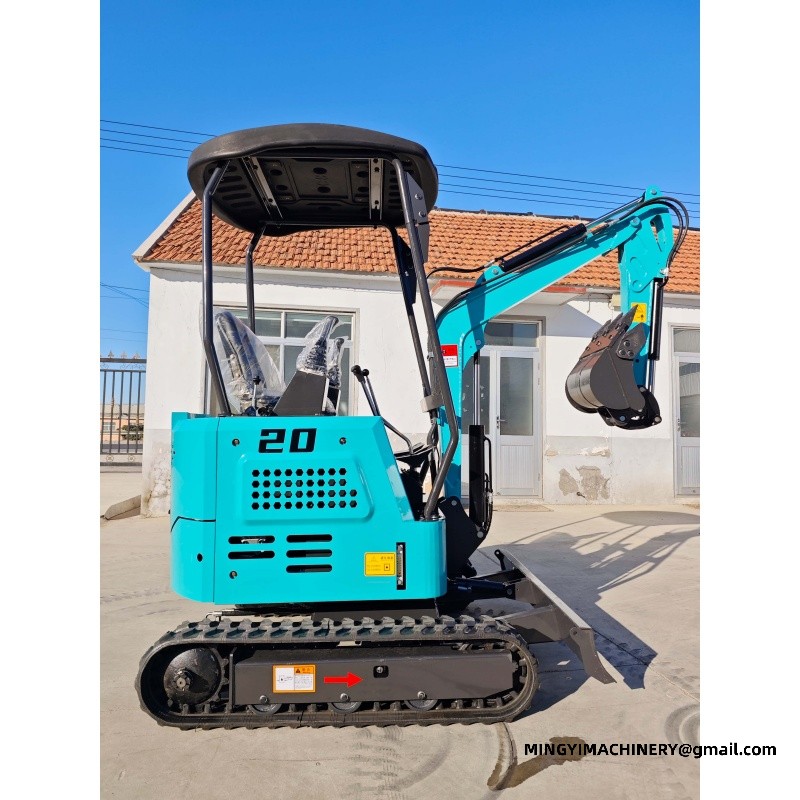
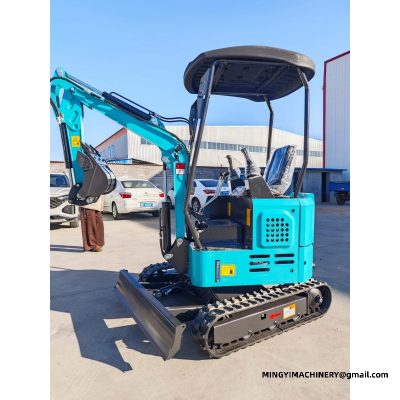
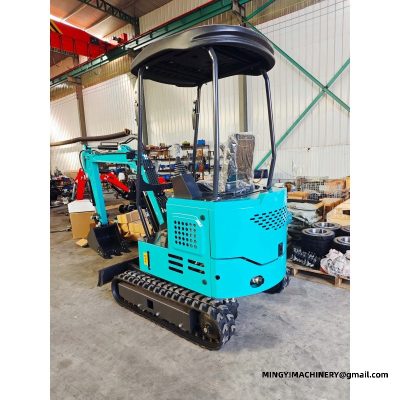
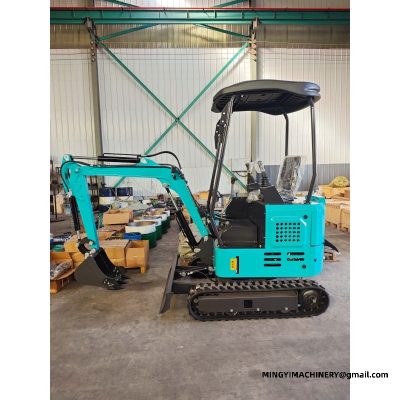
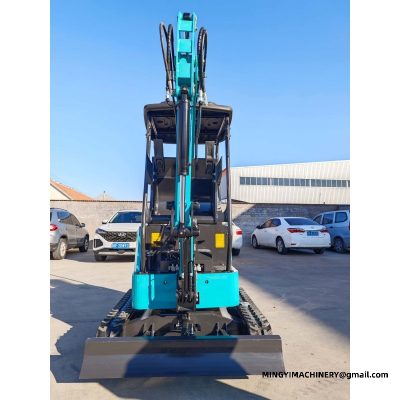
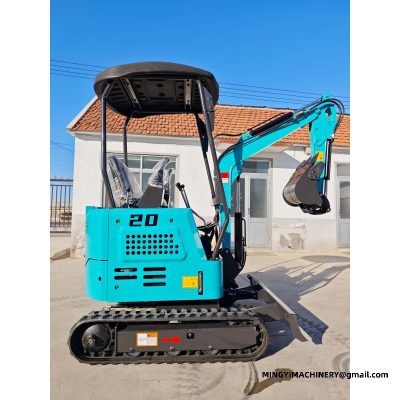
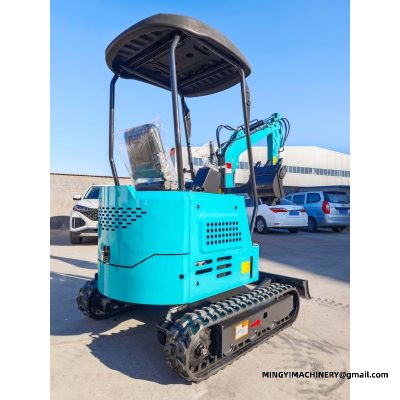
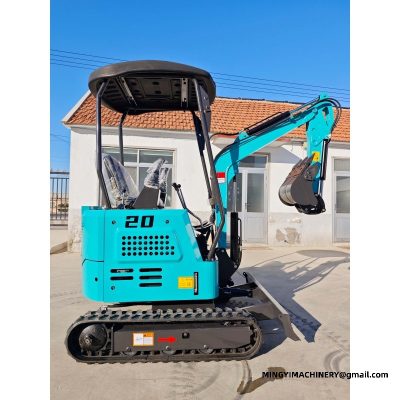
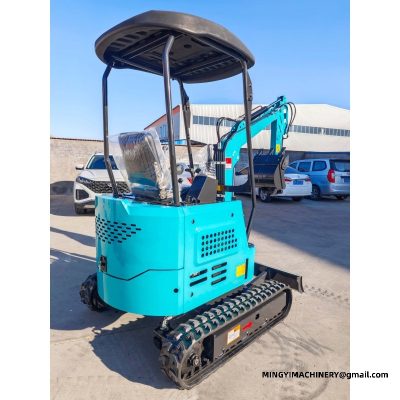
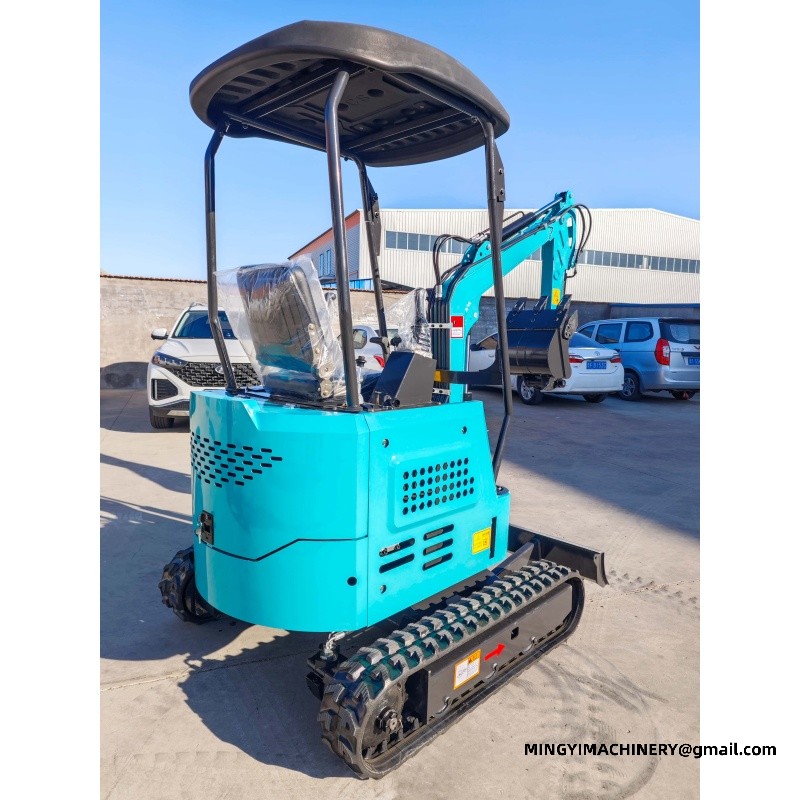
The 1 to 3.5 tonnes class is where most small contractors live. Big enough to dig productively and run a breaker, small enough to move between sites without heavy haulage, and light enough to work on surfaces that would sink under larger plant. MINGYI builds its machines in this class to order for export buyers.
Within the class, engine options include Kubota and YANMAR units on the higher outputs and Changchai, Laidong and Youpu units where a simpler installation serves the duty. This page explains what sits inside the class and how a buyer narrows the choice.
Where the class sits in the range
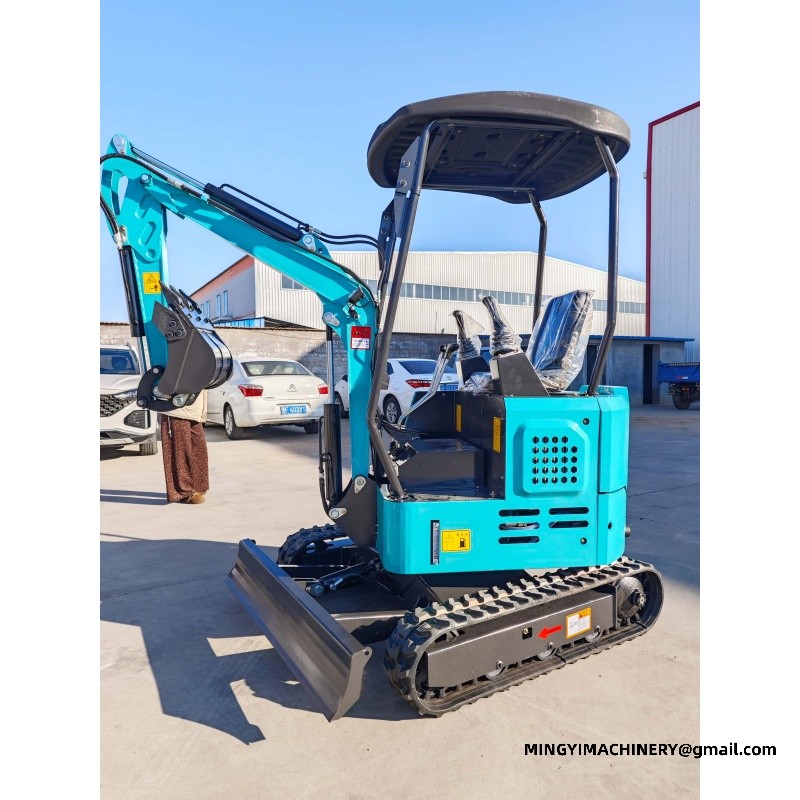
Below it, the smallest machines in the 0.8 to 6 tonnes range suit access work and light grounds maintenance, trading digging force for width. Above it, the larger machines take bigger buckets and heavier attachments but need proper transport planning on every job.
The middle class is the compromise that suits general contracting: trenching for services, footings for extensions, farm drainage and light demolition all sit comfortably within its capacity. Most buyers in this class specify a quick coupler, since the attachment list grows with the variety of work.
Choosing within the class
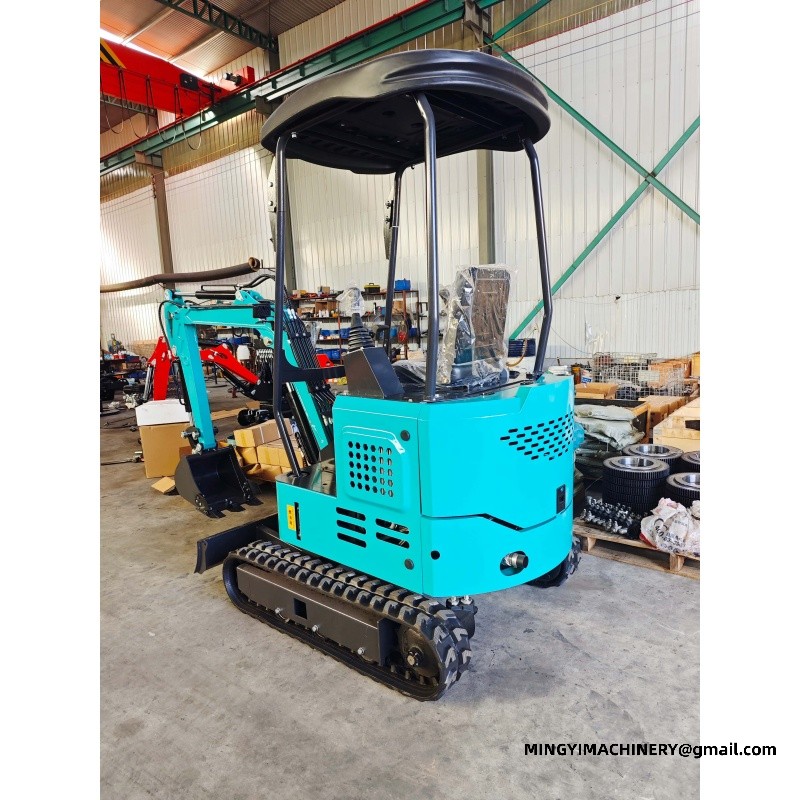
The first question is transport. Machines at the upper end of the class may need a dedicated trailer and towing vehicle, while those at the lower end move behind an ordinary van based setup. The second question is duty, since daily breaker use pushes the choice toward the machines with the stronger front structure.
Cab or canopy, rubber or steel tracks with rubber blocks, and standard or extended dipper are then confirmed with MINGYI at the ordering stage. The specification is recorded against the machine, so later attachment orders can be matched to the same build.
State the jobs you run most weeks and how the machine will travel between them, and the class can be narrowed to a specific configuration. Mingyi Machinery supplies each unit with spare parts and service documentation for the field.
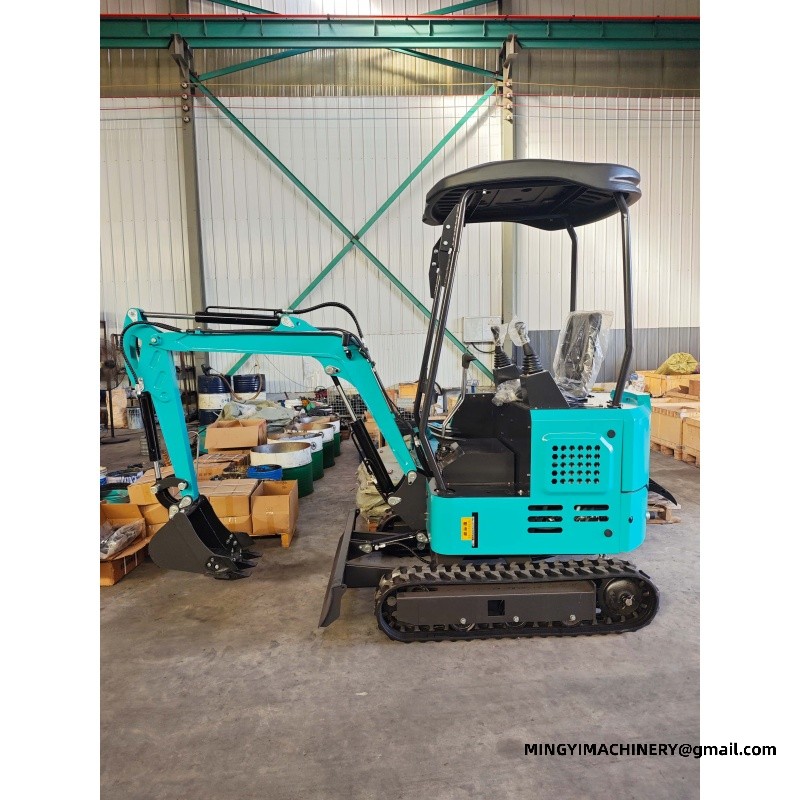
Engine options behind mini excavator in the 1 to 3.5 tonne class Power unit selection is settled against the service network the buyer already uses. MINGYI offers Kubota D722, Kubota D902, YANMAR, Changchai, Laidong, Runtong, YARMAX, Youpu 2V80 and Youpu 195, so a fleet running one brand of engine can keep the same filters, the same parts supplier and the same mechanic. Engine choice is also an emissions and documentation question for some markets. Listing the available units with the excavator enquiry lets the factory confirm what can be supplied and documented for the destination country. Orchard, vineyard and farm use of mini excavator in the 1 to 3.5 tonne class Orchard and vineyard work is carried out between rows. This class of machine with a narrow chassis and a swing boom works down the row without damaging the trees, which is the reason a full-size machine is not used at all. Farms also use the unit in daily use for general maintenance - clearing a watercourse, repairing a track, loading a spreader. One carrier with a few attachments covers most of the jobs that would otherwise wait for a contractor. Quick coupler practice on mini excavator in the 1 to 3.5 tonne class A quick coupler is the single option that changes how a machine is used day to day. Fitted to a machine of this size, it turns an attachment change from a two-person workshop job into a task the operator does alone in minutes. Couplers are specified early because they affect the arm and the hydraulic kit. Adding one to the equipment on site after delivery means new pins, new hoses and a fitment session; adding it at build time is a line on the sheet. Acceptance checks when a mini excavator in the 1 to 3.5 tonne class arrives A function check before the machine goes to work is worth the hour. Running through the controls, the travel and the attachment circuit on the machine itself confirms it is set up as specified and ready for the site. Documentation should arrive with the machine. Parts list, service schedule and any certificates for the model in question are what the workshop needs later, and they are much easier to obtain at delivery than in month six. Matching mini excavator in the 1 to 3.5 tonne class to ground conditions Hard and abrasive ground reverses the specification. On rock, demolition rubble or sharp gravel, steel tracks with rubber blocks on the machine in that duty survive conditions that cut a rubber belt quickly. Mixed sites are common and argue for a compromise specification. Most buyers choose rubber for the unit on the job and accept the wear, unless the majority of the work is on material that will damage it. Working a mini excavator in the 1 to 3.5 tonne class in confined spaces Confined sites are decided by dimensions. Overall width, tail swing and the space needed to work the arm are what let a machine built for the work operate inside a building, between walls or in a courtyard. Ventilation is the other indoor constraint. Running the equipment in service inside a closed structure needs air movement, and that is a planning item rather than something to discover after the first hour. Export packing and shipping of the excavator Export documentation, decals and paint are settled before packing. Asking for them with the unit in daily use order avoids a second handling session and keeps the machine on the booked vessel. Buyers who import regularly plan the spare parts with the machine. This class of machine ordered with a wearing-parts kit arrives ready to work rather than ready to wait for the first service interval. Running a machine of this size in a rental fleet Rental fleets buy for utilisation, not for a single job. The equipment on site with a quick coupler and a common attachment standard is hired more often because it suits more of the calls that come in. The specification that rents best is usually the simplest one to explain at the counter. The machine itself with rubber tracks, a canopy and a coupler covers the majority of weekend and short-term hires. Operator technique for the model in question The second habit is tool discipline. Running the machine in that duty with the right bucket width for the trench means less spoil, less reinstatement and a cleaner job than a wide bucket and a lot of trimming. Stability is the third. The unit on the job working across the tracks rather than over the corners keeps the machine steady and the undercarriage loaded evenly, which shows up as track life at the end of the season. Parts, service and support for a machine built for the work Support after delivery is a parts question. Wearing items for the equipment in service - filters, belts, track components, bucket teeth and pins - are the items a buyer should plan to hold before the first service interval. Engine parts availability usually drives the engine choice. The excavator built with an engine the local network already carries is serviced from stock rather than from an international order. Specification data for this class of machine Where the unit in daily use is being specified for a job list, the table below gives the factory figures that matter most: what the machine weighs, how deep and how far it works, and what it measures on a trailer. Every value shown is as built for a machine of this size; options such as cab, side swing or a telescopic undercarriage change the transport dimensions and are confirmed at order stage. The base machine is a carrier; the tool on the end of the arm decides the task. The equipment on site fitted with a toothed bucket digs, and the same machine with a breaker, an auger or a grab does work that would otherwise need a second unit on site. Attachment lists are best written before delivery. Specifying the machine itself with the tools the job list needs avoids the work and delay of adding hydraulics later, and a quick coupler makes the swap a few minutes instead of a workshop job.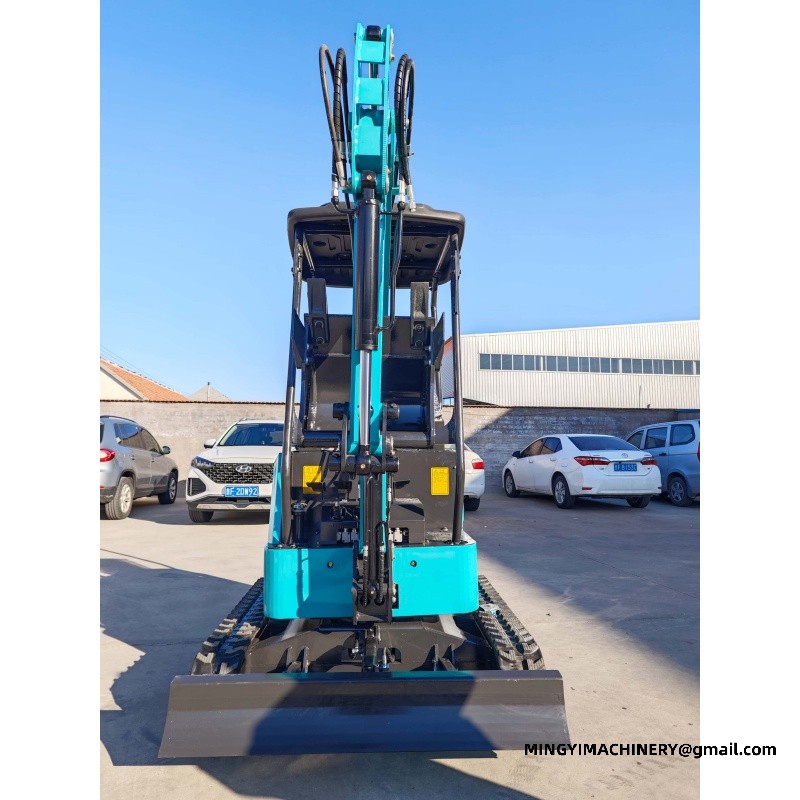
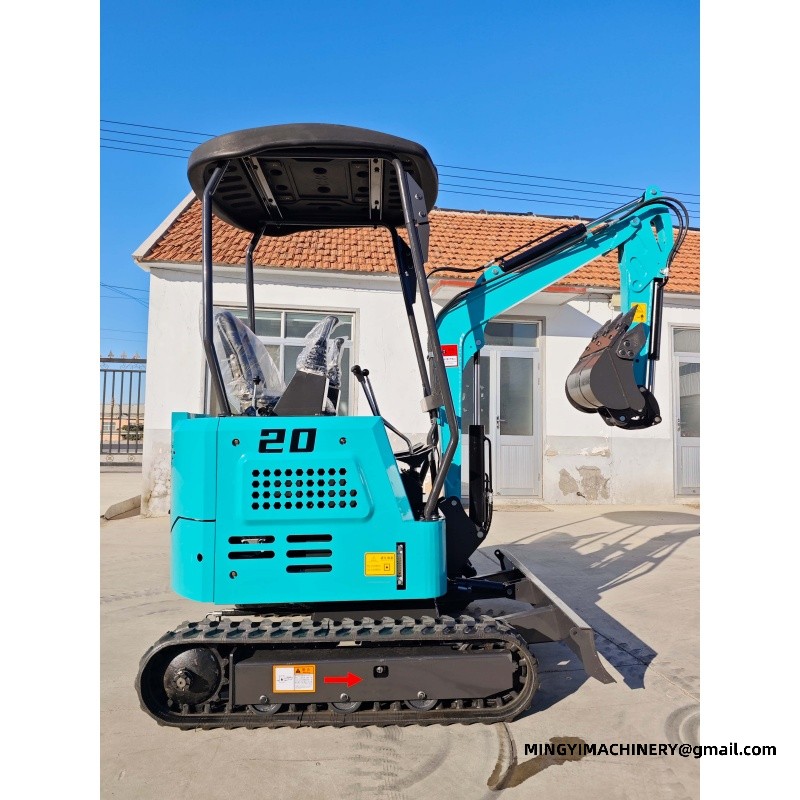
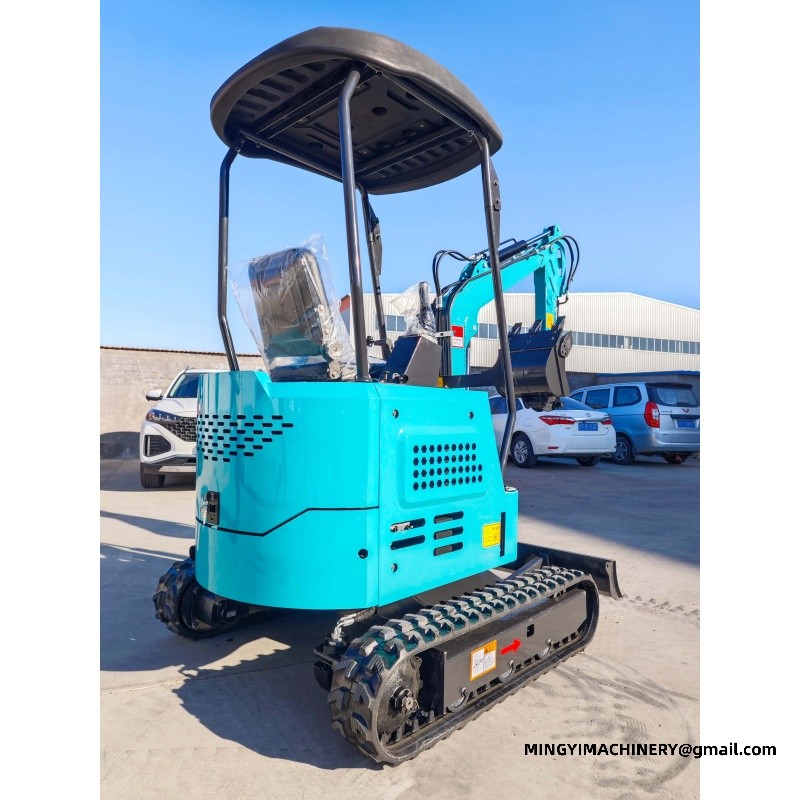
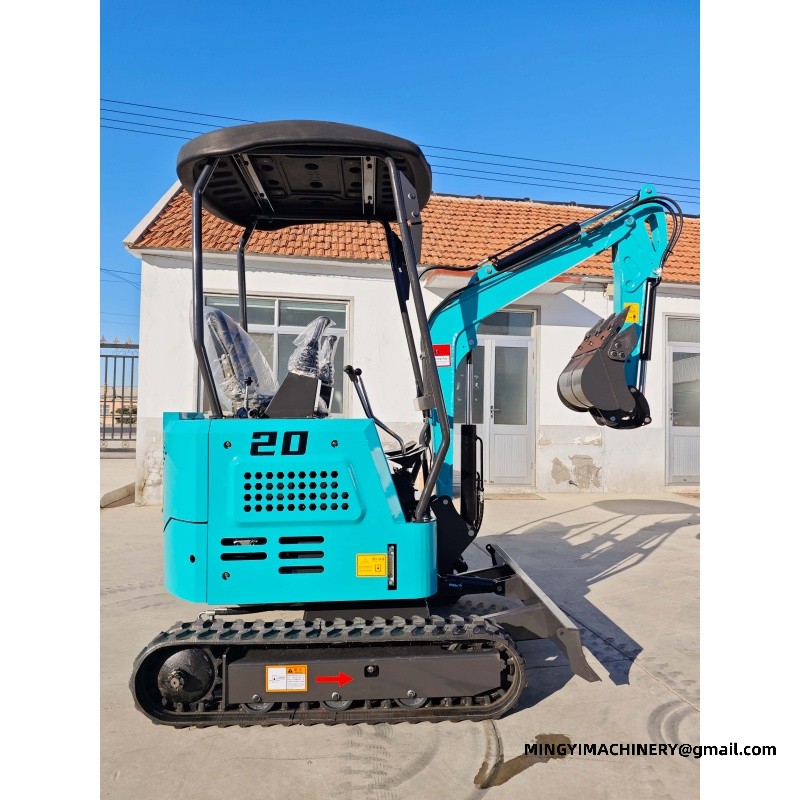
Reference specification — mini excavator range 12W 20-1WL 09L 20-2L Operating weight 1200 kg (2645.55 lb) 1900 kg (4188.78 lb) 1100 kg (2425.08 lb) 1900 kg (4188.78 lb) Transport size (L×W×H) 2200 × 930 × 2250 mm 2550 × 1100 × 2200 mm 2300 × 720 × 1870 mm 2600 × 1300 × 2344 mm Max digging depth 1630 mm (64.17 in) 1800 mm (70.87 in) 1400 mm (55.12 in) 2100 mm (82.68 in) Max digging height 2750 mm (108.27 in) 2820 mm (111.02 in) 2800 mm (110.24 in) 2880 mm (113.39 in) Max dumping height 1960 mm (77.17 in) 2050 mm (80.71 in) 1880 mm (74.02 in) 2100 mm (82.68 in) Max digging radius 2900 mm (114.17 in) 3050 mm (120.08 in) 2490 mm (98.03 in) 3215 mm (126.57 in) Max digging distance 2100 mm (82.68 in) 2300 mm (90.55 in) 2000 mm (78.74 in) 2460 mm (96.85 in) Minimum turning radius 1300 mm (51.18 in) 1450 mm (57.09 in) 1400 mm (55.12 in) 1587 mm (62.48 in) Travel speed 3 km/h (1.86 mph) 5 km/h (3.11 mph) 3 km/h (1.86 mph) 5 km/h (3.11 mph) Gradeability 30° 30° 30° 30° Fuel consumption 1-1.3 L/h (0.264—0.343 gal) 2-3 L/h (0.528—0.793 gal) 1-1.3 L/h (0.264—0.343 gal) 2-3 L/h (0.528—0.793 gal) Fuel tank capacity 10 L (2.64 gal) 16 L (4.23 gal) 8 L (2.11 gal) 16 L (4.23 gal) Hydraulic oil tank 16 L (4.23 gal) 18 L (4.76 gal) 16 L (4.23 gal) 18 L (4.76 gal) Dozer blade lift height 180 mm (7.09 in) 180 mm (7.09 in) 180 mm (7.09 in) 180 mm (7.09 in) Dozer blade drop depth 210 mm (8.27 in) 210 mm (8.27 in) 210 mm (8.27 in) 210 mm (8.27 in)
Q. What is the model in question used for?
A. Inside the 0.8 to 6 tonne class MINGYI builds as the 08, 12 and 18 models lives most of the site, farm and rental work in the world. Tracks, cabs and attachments are common across the range, so the size decision is mostly about where the machine must fit and what it must lift. MINGYI builds the 08, 12 and 18 models covering the 0.8 to 6 tonne class, and the machine in that duty is where that range meets 1 to 3.5 tonne class.
Q. What changes between the size classes?
A. Reach, lift and stability grow with the class; doorways and trailer weight limits close. The smallest classes trade reach for access, the largest trade access for full-size work rates, and tracks, cabs and attachments stay common across the range.
Q. What about colours and branding?
A. OEM colours and decals are part of the build: private-label machines carry the buyer brand on the standard MINGYI platform, and the 1 to 3.5 tonne class order confirms colours, marks and documents before production starts.
Fuel, oil and fluid quality for the unit on the job
Fluid quality is a storage problem before it is a machine problem. Water and sediment in a drum will find the injection system of a machine built for the work eventually, and a settling period is nothing compared with a pump.
Cold weather and winter care for the equipment in service
Cold exposes weak batteries, thick oil and water in the fuel. Preparing the excavator for winter means the right grade of oil, a battery in good condition and fuel that will not wax in the tank overnight.
E-mail : sales@mingycn.com
LINE ( ID ): mingyicn
Night work and lighting on mini excavator in the 1 to 3.5 tonne class
Night work changes the job more than most specification lines do, because light coverage, glare and shadow decide how much of the site the operator can actually read.
Work lamps should cover the working area and the travel path separately, since a beam set for loading usually leaves the route dark.
A lighting check belongs at the start of every night shift, together with a look at the warning beacon and the brake lights.
Slope working and stability with mini excavator in the 1 to 3.5 tonne class
Rated capacity is measured on level ground, and once the machine works across a gradient the safe figure follows the slope and the load position.
Related pages
mini excavator for trailer transport · 1 to 3.5 tonne mini excavator · Wheel Loader Factory China: 21 Builds, Three Frame Tiers · Mini Excavators









