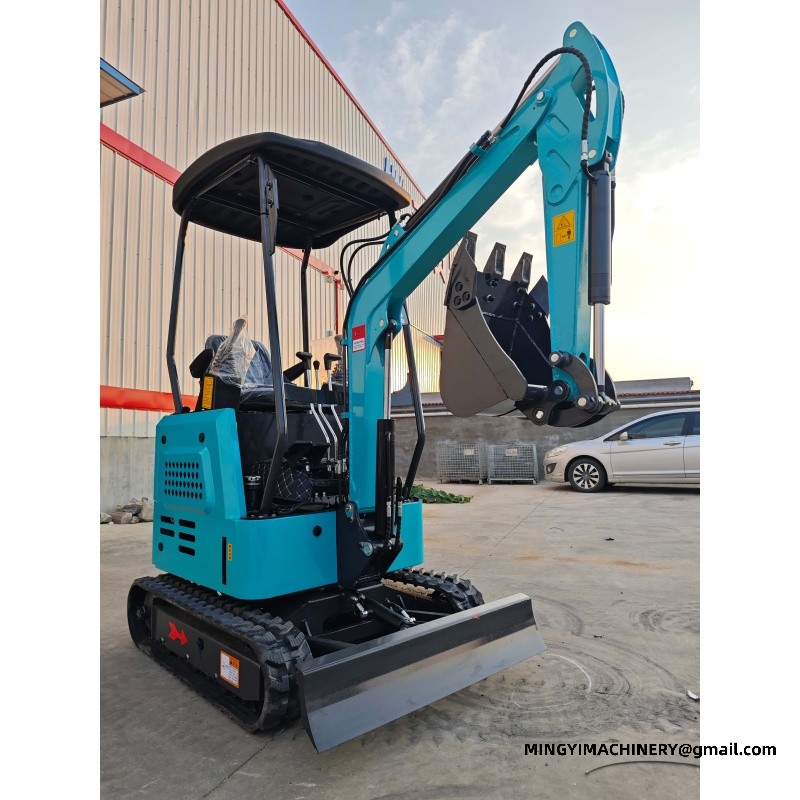
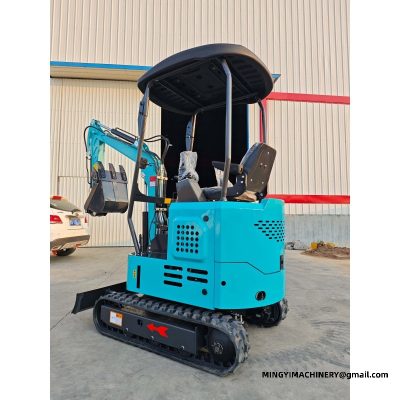
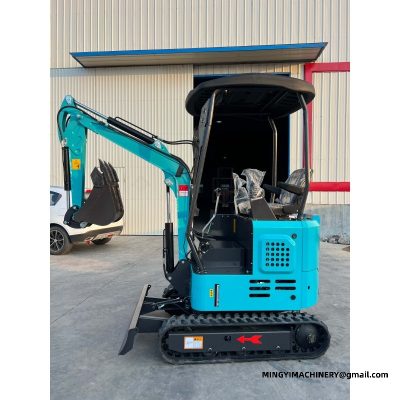
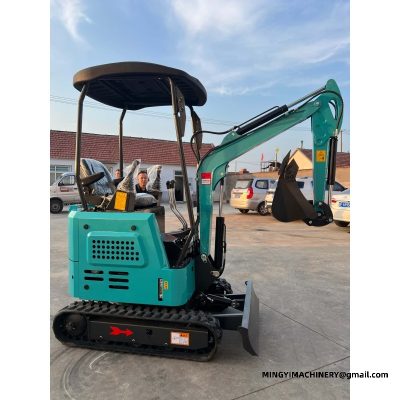
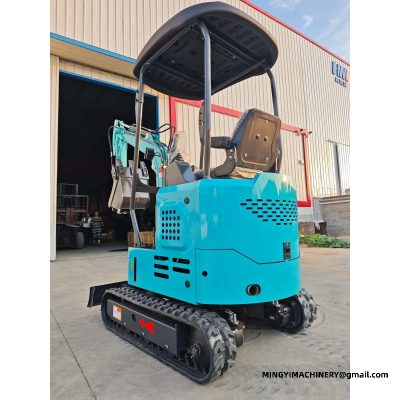
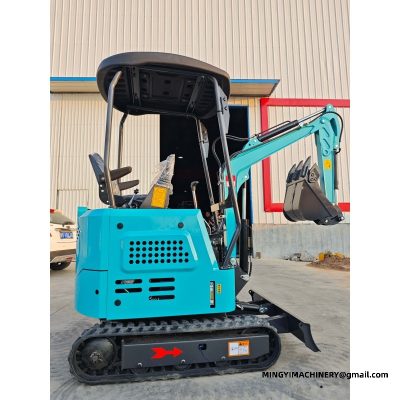
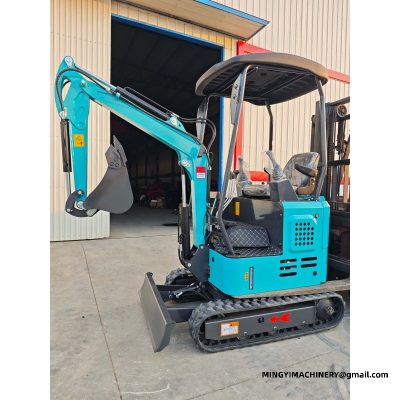
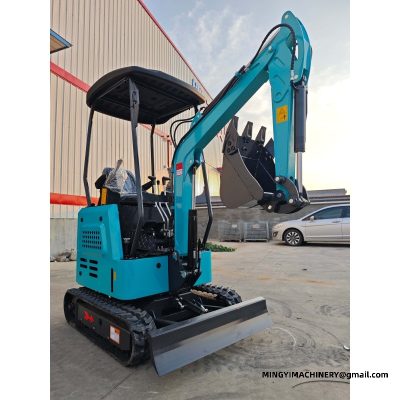
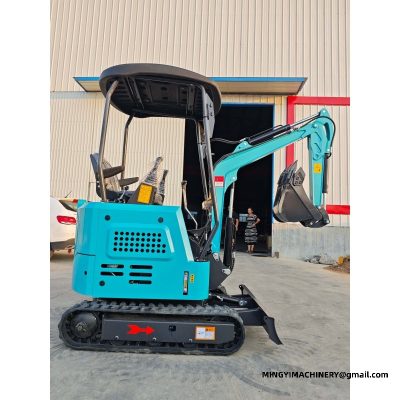
Planting beds and new lawns need a soil profile, not just a hole. The ground has to be loosened to depth, the levels graded so water moves away from the plants, and the surface left open enough for roots to establish quickly.
A compact crawler excavator with the right attachments covers that combination in one operation. MINGYI produces these machines to order, so a planting and grading specification can be agreed and built into the unit before it ships.
Preparing beds and setting levels
Preparation starts with loosening the subsoil so that water drains through rather than sitting under the planting layer. A rotary tiller or soil loosener on a quick coupler does this without the compaction that comes from repeated bucket passes over the same strip.
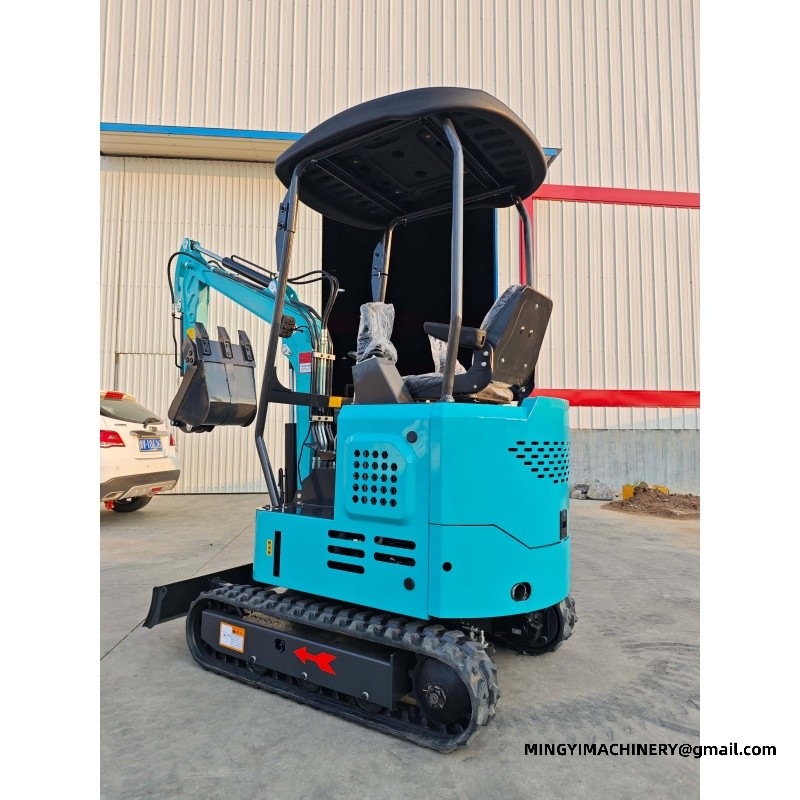
The finished level is then graded to the setting-out. A tilting bucket lets the operator feather the surface and follow a fall away from the building, which is the part of the work most often corrected later by hand.
Handling plants and soil without compaction
Trees and shrubs are usually moved into position while the machine is still on site. A plant grabber lifts root balls without crushing them, and a front fork handles pallets of plants and bagged material around the boundary.
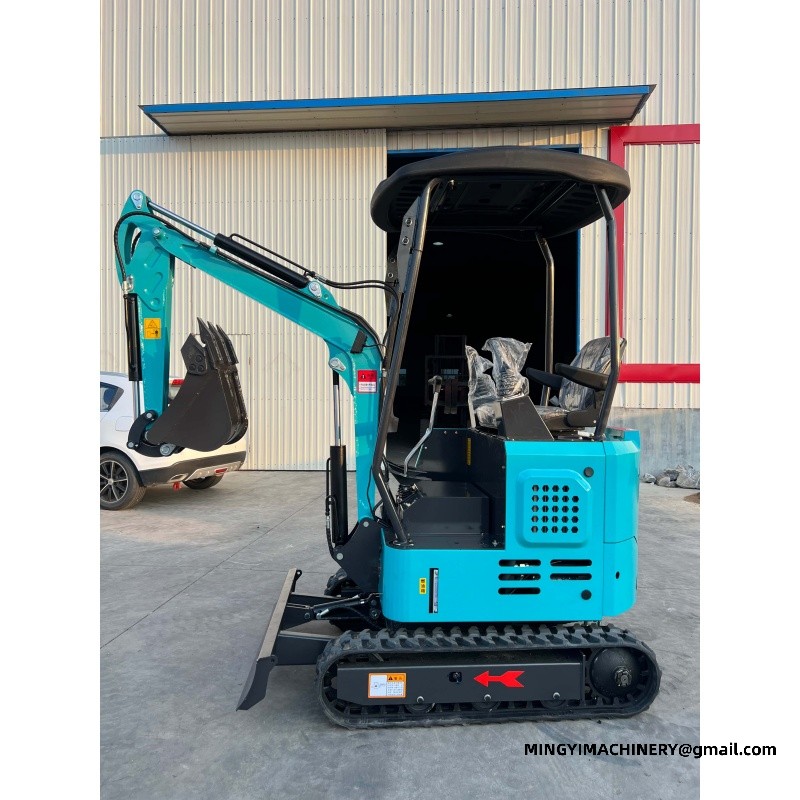
Because this work happens close to finished areas, rubber tracks are normally specified so the machine can travel over path edges and established lawns. Track type, together with the attachment list, is confirmed at the ordering stage.
Planting and grading are the point at which a scheme starts to look finished. A compact excavator fitted for tillage, grading and plant handling lets the contractor complete that stage without bringing further equipment onto the site.
Quick coupler practice on mini excavator for planting and grading A quick coupler is the single option that changes how a machine is used day to day. Fitted to the excavator, it turns an attachment change from a two-person workshop job into a task the operator does alone in minutes. Couplers are specified early because they affect the arm and the hydraulic kit. Adding one to this class of machine after delivery means new pins, new hoses and a fitment session; adding it at build time is a line on the sheet. Operator technique for mini excavator for planting and grading The second habit is tool discipline. Running the unit in daily use with the right bucket width for the trench means less spoil, less reinstatement and a cleaner job than a wide bucket and a lot of trimming. Stability is the third. A machine of this size working across the tracks rather than over the corners keeps the machine steady and the undercarriage loaded evenly, which shows up as track life at the end of the season. Road and paving work for mini excavator for planting and grading Road repair generates short, interrupted jobs - a patch, a drainage connection, a kerb line. The equipment on site is economical here because it travels on a small trailer and starts working minutes after arriving. Patching and reinstatement favour a machine that can work in a lane closure. The machine itself occupies less road than a full-size excavator, which reduces the traffic management needed and the length of the closure. Running mini excavator for planting and grading in a rental fleet Rental fleets buy for utilisation, not for a single job. The model in question with a quick coupler and a common attachment standard is hired more often because it suits more of the calls that come in. The specification that rents best is usually the simplest one to explain at the counter. The machine in that duty with rubber tracks, a canopy and a coupler covers the majority of weekend and short-term hires. Parts, service and support for mini excavator for planting and grading Support after delivery is a parts question. Wearing items for the unit on the job - filters, belts, track components, bucket teeth and pins - are the items a buyer should plan to hold before the first service interval. Engine parts availability usually drives the engine choice. A machine built for the work built with an engine the local network already carries is serviced from stock rather than from an international order. Boom configuration for mini excavator for planting and grading Extended and offset boom configurations change reach and working range. The equipment in service with a longer arm reaches further but lifts less at full extension, so the specification is set against the deepest and furthest point on the job list. Detachable boom sections are used where transport length matters. The excavator that has to travel on a standard trailer can be built so the arm comes off for the road and goes back on at the site. Acceptance checks when this class of machine arrives A function check before the machine goes to work is worth the hour. Running through the controls, the travel and the attachment circuit on the unit in daily use confirms it is set up as specified and ready for the site. Documentation should arrive with the machine. Parts list, service schedule and any certificates for a machine of this size are what the workshop needs later, and they are much easier to obtain at delivery than in month six. Hydraulic circuits on the equipment on site Auxiliary hydraulic lines are what let a machine drive a tool rather than only a bucket. The machine itself specified with the right circuits and flow runs a breaker or an auger without an add-on power pack bolted to the frame. Hydraulic specification is easier to settle at build time than to correct later. The model in question delivered without auxiliary lines can still dig, but every additional tool becomes a retrofit project. What owners should plan for beyond the machine in that duty The useful comparison is demand per working hour, not demand per machine. The unit on the job that works more hours a year spreads its standing takes over more output, which is why utilisation usually matters more than the invoice figure. Downtime is the hidden line item. A machine built for the work waiting on a part earns nothing while it stands, so parts availability and service access belong in the plan as much as fuel does. Daily checks and maintenance on the equipment in service Daily maintenance on the excavator is a short list: engine oil level, coolant, track tension, hydraulic oil level and a look at the hoses. Ten minutes at the start of the shift prevents most of the failures that stop a machine. Greasing is the second item. The slew ring, the boom and arm pins and the bucket linkage on this class of machine take grease daily in dusty work, and the intervals shorten further when the machine is used in water or mud. Interior and light demolition with the unit in daily use Breaking out a floor slab, a wall footing or a concrete step is routine work for a machine of this size with a breaker. The machine is small enough to work inside and heavy enough to run the tool at a practical rate. Dust, debris clearance and floor loading all argue for a compact machine indoors. The equipment on site spreads its weight over a wider track footprint than a wheeled machine of similar capacity. Specification data for the machine itself Buyers comparing the model in question usually start from four numbers - weight, digging depth, reach and transport width - because those are the ones that decide whether the machine can be delivered and whether it can do the job once it is there. These are the reference figures for the machine in that duty. MINGYI confirms the final build sheet, including engine and attachment choices, against the destination and the job list before production. Slope work is a stability question before it is a traction question. Knowing the gradient the unit on the job is rated for, and working across rather than straight up where the ground allows, removes most of the risk. Ground that looks level often is not. A machine built for the work crossing a filled trench, a soft edge or a hidden void behaves differently from one on undisturbed ground, and those are the places worth walking before driving.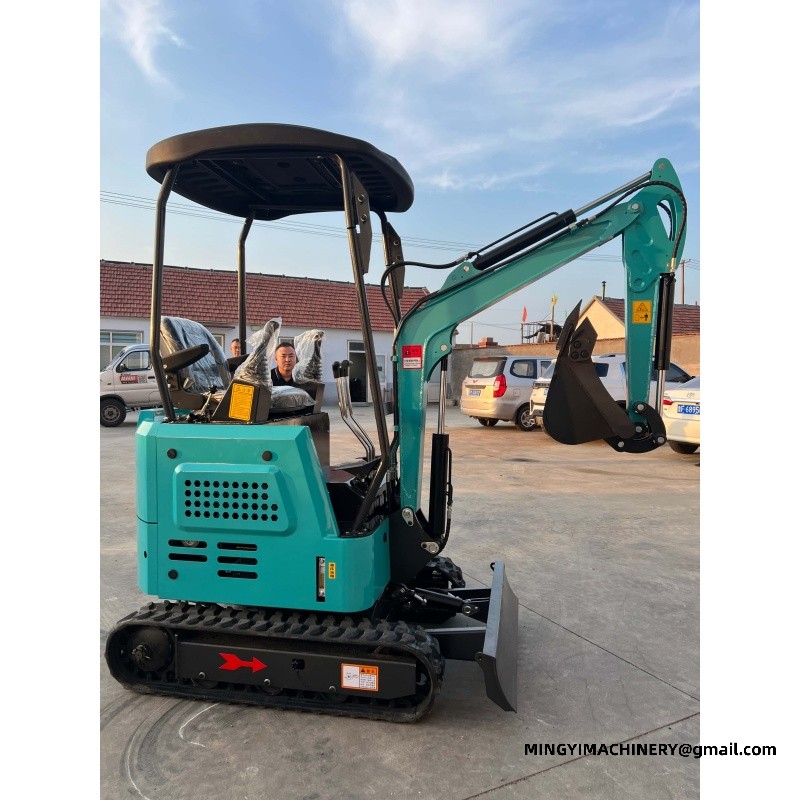
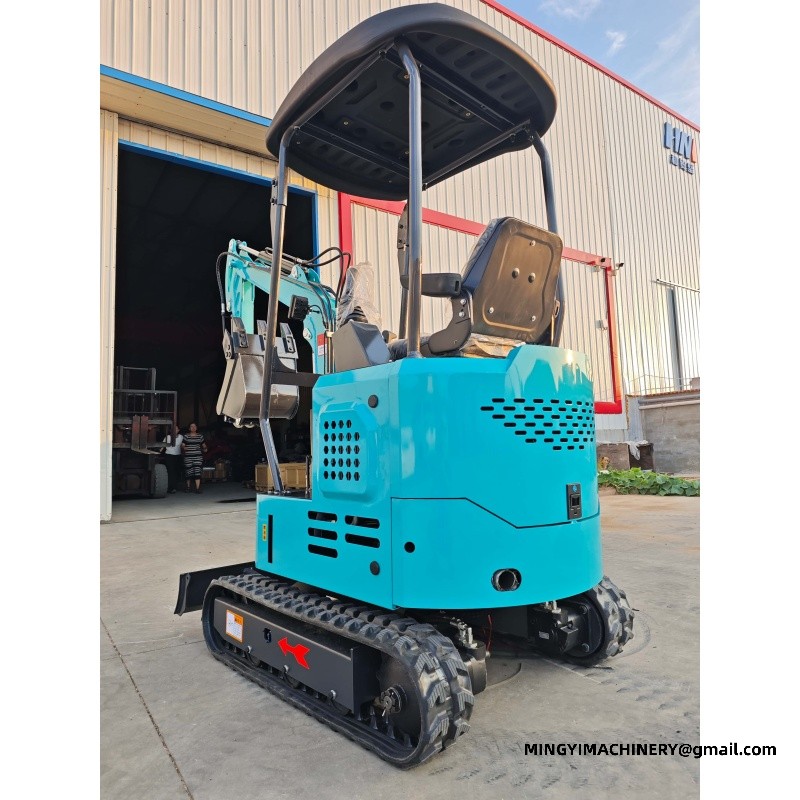
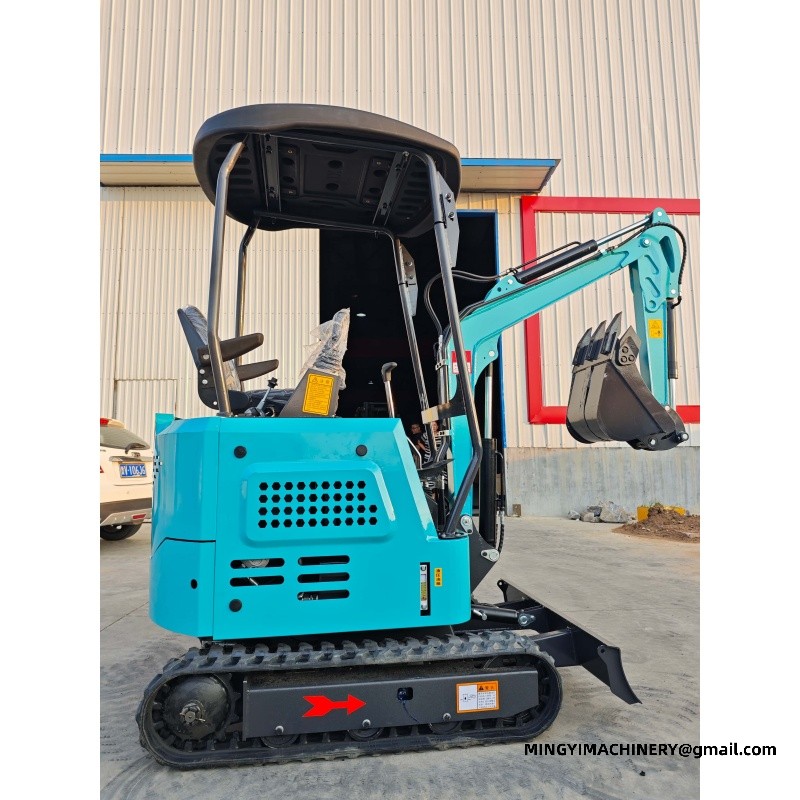
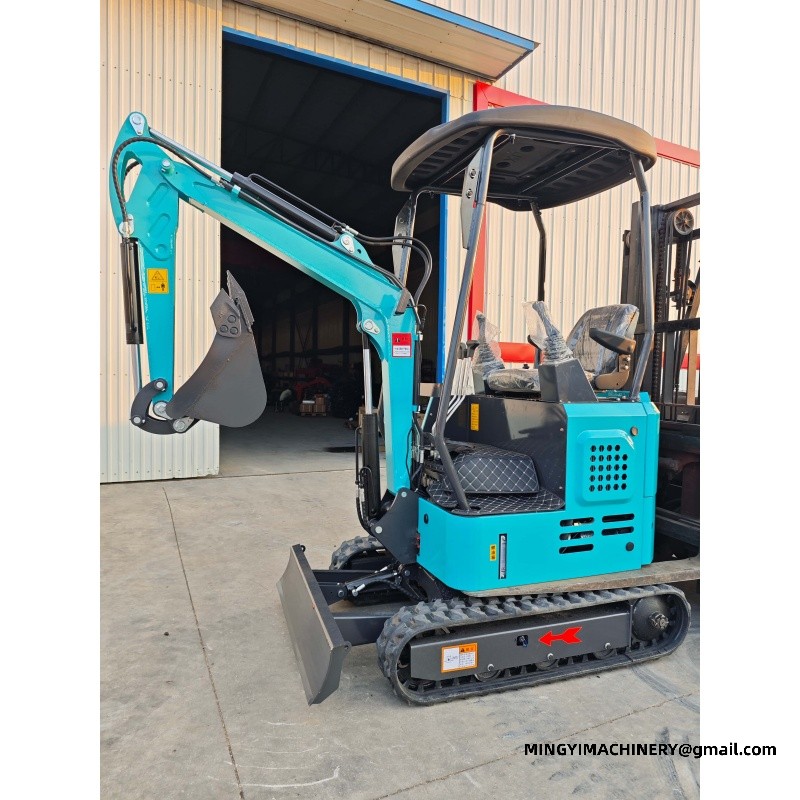
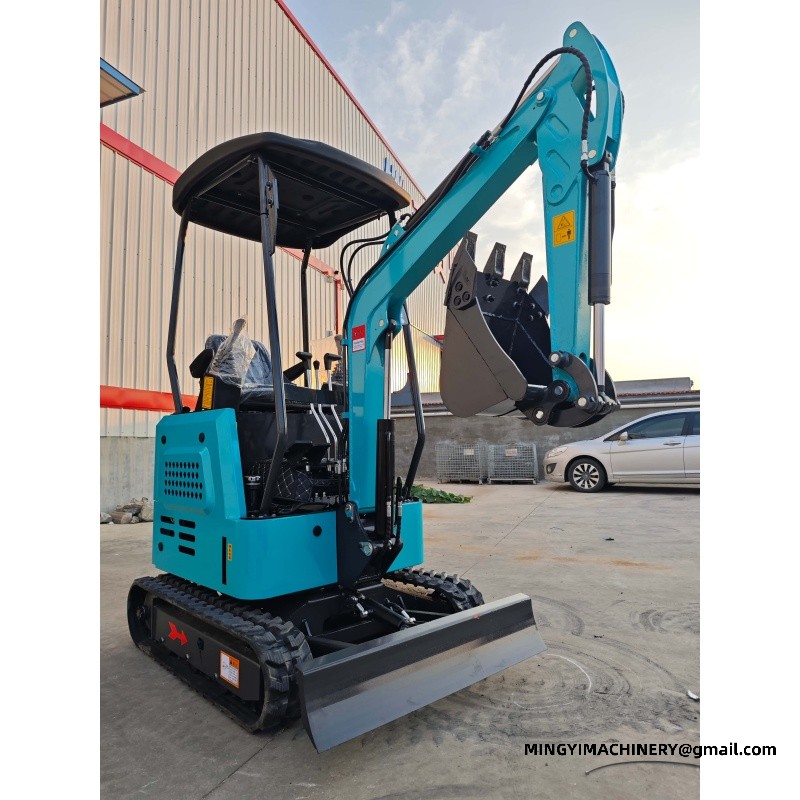
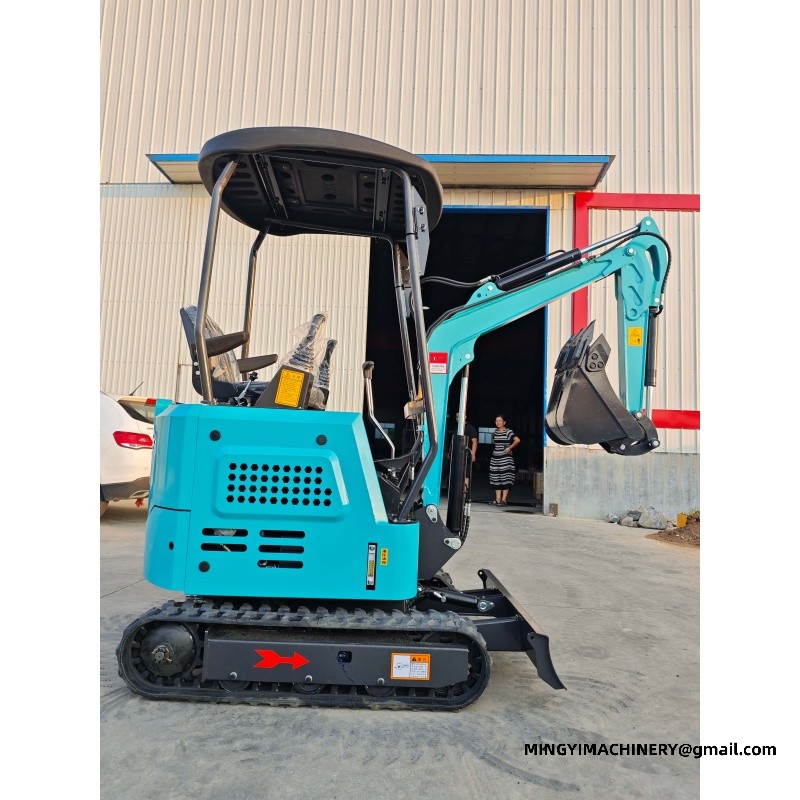
Reference specification — mini excavator range 09W 09L 12L 20-2L Operating weight 1100 kg (2425.08 lb) 1100 kg (2425.08 lb) 1200 kg (2645.55 lb) 1900 kg (4188.78 lb) Transport size (L×W×H) 1800 × 750 × 1970 mm 2300 × 720 × 1870 mm 2200 × 930 × 2250 mm 2600 × 1300 × 2344 mm Max digging depth 1250 mm (49.21 in) 1400 mm (55.12 in) 1700 mm (66.93 in) 2100 mm (82.68 in) Max digging height 2800 mm (110.24 in) 2800 mm (110.24 in) 2600 mm (102.36 in) 2880 mm (113.39 in) Max dumping height 1700 mm (66.93 in) 1880 mm (74.02 in) 1800 mm (70.87 in) 2100 mm (82.68 in) Max digging radius 2570 mm (101.18 in) 2490 mm (98.03 in) 2900 mm (114.17 in) 3215 mm (126.57 in) Max digging distance 1869 mm (73.58 in) 2000 mm (78.74 in) 2300 mm (90.55 in) 2460 mm (96.85 in) Minimum turning radius 1000 mm (39.37 in) 1400 mm (55.12 in) 1450 mm (57.09 in) 1587 mm (62.48 in) Travel speed 3 km/h (1.86 mph) 3 km/h (1.86 mph) 3 km/h (1.86 mph) 5 km/h (3.11 mph) Gradeability 30° 30° 30° 30° Fuel consumption 1-1.3 L/h (0.264—0.343 gal) 1-1.3 L/h (0.264—0.343 gal) 1-1.3 L/h (0.264—0.343 gal) 2-3 L/h (0.528—0.793 gal) Fuel tank capacity 8 L (2.11 gal) 8 L (2.11 gal) 10 L (2.64 gal) 16 L (4.23 gal) Hydraulic oil tank 16 L (4.23 gal) 16 L (4.23 gal) 16 L (4.23 gal) 18 L (4.76 gal) Dozer blade lift height 180 mm (7.09 in) 180 mm (7.09 in) 180 mm (7.09 in) 180 mm (7.09 in) Dozer blade drop depth 210 mm (8.27 in) 210 mm (8.27 in) 210 mm (8.27 in) 210 mm (8.27 in)
Q. Who chooses the equipment in service?
A. Between crops and livestock, the compact excavator earns its place as the farm utility machine. Between farms the machine moves by trailer, and the transport pages cover ramp and tie-down practice. MINGYI builds the 08, 12 and 18 models covering the 0.8 to 6 tonne class, and the excavator is where that range meets planting and grading.
Q. Will it damage crop ground?
A. Not when set up for it: rubber tracks and a light footprint are why the farm pages pair track choice with boom reach. Plan the runs along the headland and the field looks the same after the machine as before.
Q. What support follows the sale?
A. Spare-part kits, wear items and service documentation ship with the programme, and the parts team works from the serial plate to match components exactly. Warranty and support terms for the planting and grading order are confirmed in writing before the machine leaves.
Wear items and spares worth holding for this class of machine
Holding spares is about downtime rather than the shelf itself. The question for the unit in daily use is not how large the part is but how long the machine sits while it is found, and a small shelf answers that better than a fast courier.
Later additions and retrofits on a machine of this size
Most additions are easier to plan than to add. Hydraulic services, mounting brackets and electrical capacity on the equipment on site are build items, and deciding them at the specification stage is far easier than doing it later.
E-mail : sales@mingycn.com
LINE ( ID ): mingyicn
Planning utilisation for mini excavator for planting and grading
Utilisation is decided in the planning office as much as on site, through the number of machines, the haul route and the order of the work.
A machine booked for a job it is too large for wastes capacity, while one that is too small loses the day to rework.
Keeping one machine as the planned spare is simpler than scheduling around an unplanned stop in the middle of a programme.
Common operator mistakes with mini excavator for planting and grading
Most early damage comes from three habits, namely working with the wrong attachment angle, carrying loads too high and skipping the walk-around.
Related pages
mini excavator for livestock farms · mini excavator for orchard trenching · China Wheel Loader Factory: How Each Model Is Built and Checked · Mini Excavators









