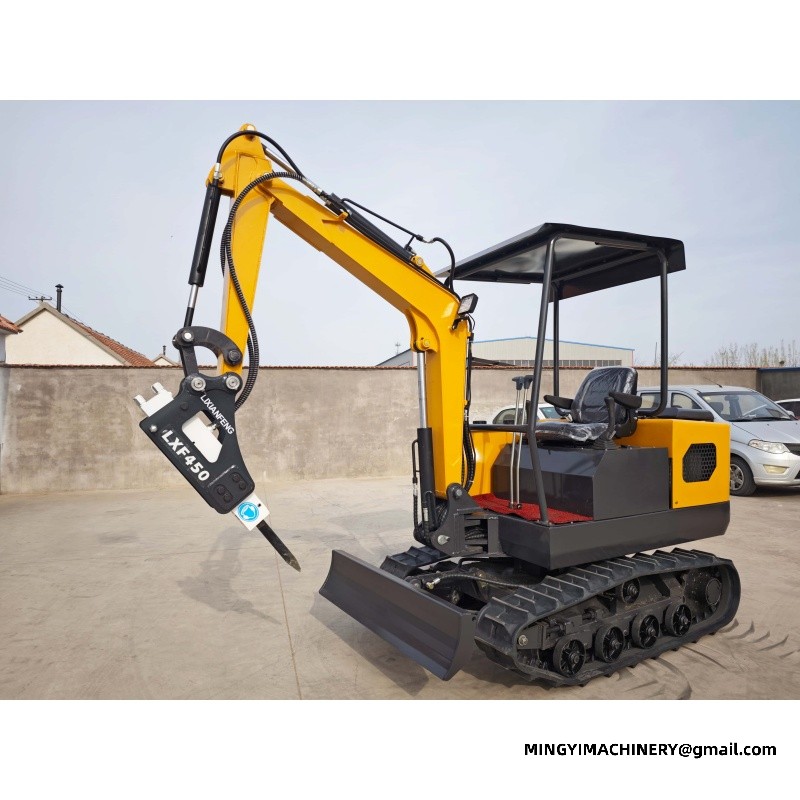
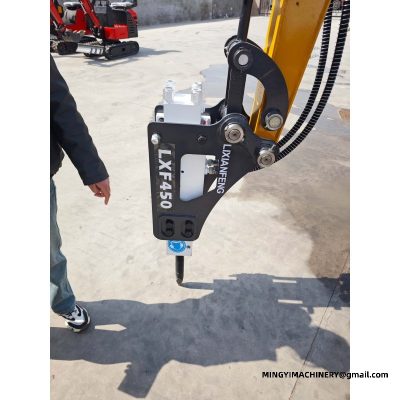
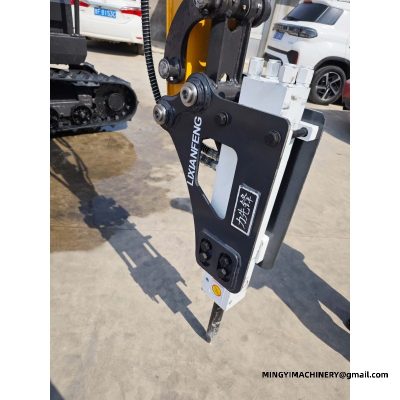
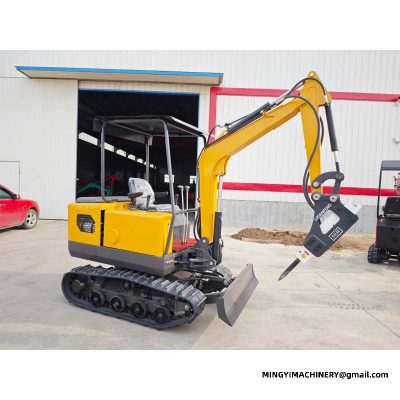
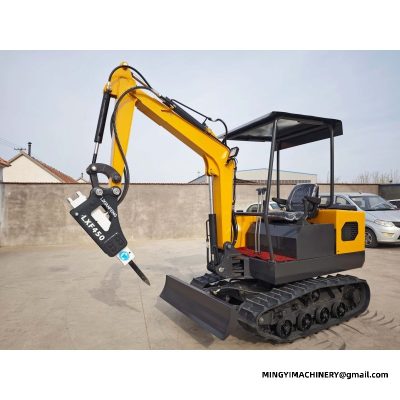
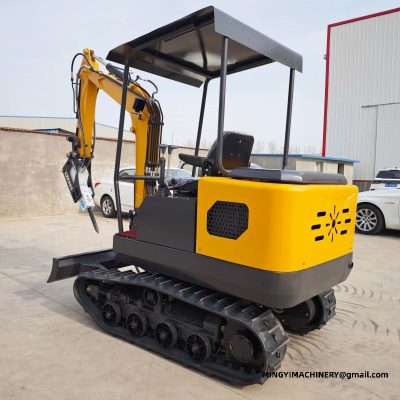
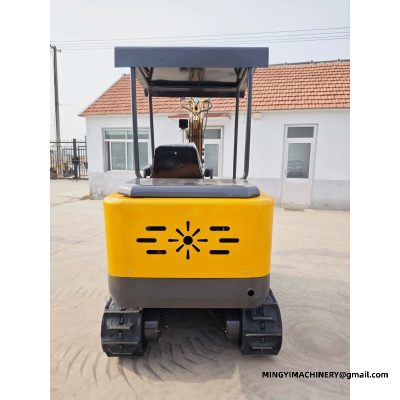
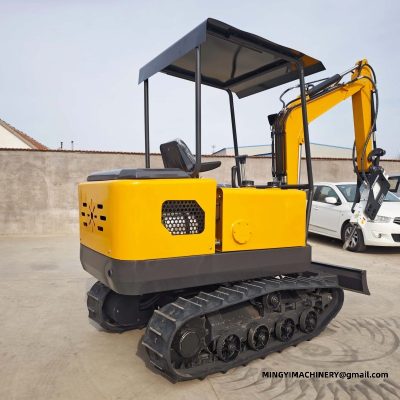
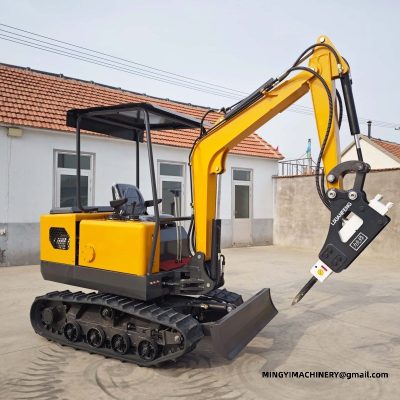
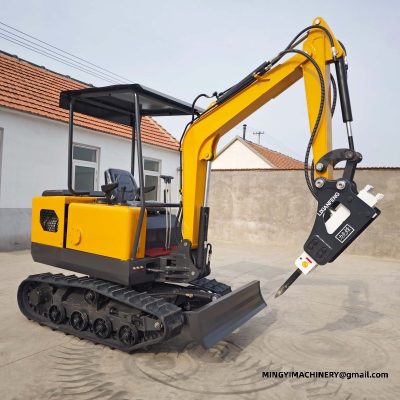
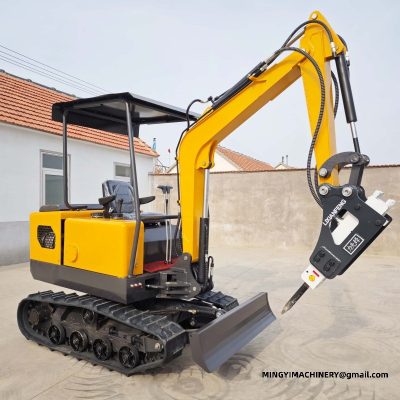
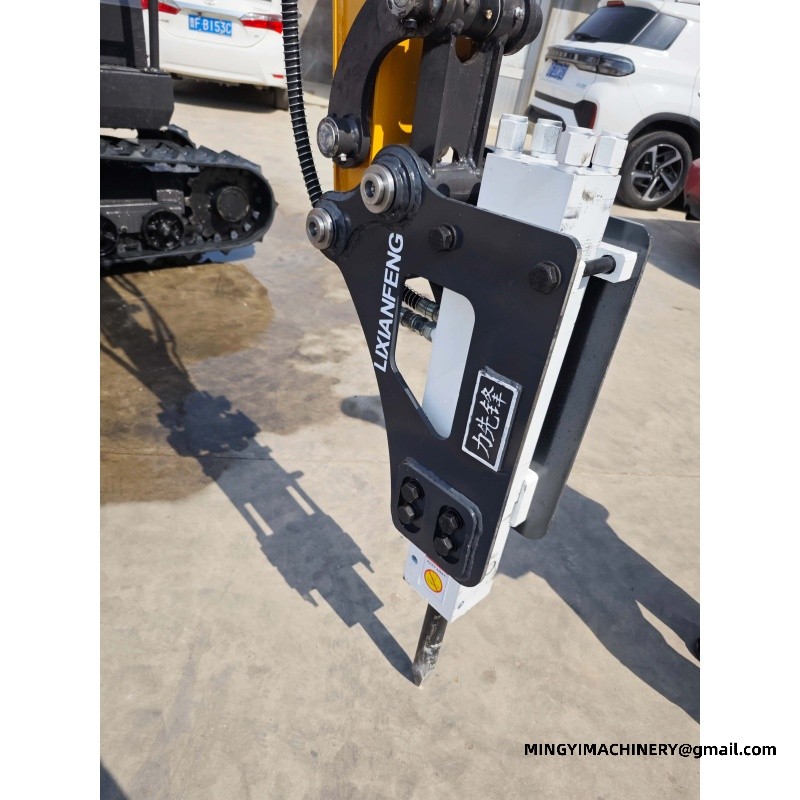
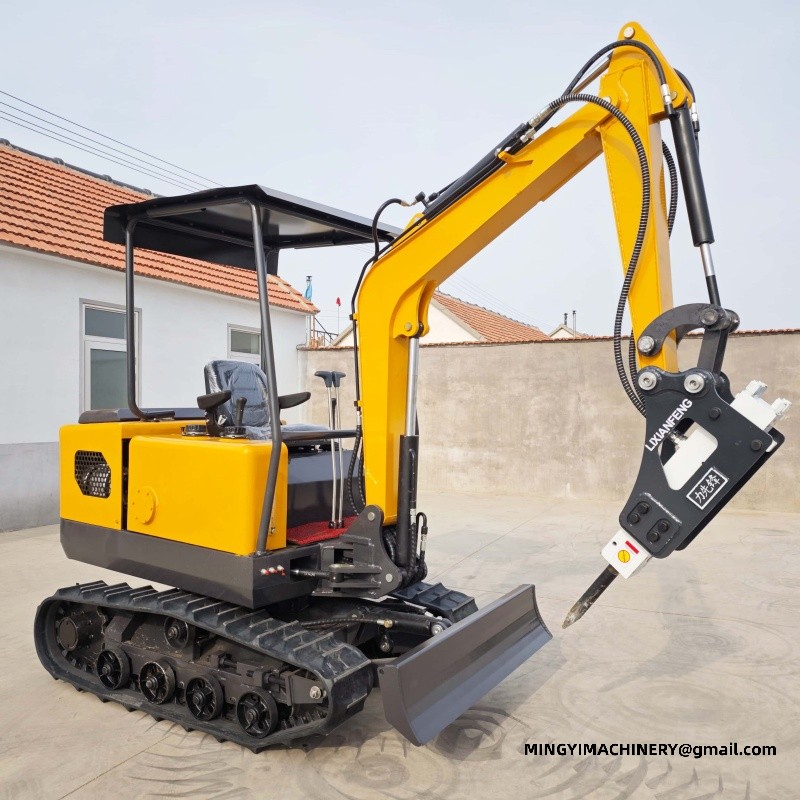
Many buyers come to MINGYI looking for one order that covers both the carrier and the breaking tool, rather than sourcing a hammer separately and hoping it matches. Buying the excavator and breaker as a single package means the two are chosen together, built together and shipped together.
The package covers machines across the 0.8 to 6 tonnes range with the breaker, coupler and buckets matched to the hydraulic circuit of the specific carrier. This page explains what the package contains and how the specification is agreed.
What the package is used for
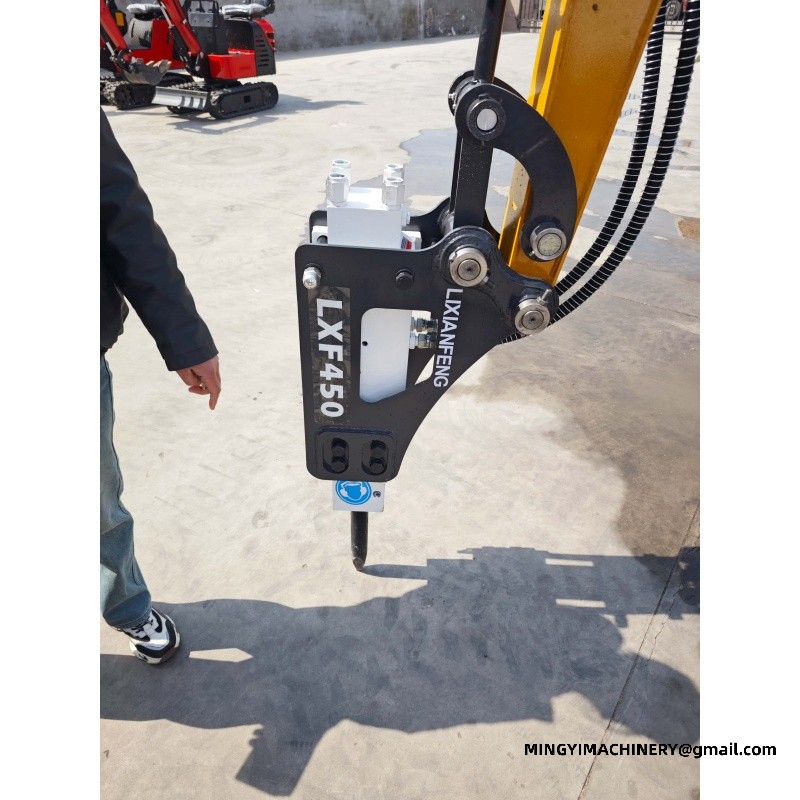
Contractors order this combination for concrete removal, rock trenching, pavement stripping and demolition clearances where hiring a separate breaking service is not economical. The machine digs, the breaker reduces what will not dig, and the bucket loads the result, all with one operator.
Farms and small builders use the same package for breaking hardpan before drainage work and for removing old footings and floor slabs when a shed or yard is rebuilt. The breaker turns a dig only job into a dig, break and clear job.
Agreeing the package specification
The first decision is weight class, because the breaker must sit comfortably within the capacity of the carrier. From there, MINGYI confirms the coupler type, the bucket set and the hydraulic arrangement with the buyer, and records the full list against the machine before assembly.
It is also worth stating your transport arrangements at this point, since tooling and spare hammers add weight and volume to a shipment. The package can be packed so that the breaker and its mounts travel safely with the machine.
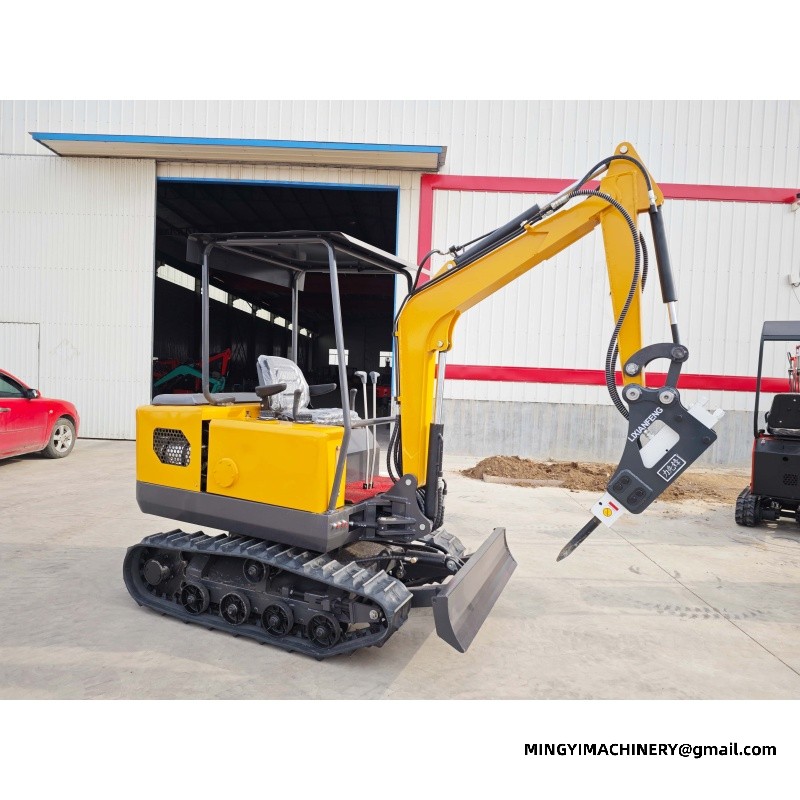
Send your usual material list and the share of breaking versus digging work, and the combination will be specified from that. Mingyi Machinery supplies the documentation for every item in the package, so servicing stays straightforward once the unit is in the field.
Getting mini excavator and breaker package through a narrow gap The first question on most job lists is whether the machine can reach the work at all. The excavator is chosen against the narrowest point on the route - a garden gate, a doorway, a gap between two walls - because a machine that arrives and then cannot pass loses a day, not an hour. Contractors who buy this class of machine normally have one job in mind that nothing else reaches. The purchase order follows the access measurement, not the other way round, and the build sheet is then settled around it. Landscaping and ground care with mini excavator and breaker package Landscape contractors use the unit in daily use for planting holes, pond excavation, grading and retaining work. The machine is light enough to cross finished lawn and narrow enough to work between established trees. Grass cutting heads, rakes and tillers extend a machine of this size into ground care. The same carrier that digs a border in spring can cut and clear the same area later in the season. Noise, dust and working near occupied buildings Work near housing or occupied premises brings constraints that open sites do not. Start times, exhaust condition and how often the equipment on site needs to reverse are the practical limits that neighbours notice. Dust control is often part of the same conversation. Water, timing and work sequence reduce what leaves the site, and agreeing them in advance keeps the machine itself working rather than stopped after a complaint. Lifting and material handling with a mini excavator and breaker package Lifting with a machine built to dig needs a plan. The load, the radius and the ground under the machine in that duty all matter, and the safe figure is the one on the chart rather than the one that looks possible. Stability changes with reach. A load the model in question handles close in becomes a different proposition at full extension, so the working radius belongs in the plan before the lift rather than during it. Working a mini excavator and breaker package in confined spaces Confined sites are decided by dimensions. Overall width, tail swing and the space needed to work the arm are what let the unit on the job operate inside a building, between walls or in a courtyard. Ventilation is the other indoor constraint. Running a machine built for the work inside a closed structure needs air movement, and that is a planning item rather than something to discover after the first hour. Engine options behind mini excavator and breaker package Power unit selection is settled against the service network the buyer already uses. MINGYI offers Kubota D722, Kubota D902, YANMAR, Changchai, Laidong, Runtong, YARMAX, Youpu 2V80 and Youpu 195, so a fleet running one brand of engine can keep the same filters, the same parts supplier and the same mechanic. Engine choice is also an emissions and documentation question for some markets. Listing the available units with the equipment in service enquiry lets the factory confirm what can be supplied and documented for the destination country. Parts, service and support for the excavator Support after delivery is a parts question. Wearing items for this class of machine - filters, belts, track components, bucket teeth and pins - are the items a buyer should plan to hold before the first service interval. Engine parts availability usually drives the engine choice. The unit in daily use built with an engine the local network already carries is serviced from stock rather than from an international order. Quick coupler practice on a machine of this size A quick coupler is the single option that changes how a machine is used day to day. Fitted to the equipment on site, it turns an attachment change from a two-person workshop job into a task the operator does alone in minutes. Couplers are specified early because they affect the arm and the hydraulic kit. Adding one to the machine itself after delivery means new pins, new hoses and a fitment session; adding it at build time is a line on the sheet. Acceptance checks when the model in question arrives A function check before the machine goes to work is worth the hour. Running through the controls, the travel and the attachment circuit on the machine in that duty confirms it is set up as specified and ready for the site. Documentation should arrive with the machine. Parts list, service schedule and any certificates for the unit on the job are what the workshop needs later, and they are much easier to obtain at delivery than in month six. Road and paving work for a machine built for the work Road repair generates short, interrupted jobs - a patch, a drainage connection, a kerb line. The equipment in service is economical here because it travels on a small trailer and starts working minutes after arriving. Patching and reinstatement favour a machine that can work in a lane closure. The excavator occupies less road than a full-size excavator, which reduces the traffic management needed and the length of the closure. Specifying this class of machine against a job list The practical way to specify is to write the job list first: the narrowest access, the deepest trench, the heaviest tool and the surfaces the machine must cross. The unit in daily use is then matched to those four numbers. Useful information to send with an enquiry includes working width, required digging depth, ground conditions and the attachment set. Those four items let the factory specify a machine of this size that fits rather than a generic build. Specification data for the equipment on site Where the machine itself is being specified for a job list, the table below gives the factory figures that matter most: what the machine weighs, how deep and how far it works, and what it measures on a trailer. Every value shown is as built for the model in question; options such as cab, side swing or a telescopic undercarriage change the transport dimensions and are confirmed at order stage. Rubber tracks suit paved and landscaped ground because they spread the machine weight and leave the surface intact. Steel tracks with rubber blocks are specified where the ground is rougher or the working day is longer, and the choice can be made per machine rather than accepted as a factory default. Undercarriage selection is a ground question, not a preference question. The machine in that duty running on finished paving needs rubber; the same machine on demolition rubble or rock wears rubber quickly, so steel with rubber blocks becomes the better answer over a full season.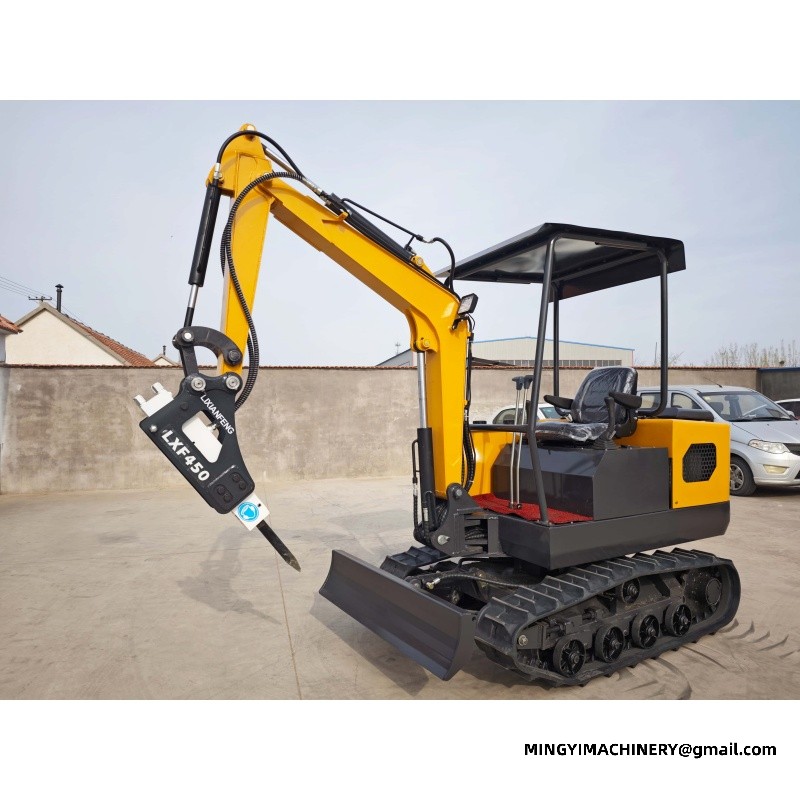
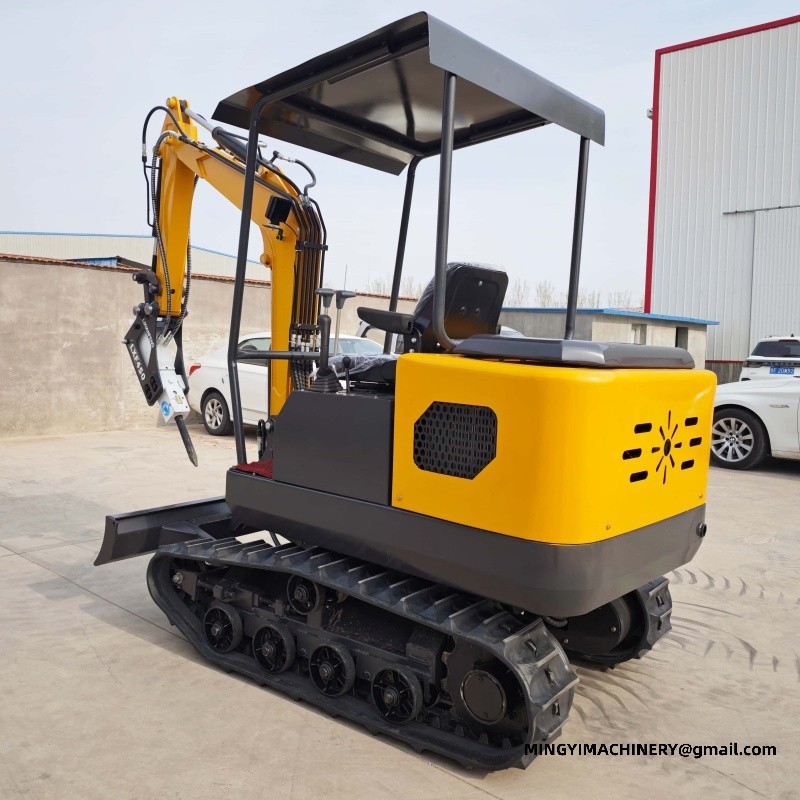
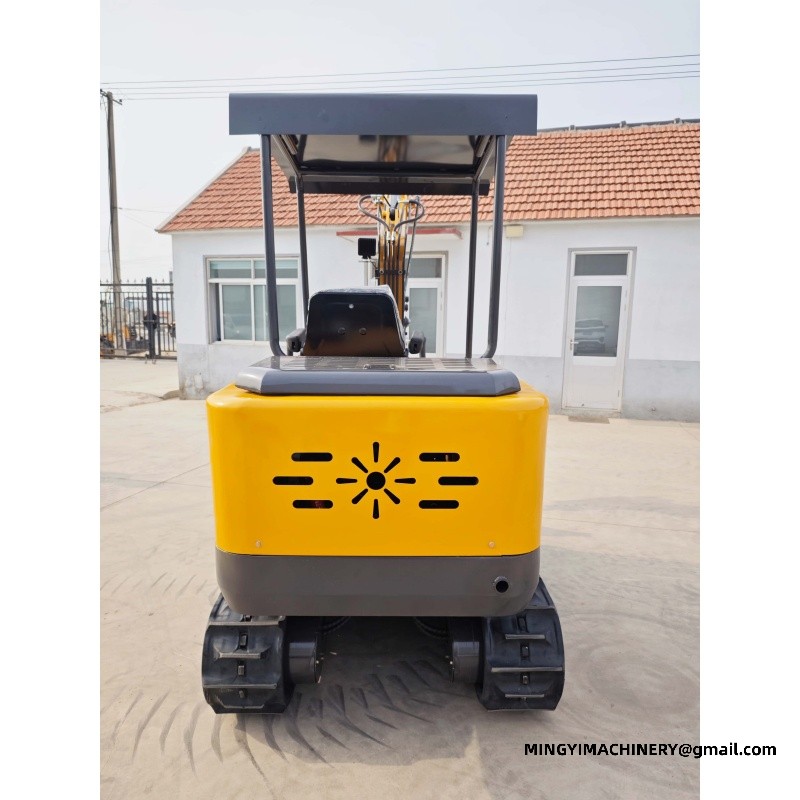
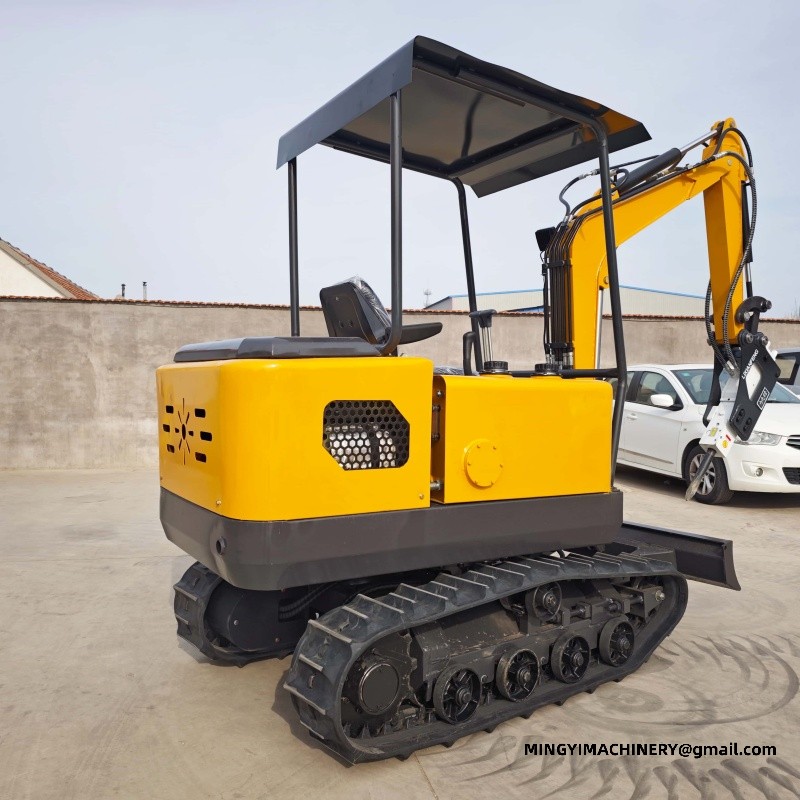
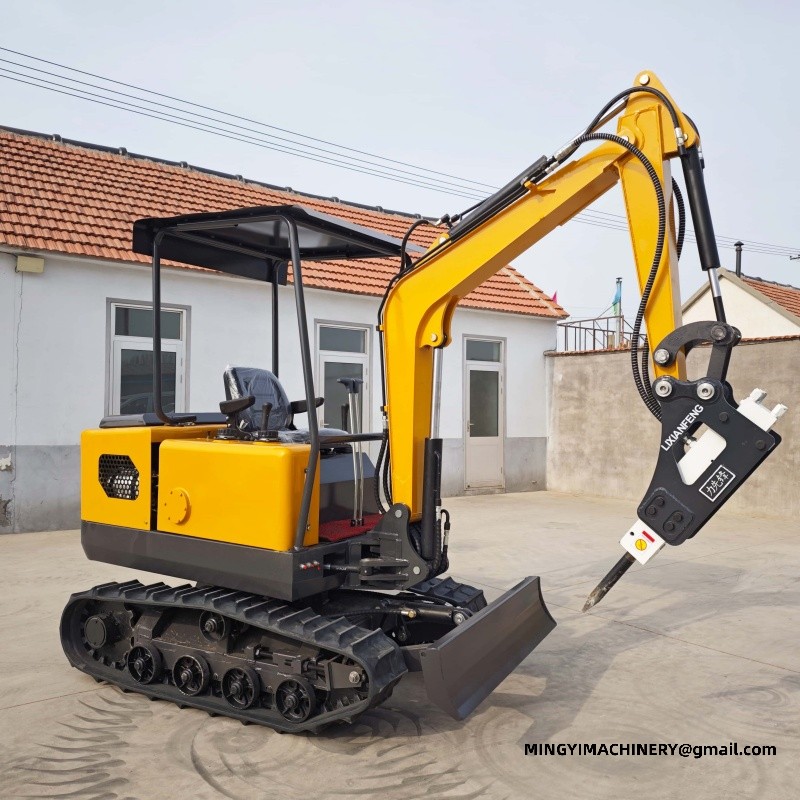
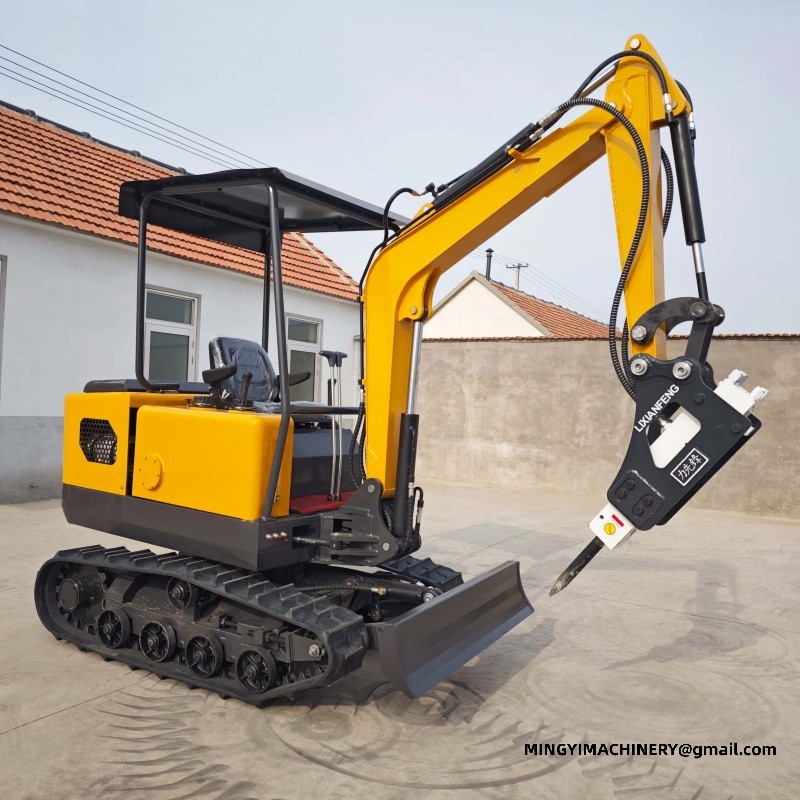
Reference specification — mini excavator range 09W 12W 13W 15W Operating weight 1100 kg (2425.08 lb) 1200 kg (2645.55 lb) 1300 kg (2866.01 lb) 1400 kg (3086.47 lb) Transport size (L×W×H) 1800 × 750 × 1970 mm 2200 × 930 × 2250 mm 2200 × 930 × 2250 mm 2200 × 930 × 2250 mm Max digging depth 1250 mm (49.21 in) 1630 mm (64.17 in) 1630 mm (64.17 in) 1630 mm (64.17 in) Max digging height 2800 mm (110.24 in) 2750 mm (108.27 in) 2750 mm (108.27 in) 2750 mm (108.27 in) Max dumping height 1700 mm (66.93 in) 1960 mm (77.17 in) 1960 mm (77.17 in) 1960 mm (77.17 in) Max digging radius 2570 mm (101.18 in) 2900 mm (114.17 in) 2900 mm (114.17 in) 2900 mm (114.17 in) Max digging distance 1869 mm (73.58 in) 2100 mm (82.68 in) 2100 mm (82.68 in) 2100 mm (82.68 in) Minimum turning radius 1000 mm (39.37 in) 1300 mm (51.18 in) 1300 mm (51.18 in) 1300 mm (51.18 in) Travel speed 3 km/h (1.86 mph) 3 km/h (1.86 mph) 3 km/h (1.86 mph) 3 km/h (1.86 mph) Gradeability 30° 30° 30° 30° Fuel consumption 1-1.3 L/h (0.264—0.343 gal) 1-1.3 L/h (0.264—0.343 gal) 1-1.3 L/h (0.264—0.343 gal) 1-1.3 L/h (0.264—0.343 gal) Fuel tank capacity 8 L (2.11 gal) 10 L (2.64 gal) 10 L (2.64 gal) 10 L (2.64 gal) Hydraulic oil tank 16 L (4.23 gal) 16 L (4.23 gal) 16 L (4.23 gal) 16 L (4.23 gal) Dozer blade lift height 180 mm (7.09 in) 180 mm (7.09 in) 180 mm (7.09 in) 180 mm (7.09 in) Dozer blade drop depth 210 mm (8.27 in) 210 mm (8.27 in) 210 mm (8.27 in) 210 mm (8.27 in)
Q. What is the unit on the job?
A. Attachments turn one carrier into several machines: dig on Monday, grade, lift, mow or drill on Tuesday without the machine leaving site. The quick coupler makes the changeover a minute job at the trench edge, and mechanical tools need no hydraulic lines at all. For breaker package applications the practical route is to send the job list to the factory and let the build sheet answer it - which is exactly what this page invites.
Q. What does the attachment add to daily work?
A. Reach into jobs the bucket alone cannot specification: grading with a tilting bucket, clearing with a rake, drilling with an auger, lifting with a thumb. One carrier, several trades - the machine stays on site earning instead of waiting for a specialist.
Q. Can I see the machine before it ships?
A. Inspection is arranged at the factory, in person or by a scheduled video walk-around - the same session covers paint, decals and attachment fitment for the breaker package specification, so the machine inspected is the machine that ships.
Pre-delivery inspection before a machine built for the work leaves the shop
A machine should be inspected while it is still on our floor rather than after it lands. For the equipment in service that means the engine is run to temperature, the hydraulics are cycled through full travel, and every function is checked against the build sheet before the crate is closed.
Wear items and spares worth holding for the excavator
The parts that stop a machine are rarely the parts that are hardest to find. Filters, belts, seals and the ground engaging tools on this class of machine are easy to hold and slow to replace, which is why they belong on the shelf rather than on an order.
E-mail : sales@mingycn.com
LINE ( ID ): mingyicn
Related pages
mini excavator with grading bucket · mini excavator quick coupler types · Wheel Loader for Construction Site: Tipper Clearance and Cycle Time · Mini Excavators









