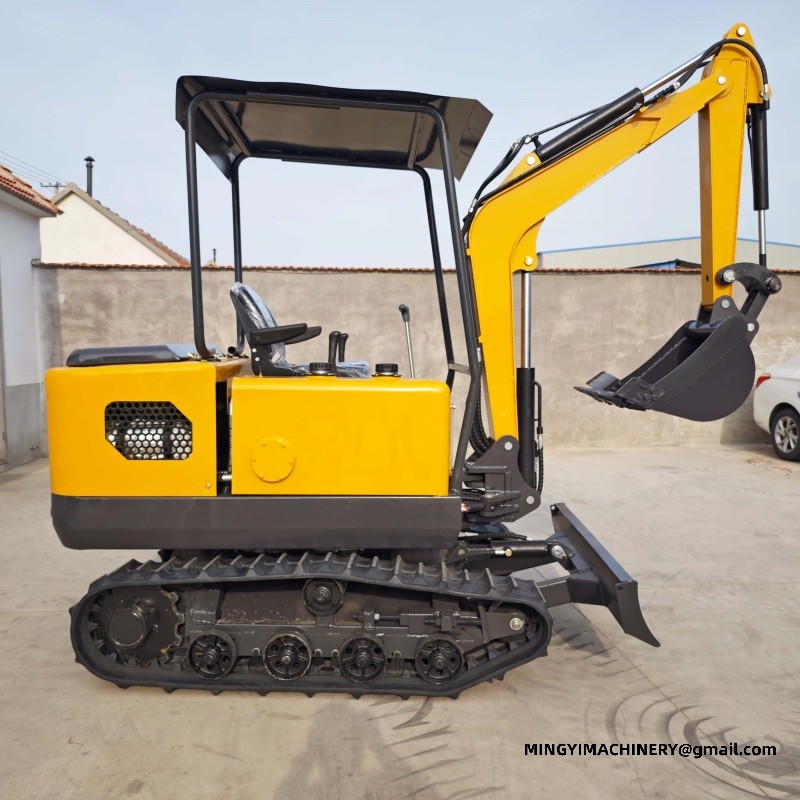
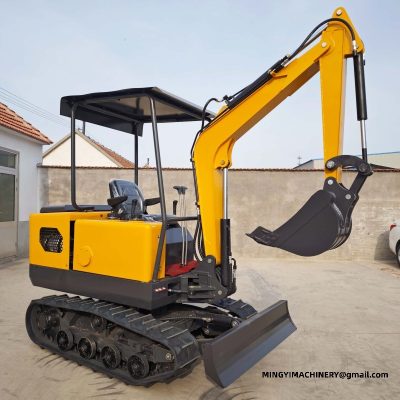
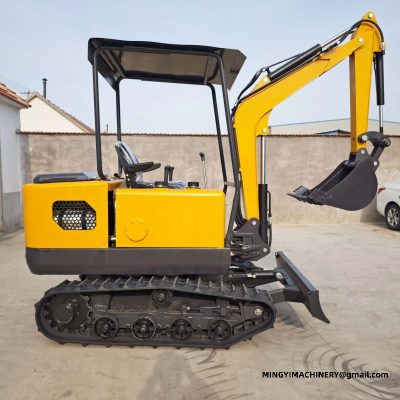
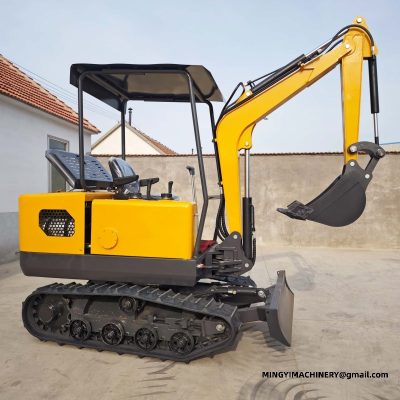
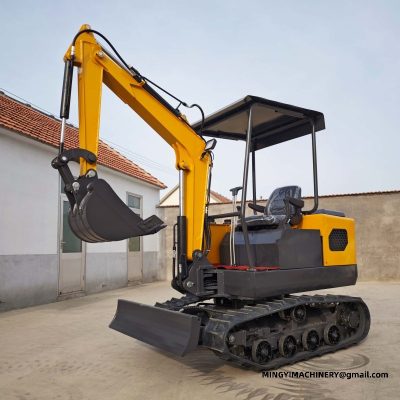
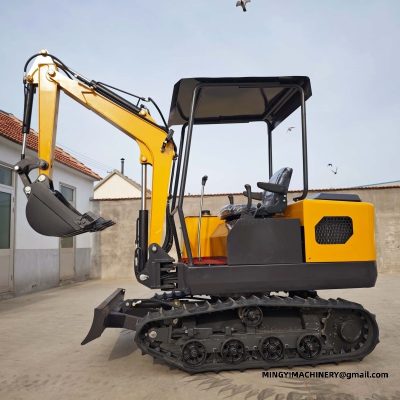
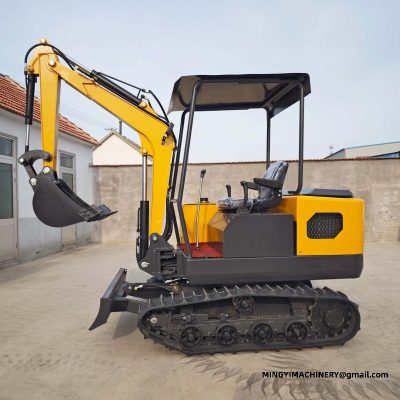
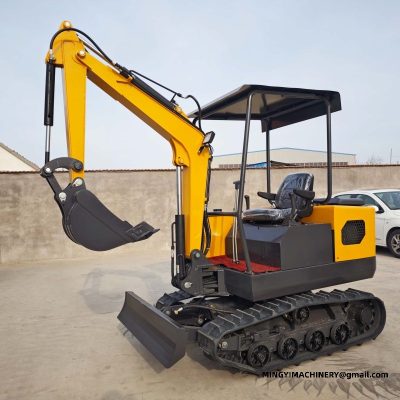
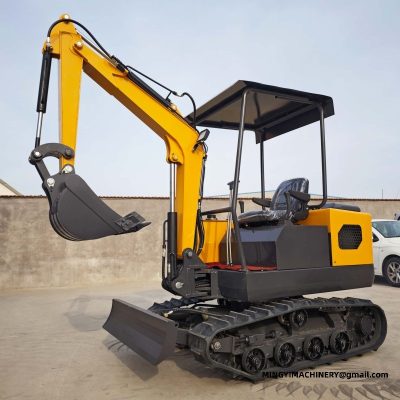
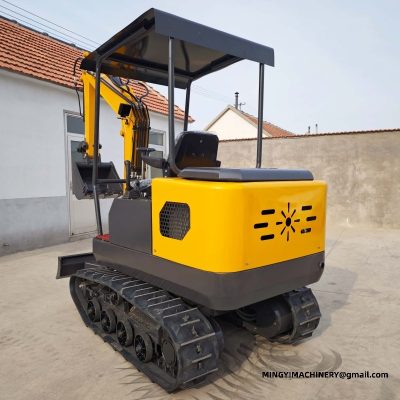
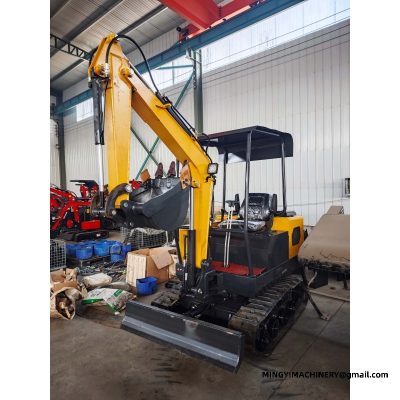
Machines that work on paved surfaces have to travel across them as well. A rubber undercarriage lets a compact excavator drive over asphalt, block paving and concrete aprons between one position and the next without a trailer for every short move.
MINGYI builds compact crawler excavators to order with rubber tracks across the range. Which tracks are fitted, and how they suit the surfaces on the route, is settled at the ordering stage.
Rubber tracks on paved surfaces
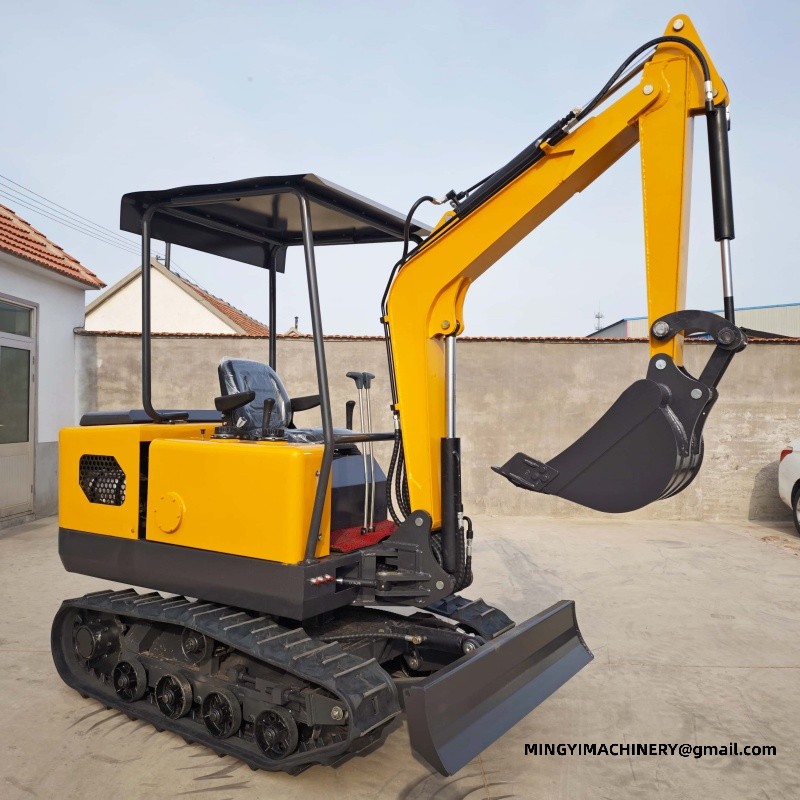
Rubber tracks conform to the surface rather than cutting into it. On asphalt and block paving the machine can be driven along the route and repositioned without leaving the scoring that a steel track would produce.
Kerb edges and thresholds are crossed more easily too, because the flexible track rolls over a small step instead of digging in. That saves the operator from laying mats or timber every time the machine changes position.
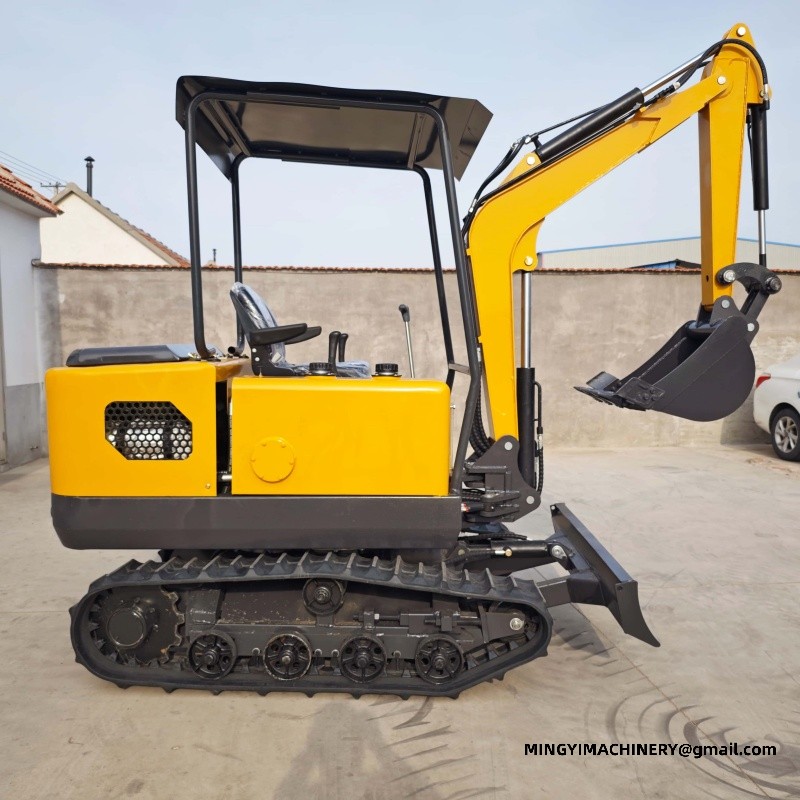
Short moves between adjacent work areas
The most common use of this is the short move. When a machine is digging footings at one end of a site and then a drain at the other, a rubber undercarriage lets it travel directly rather than being loaded and unloaded.
The same property suits work inside a completed development, where the machine has to cross driveways that are already finished. Undercarriage width and cab form are chosen with that route in mind before the machine is built.
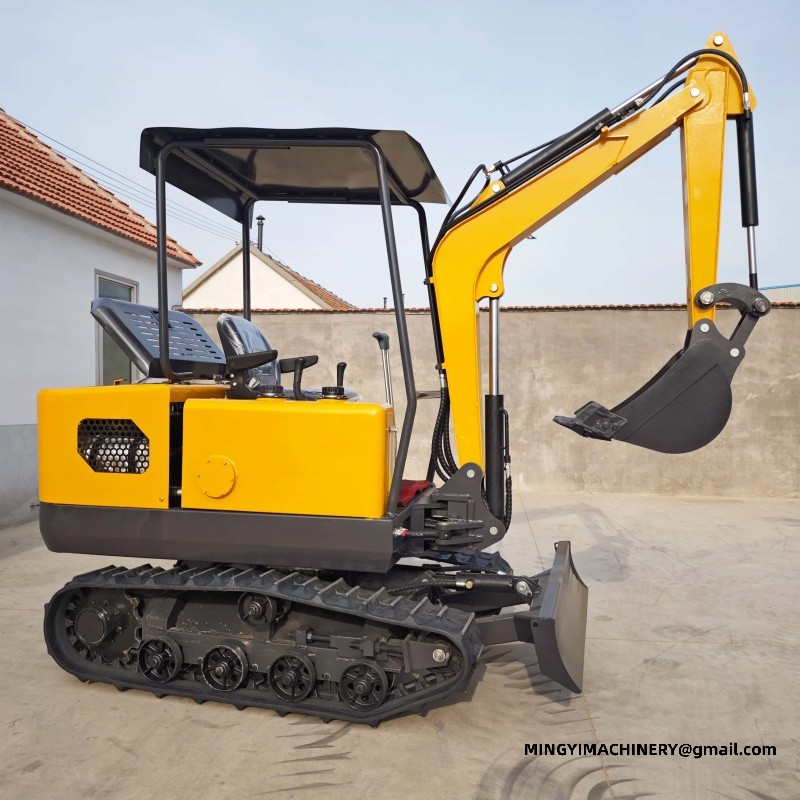
Where a compact excavator spends its day crossing finished ground, the undercarriage is the specification that matters most. Rubber tracks keep the machine moving between positions without damaging the surfaces it crosses.
Attachments that turn rubber track excavator for paved travel into several machines The base machine is a carrier; the tool on the end of the arm decides the task. The excavator fitted with a toothed bucket digs, and the same machine with a breaker, an auger or a grab does work that would otherwise need a second unit on site. Attachment lists are best written before delivery. Specifying this class of machine with the tools the job list needs avoids the work and delay of adding hydraulics later, and a quick coupler makes the swap a few minutes instead of a workshop job. Landscaping and ground care with rubber track excavator for paved travel Landscape contractors use the unit in daily use for planting holes, pond excavation, grading and retaining work. The machine is light enough to cross finished lawn and narrow enough to work between established trees. Grass cutting heads, rakes and tillers extend a machine of this size into ground care. The same carrier that digs a border in spring can cut and clear the same area later in the season. Acceptance checks when a rubber track excavator for paved travel arrives A function check before the machine goes to work is worth the hour. Running through the controls, the travel and the attachment circuit on the equipment on site confirms it is set up as specified and ready for the site. Documentation should arrive with the machine. Parts list, service schedule and any certificates for the machine itself are what the workshop needs later, and they are much easier to obtain at delivery than in month six. Trailering and moving rubber track excavator for paved travel Transport weight and width decide whether a machine needs a specialist haulier. The model in question sized to travel on a standard plant trailer behind a suitable vehicle moves with the crew rather than on a scheduled low loader. Loading practice matters as much as the numbers. The machine in that duty is driven up ramps under its own power with the boom lowered and the tracks aligned, and secured at the points the manufacturer specifies. Noise, dust and working near occupied buildings Work near housing or occupied premises brings constraints that open sites do not. Start times, exhaust condition and how often the unit on the job needs to reverse are the practical limits that neighbours notice. Dust control is often part of the same conversation. Water, timing and work sequence reduce what leaves the site, and agreeing them in advance keeps a machine built for the work working rather than stopped after a complaint. Boom configuration for rubber track excavator for paved travel Extended and offset boom configurations change reach and working range. The equipment in service with a longer arm reaches further but lifts less at full extension, so the specification is set against the deepest and furthest point on the job list. Detachable boom sections are used where transport length matters. The excavator that has to travel on a standard trailer can be built so the arm comes off for the road and goes back on at the site. Canopy or enclosed cab on this class of machine A canopy keeps the machine light and the operator aware of the surroundings, which suits short jobs in warm weather. A fully enclosed cab is specified where rain, dust or cold are part of the working year, and it can be added to the unit in daily use as a retrofit rather than only at build time. Enclosure also changes noise and dust exposure. A sealed cab on a machine of this size keeps dust out on dry sites and lets the machine work through weather that would otherwise stop a canopy machine for the day. Working on slopes and uneven ground with the equipment on site Slope work is a stability question before it is a traction question. Knowing the gradient the machine itself is rated for, and working across rather than straight up where the ground allows, removes most of the risk. Ground that looks level often is not. The model in question crossing a filled trench, a soft edge or a hidden void behaves differently from one on undisturbed ground, and those are the places worth walking before driving. OEM and fleet customisation of the machine in that duty Customisation also covers the specification sheet. A fleet buyer may want every machine built for the work delivered with the same coupler, the same engine and the same tool kit so training and parts stock stay simple. Documentation can be prepared to suit the importer. Manuals, parts books and decal sets for the unit on the job can be supplied with the buyer's own branding where the order size justifies it. Matching the equipment in service to ground conditions Hard and abrasive ground reverses the specification. On rock, demolition rubble or sharp gravel, steel tracks with rubber blocks on the excavator survive conditions that cut a rubber belt quickly. Mixed sites are common and argue for a compromise specification. Most buyers choose rubber for this class of machine and accept the wear, unless the majority of the work is on material that will damage it. Trenching work with the unit in daily use Service trenches are the most common reason a machine of this size is hired. Water, sewage, cable and gas runs are narrow, shallow and often close to existing services, which is exactly the work a full-size machine cannot do safely. Depth control matters more on service work than speed. The equipment on site working beside live services is chosen because it can be placed precisely and stopped instantly, which is what the job actually requires. Specification data for the machine itself Buyers comparing the model in question usually start from four numbers - weight, digging depth, reach and transport width - because those are the ones that decide whether the machine can be delivered and whether it can do the job once it is there. Every value shown is as built for the machine in that duty; options such as cab, side swing or a telescopic undercarriage change the transport dimensions and are confirmed at order stage. Daily maintenance on the unit on the job is a short list: engine oil level, coolant, track tension, hydraulic oil level and a look at the hoses. Ten minutes at the start of the shift prevents most of the failures that stop a machine. Track tension is the item most often neglected. A machine built for the work run with slack tracks wears the undercarriage and can throw a track on a turn; run too tight, the same components wear from the other direction.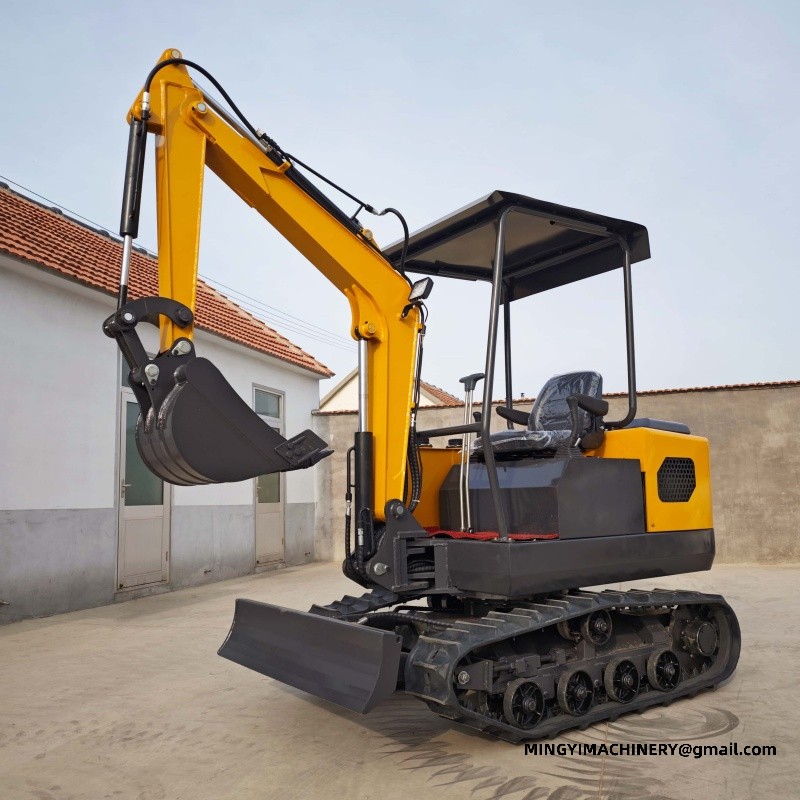
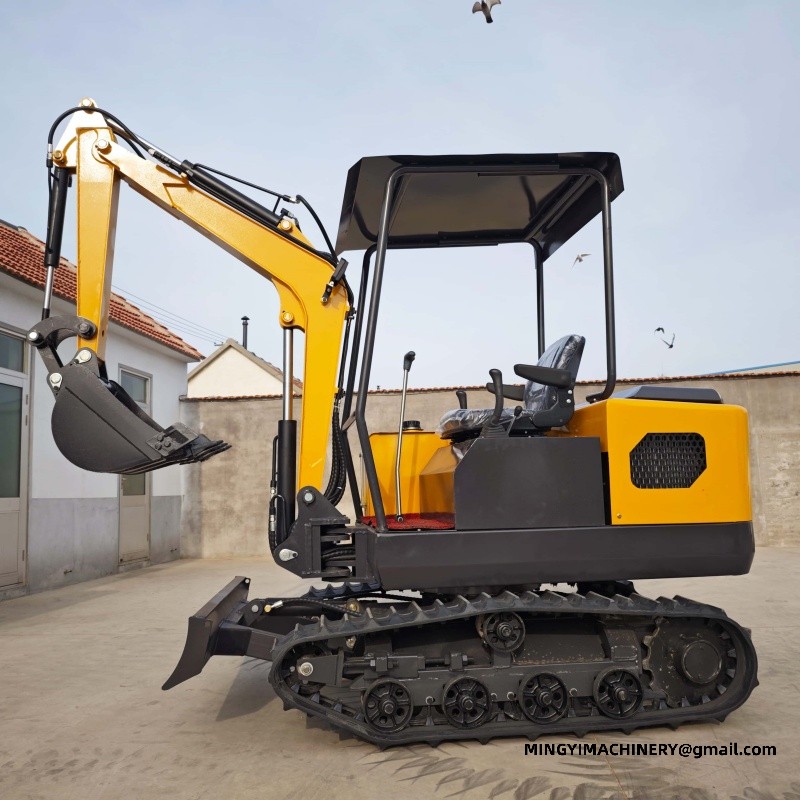
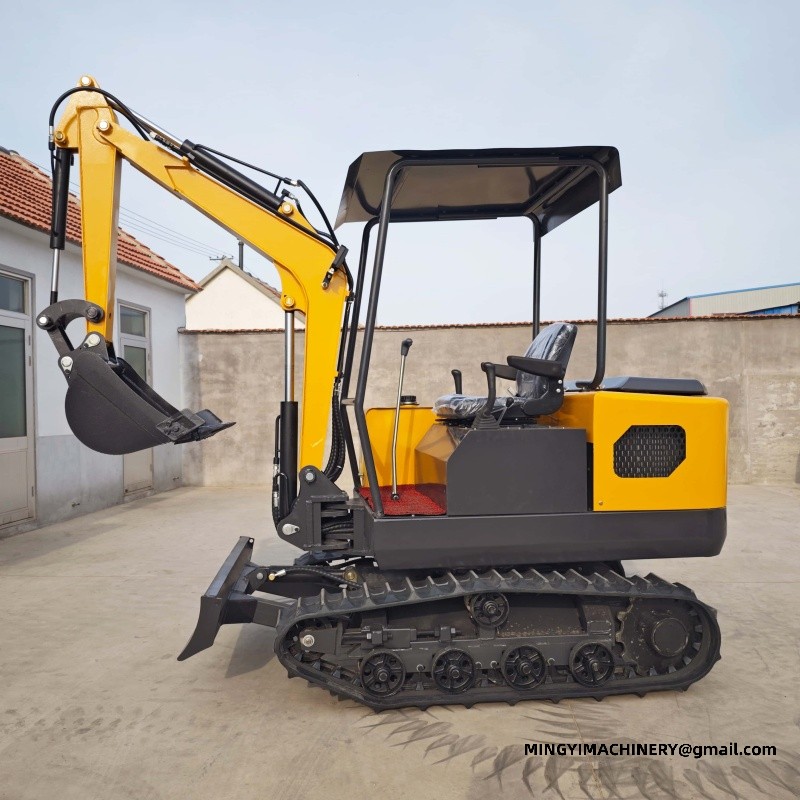
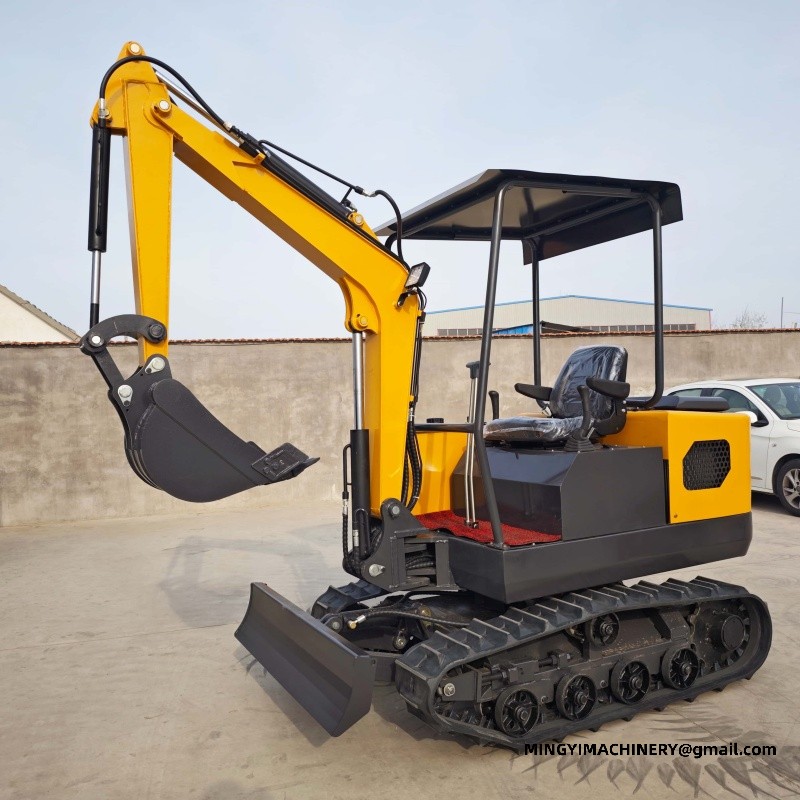
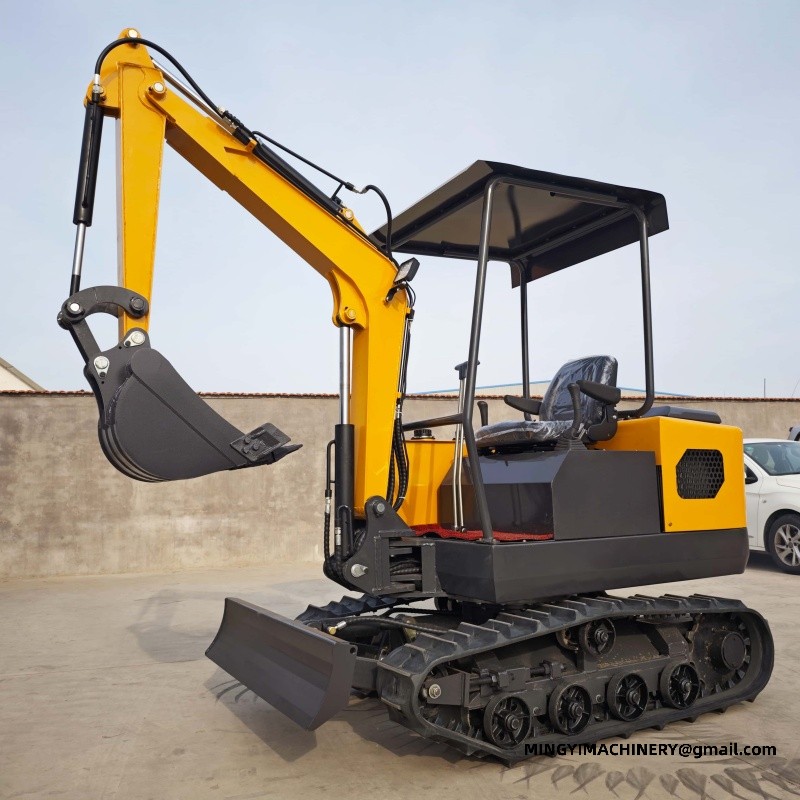
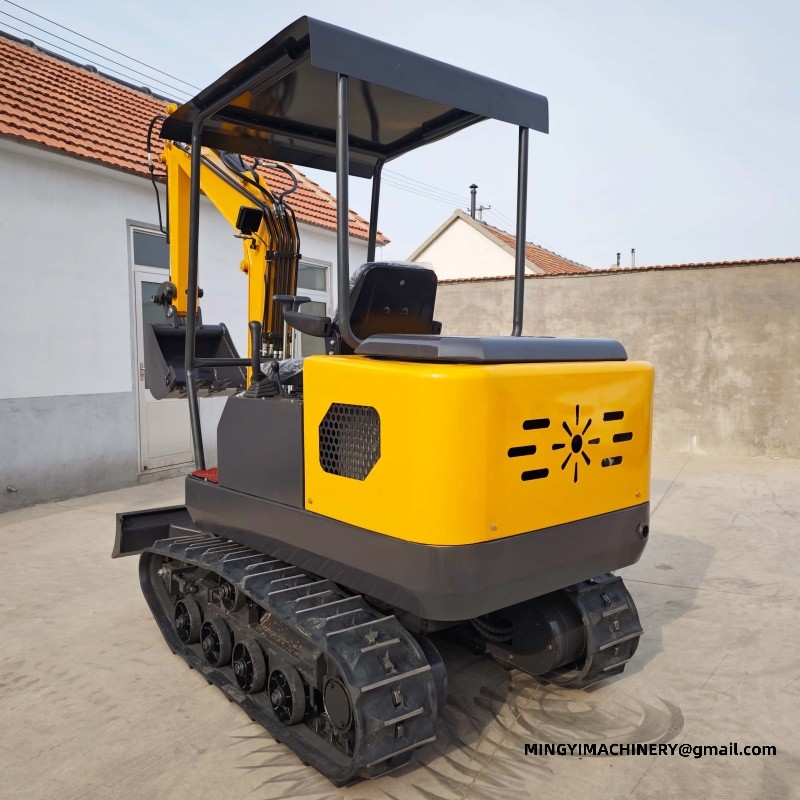
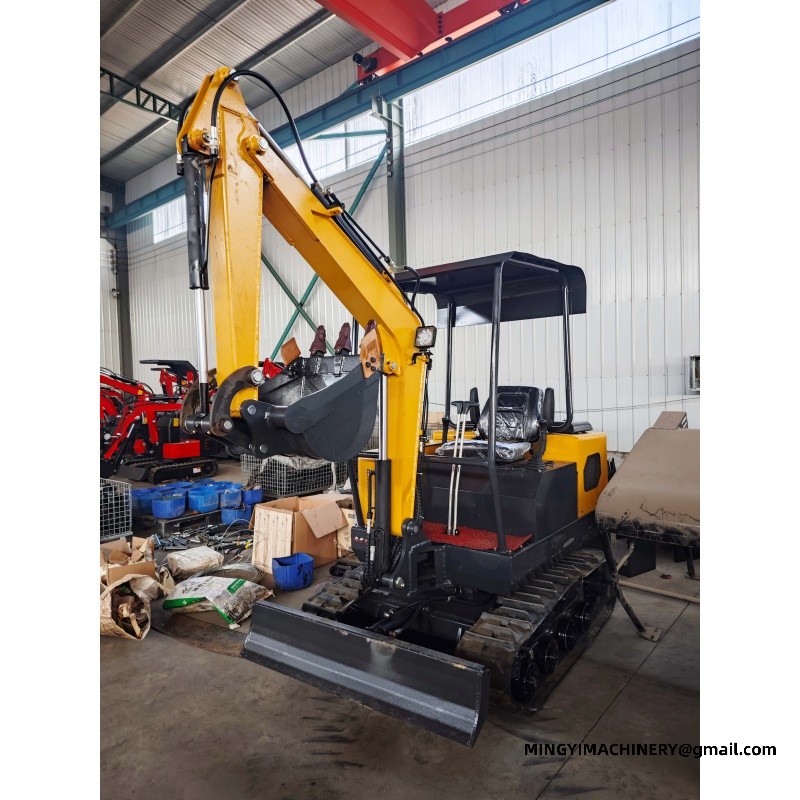
Reference specification — mini excavator range 20-1W 15L 20-2L 30-2L Operating weight 1800 kg (3968.32 lb) 1400 kg (3086.47 lb) 1900 kg (4188.78 lb) 2400 kg (5291 lb) Transport size (L×W×H) 2550 × 1100 × 2200 mm 2200 × 930 × 2250 mm 2600 × 1300 × 2344 mm 2800 × 1500 × 2500 mm Max digging depth 1800 mm (70.87 in) 1700 mm (66.93 in) 2100 mm (82.68 in) 2200 mm (86.61 in) Max digging height 2820 mm (111.02 in) 2750 mm (108.27 in) 2880 mm (113.39 in) 2900 mm (114.17 in) Max dumping height 2050 mm (80.71 in) 1960 mm (77.17 in) 2100 mm (82.68 in) 2100 mm (82.68 in) Max digging radius 3050 mm (120.08 in) 2900 mm (114.17 in) 3215 mm (126.57 in) 3330 mm (131.1 in) Max digging distance 2300 mm (90.55 in) 2300 mm (90.55 in) 2460 mm (96.85 in) 2700 mm (106.3 in) Minimum turning radius 1450 mm (57.09 in) 1450 mm (57.09 in) 1587 mm (62.48 in) 1555 mm (61.22 in) Travel speed 5 km/h (3.11 mph) 3 km/h (1.86 mph) 5 km/h (3.11 mph) 7 km/h (4.35 mph) Gradeability 30° 30° 30° 30° Fuel consumption 2-3 L/h (0.528—0.793 gal) 1-1.3 L/h (0.264—0.343 gal) 2-3 L/h (0.528—0.793 gal) 2-3 L/h (0.528—0.793 gal) Fuel tank capacity 16 L (4.23 gal) 10 L (2.64 gal) 16 L (4.23 gal) 16 L (4.23 gal) Hydraulic oil tank 18 L (4.76 gal) 16 L (4.23 gal) 18 L (4.76 gal) 18 L (4.76 gal) Dozer blade lift height 180 mm (7.09 in) 180 mm (7.09 in) 180 mm (7.09 in) 230 mm (9.06 in) Dozer blade drop depth 210 mm (8.27 in) 210 mm (8.27 in) 210 mm (8.27 in) 280 mm (11.02 in)
Q. Who chooses the equipment in service?
A. The undercarriage is the most lengthy part of a compact digger to replace, which makes track choice a buying decision rather than an accessory. Most owners change ground through the year, and a machine that moves between track types keeps earning on both. The excavator is one of the pages buyers land on when comparing machines for paved travel, and the factory treats it as a specification conversation rather than a catalogue line.
Q. Can I change track type after purchase?
A. Yes; conversion is a planned job rather than a swap, and the pages on steel track replacement and rubber-to-steel conversion describe what is involved. Confirm the machine model and the target ground with the factory and the parts arrive as a matched set.
Q. What about colours and branding?
A. OEM colours and decals are part of the build: private-label machines carry the buyer brand on the standard MINGYI platform, and the paved travel order confirms colours, marks and documents before production starts.
Cold weather and winter care for this class of machine
Cold exposes weak batteries, thick oil and water in the fuel. Preparing the unit in daily use for winter means the right grade of oil, a battery in good condition and fuel that will not wax in the tank overnight.
Wear items and spares worth holding for a machine of this size
Wear items are predictable once the machine has settled in. After the first service interval the pattern on the equipment on site is visible, and the parts that were replaced become the parts that are kept.
E-mail : sales@mingycn.com
LINE ( ID ): mingyicn
Planning utilisation for rubber track excavator for paved travel
Utilisation is decided in the planning office as much as on site, through the number of machines, the haul route and the order of the work.
Seasonal peaks are easier handled with a clear service window before them than with a repair during them.
Keeping one machine as the planned spare is simpler than scheduling around an unplanned stop in the middle of a programme.
Common operator mistakes with rubber track excavator for paved travel
Most early damage comes from three habits, namely working with the wrong attachment angle, carrying loads too high and skipping the walk-around.
Related pages
fully hydraulic mini excavator · off grid diesel mini excavator · China Wheel Loader Factory Supplier: Fleet Orders and Spares · Mini Excavators









