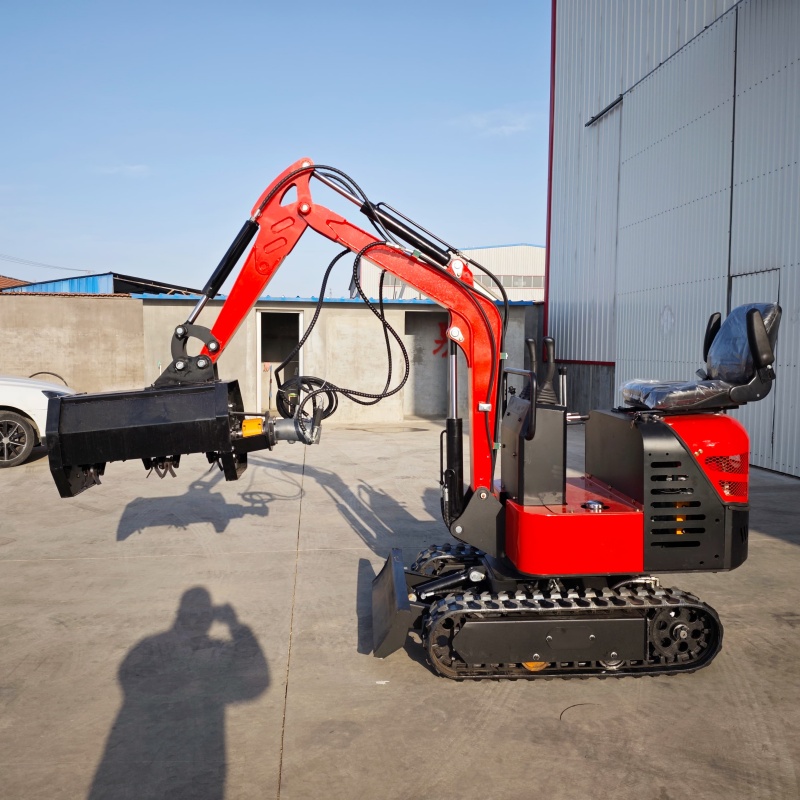
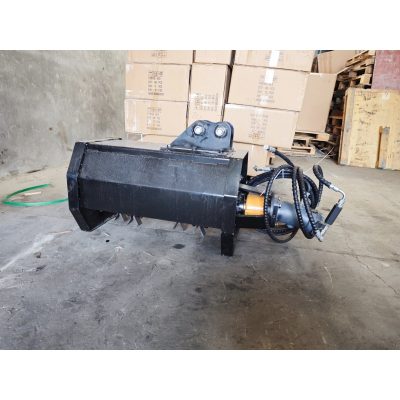
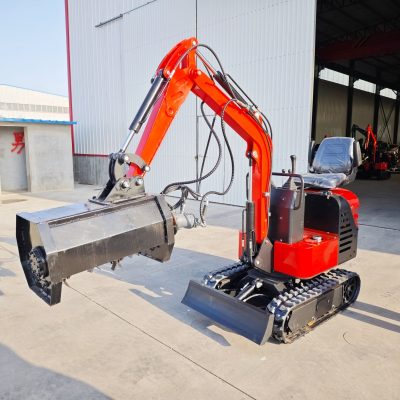
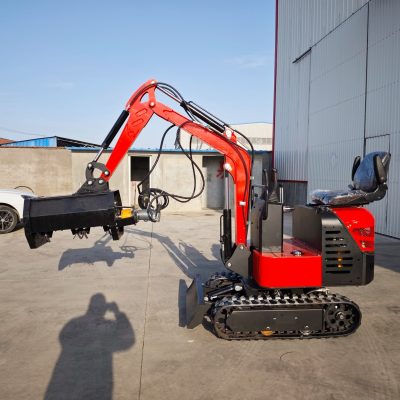
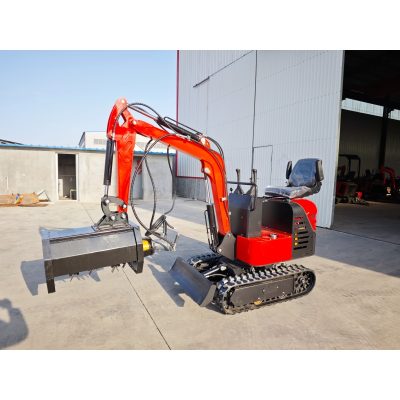
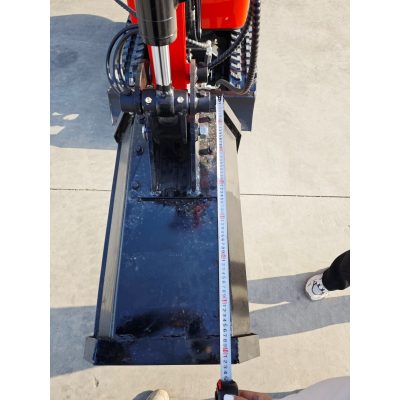
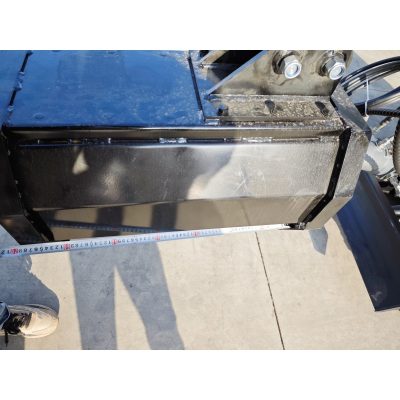
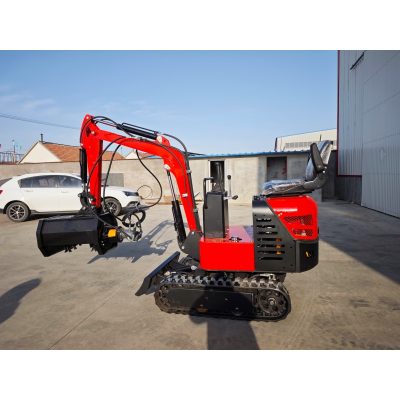
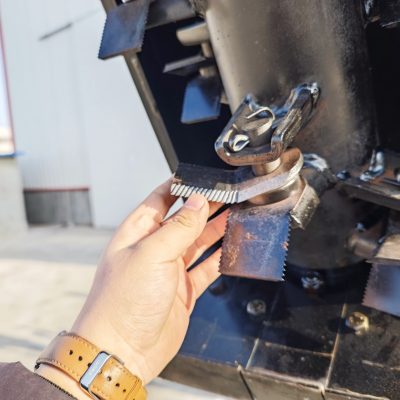
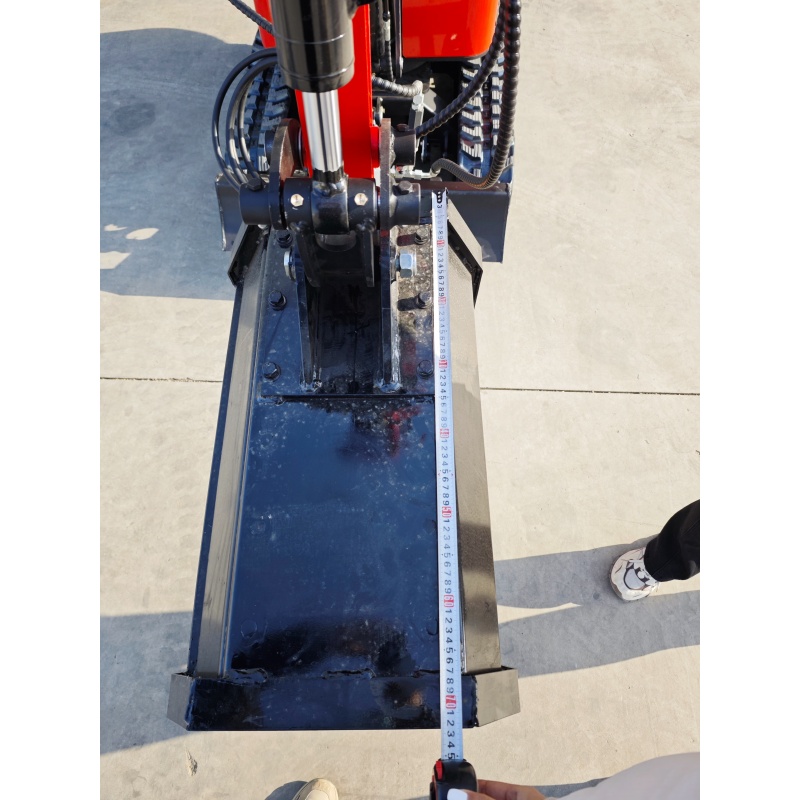
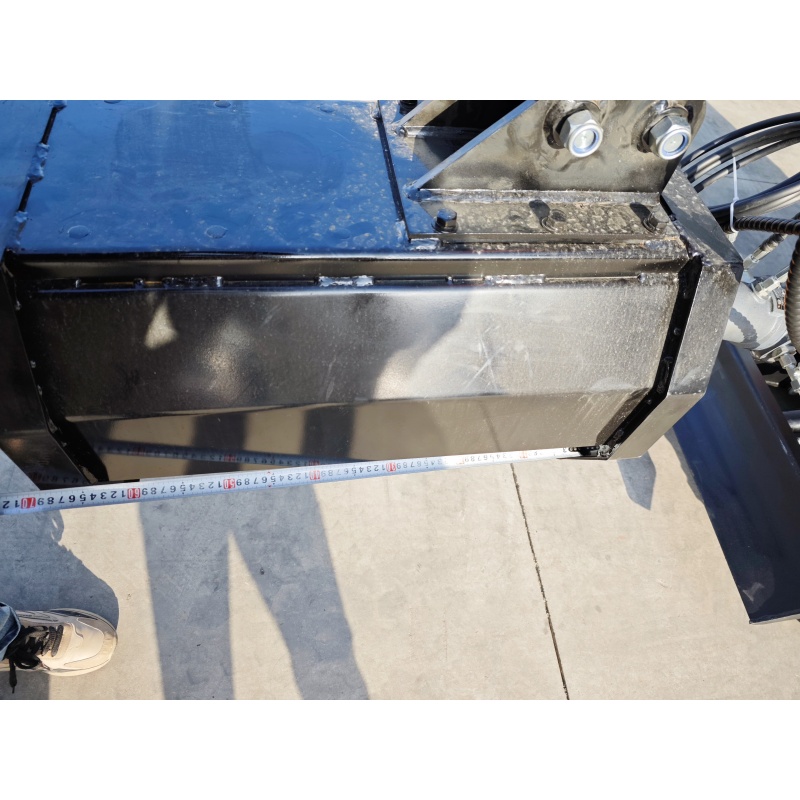
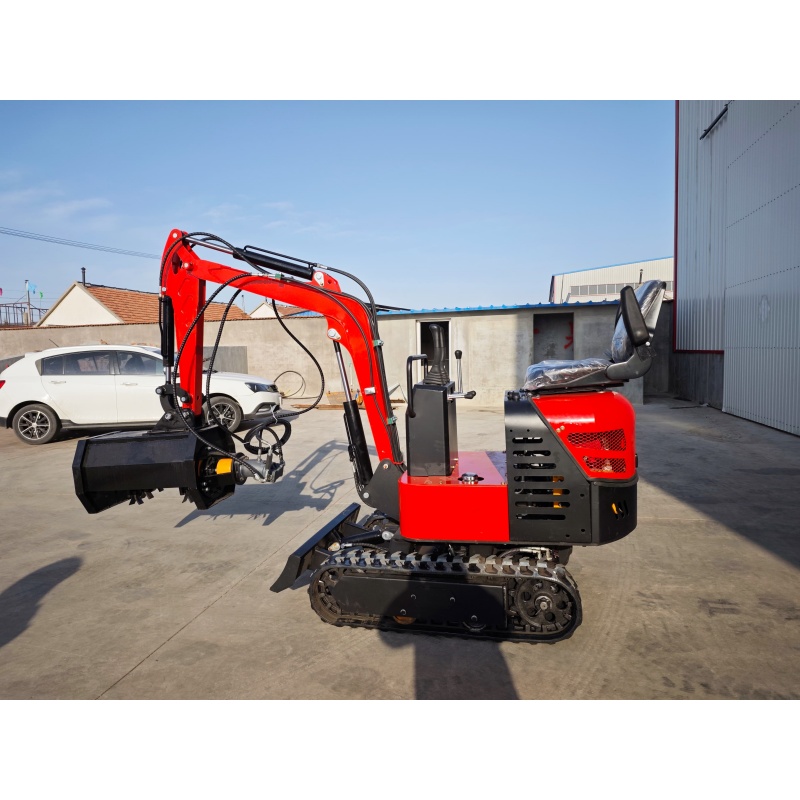
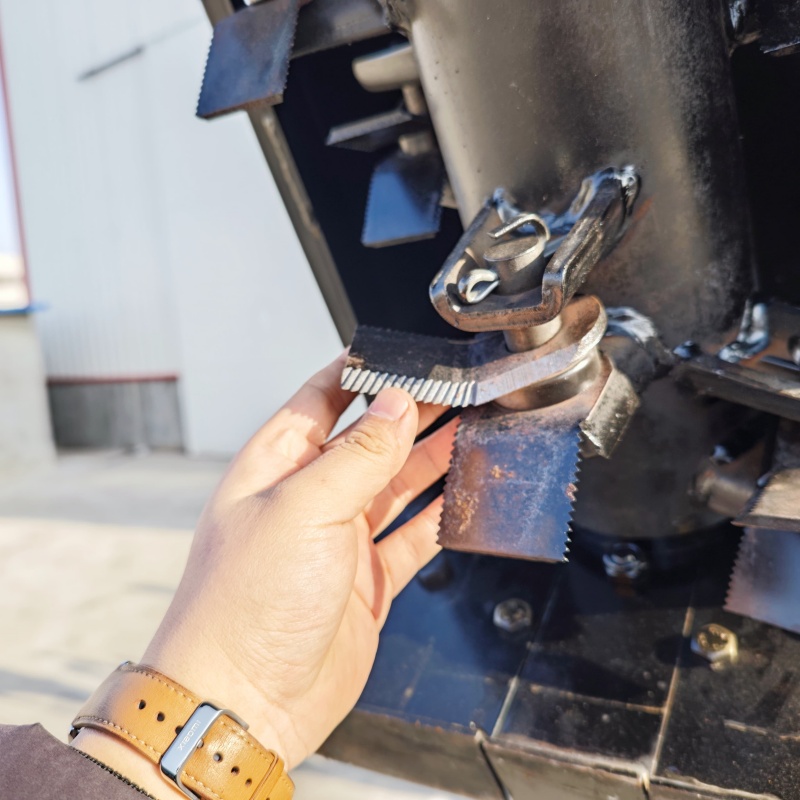
A grass cutting head turns a compact excavator into a mower that can reach banks, ditches and fence lines a ride-on machine cannot follow. The carrier stays on firm ground while the boom carries the cutting head out over the slope.
MINGYI supplies machines that accept this style of attachment, and the hydraulic flow the head needs is part of the specification rather than an afterthought. The machine is built to order, so the head, the coupler and the track type are settled before production.
Cutting banks, ditches and fence lines from the boom
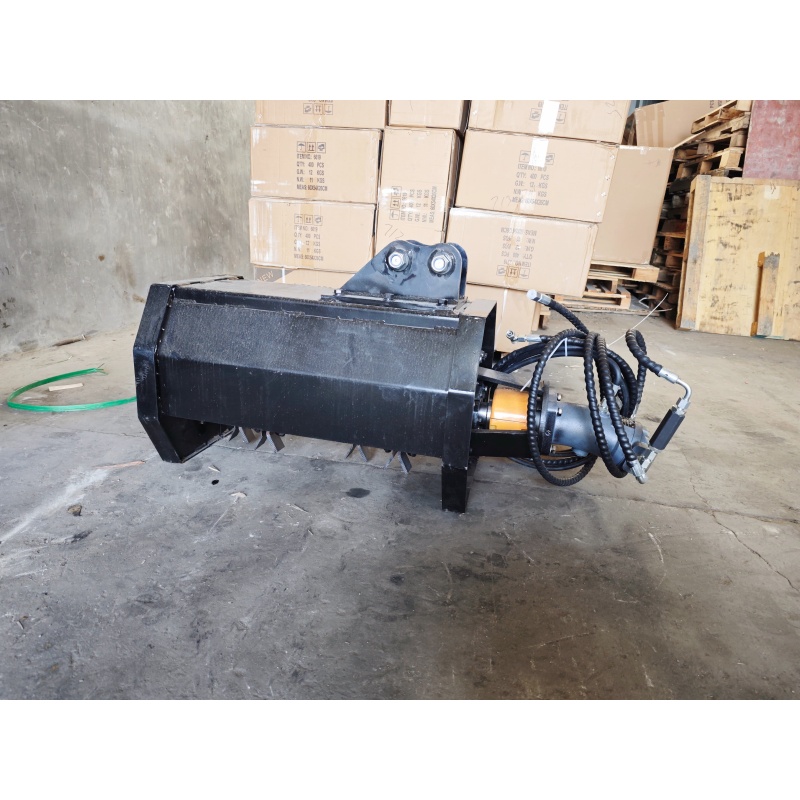
The advantage of a boom mounted head is reach. A verge that slopes away from the road, or a ditch whose banks would not carry a wheeled mower, can be cut with the carrier parked on level ground and the arm extended.
Control matters more than cutting width on this kind of work. The operator trims along the fence line and around posts without repositioning the machine, which keeps the cycle steady across a long stretch of boundary.
Hydraulics and head selection for grass cutting work
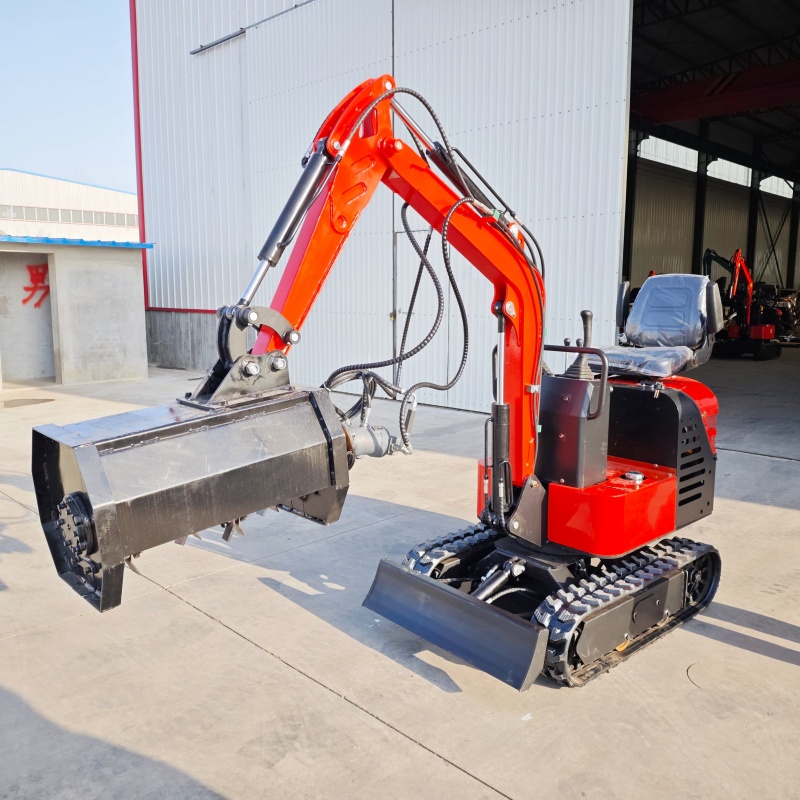
A cutting head needs a steady oil flow and a return path suited to the motor. On a load sensing machine the pump matches output to demand, so the head runs evenly and the oil stays cooler than on a fixed displacement system.
Grass, reeds and light scrub call for different heads, and the choice is recorded against the machine at the ordering stage. A quick coupler allows the head to be exchanged for a bucket when the same carrier has to open a ditch as well.
A mower head extends a small excavator into work it would otherwise never see. For councils, farms and grounds teams the value lies in one carrier covering digging and verge cutting across the same season.
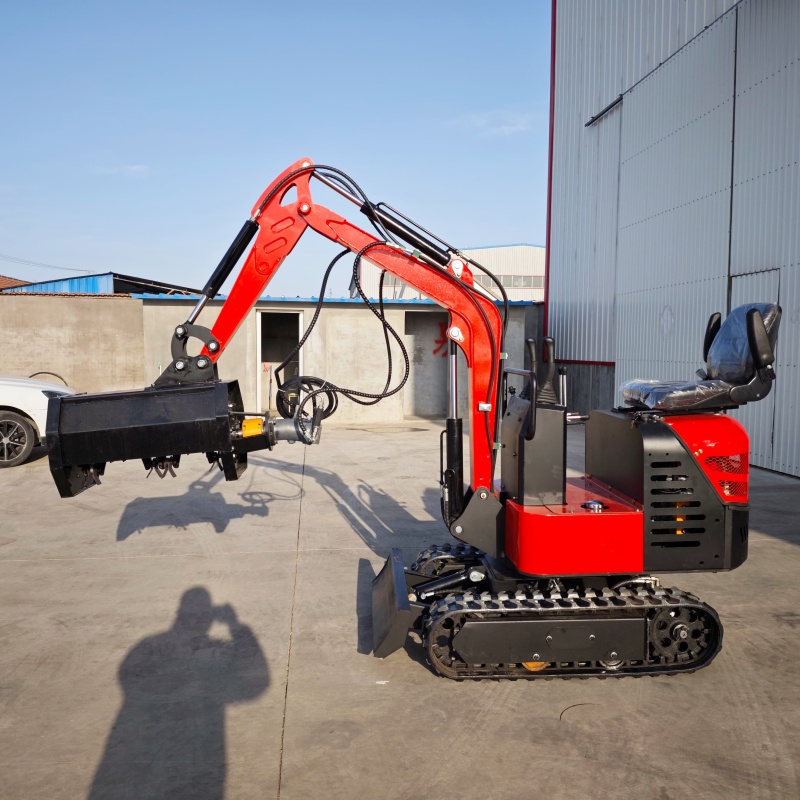
Canopy or enclosed cab on a mini excavator grass cutting head A canopy keeps the machine light and the operator aware of the surroundings, which suits short jobs in warm weather. A fully enclosed cab is specified where rain, dust or cold are part of the working year, and it can be added to the excavator as a retrofit rather than only at build time. The cab decision follows the climate and the hours. Operators working a full shift in this class of machine benefit from a sealed cab with wipers and heating; operators stepping on and off every few minutes usually prefer the canopy for the visibility and the quick exit. Lifting and material handling with a mini excavator grass cutting head Stability changes with reach. A load the unit in daily use handles close in becomes a different proposition at full extension, so the working radius belongs in the plan before the lift rather than during it. Ground condition under the machine is part of every lift. Soft or uneven support is the common factor in handling incidents, and checking it takes less time than recovering a machine of this size that has settled. Getting mini excavator grass cutting head through a narrow gap The first question on most job lists is whether the machine can reach the work at all. The equipment on site is chosen against the narrowest point on the route - a garden gate, a doorway, a gap between two walls - because a machine that arrives and then cannot pass loses a day, not an hour. Access decides the machine before output does. With the machine itself the limiting dimension is usually the widest point on the way in, so measuring the gate, the corridor and the turning space first saves a wasted delivery and a second visit. Orchard, vineyard and farm use of mini excavator grass cutting head Orchard and vineyard work is carried out between rows. The model in question with a narrow chassis and a swing boom works down the row without damaging the trees, which is the reason a full-size machine is not used at all. Ditching, fertilising and drainage on farmland suit the machine in that duty because the work is spread over a large area in short bursts. The machine travels behind a pickup and works where it stops. Running mini excavator grass cutting head in a rental fleet Rental fleets buy for utilisation, not for a single job. The unit on the job with a quick coupler and a common attachment standard is hired more often because it suits more of the calls that come in. Fleet buyers also weigh transport. A machine built for the work that a customer can tow on a normal licence and a standard trailer is a hire that does not need a delivery truck, which changes how often it goes out. What owners should plan for beyond the mini excavator grass cutting head Purchase decision is the visible part of the effort. Fuel, filters, tracks or tyres, the operator and the transport between sites are the items that decide what the equipment in service actually demands over a few seasons, and they are worth listing before the order. The useful comparison is demand per working hour, not demand per machine. The excavator that works more hours a year spreads its standing takes over more output, which is why utilisation usually matters more than the invoice figure. Acceptance checks when this class of machine arrives Delivery day is the best time to find a problem. Checking the specification against the order, the fluid levels, the fasteners and any transport damage while the machine of this size is still on the trailer is faster than claiming later. Documentation should arrive with the machine. Parts list, service schedule and any certificates for the unit in daily use are what the workshop needs later, and they are much easier to obtain at delivery than in month six. Hydraulic circuits on the equipment on site Auxiliary hydraulic lines are what let a machine drive a tool rather than only a bucket. The machine itself specified with the right circuits and flow runs a breaker or an auger without an add-on power pack bolted to the frame. Flow and pressure are matched to the tool, not to the machine size. Asking for the attachment list first means the model in question leaves the factory with circuits that suit the heaviest tool the buyer intends to run. Working the machine in that duty through the seasons Weather decides which days are productive. Rain turns some ground unusable and cold changes how the unit on the job starts and warms up, so planning the wet months around maintenance is more useful than planning around output. Heat and dust are as limiting as rain. Air intake condition and cooling cleanliness decide how a machine built for the work behaves in a dry season, and both are checked in a minute rather than repaired later. Landscaping and ground care with the equipment in service Grass cutting heads, rakes and tillers extend the excavator into ground care. The same carrier that digs a border in spring can cut and clear the same area later in the season. On soft landscape work the surface is the constraint. This class of machine on rubber tracks crosses turf without stripping it, which is why the same jobs are not given to a wheeled machine. Boom configuration for the unit in daily use Extended and offset boom configurations change reach and working range. A machine of this size with a longer arm reaches further but lifts less at full extension, so the specification is set against the deepest and furthest point on the job list. Specification data for the equipment on site Where the machine itself is being specified for a job list, the table below gives the factory figures that matter most: what the machine weighs, how deep and how far it works, and what it measures on a trailer. Figures are factory figures and are confirmed on the build sheet for the model in question. Where a job sits between two models, the larger machine usually takes less time than the smaller one spends on rework. A swing boom lets the machine dig parallel to its tracks without repositioning, which is what makes trenching beside a wall or a fence practical. On the machine in that duty this is often the option that decides whether a job is possible at all. Detachable boom sections are used where transport length matters. The unit on the job that has to travel on a standard trailer can be built so the arm comes off for the road and goes back on at the site.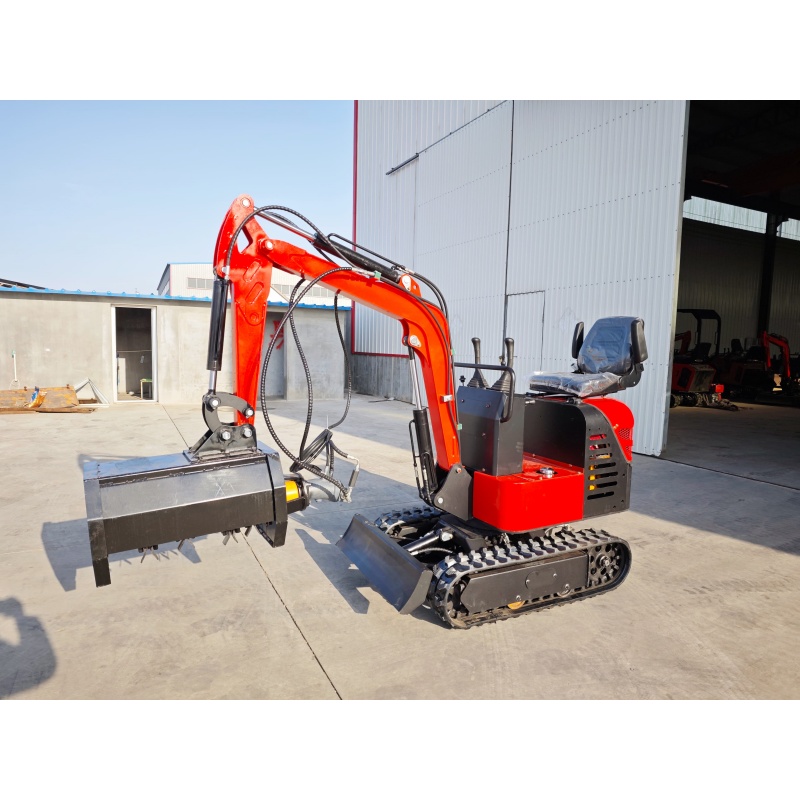
Reference specification — mini excavator range 12W 13W 20-1WL 30-2L Operating weight 1200 kg (2645.55 lb) 1300 kg (2866.01 lb) 1900 kg (4188.78 lb) 2400 kg (5291 lb) Transport size (L×W×H) 2200 × 930 × 2250 mm 2200 × 930 × 2250 mm 2550 × 1100 × 2200 mm 2800 × 1500 × 2500 mm Max digging depth 1630 mm (64.17 in) 1630 mm (64.17 in) 1800 mm (70.87 in) 2200 mm (86.61 in) Max digging height 2750 mm (108.27 in) 2750 mm (108.27 in) 2820 mm (111.02 in) 2900 mm (114.17 in) Max dumping height 1960 mm (77.17 in) 1960 mm (77.17 in) 2050 mm (80.71 in) 2100 mm (82.68 in) Max digging radius 2900 mm (114.17 in) 2900 mm (114.17 in) 3050 mm (120.08 in) 3330 mm (131.1 in) Max digging distance 2100 mm (82.68 in) 2100 mm (82.68 in) 2300 mm (90.55 in) 2700 mm (106.3 in) Minimum turning radius 1300 mm (51.18 in) 1300 mm (51.18 in) 1450 mm (57.09 in) 1555 mm (61.22 in) Travel speed 3 km/h (1.86 mph) 3 km/h (1.86 mph) 5 km/h (3.11 mph) 7 km/h (4.35 mph) Gradeability 30° 30° 30° 30° Fuel consumption 1-1.3 L/h (0.264—0.343 gal) 1-1.3 L/h (0.264—0.343 gal) 2-3 L/h (0.528—0.793 gal) 2-3 L/h (0.528—0.793 gal) Fuel tank capacity 10 L (2.64 gal) 10 L (2.64 gal) 16 L (4.23 gal) 16 L (4.23 gal) Hydraulic oil tank 16 L (4.23 gal) 16 L (4.23 gal) 18 L (4.76 gal) 18 L (4.76 gal) Dozer blade lift height 180 mm (7.09 in) 180 mm (7.09 in) 180 mm (7.09 in) 230 mm (9.06 in) Dozer blade drop depth 210 mm (8.27 in) 210 mm (8.27 in) 210 mm (8.27 in) 280 mm (11.02 in)
Q. What is a machine built for the work used for?
A. The compact class exists for the jobs in between - too much for hand tools, too tight or too short for a full-size machine. Tracks, cab and attachments are options across the range, so the core decision is simply where the machine must fit. The equipment in service is one of the pages buyers land on when comparing machines for grass cutting head, and the factory treats it as a specification conversation rather than a catalogue line.
Q. How do I choose the right machine for mixed work?
A. List the jobs in a normal month, find the narrowest access and the deepest dig, then size the machine to both. Send the list to the factory by email or LINE and the recommendation comes back matched to the work, not to the stock.
Q. How do I get a specification?
A. Send the model, the destination and the attachment list by email or LINE - the channels listed just below this section. The reply covers the specification, lead time, packing and freight in one document, with the grass cutting head build sheet attached.
Planning the season around the excavator
Workload is rarely even across the year, and the machine should be specified for the busy weeks. This class of machine sized only for the average month will be the limiting factor exactly when the work is worth the most.
A second operator for the unit in daily use
Different operators suit different work. The person who is quickest with a machine of this size on open ground is not always the one who is safest in a confined space, and having both available is a genuine advantage.
Reading the early symptoms on the equipment on site
Operators notice things first because they hear the machine every day. Encouraging the person on the machine itself to report small changes, and acting on them, is the most effective maintenance programme there is.
E-mail : sales@mingycn.com
LINE ( ID ): mingyicn
Related pages
mini excavator grass crushing mower · small excavator with shell bucket · Wheel Loader for Material Handling: Forks, Grapples and Circuits · Mini Excavators









