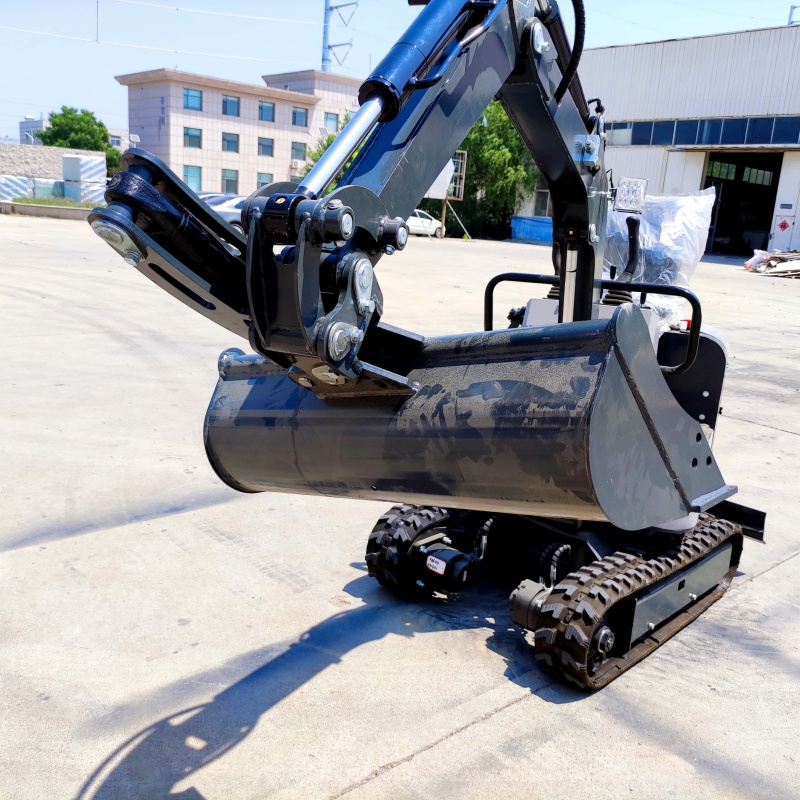
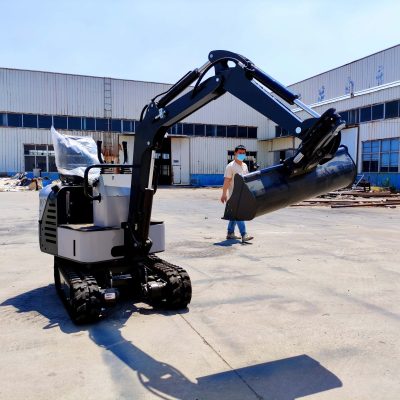
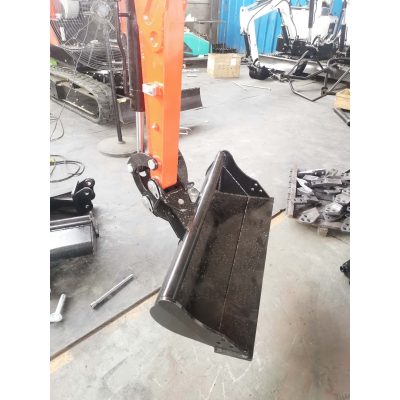
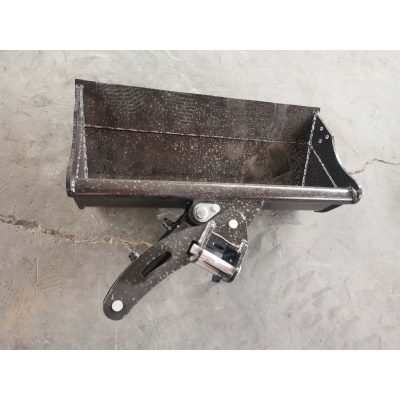
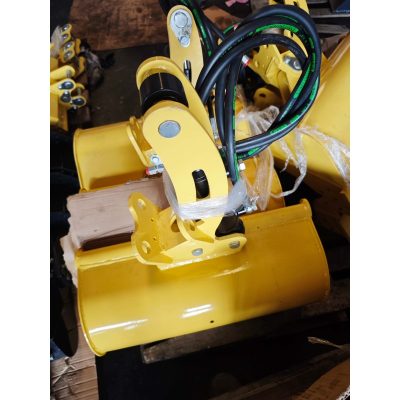
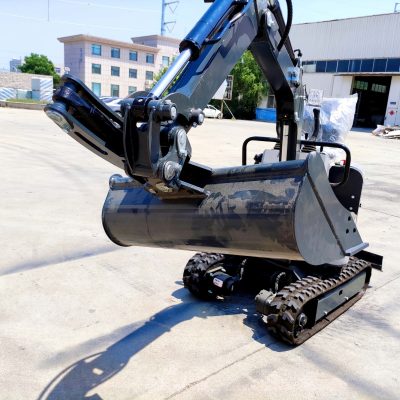
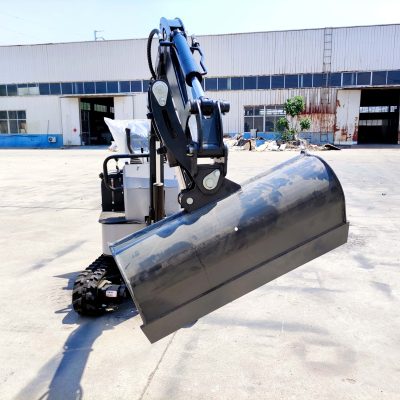
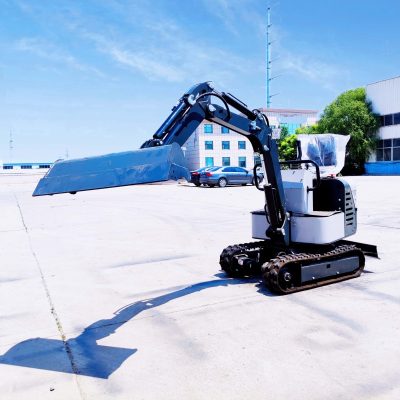
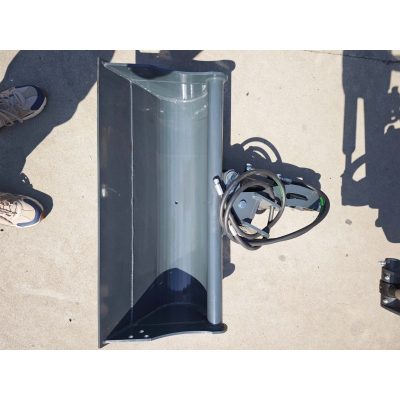
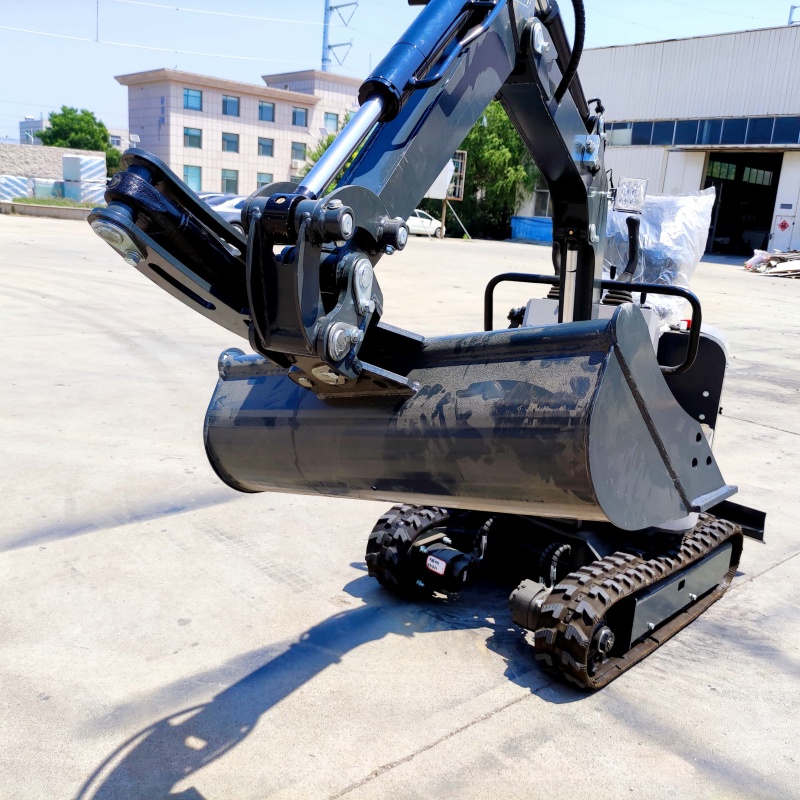
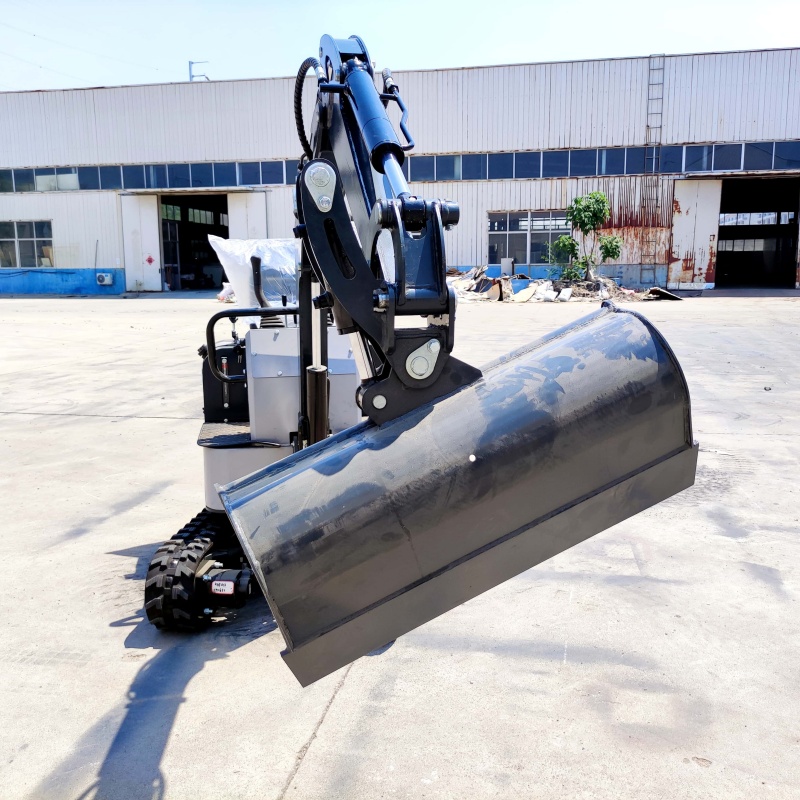
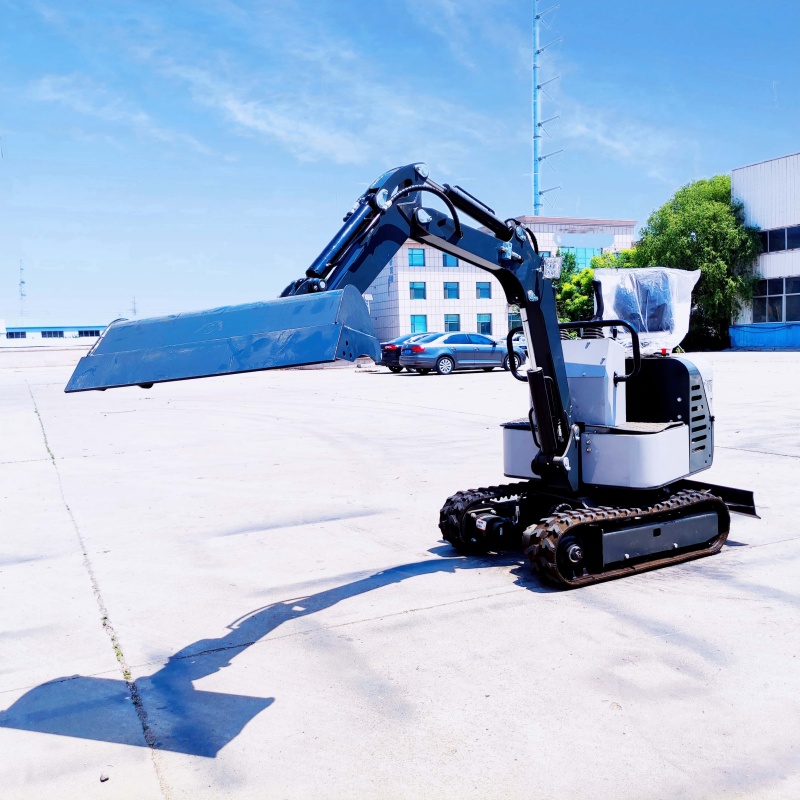
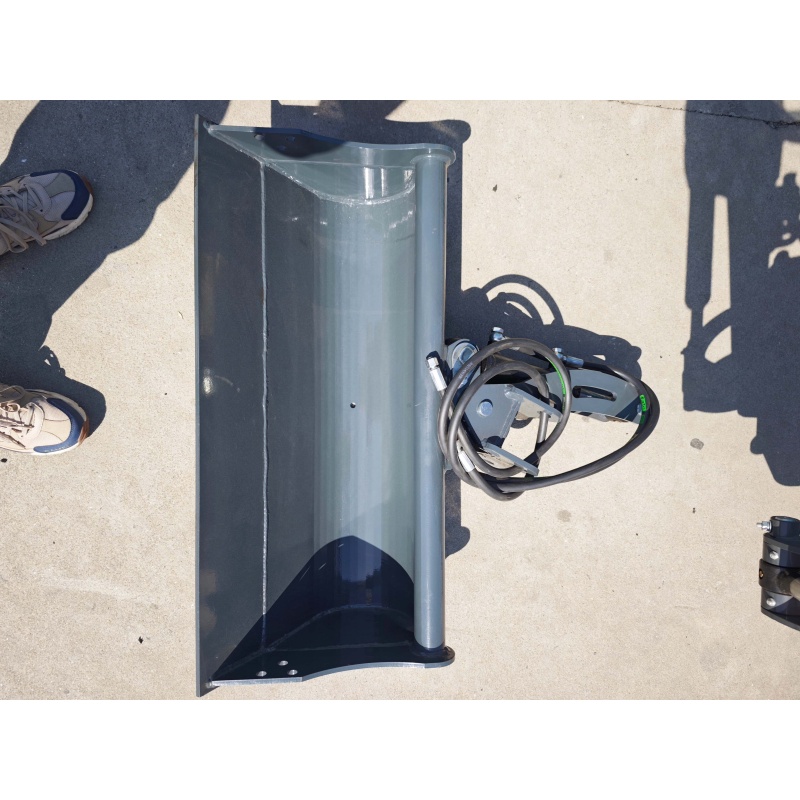
Grading a slope, shaping a ditch or finishing a drainage line with a fixed bucket means repositioning the machine for every angle. The MINGYI the excavator tilts the bowl through its working range from the cab, keeping the cut on grade.
The attachment mounts through the quick coupler and is matched to the 08, 12 and 18 machine series. It is the finishing tool that landscaping, utility and agricultural buyers add when the job stops being about digging and starts being about shape.
Grading and shaping work the tilt covers
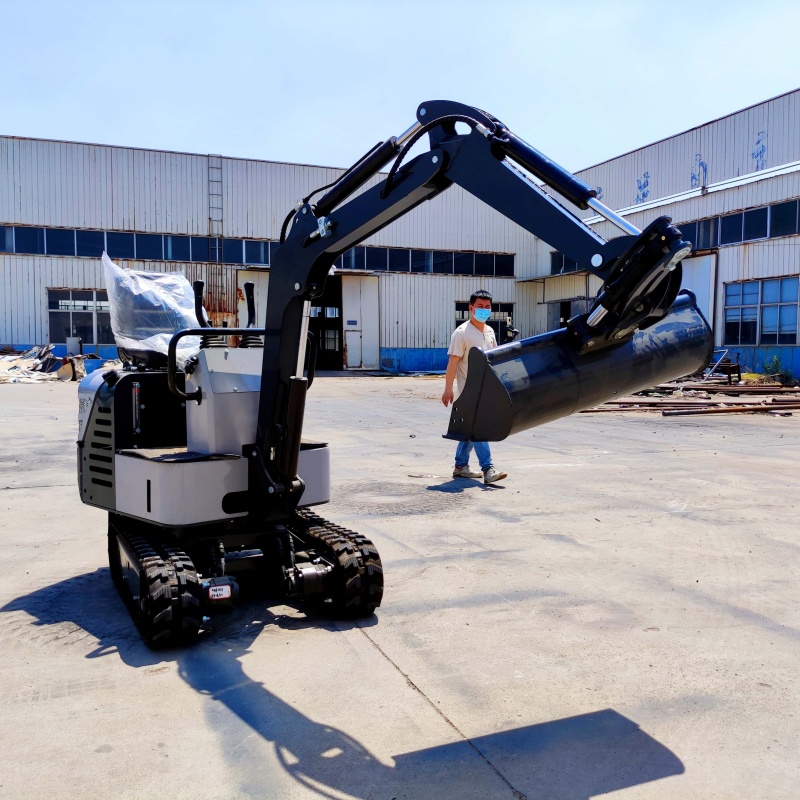
Verge shaping, swale grading and ditch profiles are cut in one pass with the bucket angled to the required batter instead of tracked over repeatedly. Around planting beds and paths, the tilt trims soil and gravel to a finished level without manual raking.
On drainage work the tilting bucket cuts the fall along the ditch invert while the machine sits in one position, which shortens the run compared with squaring up for every metre. The same control shapes pond edges and backfill layers to level.
Adding a tilting bucket to a MINGYI order
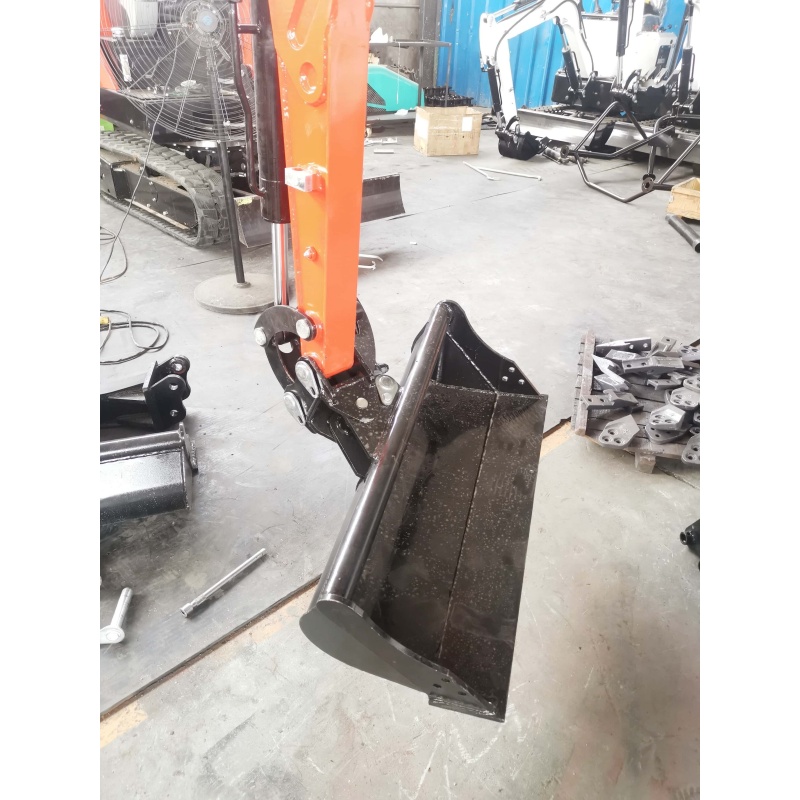
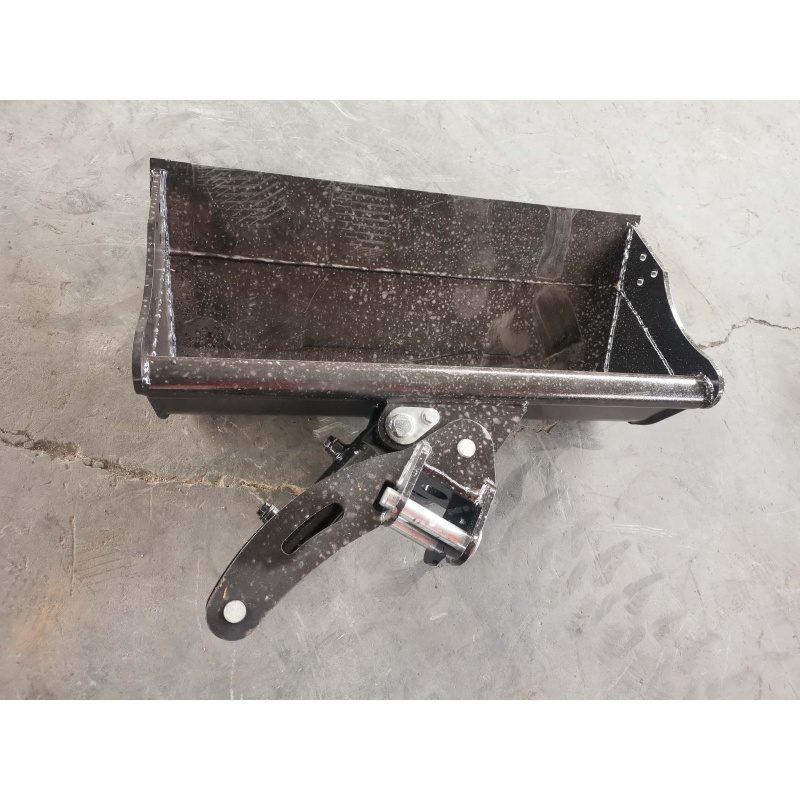
The bucket is ordered with the carrier or added to the attachment package, and the configuration is recorded against the machine. Buyers confirm the width and the coupler style so the tool shares the head with the rest of the set.
Service information and the wear parts for the tilt mechanism travel with the attachment. Describing the profiles to be cut, from gentle verges to steeper drainage batters, lets MINGYI match the bucket geometry to the intended finish.
A tilting bucket is the attachment that converts a digging machine into a finishing machine for slopes and drains. MINGYI fixes the width and carrier match with the buyer at the ordering stage, together with the rest of the tool package.
Attachments that turn tilting bucket for mini excavators into several machines The base machine is a carrier; the tool on the end of the arm decides the task. This class of machine fitted with a toothed bucket digs, and the same machine with a breaker, an auger or a grab does work that would otherwise need a second unit on site. Attachment lists are best written before delivery. Specifying the unit in daily use with the tools the job list needs avoids the work and delay of adding hydraulics later, and a quick coupler makes the swap a few minutes instead of a workshop job. Working on slopes and uneven ground with tilting bucket for mini excavators Slope work is a stability question before it is a traction question. Knowing the gradient a machine of this size is rated for, and working across rather than straight up where the ground allows, removes most of the risk. Ground that looks level often is not. The equipment on site crossing a filled trench, a soft edge or a hidden void behaves differently from one on undisturbed ground, and those are the places worth walking before driving. Export packing and shipping of tilting bucket for mini excavators Machines leave the factory prepared for container or flat rack shipment. The machine itself is normally shipped with the attachment set and the spare parts list agreed in advance so the container is planned once. Buyers who import regularly plan the spare parts with the machine. The model in question ordered with a wearing-parts kit arrives ready to work rather than ready to wait for the first service interval. Working a tilting bucket for mini excavators in confined spaces Confined sites are decided by dimensions. Overall width, tail swing and the space needed to work the arm are what let the machine in that duty operate inside a building, between walls or in a courtyard. Clearance above matters as much as around. Door heights, pipework and overhead services set the limit for the unit on the job indoors, and measuring them first avoids a machine that arrives and cannot be used. Parts, service and support for tilting bucket for mini excavators Support after delivery is a parts question. Wearing items for a machine built for the work - filters, belts, track components, bucket teeth and pins - are the items a buyer should plan to hold before the first service interval. Engine parts availability usually drives the engine choice. The equipment in service built with an engine the local network already carries is serviced from stock rather than from an international order. Quick coupler practice on tilting bucket for mini excavators A quick coupler is the single option that changes how a machine is used day to day. Fitted to the excavator, it turns an attachment change from a two-person workshop job into a task the operator does alone in minutes. For a fleet that shares attachments between machines, a common coupler standard matters more than the coupler brand. This class of machine that picks up the same tools as the larger machines keeps the rack usable across the yard. Interior and light demolition with the unit in daily use Interior demolition is an access and a weight question. A machine of this size that fits through a doorway and works on a suspended floor does jobs that would otherwise be done by hand or by a larger machine that cannot enter. Breaking out a floor slab, a wall footing or a concrete step is routine work for the equipment on site with a breaker. The machine is small enough to work inside and heavy enough to run the tool at a practical rate. Road and paving work for the machine itself Road repair generates short, interrupted jobs - a patch, a drainage connection, a kerb line. The model in question is economical here because it travels on a small trailer and starts working minutes after arriving. Patching and reinstatement favour a machine that can work in a lane closure. The machine in that duty occupies less road than a full-size excavator, which reduces the traffic management needed and the length of the closure. Acceptance checks when the unit on the job arrives A function check before the machine goes to work is worth the hour. Running through the controls, the travel and the attachment circuit on a machine built for the work confirms it is set up as specified and ready for the site. Documentation should arrive with the machine. Parts list, service schedule and any certificates for the equipment in service are what the workshop needs later, and they are much easier to obtain at delivery than in month six. Getting the excavator through a narrow gap The first question on most job lists is whether the machine can reach the work at all. This class of machine is chosen against the narrowest point on the route - a garden gate, a doorway, a gap between two walls - because a machine that arrives and then cannot pass loses a day, not an hour. Contractors who buy the unit in daily use normally have one job in mind that nothing else reaches. The purchase order follows the access measurement, not the other way round, and the build sheet is then settled around it. Specification data for a machine of this size Buyers comparing the equipment on site usually start from four numbers - weight, digging depth, reach and transport width - because those are the ones that decide whether the machine can be delivered and whether it can do the job once it is there. Figures are factory figures and are confirmed on the build sheet for the machine itself. Where a job sits between two models, the larger machine usually takes less time than the smaller one spends on rework. A canopy keeps the machine light and the operator aware of the surroundings, which suits short jobs in warm weather. A fully enclosed cab is specified where rain, dust or cold are part of the working year, and it can be added to the model in question as a retrofit rather than only at build time. Enclosure also changes noise and dust exposure. A sealed cab on the machine in that duty keeps dust out on dry sites and lets the machine work through weather that would otherwise stop a canopy machine for the day.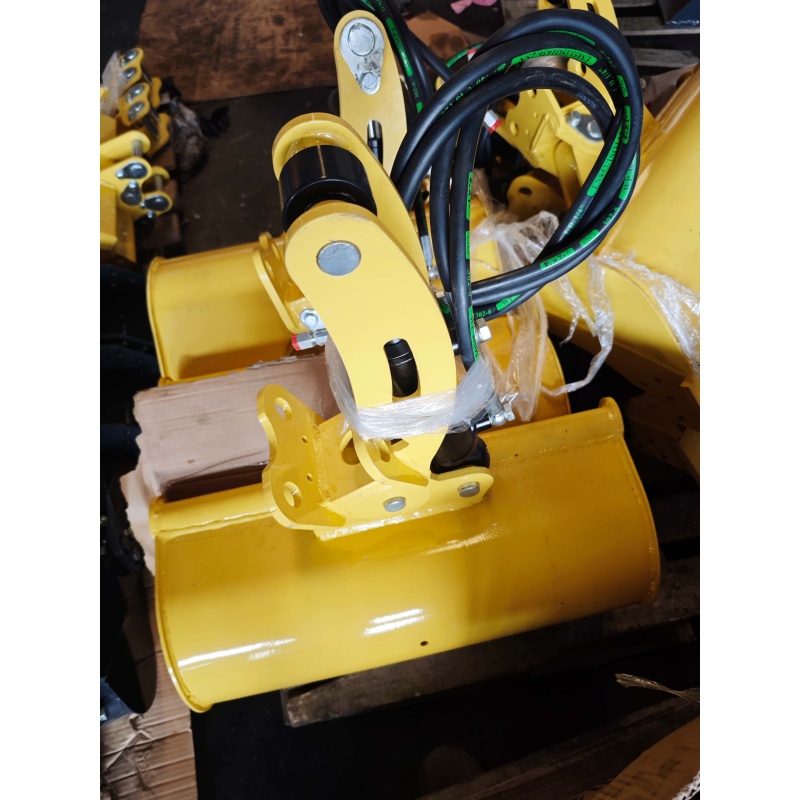
Reference specification — mini excavator range 13W 20-1WL 20-2L 30-2L Operating weight 1300 kg (2866.01 lb) 1900 kg (4188.78 lb) 1900 kg (4188.78 lb) 2400 kg (5291 lb) Transport size (L×W×H) 2200 × 930 × 2250 mm 2550 × 1100 × 2200 mm 2600 × 1300 × 2344 mm 2800 × 1500 × 2500 mm Max digging depth 1630 mm (64.17 in) 1800 mm (70.87 in) 2100 mm (82.68 in) 2200 mm (86.61 in) Max digging height 2750 mm (108.27 in) 2820 mm (111.02 in) 2880 mm (113.39 in) 2900 mm (114.17 in) Max dumping height 1960 mm (77.17 in) 2050 mm (80.71 in) 2100 mm (82.68 in) 2100 mm (82.68 in) Max digging radius 2900 mm (114.17 in) 3050 mm (120.08 in) 3215 mm (126.57 in) 3330 mm (131.1 in) Max digging distance 2100 mm (82.68 in) 2300 mm (90.55 in) 2460 mm (96.85 in) 2700 mm (106.3 in) Minimum turning radius 1300 mm (51.18 in) 1450 mm (57.09 in) 1587 mm (62.48 in) 1555 mm (61.22 in) Travel speed 3 km/h (1.86 mph) 5 km/h (3.11 mph) 5 km/h (3.11 mph) 7 km/h (4.35 mph) Gradeability 30° 30° 30° 30° Fuel consumption 1-1.3 L/h (0.264—0.343 gal) 2-3 L/h (0.528—0.793 gal) 2-3 L/h (0.528—0.793 gal) 2-3 L/h (0.528—0.793 gal) Fuel tank capacity 10 L (2.64 gal) 16 L (4.23 gal) 16 L (4.23 gal) 16 L (4.23 gal) Hydraulic oil tank 16 L (4.23 gal) 18 L (4.76 gal) 18 L (4.76 gal) 18 L (4.76 gal) Dozer blade lift height 180 mm (7.09 in) 180 mm (7.09 in) 180 mm (7.09 in) 230 mm (9.06 in) Dozer blade drop depth 210 mm (8.27 in) 210 mm (8.27 in) 210 mm (8.27 in) 280 mm (11.02 in)
Q. What are the unit on the job?
A. An attachment widens the range of jobs a single compact excavator can specification and win, which is why the working set matters as much as the base machine. Every attachment on this page runs on the same carrier the machine ships with, matched to its hydraulic flow and coupler. A machine built for the work is one of the pages buyers land on when comparing machines for mini excavators, and the factory treats it as a specification conversation rather than a catalogue line.
Q. How is the attachment fitted and swapped?
A. Through the quick coupler on the dipper: seat the tool, lock it, plug the hydraulics where the design needs them. Mechanical attachments need no lines at all, so a bucket-to-rake change is a minute job at the trench edge.
Q. What about colours and branding?
A. OEM colours and decals are part of the build: private-label machines carry the buyer brand on the standard MINGYI platform, and the mini excavators order confirms colours, marks and documents before production starts.
Later additions and retrofits on the equipment in service
An added function should pay for itself quickly. Whether the excavator gains a different bucket, a hydraulic service or a protection package, the test is the number of days a year it is actually used.
Pre-delivery inspection before this class of machine leaves the shop
The last hour before packing is the best time to find a fault. Running the unit in daily use through its full working cycle, checking for leaks under load and confirming that the controls match the specification avoids a conversation across time zones later.
Cold weather and winter care for a machine of this size
A cold start is easier when the machine is prepared the night before. The routine that keeps the equipment on site working through winter is mostly a matter of fuel, battery and patience in the first ten minutes of the day.
E-mail : sales@mingycn.com
LINE ( ID ): mingyicn
Working alongside other plant with tilting bucket for mini excavators
Most site incidents between machines are about sequencing rather than about skill, meaning who is in the arc, who is loading whom and who moves next.
Exclusion zones drawn on the ground work better than zones described in a meeting, and they are re-drawn when the job phase changes.
Related pages
mini excavator rotary tiller · soil loosener attachment for excavators · Construction Wheel Loader: Site Loading, Backfill, Hardstands · Mini Excavators









