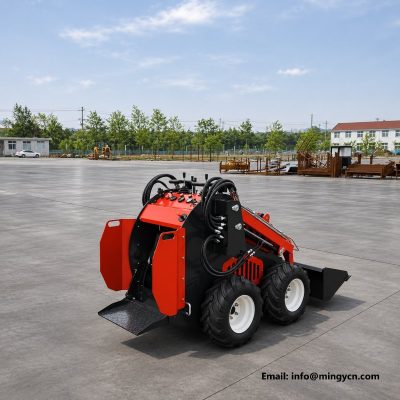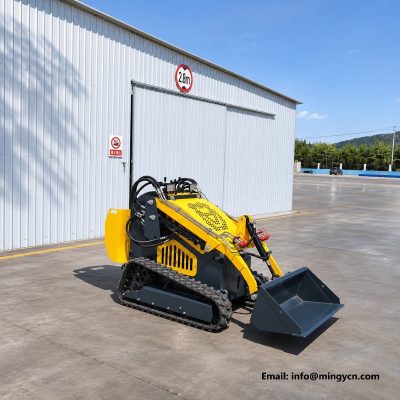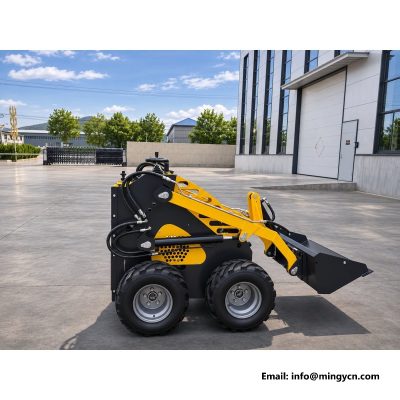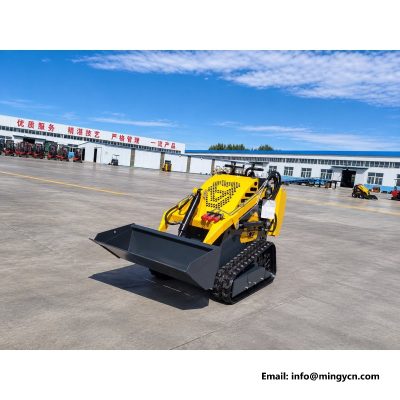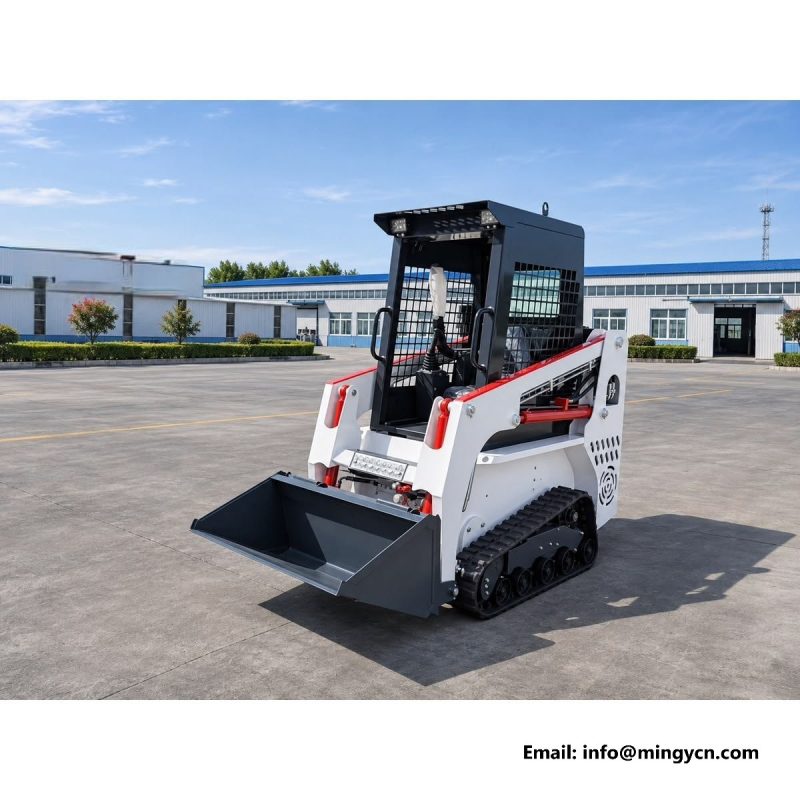
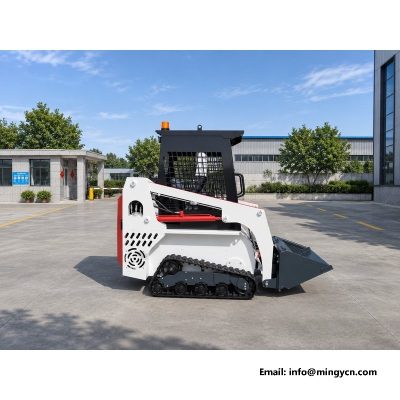
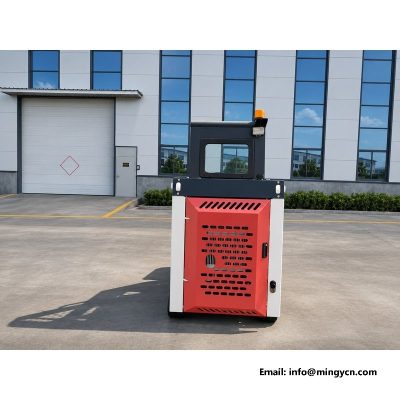
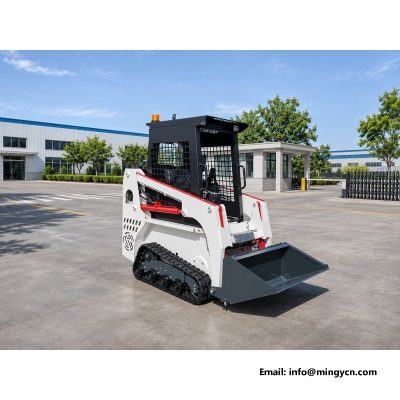
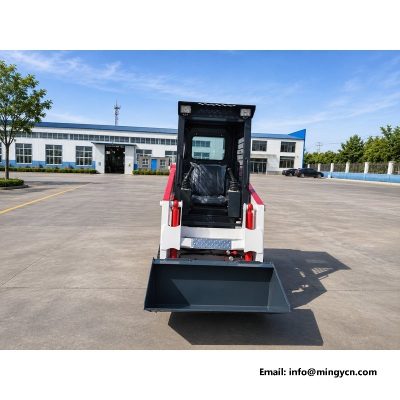
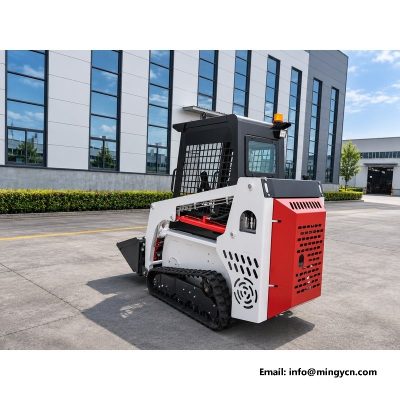
Crawler version of the MY25 skid steer loader with load-sensing hydraulics and quick coupler.
The MY25 crawler skid steer is a compact loader built around two ideas: differential track steering that lets it turn inside its own length, and a hydraulic system that reads the load instead of pushing a fixed flow. It carries an open-circuit load-sensing piston pump, pilot joystick control, four wheel-motor travel drive, a standard quick-attach coupler and the Runtong R999 engine. This page explains what those choices mean in use, where a tracked machine earns its keep and where it does not, how tracks and hydraulics are maintained, and what a buyer should check in the photographs and at handover.
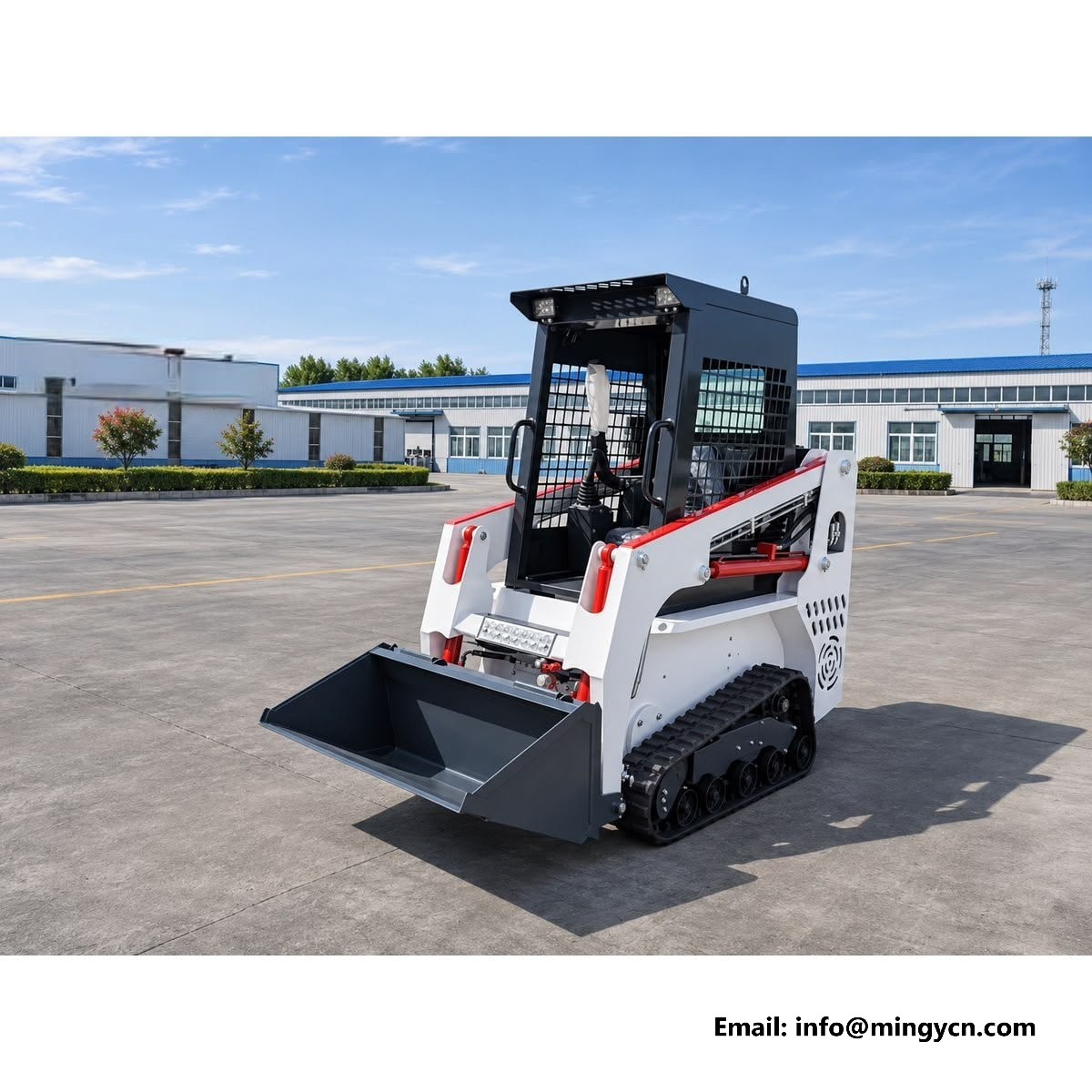
A skid steer has no steering axle and no wheels that turn. Direction is changed by driving the two sides of the machine at different speeds, or in opposite directions, and letting the tracks scrub sideways on the ground. On a crawler machine the same principle applies to the tracks: slow the left side and the machine turns left, reverse one side and it spins about its centre. Because the machine pivots within its own footprint, it can work in a yard where a conventional loader would need three attempts to turn. The trade-off is that skid steering always costs something in surface wear, and an operator learns quickly that a planned, gentle turn is cheaper than a sharp correction. That is also why the undercarriage, rather than the engine, usually sets the service life of a machine in this class.
The value of this layout appears in places with no room to manoeuvre: a farmyard between a shed and a wall, a garden gate the machine barely passes through, a building site where the material stack sits close to the excavation. A crawler skid steer can enter, turn within its own length and leave without reversing the way it came, which is often the difference between a job done with one machine and one that needs a second pair of hands to guide it. The operator also works closer to the trench edge, because the machine can be placed precisely rather than approximately. That precision, more than travel speed or capacity, is what buyers in this class are actually paying for. It also cuts the labour needed around the machine, which matters on a small site with a tight budget.
| Model | MY25 |
| Hydraulic system | Open-circuit piston pump, load-sensing |
| Control | Pilot joystick operation |
| Drive | Four wheel-motor travel drive |
| Quick coupler | Standard quick-attach coupler |
| Engine | Runtong R999 (standard) |
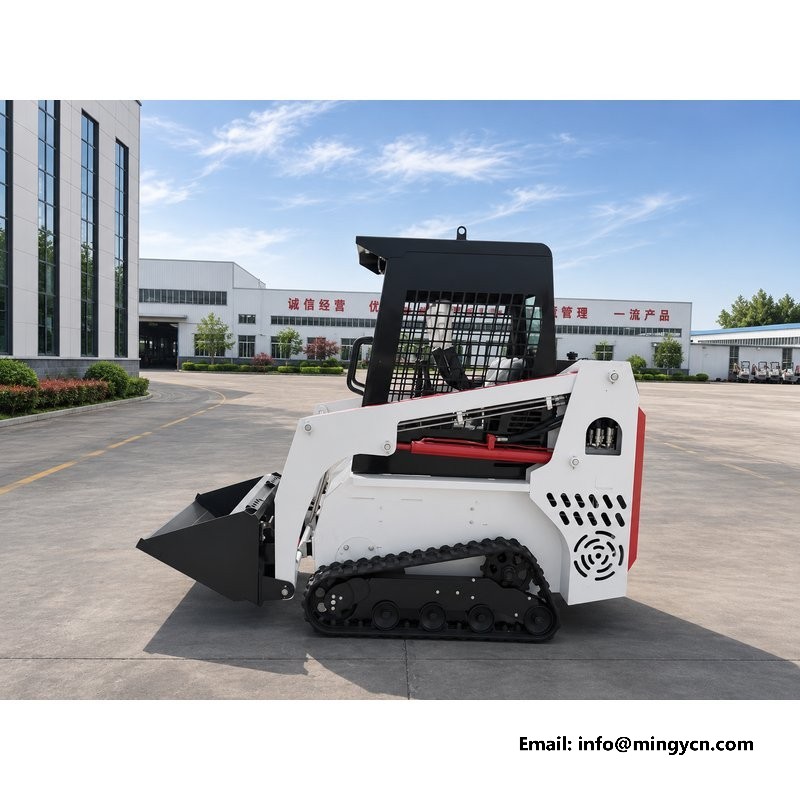
Tracks spread the weight of the machine over a long contact patch instead of concentrating it under four tyres. On wet grass, loose gravel, freshly worked soil or a site after rain, that difference decides whether the machine works or digs itself in. A crawler skid steer also holds a slope better, because the contact patch does not lose grip the moment a wheel unloads. The same property protects finished surfaces: a track bridges small hollows rather than pressing into them, so a lawn or gravel drive suffers less marking than it would under a wheeled machine of similar size. On hard, flat concrete the advantage reverses, and that is precisely where the wheeled version of this loader earns its place. A tracked machine also climbs a loading ramp with less slip, which makes one-man transport calmer.
The hydraulic system uses an open-circuit piston pump with load sensing. In plain terms, the pump reads the pressure the work demands and supplies flow to match it, instead of pushing a fixed flow through a relief valve all day. The operator feels this as a machine that answers in proportion to the lever: ease the joystick and the movement slows smoothly, hold it against a load and the hydraulic effort stays where it is needed. It also means less heat, because oil that is not required is not forced over a relief. For work that alternates between fine grading and loading, that behaviour matters more than a headline flow figure, and it is why piston pumps are specified on machines expected to work full shifts. The oil also runs cooler in summer, and engine speed holds when a second function is used.
Pilot operation replaces the mechanical link between lever and valve spool with a small hydraulic signal. Lever stroke becomes shorter and lighter, and there is no play to develop as a linkage wears. On a skid steer this is felt most in grading: the operator can feather the bucket up and down across a surface, correcting by a few millimetres, without the lever fighting back. The same quality helps when the machine runs a breaker or an auger, where the operator needs to hold a position rather than make a movement. Pilot control also reduces the effort of a long shift, which is not a luxury on a machine that is often run by the same person every working day of the year. The joystick is a sealed unit, so there is no linkage to lubricate after the first season.
The machine carries a standard quick-attach coupler on the loader arms, the interface that turns one chassis into several tools. The coupler is a plate with a locking mechanism: the attachment is offered up, the arms are rolled back to engage the top edge, the locking pins or levers are engaged, and the operator confirms the lock before lifting. On a crawler machine the procedure is done on level ground with the attachment resting flat, so it does not have to be forced into place. Buyers should check that the coupler matches the attachment standard used in their market, because a mismatch means every bucket, fork and grapple has to be adapted. The coupler itself needs greasing and a periodic check for wear in the locking faces. Keep a spare set of locking springs on the shelf, since a lost spring stops the machine.
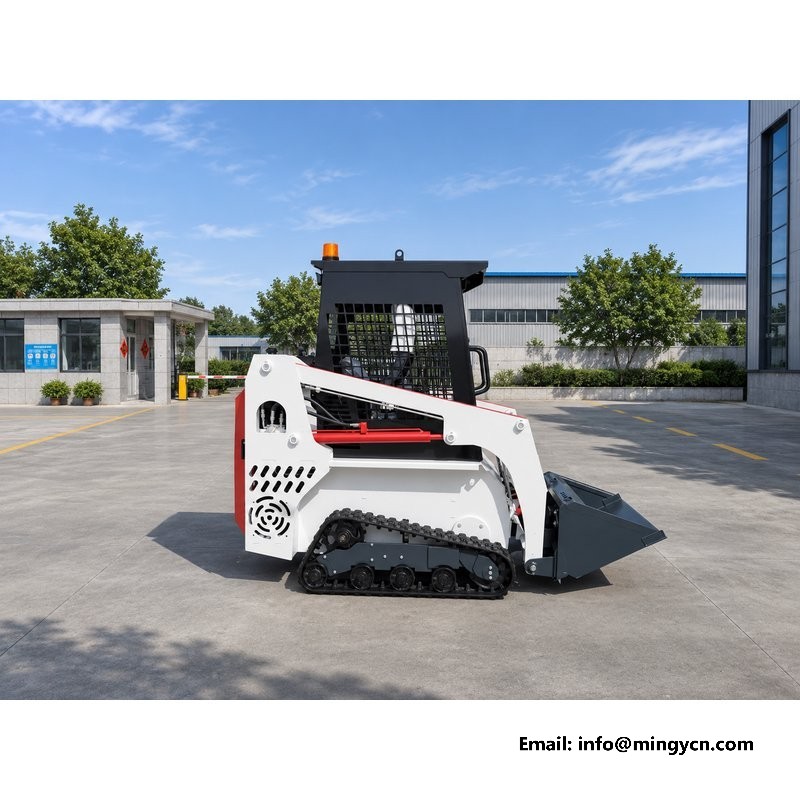
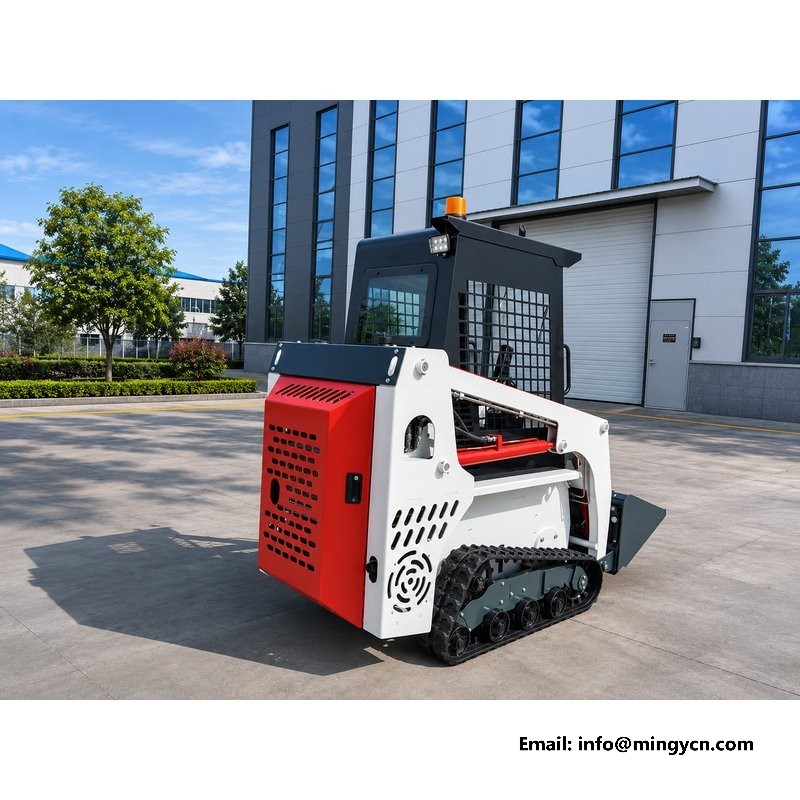
The MY25 is supplied with the Runtong R999 as standard. It is a small industrial diesel of the type used widely in compact equipment, and the practical question for a buyer is not the badge on the rocker cover but how easily the engine can be serviced in the field. Look at access: whether the air cleaner is reachable without removing panels, whether the fuel filter sits where it can be changed without spilling diesel onto the block, and whether the oil drain is clear of the frame. Check that the cooling fins or radiator core can be cleaned, because dust is the main enemy of any engine in this class. Parts for the R999 family are widely available, which keeps a machine working. Ask for the part numbers of the three filters before the unit ships.
Rubber tracks on a compact loader wear in a predictable order. The drive lugs inside the belt show it first, then the outer edge of the tread, then the steel cores if the belt is run loose. Correct tension is the single biggest factor in track life. Too loose and the track climbs the sprocket under load; too tight and the bearings carry loads they were not designed for. Check tension with the machine on level ground and the track clean, and follow the measurement in the manual rather than judging by eye. Look for cracks at the base of the lugs, missing tread blocks and embedded stones. A track worn unevenly from side to side usually points to a misaligned undercarriage rather than a bad belt. Replace tracks as a pair, because a new belt beside a worn one wears faster.
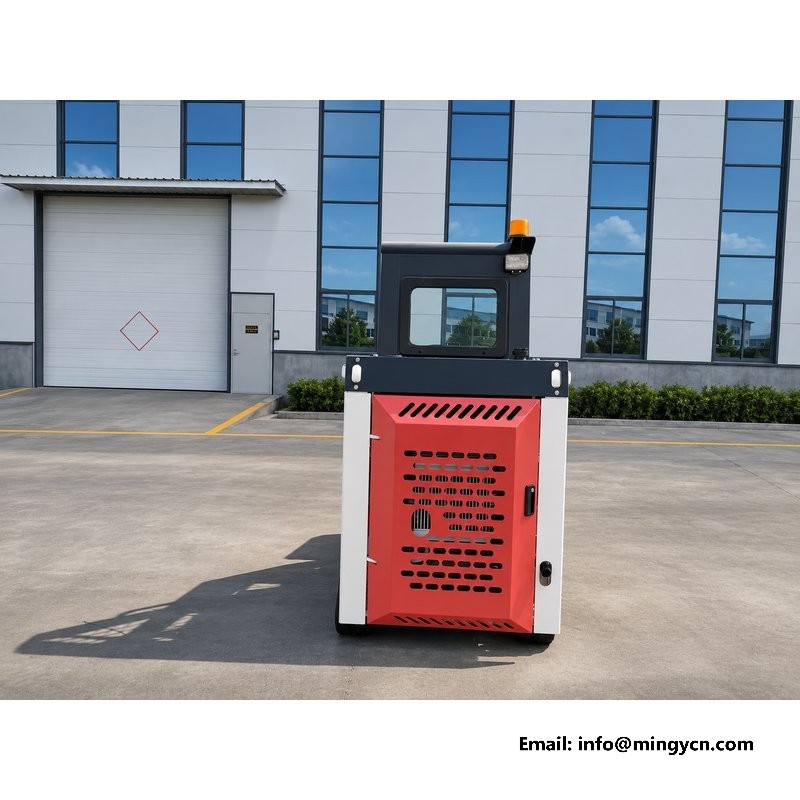
Landscape contractors are the natural users of a crawler skid steer, and the reason is damage. A wheeled machine turning on a lawn leaves ruts and scuff marks that have to be repaired before the client sees the job. Tracks spread the load and turn with less scrubbing, and a careful operator can cross a garden, a verge or a newly seeded area with minimal marking. That does not make the machine harmless. Sharp turns still tear turf, wet ground still ruts, and a loaded bucket carried high changes the balance. The habits that protect a lawn are to turn in wide arcs where possible, keep the bucket low while travelling, and plan the route so the machine crosses a finished surface once rather than several times. Rubber tracks also leave a shallower rut on soft ground, which is what clients notice first.
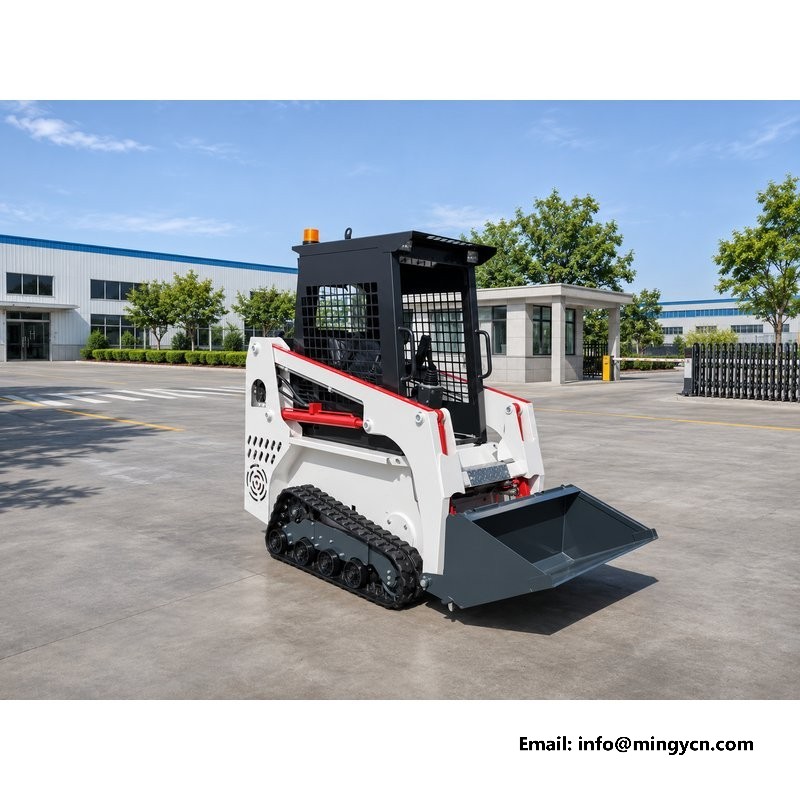
The working list for this class is long and unglamorous: moving soil and gravel, spreading and levelling, clearing snow, lifting pallets with forks, augering fence posts, breaking concrete, sweeping a yard. What connects those jobs is access. The machine passes through a gap between buildings, crosses a garden without a delivery permit, and still has enough hydraulic capacity to run the attachments those tasks need. Farms use it because it turns inside a barn and parks in a shed. Small builders use it because it replaces labour on a site where a full-size loader cannot enter. The machine is bought for the jobs in between, not for one big contract. It also fits on a small trailer behind a pickup, which is how most of these units move between jobs.
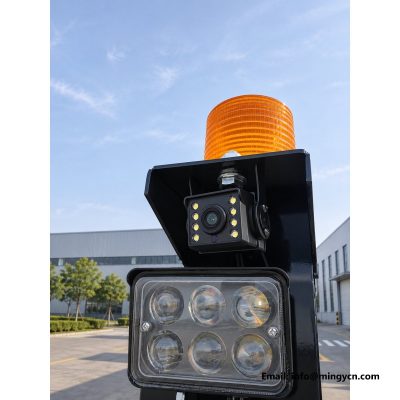
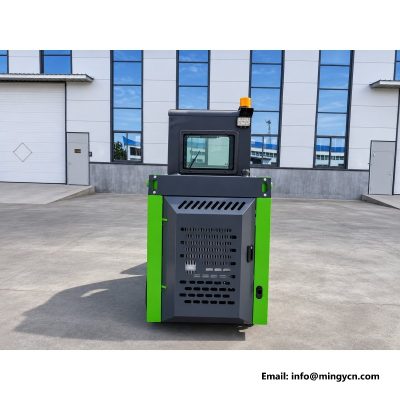
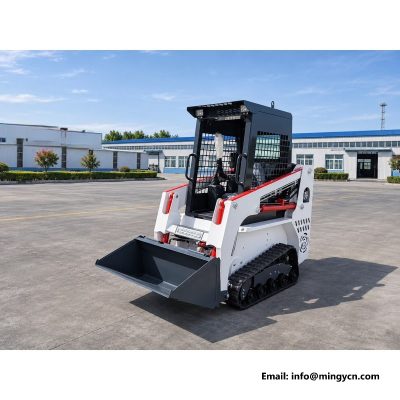
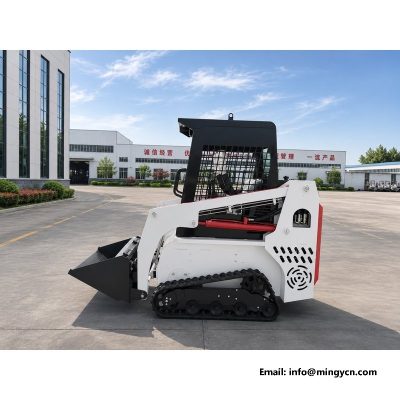
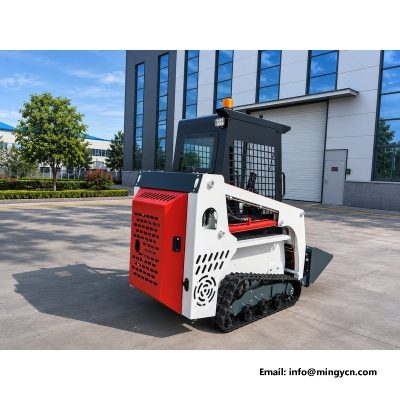
The yard photographs on this page are worth reading in a fixed order. Start with the three-quarter front view and look at the loader arms: the pivot points, the size of the pins and whether the arms are braced between their plates. Move to the side view and follow the undercarriage: how the track is tensioned, where the drive motor sits and whether the frame protects it. The rear view shows engine access and the counterweight. The shots of the operator platform show whether the machine is set up as a stand-on or a seated unit, where the controls fall and how the operator steps aboard. None of these details appear on a specification sheet, and all of them decide how the machine behaves after a season. Ask for the date of the photographs as well, since an old yard image tells you little.
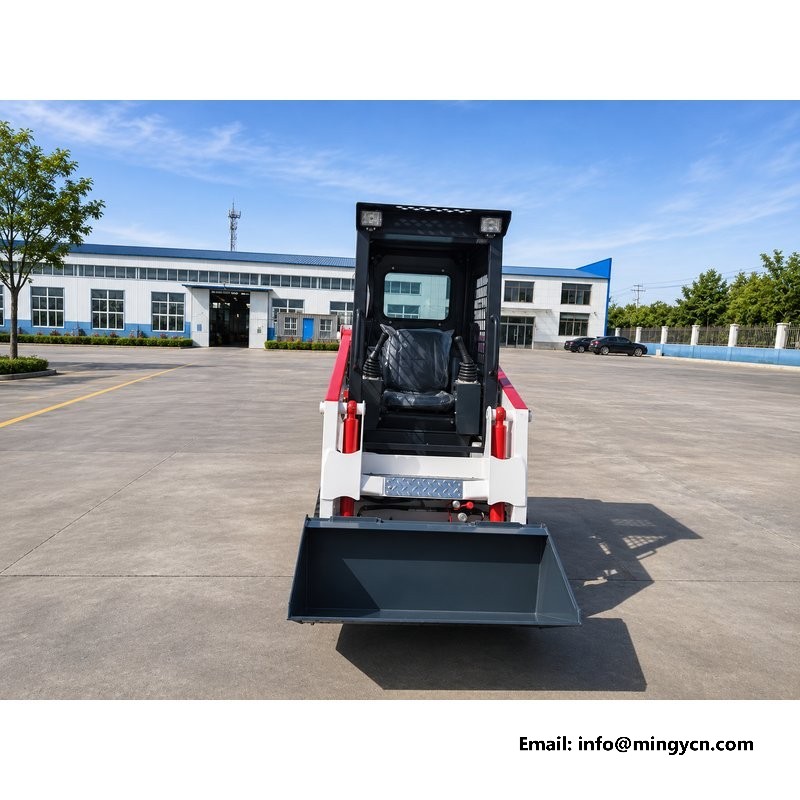
Before the machine is crated, a short inspection catches most of what goes wrong in the first weeks. Check both tracks for tension and for damage to the lugs. Confirm that the quick-attach coupler locks and releases with an attachment fitted. Run every hydraulic function to the end of its stroke and look for weeping at the fittings. Check engine oil, hydraulic oil and coolant, then start from cold and watch for smoke that does not clear. Test the pilot joysticks for creep with the engine idling. Photograph the hour meter and serial plate. Confirm that manuals, tool kit and a spare filter set travel with the machine, and that the attachment matches the coupler. Photograph the crated unit with the tie-down points visible, and keep a copy with the shipping documents.
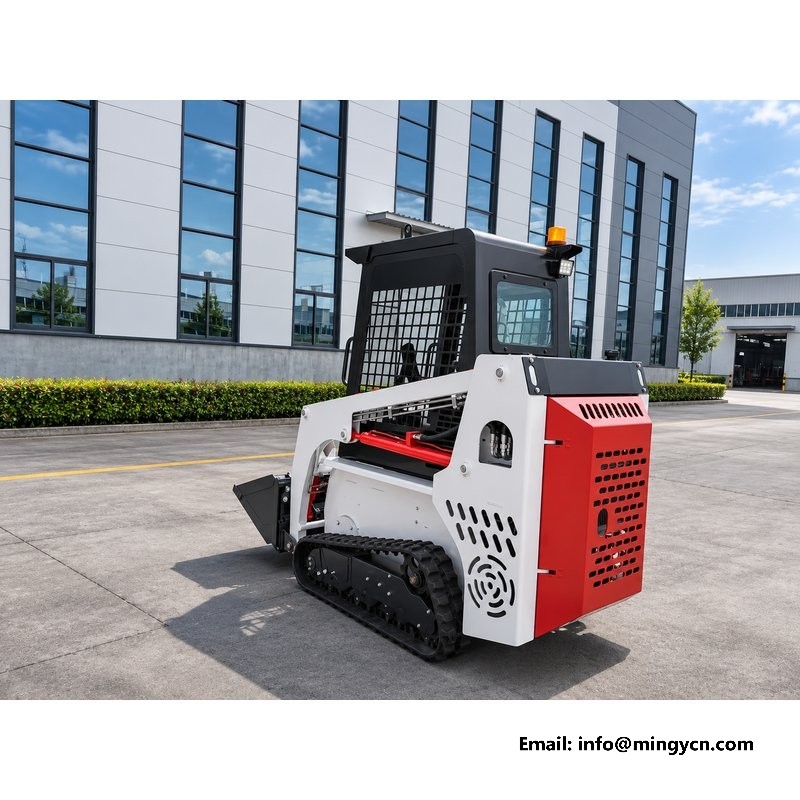
Tracks spread the machine's weight across a long contact patch, so it keeps working on wet grass, loose soil and slopes where a wheeled machine loses grip, and it marks finished lawns and gravel less. The trade-off is slower travel on hard ground and more attention to track tension and wear. If most work happens on soil, turf or gravel, tracks are usually the better fit; on concrete and asphalt, wheels are faster and cheaper to run.
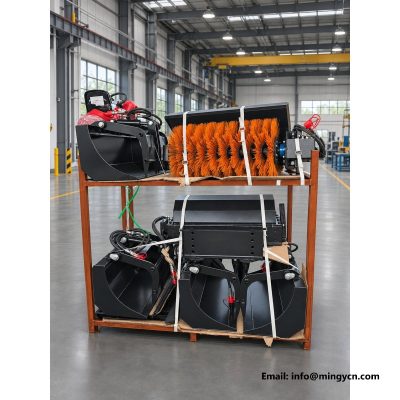
The standard coupler accepts the common skid-steer attachment pattern, which covers buckets, pallet forks, grapples, augers, breakers, sweepers and snow blades. Because the coupler is only the interface, the practical limit is hydraulic flow rather than the mount: demanding attachments such as breakers and augers need enough flow and the right auxiliary circuit. Buyers should list the attachments they intend to run before ordering, then confirm the auxiliary hydraulics and coupler pattern match.
Ordering and technical support
Email: sales@mingycn.com
LINE (ID): mingyicn
Tell us your working width, ground conditions and the attachment you need, and we will confirm the right configuration and shipping details.