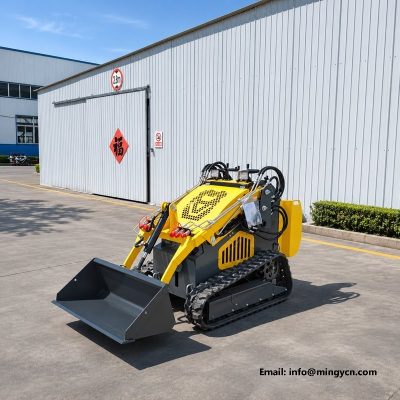
MY360 crawler skid steer loader with a twin-pump three-valve hydraulic system.
The MY360 is a stand-on crawler skid steer loader built for tight yards and soft ground. This page uses five factory photographs of the same yellow machine to explain how it is put together: the twin-pump, three-valve hydraulic layout, the stand-on operator platform inside its protective frame, the rubber track undercarriage, and the Runtong R740 engine fitted as standard. It is written for buyers who judge a machine from pictures and want to know what to look at, why each detail is there, and what it will mean once the machine is working on their own site. The notes are technical rather than promotional, and they assume the reader will compare this machine with others.
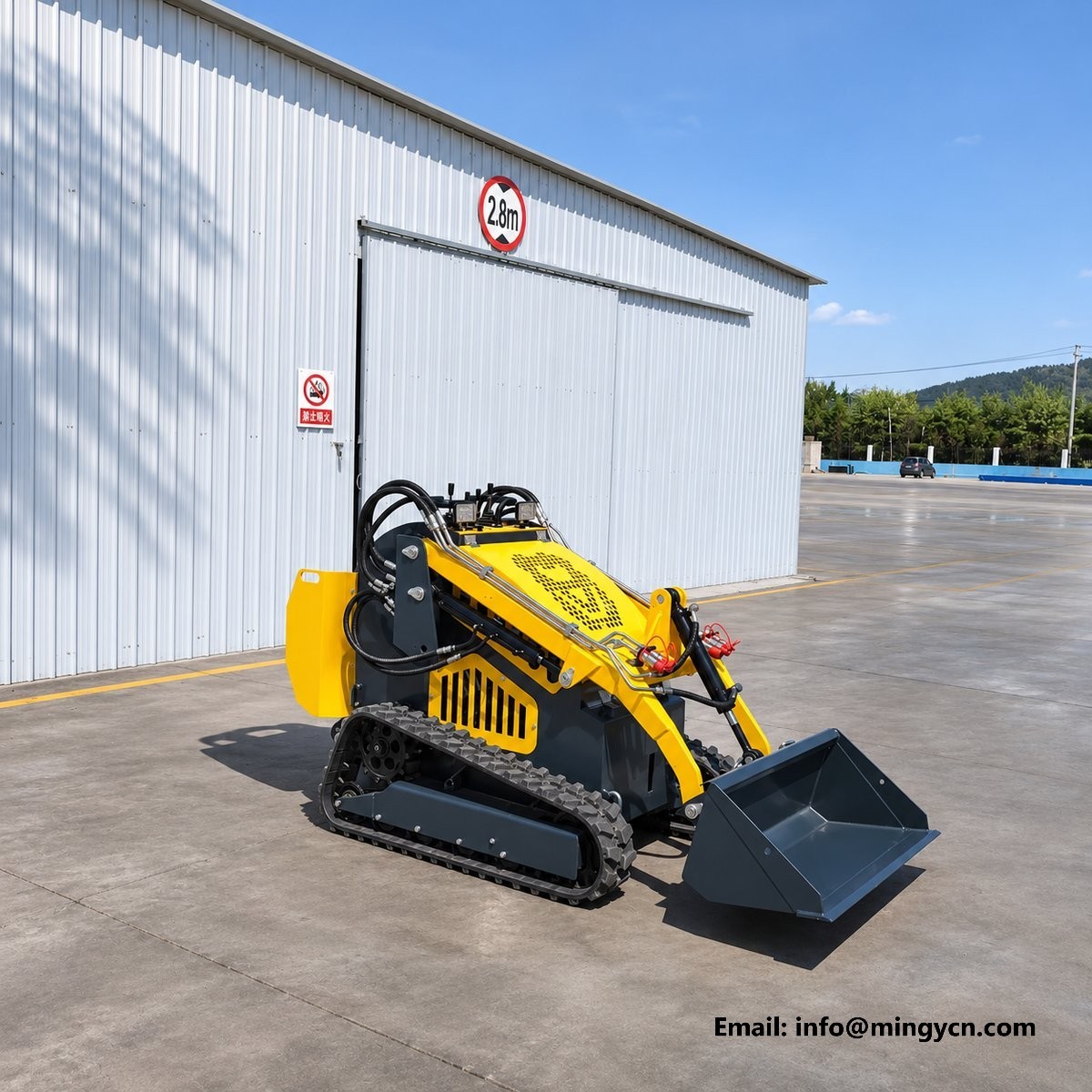
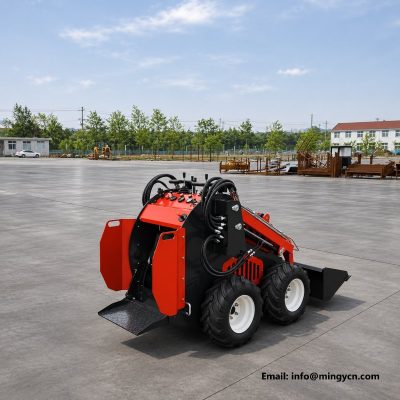
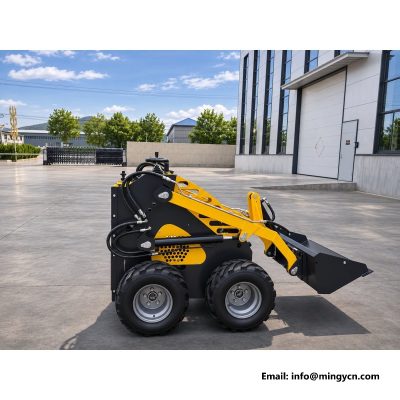
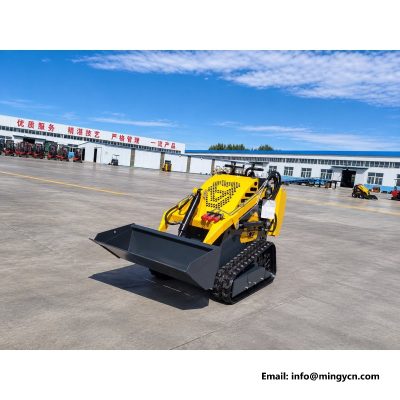
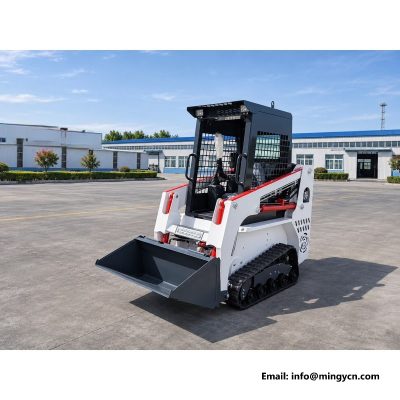
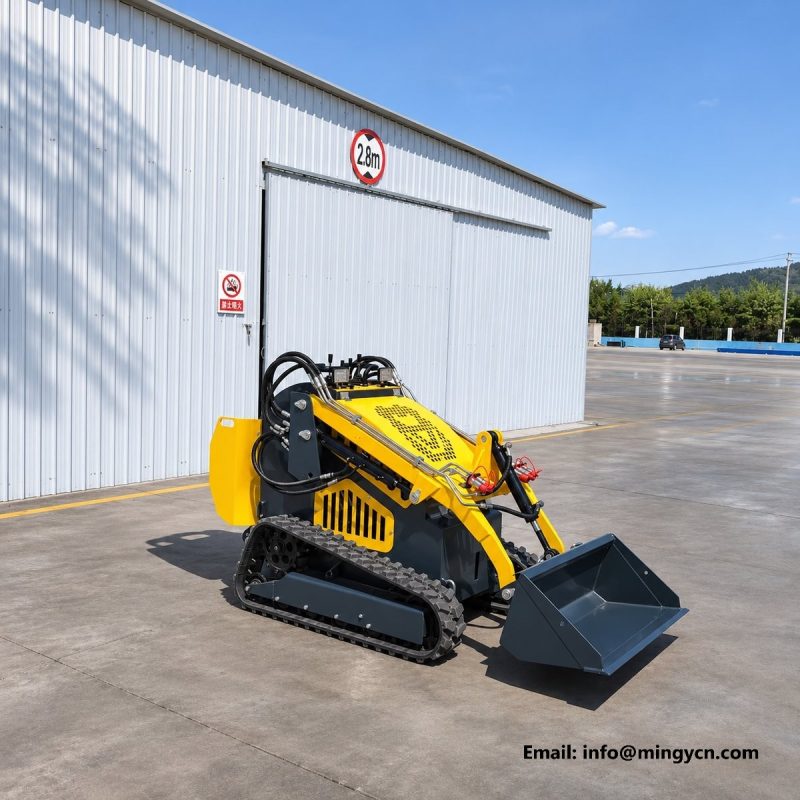
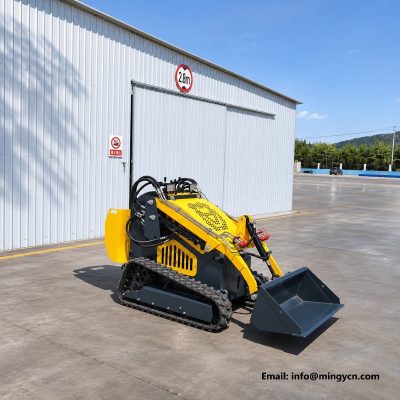
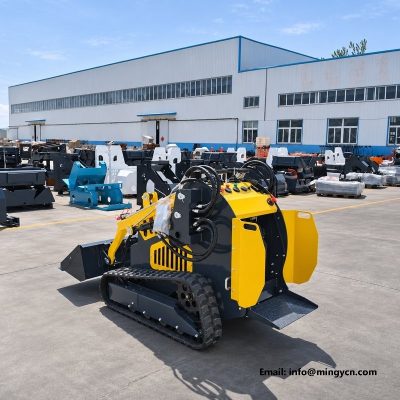
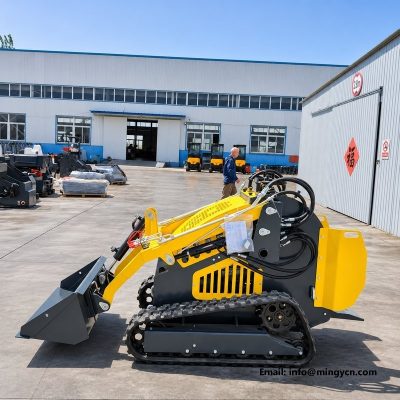
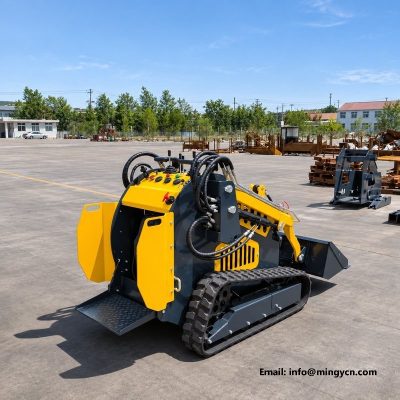
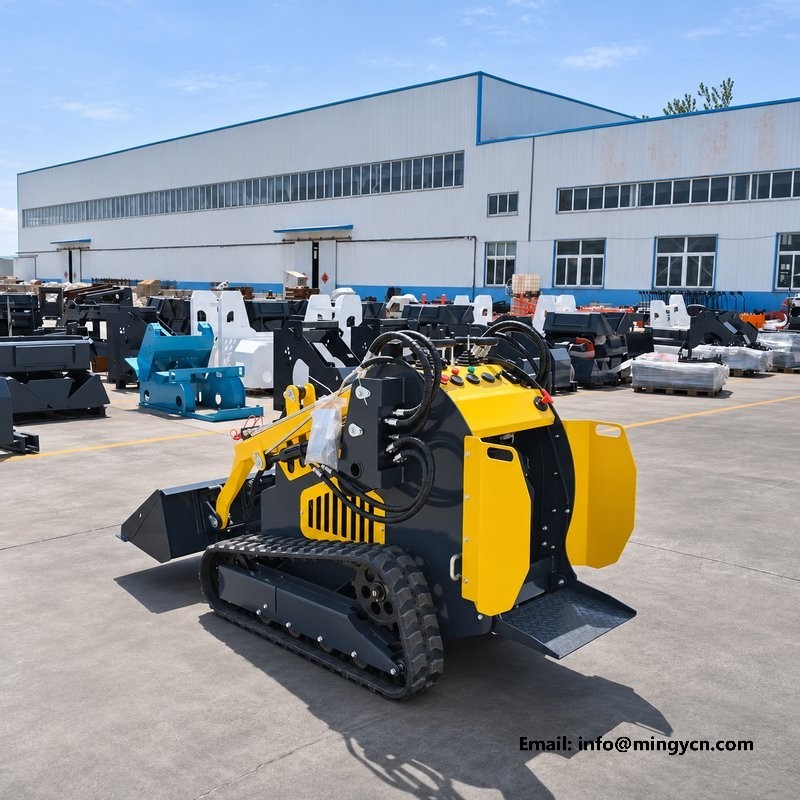
Five photographs of the same yellow machine, taken from the side, the front, the rear and both rear quarters, tell a buyer more than a specification sheet can. The MY360 is a stand-on crawler skid steer loader: rubber tracks, an open operator platform inside a protective frame, and a bucket carried on lift arms at the front. Because the machine is photographed outdoors on the factory apron rather than in a studio, the track tension, the hose routing and the paint on the frame can all be judged at working distance. The angles are deliberate. A side view shows how the lift arms sit against the chassis; a rear view shows the engine access and the counterweight; the three-quarter views show the weld runs where the loader towers meet the frame. This page explains what those details mean in daily work.
Twin-pump, three-valve is the hydraulic layout fitted as standard to the MY360, and it is worth understanding because it decides how the machine feels to operate. Two separate pumps draw from the same reservoir and each supplies its own circuit, so the flow that drives the machine does not have to be shared with the flow that raises the bucket. Three valves then divide that supply between the functions the operator commands: lift, tilt, and the auxiliary line used by attachments. In practice the arrangement allows a loaded bucket to be raised while the machine is still creeping forward, without one function starving the other. On a single-pump machine the same manoeuvre forces the operator to choose between travel speed and lift speed. The difference is felt most when loading a truck, where the bucket must rise and crowd at the same time.
| Model | MY360 |
| Hydraulic system | Twin-pump, three-valve |
| Engine | Runtong R740 (standard) |
| Configurations | Stand-on crawler / stand-on wheeled |
Each valve spool meters oil to one function, and the order in which they are plumbed determines what the machine can do smoothly. The lift valve feeds the two boom cylinders; the tilt valve feeds the bucket cylinder; the auxiliary valve feeds a pair of quick-release couplers at the front of the lift arms. Because the auxiliary circuit has its own valve, an attachment such as a grapple or a sweeper can be operated without disturbing the lift and tilt circuits. The spools are also what give the operator proportional control: a small movement of the lever opens the spool slightly and the function moves slowly, which matters when the bucket edge is close to a kerb or a pallet. Buyers who plan to run powered attachments should confirm the auxiliary flow direction and coupler type before ordering, since those details are set at build.
The MY360 is operated from a standing position rather than a seat, and the photographs show the layout clearly: a platform between the tracks, a padded backrest, a control console at hand height, and a four-post frame around the operator. Standing changes the way weight is distributed. The operator's mass sits low and central, close to the machine's centre of gravity, and it moves with the machine rather than against a suspension seat. It also makes mounting and dismounting quick, which is an advantage on sites where the operator leaves the machine several times an hour. The frame is a roll-over protective structure, and it is there for the case where the machine tips on a slope or a stockpile. The instruction is simple: restraint in place, load kept low while travelling, and no lifting over the side.
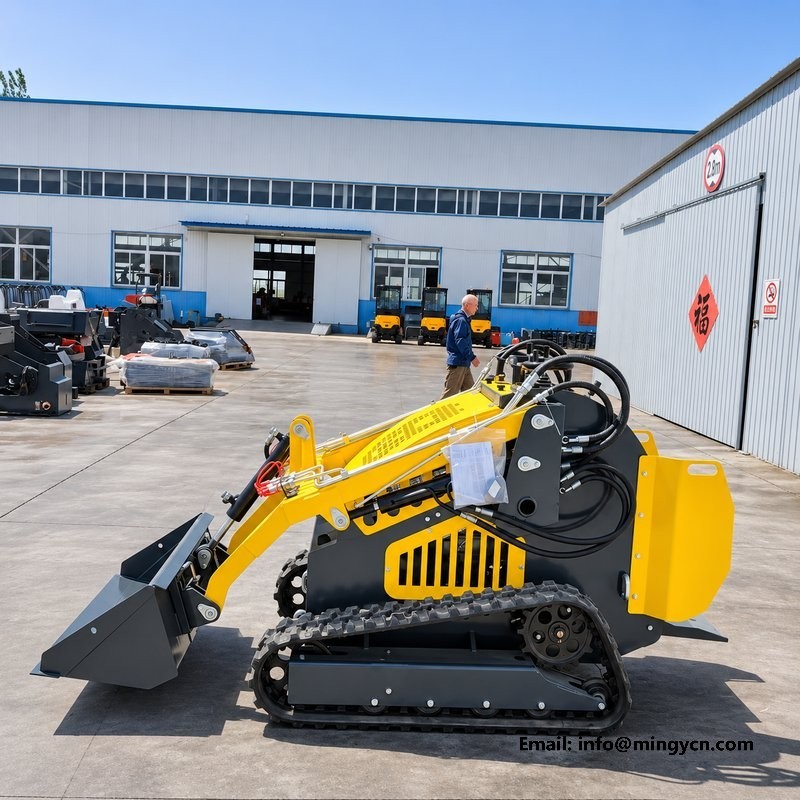
Tracks spread the weight of the machine over a long contact patch instead of four small tyre footprints, and that is the reason this version exists. On soil that has been dug over, on wet grass, on sand or on the mud around a cattle shed, a wheeled machine digs itself in while a tracked machine keeps moving because the load is distributed along the whole length of the track. The rubber track also leaves a lighter mark than a steel track and can cross a paved apron without damaging it, which is why contractors use one machine for both the yard and the ground beyond it. The trade-off is speed on hard surfaces and the cost of the tracks themselves. Tracks are a wear item, and the way they are tensioned and cleaned decides how long they last.
Rubber tracks fail early for two reasons: they are run too tight, or they are packed with material. A track tensioned beyond the manufacturer's setting loads the idler bearings and the drive sprocket constantly, and the first symptom is usually a whine that follows machine speed. A track packed with clay or gravel does the opposite: it lifts the track off the rollers, lets it run out of line, and eventually derails it at the front idler. The daily routine is short. After work, knock the worst of the material out of the undercarriage, check that the track sits evenly on the rollers, and look along the inside of the belt for cuts or embedded stones. During the walk-around, also check the sprocket teeth for hooked wear. Catching a worn sprocket early saves the track that would otherwise be destroyed by it.
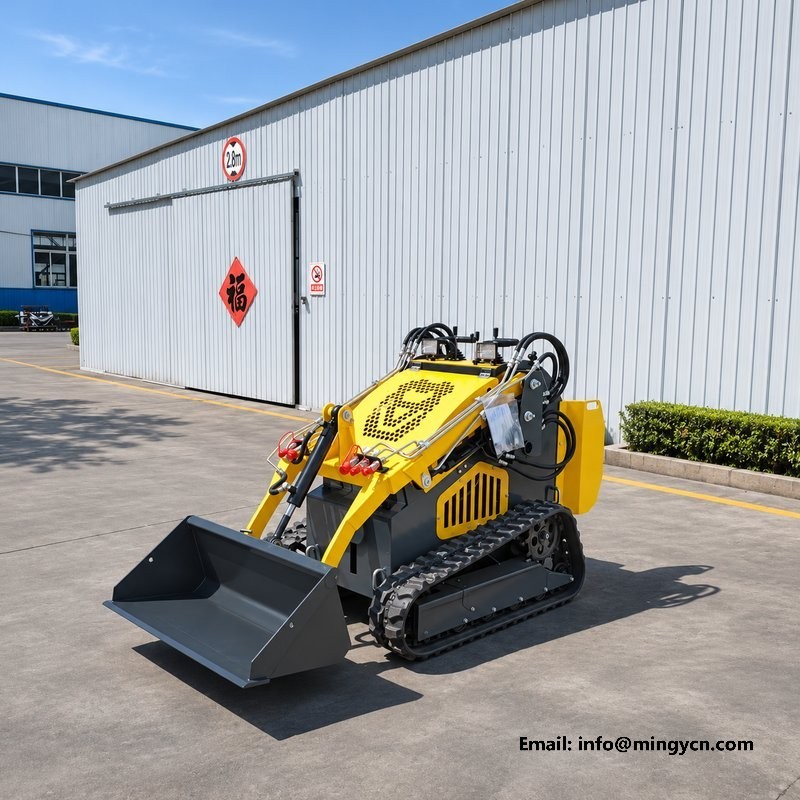
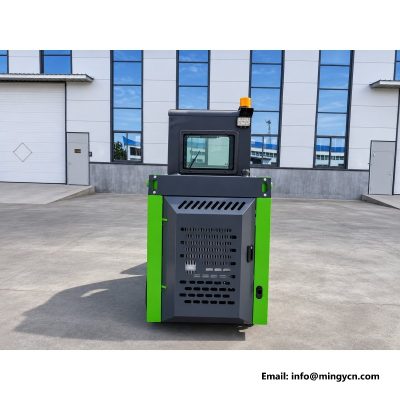
The MY360 is supplied with the Runtong R740 as its standard engine, and that choice says something about who the machine is built for. It is a small industrial diesel of the type that is serviced in almost any agricultural or construction workshop, with parts that can be sourced without a specialist dealer network. For a contractor running one machine, or a farm using a loader for a few hours a day, that matters more than a marginal difference in output. The installation is conventional and easy to inspect: the engine sits behind the operator platform under a cover, with the air cleaner, the fuel filter and the oil dipstick reachable from the rear of the machine. The photographs from the rear quarter show the access panel and the exhaust routing. Simple access is not a small thing when a filter change has to happen on site.
Skid steer loaders concentrate load in a small area. The lift arms pivot on towers welded to the main frame, and every bucketful transmits its weight through those pivots into the chassis. The photographs of the MY360 show the towers as fabricated box structures rather than folded plate, with the pivot bosses set into the top. What a buyer should look for in images like these is consistency: weld beads of even width along the tower-to-frame joint, no undercut where the bead meets the plate, and gussets at the corners where the tower meets the side of the machine. Paint hides a great deal, so a close view of an unpainted or part-painted joint is worth asking for. On a machine that works with a full bucket at full lift, these joints are the difference between a long life and a repair.
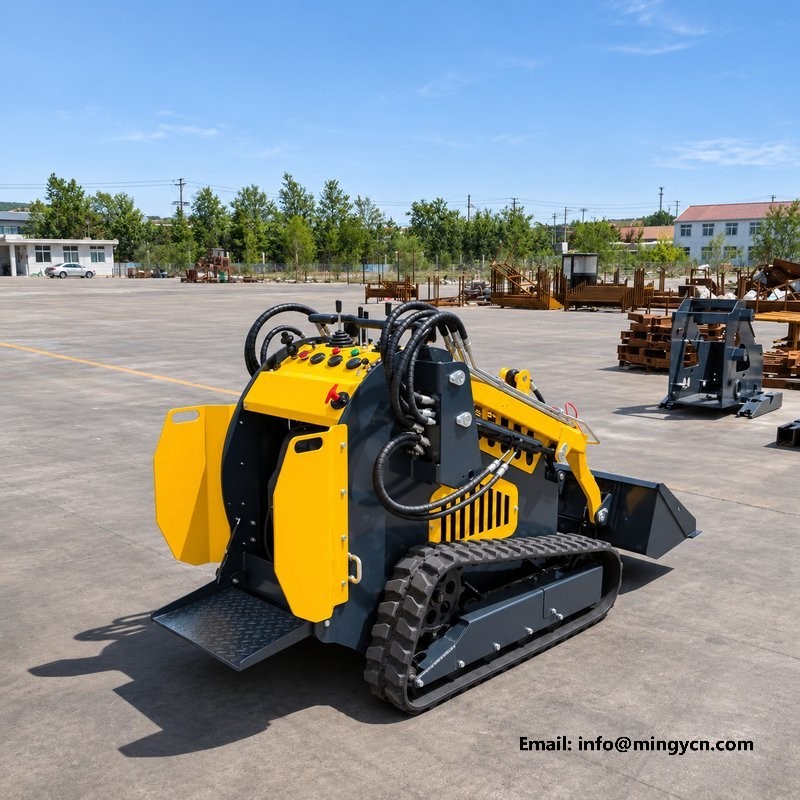
Look at the hoses in the side view: they run from the valve block along the inside of the lift arm, clipped at intervals, and turn into the cylinders through swept bends rather than sharp elbows. That routing is deliberate. A hose that is allowed to rub against a plate will fail at the point of contact long before the rubber itself is worn out, and a sharp bend concentrates stress at the fitting. The fittings on the MY360 are crimped assemblies rather than reusable ends, which is the correct choice for a production machine because the crimp is made and tested under controlled conditions. When inspecting a machine, run a hand along each hose and feel for chafing, check that every clip is present, and look for weeping at the crimp collars. A missing clip is a small item that costs a hose and a day of work.
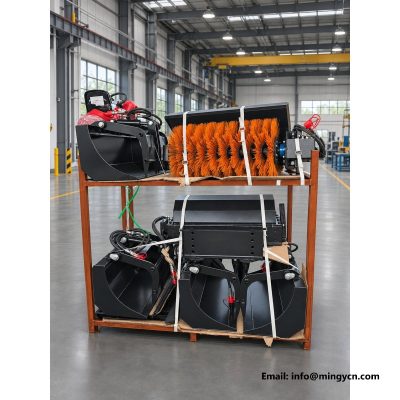
The bucket in the photographs is mounted on a quick coupler, and this is the feature that turns a skid steer loader from a digging machine into a tool carrier. With the coupler fitted, the operator can release one attachment and pick up another without leaving the platform, using the machine's own hydraulics to operate the locking mechanism. The common set for a machine of this size is a general-purpose bucket, a set of pallet forks, a grapple for brush and debris, and a sweeper or snow blade for seasonal work. Each one adds a task the machine can do without a second prime mover. When ordering, confirm the coupler plate pattern and the auxiliary hydraulic couplers match the attachments you already own, because plate patterns are not universal and an adapter adds cost and length to the front of the machine.
The MY360 crawler suits work where the ground is soft, uneven or easily marked, and where the machine stays on one site for days rather than moving between jobs. That covers landscaped gardens before paving, farmyards and cattle sheds, small demolition and clearance jobs, and yard work around stockpiles of sand and gravel. It is also a sensible choice for hire fleets that send machines to private property, because rubber tracks do less damage to lawns and driveways than tyres. It is not the right machine for a contractor who spends half the day travelling on public roads, where a wheeled version is faster and cheaper to run. The honest answer is that the two versions share a platform and a hydraulic layout but are bought for different sites. Matching the undercarriage to the ground is the first decision, not the last.
It means the machine has two separate pumps and three control valves. Each pump supplies its own circuit, so drive flow and loader flow do not compete, and the three valves divide the oil between lift, tilt and the auxiliary couplers. The practical benefit is that the bucket can rise while the machine is still creeping forward, which makes truck loading smoother than on a single-pump machine.
Rubber tracks are far kinder to finished surfaces than steel tracks or wheels, because the load is spread along the belt rather than concentrated at four contact points. The machine can cross a lawn or a paved apron with much less marking, provided turns are made gently and the ground is firm. Very soft turf after rain will still take a track pattern, so avoid pivoting on the spot.
Ordering and technical support
Email: sales@mingycn.com
LINE (ID): mingyicn
Tell us your working width, ground conditions and the attachment you need, and we will confirm the right configuration and shipping details.