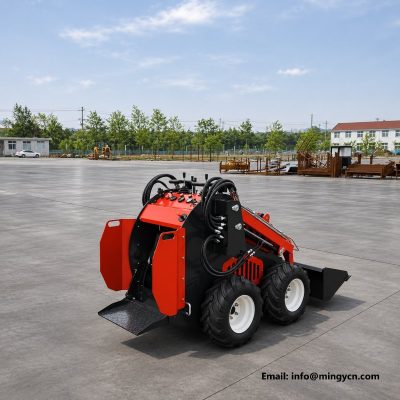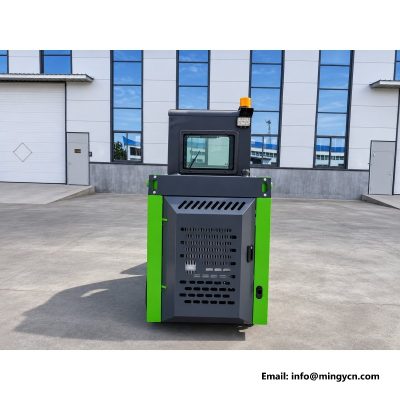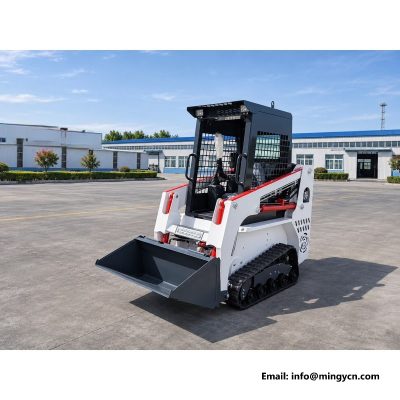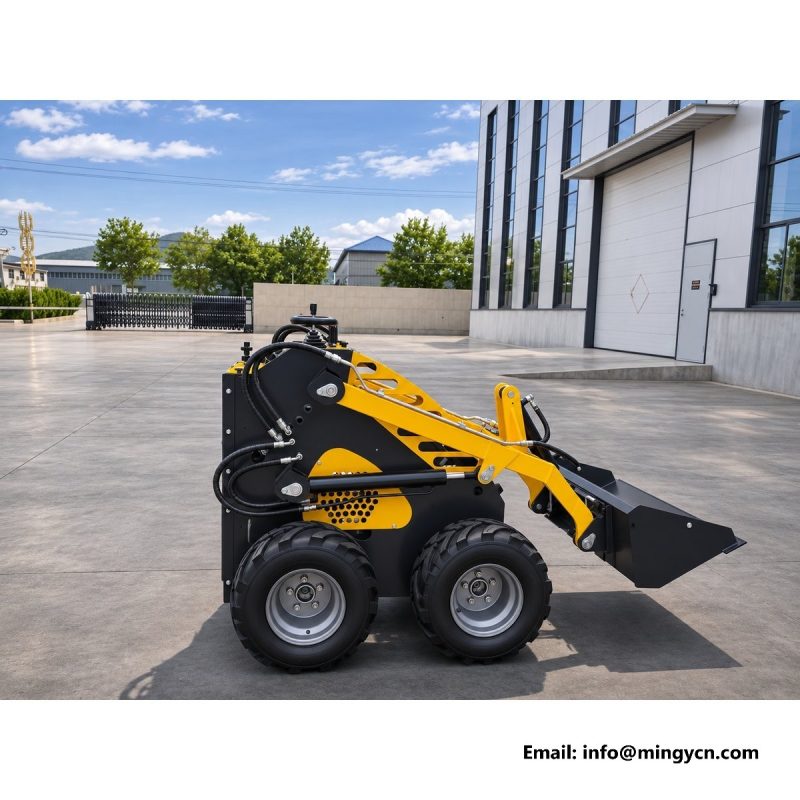
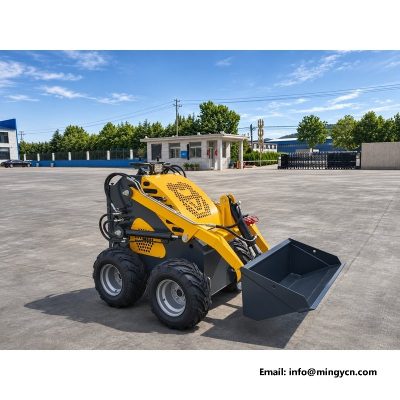
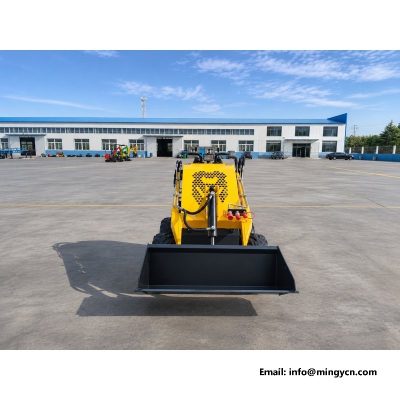
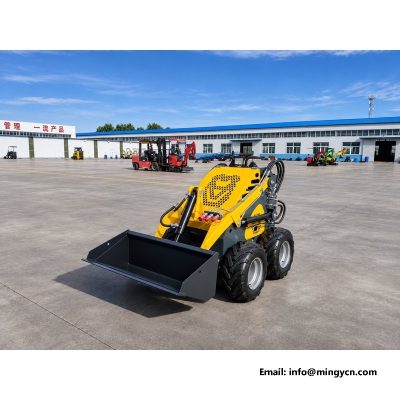
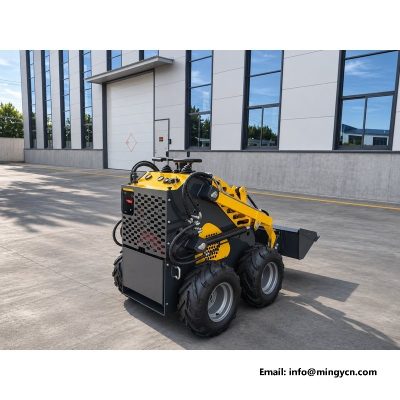
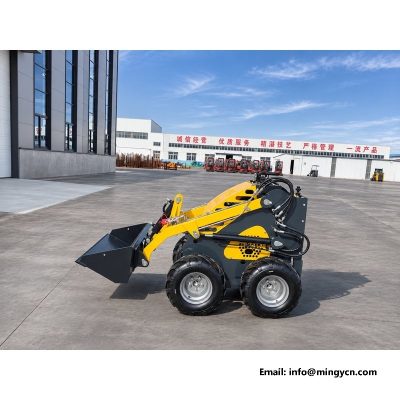
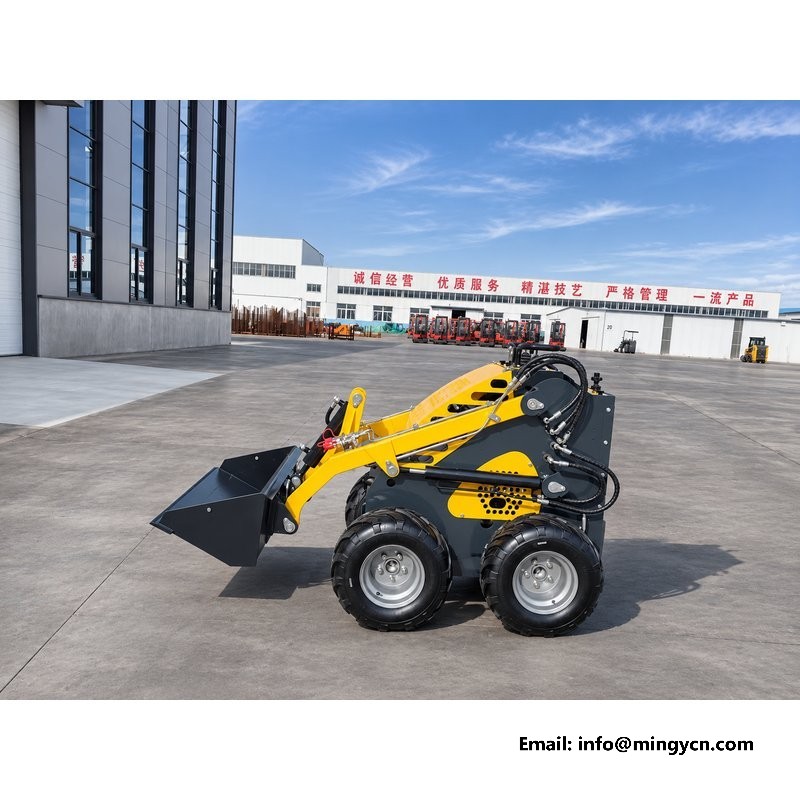
MY320 wheeled skid steer loader with a 200 kg rated load and 23 x 8.5 x 12 tyres.
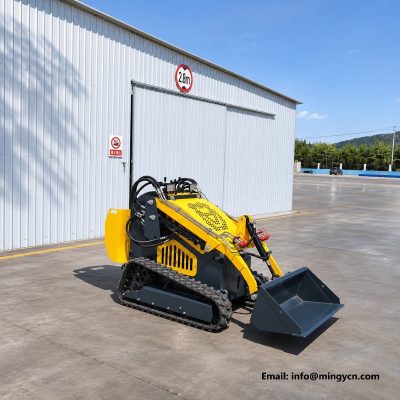
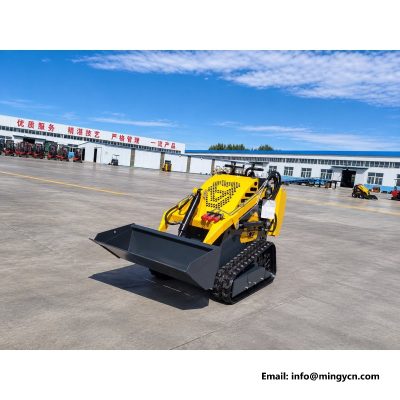
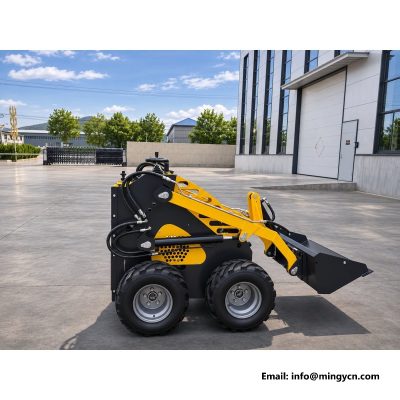
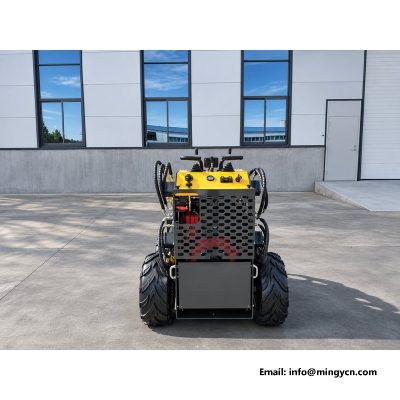
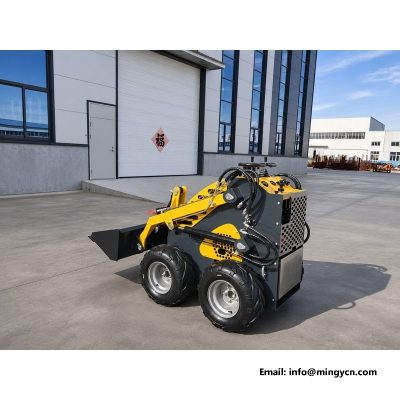
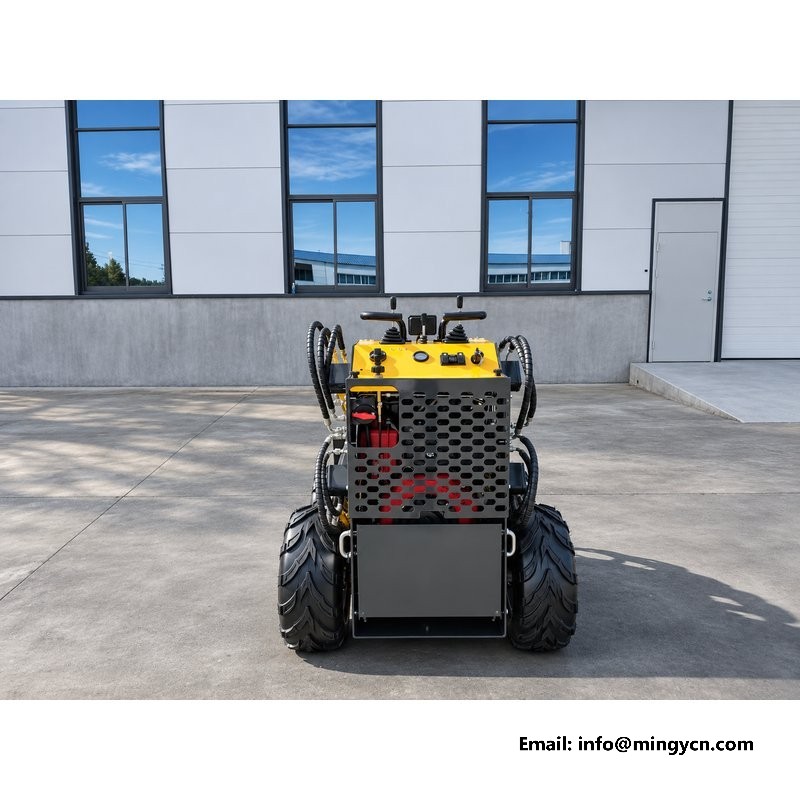
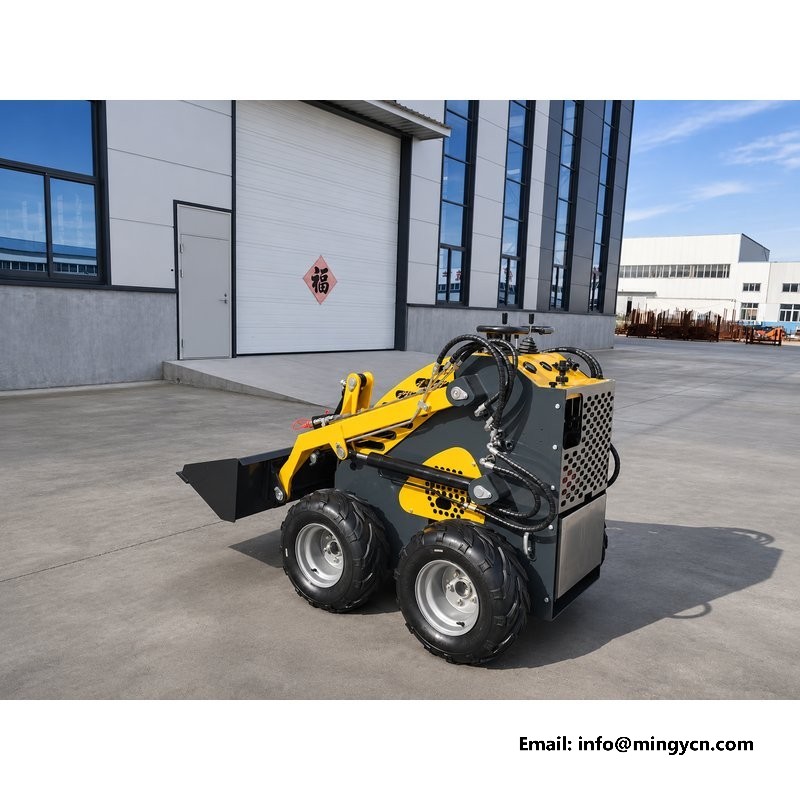
The wheeled version of the MY320 uses the same 200 kg rated load, the same 0.06 m3 bucket and the same 420 cc engine as the crawler, and puts them on four tyres instead of two rubber tracks. The eight photographs here show the yellow machine in the factory yard with its open stand-on platform, roll bar and standard bucket, from enough angles to judge the layout and the finish. The sections that follow compare the two variants honestly, explain how a skid steer turns, and set out what tyre size, pressure and maintenance mean in daily use. Figures are quoted from the specification sheet only.
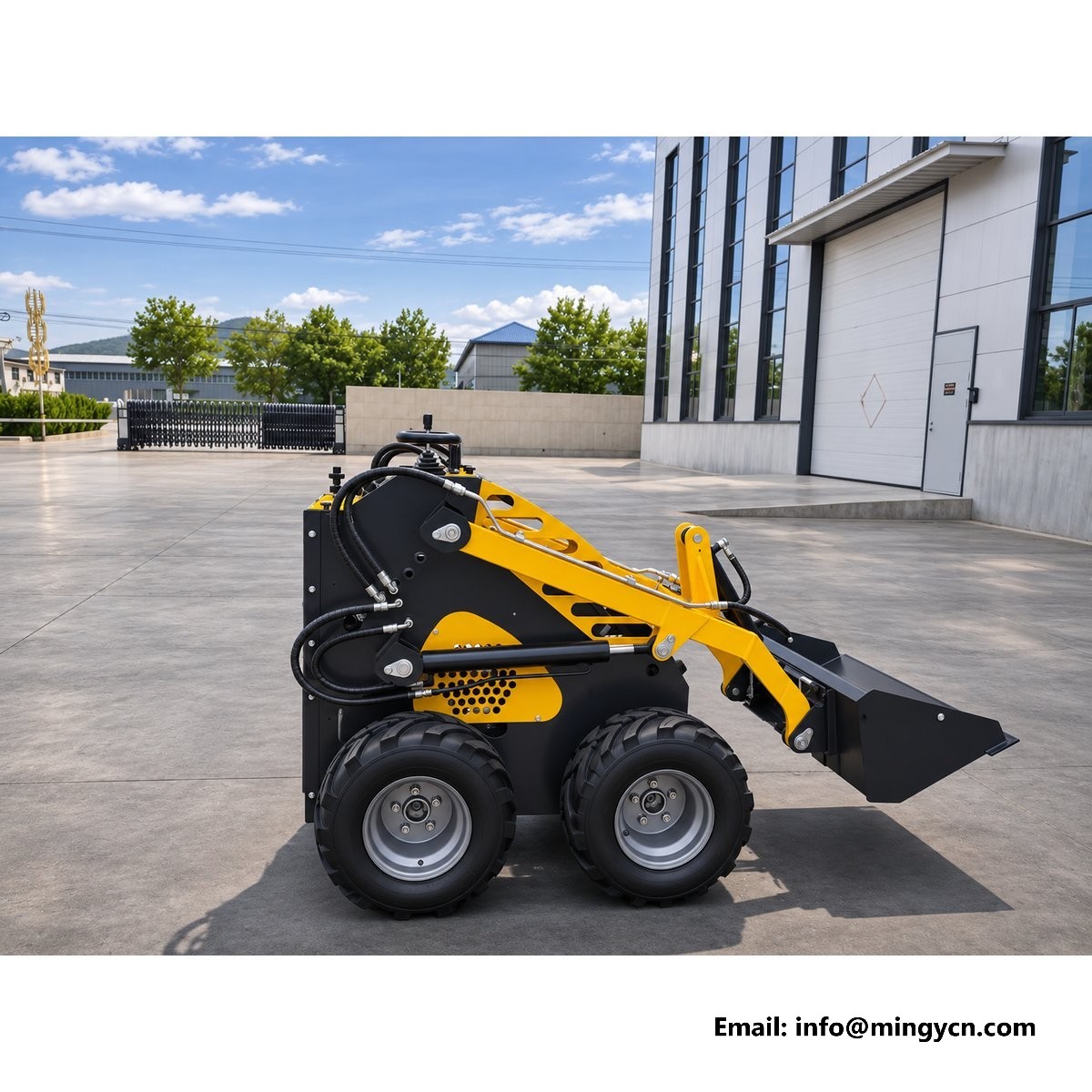
The wheeled MY320 shares its load ratings, bucket and engine with the crawler version, so the choice between them is not about capacity. It is about the surface the machine will spend its life on. Wheels roll easily on concrete, asphalt, packed gravel and warehouse floors, and they do it without the drag and scrub that a rubber track produces on a hard surface. Tracks float over soft ground and climb wet slopes that would stop a wheeled machine. The photographs on this page show the wheeled build in the factory yard: yellow paint, an open stand-on platform inside a roll bar, a standard bucket on the quick coupler, and four tyres in place of the track frames. Deciding which surface dominates the work is the first question, and price comes after it.
The tyre on this machine is marked 23 x 8.5 x 12, which describes a 23 inch overall diameter, an 8.5 inch section width and a 12 inch rim. The size is common enough that replacements can be found through industrial and trailer suppliers rather than only through the loader dealer, which matters in a market far from the factory. Width is the part that decides behaviour on grass and gravel: a narrow tyre cuts in and finds grip, a wide one floats and leaves the surface alone. On a compact loader of this weight the 8.5 inch section is a working compromise between the two, steady on a concrete apron and not destructive on a lawn. Tread pattern is what the buyer should confirm against the intended surface. Record the sidewall marking when the machine arrives, so a later replacement matches the set.
| Model | MY320 |
| Rated load | 200 kg |
| Max load | 300 kg |
| Operating weight | 630 kg |
| Bucket capacity | 0.06 m3 |
| Engine options | Runtong R420D / Briggs XR2100 / Kopu 192 / Kubota D722 |
| Rated power | 13.5 HP / 13.5 HP / 11 HP / 10.2 kW |
| Rated speed | 3,600 / 3,600 / 3,000 / 2,500 rpm |
| Displacement / cylinders | 420 cc / 1 |
| Aspiration | Naturally aspirated |
| Emission | Euro 5 / EPA |
| Travel speed | 0-6 km/h |
| Max operating height | 2,490 mm |
| Dump height | 1,564 mm |
| Dump reach | 446 mm |
| Overall height | 1,390 mm |
| Length without attachment | 1,540 mm |
| Length with standard bucket | 2,160 mm |
| Bucket roll-back at ground / at top | 25 / 115 degrees |
| Fuel tank | 5 L |
| Undercarriage | Rubber track 150 x 36 x 72 mm (crawler) / 23 x 8.5 x 12 tyre (wheeled) |
A skid steer turns by driving its left and right sides at different speeds, and when those speeds are opposite the machine rotates about its own centre. There is no steering axle and no universal joint in the driveline; the turn comes entirely from the wheel motors, which is why the machine can work in a space barely wider than itself. The cost of that geometry is scrub. In a tight turn the tyres cannot roll, so they slide sideways across the surface, and that sliding is what wears them and what marks a floor. An experienced operator turns in a wide arc when there is room and saves the pivot turn for the places that demand it. Four motors give each wheel its own drive, which keeps push available when one tyre loses grip.
On a finished floor the wheeled machine is in its element. It travels faster between the pile and the truck, it does not leave the scuffed track marks that a crawler leaves on new concrete, and it turns into a bay without tearing at the surface. Warehouse and yard work suits it: pallets of bagged material, sweeping, odd jobs around a loading dock. Three cautions belong in the same paragraph. Sharp pivot turns will still mark a sealed floor, so plan the route. Wet concrete and painted steel are slippery under a loaded tyre. And a diesel engine running indoors needs ventilation and, in many workplaces, a written risk assessment. A wheeled loader is not automatically an indoor machine just because it fits through the door. Keep the floor swept as well, since grit under a tyre is what turns a slow turn into a skid.
Tyre pressure is the cheapest maintenance item on this machine and the one most often skipped. Check it cold, with a proper gauge rather than a thumb, and set both tyres on an axle to the same figure so the machine does not pull to one side under load. The wear pattern tells you what is wrong. Wear down the centre of the tread points to over-inflation; wear on both shoulders points to under-inflation; a flat spot or cupping on one tyre usually means a dragging brake, a worn wheel motor or a lot of pivot turns on abrasive ground. Rotate the wheels front to rear at intervals to even out the wear, keep the valve caps on, and look at the rim edge for dents from kerbs. A tyre that fails on site is a day lost.
Running cost is where the two variants separate most clearly. A wheeled machine wears tyres, wheel bearings and the occasional rim; a crawler wears belts, sprockets, idlers and rollers, and those parts are both more numerous and more expensive to renew. On hard ground the wheeled machine will usually cost less per hour to keep working, and it will spend less time in the workshop. On soft ground the argument reverses: a wheeled machine that spins and digs itself in damages tyres and turf, while a crawler keeps moving. Engine, hydraulics and the rest of the structure are shared, so fuel use and routine service are close between them. The honest comparison is not the purchase figure but the cost per year on the surface the machine actually works. Ask for the wear parts list with the quotation, so the comparison includes what each variant will consume.
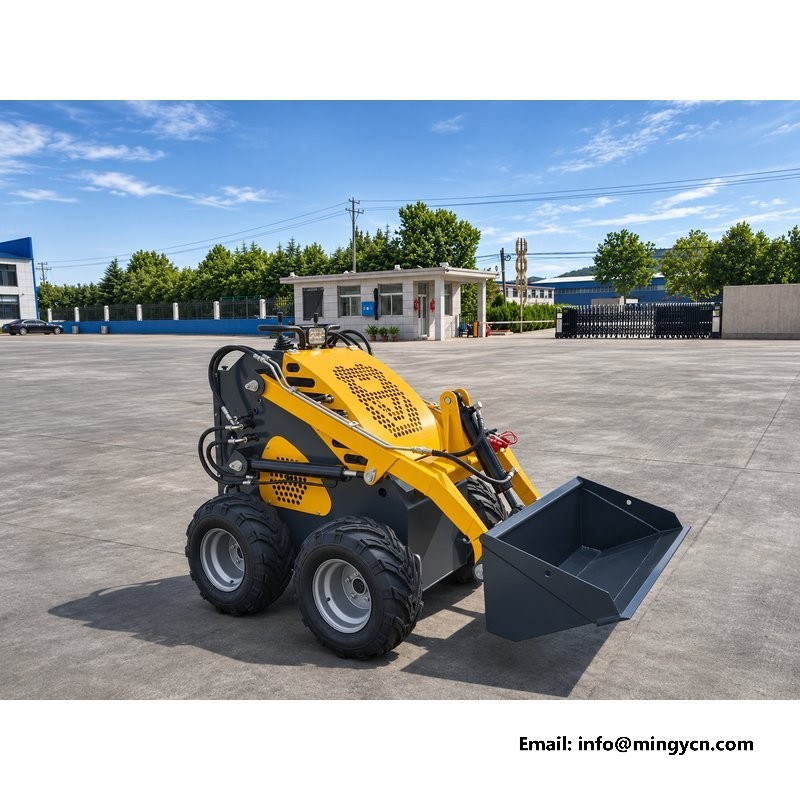
The 200 kg rated load puts this loader into a particular kind of work rather than a particular industry. It is the machine for a landscape contractor moving soil and mulch around a finished garden, for a farm shifting feed sacks and cleaning out a shed, for a small yard that receives pallets and needs them moved without a forklift, for a grounds team maintaining paths and beds. In each case the loads are modest, the spaces are tight, and the alternative is a wheelbarrow and two men. That is the real comparison. A compact loader does not compete with a full-size machine; it replaces labour on jobs too small to justify one. Buyers who expect it to load large tippers all day are buying the wrong class. It also suits hire fleets, where one machine has to cover several small jobs in a week.
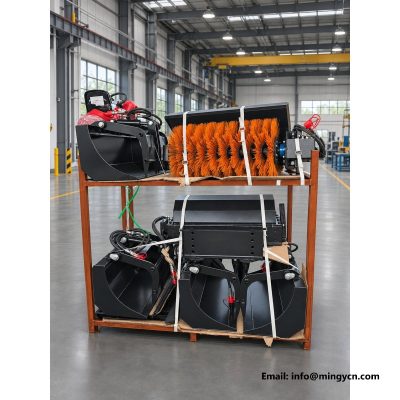
The standard quick-attach coupler is what turns one compact loader into several machines. A bucket handles aggregate and soil, forks take pallets and timber, a grapple clears brush and branches, a sweeper cleans a yard, and a levelling bar finishes a gravel drive. For a small contractor, that spread of attachments is the argument for owning a loader at all: the same engine, the same operator and the same parking space do the work of a forklift, a barrow gang and a sweeper. Two practical points are worth raising. Every attachment has its own weight, and that weight comes out of the rated load, so a heavy attachment leaves less capacity for material. And attachments need somewhere to live, dry and off the ground, or the coupler becomes a way of storing rust.
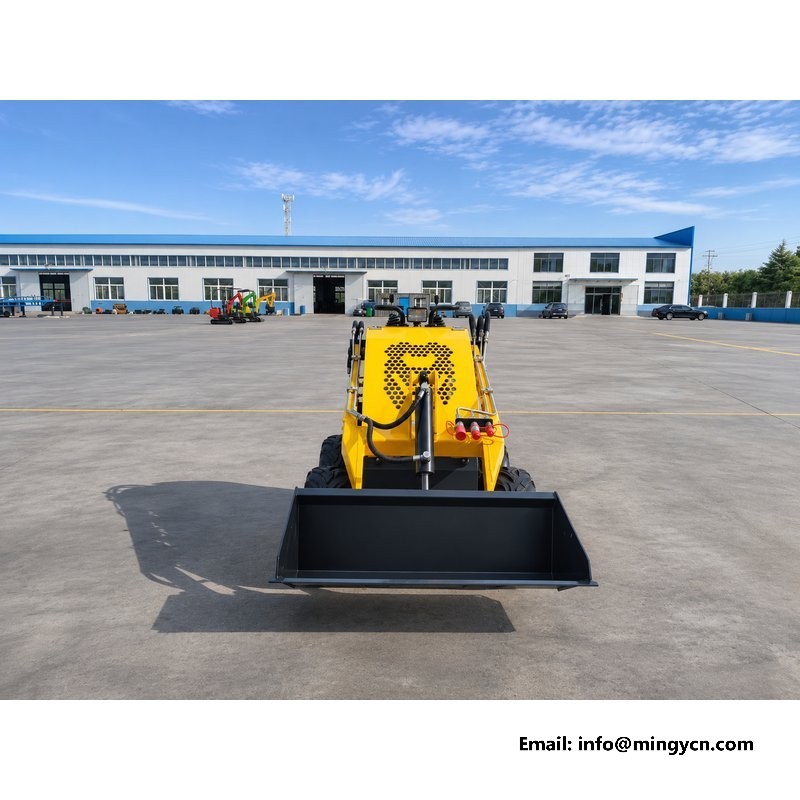
The travel speed of this machine runs from zero to 6 km/h, and on a large site that figure is worth more than it looks. A yard, a farm or a garden centre can be several hundred metres across, and a loader that shuttles at walking pace with a full bucket covers that distance many times a day. Six kilometres an hour is fast enough to make the trips short and slow enough to stay controllable with a load held low. It is not a road speed, and the machine should not be driven on a public road. Between sites it goes on a trailer. The value of the speed is in the small savings that accumulate: fewer minutes per trip, more trips per hour, and an operator who is not worn out by a machine that crawls.
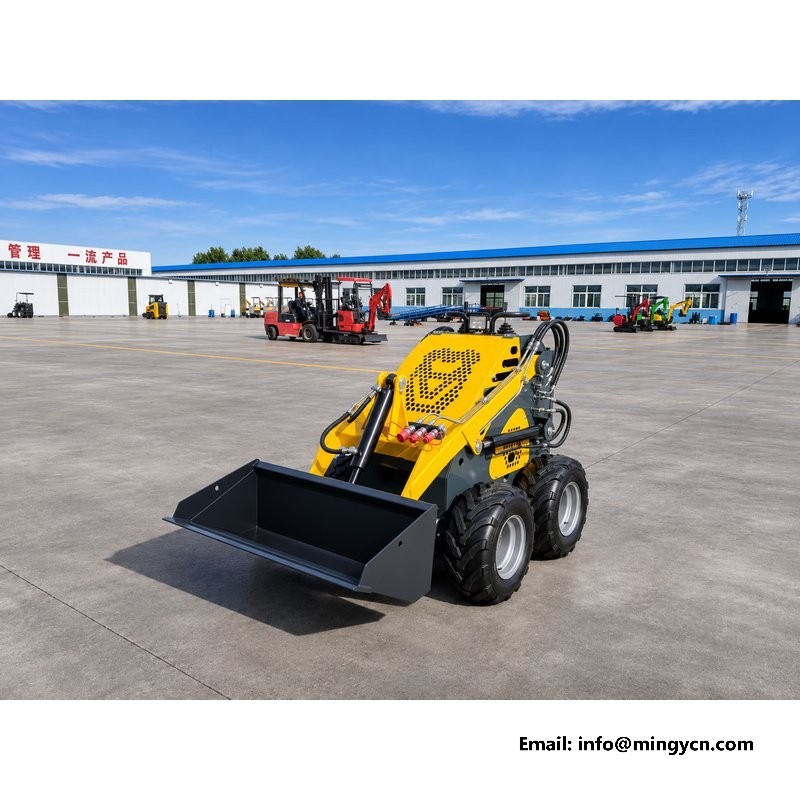
The lift geometry on the wheeled machine is the same as on the crawler: a maximum operating height of 2,490 mm, a dump height of 1,564 mm and a dump reach of 446 mm. What changes is the ground under it. On a level concrete apron the machine can use that full dump height with confidence, because the tyres sit square to a flat surface and the load goes straight down through them. On uneven ground the same lift puts a twist into the chassis that a track would absorb more easily, so the operator should pick a flat spot before raising a full bucket. The 446 mm reach still lets the bucket lip clear a wall or a trailer side. Reading these three figures together, rather than one at a time, tells a buyer whether the machine fits the job.
A compact loader survives on ten minutes of checking at the start of a shift. Walk around the machine before starting: look at each tyre for cuts and embedded stones, check the wheel nuts for a bright ring that shows one has moved, and look under the machine for fresh oil. Open the engine cover and check the oil level and the air filter, which fills quickly in a dusty yard. Grease the arm pivots and the coupler at the stated intervals rather than when they begin to squeak. At the end of the day, park on level ground, lower the bucket to the deck, apply the parking brake and remove the key. Wash down periodically, but keep the hose away from the air intake and the electrical connectors. Keep a written log of greasing and tyre pressures, because it is the cheapest evidence of care when the machine is sold.
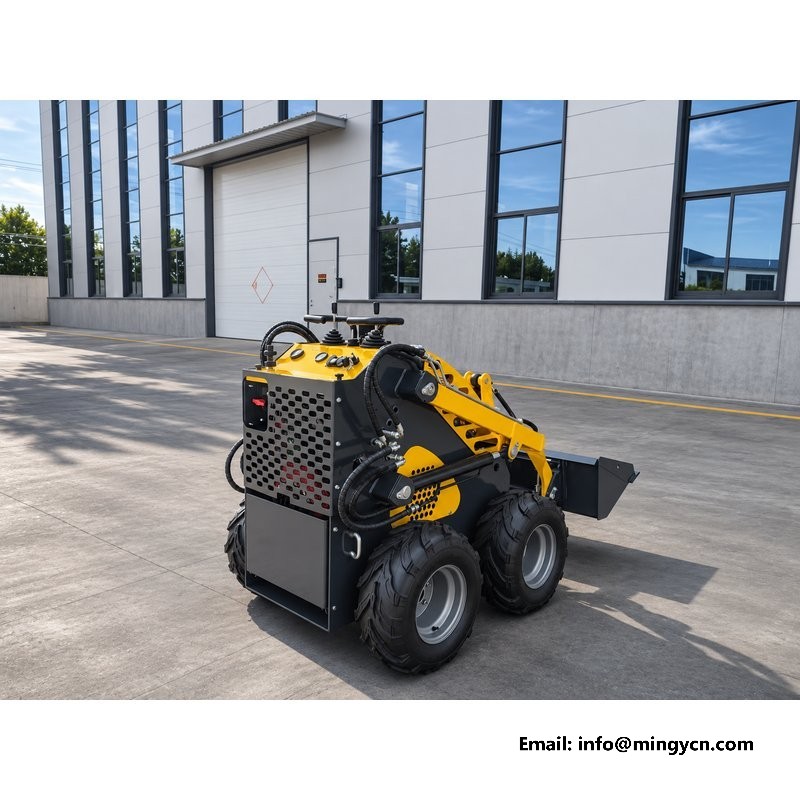
Choosing between the two MY320 variants comes down to an honest description of the ground. Write down where the machine will work, as a percentage: concrete and asphalt, gravel, turf, mud. If most of the year is spent on hard, level surfaces, the wheeled machine will be faster, cheaper to run and easier on floors. If the work moves onto soft ground, building sites in winter, paddocks or slopes, the crawler will keep working when the wheeled machine is stuck. Two secondary questions matter as well: how the machine will be transported, and who will maintain it. Tyres are simpler for a small workshop; tracks reward a dealer with parts. Where the split is close, buy the variant that matches the worst month, not the best one. A demonstration on your own ground settles the question faster than any specification sheet.
Less than a tracked machine in a straight line, more in a turn. The 23 x 8.5 x 12 tyres spread the load and roll rather than scrub, so travel across turf is gentle. A pivot turn, where the two sides counter-rotate, slides the tyres sideways and will scuff grass, especially when wet. Turn in a wide arc on turf, keep loads light, and stay off a soft lawn after rain.
The quick-attach coupler is standard on both, and the interface is the same, so a bucket, forks or a grapple bought for one machine will generally fit the other. Two checks are needed: confirm the coupler pattern matches the attachment you already own, and subtract the attachment weight from the 200 kg rated load. A heavy attachment leaves correspondingly less capacity for material.
Ordering and technical support
Email: sales@mingycn.com
LINE (ID): mingyicn
Tell us your working width, ground conditions and the attachment you need, and we will confirm the right configuration and shipping details.