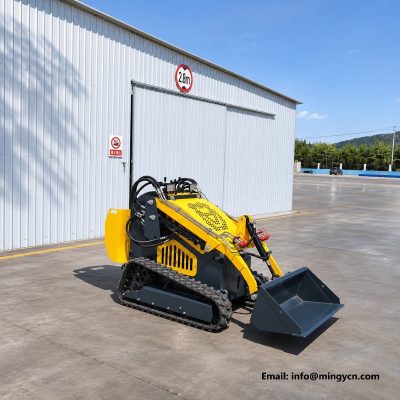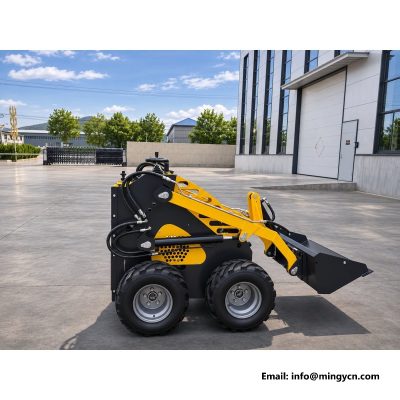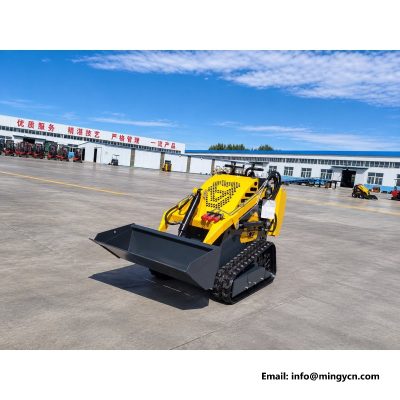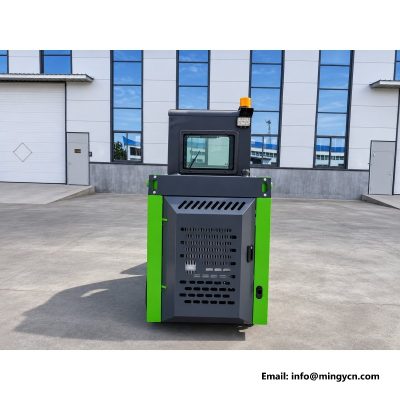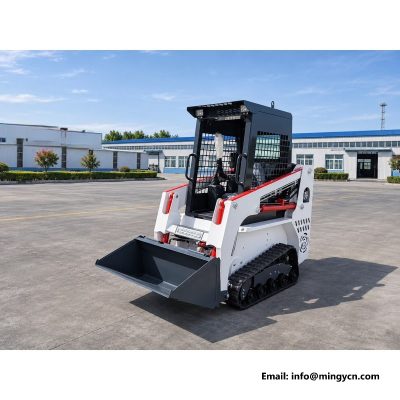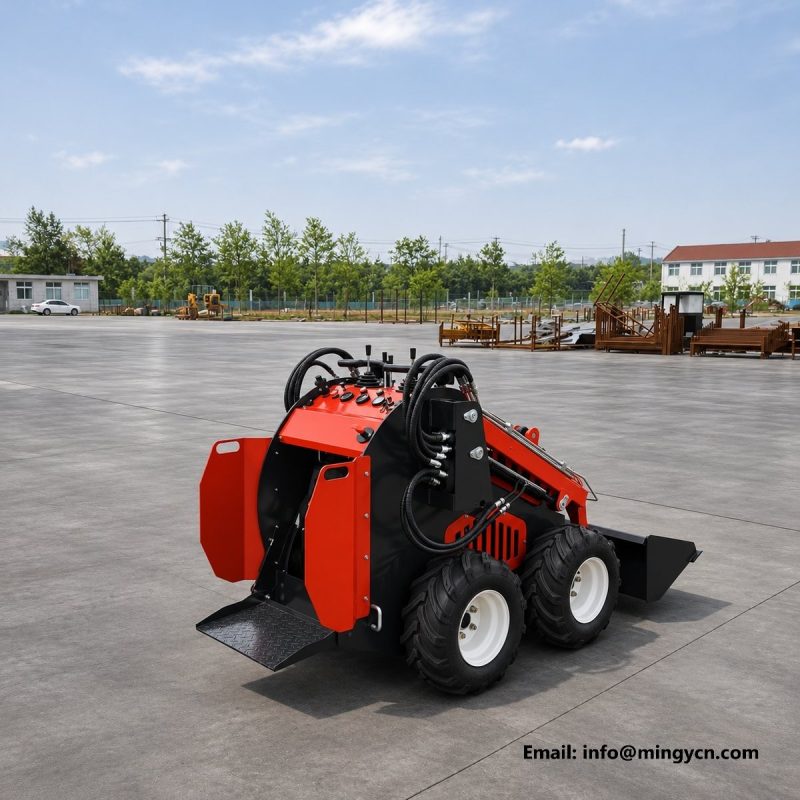
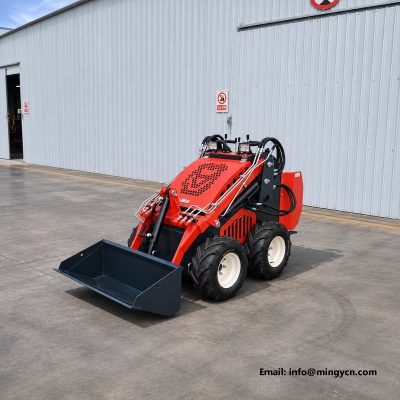
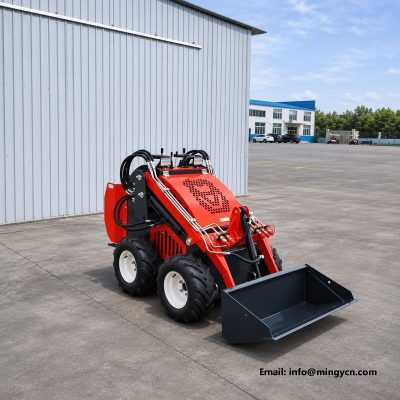
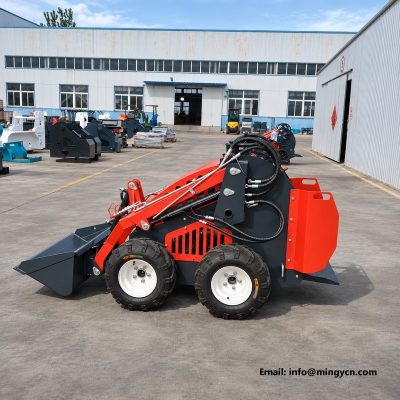
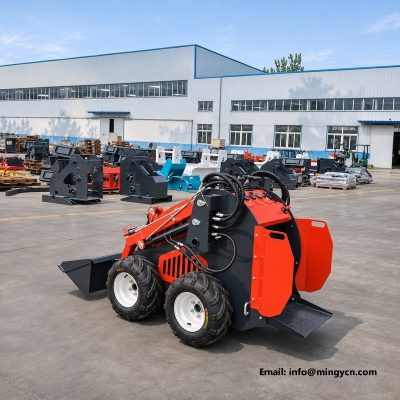
MY360 wheeled skid steer loader with a twin-pump three-valve hydraulic system.
This is the wheeled version of the MY360, a red stand-on skid steer loader on four pneumatic tyres. The same five angles used for the crawler page are repeated here, so the two undercarriages can be compared directly: the platform, the protective frame and the bucket are shared, while the tracks are replaced by wheels and axles. The page explains how a wheeled skid steer travels and turns, what that does to tyres, how the twin-pump, three-valve hydraulics behave on a hard surface, and how to decide between this machine and the crawler version. Together the views show what changes when tracks are replaced by wheels, and what stays exactly the same.
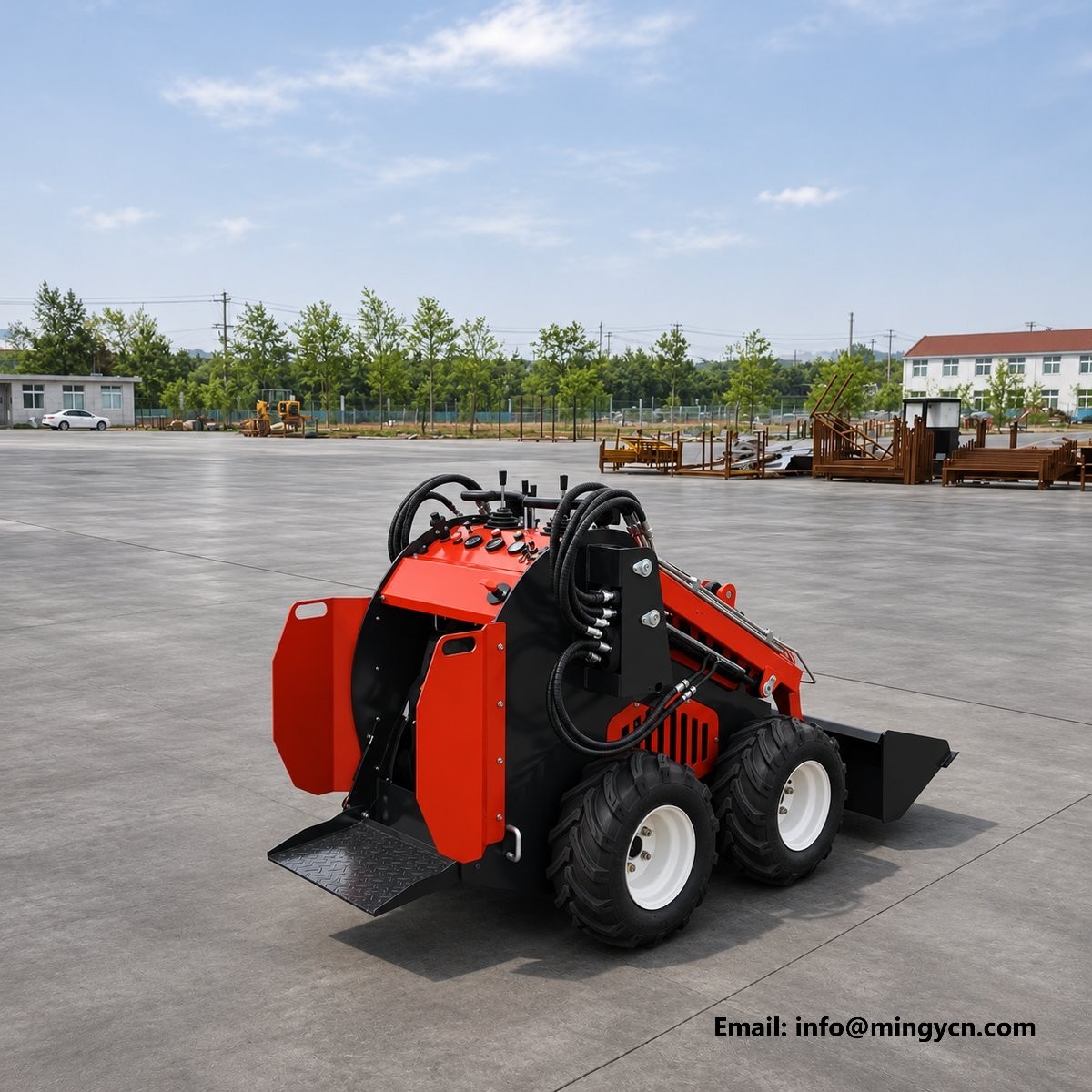
The machine in these photographs is the wheeled version of the MY360: a red stand-on skid steer loader with four tyres, an open operator station within a roll-over frame, and a bucket carried on the lift arms. The photographs follow the same sequence as the crawler page, side, front, rear and two rear quarters, which makes the differences between the two undercarriages easy to see. Where the crawler carries its weight on two rubber belts, this machine puts it on four pneumatic tyres and rigid axles. That single change alters where the machine is useful, how it steers, what it costs to run and what the operator feels through the platform. The sections below work through those consequences in the order a buyer usually meets them: travel, steering, hydraulic response, tyres, maintenance and the choice between the two versions.
On a concrete apron, a paved yard or a compacted gravel road, wheels are simply more efficient than tracks. A tyre rolls; a track has to flex around its idlers and sprockets with every revolution, and that flexing consumes energy and generates heat. The practical result is that the wheeled MY360 travels faster between piles, arrives with more of its engine output available for the bucket, and does not leave the marks that a rubber track can leave when it turns on the spot. For a builder's merchant, a recycling yard, a sawmill or any site where the work happens on a hard standing, the wheeled machine spends more of its day working and less of it crawling. The advantage disappears as soon as the ground turns soft, which is why the crawler version exists alongside it.
| Model | MY360 |
| Hydraulic system | Twin-pump, three-valve |
| Engine | Runtong R740 (standard) |
| Configurations | Stand-on crawler / stand-on wheeled |
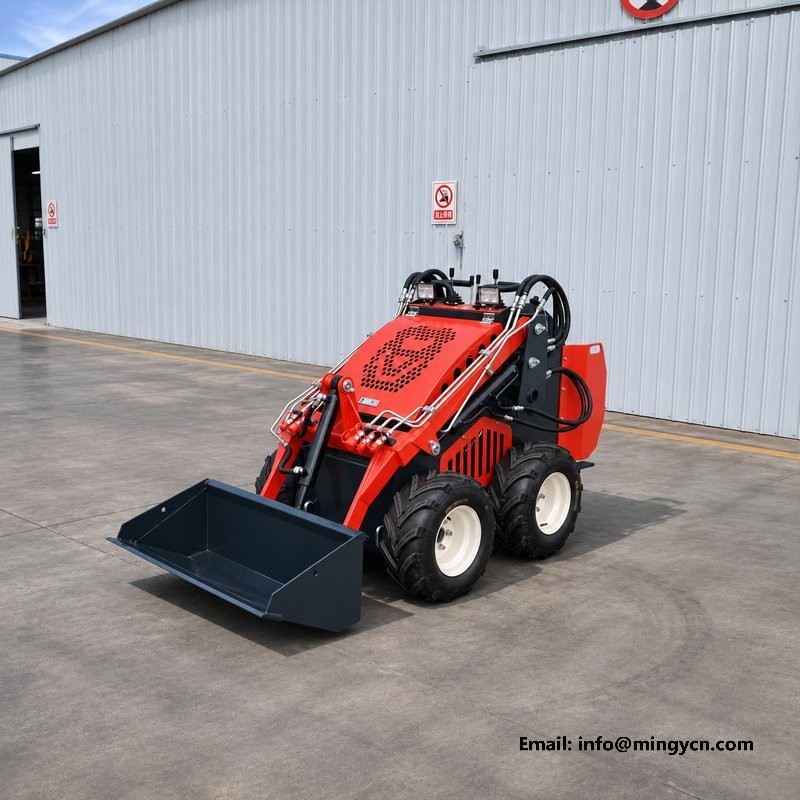
Skid steer steering is simple in principle and brutal in practice. The two sides of the machine are driven independently, and to turn, one side is slowed or reversed while the other keeps driving. The machine then pivots about a point near its centre, and the tyres have to slide sideways across the ground to allow that to happen. On loose gravel the scrub is invisible. On concrete or asphalt it is the reason skid steer tyres wear in a distinctive pattern and the reason the surface underneath takes a scuff. The operator controls how much of this happens: a wide, rolling turn costs far less rubber than a series of tight pivots on the spot. Teaching that habit is cheaper than replacing tyres, and it is the single largest influence on tyre life on any machine of this type.
Four tyres on a skid steer do different jobs, and they wear at different rates. The front pair carries the bucket load and takes most of the scrub during turns; the rear pair follows and often lasts considerably longer. That is why rotation is worth the effort: swapping front to rear at intervals evens out the wear and gets more working life from a set. Pressure matters as much as tread depth. An under-inflated tyre bulges, runs hot and can slip off the rim during a tight pivot, while an over-inflated one gives a harsh ride and a smaller contact patch. Check pressures cold, before the machine has worked, and check them on all four. Replace tyres in axle pairs rather than singly, so the machine does not pull to one side under load.
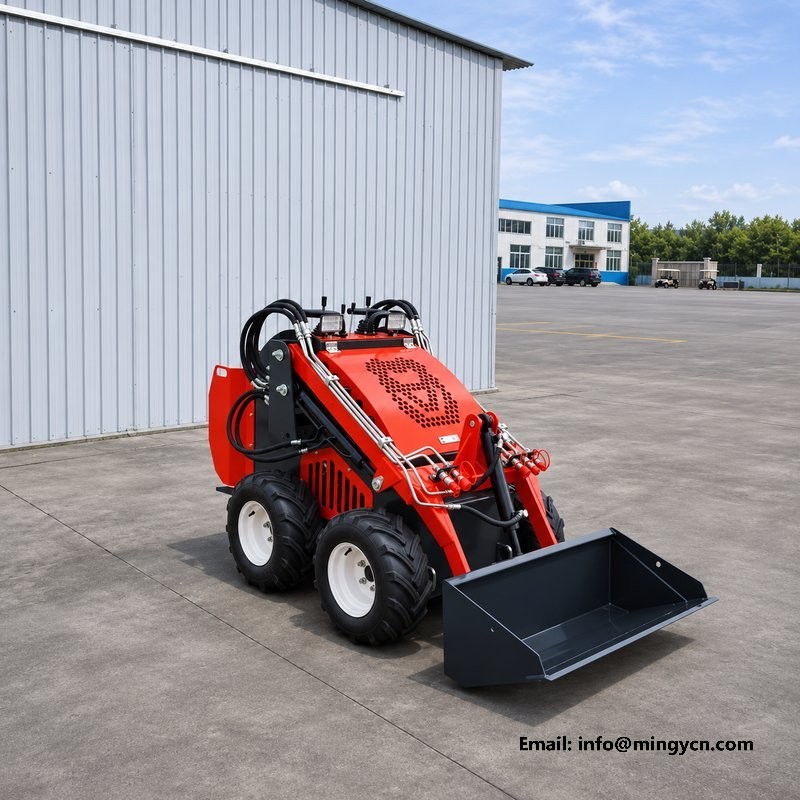
The hydraulic layout is the same twin-pump, three-valve arrangement used on the crawler version, and on wheels it changes the character of the machine. Because the two pumps work independently, the side that drives the turn can be reversed while the other keeps pushing, which is exactly what a skid steer manoeuvre requires, and the bucket circuit still receives its own supply at the same time. The three valves divide that supply between lift, tilt and the auxiliary couplers, so an operator can raise a loaded bucket, crowd it back and still creep forward to the truck. On a hard surface, where the machine can use all of its traction, this shows up as a smoother, faster loading cycle. The same layout also makes the machine predictable when the bucket is full and the yard is crowded.
The operator stands on a platform between the wheels, inside a four-post frame, with the controls at hand height and the bucket in full view below the lift arms. Standing gives a clear line over the front of the machine: the bucket edge, the ground in front of it and the corners of the load are all visible without leaning. It also shortens the time to get on and off, which matters on a machine used for short bursts of work rather than long shifts. On a wheeled chassis the platform transmits more of the ground through the operator's feet than a suspended seat would, so smooth surfaces are comfortable and rough ones are not. That is a fair trade for the visibility, provided the site is level and the surface is firm.
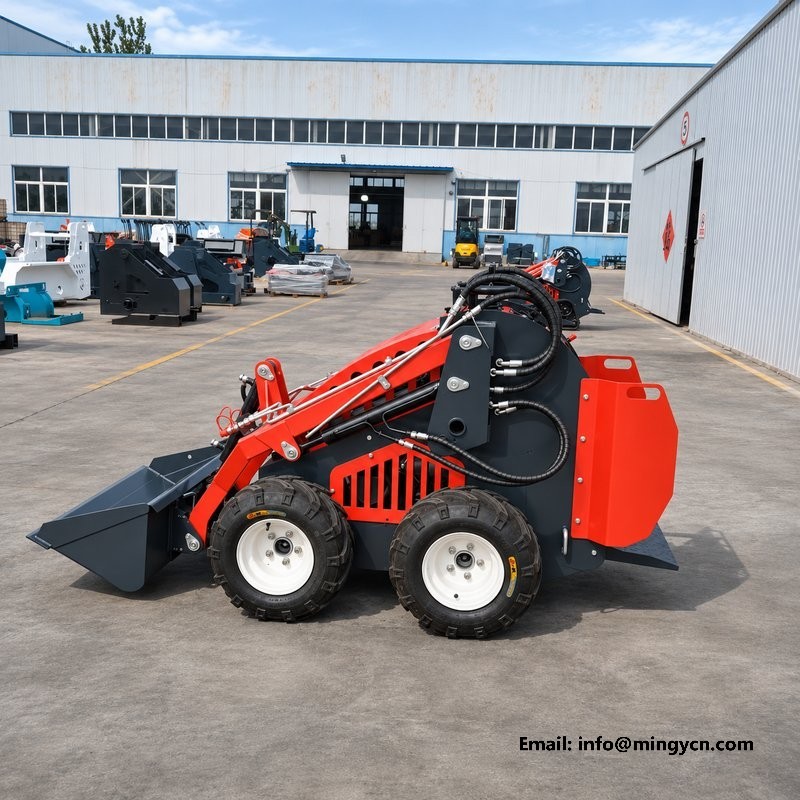
A wheeled skid steer is at its best on firm, level ground, and the operator should treat slopes with respect. The machine is short and the wheels are close together, so the stability margin is smaller than it looks from the driving position. Travelling up or down a slope with the heavy end uphill, keeping the bucket low, and avoiding turns across a slope are the basic habits. On uneven ground, one wheel can lose contact and the machine will rock; the rigid frame has no suspension to absorb that, so speed should come down. None of this makes the wheeled MY360 unsafe, but it does mean the machine rewards an operator who reads the ground. For sites that are soft or badly rutted, the crawler version is the better answer.
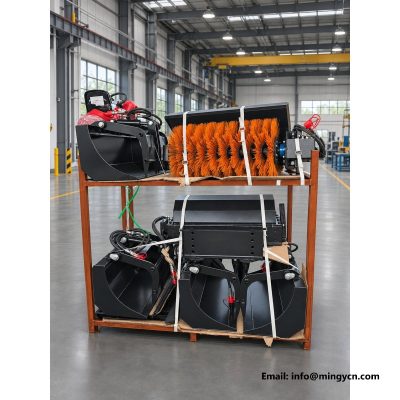
The quick coupler on the front of the lift arms is what allows one machine to replace several. On the wheeled MY360 the usual set is a general-purpose bucket, pallet forks, a grapple and a sweeper, and each one is changed from the operator position using the machine's own hydraulics. Wheels make some attachments more useful than they are on tracks: forks for unloading pallets in a yard, a sweeper for cleaning a paved apron, a snow blade for a car park. The limiting factor is traction, not hydraulic flow. A heavy attachment on a smooth surface can leave the machine short of grip, so the operator has to work with smaller bites. Confirm the coupler plate and auxiliary coupler type against the attachments already in the yard before ordering.
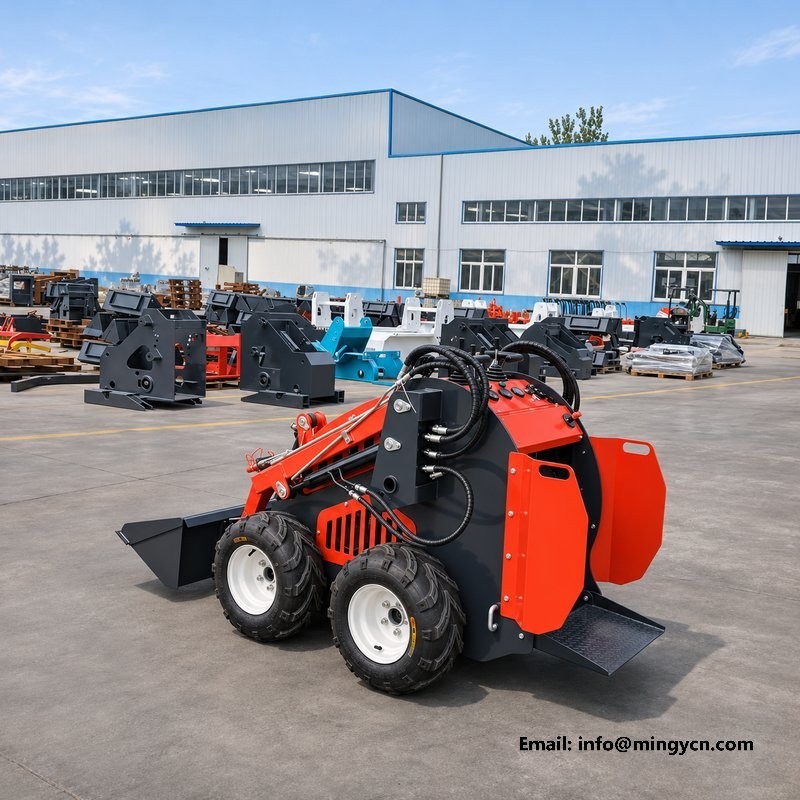
The daily walk-around on the wheeled MY360 is short and mostly visual. Check the four tyres for pressure, cuts and embedded stones; check the wheel nuts for movement; look under the machine for oil at the axle seals and the hose ends; check the engine oil and the coolant at the rear; and clear the air cleaner pre-cleaner of dust. Then start the machine and listen: a whine that follows ground speed points to a drive component, a squeal when the arms move points to a dry pivot. Grease the loader arm pivots and the bucket pins at the interval in the manual, not when a joint starts to complain. Most of the expensive failures on a skid steer begin as a cheap check that was skipped for a week.
The choice between the two versions comes down to three questions. What surface will the machine work on most of the time? How far does it travel between jobs? And how much does surface damage cost the customer? If the answers are concrete, short distances and no damage concern, the wheeled machine is faster and cheaper to run. If the answers are soil, long tracks across a site, and lawns or paving that must stay intact, the crawler is the right tool. There is no single correct answer here, because the two machines are built for different kinds of work. Hire fleets often buy both, sending the wheeled machine to builders' yards and the crawler to landscaped gardens. Both share the same hydraulic layout and the same stand-on platform, so an operator trained on one can run the other with very little adjustment.
Before the machine leaves the yard, ask for a demonstration on the surface it will actually work on. Watch the turn: a wheeled skid steer should pivot without hesitation and without a tyre breaking away from the rim. Operate the lift and tilt through the full stroke and listen for a judder, which usually means air in a circuit or a loose hose end. Check that the quick coupler locks and releases with the attachment fitted, and that the auxiliary couplers are clean and capped. Confirm the tyre pressures and that the wheel nuts have been torqued. Finally, ask for the hydraulic diagram and the parts list with the machine; on a loader that will be serviced locally, those two documents are worth more than a glossy brochure. That is a reasonable request for a machine of this size, and a supplier should not hesitate to meet it.
Check pressures cold before each shift, keep all four at the specified setting, and rotate front to rear at regular intervals so the steering pair does not wear out first. Replace tyres in axle pairs to keep the machine tracking straight. Avoid repeated pivots on abrasive concrete, because that is what removes rubber fastest, and inspect for cuts and embedded stones after every shift.
Only for short crossings. A wheeled skid steer relies on tyre grip, and in soft mud the tyres dig in and spin rather than carrying the machine forward. If the site is wet for most of the year, or the work involves freshly dug soil, the crawler version is the better choice. For a firm yard with occasional wet patches, the wheeled machine is fine.
Ordering and technical support
Email: sales@mingycn.com
LINE (ID): mingyicn
Tell us your working width, ground conditions and the attachment you need, and we will confirm the right configuration and shipping details.