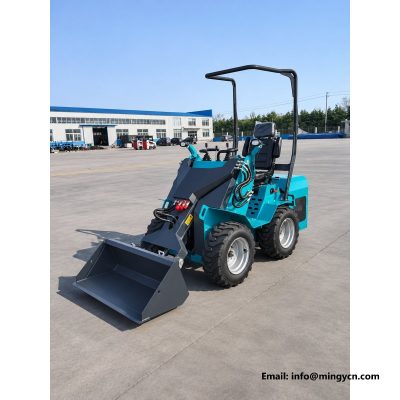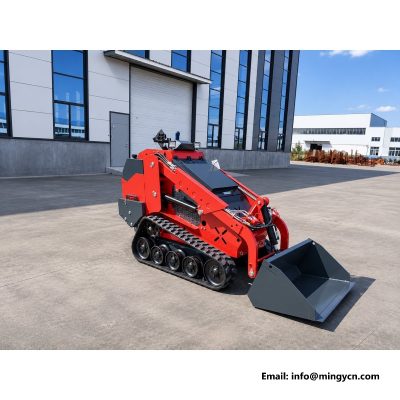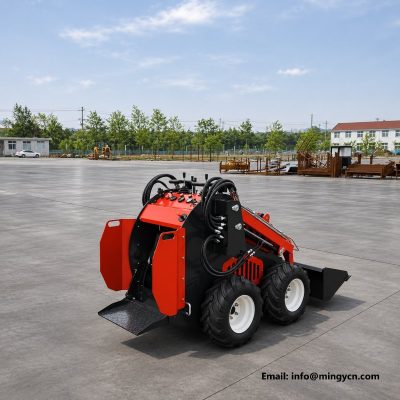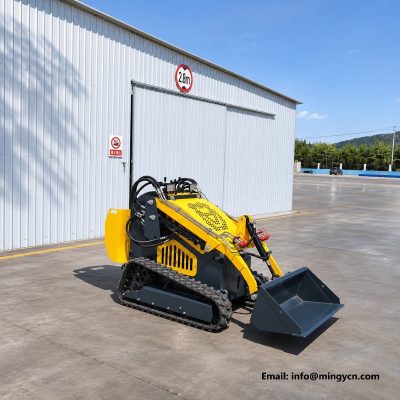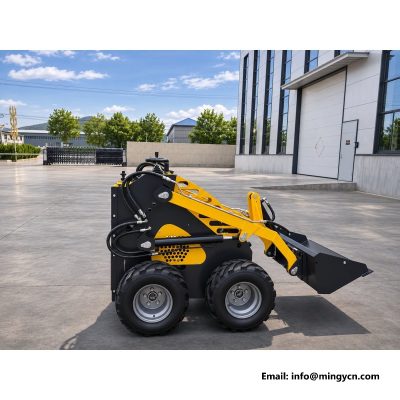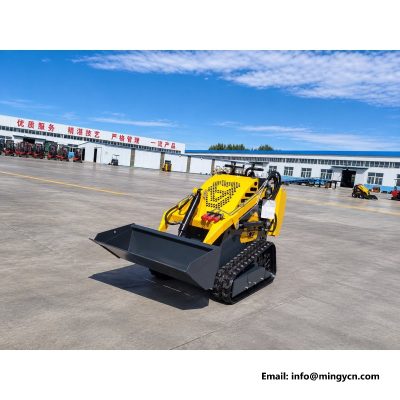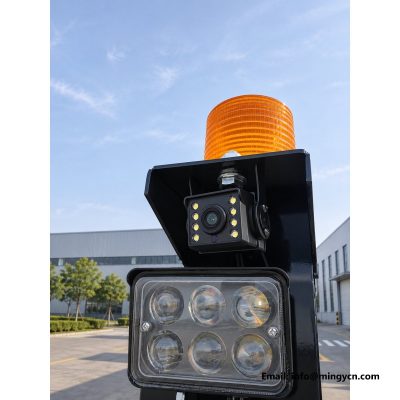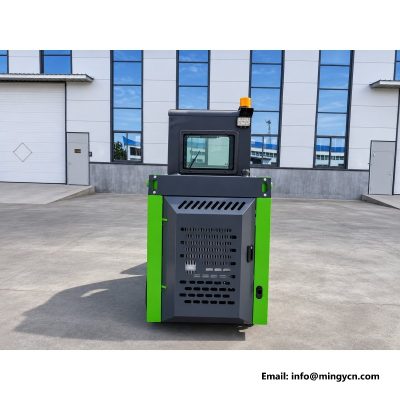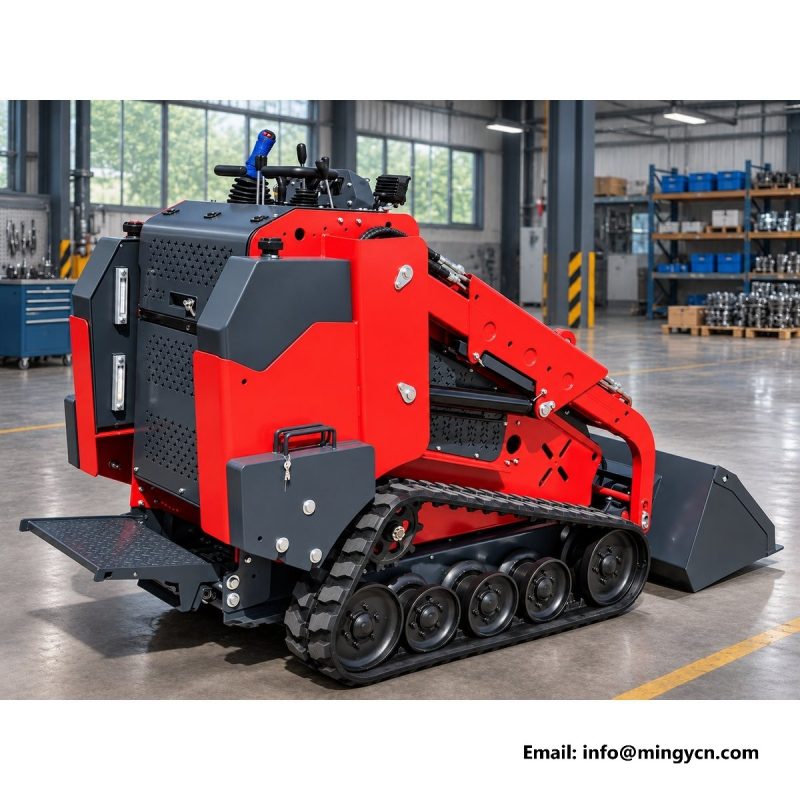
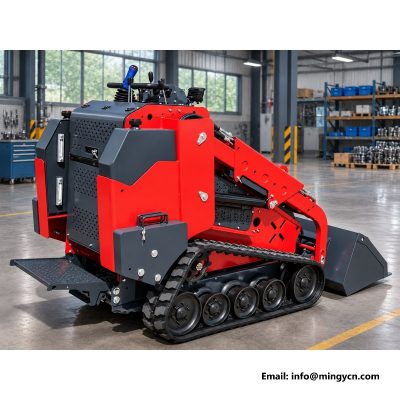
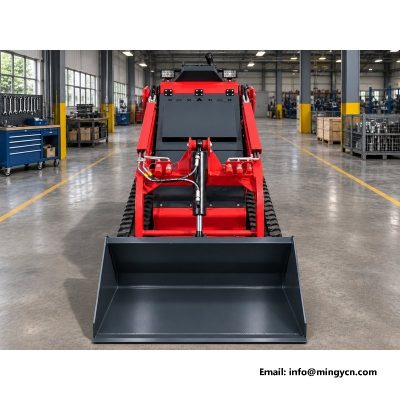
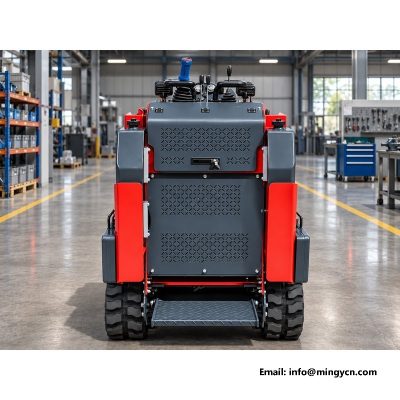
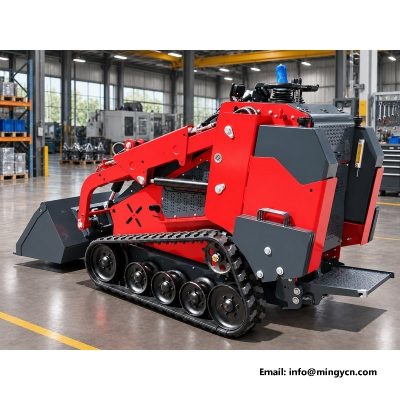
Studio and detail views of the MY1000 stand-on tracked skid steer loader.
This page collects the studio and detail photographs of the MY1000 stand-on tracked skid steer loader, taken on a plain background so that a buyer can study the machine without yard clutter in the way. For an export buyer who will never see the machine before it is crated, these views do more work than a specification table: they show how the panels fit, where the service points are, how the undercarriage is built and what the operator actually stands on. Each view below is described so that it can be checked against a quotation.
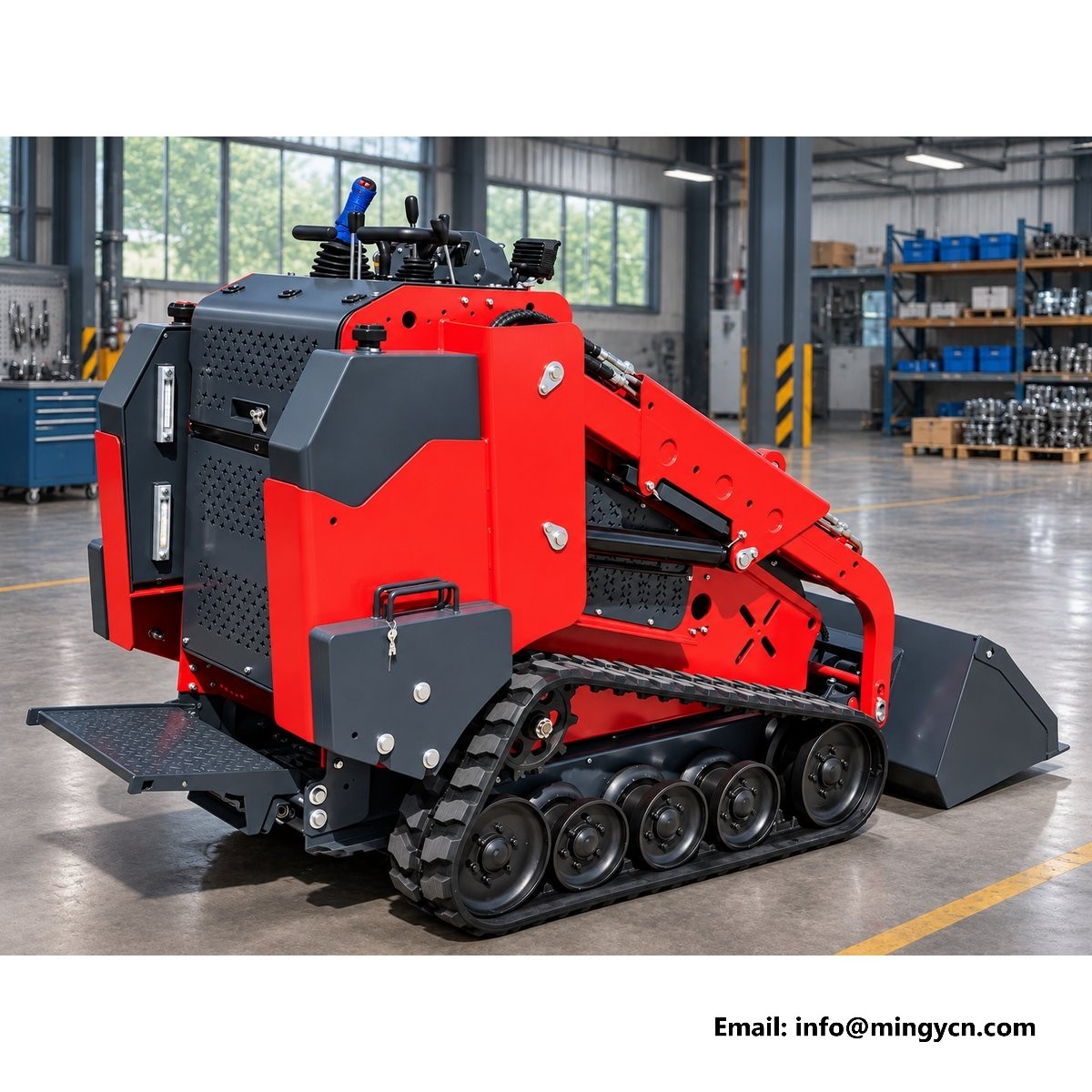
Yard photographs show a machine in context. Studio views show it as an object, and that is where build quality is visible: panel gaps, the alignment of the lift arms, whether the paint coverage is even on the inside of the frame, and whether the hydraulic hoses are routed with clamps or simply run loose. A buyer comparing two suppliers should look at the same details on both. It is common for two machines with similar specification sheets to differ visibly in how carefully the hoses are routed, and that difference usually predicts how the machine behaves after a thousand hours.
The track frame, the drive sprocket and the road wheels are the parts of a tracked loader that cost the most to replace. In the studio views, check that the track sits squarely on the sprocket with even engagement, that the road wheels are aligned, and that the tensioning arrangement is accessible without removing the track guard. Confirm the track type and whether a steel track option is available for abrasive ground. On this machine the ground pressure on rubber is 2,800 kg/m2, which is the figure to quote when a customer asks whether it will mark a lawn.
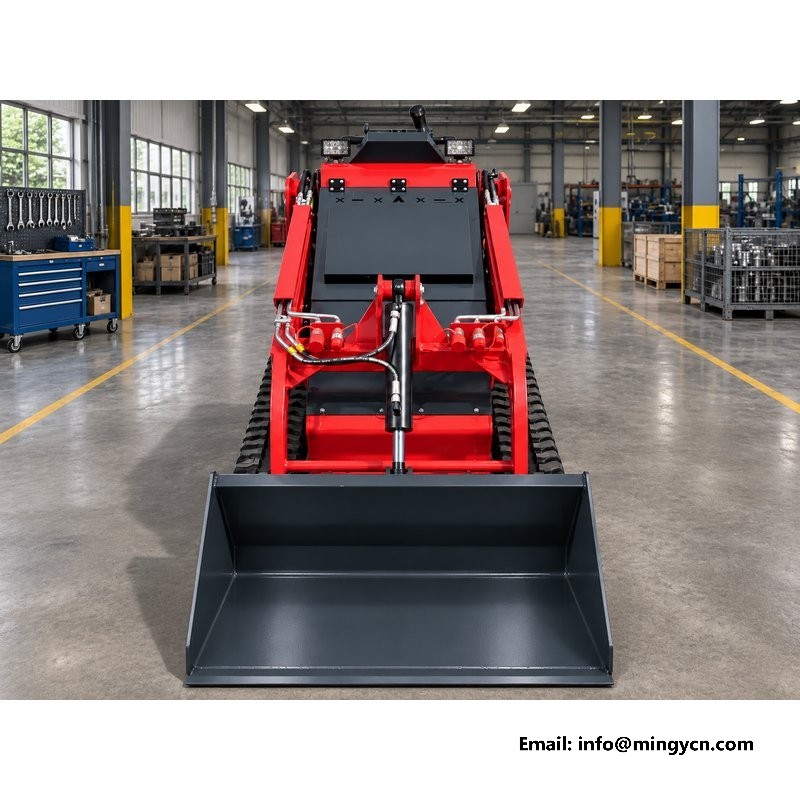
The hydraulic package on this machine is a Hansen gear pump with Danfoss drive motors, delivering 56.8 L/min of auxiliary flow at 19.3 MPa. In the detail views, look at where the hoses pass close to the frame and whether they are protected at those points. Look at the filter location: a filter that can be changed standing beside the machine is a filter that gets changed on time. Confirm that the quick coupler circuit is set to 200 bar, and ask for the pressure at which the relief is set so that it can be verified at commissioning.
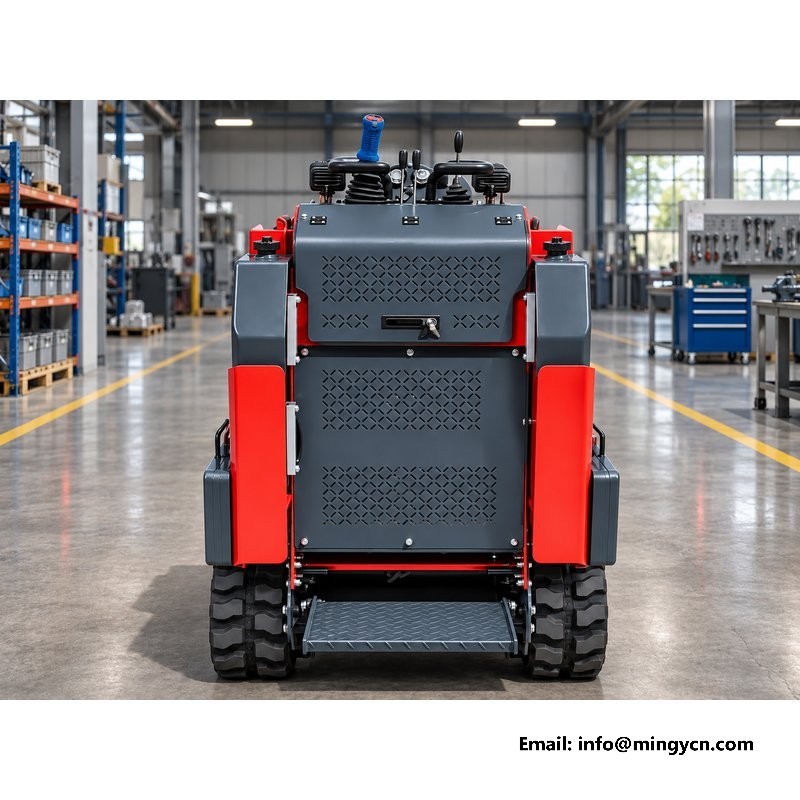
A stand-on platform is judged by how it feels after an hour. The floor should be large enough for both feet with the machine moving, the grab handles should be positioned so that the operator is not reaching forward, and the control levers should fall naturally to hand without the operator having to look down. In the studio views, check the platform deck surface, the position of the levers relative to the shoulders of the operator, and whether there is a place to stand the machine down safely. These are small things that decide whether a crew keeps using a stand-on loader or drifts back to a wheelbarrow.
| Model | MY1000 |
| Configuration | Stand-on tracked skid steer loader |
| Engine | Kubota D1105, three-cylinder liquid-cooled diesel, 1.131 L |
| Rated power | 18.4 kW (25 hp) |
| Emission standard | EU Stage V / EPA Tier 4 Final |
| Operating weight | 1,520 kg |
| Rated operating capacity | 300 kg |
| Tipping load | 1,315 kg |
| Ground pressure (rubber track) | 2,800 kg/m2 |
| Travel speed | 5.8 km/h forward, 3.9 km/h reverse |
| Auxiliary hydraulic flow | 56.8 L/min at 19.3 MPa |
| Attachment interface | C II universal industrial interface |
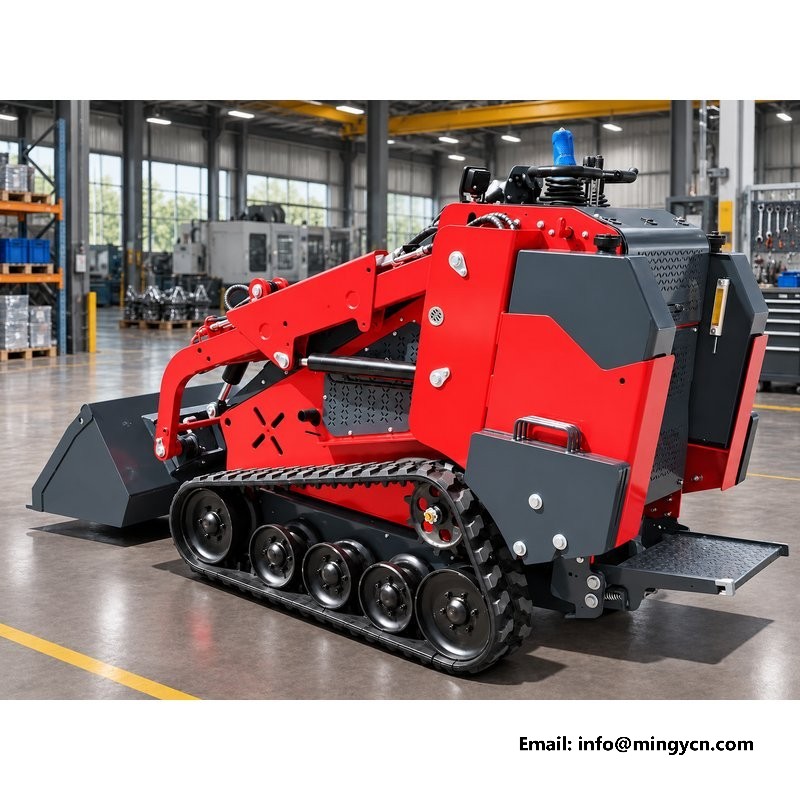
Take the studio views to the quotation stage. Point at the coupler and confirm the interface type. Point at the track and confirm whether rubber or steel is being quoted. Point at the platform and confirm whether a canopy or any weather protection is available. Point at the rear cover and ask for the filter part numbers. A buyer who asks those four questions in writing is very unlikely to receive a machine with the wrong configuration, which is the most common and most expensive mistake in this trade.
Ask for the operator manual in English, the hydraulic schematic, the parts list with filter and track part numbers, and the emission certificate for the engine. For a Stage V or Tier 4 Final machine, the certificate is a document the buyer may need for registration. Confirm the packed dimensions and weight, not just the working dimensions, because freight is quoted on the packed figures and a miscalculated container load is a direct cost.
Ordering and technical support
Email: sales@mingycn.com
LINE (ID): mingyicn
Tell us the trench width, ground conditions and attachments you need, and we will confirm the right configuration and shipping details.