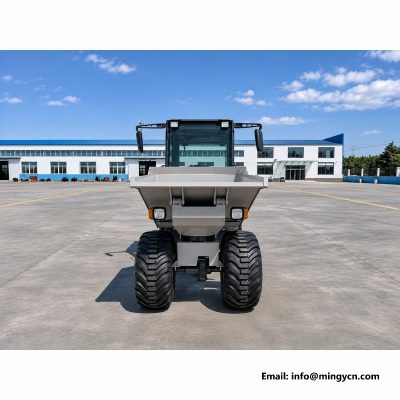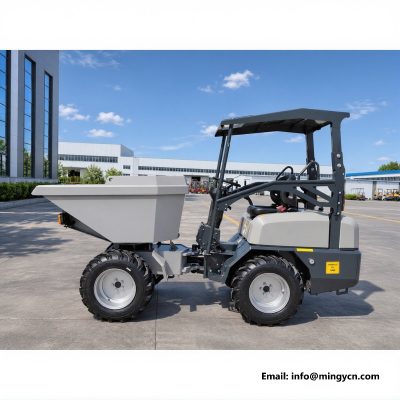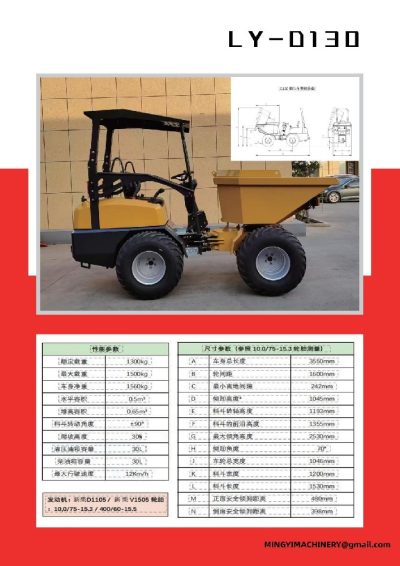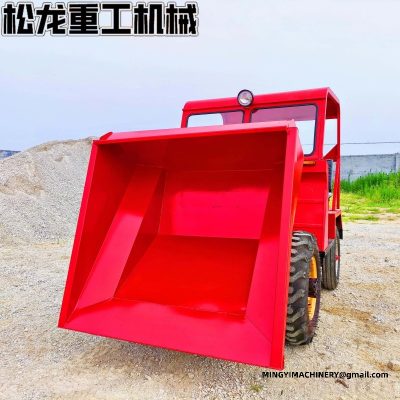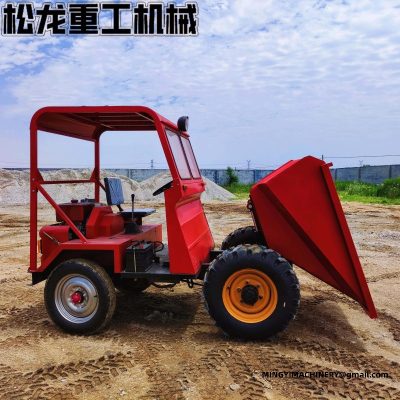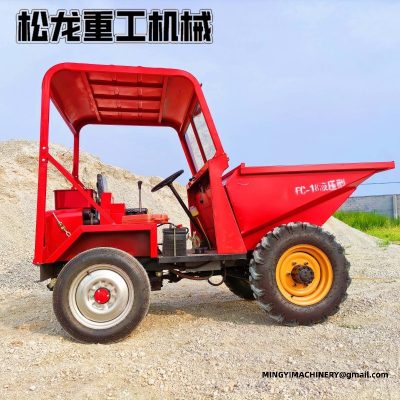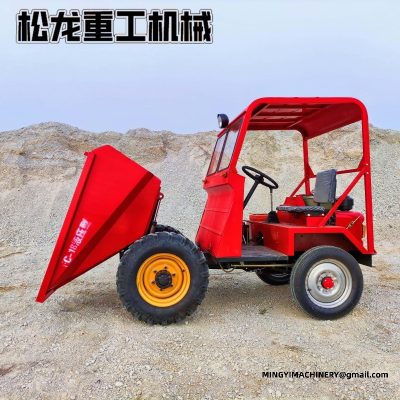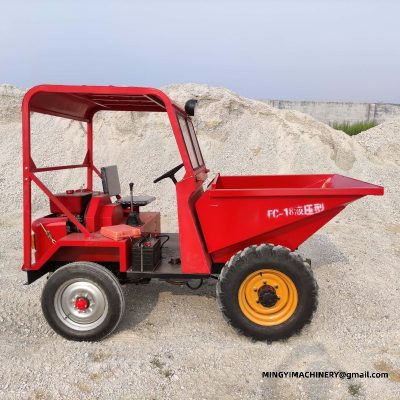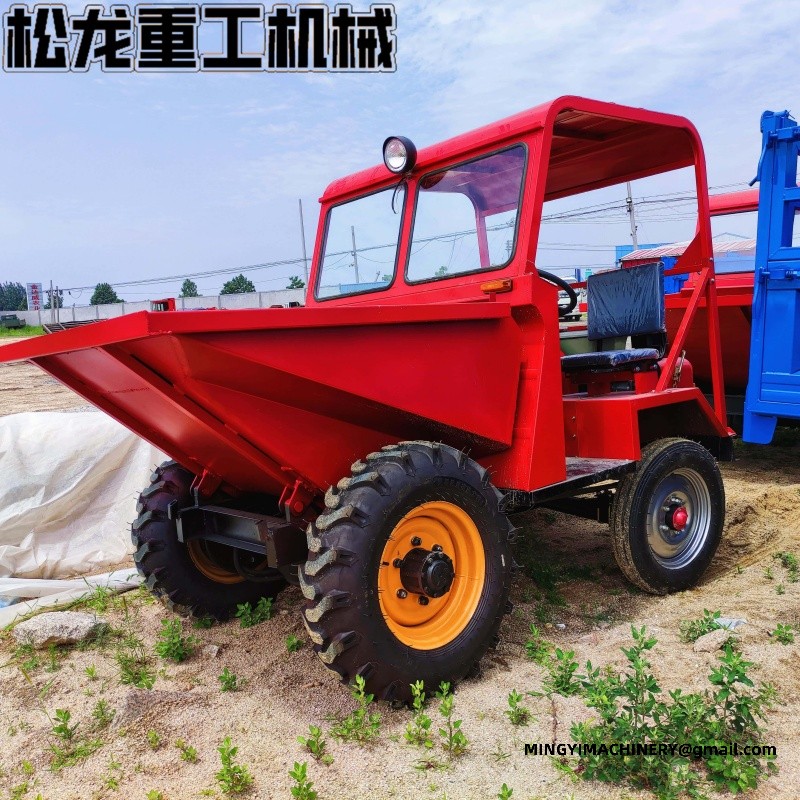
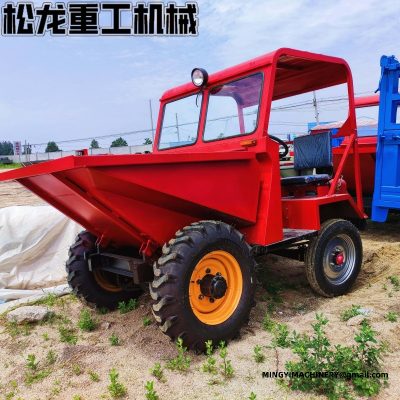
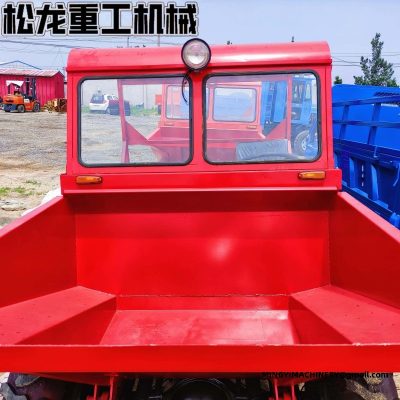
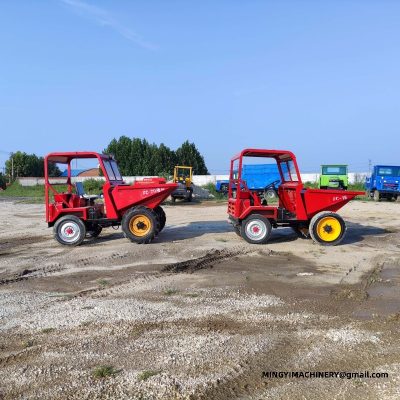
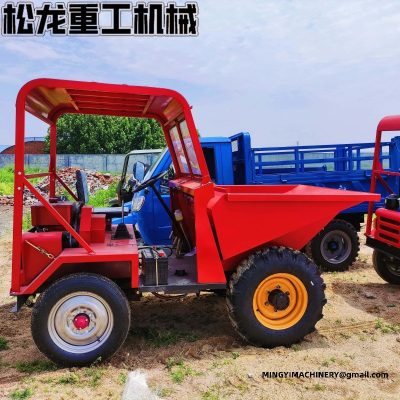
A front tipper truck is judged by where it can dump, not only by what it can carry.
A front tipper truck discharges its load forward, over the front axle, rather than tipping backwards like a conventional dumper. The same machine is sold as a front tipping dumper, a front tip dumper or a front discharge dumper depending on the market; the term differs, the working principle does not. What the machine is actually judged on is where it can put the load and whether it can get there — not the tonnage on the plate.
A rear-tipping dumper has to be able to drive past the point where it dumps, or reverse to it. On a narrow site, in a trench, against a wall or between two rows of scaffolding, that is often impossible. A front tipper discharges ahead of itself: the machine stops, tips forward, and the load lands where the machine could not go. That single difference decides whether a machine is usable on a constrained site at all.
The trade-off is that the load lands close to the machine and at a low height. Discharge height on the FC10 is 390 mm. That is right for filling a trench, spreading onto a slab or feeding a hopper at ground level, and wrong for loading into the side of a tall truck. Match the discharge height to the target before ordering.
Rated load, bucket capacity and bucket width are set together and should be read together. On the FC10 the rated load is 1,000 kg, the bucket is 0.5 m³ and the bucket width is 1,580 mm. A bucket wider than the machine tracks will catch on gateposts and kerbs; a bucket narrower than the trench leaves the operator shovelling by hand. The 1,580 mm width is the figure to check against the narrowest point on the route.
| Figure | FC10 (two-wheel drive) |
|---|---|
| Rated load | 1,000 kg |
| Bucket capacity | 0.5 m³ |
| Bucket width | 1,580 mm |
| Discharge height | 390 mm |
| Overall size | 2,700 × 1,600 × 2,000 mm |
| Track | 1,500 mm |
| Turning radius | 4,500 mm |
| Ground clearance | 200 mm |
| Gradeability | 21% |
| Travel speed | 22 km/h |
| Engine | 17.3 kW at 2,200 r/min, CG25M diesel |
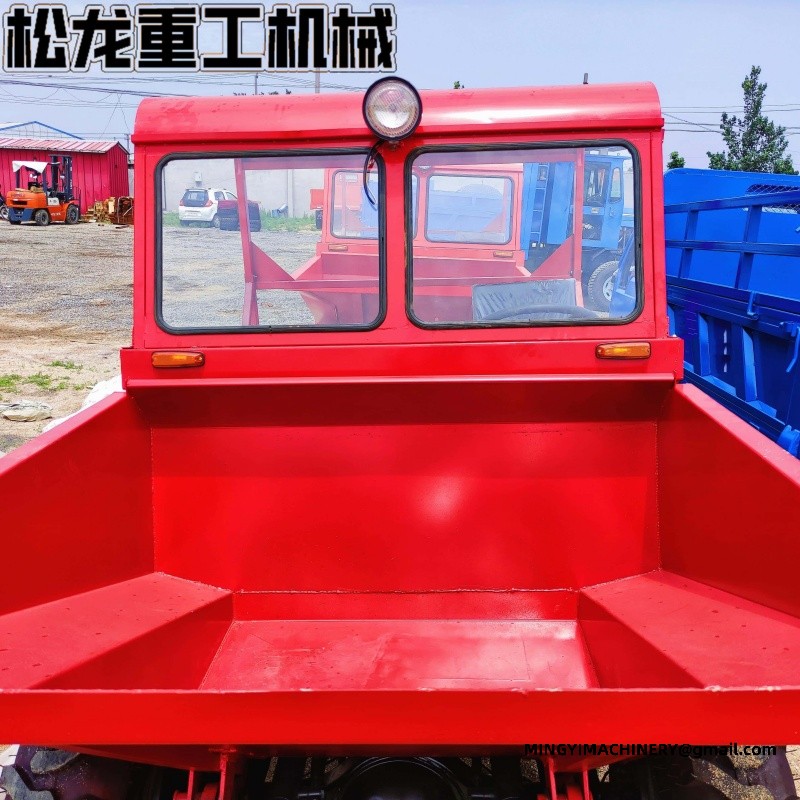
The FC10 drives its front axle and steers at the rear. That is a two-wheel-drive layout, and it is the right one for firm ground and grades up to 21%. It is also the cheaper machine, and on a yard or a hard site it will outlast and outwork a four-wheel-drive machine that is being asked to do the same job.
Soft ground, persistent mud or a route across broken surfaces changes the answer. That is where the four-wheel-drive builds above the FC10 in the range earn their cost: they drive all four wheels, and the traction difference on wet clay or loose gravel is not marginal. The decision belongs to the site — but it can only be made if the two-wheel-drive baseline figures are known, which is why they are published in full rather than summarised.
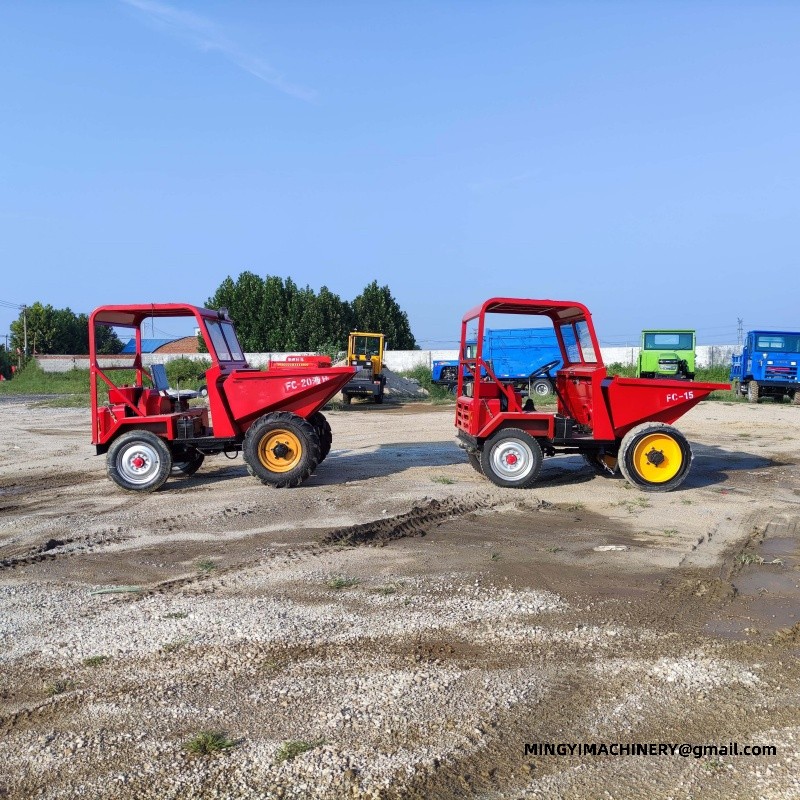
A dumper on a building site does not work in a straight line. It loads at one point, travels a route that changes as the build progresses, dumps at another, and returns. The figures that decide whether that cycle is efficient are the turning radius (4,500 mm here), the travel speed on the empty leg (22 km/h), the ground clearance over the route (200 mm) and the gradeability on the ramp (21%). A machine that is fast on the straight but cannot turn inside the site will lose more time manoeuvring than it gains travelling.
The tipping gear takes more abuse than any other part of the machine, because it is worked at the end of every cycle with a full load behind it. Hydraulic tipping with powered return on the FC10 removes the manual handling that wears out operators and rams. Tyre pressures deserve more attention than they usually get: 1,000 kg over four wheels with 200 mm of clearance and a rear axle swinging under the load will steer unpredictably on soft tyres at 22 km/h.
Request a front tipper truck quotation
Send the route width, the discharge target and the ground condition, and we will confirm the build and drive layout.
Email: sales@mingycn.com | LINE (ID): mingyicn