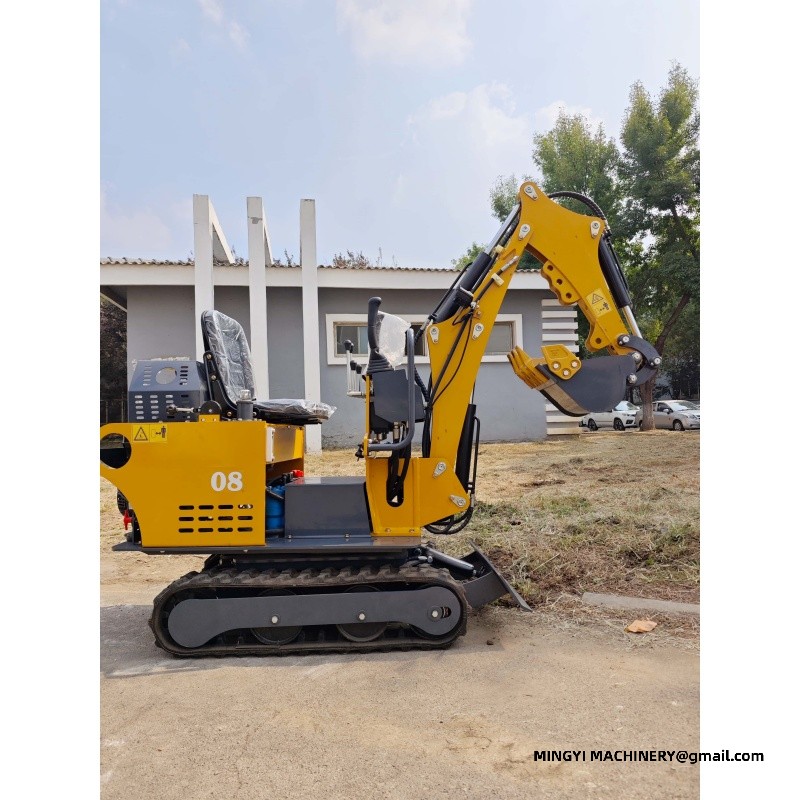
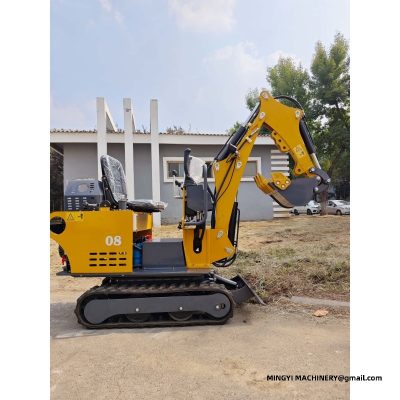
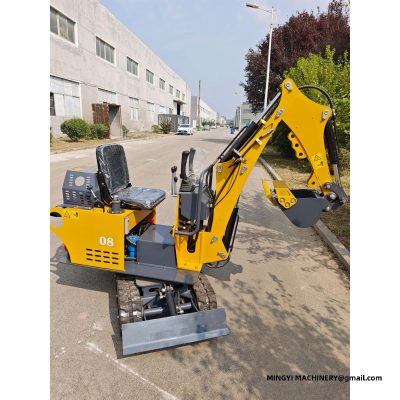
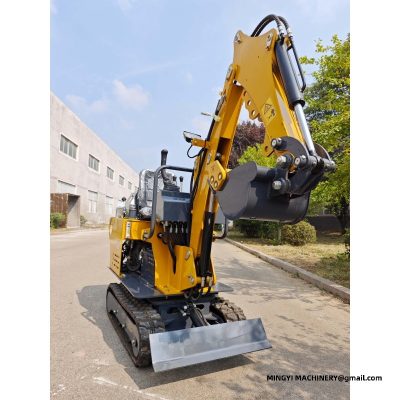
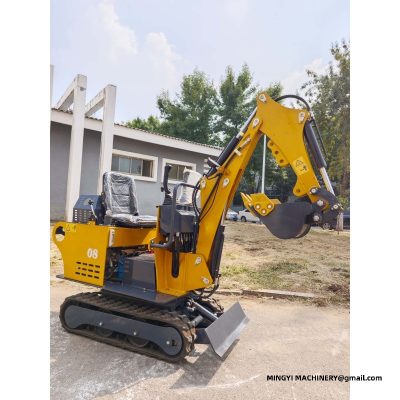
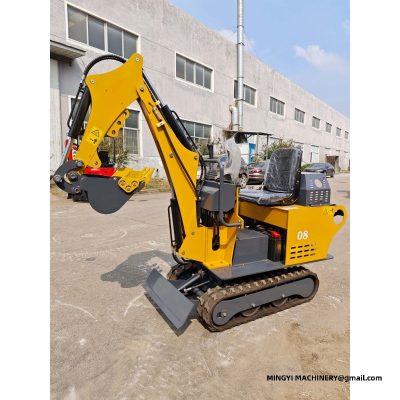
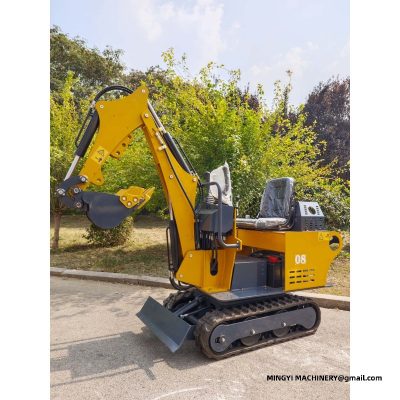
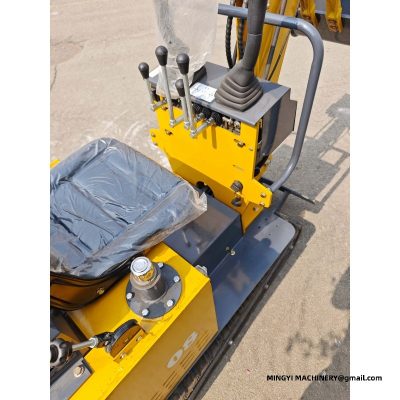
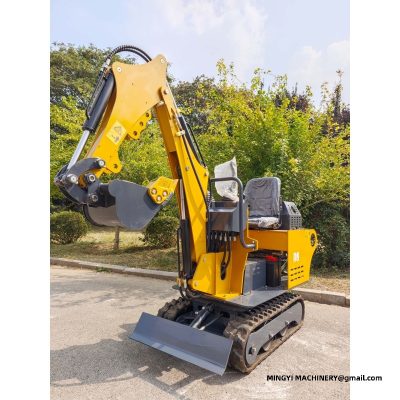
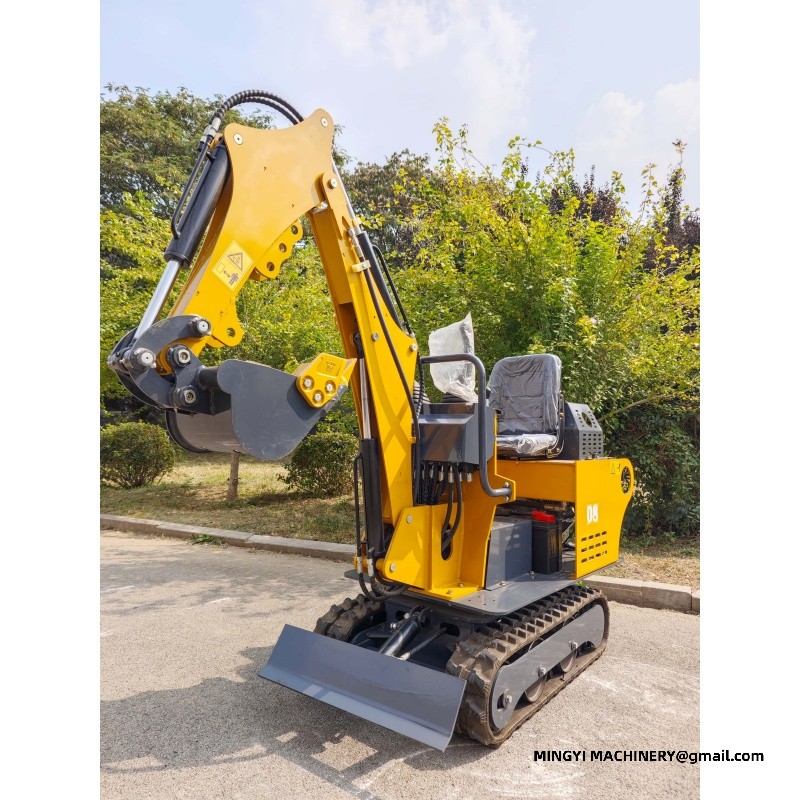
The 08 model is the smallest machine in the compact range. It is chosen where a job is tight rather than deep: a garden gate, a basement, a courtyard or a footpath. In those places the value of the machine lies in its width and its turning circle, not its output.
MINGYI builds the 08 model to order, with the track type, boom layout and bucket set chosen before production. Because the machine is small, the attachment list is usually kept short and focused on the work it will repeat.
Where the 08 model fits in a contractor's line up
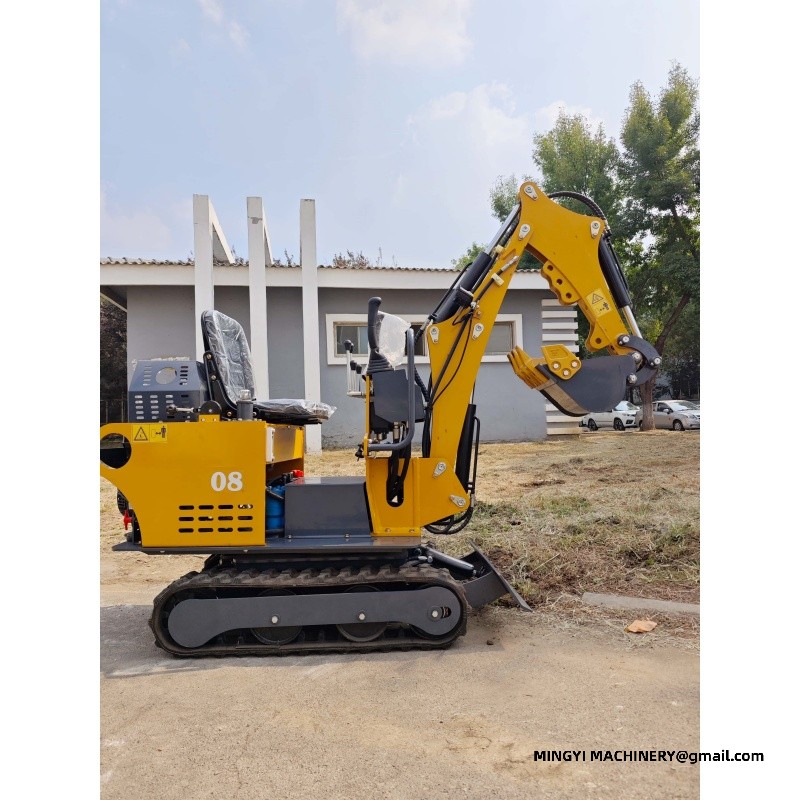
Small machines are used where access is the whole problem. They pass through openings that rule out anything wider, and they work between finished surfaces without needing protection underneath. On domestic and light commercial jobs this covers a great many tasks.
Output is modest, so the 08 model suits short runs: small footings, service trenches, planting and light clearance. Owners usually keep it as a second machine alongside a larger excavator rather than as the only unit.
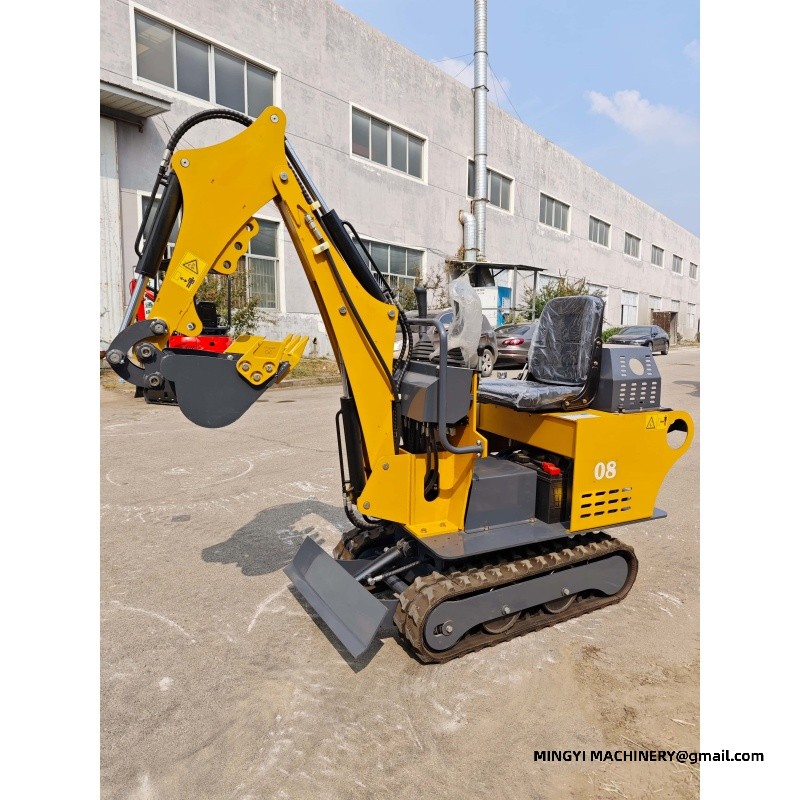
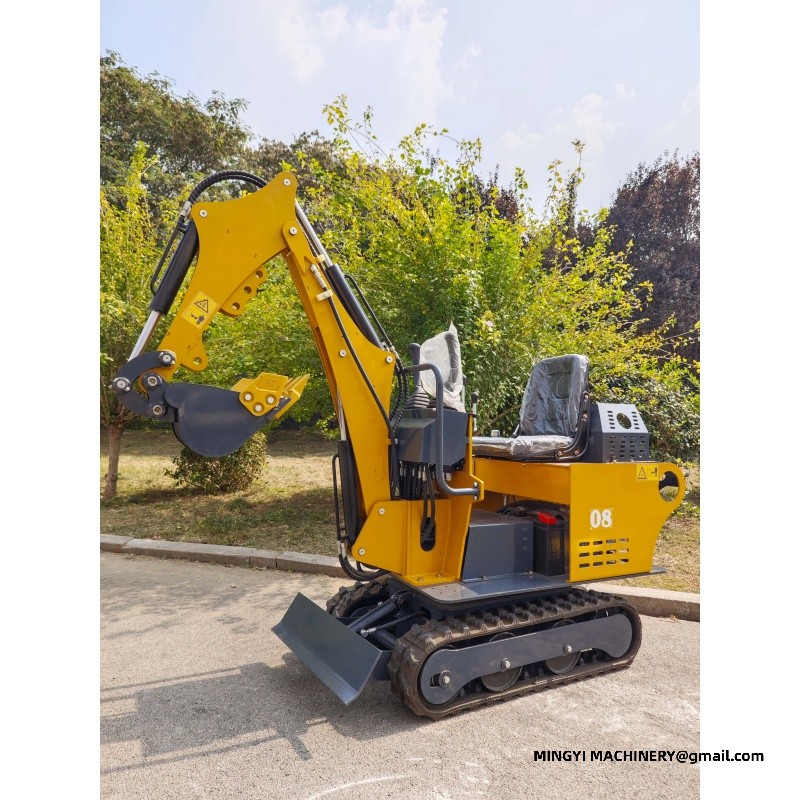
Undercarriage and attachments for the 08 model
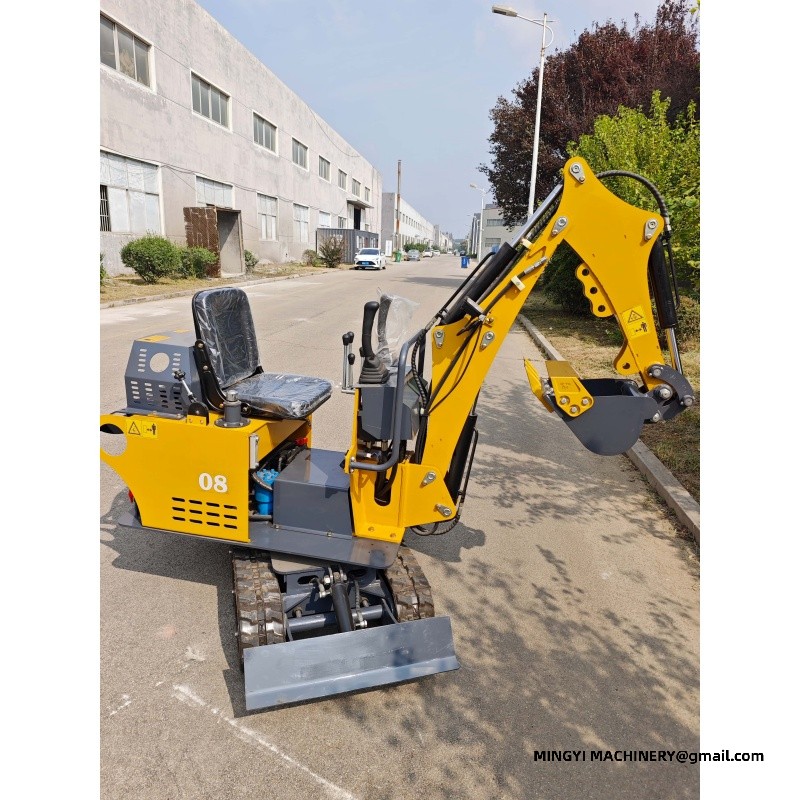
Rubber tracks are the usual specification because most work happens on finished or grassed ground. A narrow bucket handles trenching, and a small grading bucket covers the level work that follows.
Because the 08 model is compact, attachments must be chosen with weight in mind. Buyers should confirm bucket sizes, coupler type and any powered attachment at ordering so the hydraulic circuit is sized correctly.
The 08 model is bought for access rather than capacity. MINGYI builds this compact excavator to order as part of the full machine range.
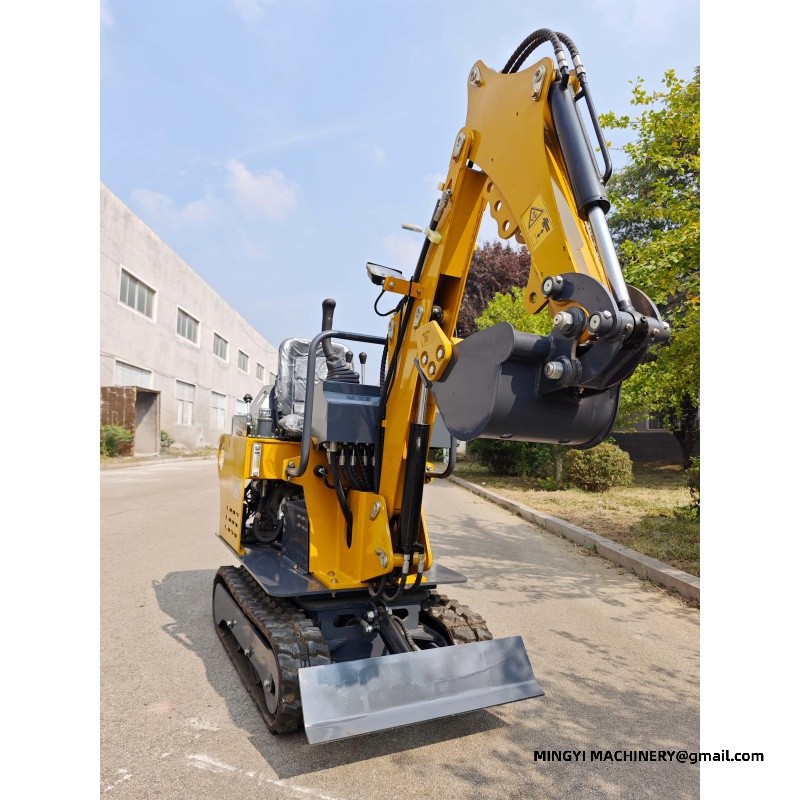
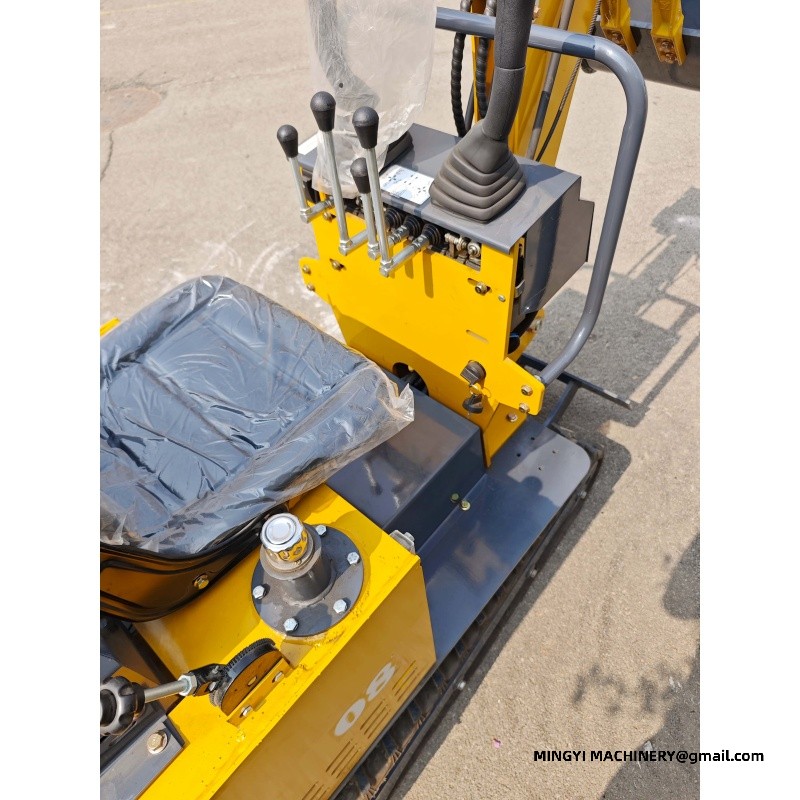
Operator technique for 08 model mini excavator The second habit is tool discipline. Running the excavator with the right bucket width for the trench means less spoil, less reinstatement and a cleaner job than a wide bucket and a lot of trimming. Stability is the third. This class of machine working across the tracks rather than over the corners keeps the machine steady and the undercarriage loaded evenly, which shows up as track life at the end of the season. Lifting and material handling with a 08 model mini excavator Lifting with a machine built to dig needs a plan. The load, the radius and the ground under the machine of this size all matter, and the safe figure is the one on the chart rather than the one that looks possible. Stability changes with reach. A load the unit in daily use handles close in becomes a different proposition at full extension, so the working radius belongs in the plan before the lift rather than during it. Running 08 model mini excavator in a rental fleet Rental fleets buy for utilisation, not for a single job. The equipment on site with a quick coupler and a common attachment standard is hired more often because it suits more of the calls that come in. Fleet buyers also weigh transport. The machine itself that a customer can tow on a normal licence and a standard trailer is a hire that does not need a delivery truck, which changes how often it goes out. Acceptance checks when a 08 model mini excavator arrives Delivery day is the best time to find a problem. Checking the specification against the order, the fluid levels, the fasteners and any transport damage while the machine in that duty is still on the trailer is faster than claiming later. Documentation should arrive with the machine. Parts list, service schedule and any certificates for the model in question are what the workshop needs later, and they are much easier to obtain at delivery than in month six. Hydraulic circuits on a 08 model mini excavator Auxiliary hydraulic lines are what let a machine drive a tool rather than only a bucket. The unit on the job specified with the right circuits and flow runs a breaker or an auger without an add-on power pack bolted to the frame. Hydraulic specification is easier to settle at build time than to correct later. A machine built for the work delivered without auxiliary lines can still dig, but every additional tool becomes a retrofit project. Canopy or enclosed cab on a 08 model mini excavator A canopy keeps the machine light and the operator aware of the surroundings, which suits short jobs in warm weather. A fully enclosed cab is specified where rain, dust or cold are part of the working year, and it can be added to the equipment in service as a retrofit rather than only at build time. Enclosure also changes noise and dust exposure. A sealed cab on the excavator keeps dust out on dry sites and lets the machine work through weather that would otherwise stop a canopy machine for the day. Track choice for this class of machine Rubber tracks suit paved and landscaped ground because they spread the machine weight and leave the surface intact. Steel tracks with rubber blocks are specified where the ground is rougher or the working day is longer, and the choice can be made per machine rather than accepted as a factory default. Undercarriage selection is a ground question, not a preference question. The unit in daily use running on finished paving needs rubber; the same machine on demolition rubble or rock wears rubber quickly, so steel with rubber blocks becomes the better answer over a full season. Daily checks and maintenance on a machine of this size Track tension is the item most often neglected. The equipment on site run with slack tracks wears the undercarriage and can throw a track on a turn; run too tight, the same components wear from the other direction. Greasing is the second item. The slew ring, the boom and arm pins and the bucket linkage on the machine itself take grease daily in dusty work, and the intervals shorten further when the machine is used in water or mud. Hiring versus owning the model in question Availability is part of the decision. Owning the machine in that duty means it is there on the day the ground is ready; hiring means competing for the same machine at the same time as everyone else in the season. Ownership brings obligations that hiring does not. Storage, servicing, insurance and an operator are the items to set against the hire rate before deciding which way the unit on the job should be supplied. Getting a machine built for the work through a narrow gap The first question on most job lists is whether the machine can reach the work at all. The equipment in service is chosen against the narrowest point on the route - a garden gate, a doorway, a gap between two walls - because a machine that arrives and then cannot pass loses a day, not an hour. Access decides the machine before output does. With the excavator the limiting dimension is usually the widest point on the way in, so measuring the gate, the corridor and the turning space first saves a wasted delivery and a second visit. OEM and fleet customisation of this class of machine Distributors and rental fleets usually need the machine to look like theirs. Paint, decals, seat colour and attachment branding can be specified on the unit in daily use at build time rather than applied after import. Customisation also covers the specification sheet. A fleet buyer may want every machine of this size delivered with the same coupler, the same engine and the same tool kit so training and parts stock stay simple. What owners should plan for beyond the equipment on site Downtime is the hidden line item. The machine itself waiting on a part earns nothing while it stands, so parts availability and service access belong in the plan as much as fuel does. Specification data for the model in question Buyers comparing the machine in that duty usually start from four numbers - weight, digging depth, reach and transport width - because those are the ones that decide whether the machine can be delivered and whether it can do the job once it is there. Every value shown is as built for the unit on the job; options such as cab, side swing or a telescopic undercarriage change the transport dimensions and are confirmed at order stage. Purchase decision is the visible part of the effort. Fuel, filters, tracks or tyres, the operator and the transport between sites are the items that decide what a machine built for the work actually demands over a few seasons, and they are worth listing before the order. The useful comparison is demand per working hour, not demand per machine. The equipment in service that works more hours a year spreads its standing takes over more output, which is why utilisation usually matters more than the invoice figure.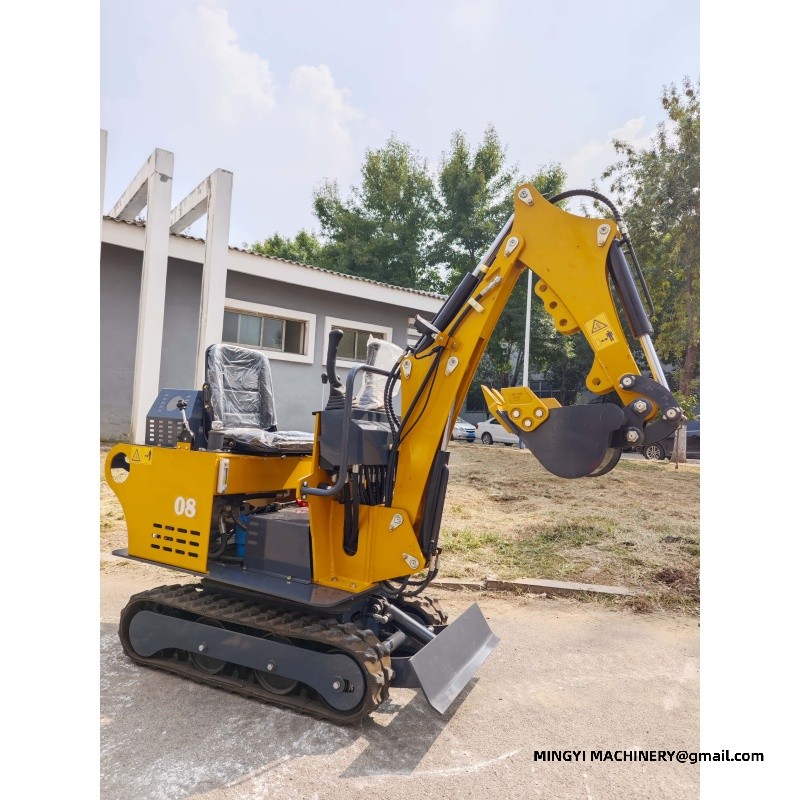
Reference specification — mini excavator range 09W 20-3W 09L 15L Operating weight 1100 kg (2425.08 lb) 1900 kg (4188.78 lb) 1100 kg (2425.08 lb) 1400 kg (3086.47 lb) Transport size (L×W×H) 1800 × 750 × 1970 mm 2550 × 1100 × 2200 mm 2300 × 720 × 1870 mm 2200 × 930 × 2250 mm Max digging depth 1250 mm (49.21 in) 1800 mm (70.87 in) 1400 mm (55.12 in) 1700 mm (66.93 in) Max digging height 2800 mm (110.24 in) 2820 mm (111.02 in) 2800 mm (110.24 in) 2750 mm (108.27 in) Max dumping height 1700 mm (66.93 in) 2050 mm (80.71 in) 1880 mm (74.02 in) 1960 mm (77.17 in) Max digging radius 2570 mm (101.18 in) 3050 mm (120.08 in) 2490 mm (98.03 in) 2900 mm (114.17 in) Max digging distance 1869 mm (73.58 in) 2300 mm (90.55 in) 2000 mm (78.74 in) 2300 mm (90.55 in) Minimum turning radius 1000 mm (39.37 in) 1450 mm (57.09 in) 1400 mm (55.12 in) 1450 mm (57.09 in) Travel speed 3 km/h (1.86 mph) 5 km/h (3.11 mph) 3 km/h (1.86 mph) 3 km/h (1.86 mph) Gradeability 30° 30° 30° 30° Fuel consumption 1-1.3 L/h (0.264—0.343 gal) 2-3 L/h (0.528—0.793 gal) 1-1.3 L/h (0.264—0.343 gal) 1-1.3 L/h (0.264—0.343 gal) Fuel tank capacity 8 L (2.11 gal) 16 L (4.23 gal) 8 L (2.11 gal) 10 L (2.64 gal) Hydraulic oil tank 16 L (4.23 gal) 18 L (4.76 gal) 16 L (4.23 gal) 16 L (4.23 gal) Dozer blade lift height 180 mm (7.09 in) 180 mm (7.09 in) 180 mm (7.09 in) 180 mm (7.09 in) Dozer blade drop depth 210 mm (8.27 in) 210 mm (8.27 in) 210 mm (8.27 in) 210 mm (8.27 in)
Q. What is the excavator?
A. Inside the 0.8 to 6 tonne class MINGYI builds as the 08, 12 and 18 models lives most of the site, farm and rental work in the world. The smallest classes trade reach for access; the largest trade access for output - the build sheet settles the rest. MINGYI builds the 08, 12 and 18 models covering the 0.8 to 6 tonne class, and this class of machine is where that range meets 08.
Q. What changes between the size classes?
A. Reach, lift and stability grow with the class; doorways and trailer weight limits close. The smallest classes trade reach for access, the largest trade access for full-size work rates, and tracks, cabs and attachments stay common across the range.
Q. How do I get a specification?
A. Send the model, the destination and the attachment list by email or LINE - the channels listed just below this section. The reply covers the specification, lead time, packing and freight in one document, with the 08 build sheet attached.
Packing, loading and shipment of the unit in daily use
Export packing is part of the machine, not an afterthought. A machine of this size is blocked and braced inside the container so that it arrives in the same condition it left, and the load plan is decided by the dimensions rather than by what fits loosely.
Documents that travel with the equipment on site
A clear parts book saves more time than any other document. When the machine itself needs a replacement, the illustration and the part number are what turn a phone call into a shipment instead of a description.
Keeping a service record for the model in question
The record should follow the machine, not the owner. When the machine in that duty changes hands the service history travels with it, and a complete folder is often the difference between a quick sale and a long one.
E-mail : sales@mingycn.com
LINE ( ID ): mingyicn
Related pages
mini excavator for building access · micro excavator for elevator rooms · Heavy Duty Wheel Loader: Cross-Members, Hinge Steel and Duty · Mini Excavators









