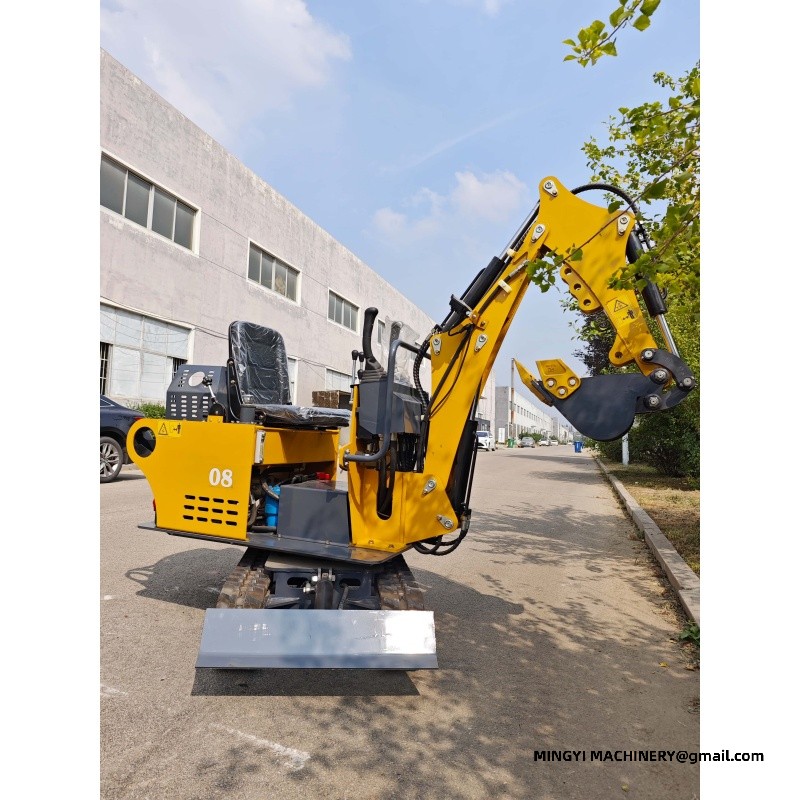
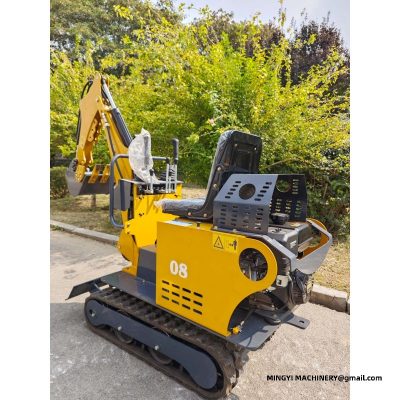
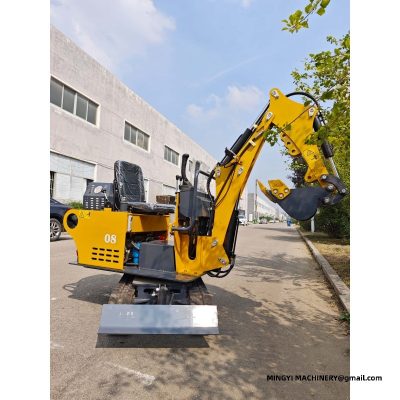
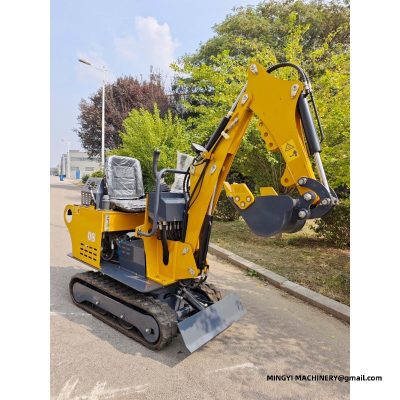
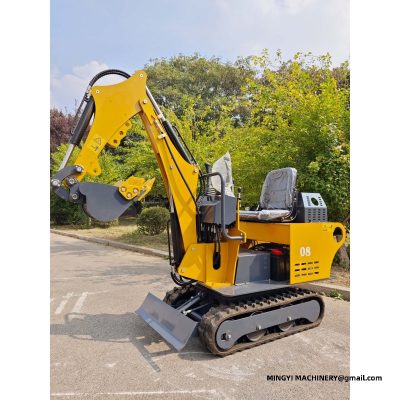
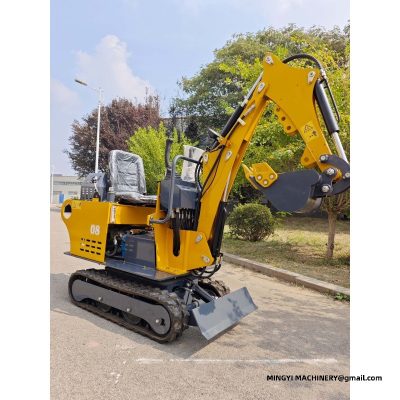
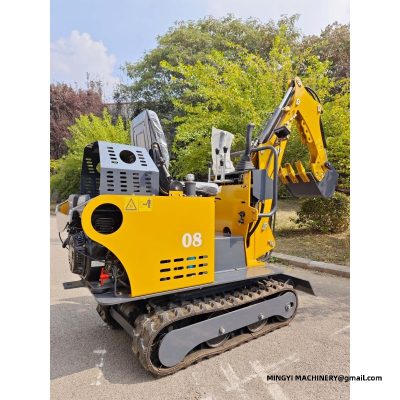
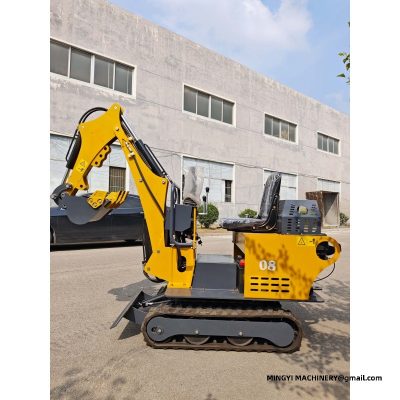
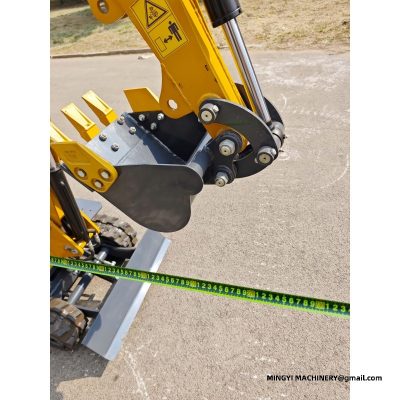
Interior renovation and demolition take place inside a standing building, where a machine has to fit through doorways and lift access, work under low ceilings and keep noise and fumes to a level the occupied building can tolerate. MINGYI builds compact excavators for this kind of indoor work.
The machine is small enough to be brought in through a normal access route and used on floors and slabs, breaking out walls, floors and fittings rather than doing heavy ground excavation.
Getting a machine into a building
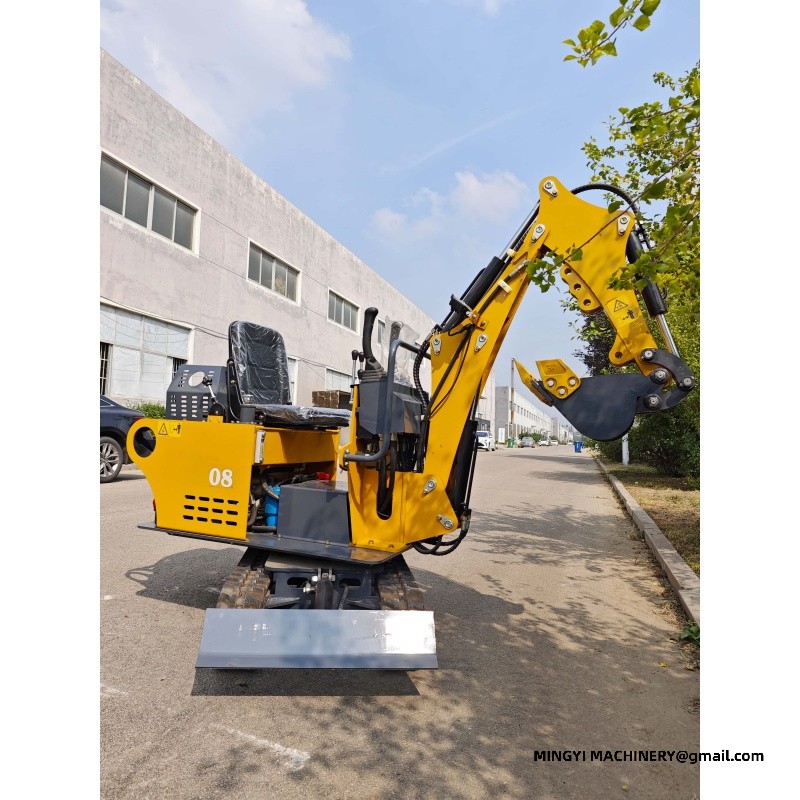
The first constraint indoors is access: the machine has to pass the entry, the lift or the stair lobby that the building provides. A compact excavator with a narrow body and low canopy can be taken to the floor where the work is, instead of stripping out the building first.
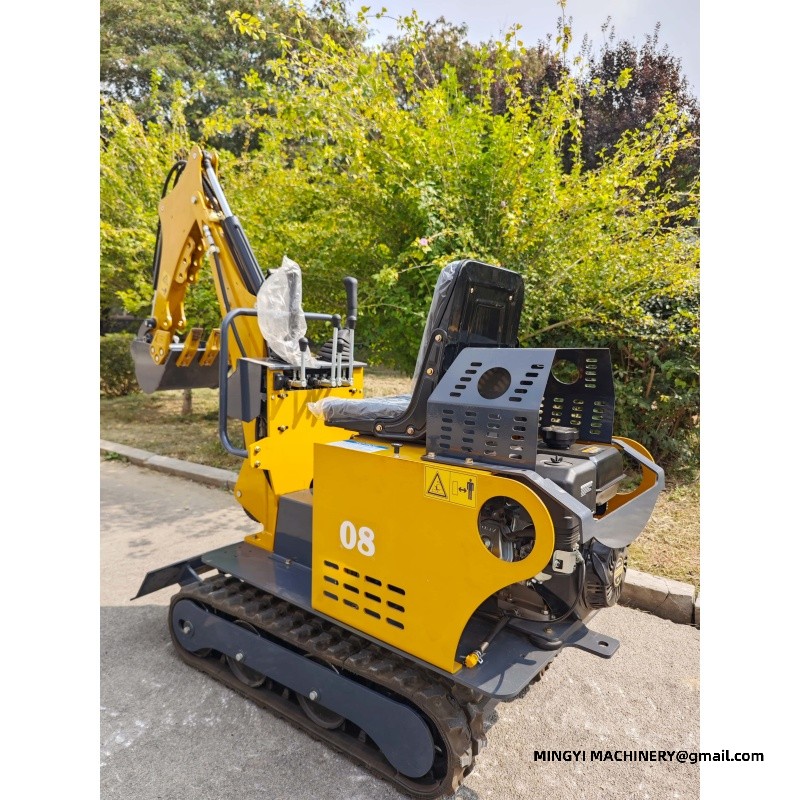
Because the floor is a finished slab rather than open ground, rubber tracks are usually preferred to protect the surface. The machine is moved in, works, and is moved out again through the same route.
Demolition and renovation inside a structure
Indoor demolition means breaking out walls, screeds, floors and fittings, so a breaker hammer is the attachment most often fitted. A bucket then removes the rubble, and a grabber or front fork helps with timber and waste.
Noise and exhaust are managed by running the machine considerately, with the engine matched to the building's constraints. Buyers confirm the engine option and the attachments with MINGYI at the ordering stage.
For indoor demolition and renovation, the key details for MINGYI are the access route into the building, the floor material and the attachments needed to break out and clear the work.
Attachments that turn mini excavator for indoor demolition into several machines The base machine is a carrier; the tool on the end of the arm decides the task. The excavator fitted with a toothed bucket digs, and the same machine with a breaker, an auger or a grab does work that would otherwise need a second unit on site. Most of the daily variety on this class of machine comes from the attachment rack rather than from the machine itself. Bucket, breaker, auger, ripper, rake and grab cover the large majority of the work a contractor will see. Interior and light demolition with mini excavator for indoor demolition Interior demolition is an access and a weight question. The unit in daily use that fits through a doorway and works on a suspended floor does jobs that would otherwise be done by hand or by a larger machine that cannot enter. Breaking out a floor slab, a wall footing or a concrete step is routine work for a machine of this size with a breaker. The machine is small enough to work inside and heavy enough to run the tool at a practical rate. Working on slopes and uneven ground with mini excavator for indoor demolition Slope work is a stability question before it is a traction question. Knowing the gradient the equipment on site is rated for, and working across rather than straight up where the ground allows, removes most of the risk. Planning the direction of travel helps. Working so that the machine itself is stable under load and not required to turn on a slope is a decision made before the job starts, not a correction made during it. Trenching work with mini excavator for indoor demolition Service trenches are the most common reason the model in question is hired. Water, sewage, cable and gas runs are narrow, shallow and often close to existing services, which is exactly the work a full-size machine cannot do safely. Trench quality depends on the bucket width and the operator, not on machine size. The machine in that duty with a narrow bucket and a swing boom cuts a clean run along a boundary without disturbing the ground either side of it. Export packing and shipping of mini excavator for indoor demolition Machines leave the factory prepared for container or flat rack shipment. The unit on the job is normally shipped with the attachment set and the spare parts list agreed in advance so the container is planned once. Buyers who import regularly plan the spare parts with the machine. A machine built for the work ordered with a wearing-parts kit arrives ready to work rather than ready to wait for the first service interval. Boom configuration for mini excavator for indoor demolition A swing boom lets the machine dig parallel to its tracks without repositioning, which is what makes trenching beside a wall or a fence practical. On the equipment in service this is often the option that decides whether a job is possible at all. Detachable boom sections are used where transport length matters. The excavator that has to travel on a standard trailer can be built so the arm comes off for the road and goes back on at the site. Trailering and moving this class of machine Loading practice matters as much as the numbers. The unit in daily use is driven up ramps under its own power with the boom lowered and the tracks aligned, and secured at the points the manufacturer specifies. Detachable components reduce transport length. A machine of this size built with a removable arm section or a folding step fits a shorter trailer and may avoid an oversize movement permit. Road and paving work for the equipment on site Road repair generates short, interrupted jobs - a patch, a drainage connection, a kerb line. The machine itself is economical here because it travels on a small trailer and starts working minutes after arriving. Breaking out a failed slab and backfilling the same hole in one visit is normal work for the model in question. The breaker and the bucket come off the same coupler, so the road is reopened the same day. Working the machine in that duty in confined spaces Confined sites are decided by dimensions. Overall width, tail swing and the space needed to work the arm are what let the unit on the job operate inside a building, between walls or in a courtyard. Clearance above matters as much as around. Door heights, pipework and overhead services set the limit for a machine built for the work indoors, and measuring them first avoids a machine that arrives and cannot be used. What owners should plan for beyond the equipment in service Purchase decision is the visible part of the effort. Fuel, filters, tracks or tyres, the operator and the transport between sites are the items that decide what the excavator actually demands over a few seasons, and they are worth listing before the order. The useful comparison is demand per working hour, not demand per machine. This class of machine that works more hours a year spreads its standing takes over more output, which is why utilisation usually matters more than the invoice figure. Specification data for the unit in daily use Where a machine of this size is being specified for a job list, the table below gives the factory figures that matter most: what the machine weighs, how deep and how far it works, and what it measures on a trailer. These are the reference figures for the equipment on site. MINGYI confirms the final build sheet, including engine and attachment choices, against the destination and the job list before production. Orchard and vineyard work is carried out between rows. The machine itself with a narrow chassis and a swing boom works down the row without damaging the trees, which is the reason a full-size machine is not used at all. Ditching, fertilising and drainage on farmland suit the model in question because the work is spread over a large area in short bursts. The machine travels behind a pickup and works where it stops.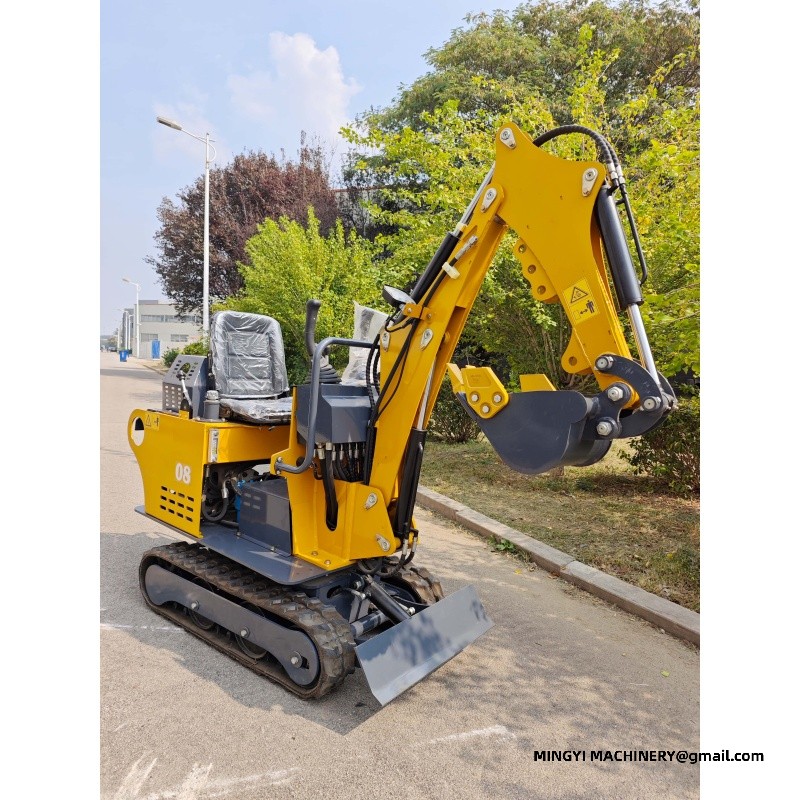
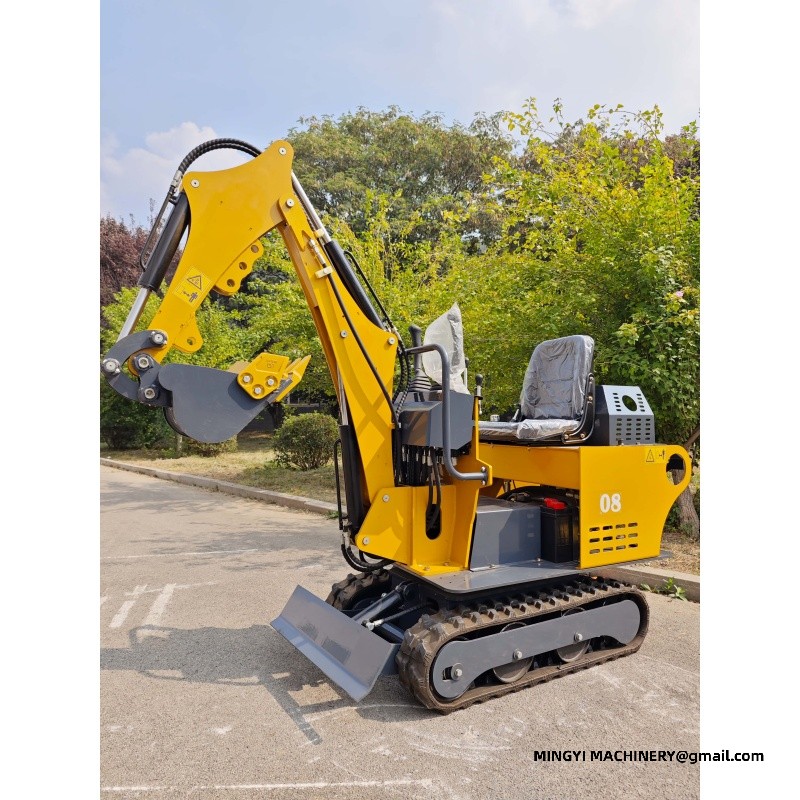
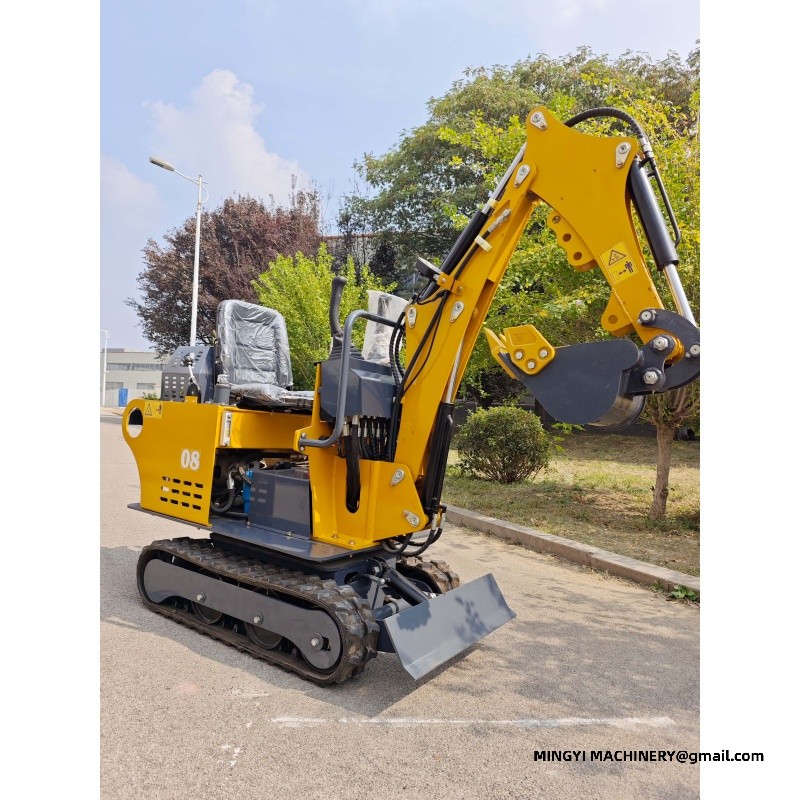
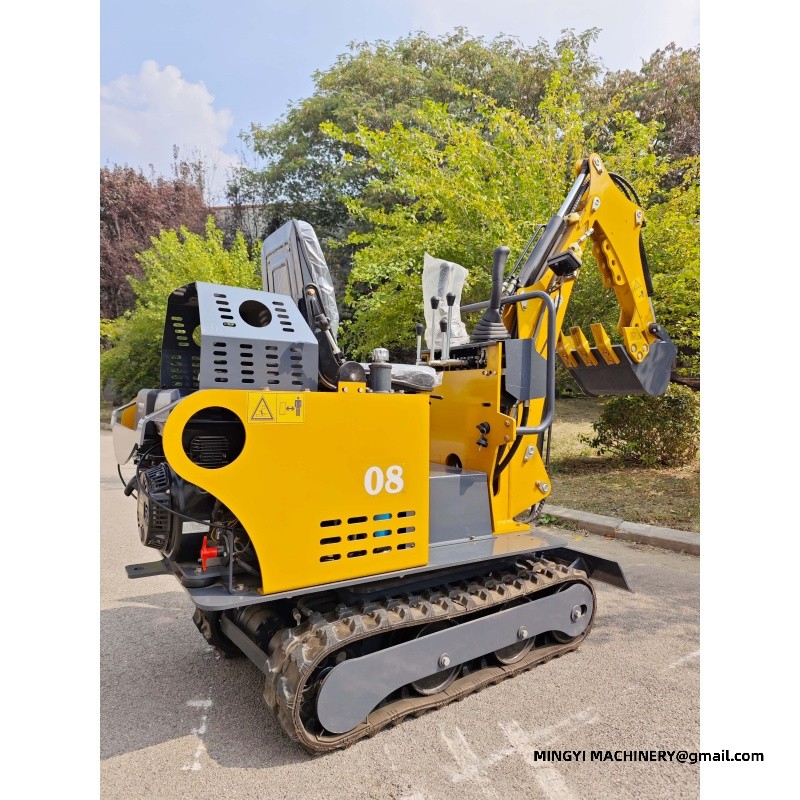
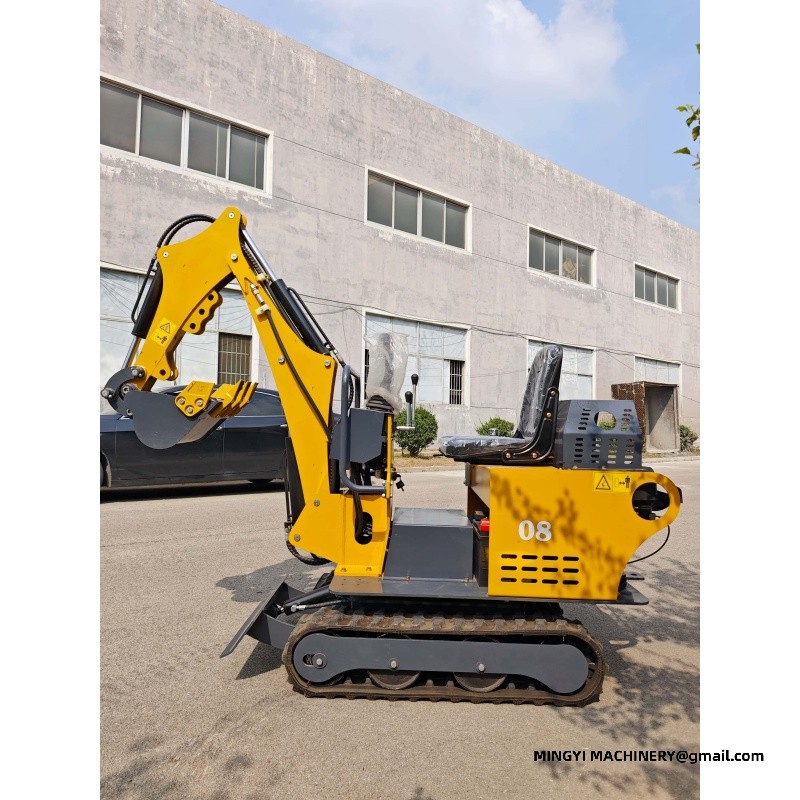
Reference specification — mini excavator range 09W 12W 12L 25L Operating weight 1100 kg (2425.08 lb) 1200 kg (2645.55 lb) 1200 kg (2645.55 lb) 2200 kg (4850.17 lb) Transport size (L×W×H) 1800 × 750 × 1970 mm 2200 × 930 × 2250 mm 2200 × 930 × 2250 mm 3000 × 1300 × 2700 mm Max digging depth 1250 mm (49.21 in) 1630 mm (64.17 in) 1700 mm (66.93 in) 2300 mm (90.55 in) Max digging height 2800 mm (110.24 in) 2750 mm (108.27 in) 2600 mm (102.36 in) 3100 mm (122.05 in) Max dumping height 1700 mm (66.93 in) 1960 mm (77.17 in) 1800 mm (70.87 in) 2050 mm (80.71 in) Max digging radius 2570 mm (101.18 in) 2900 mm (114.17 in) 2900 mm (114.17 in) 3900 mm (153.54 in) Max digging distance 1869 mm (73.58 in) 2100 mm (82.68 in) 2300 mm (90.55 in) 3100 mm (125.05 in) Minimum turning radius 1000 mm (39.37 in) 1300 mm (51.18 in) 1450 mm (57.09 in) 1800 mm (70.87 in) Travel speed 3 km/h (1.86 mph) 3 km/h (1.86 mph) 3 km/h (1.86 mph) 7 km/h (4.35 mph) Gradeability 30° 30° 30° 30° Fuel consumption 1-1.3 L/h (0.264—0.343 gal) 1-1.3 L/h (0.264—0.343 gal) 1-1.3 L/h (0.264—0.343 gal) 2-3 L/h (0.528—0.793 gal) Fuel tank capacity 8 L (2.11 gal) 10 L (2.64 gal) 10 L (2.64 gal) 16 L (4.23 gal) Hydraulic oil tank 16 L (4.23 gal) 16 L (4.23 gal) 16 L (4.23 gal) 18 L (4.76 gal) Dozer blade lift height 180 mm (7.09 in) 180 mm (7.09 in) 180 mm (7.09 in) 230 mm (9.06 in) Dozer blade drop depth 210 mm (8.27 in) 210 mm (8.27 in) 210 mm (8.27 in) 280 mm (11.02 in)
Q. Who chooses the machine in that duty?
A. In strip-out and demolition the compact digger does the work that used to need crews with hand tools, at a rate hand work cannot touch. The coupler switches the machine from breaker carrier to loader between passes, which is what keeps a small demolition job worth taking on. Read the unit on the job together with the engine, track and attachment pages: jobs around indoor demolition are decided by how those choices line up, not by any single number on the sheet.
Q. How does a small machine demolish safely?
A. By working in layers and sorting as it goes: break, clutch with the thumb, load out, repeat. Zero tail swing keeps the counterweight off the standing structure, and sequential strip-out protects the crew and the building that remains.
Q. What support follows the sale?
A. Spare-part kits, wear items and service documentation ship with the programme, and the parts team works from the serial plate to match components exactly. Warranty and support terms for the indoor demolition order are confirmed in writing before the machine leaves.
Hot, humid and dusty conditions around a machine built for the work
Humidity attacks the parts that are not used. Storage in a damp climate means the equipment in service needs the exposed metal protected and the machine run regularly, because standing still does more damage than working.
Planning the season around the excavator
Downtime is simplest when it is planned. Booking the service for this class of machine in the quiet part of the season takes nothing from the schedule, while the same work in the busy weeks gives up a day of output every time.
Later additions and retrofits on the unit in daily use
Later changes are easier when they were anticipated. Asking for the extra hydraulic circuit or the heavier mounting plate on a machine of this size at build time adds little and leaves the option open.
Reading the early symptoms on the equipment on site
The symptom is usually not at the fault. A hydraulic function that has become sluggish on the machine itself may point to a filter, a relief setting or a pump, and starting with the simple checks avoids the wrong guess.
E-mail : sales@mingycn.com
LINE ( ID ): mingyicn
Common operator mistakes with mini excavator for indoor demolition
Most early damage comes from three habits, namely working with the wrong attachment angle, carrying loads too high and skipping the walk-around.
Ignoring a small change in sound or feel is the mistake that turns a service item into a repair, and reporting it early is the habit worth building.
Leaving the machine idling for long periods adds hours without adding output, and it is the easiest waste to remove.
Related pages
mini excavator for interior renovation · mini digger manufacture and supply · Payloader Machine: What the Name Covers and How to Specify One · Mini Excavators









