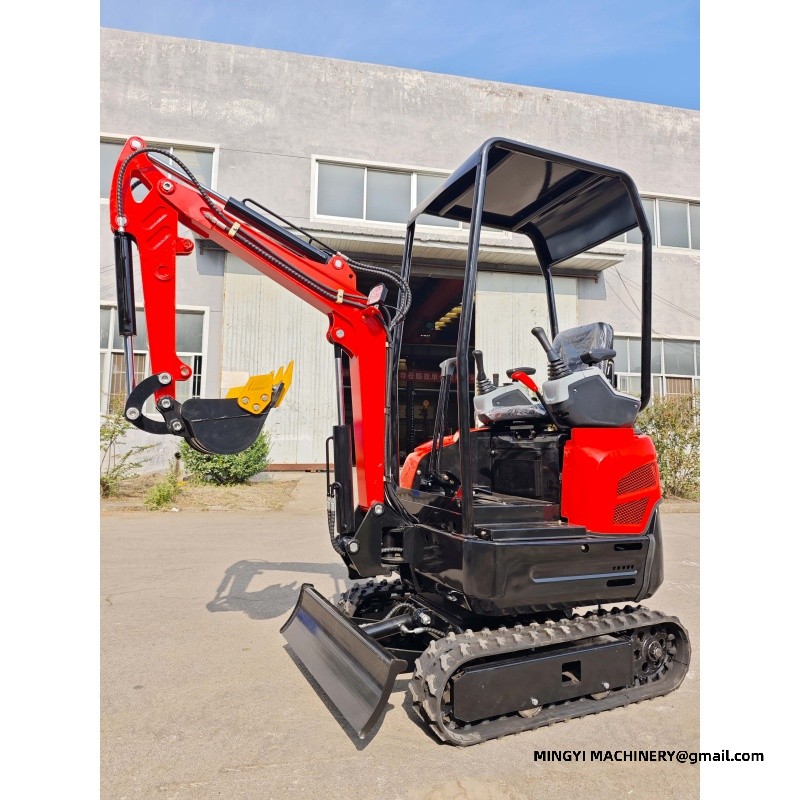
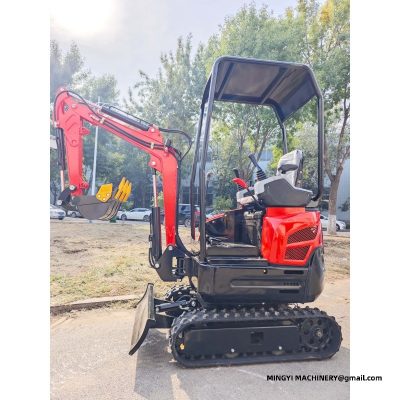
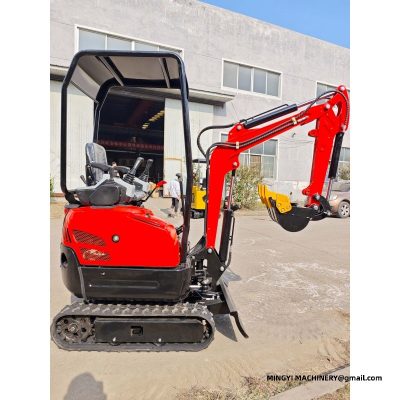
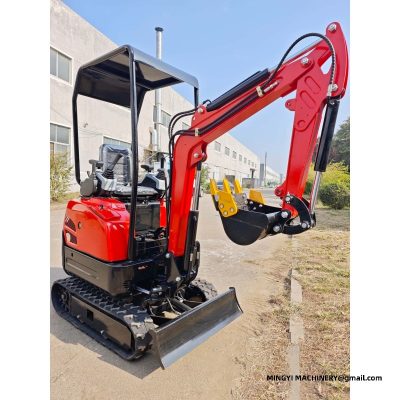
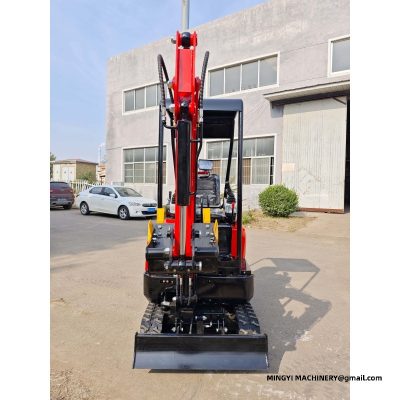
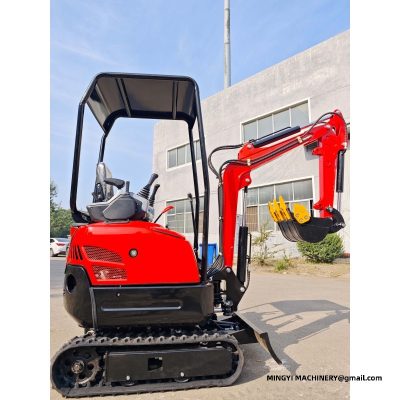
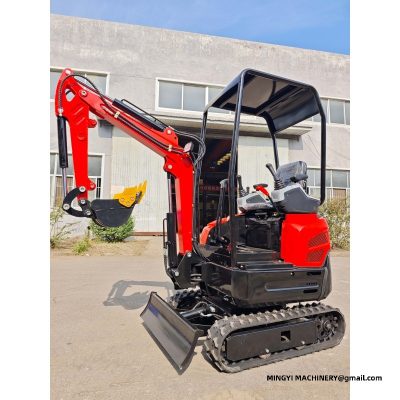
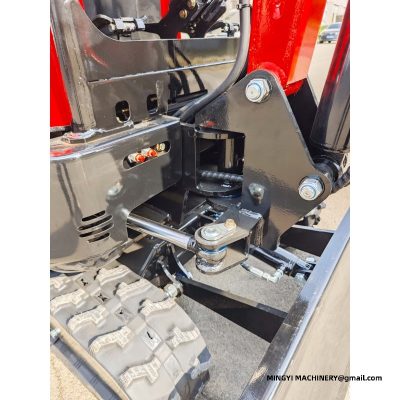
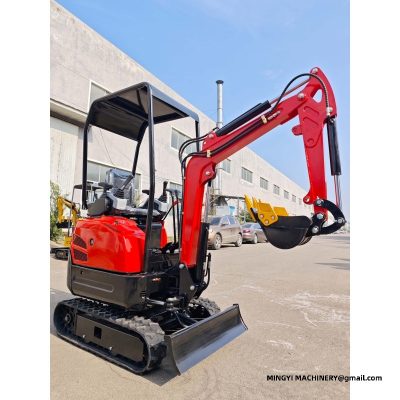
Some buyers need a compact excavator that carries their own brand, their own colour scheme and their own specification rather than a standard catalogue model. That is a manufacturing arrangement rather than a purchase, and it has to be set up accordingly.
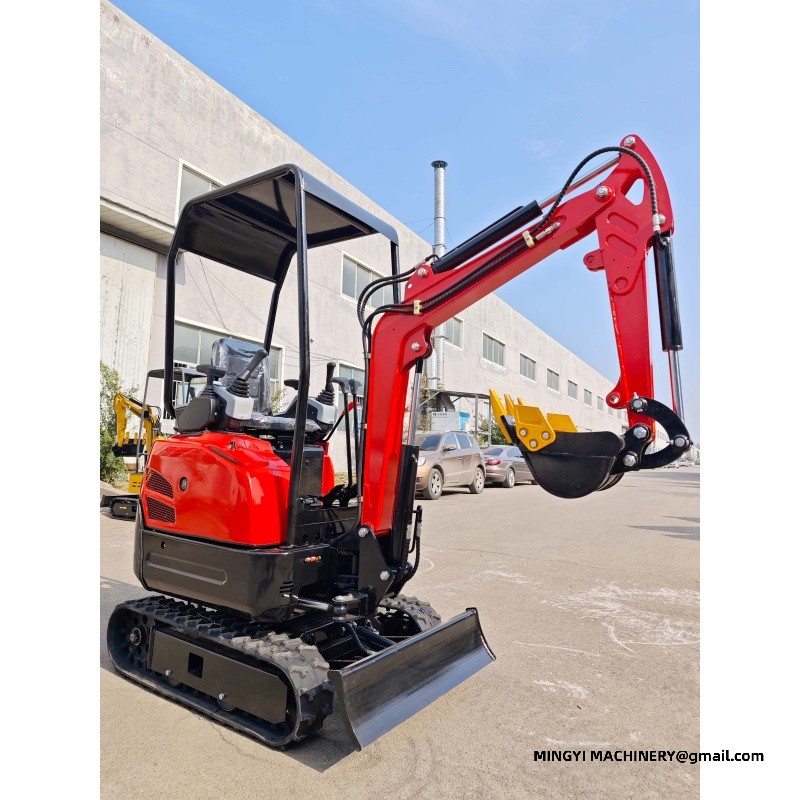
MINGYI builds mini crawler excavators to order and can work with distributors and importers who require their own branding on the finished machine. The details of the arrangement are agreed before production begins.
What an OEM programme covers
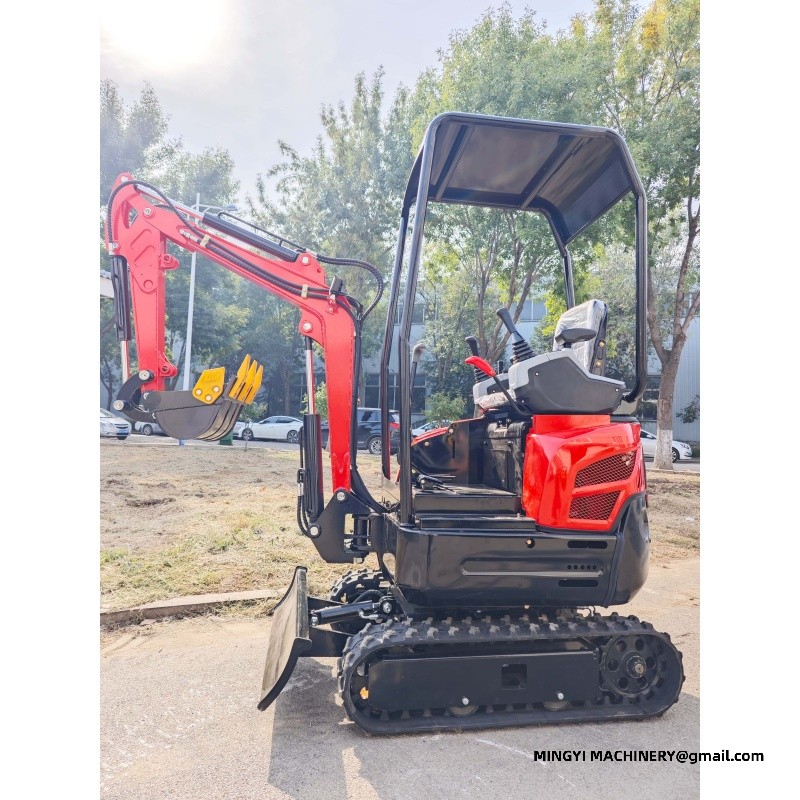
The usual items are the machine specification, the paint and decal scheme, the attachment package and the model designation on the identification plate. Each of these is a variable, and each is fixed in writing before the build starts.
The technical side is no different from an ordinary build. Track type, cab or canopy, engine option and hydraulic arrangements are chosen for the market the machine is going to, not for a fixed stock specification.
Documentation, spare parts and service information
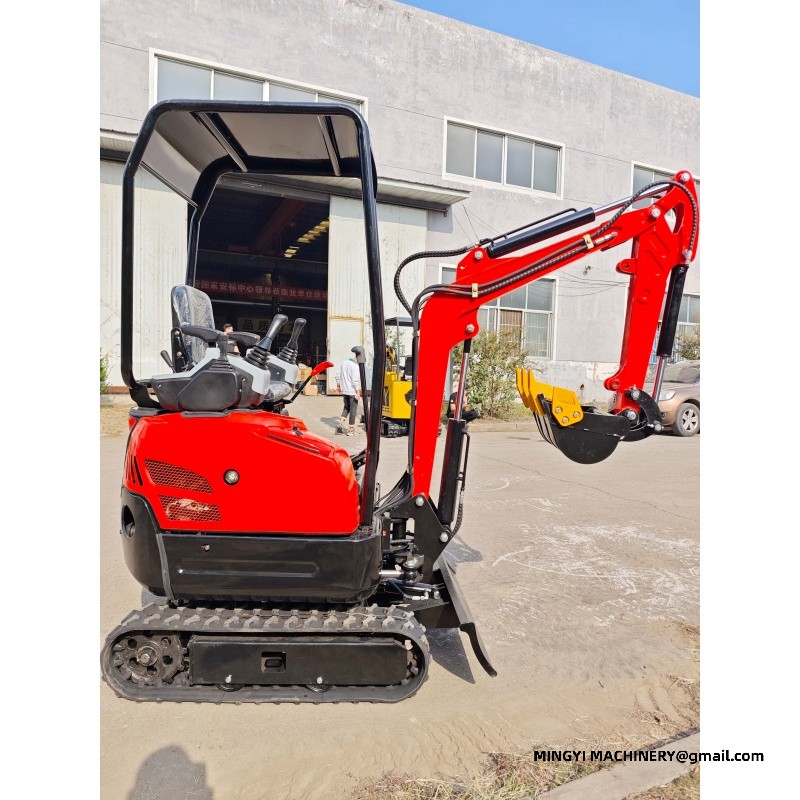
A buyer selling under their own name needs material to support the machine after delivery. MINGYI supplies spare parts together with the machine and provides service information covering the engine, the hydraulic system and the undercarriage.
Consistency matters across a shipment as well as within a single unit. Where several machines are ordered together, the specification is held constant for the batch so that parts and procedures do not differ from one unit to the next.
An OEM arrangement is better judged over a supply programme rather than a single container. A manufacturer that fixes the specification in writing, supplies parts with the machine and holds it constant across the batch gives a distributor something they can build a service business around.
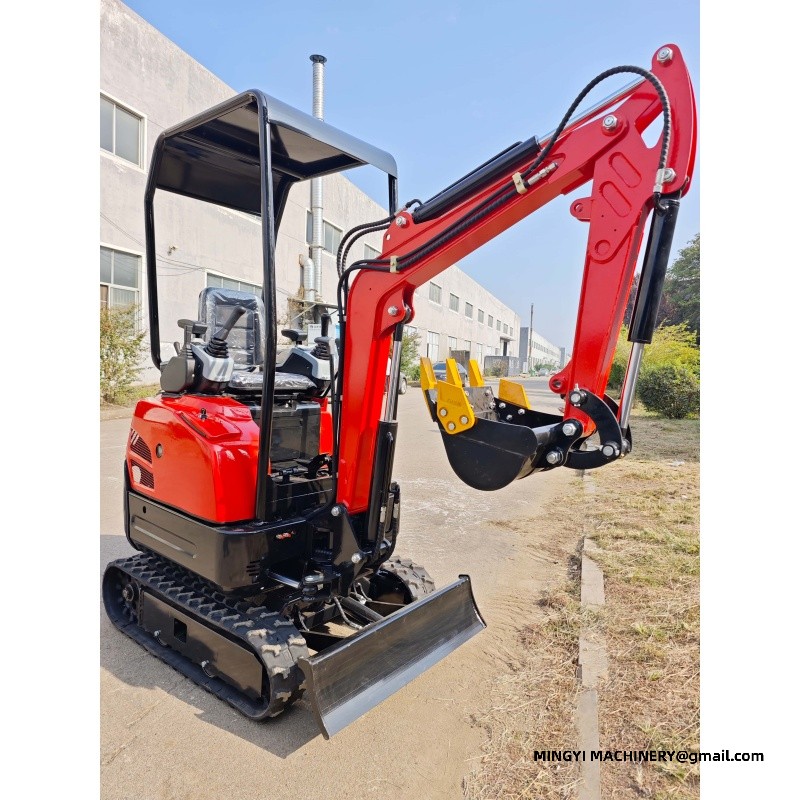
Engine options behind oem mini excavator manufacturing Power unit selection is settled against the service network the buyer already uses. MINGYI offers Kubota D722, Kubota D902, YANMAR, Changchai, Laidong, Runtong, YARMAX, Youpu 2V80 and Youpu 195, so a fleet running one brand of engine can keep the same filters, the same parts supplier and the same mechanic. Two buyers can order the same the excavator and receive different engines. The decision is rarely about peak power; it is about which parts counter is closest to the site and which engine the local mechanic already knows. OEM and fleet customisation of oem mini excavator manufacturing Customisation also covers the specification sheet. A fleet buyer may want every unit in daily use delivered with the same coupler, the same engine and the same tool kit so training and parts stock stay simple. Documentation can be prepared to suit the importer. Manuals, parts books and decal sets for this class of machine can be supplied with the buyer's own branding where the order size justifies it. Noise, dust and working near occupied buildings Enclosure and machine condition both reduce noise. A machine of this size with intact panels, sound mounts and a maintained exhaust is measurably quieter than the same machine with loose guards, and the difference matters on restricted sites. Dust control is often part of the same conversation. Water, timing and work sequence reduce what leaves the site, and agreeing them in advance keeps the equipment on site working rather than stopped after a complaint. Interior and light demolition with oem mini excavator manufacturing Interior demolition is an access and a weight question. The machine itself that fits through a doorway and works on a suspended floor does jobs that would otherwise be done by hand or by a larger machine that cannot enter. Dust, debris clearance and floor loading all argue for a compact machine indoors. The model in question spreads its weight over a wider track footprint than a wheeled machine of similar capacity. Road and paving work for oem mini excavator manufacturing Patching and reinstatement favour a machine that can work in a lane closure. The machine in that duty occupies less road than a full-size excavator, which reduces the traffic management needed and the length of the closure. Breaking out a failed slab and backfilling the same hole in one visit is normal work for the unit on the job. The breaker and the bucket come off the same coupler, so the road is reopened the same day. Operator technique for oem mini excavator manufacturing Output on a compact machine comes from placement rather than power. An experienced operator keeps a machine built for the work working inside the swing arc, positions once and digs a full run instead of repositioning for every bucket. The second habit is tool discipline. Running the equipment in service with the right bucket width for the trench means less spoil, less reinstatement and a cleaner job than a wide bucket and a lot of trimming. Getting the excavator through a narrow gap Access decides the machine before output does. With this class of machine the limiting dimension is usually the widest point on the way in, so measuring the gate, the corridor and the turning space first saves a wasted delivery and a second visit. Contractors who buy the unit in daily use normally have one job in mind that nothing else reaches. The purchase order follows the access measurement, not the other way round, and the build sheet is then settled around it. Working near live services with a machine of this size Digging near water, gas and cable is a precision job. The equipment on site is used here because the operator can work in short controlled cuts and because the machine can be positioned without driving over the run being exposed. The risk on utility work is not machine power but machine placement. The machine itself that fits the working width leaves the surrounding ground undisturbed, which keeps the trench stable and the reinstatement small. Landscaping and ground care with the model in question Landscape contractors use the machine in that duty for planting holes, pond excavation, grading and retaining work. The machine is light enough to cross finished lawn and narrow enough to work between established trees. On soft landscape work the surface is the constraint. The unit on the job on rubber tracks crosses turf without stripping it, which is why the same jobs are not given to a wheeled machine. Lifting and material handling with a machine built for the work Lifting with a machine built to dig needs a plan. The load, the radius and the ground under the excavator all matter, and the safe figure is the one on the chart rather than the one that looks possible. Ground condition under the machine is part of every lift. Soft or uneven support is the common factor in handling incidents, and checking it takes less time than recovering the equipment in service that has settled. Boom configuration for this class of machine A swing boom lets the machine dig parallel to its tracks without repositioning, which is what makes trenching beside a wall or a fence practical. On the unit in daily use this is often the option that decides whether a job is possible at all. Extended and offset boom configurations change reach and working range. A machine of this size with a longer arm reaches further but lifts less at full extension, so the specification is set against the deepest and furthest point on the job list. Trailering and moving the equipment on site Transport weight and width decide whether a machine needs a specialist haulier. The machine itself sized to travel on a standard plant trailer behind a suitable vehicle moves with the crew rather than on a scheduled low loader. Loading practice matters as much as the numbers. The model in question is driven up ramps under its own power with the boom lowered and the tracks aligned, and secured at the points the manufacturer specifies. Working on slopes and uneven ground with the machine in that duty Slope work is a stability question before it is a traction question. Knowing the gradient the unit on the job is rated for, and working across rather than straight up where the ground allows, removes most of the risk. Specification data for a machine built for the work The figures below are the factory figures for the models most often matched to the equipment in service. They are the numbers to check against the site: the depth the work needs, the reach from one position, and the width of the narrowest point on the route in. Figures are factory figures and are confirmed on the build sheet for the excavator. Where a job sits between two models, the larger machine usually takes less time than the smaller one spends on rework. Ground that looks level often is not. This class of machine crossing a filled trench, a soft edge or a hidden void behaves differently from one on undisturbed ground, and those are the places worth walking before driving. Planning the direction of travel helps. Working so that the unit in daily use is stable under load and not required to turn on a slope is a decision made before the job starts, not a correction made during it.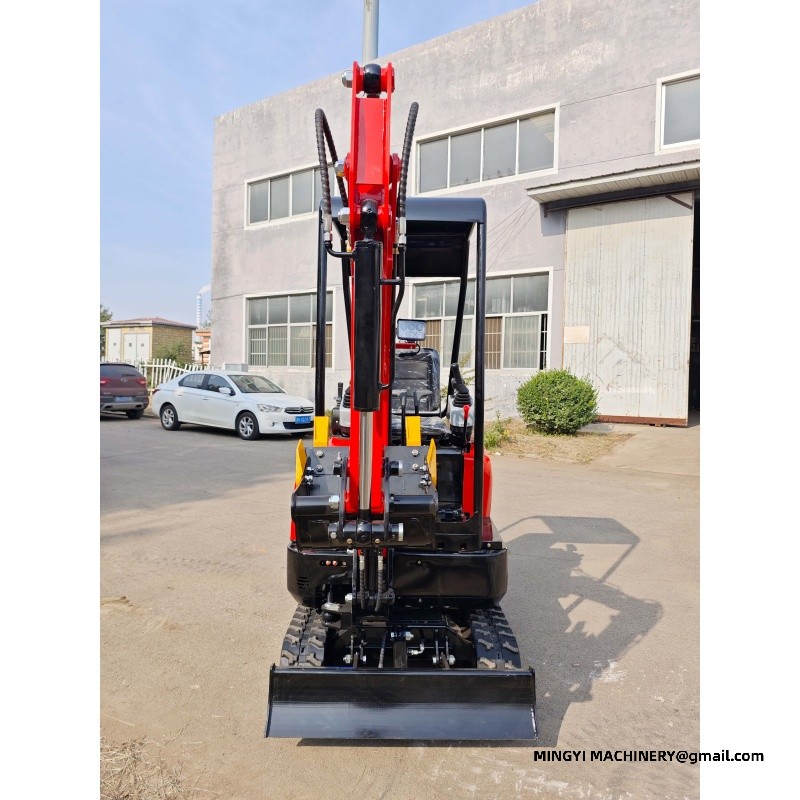
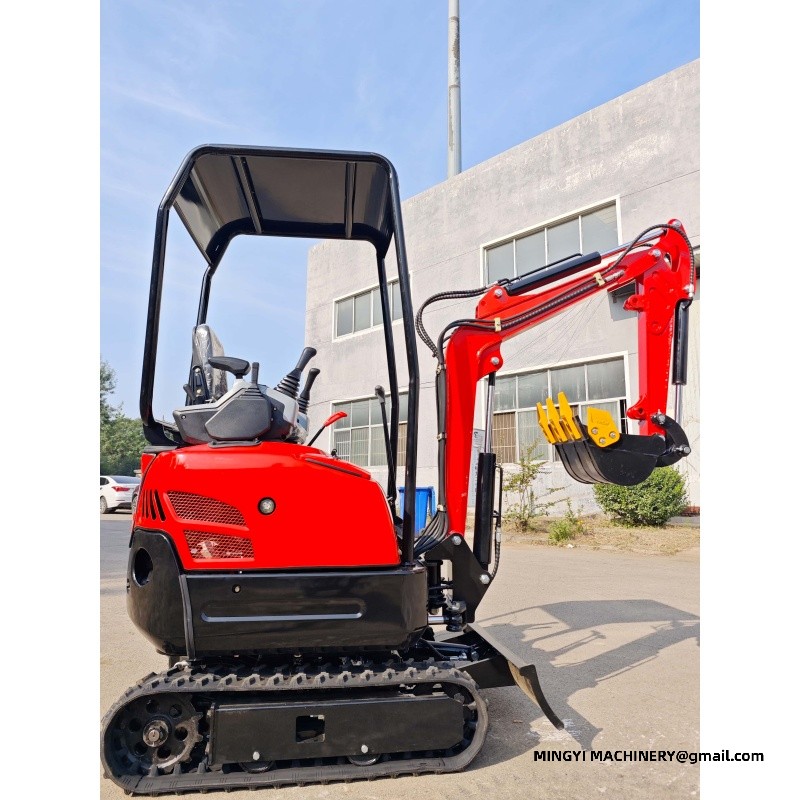
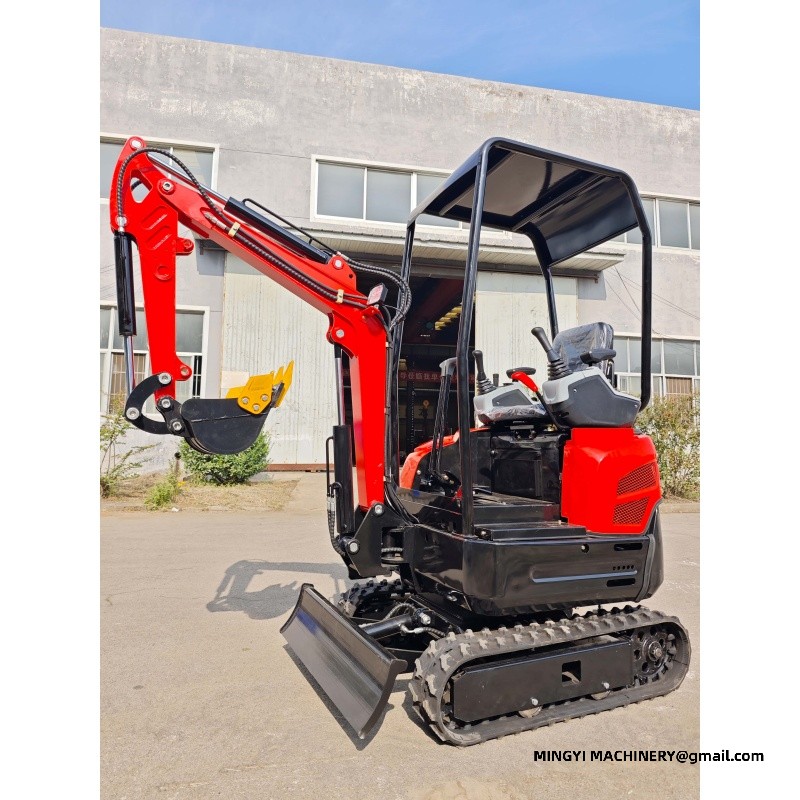
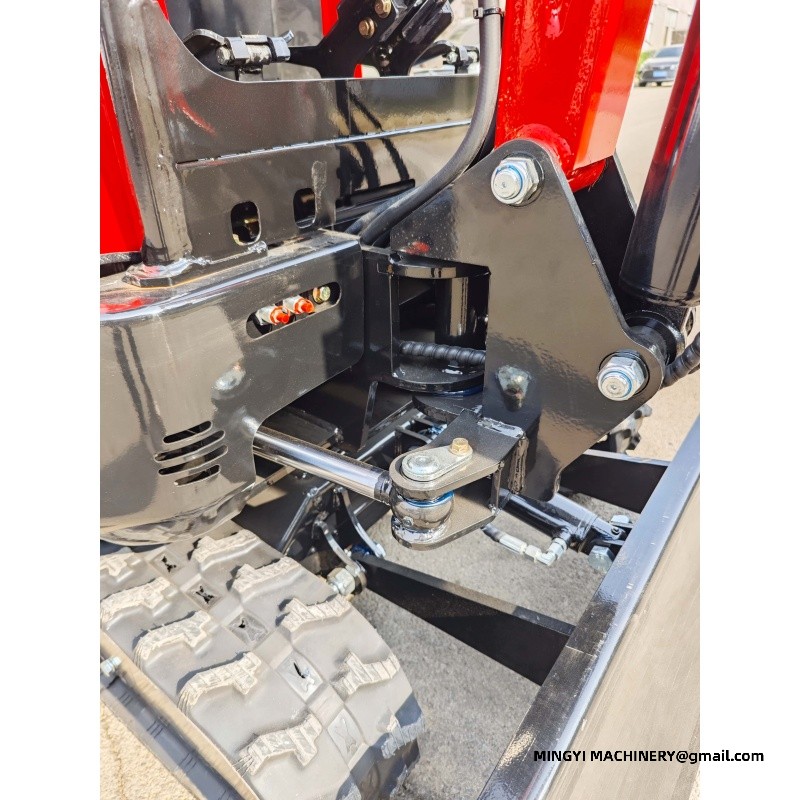
Reference specification — mini excavator range 15W 20-3W 20-2L 30-2L Operating weight 1400 kg (3086.47 lb) 1900 kg (4188.78 lb) 1900 kg (4188.78 lb) 2400 kg (5291 lb) Transport size (L×W×H) 2200 × 930 × 2250 mm 2550 × 1100 × 2200 mm 2600 × 1300 × 2344 mm 2800 × 1500 × 2500 mm Max digging depth 1630 mm (64.17 in) 1800 mm (70.87 in) 2100 mm (82.68 in) 2200 mm (86.61 in) Max digging height 2750 mm (108.27 in) 2820 mm (111.02 in) 2880 mm (113.39 in) 2900 mm (114.17 in) Max dumping height 1960 mm (77.17 in) 2050 mm (80.71 in) 2100 mm (82.68 in) 2100 mm (82.68 in) Max digging radius 2900 mm (114.17 in) 3050 mm (120.08 in) 3215 mm (126.57 in) 3330 mm (131.1 in) Max digging distance 2100 mm (82.68 in) 2300 mm (90.55 in) 2460 mm (96.85 in) 2700 mm (106.3 in) Minimum turning radius 1300 mm (51.18 in) 1450 mm (57.09 in) 1587 mm (62.48 in) 1555 mm (61.22 in) Travel speed 3 km/h (1.86 mph) 5 km/h (3.11 mph) 5 km/h (3.11 mph) 7 km/h (4.35 mph) Gradeability 30° 30° 30° 30° Fuel consumption 1-1.3 L/h (0.264—0.343 gal) 2-3 L/h (0.528—0.793 gal) 2-3 L/h (0.528—0.793 gal) 2-3 L/h (0.528—0.793 gal) Fuel tank capacity 10 L (2.64 gal) 16 L (4.23 gal) 16 L (4.23 gal) 16 L (4.23 gal) Hydraulic oil tank 16 L (4.23 gal) 18 L (4.76 gal) 18 L (4.76 gal) 18 L (4.76 gal) Dozer blade lift height 180 mm (7.09 in) 180 mm (7.09 in) 180 mm (7.09 in) 230 mm (9.06 in) Dozer blade drop depth 210 mm (8.27 in) 210 mm (8.27 in) 210 mm (8.27 in) 280 mm (11.02 in)
Q. What is a machine of this size?
A. Export supply is a programme, not a transaction: build specification, packing, documents and parts support have to line up before the machine sails. Mixed-model orders and staged deliveries are routine for dealer and importer programmes, with documents and inspection arranged with the order. For OEM manufacturing applications the practical route is to send the job list to the factory and let the build sheet answer it - which is exactly what this page invites.
Q. How are machines packed and shipped?
A. Complete units travel in containers on timber cradles; CKD packing parts the machine for volume. Documents, marks and routing follow the order, and the destination port decides the packing plan.
Q. What about colours and branding?
A. OEM colours and decals are part of the build: private-label machines carry the buyer brand on the standard MINGYI platform, and the OEM manufacturing order confirms colours, marks and documents before production starts.
Packing, loading and shipment of the equipment on site
Container loading is a planning exercise. The overall dimensions and the operating weight of the machine itself decide whether it ships whole, partly disassembled or with the attachment removed, and that decision is made before the booking.
Wear items and spares worth holding for the model in question
Holding spares is about downtime rather than the shelf itself. The question for the machine in that duty is not how large the part is but how long the machine sits while it is found, and a small shelf answers that better than a fast courier.
E-mail : sales@mingycn.com
LINE ( ID ): mingyicn
Related pages
china mini excavator supplier · china mini excavator factory · Loader Machine for Construction: Specifying for Site Cycles · Mini Excavators









