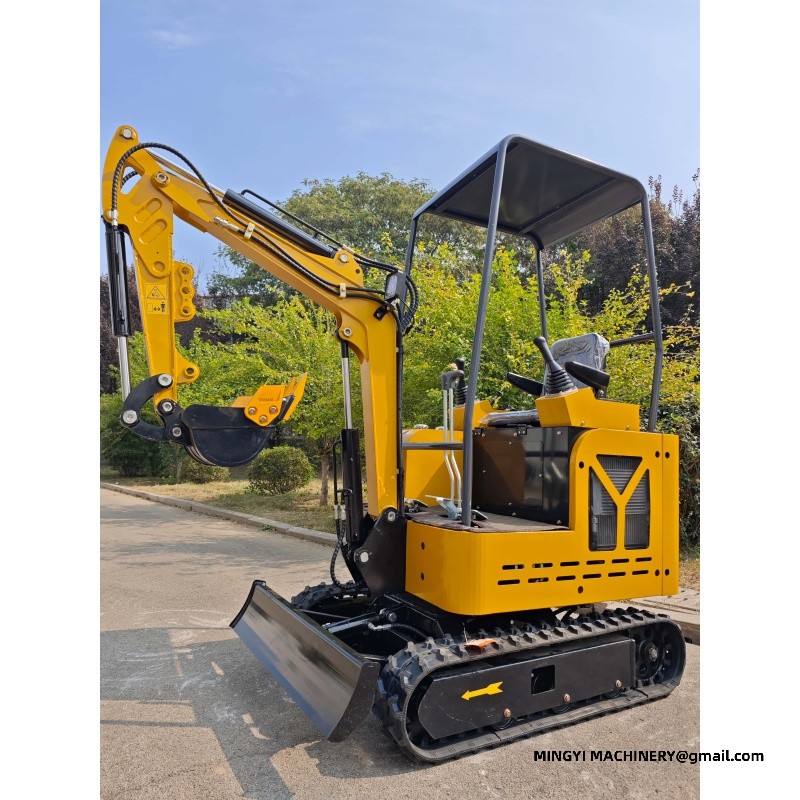
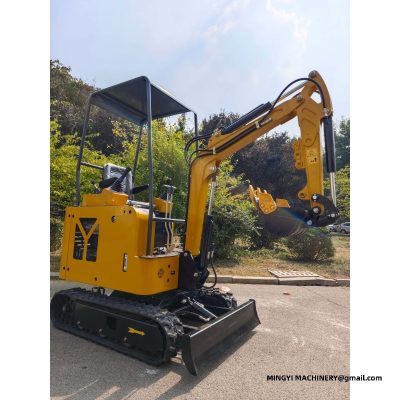
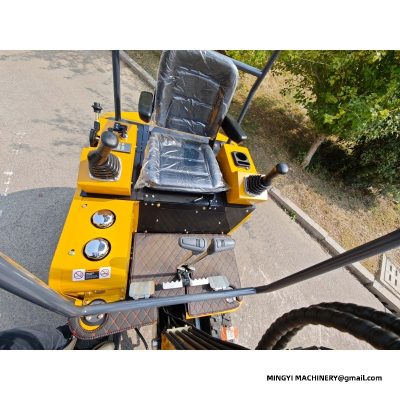
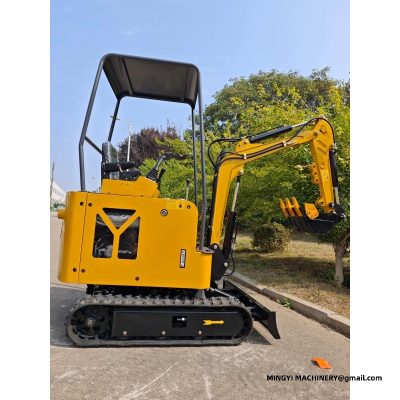
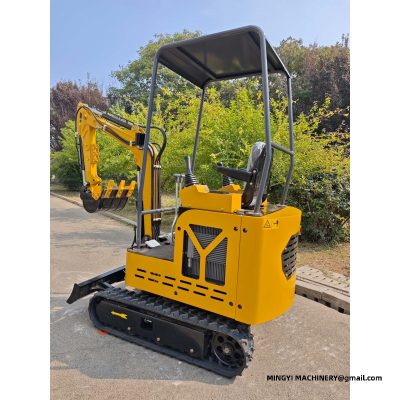
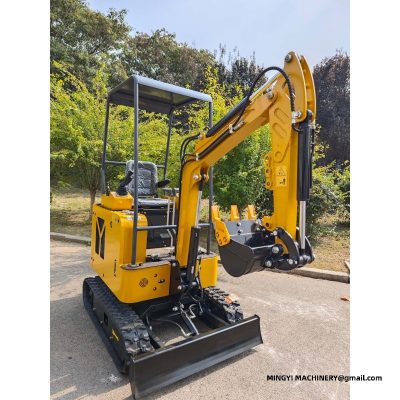
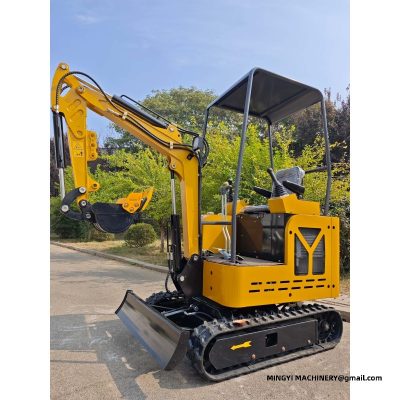
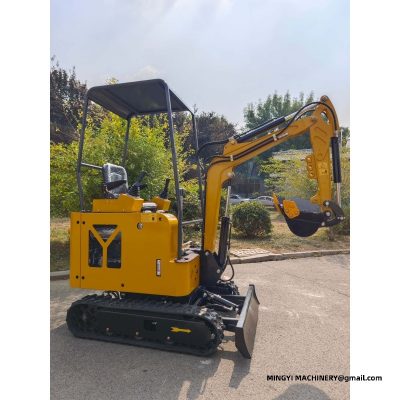
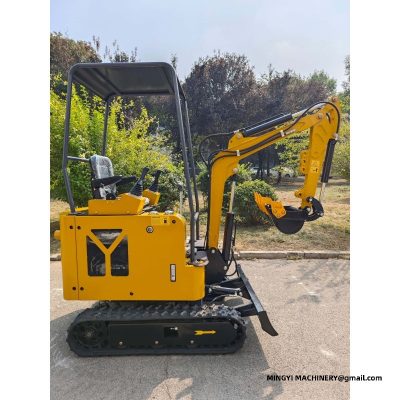
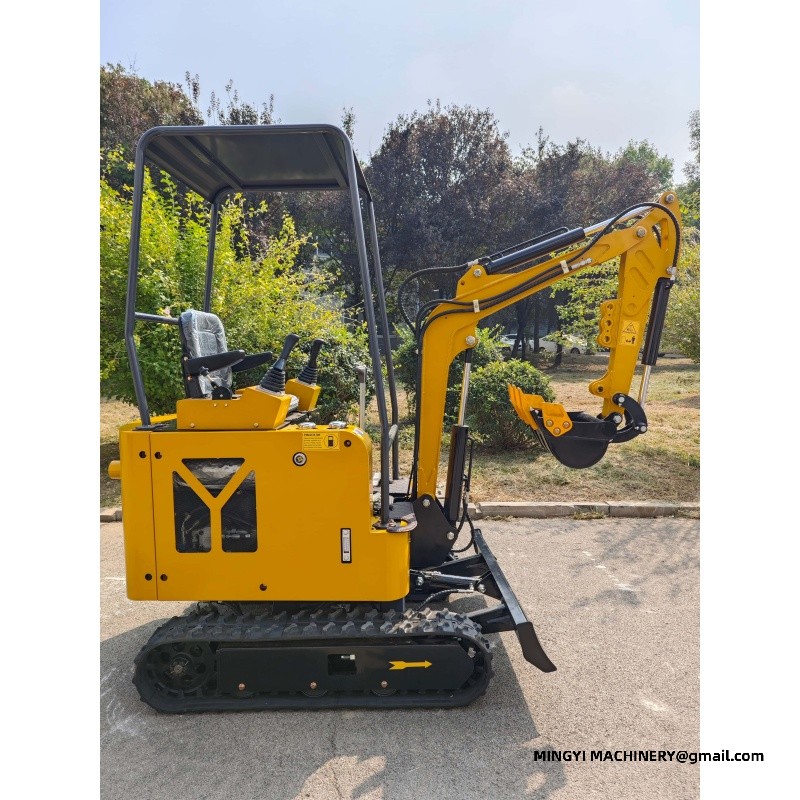
2 ton mini excavator
The two tonne class is the size many buyers settle on when one machine has to cover trenching, loading and light breaking in the same week. MINGYI builds this class to order, so track type, boom form and attachments are agreed before the build starts.
It sits between the smaller 08 and 12 models and the heavier 18 machine. That position matters on site: light enough to travel on a small trailer, yet able to carry a full attachment range from breaker hammer to grass rake.
Setting up the two tonne class for mixed work
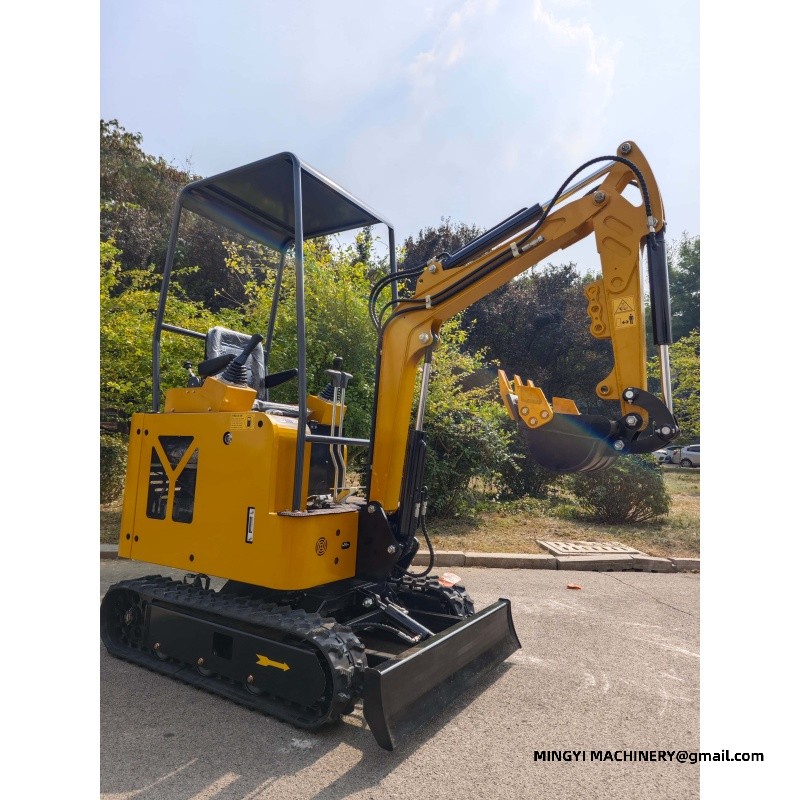
Buyers usually treat this machine as a carrier rather than a single-purpose tool, because the workload changes from job to job. Track type comes first: rubber tracks for turf and paving, or steel tracks with rubber blocks where grip matters more.
The boom and dipper then decide reach and digging depth. A swing boom helps where a trench runs close to a wall, and a zero or short tail swing keeps the rear inside a narrow lane.
Attachment choices for a two tonne mini excavator
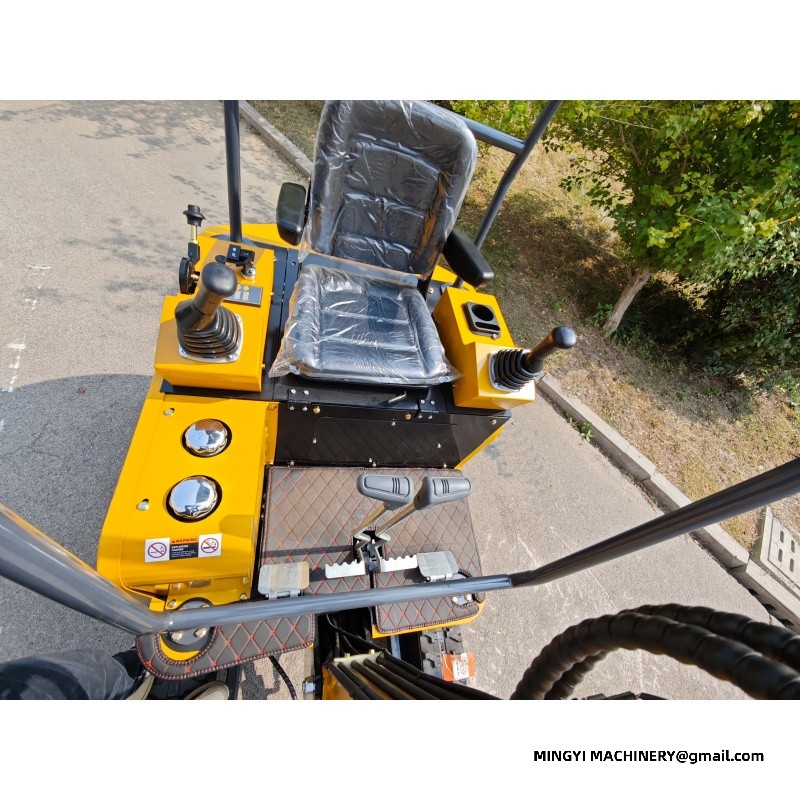
Most export orders leave with more than one attachment, because adding a second tool takes little next to sending the machine back later. A quick coupler, mechanical or hydraulic, is the usual starting point and allows a change from bucket to breaker in minutes.
Further tools follow the buyer's trade: a tilting bucket and thumb bucket for general site work, a compaction wheel for reinstatement, a rotary tiller and lawn mower for green projects, or a shell bucket for drainage stone.
Specifying a two tonne excavator is mostly a matter of naming the work it will do, then letting track type, boom form and attachment list follow. Buyers who describe the site and the tasks can have the machine built to match, with spares supplied with the unit.
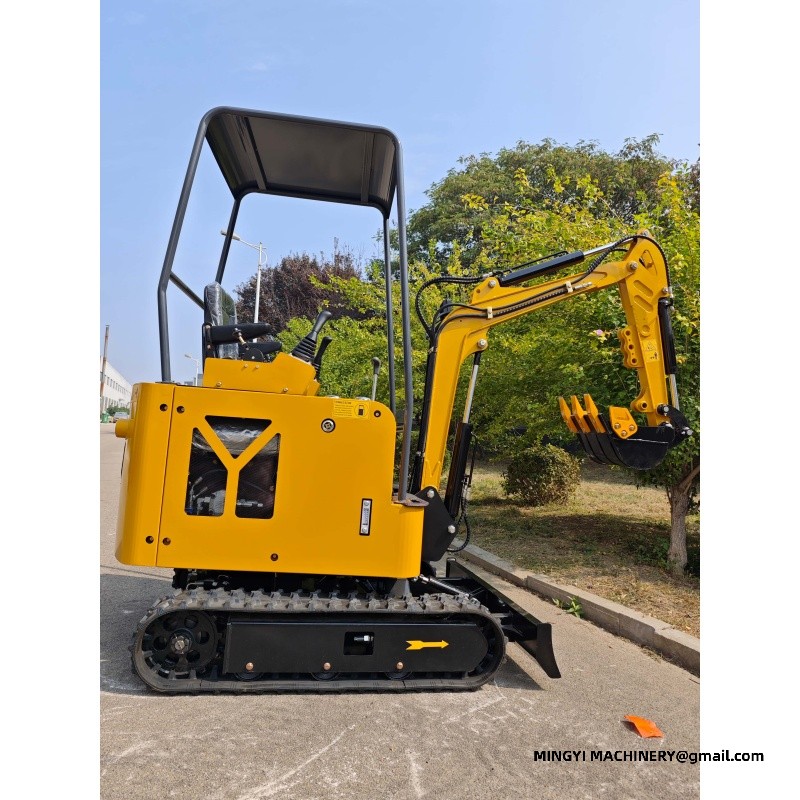
Lifting and material handling with a two tonne mini excavator Lifting with a machine built to dig needs a plan. The load, the radius and the ground under the class of machine all matter, and the safe figure is the one on the chart rather than the one that looks possible. Ground condition under the machine is part of every lift. Soft or uneven support is the common factor in handling incidents, and checking it takes less time than recovering the excavator that has settled. Noise, dust and working near occupied buildings Enclosure and machine condition both reduce noise. The unit in daily use with intact panels, sound mounts and a maintained exhaust is measurably quieter than the same machine with loose guards, and the difference matters on restricted sites. Dust control is often part of the same conversation. Water, timing and work sequence reduce what leaves the site, and agreeing them in advance keeps a machine of this size working rather than stopped after a complaint. Operator technique for two tonne mini excavator Output on a compact machine comes from placement rather than power. An experienced operator keeps the equipment on site working inside the swing arc, positions once and digs a full run instead of repositioning for every bucket. The second habit is tool discipline. Running the machine itself with the right bucket width for the trench means less spoil, less reinstatement and a cleaner job than a wide bucket and a lot of trimming. Working near live services with two tonne mini excavator The risk on utility work is not machine power but machine placement. The model in question that fits the working width leaves the surrounding ground undisturbed, which keeps the trench stable and the reinstatement small. Utility crews specify the machine in that duty with a narrow bucket and good visibility for exactly this reason: the machine has to stop at the service, not at the edge of the operator's view. Acceptance checks when a two tonne mini excavator arrives Delivery day is the best time to find a problem. Checking the specification against the order, the fluid levels, the fasteners and any transport damage while the machine built for the work is still on the trailer is faster than claiming later. A function check before the machine goes to work is worth the hour. Running through the controls, the travel and the attachment circuit on the unit on the job confirms it is set up as specified and ready for the site. Working a two tonne mini excavator through the seasons Weather decides which days are productive. Rain turns some ground unusable and cold changes how the equipment in service starts and warms up, so planning the wet months around maintenance is more useful than planning around output. Heat and dust are as limiting as rain. Air intake condition and cooling cleanliness decide how the excavator behaves in a dry season, and both are checked in a minute rather than repaired later. Engine options behind this class of machine Power unit selection is settled against the service network the buyer already uses. MINGYI offers Kubota D722, Kubota D902, YANMAR, Changchai, Laidong, Runtong, YARMAX, Youpu 2V80 and Youpu 195, so a fleet running one brand of engine can keep the same filters, the same parts supplier and the same mechanic. Two buyers can order the same the unit in daily use and receive different engines. The decision is rarely about peak power; it is about which parts counter is closest to the site and which engine the local mechanic already knows. Specifying a machine of this size against a job list Buyers who skip this step either over-buy or under-buy. The equipment on site specified only from machine size tends to arrive without the coupler, the circuits or the track type the work actually needs. Useful information to send with an enquiry includes working width, required digging depth, ground conditions and the attachment set. Those four items let the factory specify the machine itself that fits rather than a generic build. Working the model in question in confined spaces Clearance above matters as much as around. Door heights, pipework and overhead services set the limit for the machine in that duty indoors, and measuring them first avoids a machine that arrives and cannot be used. Ventilation is the other indoor constraint. Running the unit on the job inside a closed structure needs air movement, and that is a planning item rather than something to discover after the first hour. Hiring versus owning a machine built for the work The choice follows the hours. Work that fills a few weeks a year is usually better hired, while the equipment in service that would be on site most weeks starts to justify ownership once the transport and booking time is counted. Availability is part of the decision. Owning the excavator means it is there on the day the ground is ready; hiring means competing for the same machine at the same time as everyone else in the season. Daily checks and maintenance on this class of machine Daily maintenance on the unit in daily use is a short list: engine oil level, coolant, track tension, hydraulic oil level and a look at the hoses. Ten minutes at the start of the shift prevents most of the failures that stop a machine. Track tension is the item most often neglected. A machine of this size run with slack tracks wears the undercarriage and can throw a track on a turn; run too tight, the same components wear from the other direction. Quick coupler practice on the equipment on site A quick coupler is the single option that changes how a machine is used day to day. Fitted to the machine itself, it turns an attachment change from a two-person workshop job into a task the operator does alone in minutes. Specification data for the model in question Buyers comparing the machine in that duty usually start from four numbers - weight, digging depth, reach and transport width - because those are the ones that decide whether the machine can be delivered and whether it can do the job once it is there. These are the reference figures for the unit on the job. MINGYI confirms the final build sheet, including engine and attachment choices, against the destination and the job list before production. Couplers are specified early because they affect the arm and the hydraulic kit. Adding one to a machine built for the work after delivery means new pins, new hoses and a fitment session; adding it at build time is a line on the sheet. For a fleet that shares attachments between machines, a common coupler standard matters more than the coupler brand. The equipment in service that picks up the same tools as the larger machines keeps the rack usable across the yard.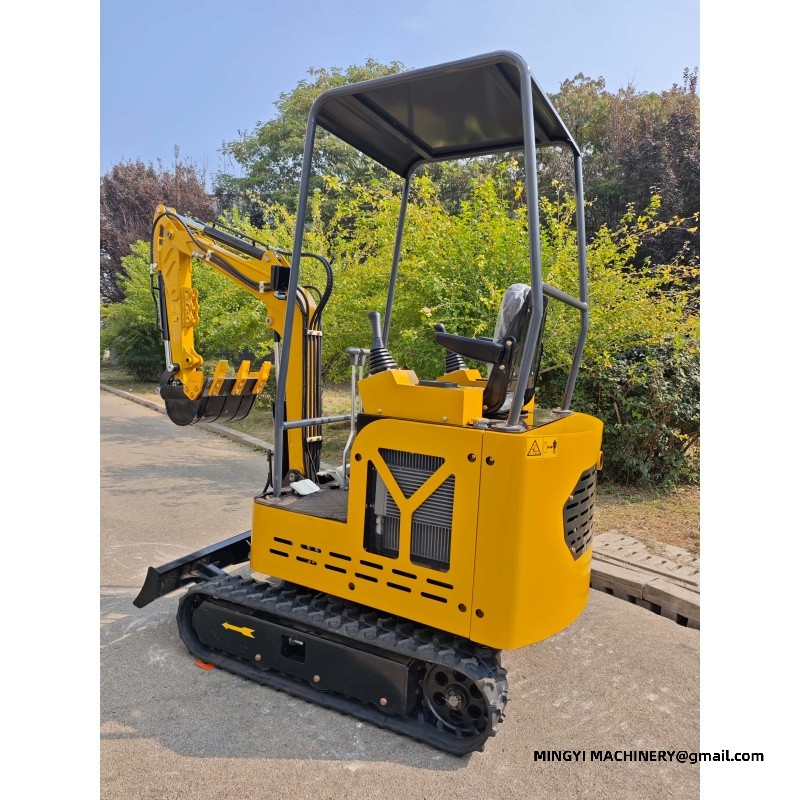
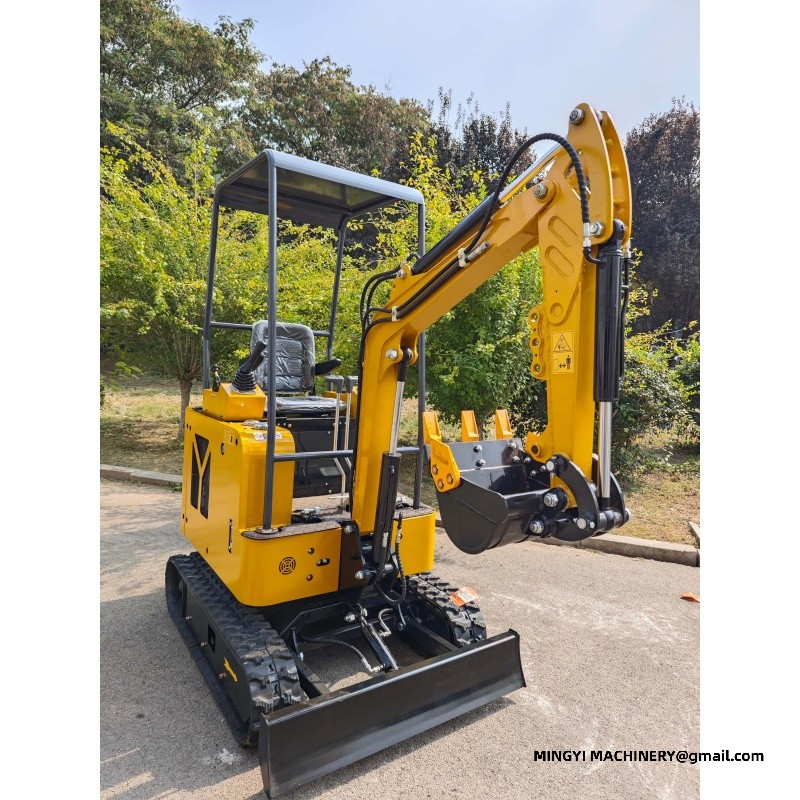
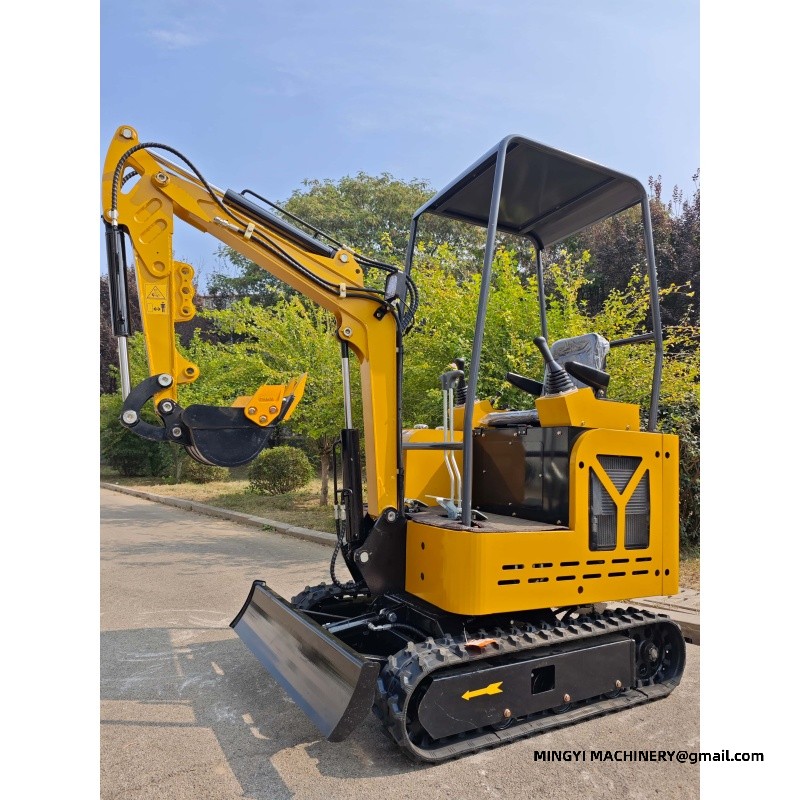
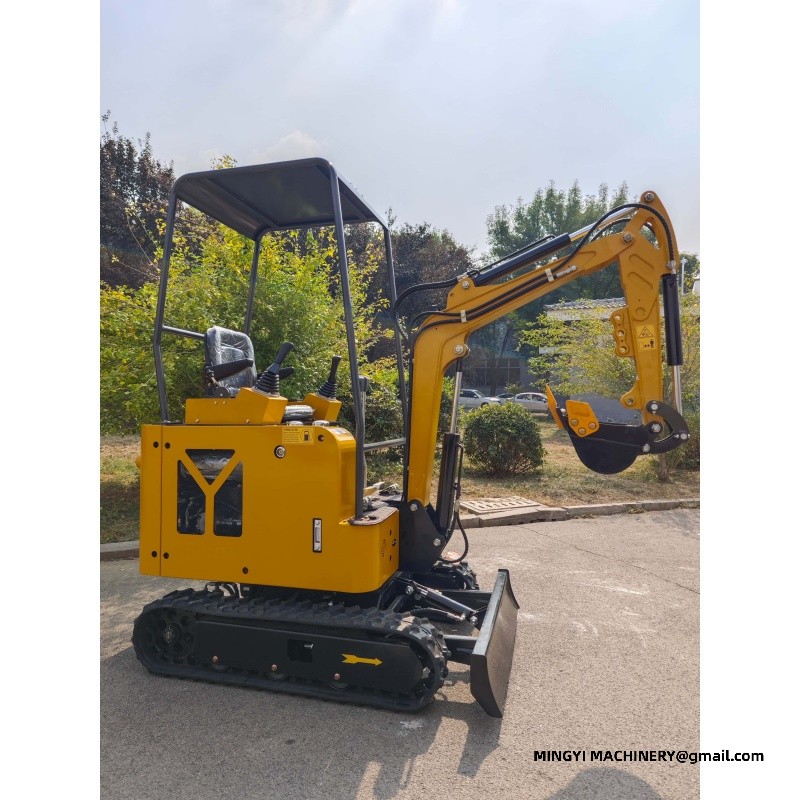
Reference specification — mini excavator range 09W 12W 13W 15L Operating weight 1100 kg (2425.08 lb) 1200 kg (2645.55 lb) 1300 kg (2866.01 lb) 1400 kg (3086.47 lb) Transport size (L×W×H) 1800 × 750 × 1970 mm 2200 × 930 × 2250 mm 2200 × 930 × 2250 mm 2200 × 930 × 2250 mm Max digging depth 1250 mm (49.21 in) 1630 mm (64.17 in) 1630 mm (64.17 in) 1700 mm (66.93 in) Max digging height 2800 mm (110.24 in) 2750 mm (108.27 in) 2750 mm (108.27 in) 2750 mm (108.27 in) Max dumping height 1700 mm (66.93 in) 1960 mm (77.17 in) 1960 mm (77.17 in) 1960 mm (77.17 in) Max digging radius 2570 mm (101.18 in) 2900 mm (114.17 in) 2900 mm (114.17 in) 2900 mm (114.17 in) Max digging distance 1869 mm (73.58 in) 2100 mm (82.68 in) 2100 mm (82.68 in) 2300 mm (90.55 in) Minimum turning radius 1000 mm (39.37 in) 1300 mm (51.18 in) 1300 mm (51.18 in) 1450 mm (57.09 in) Travel speed 3 km/h (1.86 mph) 3 km/h (1.86 mph) 3 km/h (1.86 mph) 3 km/h (1.86 mph) Gradeability 30° 30° 30° 30° Fuel consumption 1-1.3 L/h (0.264—0.343 gal) 1-1.3 L/h (0.264—0.343 gal) 1-1.3 L/h (0.264—0.343 gal) 1-1.3 L/h (0.264—0.343 gal) Fuel tank capacity 8 L (2.11 gal) 10 L (2.64 gal) 10 L (2.64 gal) 10 L (2.64 gal) Hydraulic oil tank 16 L (4.23 gal) 16 L (4.23 gal) 16 L (4.23 gal) 16 L (4.23 gal) Dozer blade lift height 180 mm (7.09 in) 180 mm (7.09 in) 180 mm (7.09 in) 180 mm (7.09 in) Dozer blade drop depth 210 mm (8.27 in) 210 mm (8.27 in) 210 mm (8.27 in) 210 mm (8.27 in)
Q. Who chooses the excavator?
A. The class sets the trade: access on one side, reach and lift on the other, and every compact buyer picks their point on that line. Tracks, cabs and attachments are common across the range, so the size decision is mostly about where the machine must fit and what it must lift. MINGYI builds the 08, 12 and 18 models covering the 0.8 to 6 tonne class, and this class of machine is where that range meets two tonne class.
Q. Which size should I start with?
A. From access and trench width: the machine must pass the narrowest gap on your jobs and swing the bucket the trench needs. The 0.8 to 6 tonne class MINGYI builds as the 08, 12 and 18 models covers most of that ground, and the class pages set out the trade-offs.
Q. Does MINGYI supply attachments with the machine?
A. Yes - buckets, breakers, augers, rakes and the rest of the working set ship with the carrier, matched to the hydraulic flow and the coupler. For two tonne class the package is confirmed on the build sheet, so machine and tools arrive together and start work together.
Reading the early symptoms on the unit in daily use
Machines rarely fail without warning. A change in sound, a slower function or a new leak on a machine of this size is the machine saying something early, and listening then takes a fraction of the time that waiting does.
Wear items and spares worth holding for the equipment on site
Wear items are predictable once the machine has settled in. After the first service interval the pattern on the machine itself is visible, and the parts that were replaced become the parts that are kept.
Fuel, oil and fluid quality for the model in question
The specification for oil is written for a reason. Using the grade and the change interval set for the machine in that duty keeps the engine and the hydraulic system inside the range they were designed for.
E-mail : sales@mingycn.com
LINE ( ID ): mingyicn
Related pages
two tonne mini excavator for trenching · mini excavator for backfilling work · Wheel Loader Fork Attachment: Matching Forks to the Boom Section · Mini Excavators









