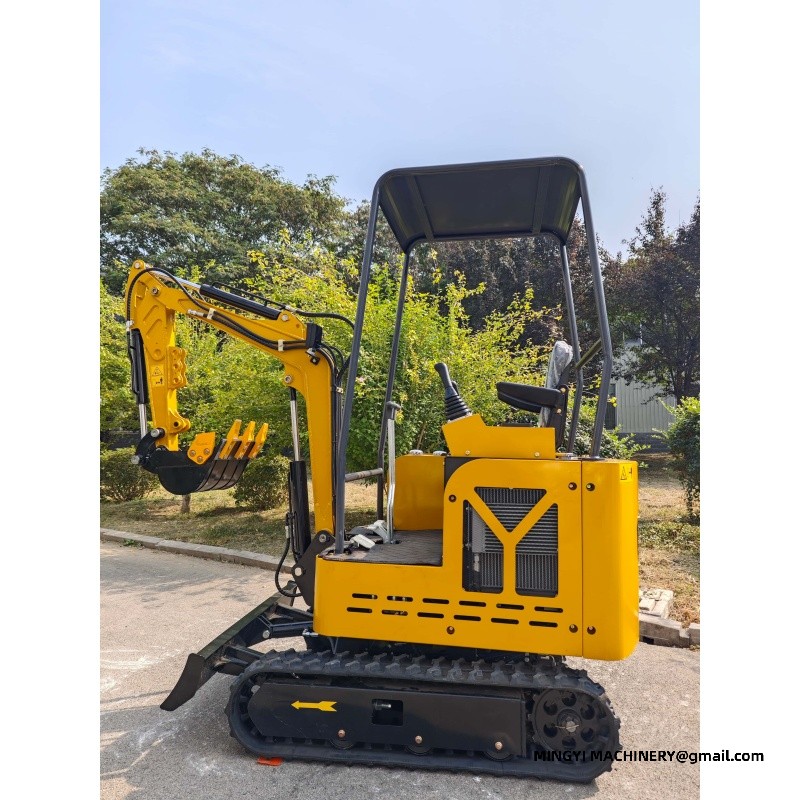
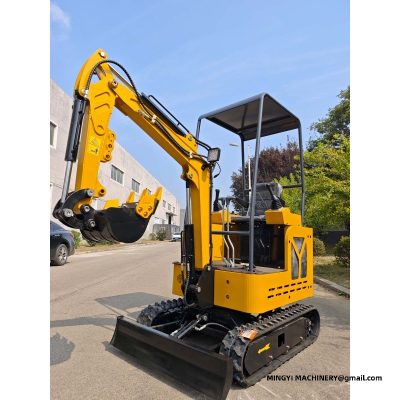
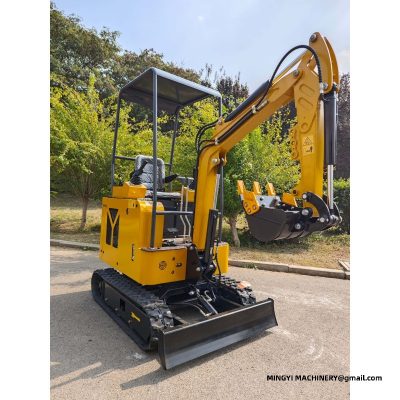
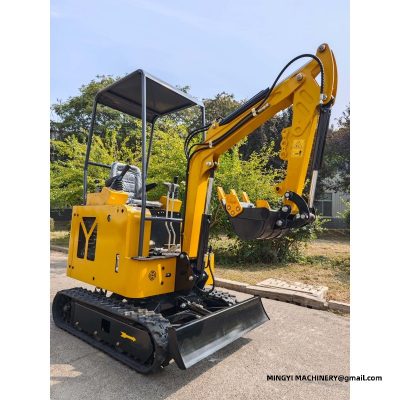
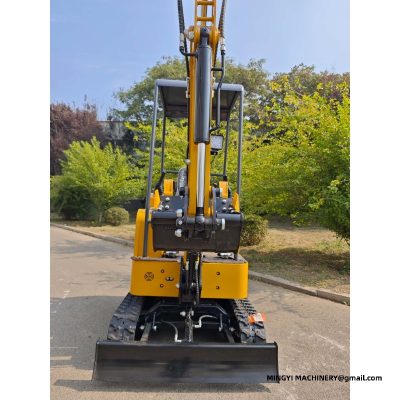
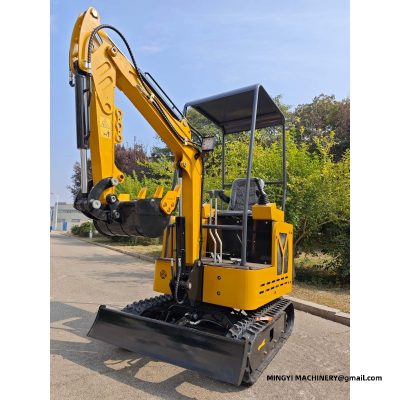
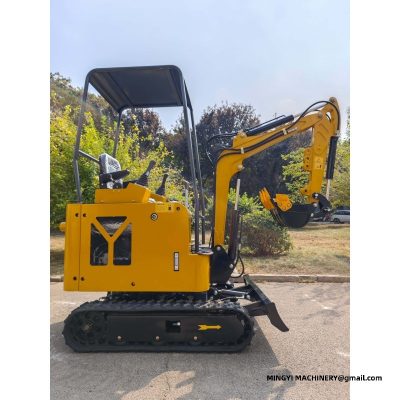
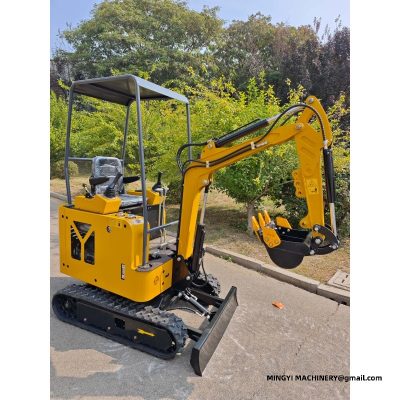
Once a structure is up, the ground around it has to be returned to level in layers that can be compacted properly. Backfilling is patient work, because a bucket of soil tipped in one heap is harder to consolidate than the same material spread evenly.
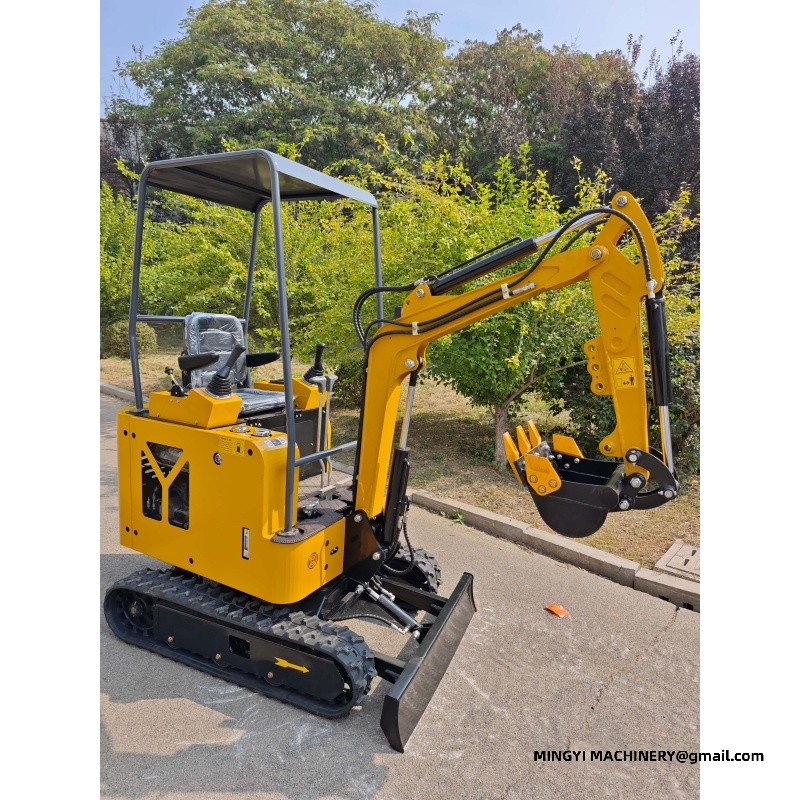
A compact crawler excavator reaches along the wall face and between props where a larger machine cannot stand. MINGYI assembles these units to order, and the grading bucket, thumb bucket or compaction wheel fitted to the job is agreed before the machine is built.
Backfilling around basement walls and service ducts
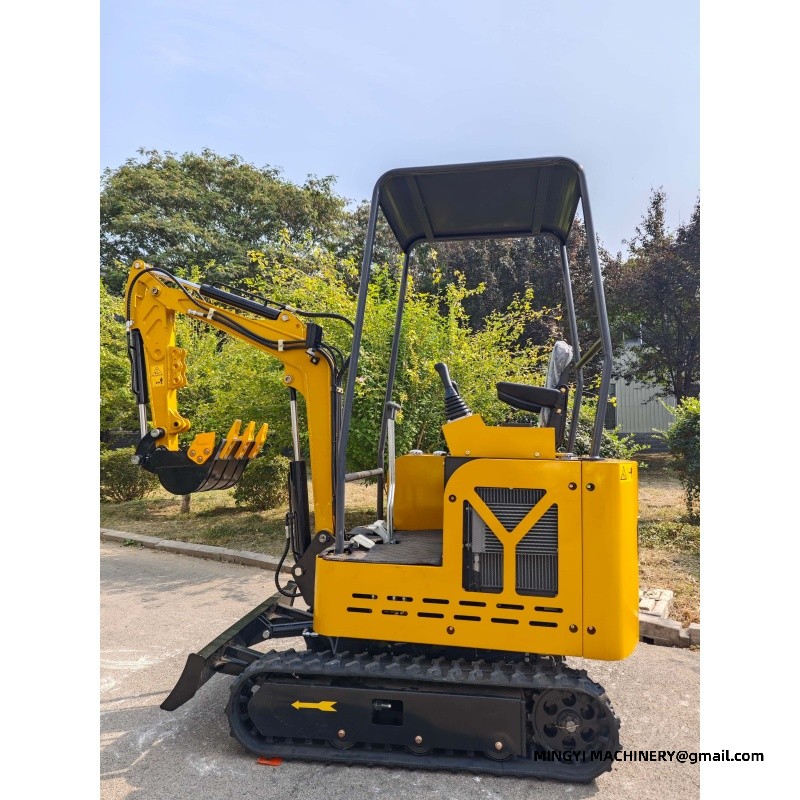
The material has to be placed in even lifts, working away from the wall so that pressure never builds on one side. The operator also keeps ducting and drainage runs clear, which calls for a steady hand rather than a fast cycle.
A tilting bucket lets the same machine trim and spread without changing attachment. Where the fill contains stone, a skeleton bucket screens the larger pieces out before they are placed against the waterproofing.
Clearing spoil and offcuts as the build moves up
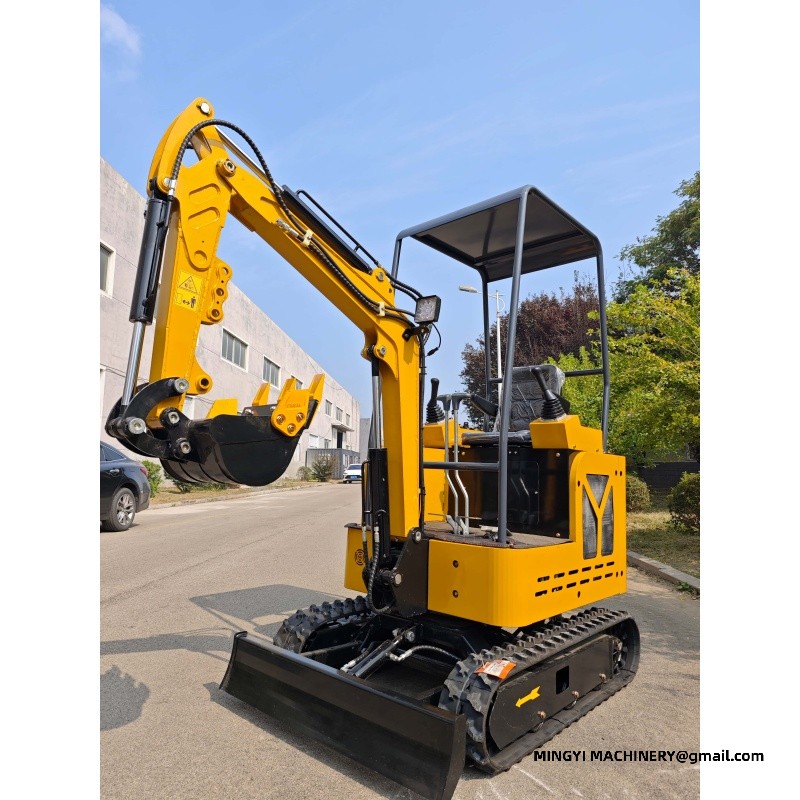
Backfilling rarely happens on its own. Offcuts, packaging and surplus spoil accumulate around the structure and have to be lifted clear before the next trade can reach its work face.
A thumb bucket or front fork turns the excavator into a handler for pallets and timber, and the machine stays useful once the digging is finished. Rubber tracks are the usual choice here because they travel over finished paving without marking it.
Backfilling and clearance are the tasks that keep a site moving between trades. A compact excavator that can spread, trim and handle material in the same working position removes a good deal of hand labour from the last weeks of a project.
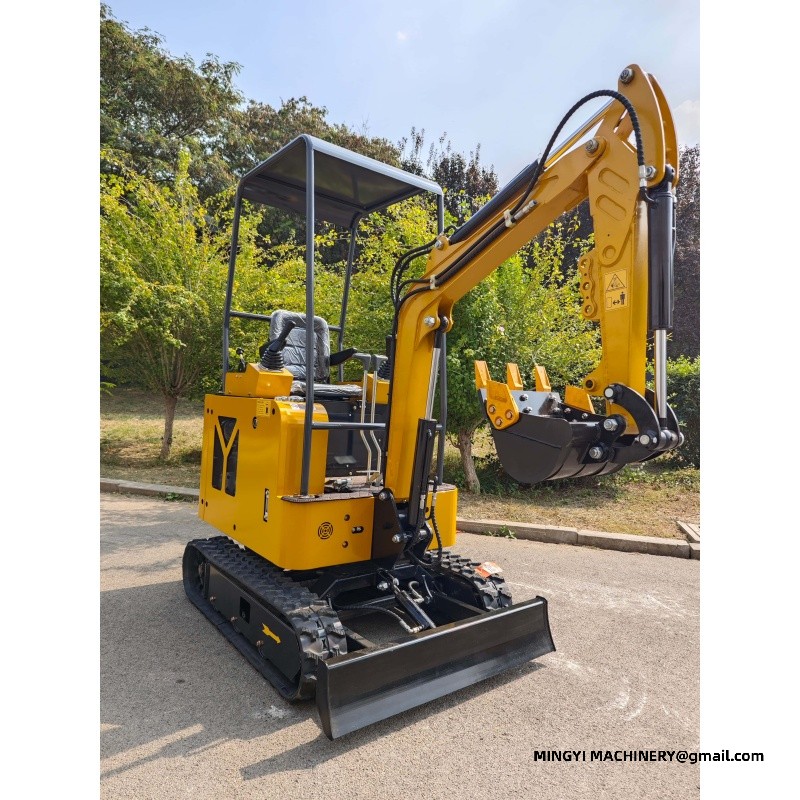
Lifting and material handling with a mini excavator for backfilling work Lifting with a machine built to dig needs a plan. The load, the radius and the ground under the class of machine all matter, and the safe figure is the one on the chart rather than the one that looks possible. Stability changes with reach. A load the excavator handles close in becomes a different proposition at full extension, so the working radius belongs in the plan before the lift rather than during it. OEM and fleet customisation of mini excavator for backfilling work Distributors and rental fleets usually need the machine to look like theirs. Paint, decals, seat colour and attachment branding can be specified on the unit in daily use at build time rather than applied after import. Customisation also covers the specification sheet. A fleet buyer may want every machine of this size delivered with the same coupler, the same engine and the same tool kit so training and parts stock stay simple. Parts, service and support for mini excavator for backfilling work Support after delivery is a parts question. Wearing items for the equipment on site - filters, belts, track components, bucket teeth and pins - are the items a buyer should plan to hold before the first service interval. Engine parts availability usually drives the engine choice. The machine itself built with an engine the local network already carries is serviced from stock rather than from an international order. Specifying mini excavator for backfilling work against a job list The practical way to specify is to write the job list first: the narrowest access, the deepest trench, the heaviest tool and the surfaces the machine must cross. The model in question is then matched to those four numbers. Useful information to send with an enquiry includes working width, required digging depth, ground conditions and the attachment set. Those four items let the factory specify the machine in that duty that fits rather than a generic build. Orchard, vineyard and farm use of mini excavator for backfilling work Orchard and vineyard work is carried out between rows. The unit on the job with a narrow chassis and a swing boom works down the row without damaging the trees, which is the reason a full-size machine is not used at all. Farms also use a machine built for the work for general maintenance - clearing a watercourse, repairing a track, loading a spreader. One carrier with a few attachments covers most of the jobs that would otherwise wait for a contractor. Daily checks and maintenance on mini excavator for backfilling work Daily maintenance on the equipment in service is a short list: engine oil level, coolant, track tension, hydraulic oil level and a look at the hoses. Ten minutes at the start of the shift prevents most of the failures that stop a machine. Greasing is the second item. The slew ring, the boom and arm pins and the bucket linkage on the excavator take grease daily in dusty work, and the intervals shorten further when the machine is used in water or mud. Attachments that turn this class of machine into several machines The base machine is a carrier; the tool on the end of the arm decides the task. The unit in daily use fitted with a toothed bucket digs, and the same machine with a breaker, an auger or a grab does work that would otherwise need a second unit on site. Attachment lists are best written before delivery. Specifying a machine of this size with the tools the job list needs avoids the work and delay of adding hydraulics later, and a quick coupler makes the swap a few minutes instead of a workshop job. Road and paving work for the equipment on site Road repair generates short, interrupted jobs - a patch, a drainage connection, a kerb line. The machine itself is economical here because it travels on a small trailer and starts working minutes after arriving. Patching and reinstatement favour a machine that can work in a lane closure. The model in question occupies less road than a full-size excavator, which reduces the traffic management needed and the length of the closure. Interior and light demolition with the machine in that duty Interior demolition is an access and a weight question. The unit on the job that fits through a doorway and works on a suspended floor does jobs that would otherwise be done by hand or by a larger machine that cannot enter. Breaking out a floor slab, a wall footing or a concrete step is routine work for a machine built for the work with a breaker. The machine is small enough to work inside and heavy enough to run the tool at a practical rate. Track choice for the equipment in service Rubber tracks suit paved and landscaped ground because they spread the machine weight and leave the surface intact. Steel tracks with rubber blocks are specified where the ground is rougher or the working day is longer, and the choice can be made per machine rather than accepted as a factory default. Undercarriage selection is a ground question, not a preference question. The excavator running on finished paving needs rubber; the same machine on demolition rubble or rock wears rubber quickly, so steel with rubber blocks becomes the better answer over a full season. Landscaping and ground care with this class of machine Landscape contractors use the unit in daily use for planting holes, pond excavation, grading and retaining work. The machine is light enough to cross finished lawn and narrow enough to work between established trees. Grass cutting heads, rakes and tillers extend a machine of this size into ground care. The same carrier that digs a border in spring can cut and clear the same area later in the season. Specification data for the equipment on site The figures below are the factory figures for the models most often matched to the machine itself. They are the numbers to check against the site: the depth the work needs, the reach from one position, and the width of the narrowest point on the route in. These are the reference figures for the model in question. MINGYI confirms the final build sheet, including engine and attachment choices, against the destination and the job list before production. Delivery day is the best time to find a problem. Checking the specification against the order, the fluid levels, the fasteners and any transport damage while the unit on the job is still on the trailer is faster than claiming later. Documentation should arrive with the machine. Parts list, service schedule and any certificates for the machine in that duty are what the workshop needs later, and they are much easier to obtain at delivery than in month six.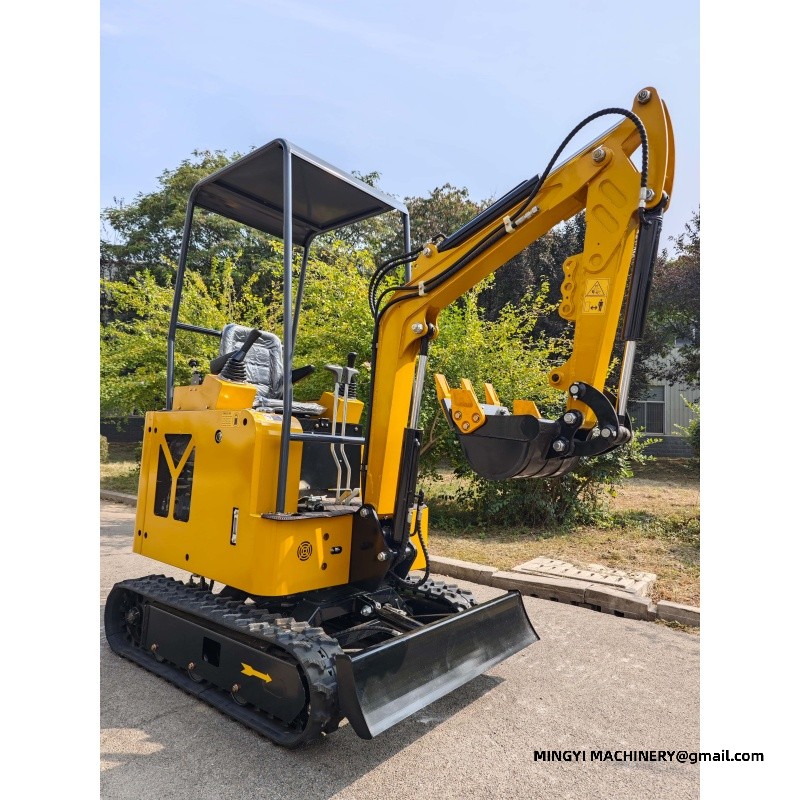
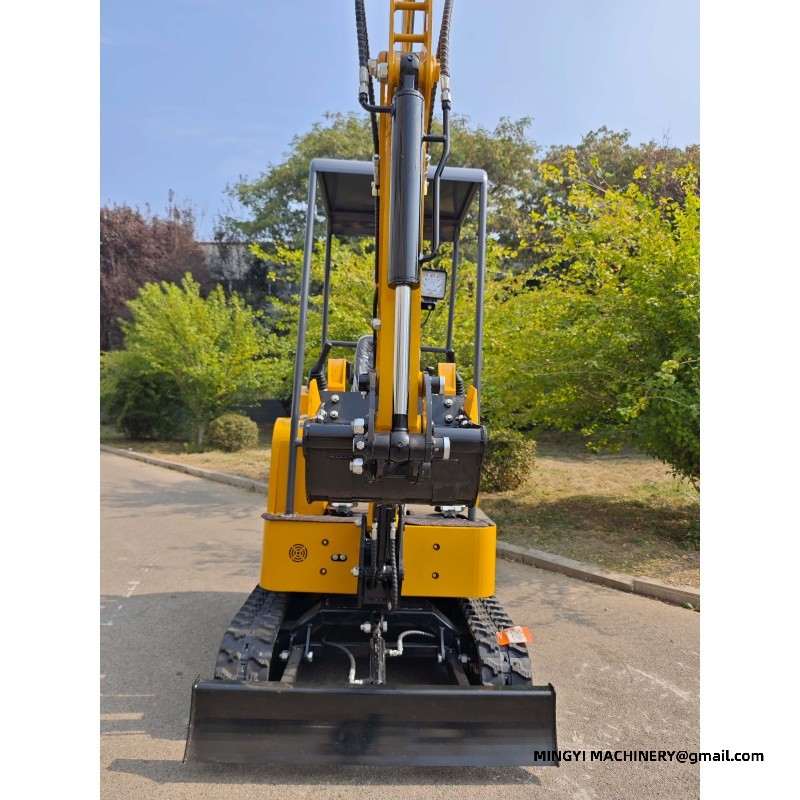
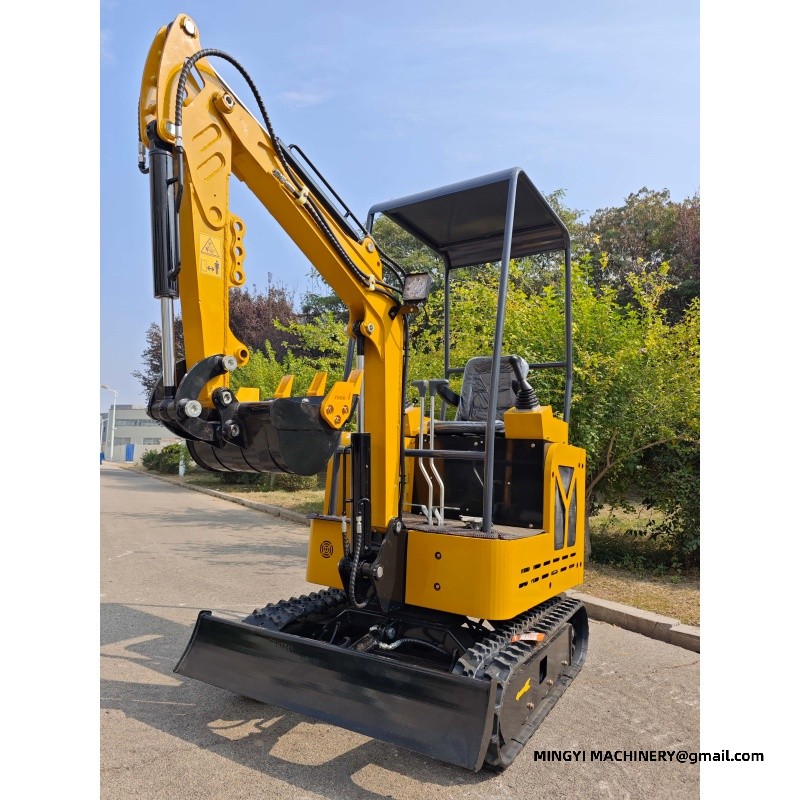
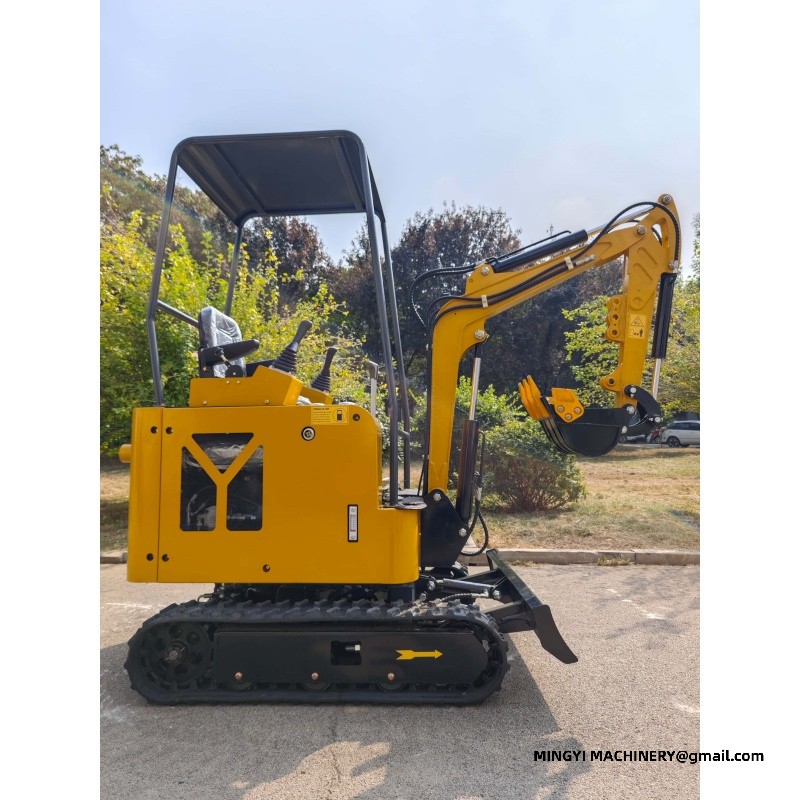
Reference specification — mini excavator range 20-1W 09L 12L 30-2L Operating weight 1800 kg (3968.32 lb) 1100 kg (2425.08 lb) 1200 kg (2645.55 lb) 2400 kg (5291 lb) Transport size (L×W×H) 2550 × 1100 × 2200 mm 2300 × 720 × 1870 mm 2200 × 930 × 2250 mm 2800 × 1500 × 2500 mm Max digging depth 1800 mm (70.87 in) 1400 mm (55.12 in) 1700 mm (66.93 in) 2200 mm (86.61 in) Max digging height 2820 mm (111.02 in) 2800 mm (110.24 in) 2600 mm (102.36 in) 2900 mm (114.17 in) Max dumping height 2050 mm (80.71 in) 1880 mm (74.02 in) 1800 mm (70.87 in) 2100 mm (82.68 in) Max digging radius 3050 mm (120.08 in) 2490 mm (98.03 in) 2900 mm (114.17 in) 3330 mm (131.1 in) Max digging distance 2300 mm (90.55 in) 2000 mm (78.74 in) 2300 mm (90.55 in) 2700 mm (106.3 in) Minimum turning radius 1450 mm (57.09 in) 1400 mm (55.12 in) 1450 mm (57.09 in) 1555 mm (61.22 in) Travel speed 5 km/h (3.11 mph) 3 km/h (1.86 mph) 3 km/h (1.86 mph) 7 km/h (4.35 mph) Gradeability 30° 30° 30° 30° Fuel consumption 2-3 L/h (0.528—0.793 gal) 1-1.3 L/h (0.264—0.343 gal) 1-1.3 L/h (0.264—0.343 gal) 2-3 L/h (0.528—0.793 gal) Fuel tank capacity 16 L (4.23 gal) 8 L (2.11 gal) 10 L (2.64 gal) 16 L (4.23 gal) Hydraulic oil tank 18 L (4.76 gal) 16 L (4.23 gal) 16 L (4.23 gal) 18 L (4.76 gal) Dozer blade lift height 180 mm (7.09 in) 180 mm (7.09 in) 180 mm (7.09 in) 230 mm (9.06 in) Dozer blade drop depth 210 mm (8.27 in) 210 mm (8.27 in) 210 mm (8.27 in) 280 mm (11.02 in)
Q. What is a machine built for the work?
A. One machine, one trailer, one operator and a full week of varied work is the whole idea behind the compact excavator class. Trenching on Monday, loading and grading through the week, fence posts and drainage to finish - the attachment set specifications the work. MINGYI builds the 08, 12 and 18 models covering the 0.8 to 6 tonne class, and the equipment in service is where that range meets backfilling work.
Q. What can I expect from a compact excavator in a normal week?
A. Trenching one day, loading and grading the next, fence posts and drainage through the rest - one machine, one trailer, one operator, and the attachment set specifications the work.
Q. Can I see the machine before it ships?
A. Inspection is arranged at the factory, in person or by a scheduled video walk-around - the same session covers paint, decals and attachment fitment for the backfilling work specification, so the machine inspected is the machine that ships.
Later additions and retrofits on the excavator
Later changes are easier when they were anticipated. Asking for the extra hydraulic circuit or the heavier mounting plate on this class of machine at build time adds little and leaves the option open.
Commissioning the unit in daily use on site
Commissioning is where the specification meets the ground. The settings chosen for a machine of this size are confirmed against the actual site, and the working pattern is adjusted before the machine is asked for a full day.
E-mail : sales@mingycn.com
LINE ( ID ): mingyicn
Planning utilisation for mini excavator for backfilling work
Utilisation is decided in the planning office as much as on site, through the number of machines, the haul route and the order of the work.
A machine booked for a job it is too large for wastes capacity, while one that is too small loses the day to rework.
Related pages
mini excavator canopy or cab options · mini excavator for service trenching · Wheel Loader Snow Blower: Specifying the Third Circuit · Mini Excavators









