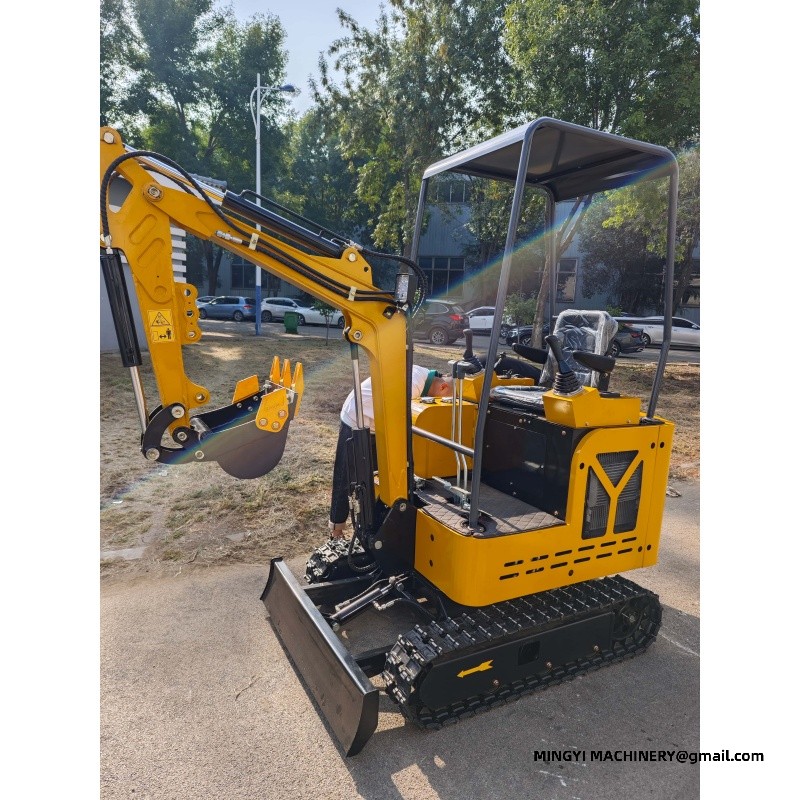
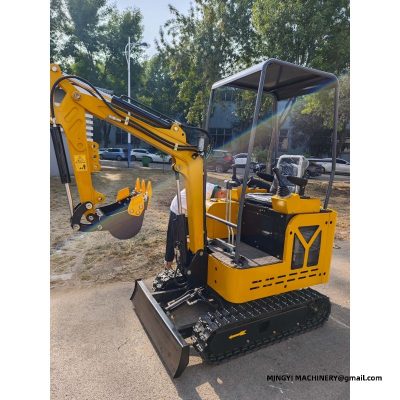
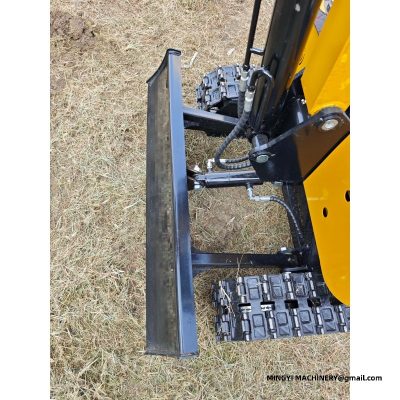
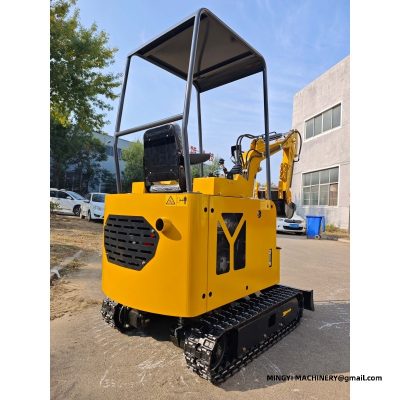
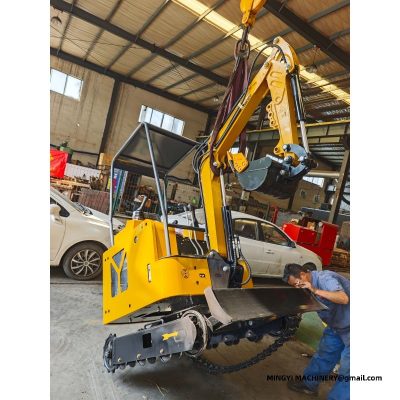
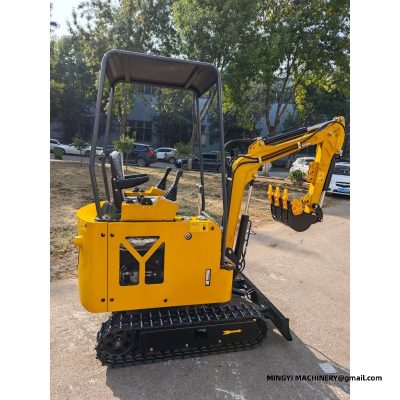
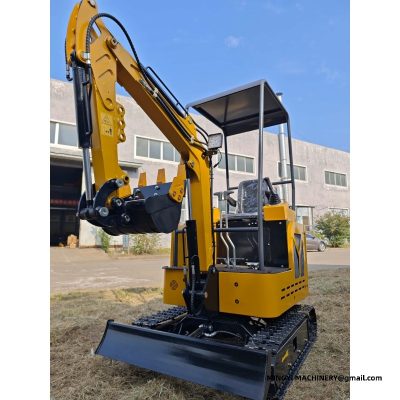
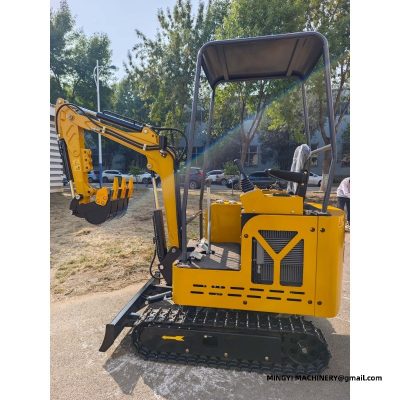
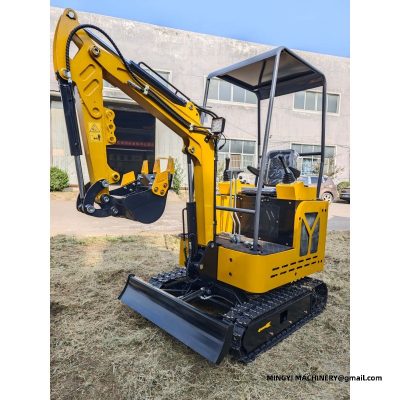
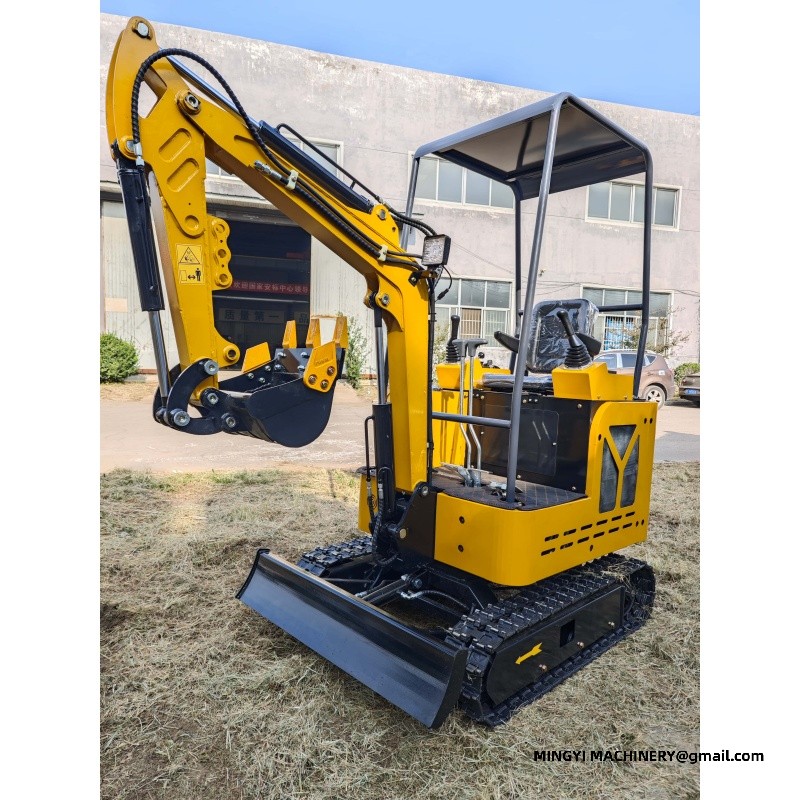
Ditching is demanding on an undercarriage. The machine works on soft verges, digs in wet ground, and drags itself along the line of the channel as the dig progresses. A MINGYI ditching machine ordered on steel tracks with rubber blocks is configured for exactly that duty.
The steel track carries the wear of stony ditch bottoms and soft ground, while the rubber blocks keep the machine acceptable on the paved crossings between one ditch and the next. This page covers the ditching work and the specification that supports it.
Ditching work through the year
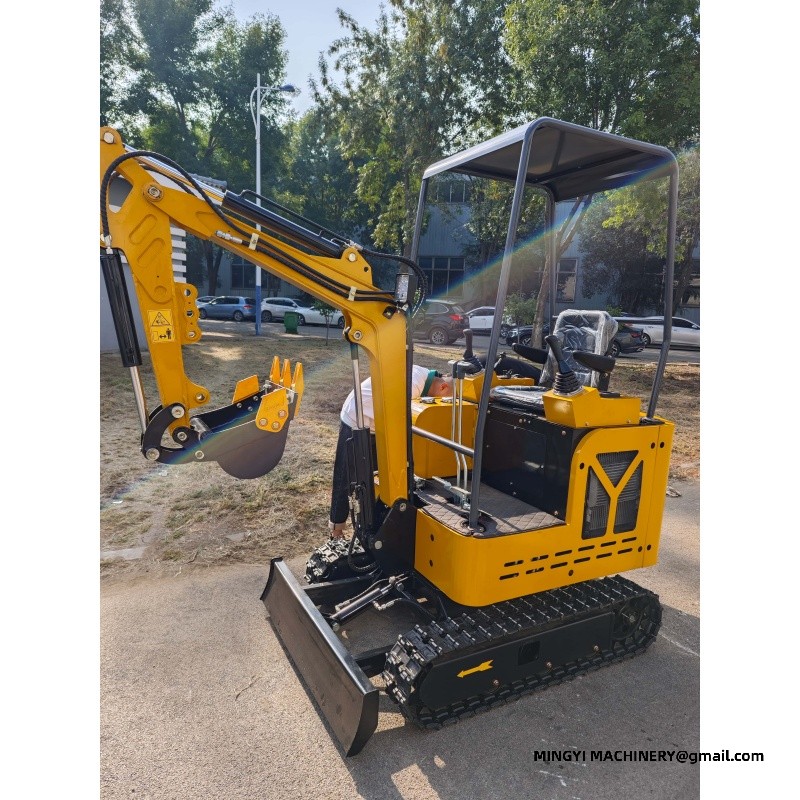
The machine cuts new field ditches, cleans silted channels, digs drainage runs to soakaways and opens culvert ends that have buried themselves in sediment. In the same week it may cut an irrigation channel for an orchard and clean the outfall of a farm pond.
The bucket choice follows the channel section: a standard digging bucket for new cuts, a skeleton bucket where the spoil should drain as it is lifted, and a tilting or rotating bucket where the ditch sides need a consistent slope. A ripper opens ground that has compacted over years.
The ditching specification
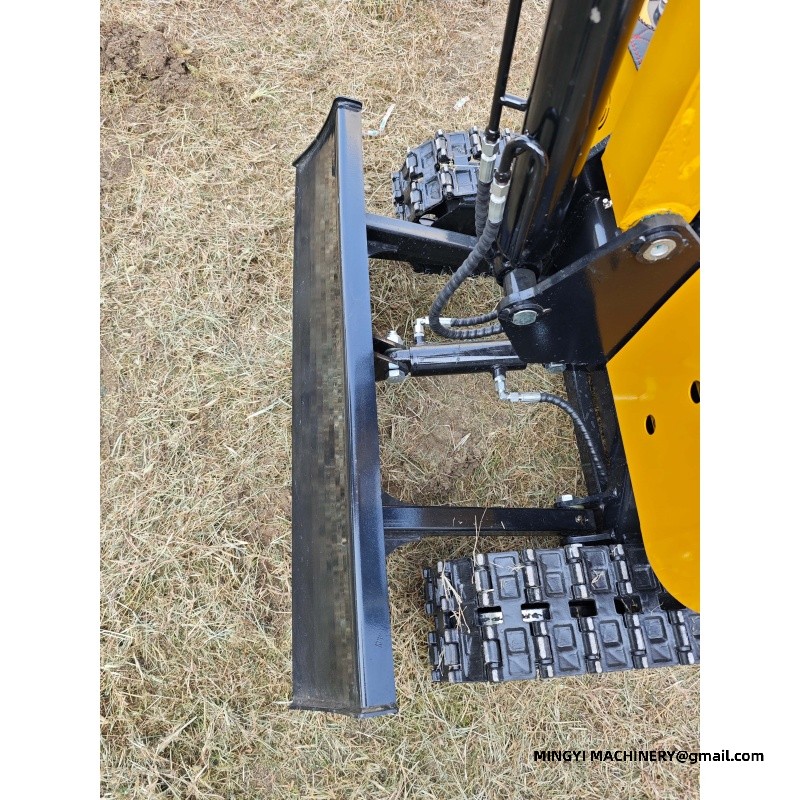
Steel tracks with rubber blocks are the heart of the build, giving traction on wet verges without tearing up the paved crossings that connect the jobs. The machine class is chosen from the 0.8 to 6 tonnes range against the width of the channels and the ground bearing conditions.
A swing boom is worth considering where ditches run beside hedges or fences, letting the arm reach the line while the tracks stay on firmer ground. Confirm the channel sizes and the worst ground at the ordering stage, and the build is recorded against those facts.
State the channels you cut and clean, and the wettest ground the machine will work over, and the ditching configuration will follow. Mingyi Machinery packs each machine with spare parts and the service information for the track system.
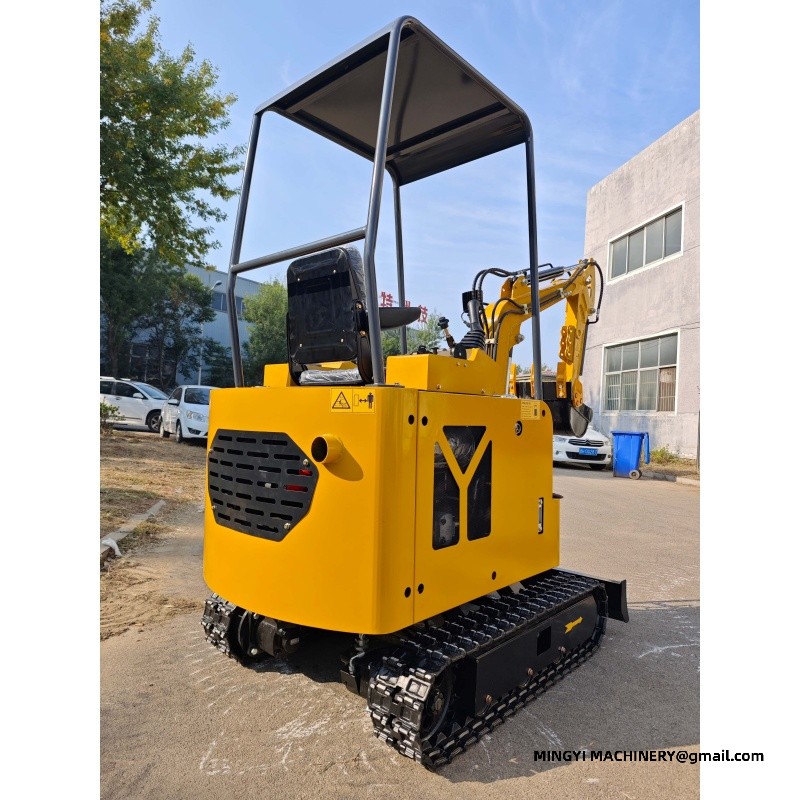
Running steel tracked ditching mini excavator in a rental fleet Rental fleets buy for utilisation, not for a single job. The excavator with a quick coupler and a common attachment standard is hired more often because it suits more of the calls that come in. The specification that rents best is usually the simplest one to explain at the counter. This class of machine with rubber tracks, a canopy and a coupler covers the majority of weekend and short-term hires. Interior and light demolition with steel tracked ditching mini excavator Breaking out a floor slab, a wall footing or a concrete step is routine work for the unit in daily use with a breaker. The machine is small enough to work inside and heavy enough to run the tool at a practical rate. Dust, debris clearance and floor loading all argue for a compact machine indoors. A machine of this size spreads its weight over a wider track footprint than a wheeled machine of similar capacity. Engine options behind steel tracked ditching mini excavator Power unit selection is settled against the service network the buyer already uses. MINGYI offers Kubota D722, Kubota D902, YANMAR, Changchai, Laidong, Runtong, YARMAX, Youpu 2V80 and Youpu 195, so a fleet running one brand of engine can keep the same filters, the same parts supplier and the same mechanic. Two buyers can order the same the equipment on site and receive different engines. The decision is rarely about peak power; it is about which parts counter is closest to the site and which engine the local mechanic already knows. Noise, dust and working near occupied buildings Work near housing or occupied premises brings constraints that open sites do not. Start times, exhaust condition and how often the machine itself needs to reverse are the practical limits that neighbours notice. Dust control is often part of the same conversation. Water, timing and work sequence reduce what leaves the site, and agreeing them in advance keeps the model in question working rather than stopped after a complaint. Lifting and material handling with a steel tracked ditching mini excavator Lifting with a machine built to dig needs a plan. The load, the radius and the ground under the unit on the job all matter, and the safe figure is the one on the chart rather than the one that looks possible. Ground condition under the machine is part of every lift. Soft or uneven support is the common factor in handling incidents, and checking it takes less time than recovering the machine in that duty that has settled. Landscaping and ground care with steel tracked ditching mini excavator Landscape contractors use a machine built for the work for planting holes, pond excavation, grading and retaining work. The machine is light enough to cross finished lawn and narrow enough to work between established trees. Grass cutting heads, rakes and tillers extend the equipment in service into ground care. The same carrier that digs a border in spring can cut and clear the same area later in the season. Municipal and public works with the excavator Drainage repair, tree planting, footway reconstruction and cemetery work are all within the range of this class of machine. The jobs are small individually and continuous across the year. Noise and surface protection matter on public work. The unit in daily use on rubber tracks across paving, with a sealed cab for the operator, suits the conditions better than a larger tracked machine. Daily checks and maintenance on a machine of this size Daily maintenance on the equipment on site is a short list: engine oil level, coolant, track tension, hydraulic oil level and a look at the hoses. Ten minutes at the start of the shift prevents most of the failures that stop a machine. Greasing is the second item. The slew ring, the boom and arm pins and the bucket linkage on the machine itself take grease daily in dusty work, and the intervals shorten further when the machine is used in water or mud. Working near live services with the model in question Digging near water, gas and cable is a precision job. The machine in that duty is used here because the operator can work in short controlled cuts and because the machine can be positioned without driving over the run being exposed. Utility crews specify the unit on the job with a narrow bucket and good visibility for exactly this reason: the machine has to stop at the service, not at the edge of the operator's view. Track choice for a machine built for the work Rubber tracks suit paved and landscaped ground because they spread the machine weight and leave the surface intact. Steel tracks with rubber blocks are specified where the ground is rougher or the working day is longer, and the choice can be made per machine rather than accepted as a factory default. Undercarriage selection is a ground question, not a preference question. The equipment in service running on finished paving needs rubber; the same machine on demolition rubble or rock wears rubber quickly, so steel with rubber blocks becomes the better answer over a full season. Attachments that turn the excavator into several machines Most of the daily variety on this class of machine comes from the attachment rack rather than from the machine itself. Bucket, breaker, auger, ripper, rake and grab cover the large majority of the work a contractor will see. Specification data for the unit in daily use The figures below are the factory figures for the models most often matched to a machine of this size. They are the numbers to check against the site: the depth the work needs, the reach from one position, and the width of the narrowest point on the route in. Figures are factory figures and are confirmed on the build sheet for the equipment on site. Where a job sits between two models, the larger machine usually takes less time than the smaller one spends on rework. The base machine is a carrier; the tool on the end of the arm decides the task. The machine itself fitted with a toothed bucket digs, and the same machine with a breaker, an auger or a grab does work that would otherwise need a second unit on site. Attachment lists are best written before delivery. Specifying the model in question with the tools the job list needs avoids the work and delay of adding hydraulics later, and a quick coupler makes the swap a few minutes instead of a workshop job.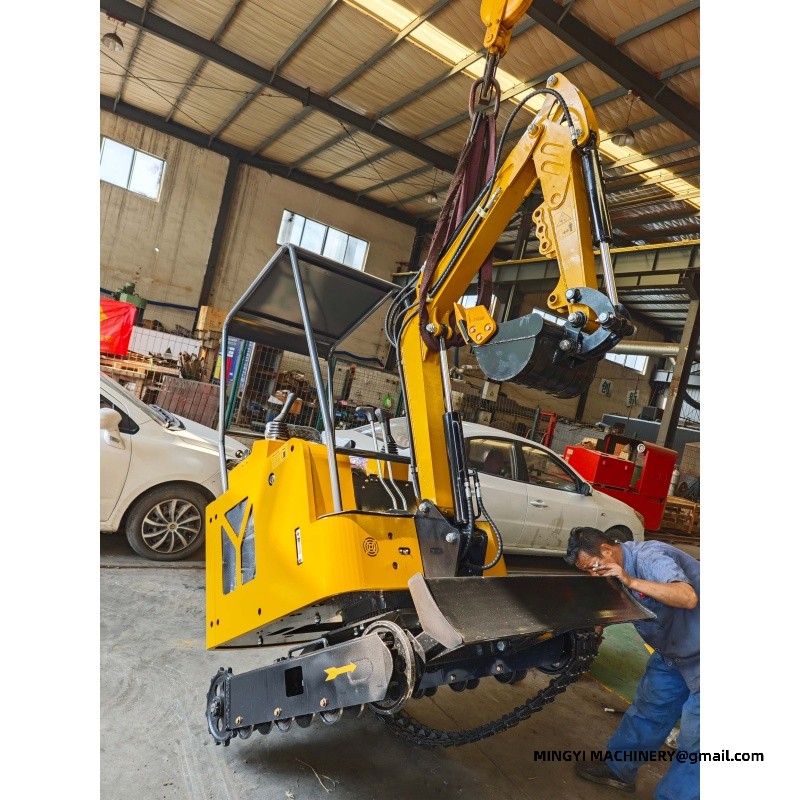
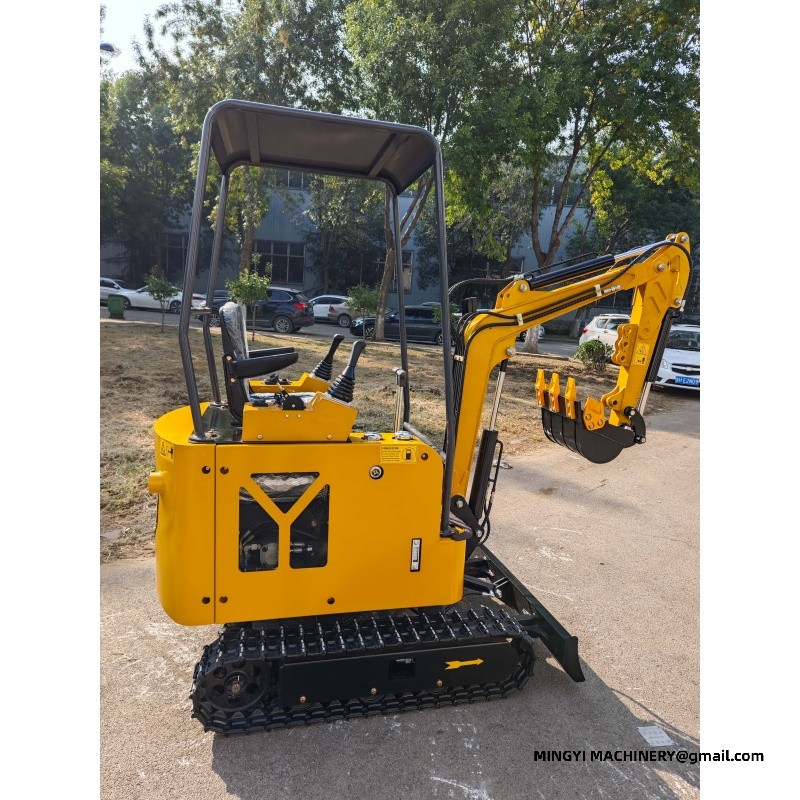
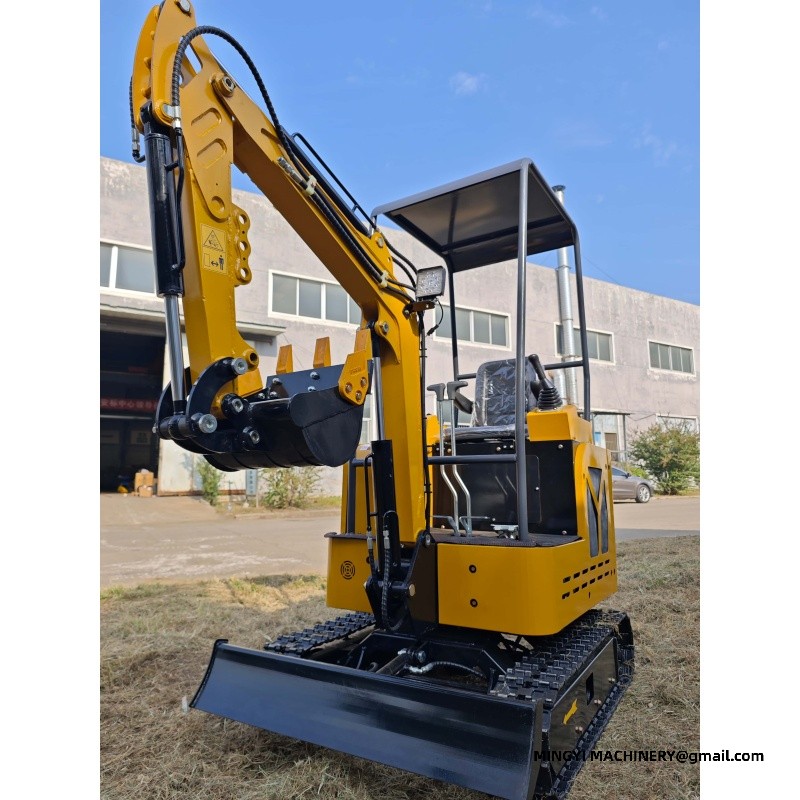
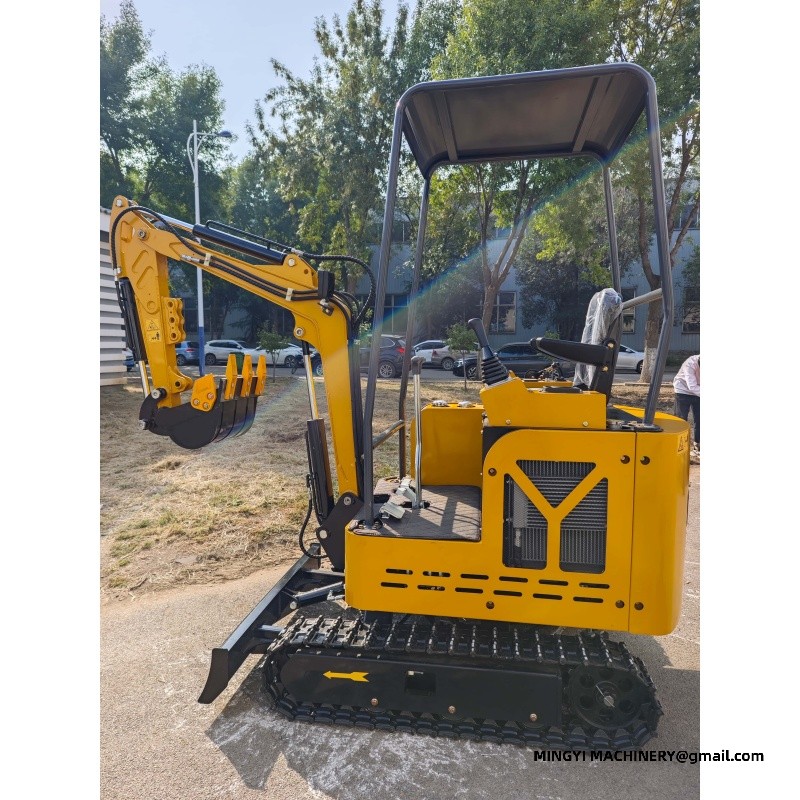
Reference specification — mini excavator range 09W 30-2W 09L 20-2L Operating weight 1100 kg (2425.08 lb) 2700 kg (5952.48 lb) 1100 kg (2425.08 lb) 1900 kg (4188.78 lb) Transport size (L×W×H) 1800 × 750 × 1970 mm 3000 × 1100 × 2700 mm 2300 × 720 × 1870 mm 2600 × 1300 × 2344 mm Max digging depth 1250 mm (49.21 in) 2200 mm (86.61 in) 1400 mm (55.12 in) 2100 mm (82.68 in) Max digging height 2800 mm (110.24 in) 3000 mm (118.11 in) 2800 mm (110.24 in) 2880 mm (113.39 in) Max dumping height 1700 mm (66.93 in) 2000 mm (78.74 in) 1880 mm (74.02 in) 2100 mm (82.68 in) Max digging radius 2570 mm (101.18 in) 3800 mm (149.61 in) 2490 mm (98.03 in) 3215 mm (126.57 in) Max digging distance 1869 mm (73.58 in) 3050 mm (120.08 in) 2000 mm (78.74 in) 2460 mm (96.85 in) Minimum turning radius 1000 mm (39.37 in) 1750 mm (68.9 in) 1400 mm (55.12 in) 1587 mm (62.48 in) Travel speed 3 km/h (1.86 mph) 7 km/h (4.35 mph) 3 km/h (1.86 mph) 5 km/h (3.11 mph) Gradeability 30° 30° 30° 30° Fuel consumption 1-1.3 L/h (0.264—0.343 gal) 2-3 L/h (0.528—0.793 gal) 1-1.3 L/h (0.264—0.343 gal) 2-3 L/h (0.528—0.793 gal) Fuel tank capacity 8 L (2.11 gal) 16 L (4.23 gal) 8 L (2.11 gal) 16 L (4.23 gal) Hydraulic oil tank 16 L (4.23 gal) 20 L (5.28 gal) 16 L (4.23 gal) 18 L (4.76 gal) Dozer blade lift height 180 mm (7.09 in) 230 mm (9.06 in) 180 mm (7.09 in) 180 mm (7.09 in) Dozer blade drop depth 210 mm (8.27 in) 280 mm (11.02 in) 210 mm (8.27 in) 210 mm (8.27 in)
Q. Who chooses the machine in that duty?
A. The undercarriage is the most lengthy part of a compact digger to replace, which makes track choice a buying decision rather than an accessory. Most owners change ground through the year, and a machine that moves between track types keeps earning on both. MINGYI builds the 08, 12 and 18 models covering the 0.8 to 6 tonne class, and the unit on the job is where that range meets steel ditching.
Q. Which track should I run on my ground?
A. Rubber for lawns, paving and finished surfaces; steel for gravel, demolition rubble and slopes that eat rubber. Where the year takes the machine across both, the conversion and options pages describe moving between them, and MINGYI specifications both track types with the carrier.
Q. Does MINGYI supply attachments with the machine?
A. Yes - buckets, breakers, augers, rakes and the rest of the working set ship with the carrier, matched to the hydraulic flow and the coupler. For steel ditching the package is confirmed on the build sheet, so machine and tools arrive together and start work together.
Pre-delivery inspection before a machine built for the work leaves the shop
Inspection is a list, not a glance. Before the equipment in service is released the fluid levels, belt tension, electrical connections and safety decals are each ticked off, and anything that fails stays in the shop rather than travelling with the machine.
Planning the season around the excavator
Workload is rarely even across the year, and the machine should be specified for the busy weeks. This class of machine sized only for the average month will be the limiting factor exactly when the work is worth the most.
Hot, humid and dusty conditions around the unit in daily use
Humidity attacks the parts that are not used. Storage in a damp climate means a machine of this size needs the exposed metal protected and the machine run regularly, because standing still does more damage than working.
E-mail : sales@mingycn.com
LINE ( ID ): mingyicn
Related pages
mini excavator for utility trenches · mini excavator for roadworks · Small Wheel Loader: Light Builds for Farms and Nurseries · Mini Excavators









