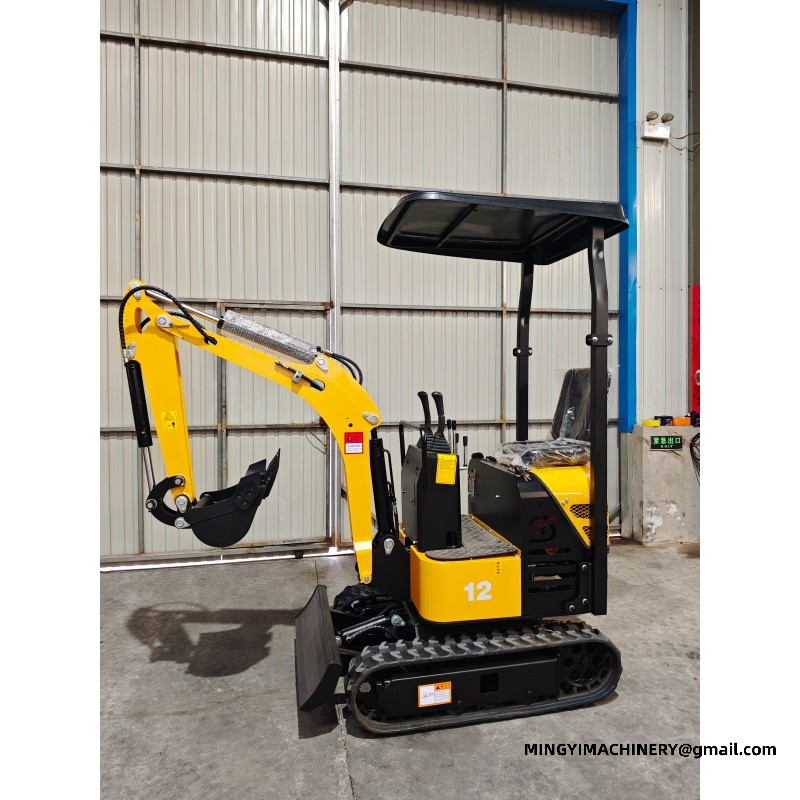
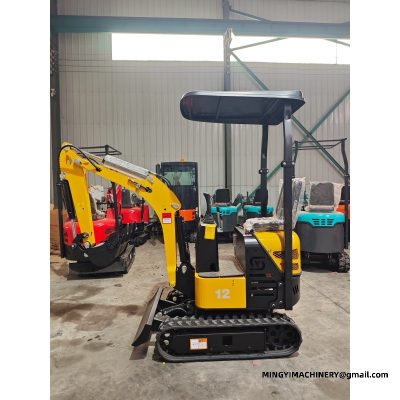
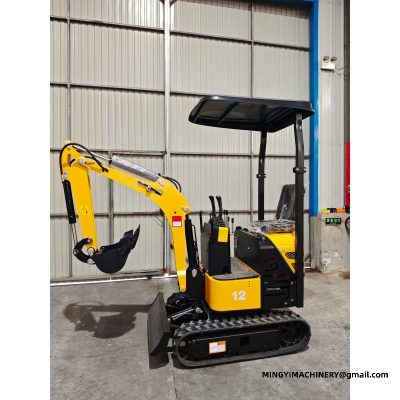
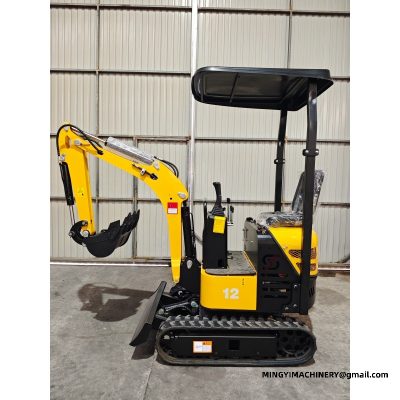
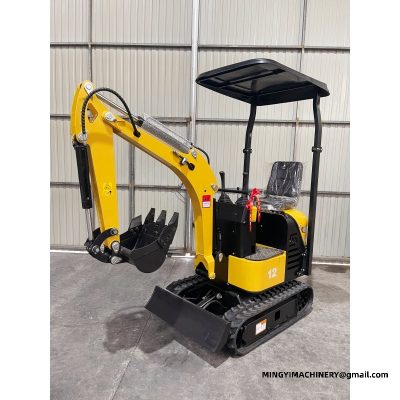
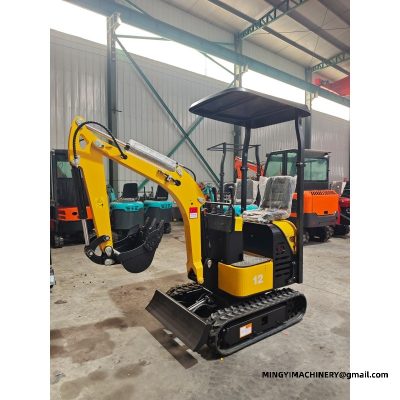
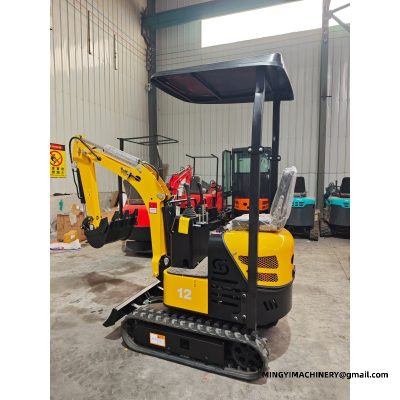
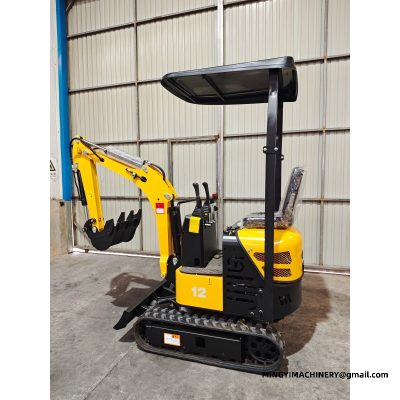
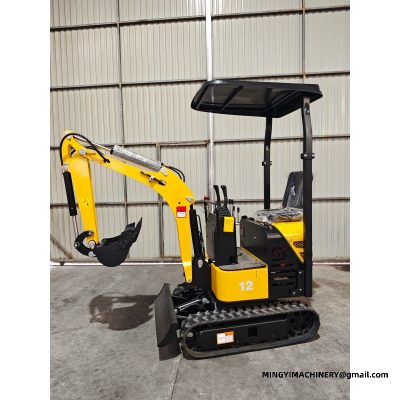
The excavator is a compact digging machine that runs on tracks rather than wheels, with an upper structure that rotates and a boom that reaches over the tracks. The crawler layout spreads weight across a long footprint, which is why these machines work well on soft or uneven ground.
MINGYI builds compact crawler excavators across the 0.8 to 6 tonnes band, including the 08, 12 and 18 model series. Each machine is built to order, so undercarriage, boom, bucket and attachments are agreed before production begins.
What separates a crawler excavator from a wheeled one
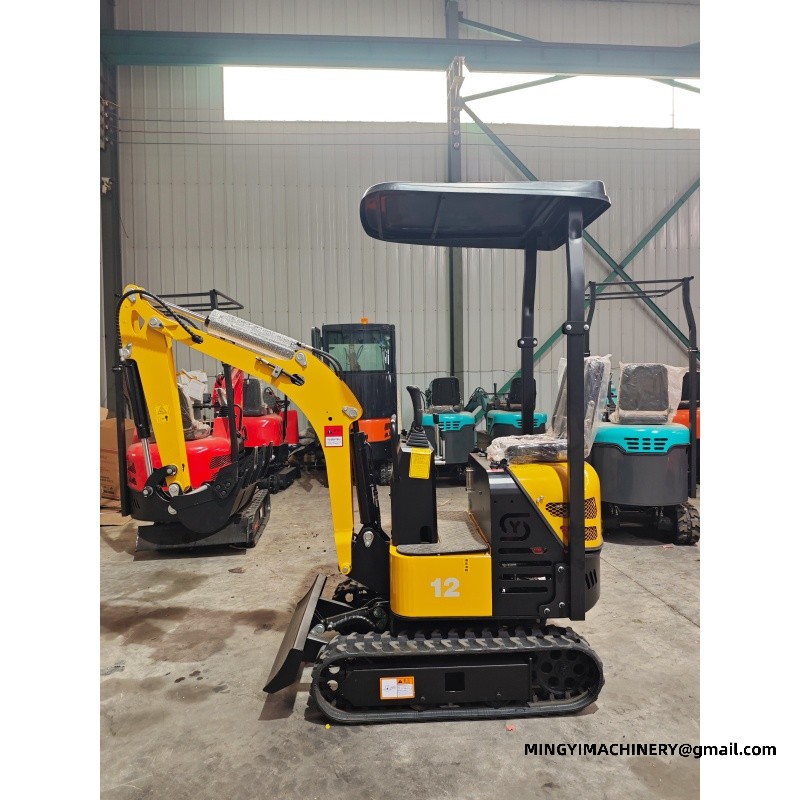
Tracks put more of the machine's weight in contact with the ground, so the excavator sinks less on soil, gravel and wet ground. That also gives a stable platform for digging, because the load is carried across the full length of the undercarriage.
The trade off is travel speed between sites. Crawler machines are usually moved on a trailer rather than driven along the road, which suits contractors who work from a fixed base and move between nearby jobs.
Model sizes and undercarriage options to specify
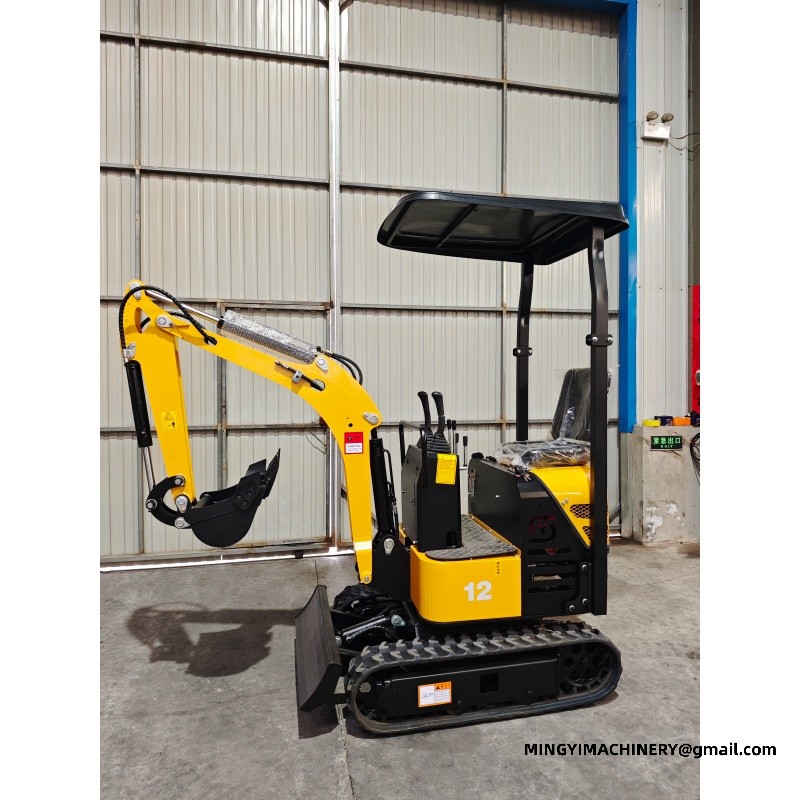
Within the compact range, the smaller models pass through gates and work inside buildings, while the larger models dig deeper and carry wider buckets. Track width, boom type and counterweight follow from the duty the buyer has in mind.
Rubber tracks suit finished surfaces, and steel tracks with rubber blocks suit firmer, rougher ground. A swing boom, retractable undercarriage or extended dipper can all be specified, and each choice is recorded against the machine at build.
This class of machine is defined by its track layout, its compact size and the way it is moved between jobs. MINGYI supplies these machines built to order across the compact range.
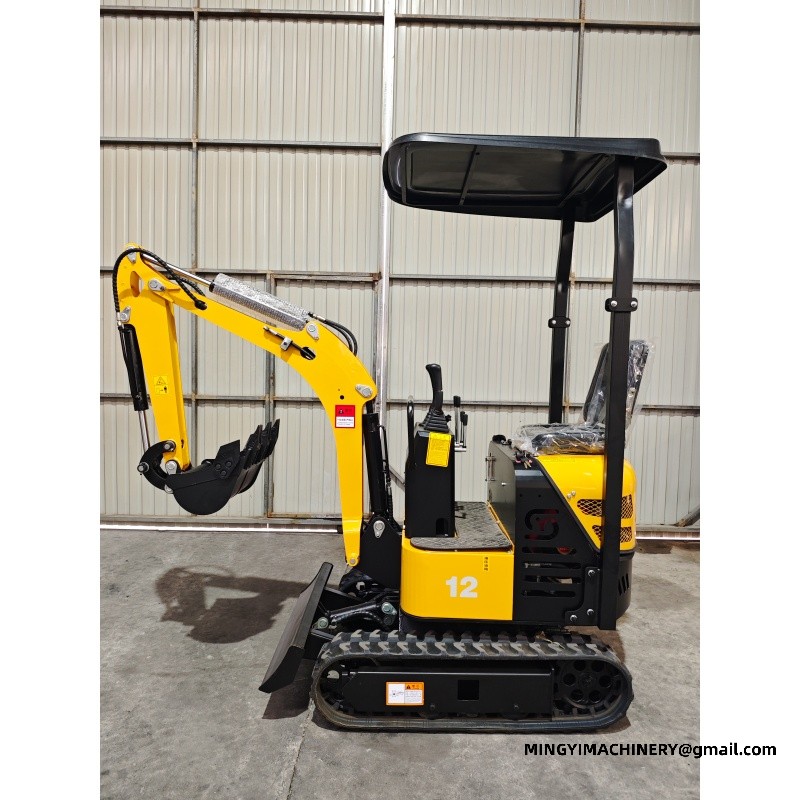
Municipal and public works with mini crawler excavator Municipal crews work on streets, footpaths and parks where the public is present. The unit in daily use is specified because it occupies little space, works inside a small exclusion zone and can be moved on a standard trailer. Noise and surface protection matter on public work. A machine of this size on rubber tracks across paving, with a sealed cab for the operator, suits the conditions better than a larger tracked machine. Landscaping and ground care with mini crawler excavator Grass cutting heads, rakes and tillers extend the equipment on site into ground care. The same carrier that digs a border in spring can cut and clear the same area later in the season. On soft landscape work the surface is the constraint. The machine itself on rubber tracks crosses turf without stripping it, which is why the same jobs are not given to a wheeled machine. Canopy or enclosed cab on a mini crawler excavator A canopy keeps the machine light and the operator aware of the surroundings, which suits short jobs in warm weather. A fully enclosed cab is specified where rain, dust or cold are part of the working year, and it can be added to the model in question as a retrofit rather than only at build time. Enclosure also changes noise and dust exposure. A sealed cab on the machine in that duty keeps dust out on dry sites and lets the machine work through weather that would otherwise stop a canopy machine for the day. Noise, dust and working near occupied buildings Work near housing or occupied premises brings constraints that open sites do not. Start times, exhaust condition and how often the unit on the job needs to reverse are the practical limits that neighbours notice. Enclosure and machine condition both reduce noise. A machine built for the work with intact panels, sound mounts and a maintained exhaust is measurably quieter than the same machine with loose guards, and the difference matters on restricted sites. Running mini crawler excavator in a rental fleet Rental fleets buy for utilisation, not for a single job. The equipment in service with a quick coupler and a common attachment standard is hired more often because it suits more of the calls that come in. Fleet buyers also weigh transport. The excavator that a customer can tow on a normal licence and a standard trailer is a hire that does not need a delivery truck, which changes how often it goes out. Trenching work with mini crawler excavator Service trenches are the most common reason this class of machine is hired. Water, sewage, cable and gas runs are narrow, shallow and often close to existing services, which is exactly the work a full-size machine cannot do safely. Trench quality depends on the bucket width and the operator, not on machine size. The unit in daily use with a narrow bucket and a swing boom cuts a clean run along a boundary without disturbing the ground either side of it. OEM and fleet customisation of a machine of this size Distributors and rental fleets usually need the machine to look like theirs. Paint, decals, seat colour and attachment branding can be specified on the equipment on site at build time rather than applied after import. Customisation also covers the specification sheet. A fleet buyer may want every machine itself delivered with the same coupler, the same engine and the same tool kit so training and parts stock stay simple. Hiring versus owning the model in question The choice follows the hours. Work that fills a few weeks a year is usually better hired, while the machine in that duty that would be on site most weeks starts to justify ownership once the transport and booking time is counted. Ownership brings obligations that hiring does not. Storage, servicing, insurance and an operator are the items to set against the hire rate before deciding which way the unit on the job should be supplied. Parts, service and support for a machine built for the work Support after delivery is a parts question. Wearing items for the equipment in service - filters, belts, track components, bucket teeth and pins - are the items a buyer should plan to hold before the first service interval. Remote support is handled by video. The excavator fault can often be diagnosed on a walk-around call with the panel open, which is faster than waiting for a visit and avoids shipping a part that is not needed. Export packing and shipping of this class of machine Machines leave the factory prepared for container or flat rack shipment. The unit in daily use is normally shipped with the attachment set and the spare parts list agreed in advance so the container is planned once. Buyers who import regularly plan the spare parts with the machine. A machine of this size ordered with a wearing-parts kit arrives ready to work rather than ready to wait for the first service interval. Getting the equipment on site through a narrow gap The first question on most job lists is whether the machine can reach the work at all. The machine itself is chosen against the narrowest point on the route - a garden gate, a doorway, a gap between two walls - because a machine that arrives and then cannot pass loses a day, not an hour. Access decides the machine before output does. With the model in question the limiting dimension is usually the widest point on the way in, so measuring the gate, the corridor and the turning space first saves a wasted delivery and a second visit. Hydraulic circuits on the machine in that duty Auxiliary hydraulic lines are what let a machine drive a tool rather than only a bucket. The unit on the job specified with the right circuits and flow runs a breaker or an auger without an add-on power pack bolted to the frame. Flow and pressure are matched to the tool, not to the machine size. Asking for the attachment list first means a machine built for the work leaves the factory with circuits that suit the heaviest tool the buyer intends to run. Specification data for the equipment in service The figures below are the factory figures for the models most often matched to the excavator. They are the numbers to check against the site: the depth the work needs, the reach from one position, and the width of the narrowest point on the route in. Every value shown is as built for this class of machine; options such as cab, side swing or a telescopic undercarriage change the transport dimensions and are confirmed at order stage. Two buyers can order the same a machine of this size and receive different engines. The decision is rarely about peak power; it is about which parts counter is closest to the site and which engine the local mechanic already knows. Engine choice is also an emissions and documentation question for some markets. Listing the available units with the unit in daily use enquiry lets the factory confirm what can be supplied and documented for the destination country.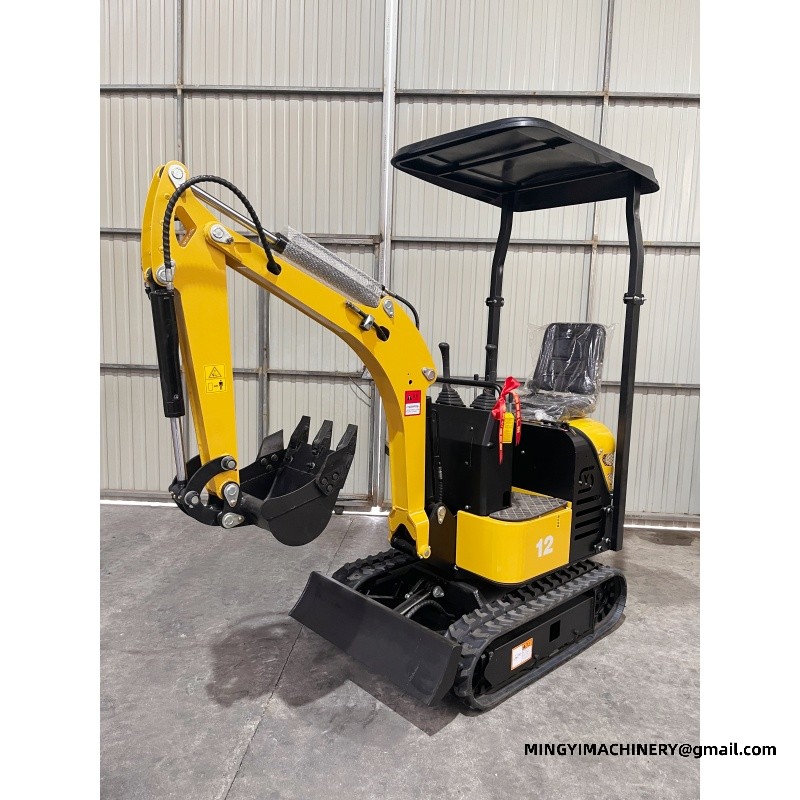
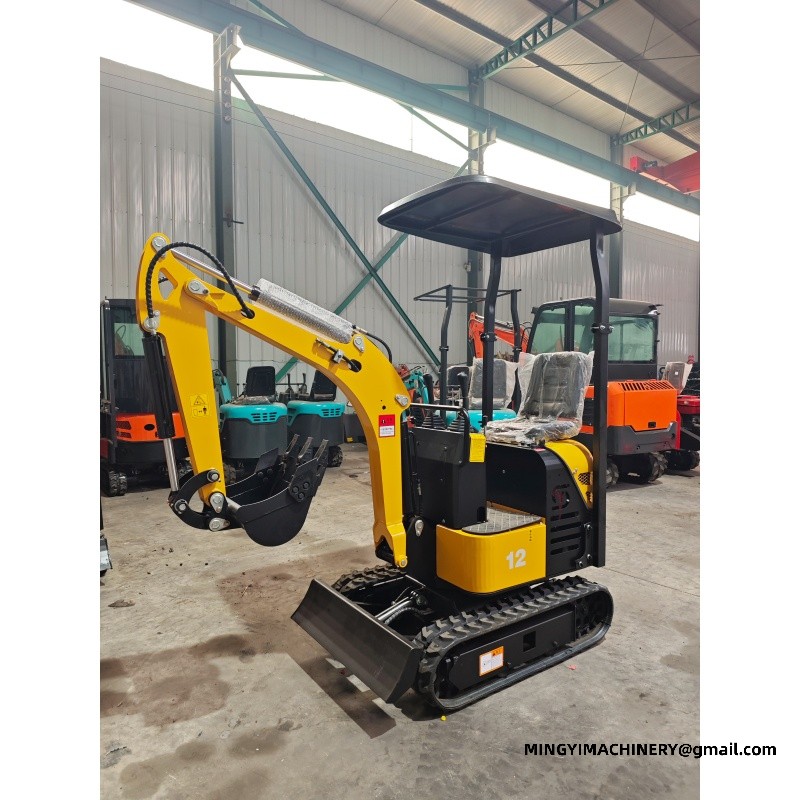
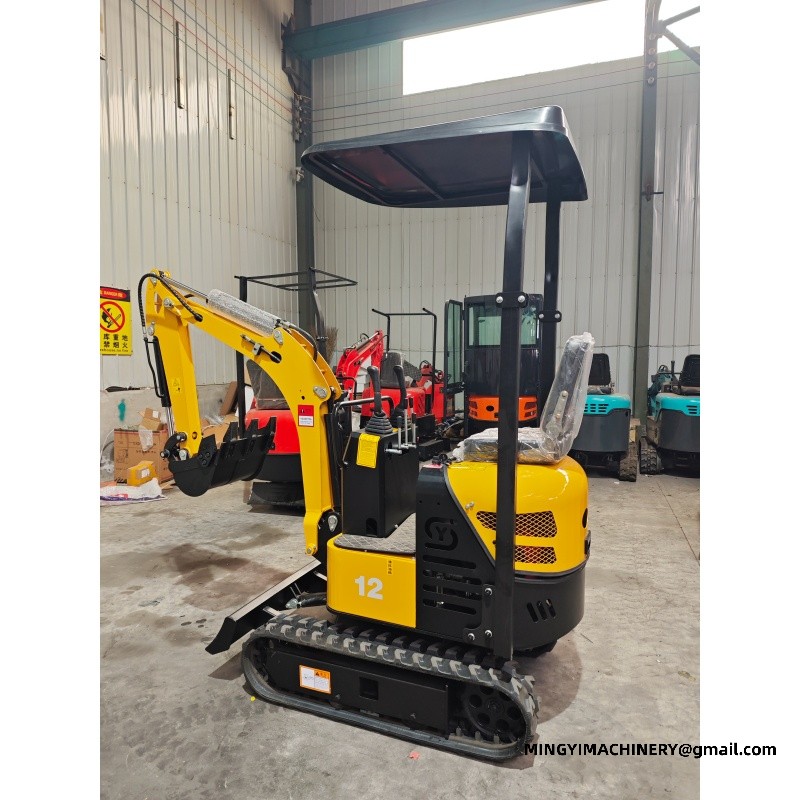
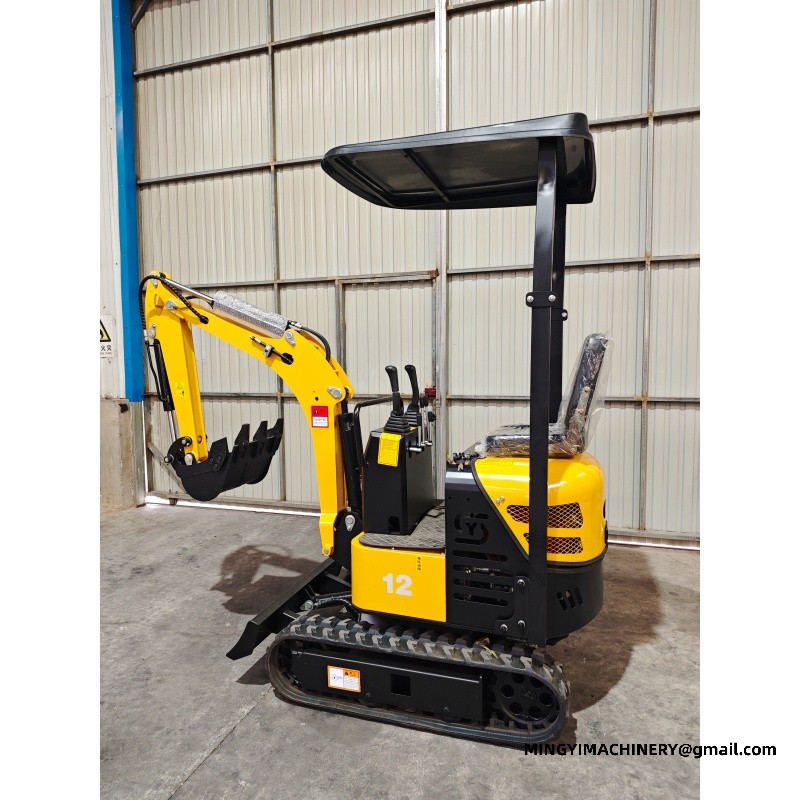
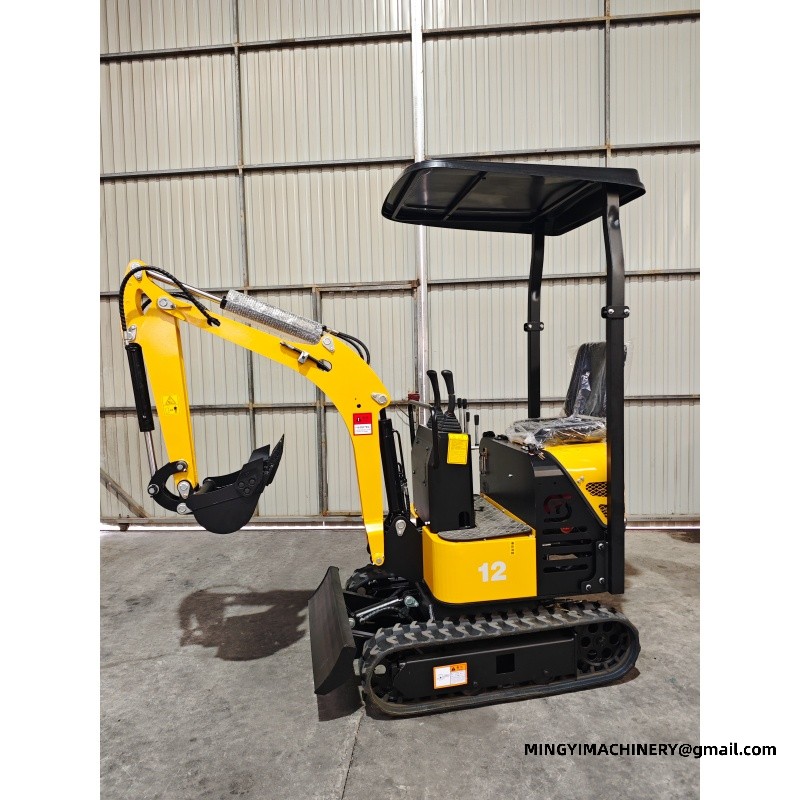
Reference specification — mini excavator range 20-1WL 30-1W 12L 20-2L Operating weight 1900 kg (4188.78 lb) 2900 kg (6393.41 lb) 1200 kg (2645.55 lb) 1900 kg (4188.78 lb) Transport size (L×W×H) 2550 × 1100 × 2200 mm 3000 × 1250 × 2780 mm 2200 × 930 × 2250 mm 2600 × 1300 × 2344 mm Max digging depth 1800 mm (70.87 in) 2200 mm (86.61 in) 1700 mm (66.93 in) 2100 mm (82.68 in) Max digging height 2820 mm (111.02 in) 3400 mm (133.86 in) 2600 mm (102.36 in) 2880 mm (113.39 in) Max dumping height 2050 mm (80.71 in) 2400 mm (94.49 in) 1800 mm (70.87 in) 2100 mm (82.68 in) Max digging radius 3050 mm (120.08 in) 4000 mm (157.48 in) 2900 mm (114.17 in) 3215 mm (126.57 in) Max digging distance 2300 mm (90.55 in) 2800 mm (110.24 in) 2300 mm (90.55 in) 2460 mm (96.85 in) Minimum turning radius 1450 mm (57.09 in) 2000 mm (78.74 in) 1450 mm (57.09 in) 1587 mm (62.48 in) Travel speed 5 km/h (3.11 mph) 5 km/h (3.11 mph) 3 km/h (1.86 mph) 5 km/h (3.11 mph) Gradeability 30° 30° 30° 30° Fuel consumption 2-3 L/h (0.528—0.793 gal) 2-3 L/h (0.528—0.793 gal) 1-1.3 L/h (0.264—0.343 gal) 2-3 L/h (0.528—0.793 gal) Fuel tank capacity 16 L (4.23 gal) 16 L (4.23 gal) 10 L (2.64 gal) 16 L (4.23 gal) Hydraulic oil tank 18 L (4.76 gal) 20 L (5.28 gal) 16 L (4.23 gal) 18 L (4.76 gal) Dozer blade lift height 180 mm (7.09 in) 420 mm (16.54 in) 180 mm (7.09 in) 180 mm (7.09 in) Dozer blade drop depth 210 mm (8.27 in) 210 mm (8.27 in) 210 mm (8.27 in) 210 mm (8.27 in)
Q. Who chooses the equipment on site?
A. One machine, one trailer, one operator and a full week of varied work is the whole idea behind the compact excavator class. Trenching on Monday, loading and grading through the week, fence posts and drainage to finish - the attachment set specifications the work. For general site applications the practical route is to send the job list to the factory and let the build sheet answer it - which is exactly what this page invites.
Q. Where does the compact class stop making sense?
A. When the jobs need full-size reach or mass digging for weeks on end - within its envelope, though, the compact machine holds a work rate that surprises first-time buyers.
Q. Can I see the machine before it ships?
A. Inspection is arranged at the factory, in person or by a scheduled video walk-around - the same session covers paint, decals and attachment fitment for the general site specification, so the machine inspected is the machine that ships.
Hot, humid and dusty conditions around the machine itself
Dust is the enemy of every rotating joint. Keeping the radiator and the air intake of the model in question clean, and cleaning them before they are blocked rather than after, is what separates a machine that lasts from one that overheats.
Planning the season around the machine in that duty
Seasonal work rewards a machine that can change duty. Through the year the unit on the job may move from one task to another, and the attachment list should be chosen for the whole year rather than for the first job.
Wear items and spares worth holding for a machine built for the work
Holding spares is about downtime rather than the shelf itself. The question for the equipment in service is not how large the part is but how long the machine sits while it is found, and a small shelf answers that better than a fast courier.
E-mail : sales@mingycn.com
LINE ( ID ): mingyicn
Related pages
micro excavator · compact crawler excavator range · China Wheel Loader Factory Supplier: Fleet Orders and Spares · Mini Excavators









