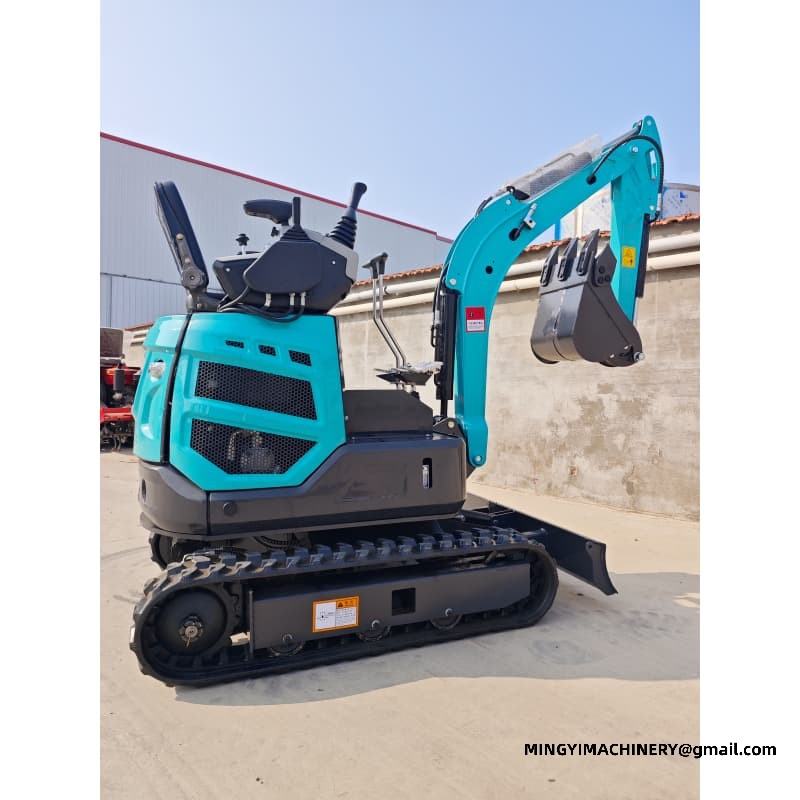
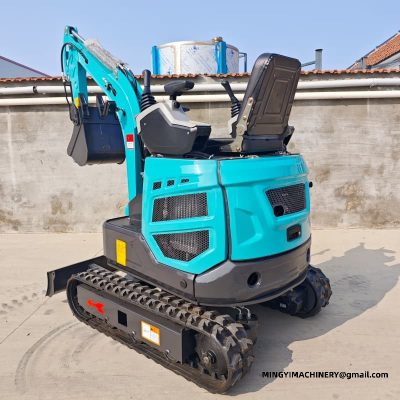
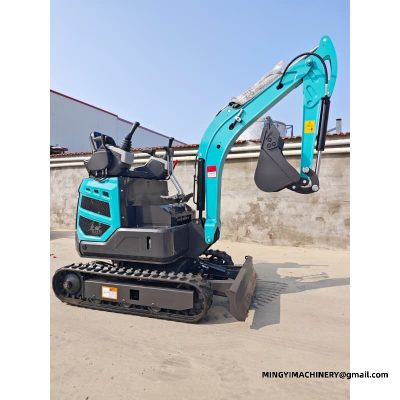
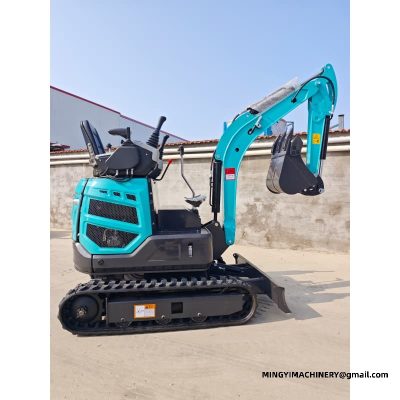
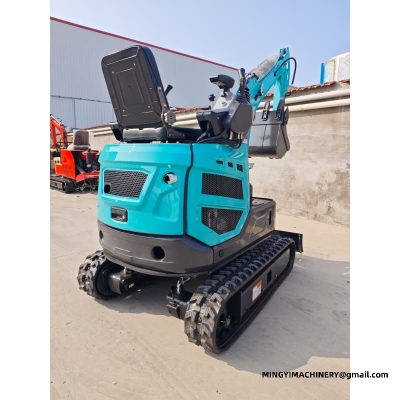
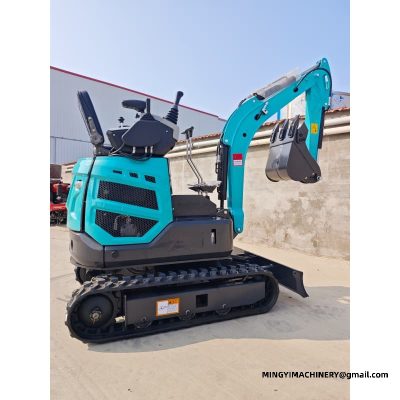
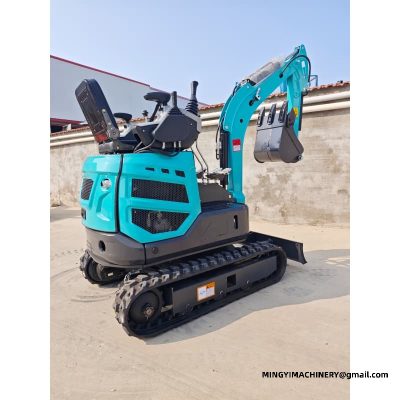
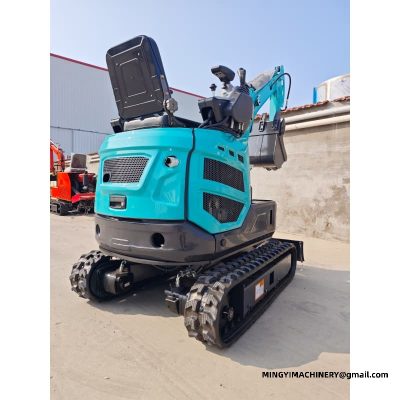
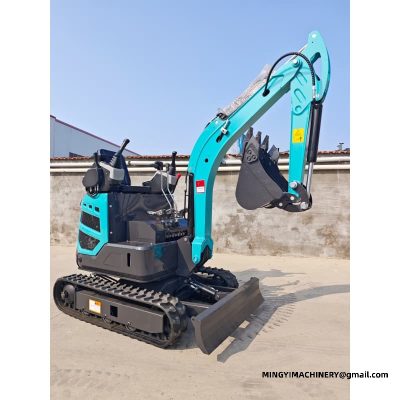
Tight access is the reason most micro excavators are bought. When the only way into a site is a narrow gate, a doorway or a path between buildings, the width of the machine decides whether the job can be done mechanically at all.
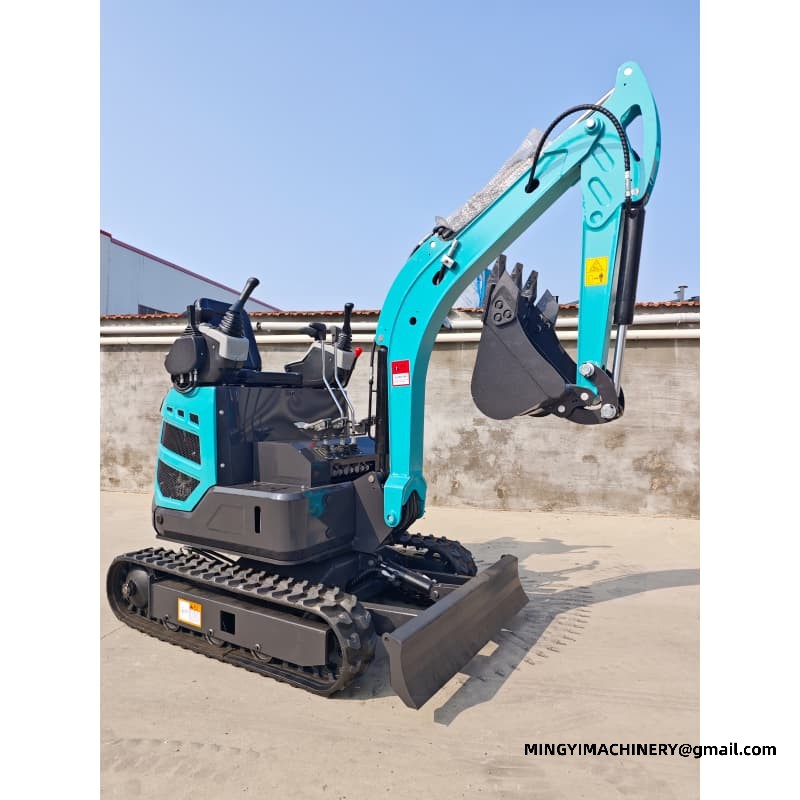
MINGYI supplies micro excavators for this kind of work, and the undercarriage and tracks are chosen so the machine fits the access it was bought for, because a unit that cannot reach the work is no use on site.
Machine width and gate access
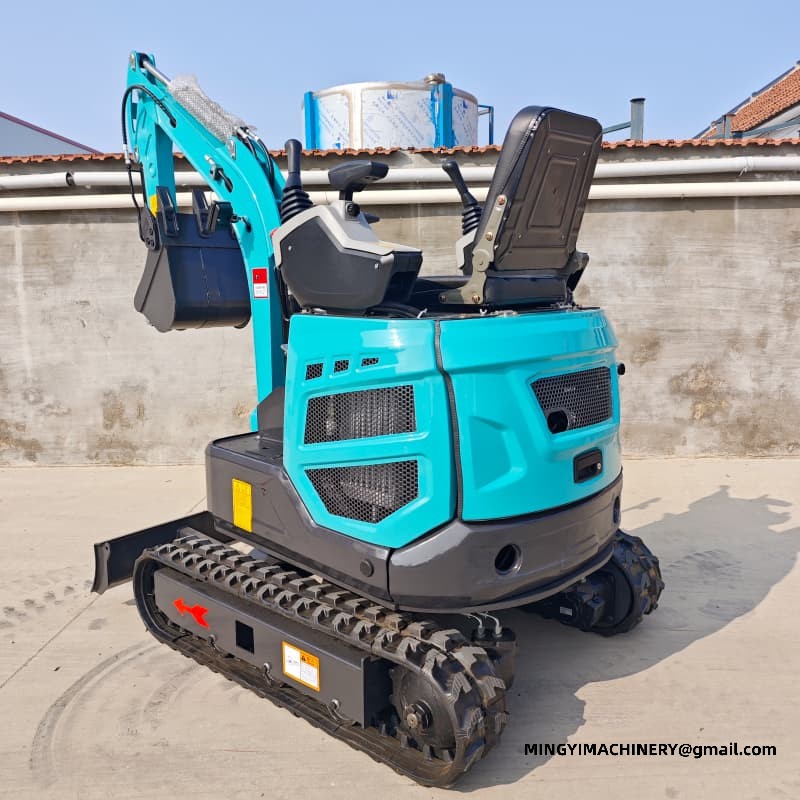
The first measurement a buyer should take is the narrowest point on the route into the site. Gate posts, doorways and the space between a wall and a fence all set the limit, and the machine has to pass through before it can do any work.
A retractable undercarriage helps in this situation because it narrows the machine for the journey in and opens out again for stability once the unit is on the working platform.
Digging in courtyards and narrow lanes
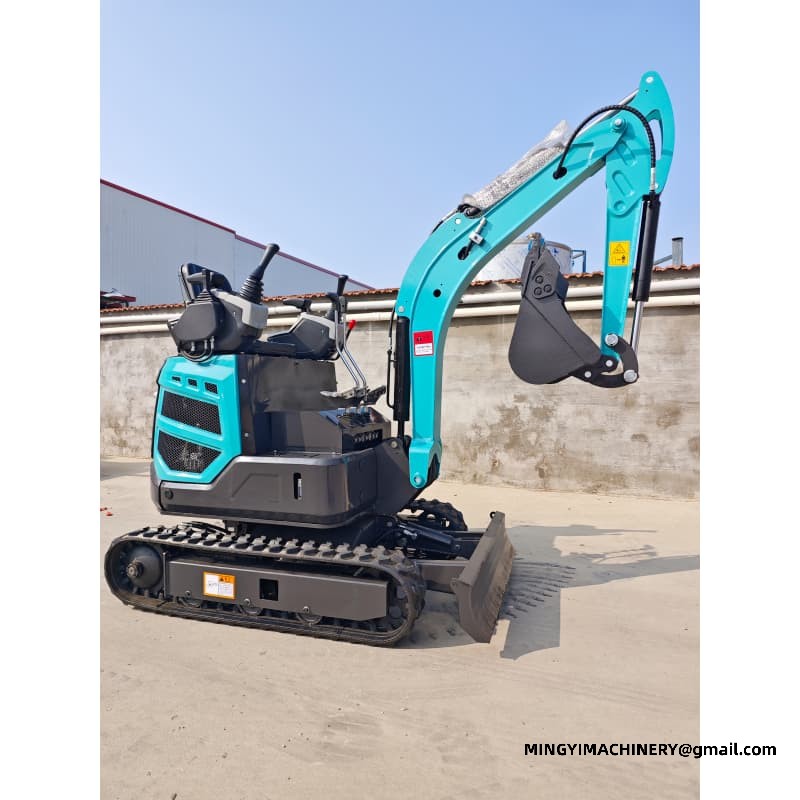
Once inside a confined space the excavator works in a limited arc. Tail swing becomes the limiting factor, so a short tail or zero tail design lets the machine turn against a wall without the counterweight touching it.
The spoil has to go somewhere. In a courtyard the bucket loads into a barrow or a small dumper that can leave the way the machine came in, and a compact unit keeps that cycle short.
For tight access work the specification is set by the site rather than by the job. Measuring the route first and choosing the micro excavator to suit it avoids a machine that arrives but cannot get to the work.
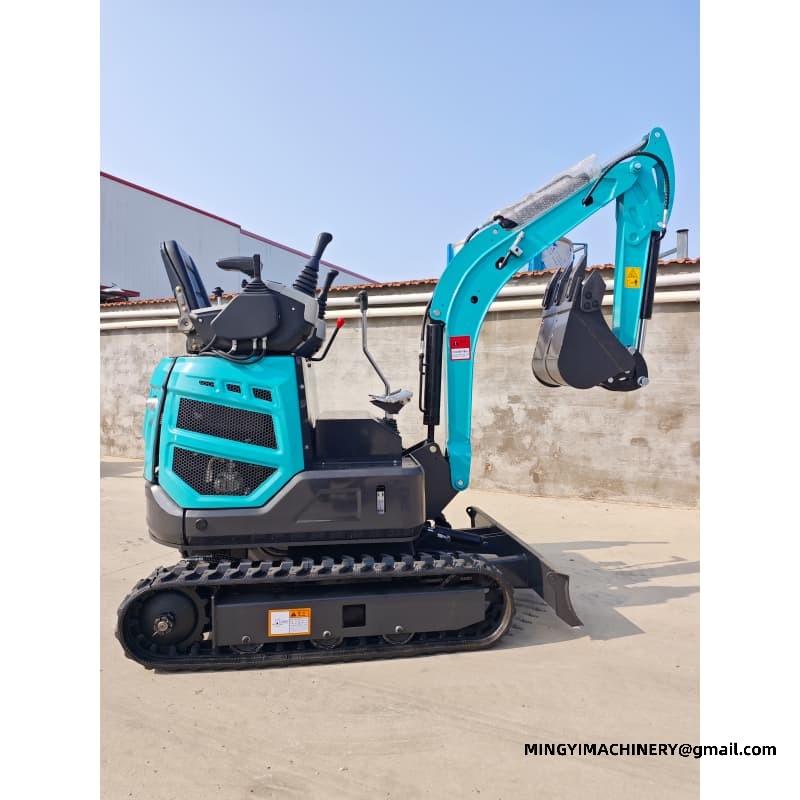
Attachments that turn micro excavator for tight access into several machines The base machine is a carrier; the tool on the end of the arm decides the task. The excavator fitted with a toothed bucket digs, and the same machine with a breaker, an auger or a grab does work that would otherwise need a second unit on site. Attachment lists are best written before delivery. Specifying this class of machine with the tools the job list needs avoids the work and delay of adding hydraulics later, and a quick coupler makes the swap a few minutes instead of a workshop job. Running micro excavator for tight access in a rental fleet Rental fleets buy for utilisation, not for a single job. The unit in daily use with a quick coupler and a common attachment standard is hired more often because it suits more of the calls that come in. Fleet buyers also weigh transport. A machine of this size that a customer can tow on a normal licence and a standard trailer is a hire that does not need a delivery truck, which changes how often it goes out. Acceptance checks when a micro excavator for tight access arrives Delivery day is the best time to find a problem. Checking the specification against the order, the fluid levels, the fasteners and any transport damage while the machine itself is still on the trailer is faster than claiming later. Documentation should arrive with the machine. Parts list, service schedule and any certificates for the equipment on site are what the workshop needs later, and they are much easier to obtain at delivery than in month six. Operator technique for micro excavator for tight access Output on a compact machine comes from placement rather than power. An experienced operator keeps the model in question working inside the swing arc, positions once and digs a full run instead of repositioning for every bucket. Stability is the third. The machine in that duty working across the tracks rather than over the corners keeps the machine steady and the undercarriage loaded evenly, which shows up as track life at the end of the season. Engine options behind micro excavator for tight access Power unit selection is settled against the service network the buyer already uses. MINGYI offers Kubota D722, Kubota D902, YANMAR, Changchai, Laidong, Runtong, YARMAX, Youpu 2V80 and Youpu 195, so a fleet running one brand of engine can keep the same filters, the same parts supplier and the same mechanic. Engine choice is also an emissions and documentation question for some markets. Listing the available units with the unit on the job enquiry lets the factory confirm what can be supplied and documented for the destination country. Municipal and public works with micro excavator for tight access Drainage repair, tree planting, footway reconstruction and cemetery work are all within the range of a machine built for the work. The jobs are small individually and continuous across the year. Noise and surface protection matter on public work. The equipment in service on rubber tracks across paving, with a sealed cab for the operator, suits the conditions better than a larger tracked machine. Working the excavator in confined spaces Confined sites are decided by dimensions. Overall width, tail swing and the space needed to work the arm are what let this class of machine operate inside a building, between walls or in a courtyard. Clearance above matters as much as around. Door heights, pipework and overhead services set the limit for the unit in daily use indoors, and measuring them first avoids a machine that arrives and cannot be used. Hiring versus owning a machine of this size Availability is part of the decision. Owning the equipment on site means it is there on the day the ground is ready; hiring means competing for the same machine at the same time as everyone else in the season. Ownership brings obligations that hiring does not. Storage, servicing, insurance and an operator are the items to set against the hire rate before deciding which way the machine itself should be supplied. Hydraulic circuits on the model in question Auxiliary hydraulic lines are what let a machine drive a tool rather than only a bucket. The machine in that duty specified with the right circuits and flow runs a breaker or an auger without an add-on power pack bolted to the frame. Hydraulic specification is easier to settle at build time than to correct later. The unit on the job delivered without auxiliary lines can still dig, but every additional tool becomes a retrofit project. Daily checks and maintenance on a machine built for the work Daily maintenance on the equipment in service is a short list: engine oil level, coolant, track tension, hydraulic oil level and a look at the hoses. Ten minutes at the start of the shift prevents most of the failures that stop a machine. Greasing is the second item. The slew ring, the boom and arm pins and the bucket linkage on the excavator take grease daily in dusty work, and the intervals shorten further when the machine is used in water or mud. Quick coupler practice on this class of machine A quick coupler is the single option that changes how a machine is used day to day. Fitted to the unit in daily use, it turns an attachment change from a two-person workshop job into a task the operator does alone in minutes. Couplers are specified early because they affect the arm and the hydraulic kit. Adding one to a machine of this size after delivery means new pins, new hoses and a fitment session; adding it at build time is a line on the sheet. Specification data for the equipment on site Where the machine itself is being specified for a job list, the table below gives the factory figures that matter most: what the machine weighs, how deep and how far it works, and what it measures on a trailer. These are the reference figures for the model in question. MINGYI confirms the final build sheet, including engine and attachment choices, against the destination and the job list before production. Stability changes with reach. A load the machine in that duty handles close in becomes a different proposition at full extension, so the working radius belongs in the plan before the lift rather than during it. Ground condition under the machine is part of every lift. Soft or uneven support is the common factor in handling incidents, and checking it takes less time than recovering the unit on the job that has settled.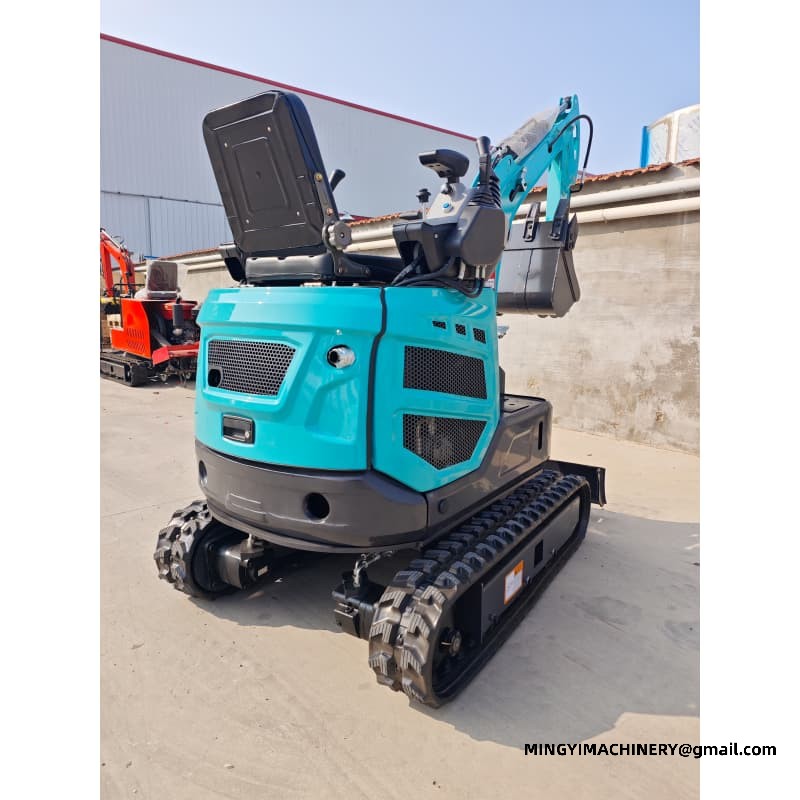
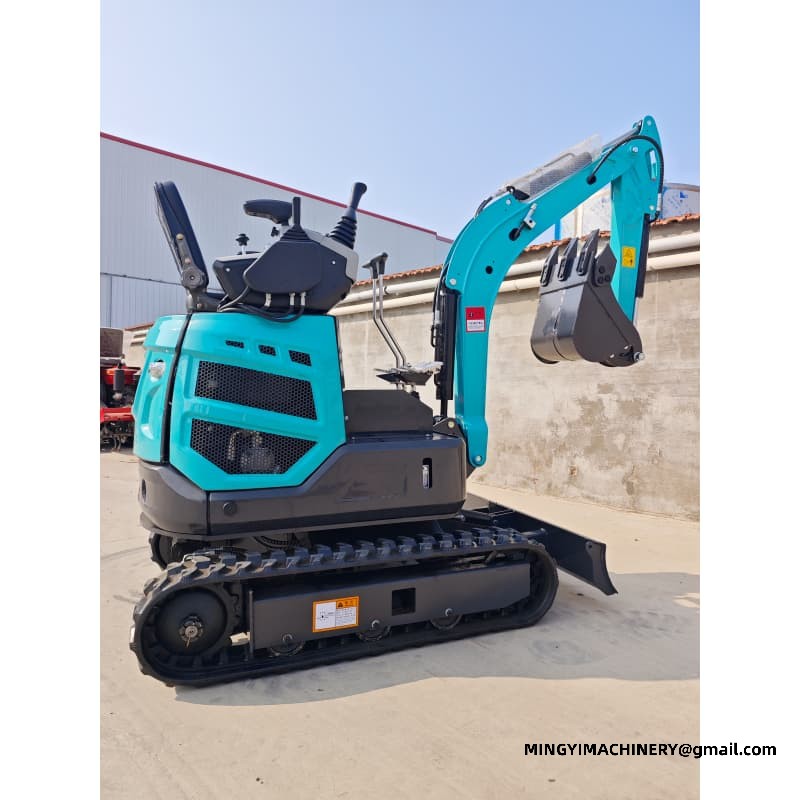
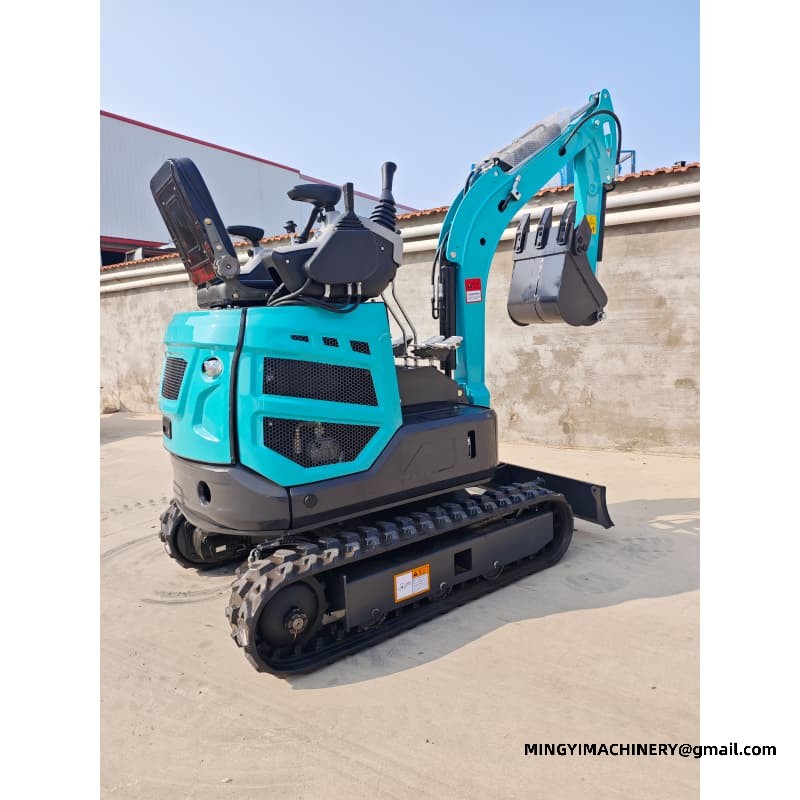
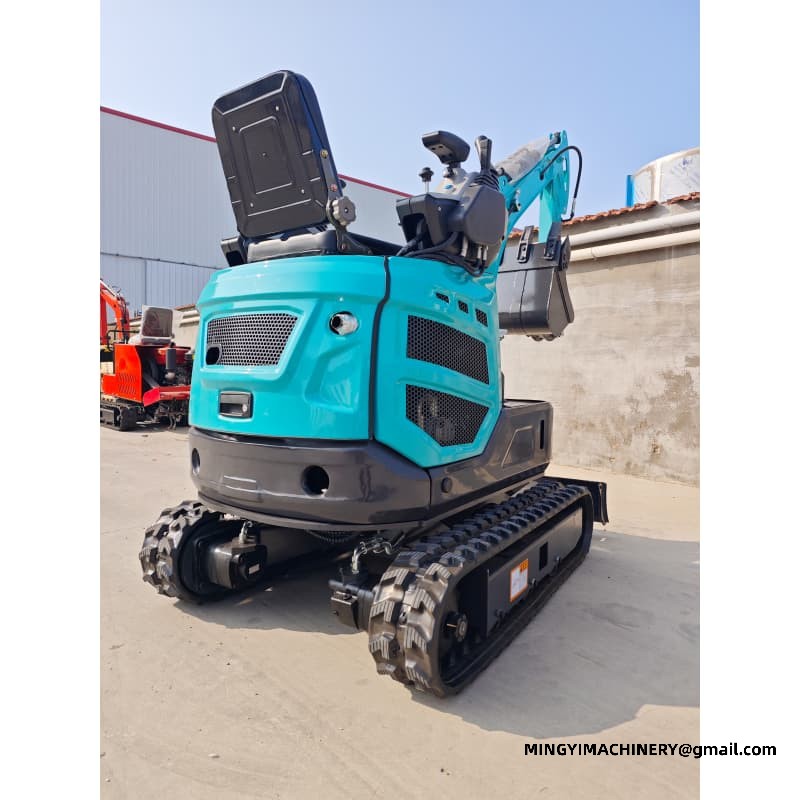
Reference specification — mini excavator range 20-1WL 30-2W 09L 20-2L Operating weight 1900 kg (4188.78 lb) 2700 kg (5952.48 lb) 1100 kg (2425.08 lb) 1900 kg (4188.78 lb) Transport size (L×W×H) 2550 × 1100 × 2200 mm 3000 × 1100 × 2700 mm 2300 × 720 × 1870 mm 2600 × 1300 × 2344 mm Max digging depth 1800 mm (70.87 in) 2200 mm (86.61 in) 1400 mm (55.12 in) 2100 mm (82.68 in) Max digging height 2820 mm (111.02 in) 3000 mm (118.11 in) 2800 mm (110.24 in) 2880 mm (113.39 in) Max dumping height 2050 mm (80.71 in) 2000 mm (78.74 in) 1880 mm (74.02 in) 2100 mm (82.68 in) Max digging radius 3050 mm (120.08 in) 3800 mm (149.61 in) 2490 mm (98.03 in) 3215 mm (126.57 in) Max digging distance 2300 mm (90.55 in) 3050 mm (120.08 in) 2000 mm (78.74 in) 2460 mm (96.85 in) Minimum turning radius 1450 mm (57.09 in) 1750 mm (68.9 in) 1400 mm (55.12 in) 1587 mm (62.48 in) Travel speed 5 km/h (3.11 mph) 7 km/h (4.35 mph) 3 km/h (1.86 mph) 5 km/h (3.11 mph) Gradeability 30° 30° 30° 30° Fuel consumption 2-3 L/h (0.528—0.793 gal) 2-3 L/h (0.528—0.793 gal) 1-1.3 L/h (0.264—0.343 gal) 2-3 L/h (0.528—0.793 gal) Fuel tank capacity 16 L (4.23 gal) 16 L (4.23 gal) 8 L (2.11 gal) 16 L (4.23 gal) Hydraulic oil tank 18 L (4.76 gal) 20 L (5.28 gal) 16 L (4.23 gal) 18 L (4.76 gal) Dozer blade lift height 180 mm (7.09 in) 230 mm (9.06 in) 180 mm (7.09 in) 180 mm (7.09 in) Dozer blade drop depth 210 mm (8.27 in) 280 mm (11.02 in) 210 mm (8.27 in) 210 mm (8.27 in)
Q. Who chooses a machine built for the work?
A. Access decides whether a compact excavator is on the job at all: gates, doorways, basements, elevator rooms and rows between benches set hard limits on width and tail radius. Retractable frames narrow for the passage then widen for stability, so nothing is given up once the machine is through. Read the equipment in service together with the engine, track and attachment pages: jobs around tight access are decided by how those choices line up, not by any single number on the sheet.
Q. How does the machine get through a narrow opening?
A. Retractable or variable-width frames narrow for the passage then widen for stability, and zero tail swing keeps the counterweight inside the track line. Measure the gap first, then match the class - the smallest machines pass where a wheelbarrow would struggle.
Q. Does MINGYI supply attachments with the machine?
A. Yes - buckets, breakers, augers, rakes and the rest of the working set ship with the carrier, matched to the hydraulic flow and the coupler. For tight access the package is confirmed on the build sheet, so machine and tools arrive together and start work together.
Storage and long idle periods for the excavator
Standing still is harder on a machine than working. Preparing this class of machine for a long idle period means clean fluids, a charged battery and protection for the exposed surfaces, because neglect is not the same as rest.
Handover and getting familiar with the unit in daily use
Operators who come from a different machine need a short conversion. The controls on a machine of this size follow the usual pattern, but the response, the sightlines and the stopping distance are learned by doing rather than by reading.
Packing, loading and shipment of the equipment on site
Container loading is a planning exercise. The overall dimensions and the operating weight of the machine itself decide whether it ships whole, partly disassembled or with the attachment removed, and that decision is made before the booking.
E-mail : sales@mingycn.com
LINE ( ID ): mingyicn
Related pages
compact excavator for site utilities · mini excavator from the manufacturer · Hydraulic Wheel Loader: Cylinders, Pumps and Circuit Options · Mini Excavators









