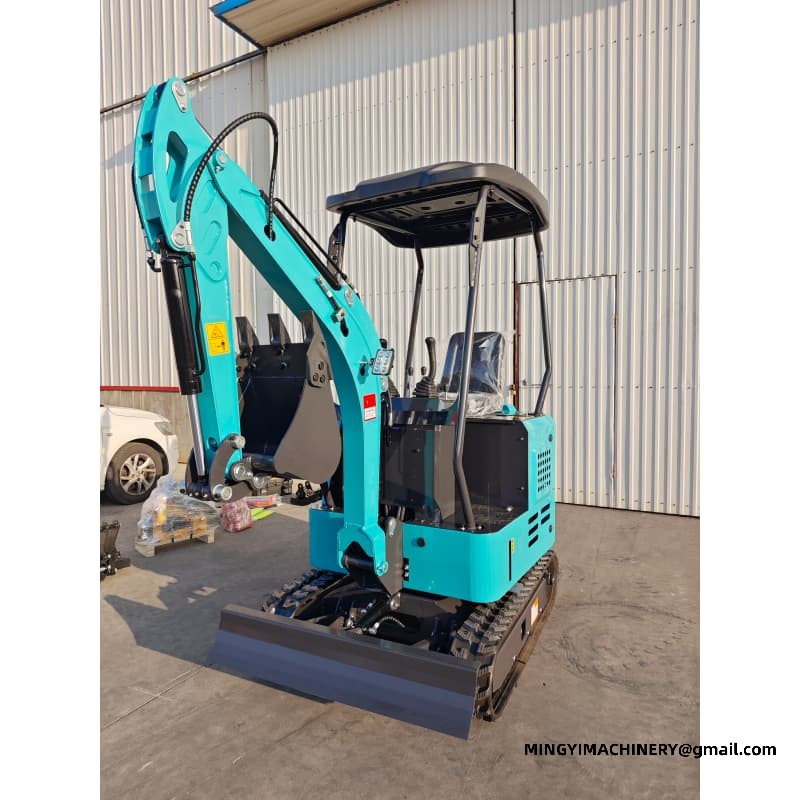
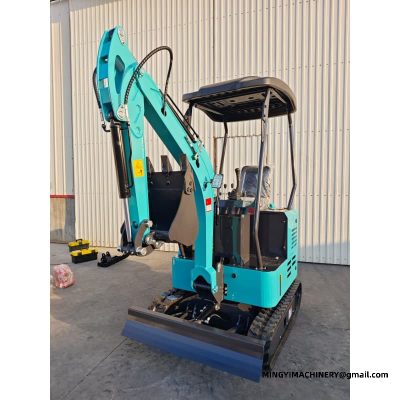
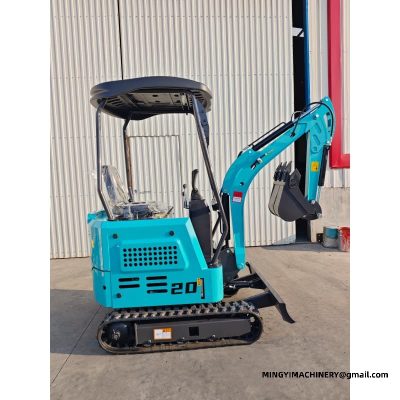
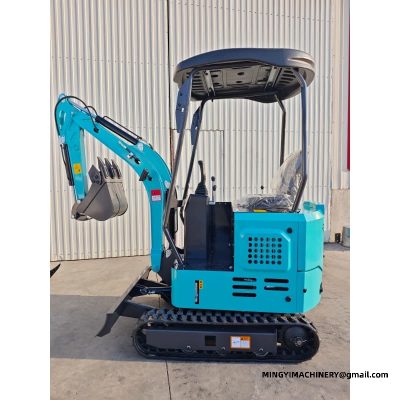
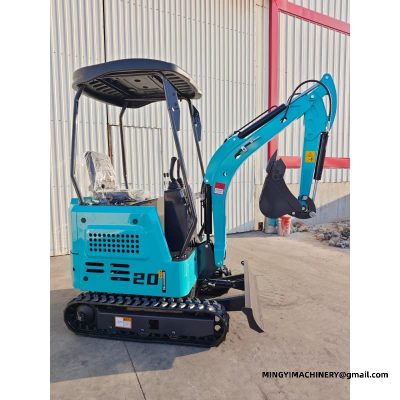
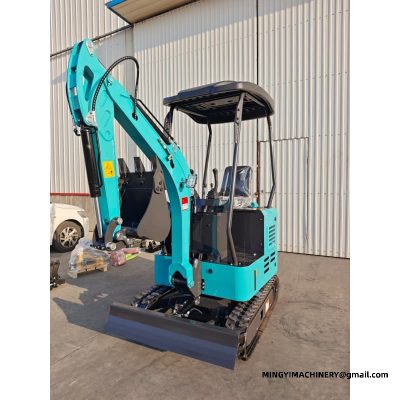
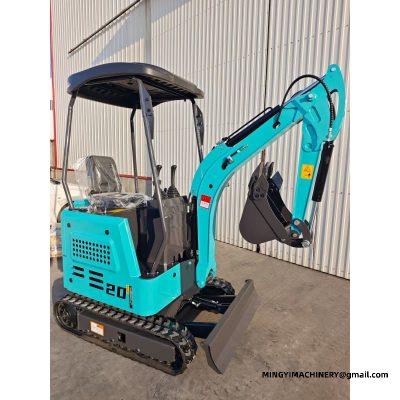
Softscaping covers the planting side of a landscape project: beds, tree pits, mulch, soil improvement and the placement of shrubs and small trees. It follows the hard landscaping, so the machine has to work carefully around finished surfaces. A mini excavator with the right bucket and thumb does that without a large footprint.
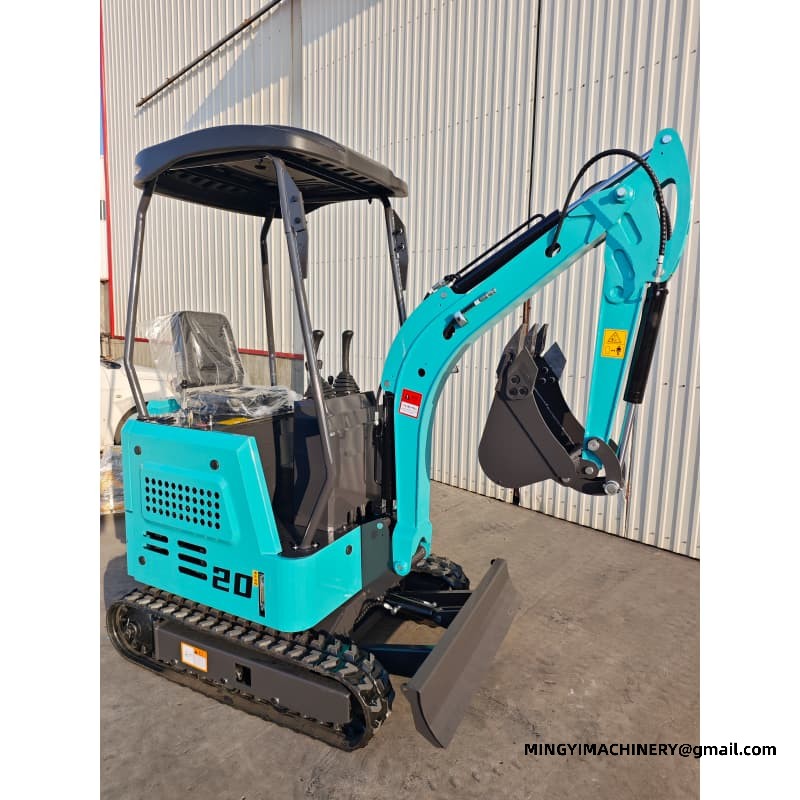
MINGYI compact excavators for softscape work are usually ordered with a narrow bucket, a thumb and rubber tracks. Because the machines are built to order, the attachment set can be chosen around the species being planted and the soil on site.
Tree pits and planting beds dug by mini excavator
Tree pits are dug to a width and depth that suit the root ball, with the sides left rough so roots can spread. A narrow bucket opens a pit cleanly, and the same bucket loosens compacted soil at the base before the tree is set.
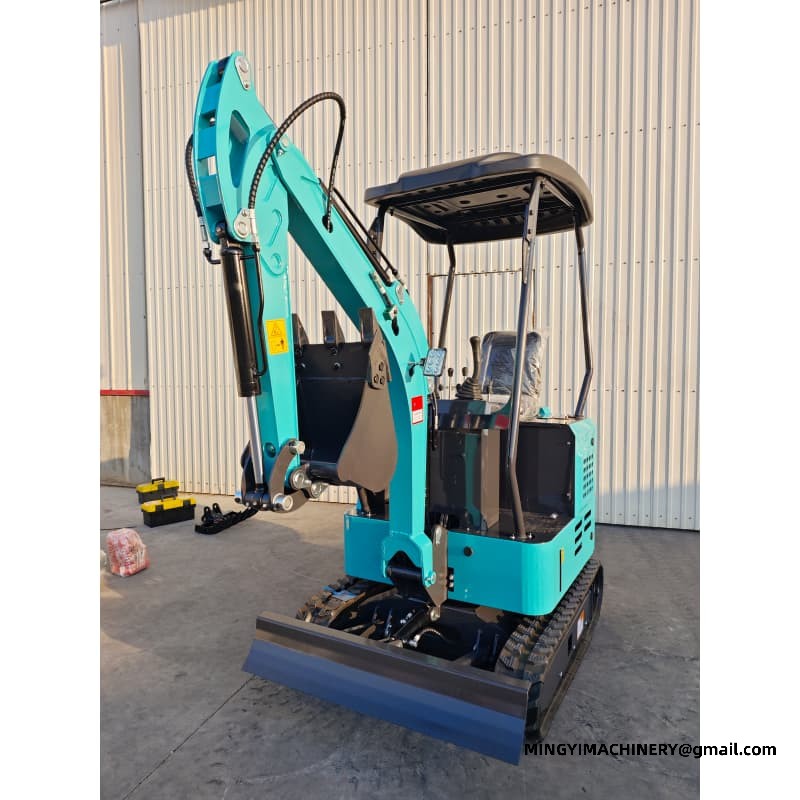
Planting beds are usually stripped of old soil and refilled with a prepared mix. Working the bed in sections keeps the new levels consistent and allows soil amendments to be blended through rather than left in patches.
Soil handling and material placing for planting work
Soil, compost and mulch all move in small loads on a planting job. A grading bucket spreads these materials evenly, and a thumb lets the operator lift root balls, stones and old stumps out of the bed without a second machine.
Where planting sits close to paving or a wall, a tilting bucket trims the soil line without tracking over the finish. Ordering the bucket, thumb and coupler together means the whole set arrives matched to the machine.
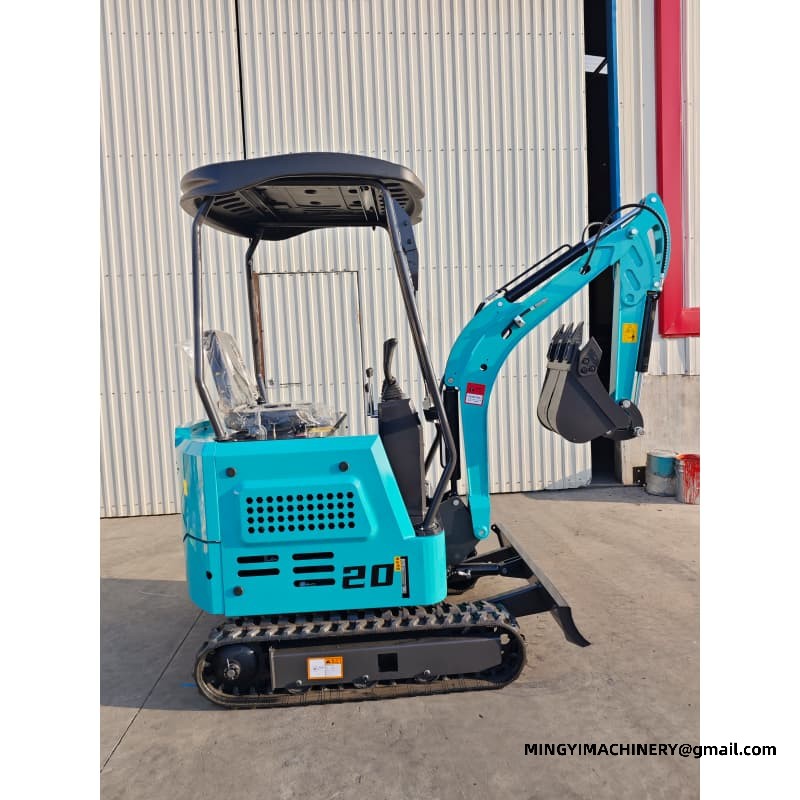
Softscape work is about placing plants and soil accurately around completed construction. MINGYI builds compact excavators to order with the buckets and thumbs planting jobs rely on.
Trenching work with mini excavator for softscape installation Trench quality depends on the bucket width and the operator, not on machine size. The excavator with a narrow bucket and a swing boom cuts a clean run along a boundary without disturbing the ground either side of it. Depth control matters more on service work than speed. This class of machine working beside live services is chosen because it can be placed precisely and stopped instantly, which is what the job actually requires. Getting mini excavator for softscape installation through a narrow gap Access decides the machine before output does. With the unit in daily use the limiting dimension is usually the widest point on the way in, so measuring the gate, the corridor and the turning space first saves a wasted delivery and a second visit. Contractors who buy a machine of this size normally have one job in mind that nothing else reaches. The purchase order follows the access measurement, not the other way round, and the build sheet is then settled around it. Trailering and moving mini excavator for softscape installation Transport weight and width decide whether a machine needs a specialist haulier. The equipment on site sized to travel on a standard plant trailer behind a suitable vehicle moves with the crew rather than on a scheduled low loader. Loading practice matters as much as the numbers. The machine itself is driven up ramps under its own power with the boom lowered and the tracks aligned, and secured at the points the manufacturer specifies. Track choice for mini excavator for softscape installation Rubber tracks suit paved and landscaped ground because they spread the machine weight and leave the surface intact. Steel tracks with rubber blocks are specified where the ground is rougher or the working day is longer, and the choice can be made per machine rather than accepted as a factory default. Undercarriage selection is a ground question, not a preference question. The model in question running on finished paving needs rubber; the same machine on demolition rubble or rock wears rubber quickly, so steel with rubber blocks becomes the better answer over a full season. Export packing and shipping of mini excavator for softscape installation Export documentation, decals and paint are settled before packing. Asking for them with the unit on the job order avoids a second handling session and keeps the machine on the booked vessel. Buyers who import regularly plan the spare parts with the machine. The machine in that duty ordered with a wearing-parts kit arrives ready to work rather than ready to wait for the first service interval. Engine options behind mini excavator for softscape installation Power unit selection is settled against the service network the buyer already uses. MINGYI offers Kubota D722, Kubota D902, YANMAR, Changchai, Laidong, Runtong, YARMAX, Youpu 2V80 and Youpu 195, so a fleet running one brand of engine can keep the same filters, the same parts supplier and the same mechanic. Two buyers can order the same a machine built for the work and receive different engines. The decision is rarely about peak power; it is about which parts counter is closest to the site and which engine the local mechanic already knows. Noise, dust and working near occupied buildings Enclosure and machine condition both reduce noise. The equipment in service with intact panels, sound mounts and a maintained exhaust is measurably quieter than the same machine with loose guards, and the difference matters on restricted sites. Dust control is often part of the same conversation. Water, timing and work sequence reduce what leaves the site, and agreeing them in advance keeps the excavator working rather than stopped after a complaint. Daily checks and maintenance on this class of machine Daily maintenance on the unit in daily use is a short list: engine oil level, coolant, track tension, hydraulic oil level and a look at the hoses. Ten minutes at the start of the shift prevents most of the failures that stop a machine. Greasing is the second item. The slew ring, the boom and arm pins and the bucket linkage on a machine of this size take grease daily in dusty work, and the intervals shorten further when the machine is used in water or mud. Parts, service and support for the equipment on site Engine parts availability usually drives the engine choice. The machine itself built with an engine the local network already carries is serviced from stock rather than from an international order. Remote support is handled by video. The model in question fault can often be diagnosed on a walk-around call with the panel open, which is faster than waiting for a visit and avoids shipping a part that is not needed. Running the machine in that duty in a rental fleet Rental fleets buy for utilisation, not for a single job. The unit on the job with a quick coupler and a common attachment standard is hired more often because it suits more of the calls that come in. The specification that rents best is usually the simplest one to explain at the counter. A machine built for the work with rubber tracks, a canopy and a coupler covers the majority of weekend and short-term hires. Interior and light demolition with the equipment in service Breaking out a floor slab, a wall footing or a concrete step is routine work for the excavator with a breaker. The machine is small enough to work inside and heavy enough to run the tool at a practical rate. Dust, debris clearance and floor loading all argue for a compact machine indoors. This class of machine spreads its weight over a wider track footprint than a wheeled machine of similar capacity. Orchard, vineyard and farm use of the unit in daily use Orchard and vineyard work is carried out between rows. A machine of this size with a narrow chassis and a swing boom works down the row without damaging the trees, which is the reason a full-size machine is not used at all. Farms also use the equipment on site for general maintenance - clearing a watercourse, repairing a track, loading a spreader. One carrier with a few attachments covers most of the jobs that would otherwise wait for a contractor. Specification data for the machine itself Where the model in question is being specified for a job list, the table below gives the factory figures that matter most: what the machine weighs, how deep and how far it works, and what it measures on a trailer. Every value shown is as built for the machine in that duty; options such as cab, side swing or a telescopic undercarriage change the transport dimensions and are confirmed at order stage. Output on a compact machine comes from placement rather than power. An experienced operator keeps the unit on the job working inside the swing arc, positions once and digs a full run instead of repositioning for every bucket. The second habit is tool discipline. Running a machine built for the work with the right bucket width for the trench means less spoil, less reinstatement and a cleaner job than a wide bucket and a lot of trimming.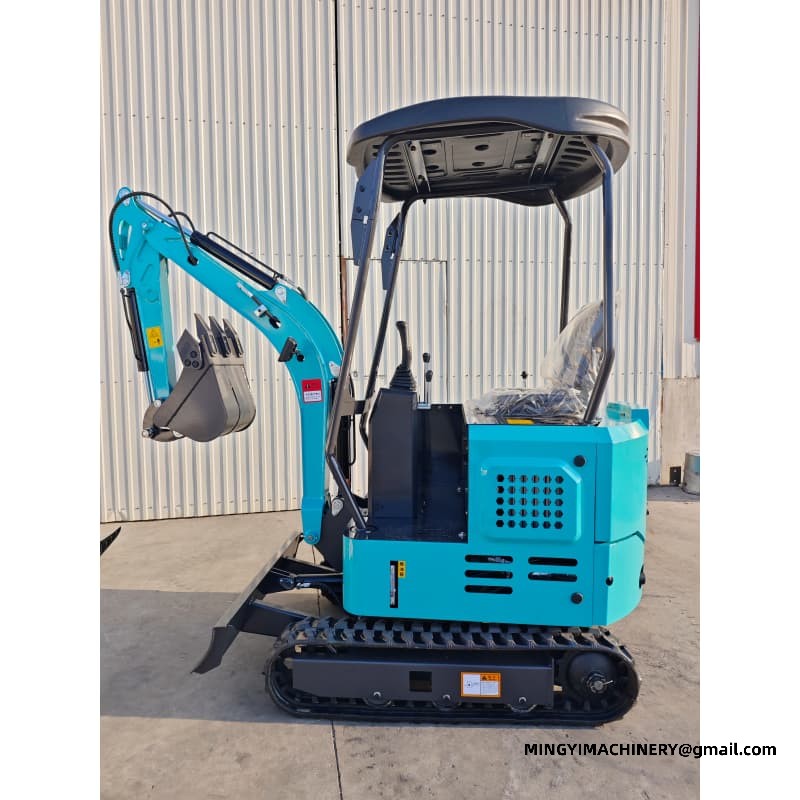
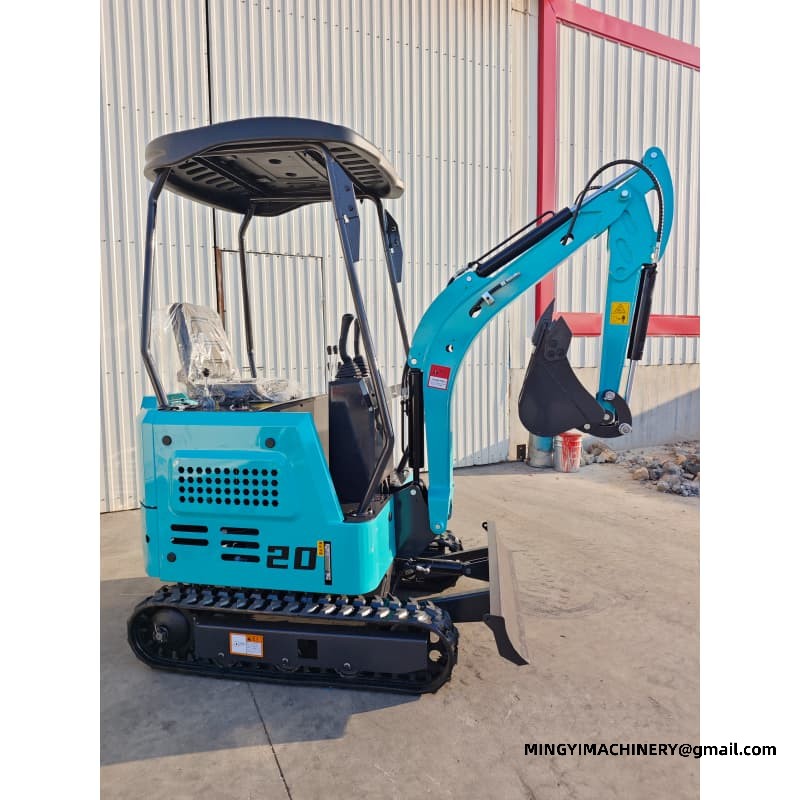
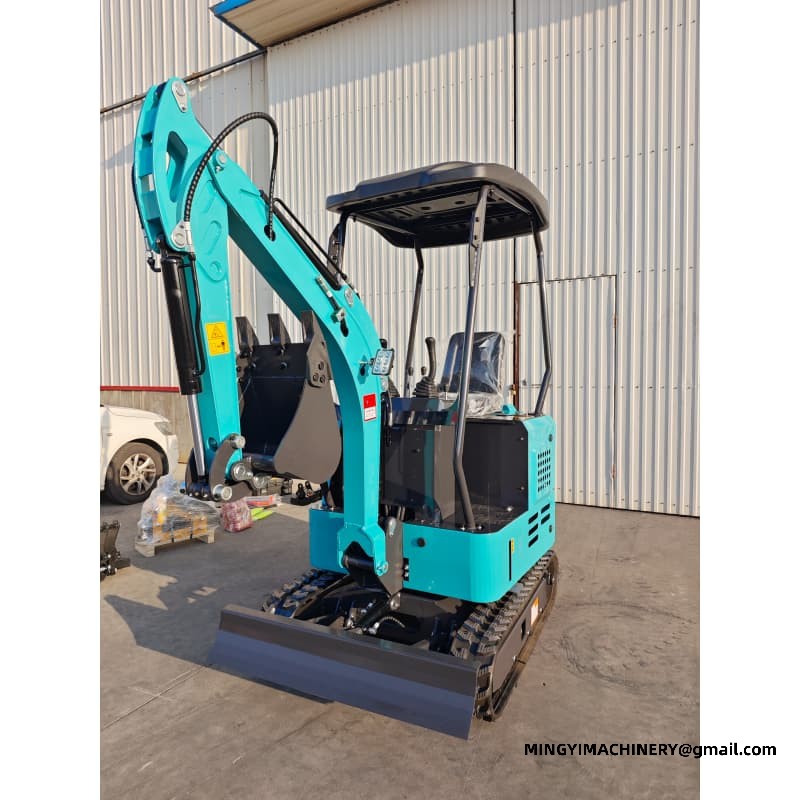
Reference specification — mini excavator range 09W 15W 15L 25L Operating weight 1100 kg (2425.08 lb) 1400 kg (3086.47 lb) 1400 kg (3086.47 lb) 2200 kg (4850.17 lb) Transport size (L×W×H) 1800 × 750 × 1970 mm 2200 × 930 × 2250 mm 2200 × 930 × 2250 mm 3000 × 1300 × 2700 mm Max digging depth 1250 mm (49.21 in) 1630 mm (64.17 in) 1700 mm (66.93 in) 2300 mm (90.55 in) Max digging height 2800 mm (110.24 in) 2750 mm (108.27 in) 2750 mm (108.27 in) 3100 mm (122.05 in) Max dumping height 1700 mm (66.93 in) 1960 mm (77.17 in) 1960 mm (77.17 in) 2050 mm (80.71 in) Max digging radius 2570 mm (101.18 in) 2900 mm (114.17 in) 2900 mm (114.17 in) 3900 mm (153.54 in) Max digging distance 1869 mm (73.58 in) 2100 mm (82.68 in) 2300 mm (90.55 in) 3100 mm (125.05 in) Minimum turning radius 1000 mm (39.37 in) 1300 mm (51.18 in) 1450 mm (57.09 in) 1800 mm (70.87 in) Travel speed 3 km/h (1.86 mph) 3 km/h (1.86 mph) 3 km/h (1.86 mph) 7 km/h (4.35 mph) Gradeability 30° 30° 30° 30° Fuel consumption 1-1.3 L/h (0.264—0.343 gal) 1-1.3 L/h (0.264—0.343 gal) 1-1.3 L/h (0.264—0.343 gal) 2-3 L/h (0.528—0.793 gal) Fuel tank capacity 8 L (2.11 gal) 10 L (2.64 gal) 10 L (2.64 gal) 16 L (4.23 gal) Hydraulic oil tank 16 L (4.23 gal) 16 L (4.23 gal) 16 L (4.23 gal) 18 L (4.76 gal) Dozer blade lift height 180 mm (7.09 in) 180 mm (7.09 in) 180 mm (7.09 in) 230 mm (9.06 in) Dozer blade drop depth 210 mm (8.27 in) 210 mm (8.27 in) 210 mm (8.27 in) 280 mm (11.02 in)
Q. Who chooses the equipment in service?
A. Softscape and turf work judge a machine by what it leaves behind, which is why compact excavators with the right tracks and valves own this trade. A fine-control valve lets the operator grade to the line the plan asks for, on the first pass. MINGYI builds the 08, 12 and 18 models covering the 0.8 to 6 tonne class, and the excavator is where that range meets softscape installation.
Q. How do you avoid damaging finished ground?
A. Rubber tracks, boards or mats under the machine, and a dig plan that treads where the hard surface will be. A fine-control valve grades to the line on the first pass, which is where the care shows.
Q. How do I get a specification?
A. Send the model, the destination and the attachment list by email or LINE - the channels listed just below this section. The reply covers the specification, lead time, packing and freight in one document, with the softscape installation build sheet attached.
Wear items and spares worth holding for this class of machine
The parts that stop a machine are rarely the parts that are hardest to find. Filters, belts, seals and the ground engaging tools on the unit in daily use are easy to hold and slow to replace, which is why they belong on the shelf rather than on an order.
Planning the season around a machine of this size
Workload is rarely even across the year, and the machine should be specified for the busy weeks. The equipment on site sized only for the average month will be the limiting factor exactly when the work is worth the most.
E-mail : sales@mingycn.com
LINE ( ID ): mingyicn
Related pages
mini excavator for rental fleets · small digger for demolition · Heavy Duty Wheel Loader: Hinge Plates and Cross-Member Steel · Mini Excavators









