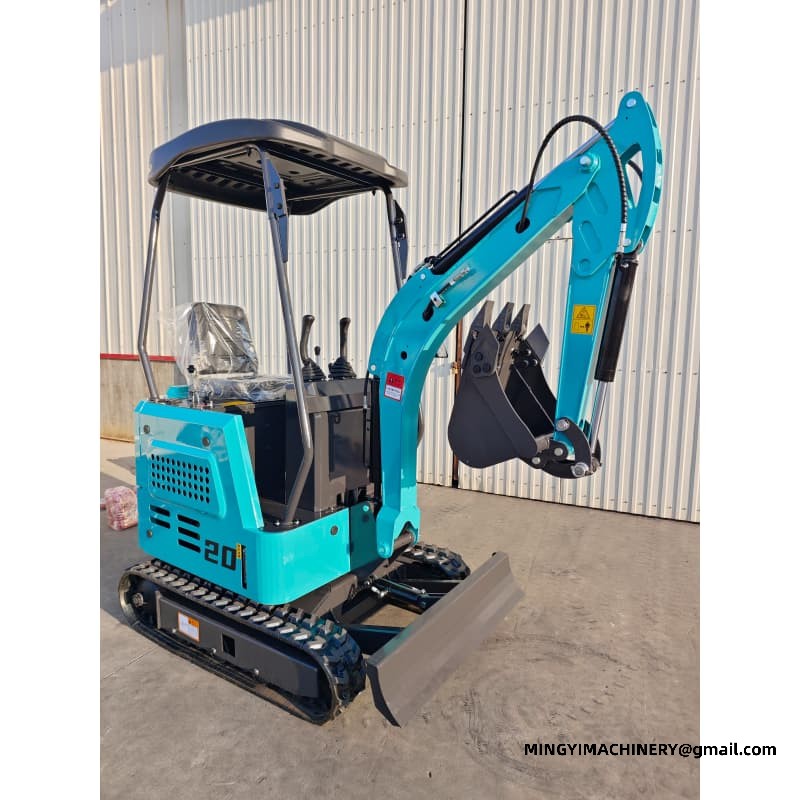
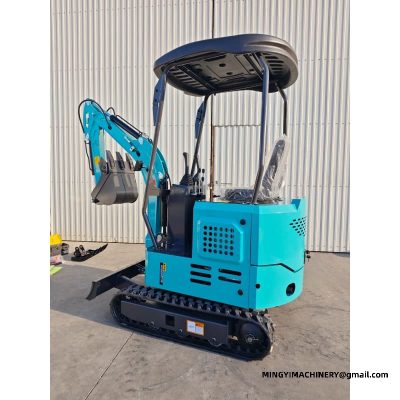
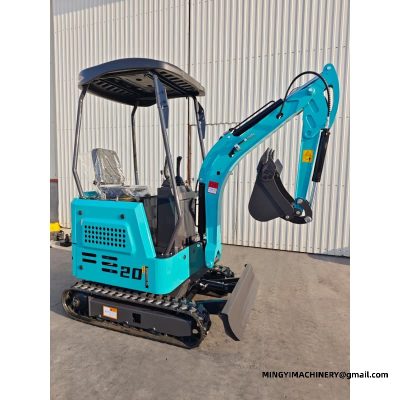
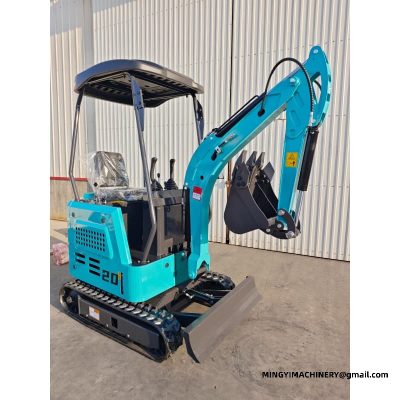
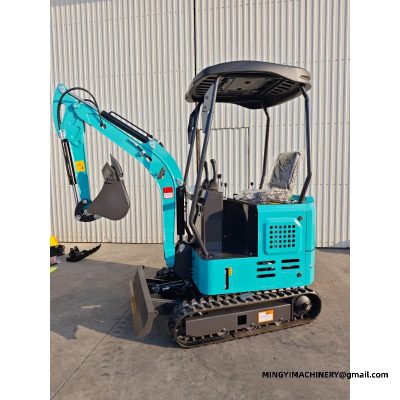
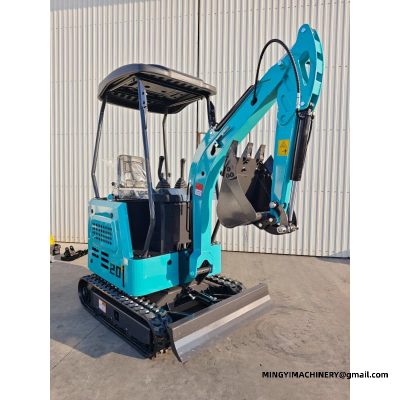
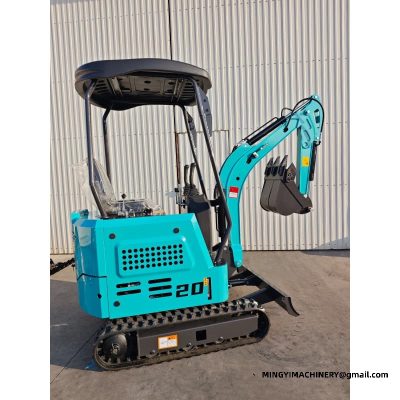
A small digger on demolition work has to punch above its weight. The machine breaks concrete, pulls down masonry in sections, sorts steel from rubble and loads the skips, all while working around the structure and the services that are staying. MINGYI configures its diggers for exactly this duty.
Buyers ordering for demolition usually settle inside the 1 to 3.5 tonnes class with a breaker hammer and a thumb bucket in the attachment list. This page covers how the machine is set up for pulling structures down safely and clearing the result.
Pulling down and clearing
The breaker softens the concrete and masonry, and the digging bucket then peels the structure apart in a controlled sequence from the top down. The thumb bucket grips the larger chunks for placing straight into the skip, which keeps the sorting area small and the site tidy.
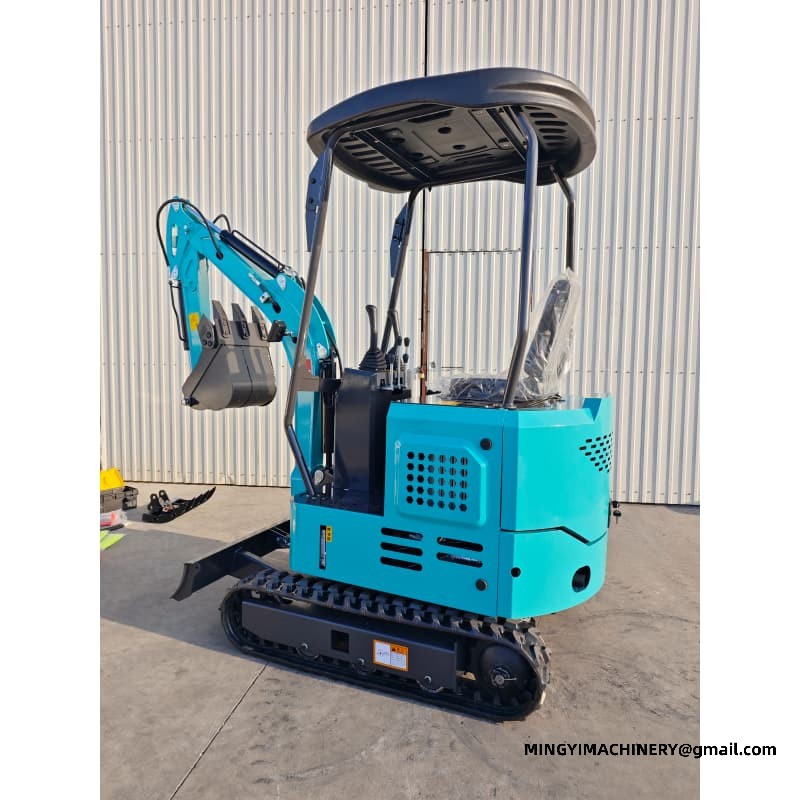
Once the structure is down, the same machine grades the platform, breaks out old floor slabs and loads the rubble. Where rebar and beam ends need handling, the thumb holds them steady for cutting, keeping the operator clear of the load.
The demolition specification
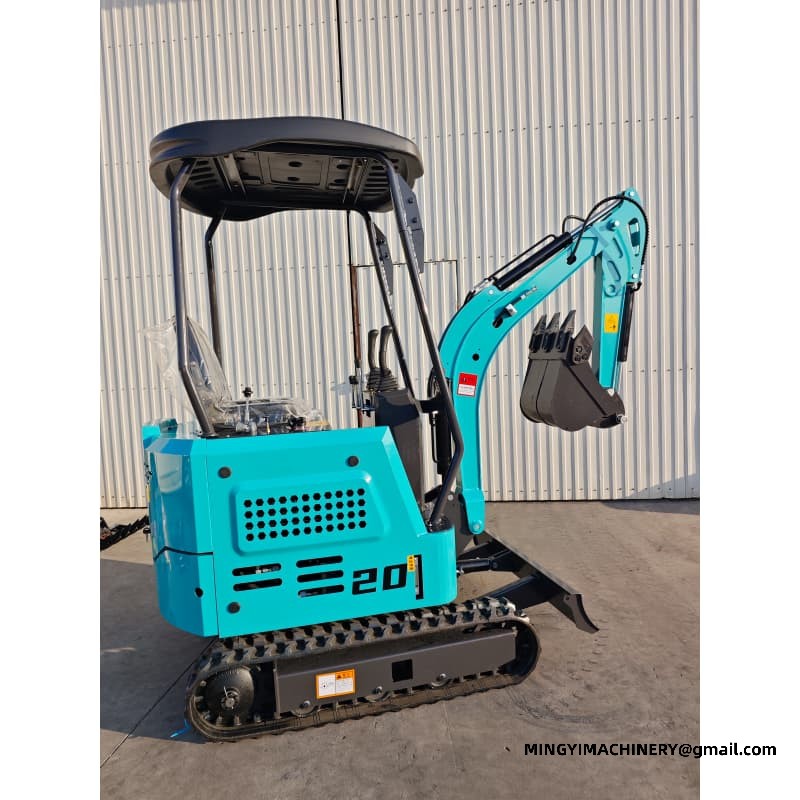
Steel tracks with rubber blocks are the common choice, since broken slab and rubble destroy rubber tracks quickly while the blocks still protect any paving that must survive. An enclosed cab with protective glazing is worth confirming for flying debris.
Hose guards, a robust coupler and a breaker matched to the carrier are settled at the ordering stage. Buyers should describe the structures they strip, since the specification for garden wall removal differs from the one for farm building clearance.
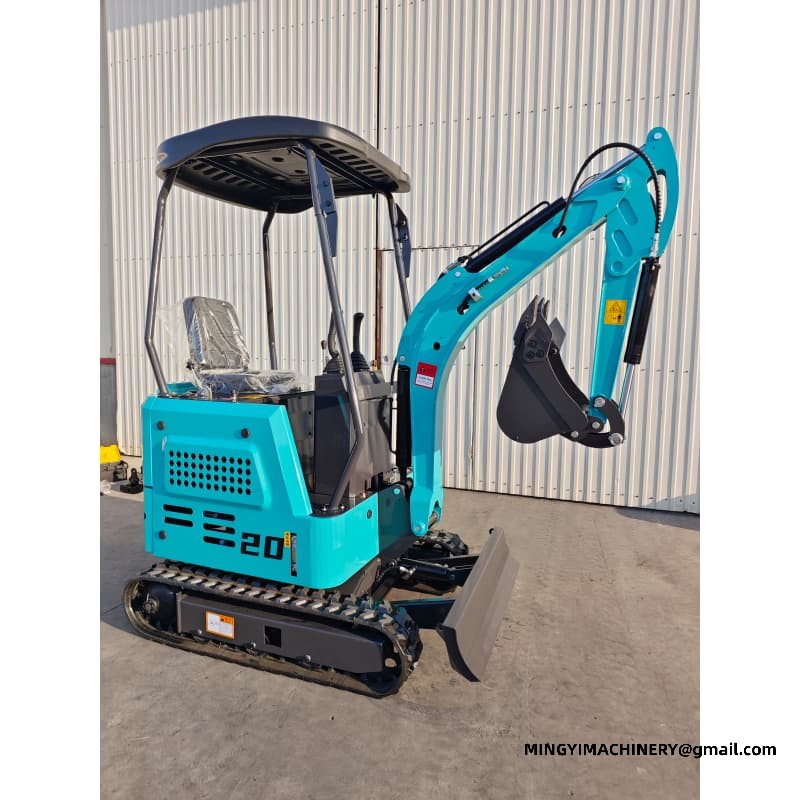
Send the type of structures you take down and the ground you work over, and the demolition digger will be specified from those facts. Each machine leaves the factory with the spare parts and service information a demolition duty cycle needs.
Getting small digger for demolition through a narrow gap The first question on most job lists is whether the machine can reach the work at all. The excavator is chosen against the narrowest point on the route - a garden gate, a doorway, a gap between two walls - because a machine that arrives and then cannot pass loses a day, not an hour. Access decides the machine before output does. With this class of machine the limiting dimension is usually the widest point on the way in, so measuring the gate, the corridor and the turning space first saves a wasted delivery and a second visit. Engine options behind small digger for demolition Two buyers can order the same a machine of this size and receive different engines. The decision is rarely about peak power; it is about which parts counter is closest to the site and which engine the local mechanic already knows. Engine choice is also an emissions and documentation question for some markets. Listing the available units with the unit in daily use enquiry lets the factory confirm what can be supplied and documented for the destination country. Working on slopes and uneven ground with small digger for demolition Slope work is a stability question before it is a traction question. Knowing the gradient the equipment on site is rated for, and working across rather than straight up where the ground allows, removes most of the risk. Planning the direction of travel helps. Working so that the machine itself is stable under load and not required to turn on a slope is a decision made before the job starts, not a correction made during it. Trenching work with small digger for demolition Service trenches are the most common reason the model in question is hired. Water, sewage, cable and gas runs are narrow, shallow and often close to existing services, which is exactly the work a full-size machine cannot do safely. Trench quality depends on the bucket width and the operator, not on machine size. The machine in that duty with a narrow bucket and a swing boom cuts a clean run along a boundary without disturbing the ground either side of it. Daily checks and maintenance on small digger for demolition Track tension is the item most often neglected. The unit on the job run with slack tracks wears the undercarriage and can throw a track on a turn; run too tight, the same components wear from the other direction. Greasing is the second item. The slew ring, the boom and arm pins and the bucket linkage on a machine built for the work take grease daily in dusty work, and the intervals shorten further when the machine is used in water or mud. Trailering and moving small digger for demolition Loading practice matters as much as the numbers. The equipment in service is driven up ramps under its own power with the boom lowered and the tracks aligned, and secured at the points the manufacturer specifies. Detachable components reduce transport length. The excavator built with a removable arm section or a folding step fits a shorter trailer and may avoid an oversize movement permit. Municipal and public works with this class of machine Municipal crews work on streets, footpaths and parks where the public is present. The unit in daily use is specified because it occupies little space, works inside a small exclusion zone and can be moved on a standard trailer. Noise and surface protection matter on public work. A machine of this size on rubber tracks across paving, with a sealed cab for the operator, suits the conditions better than a larger tracked machine. What owners should plan for beyond the equipment on site Purchase decision is the visible part of the effort. Fuel, filters, tracks or tyres, the operator and the transport between sites are the items that decide what the machine itself actually demands over a few seasons, and they are worth listing before the order. The useful comparison is demand per working hour, not demand per machine. The model in question that works more hours a year spreads its standing takes over more output, which is why utilisation usually matters more than the invoice figure. Canopy or enclosed cab on the machine in that duty A canopy keeps the machine light and the operator aware of the surroundings, which suits short jobs in warm weather. A fully enclosed cab is specified where rain, dust or cold are part of the working year, and it can be added to the unit on the job as a retrofit rather than only at build time. The cab decision follows the climate and the hours. Operators working a full shift in a machine built for the work benefit from a sealed cab with wipers and heating; operators stepping on and off every few minutes usually prefer the canopy for the visibility and the quick exit. Track choice for the equipment in service Undercarriage selection is a ground question, not a preference question. The excavator running on finished paving needs rubber; the same machine on demolition rubble or rock wears rubber quickly, so steel with rubber blocks becomes the better answer over a full season. Track type changes what the machine can cross and what it leaves behind. Buyers specify rubber for lawns, driveways and municipal work, and steel with rubber blocks for sites where sharp material would cut a rubber belt in a week. Operator technique for this class of machine Output on a compact machine comes from placement rather than power. An experienced operator keeps the unit in daily use working inside the swing arc, positions once and digs a full run instead of repositioning for every bucket. Stability is the third. A machine of this size working across the tracks rather than over the corners keeps the machine steady and the undercarriage loaded evenly, which shows up as track life at the end of the season. Specification data for the equipment on site Buyers comparing the machine itself usually start from four numbers - weight, digging depth, reach and transport width - because those are the ones that decide whether the machine can be delivered and whether it can do the job once it is there. Every value shown is as built for the model in question; options such as cab, side swing or a telescopic undercarriage change the transport dimensions and are confirmed at order stage. A quick coupler is the single option that changes how a machine is used day to day. Fitted to the machine in that duty, it turns an attachment change from a two-person workshop job into a task the operator does alone in minutes. For a fleet that shares attachments between machines, a common coupler standard matters more than the coupler brand. The unit on the job that picks up the same tools as the larger machines keeps the rack usable across the yard.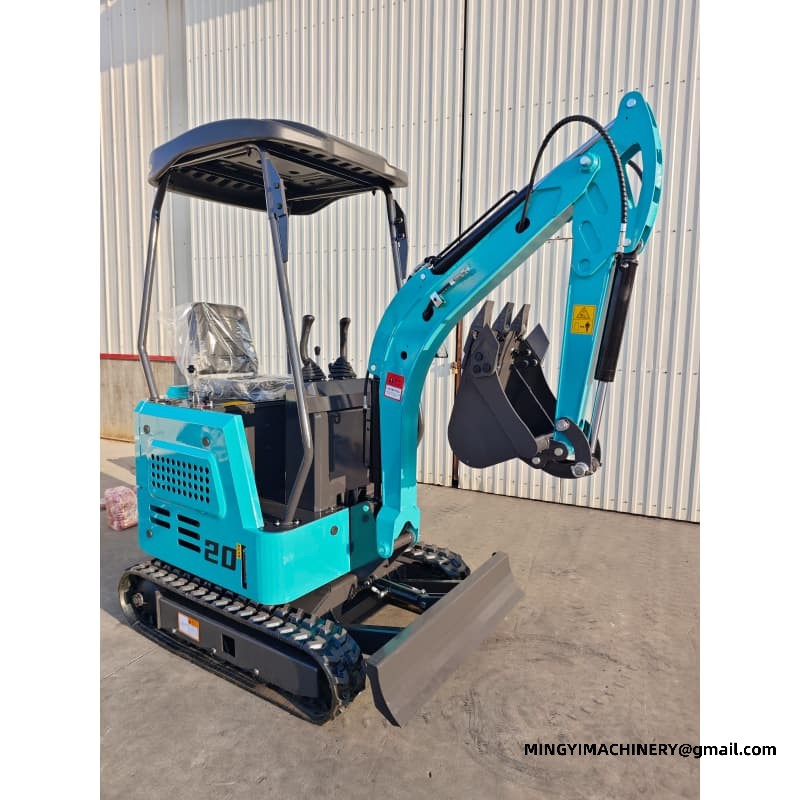
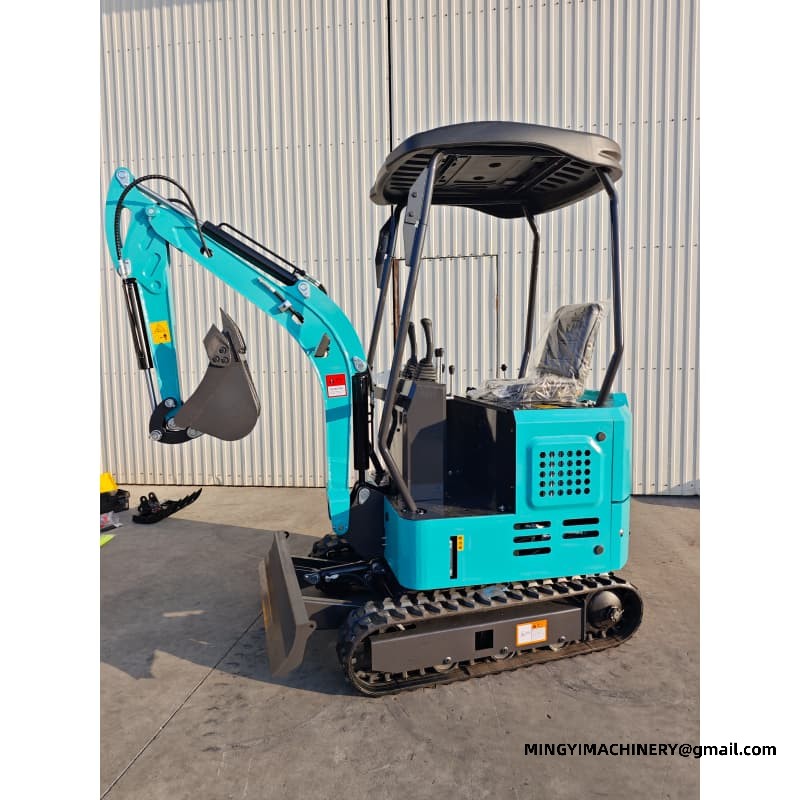
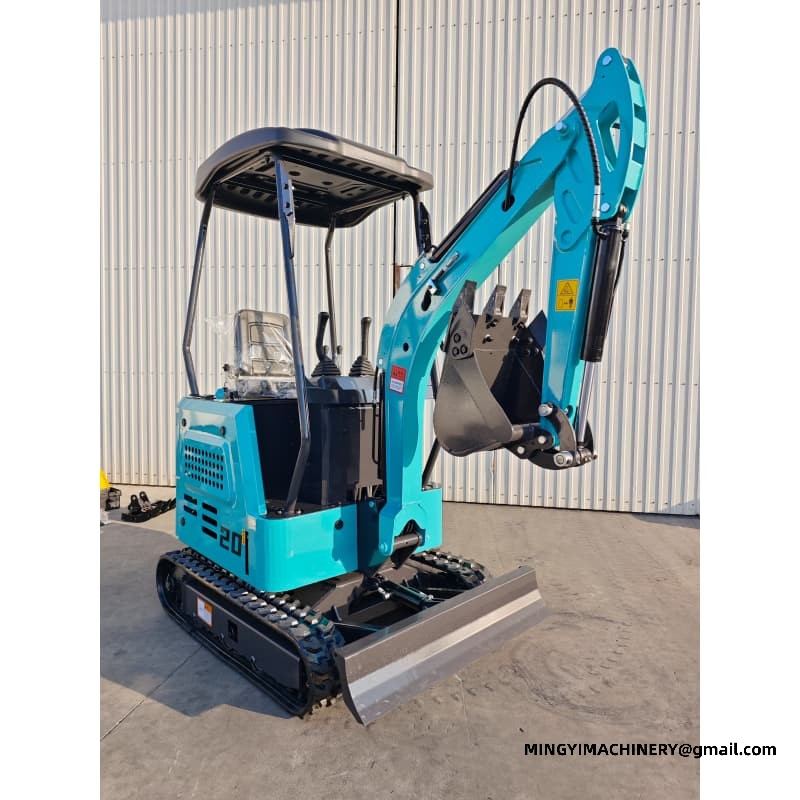
Reference specification — mini excavator range 13W 15W 20-1W 12L Operating weight 1300 kg (2866.01 lb) 1400 kg (3086.47 lb) 1800 kg (3968.32 lb) 1200 kg (2645.55 lb) Transport size (L×W×H) 2200 × 930 × 2250 mm 2200 × 930 × 2250 mm 2550 × 1100 × 2200 mm 2200 × 930 × 2250 mm Max digging depth 1630 mm (64.17 in) 1630 mm (64.17 in) 1800 mm (70.87 in) 1700 mm (66.93 in) Max digging height 2750 mm (108.27 in) 2750 mm (108.27 in) 2820 mm (111.02 in) 2600 mm (102.36 in) Max dumping height 1960 mm (77.17 in) 1960 mm (77.17 in) 2050 mm (80.71 in) 1800 mm (70.87 in) Max digging radius 2900 mm (114.17 in) 2900 mm (114.17 in) 3050 mm (120.08 in) 2900 mm (114.17 in) Max digging distance 2100 mm (82.68 in) 2100 mm (82.68 in) 2300 mm (90.55 in) 2300 mm (90.55 in) Minimum turning radius 1300 mm (51.18 in) 1300 mm (51.18 in) 1450 mm (57.09 in) 1450 mm (57.09 in) Travel speed 3 km/h (1.86 mph) 3 km/h (1.86 mph) 5 km/h (3.11 mph) 3 km/h (1.86 mph) Gradeability 30° 30° 30° 30° Fuel consumption 1-1.3 L/h (0.264—0.343 gal) 1-1.3 L/h (0.264—0.343 gal) 2-3 L/h (0.528—0.793 gal) 1-1.3 L/h (0.264—0.343 gal) Fuel tank capacity 10 L (2.64 gal) 10 L (2.64 gal) 16 L (4.23 gal) 10 L (2.64 gal) Hydraulic oil tank 16 L (4.23 gal) 16 L (4.23 gal) 18 L (4.76 gal) 16 L (4.23 gal) Dozer blade lift height 180 mm (7.09 in) 180 mm (7.09 in) 180 mm (7.09 in) 180 mm (7.09 in) Dozer blade drop depth 210 mm (8.27 in) 210 mm (8.27 in) 210 mm (8.27 in) 210 mm (8.27 in)
Q. What is a machine built for the work?
A. In strip-out and demolition the compact digger does the work that used to need crews with hand tools, at a rate hand work cannot touch. The coupler switches the machine from breaker carrier to loader between passes, which is what keeps a small demolition job worth taking on. For demolition applications the practical route is to send the job list to the factory and let the build sheet answer it - which is exactly what this page invites.
Q. What attachment set matters for demolition?
A. A breaker for the concrete, a thumb or grapple for sorting, a bucket for clean-up - and steel tracks once the floor is rubble. The coupler turns the machine from breaker carrier to loader between passes.
Q. Does MINGYI supply attachments with the machine?
A. Yes - buckets, breakers, augers, rakes and the rest of the working set ship with the carrier, matched to the hydraulic flow and the coupler. For demolition the package is confirmed on the build sheet, so machine and tools arrive together and start work together.
Moving the equipment in service between sites
Travel time is not working time, and it should be planned as its own item. The hours spent moving the excavator between jobs are hours not worked, and a trailer that matches the machine reduces them every single trip.
Pre-delivery inspection before this class of machine leaves the shop
The last hour before packing is the best time to find a fault. Running the unit in daily use through its full working cycle, checking for leaks under load and confirming that the controls match the specification avoids a conversation across time zones later.
E-mail : sales@mingycn.com
LINE ( ID ): mingyicn
Related pages
compact excavator for indoor work · mini excavator range for export buyers · Front Wheel Loader: Reading Boom, Hinge and Axle Specifications · Mini Excavators









