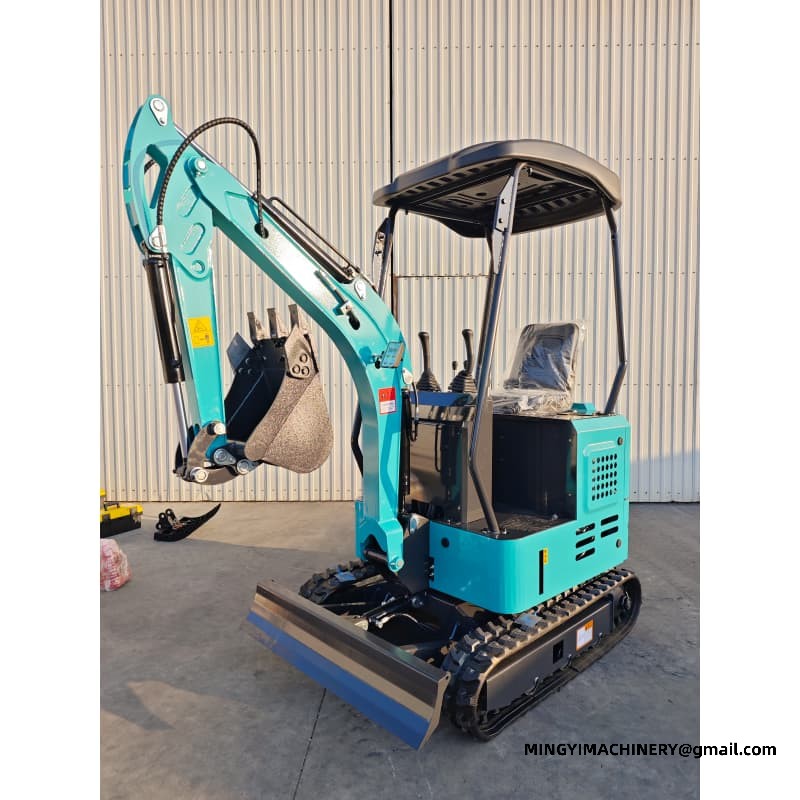
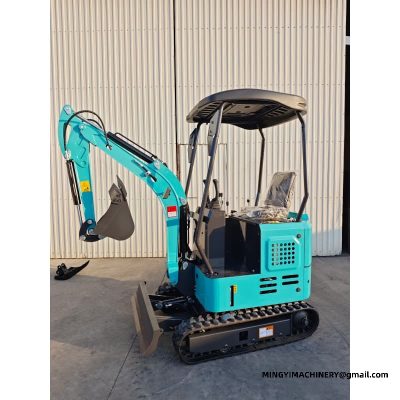
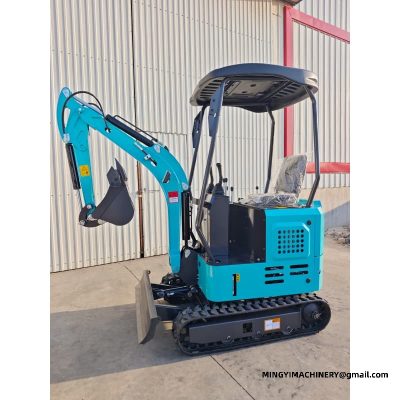
Indoor work sets limits a normal site does not. Headroom is low, the floor is finished, and the machine has to keep the air usable while it breaks and removes material. That narrows the choice of carrier and of engine.
MINGYI compact crawler excavators are used in basements, warehouses and ground floor renovations where those conditions apply. The machine is specified at ordering with the form and attachments the interior allows.
Working a compact excavator inside a building
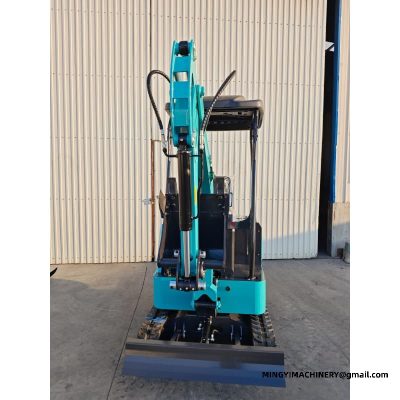
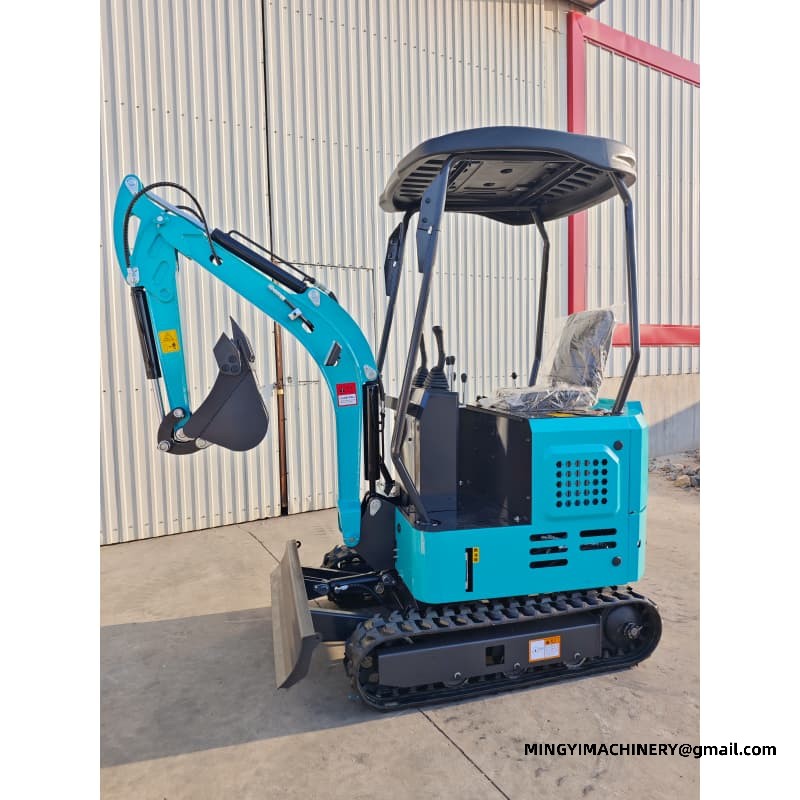
The machine has to fit through the access and pass under beams once inside, so a low profile and a narrow body count more than outright digging force. A canopy form keeps the overall height down for that reason.
Removal of material is a continuous task indoors, since spoil cannot be left on a finished floor. A machine that can lift and swing cleanly in a restricted arc keeps the carting away in step with the digging.
Engine and attachment choices for interiors
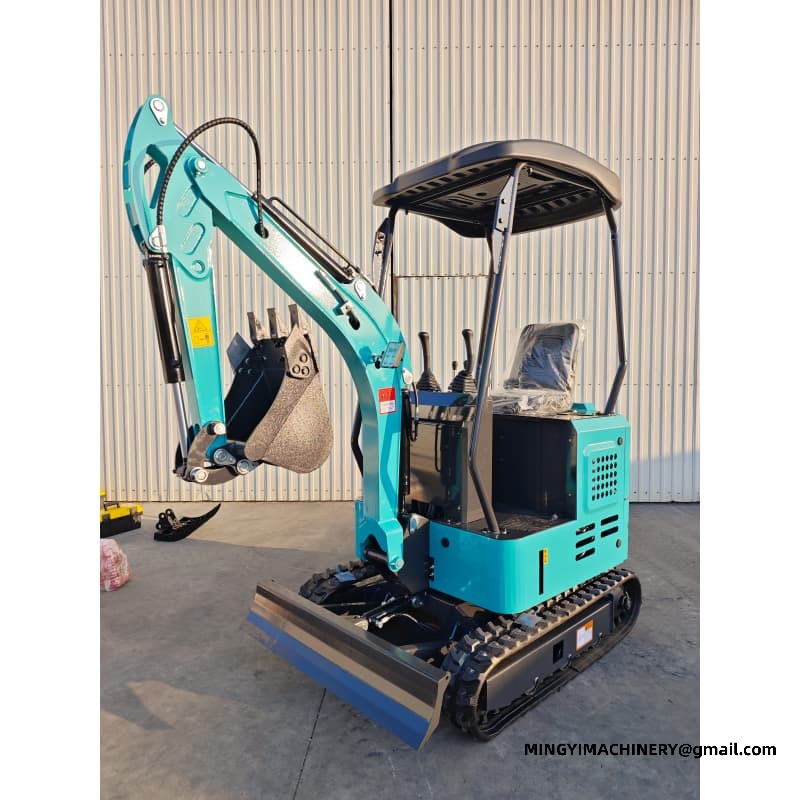
A diesel engine of the type used on these carriers can be run with ventilation provided, and the machine is specified at ordering so the working output suits indoor breaking and lifting.
A breaker hammer handles concrete floors and walls, while a shell bucket lifts the debris out. Both are matched to the coupler so the operator can work in the confined space without repeated refitting.
Machine height, cab form and attachments are the points to confirm before an indoor machine is ordered. Settling them early is what allows the carrier to enter, work and leave a finished building without damage.
Hydraulic circuits on a compact excavator for indoor work Auxiliary hydraulic lines are what let a machine drive a tool rather than only a bucket. The excavator specified with the right circuits and flow runs a breaker or an auger without an add-on power pack bolted to the frame. Hydraulic specification is easier to settle at build time than to correct later. This class of machine delivered without auxiliary lines can still dig, but every additional tool becomes a retrofit project. Municipal and public works with compact excavator for indoor work Drainage repair, tree planting, footway reconstruction and cemetery work are all within the range of the unit in daily use. The jobs are small individually and continuous across the year. Noise and surface protection matter on public work. A machine of this size on rubber tracks across paving, with a sealed cab for the operator, suits the conditions better than a larger tracked machine. Attachments that turn compact excavator for indoor work into several machines The base machine is a carrier; the tool on the end of the arm decides the task. The equipment on site fitted with a toothed bucket digs, and the same machine with a breaker, an auger or a grab does work that would otherwise need a second unit on site. Most of the daily variety on the machine itself comes from the attachment rack rather than from the machine itself. Bucket, breaker, auger, ripper, rake and grab cover the large majority of the work a contractor will see. Road and paving work for compact excavator for indoor work Road repair generates short, interrupted jobs - a patch, a drainage connection, a kerb line. The model in question is economical here because it travels on a small trailer and starts working minutes after arriving. Breaking out a failed slab and backfilling the same hole in one visit is normal work for the machine in that duty. The breaker and the bucket come off the same coupler, so the road is reopened the same day. Working a compact excavator for indoor work through the seasons Weather decides which days are productive. Rain turns some ground unusable and cold changes how the unit on the job starts and warms up, so planning the wet months around maintenance is more useful than planning around output. Heat and dust are as limiting as rain. Air intake condition and cooling cleanliness decide how a machine built for the work behaves in a dry season, and both are checked in a minute rather than repaired later. Orchard, vineyard and farm use of compact excavator for indoor work Orchard and vineyard work is carried out between rows. The equipment in service with a narrow chassis and a swing boom works down the row without damaging the trees, which is the reason a full-size machine is not used at all. Ditching, fertilising and drainage on farmland suit the excavator because the work is spread over a large area in short bursts. The machine travels behind a pickup and works where it stops. Quick coupler practice on this class of machine A quick coupler is the single option that changes how a machine is used day to day. Fitted to the unit in daily use, it turns an attachment change from a two-person workshop job into a task the operator does alone in minutes. Couplers are specified early because they affect the arm and the hydraulic kit. Adding one to a machine of this size after delivery means new pins, new hoses and a fitment session; adding it at build time is a line on the sheet. Noise, dust and working near occupied buildings Work near housing or occupied premises brings constraints that open sites do not. Start times, exhaust condition and how often the equipment on site needs to reverse are the practical limits that neighbours notice. Enclosure and machine condition both reduce noise. The machine itself with intact panels, sound mounts and a maintained exhaust is measurably quieter than the same machine with loose guards, and the difference matters on restricted sites. Working on slopes and uneven ground with the model in question Slope work is a stability question before it is a traction question. Knowing the gradient the machine in that duty is rated for, and working across rather than straight up where the ground allows, removes most of the risk. Ground that looks level often is not. The unit on the job crossing a filled trench, a soft edge or a hidden void behaves differently from one on undisturbed ground, and those are the places worth walking before driving. Specifying a machine built for the work against a job list The practical way to specify is to write the job list first: the narrowest access, the deepest trench, the heaviest tool and the surfaces the machine must cross. The equipment in service is then matched to those four numbers. Buyers who skip this step either over-buy or under-buy. The excavator specified only from machine size tends to arrive without the coupler, the circuits or the track type the work actually needs. Getting this class of machine through a narrow gap The first question on most job lists is whether the machine can reach the work at all. The unit in daily use is chosen against the narrowest point on the route - a garden gate, a doorway, a gap between two walls - because a machine that arrives and then cannot pass loses a day, not an hour. Contractors who buy a machine of this size normally have one job in mind that nothing else reaches. The purchase order follows the access measurement, not the other way round, and the build sheet is then settled around it. Parts, service and support for the equipment on site Support after delivery is a parts question. Wearing items for the machine itself - filters, belts, track components, bucket teeth and pins - are the items a buyer should plan to hold before the first service interval. Remote support is handled by video. The model in question fault can often be diagnosed on a walk-around call with the panel open, which is faster than waiting for a visit and avoids shipping a part that is not needed. Specification data for the machine in that duty Where the unit on the job is being specified for a job list, the table below gives the factory figures that matter most: what the machine weighs, how deep and how far it works, and what it measures on a trailer. Every value shown is as built for a machine built for the work; options such as cab, side swing or a telescopic undercarriage change the transport dimensions and are confirmed at order stage. Soft ground is a flotation problem, not a power problem. The equipment in service on wide rubber tracks crosses lawn, sand and cultivated soil that would stop a narrower machine or a wheeled unit of the same capacity. Mixed sites are common and argue for a compromise specification. Most buyers choose rubber for the excavator and accept the wear, unless the majority of the work is on material that will damage it.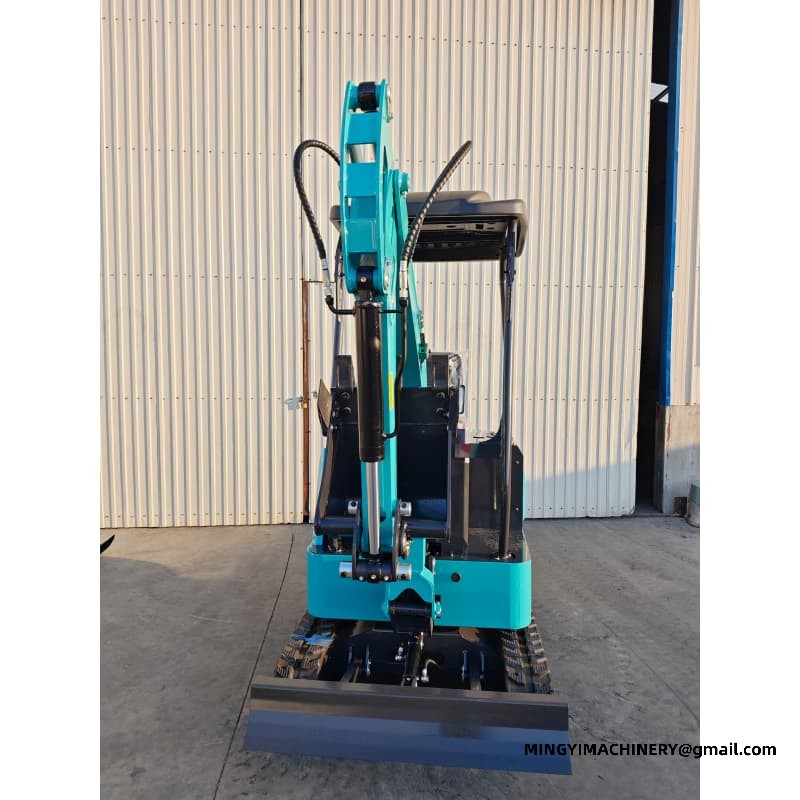
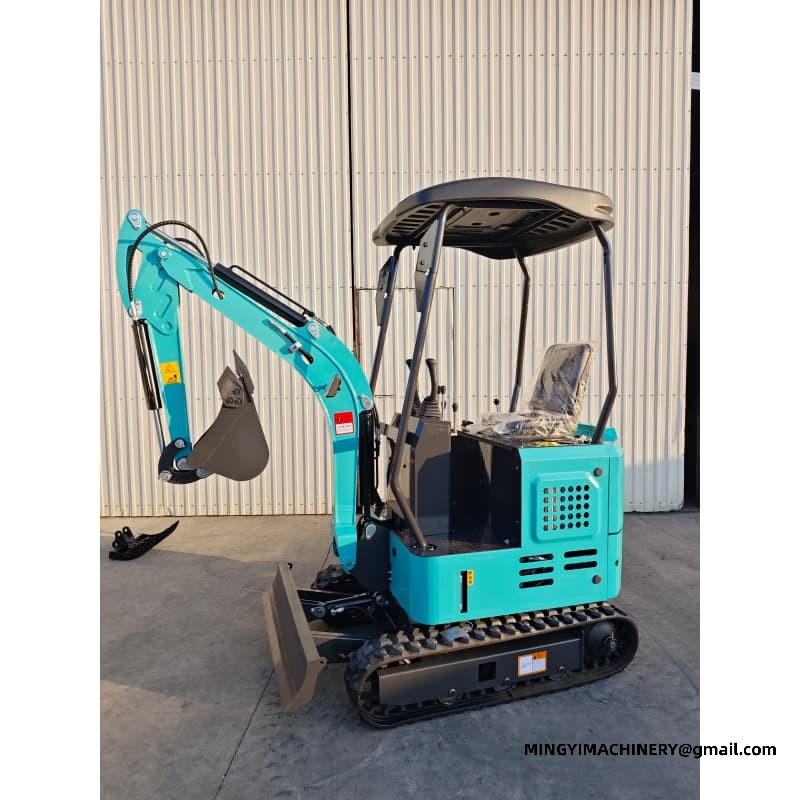
Reference specification — mini excavator range 09W 20-3W 30-2W 30-2L Operating weight 1100 kg (2425.08 lb) 1900 kg (4188.78 lb) 2700 kg (5952.48 lb) 2400 kg (5291 lb) Transport size (L×W×H) 1800 × 750 × 1970 mm 2550 × 1100 × 2200 mm 3000 × 1100 × 2700 mm 2800 × 1500 × 2500 mm Max digging depth 1250 mm (49.21 in) 1800 mm (70.87 in) 2200 mm (86.61 in) 2200 mm (86.61 in) Max digging height 2800 mm (110.24 in) 2820 mm (111.02 in) 3000 mm (118.11 in) 2900 mm (114.17 in) Max dumping height 1700 mm (66.93 in) 2050 mm (80.71 in) 2000 mm (78.74 in) 2100 mm (82.68 in) Max digging radius 2570 mm (101.18 in) 3050 mm (120.08 in) 3800 mm (149.61 in) 3330 mm (131.1 in) Max digging distance 1869 mm (73.58 in) 2300 mm (90.55 in) 3050 mm (120.08 in) 2700 mm (106.3 in) Minimum turning radius 1000 mm (39.37 in) 1450 mm (57.09 in) 1750 mm (68.9 in) 1555 mm (61.22 in) Travel speed 3 km/h (1.86 mph) 5 km/h (3.11 mph) 7 km/h (4.35 mph) 7 km/h (4.35 mph) Gradeability 30° 30° 30° 30° Fuel consumption 1-1.3 L/h (0.264—0.343 gal) 2-3 L/h (0.528—0.793 gal) 2-3 L/h (0.528—0.793 gal) 2-3 L/h (0.528—0.793 gal) Fuel tank capacity 8 L (2.11 gal) 16 L (4.23 gal) 16 L (4.23 gal) 16 L (4.23 gal) Hydraulic oil tank 16 L (4.23 gal) 18 L (4.76 gal) 20 L (5.28 gal) 18 L (4.76 gal) Dozer blade lift height 180 mm (7.09 in) 180 mm (7.09 in) 230 mm (9.06 in) 230 mm (9.06 in) Dozer blade drop depth 210 mm (8.27 in) 210 mm (8.27 in) 280 mm (11.02 in) 280 mm (11.02 in)
Q. What is this class of machine?
A. The whole point of the smallest classes is presence - a digging machine that reaches work nothing bigger can enter. Inside a basement or behind a boundary the machine digs footings, breaks floors and grades the sub-base at rates hand work cannot touch. MINGYI builds the 08, 12 and 18 models covering the 0.8 to 6 tonne class, and the unit in daily use is where that range meets indoor work.
Q. How does the machine get through a narrow opening?
A. Retractable or variable-width frames narrow for the passage then widen for stability, and zero tail swing keeps the counterweight inside the track line. Measure the gap first, then match the class - the smallest machines pass where a wheelbarrow would struggle.
Q. Does MINGYI supply attachments with the machine?
A. Yes - buckets, breakers, augers, rakes and the rest of the working set ship with the carrier, matched to the hydraulic flow and the coupler. For indoor work the package is confirmed on the build sheet, so machine and tools arrive together and start work together.
Documents that travel with a machine of this size
A clear parts book saves more time than any other document. When the equipment on site needs a replacement, the illustration and the part number are what turn a phone call into a shipment instead of a description.
Planning the season around the machine itself
Downtime is simplest when it is planned. Booking the service for the model in question in the quiet part of the season takes nothing from the schedule, while the same work in the busy weeks gives up a day of output every time.
E-mail : sales@mingycn.com
LINE ( ID ): mingyicn
Related pages
mini excavator range for export buyers · compact crawler excavator · Loader Machine for Construction: Specifying for Site Cycles · Mini Excavators









