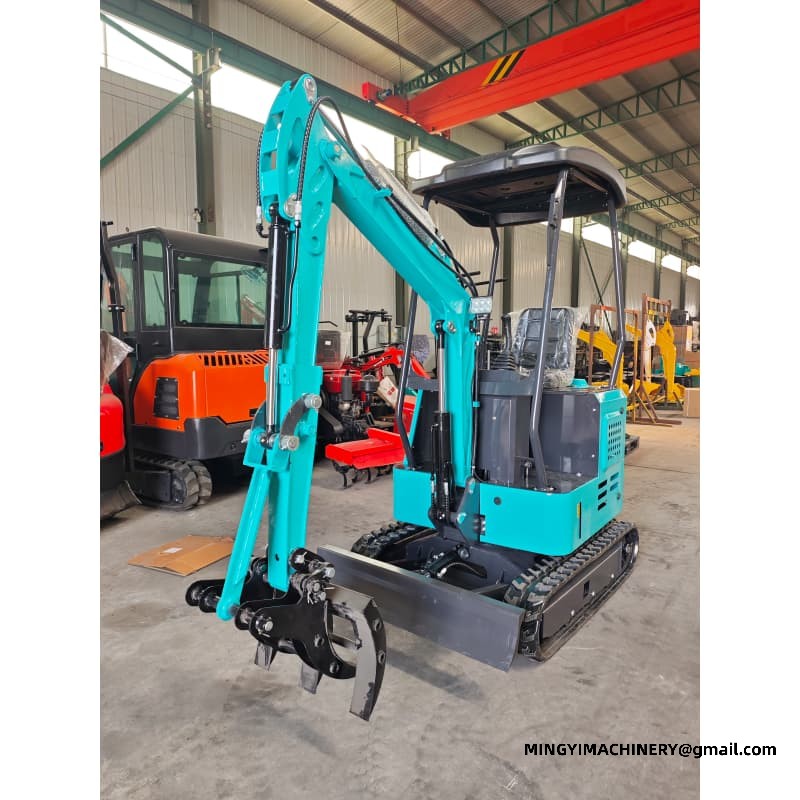
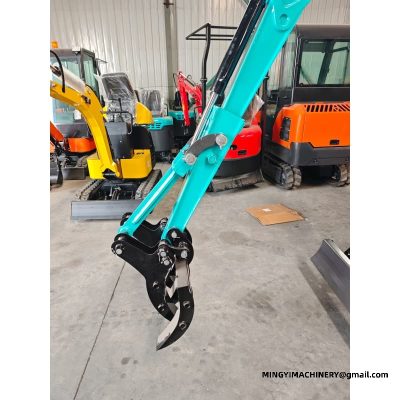
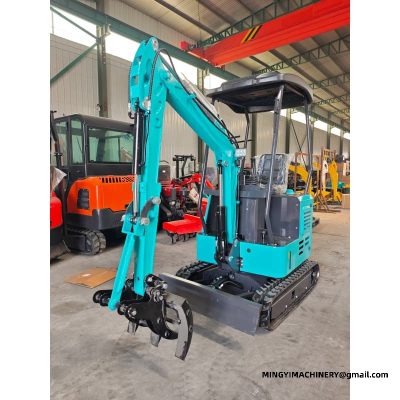
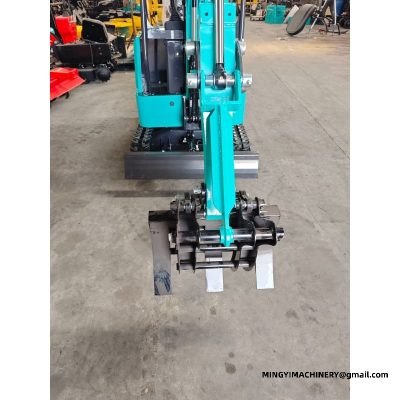
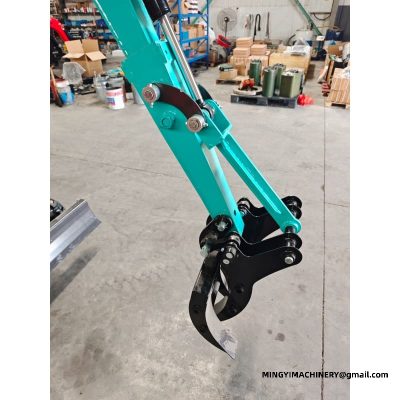
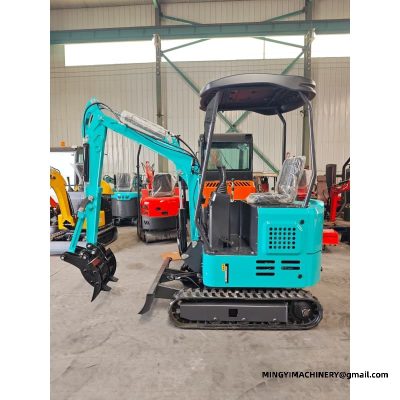
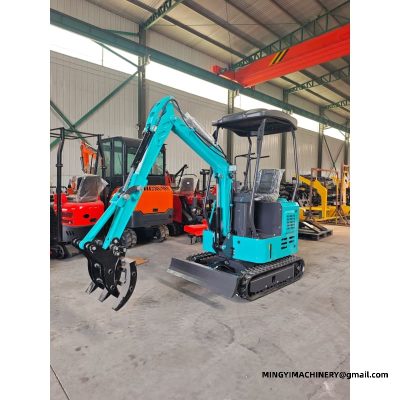
The excavator is a small tracked digging machine designed to work in places where larger plant cannot reach. It combines a rotating upper structure, an articulated boom and a narrow undercarriage, which together let it dig accurately at close range.
MINGYI builds this class of machines to order. The buyer sets track type, boom layout, bucket widths and attachment package before production, so the machine arrives ready for a defined set of tasks.
What makes a crawler excavator compact
Compact refers to the size of the machine rather than the work it does. These excavators pass through openings that rule out larger plant, work inside buildings, and can be transported on a trailer rather than a low loader.
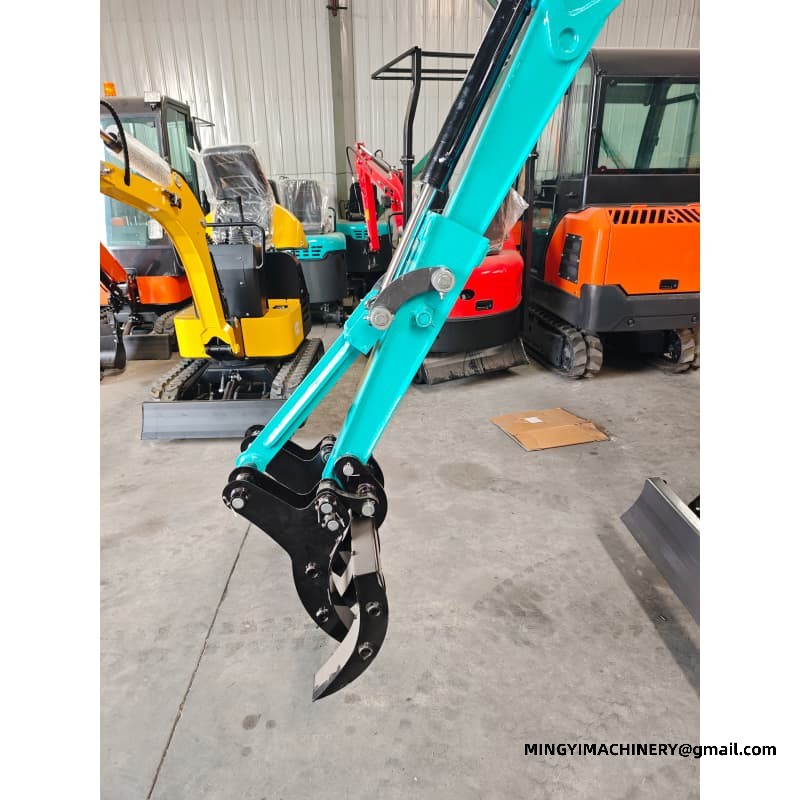
The crawler undercarriage is part of that definition. Tracks spread weight along the ground, giving stability for digging and reducing the load on the surface beneath, which matters on lawns, gravel and finished paving.
Compact excavator configurations to specify
Beyond size, the main choices are the operator station, the boom and the undercarriage. A canopy or an enclosed cab is fixed at build, and so is a fixed, offset or extendable boom, depending on the work.
Undercarriages vary too, from a fixed track frame to a retractable one that narrows for tight access. Buyers should list the tightest gap the machine has to pass through, as that single figure often decides the model.
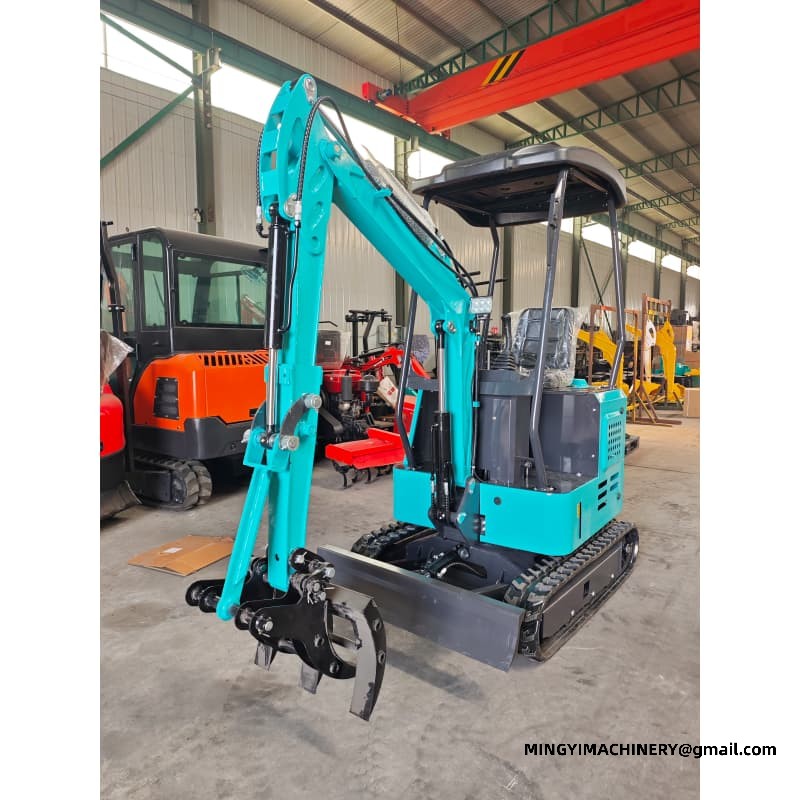
The unit in daily use is defined by access and stability rather than sheer digging power. MINGYI supplies a machine of this sizes built to order in the size, station and track layout the buyer chooses.
Parts, service and support for compact crawler excavator Support after delivery is a parts question. Wearing items for the equipment on site - filters, belts, track components, bucket teeth and pins - are the items a buyer should plan to hold before the first service interval. Engine parts availability usually drives the engine choice. The machine itself built with an engine the local network already carries is serviced from stock rather than from an international order. Lifting and material handling with a compact crawler excavator Lifting with a machine built to dig needs a plan. The load, the radius and the ground under the machine in that duty all matter, and the safe figure is the one on the chart rather than the one that looks possible. Ground condition under the machine is part of every lift. Soft or uneven support is the common factor in handling incidents, and checking it takes less time than recovering the model in question that has settled. Working on slopes and uneven ground with compact crawler excavator Ground that looks level often is not. The unit on the job crossing a filled trench, a soft edge or a hidden void behaves differently from one on undisturbed ground, and those are the places worth walking before driving. Planning the direction of travel helps. Working so that the a machine built for the work is stable under load and not required to turn on a slope is a decision made before the job starts, not a correction made during it. Daily checks and maintenance on compact crawler excavator Daily maintenance on the equipment in service is a short list: engine oil level, coolant, track tension, hydraulic oil level and a look at the hoses. Ten minutes at the start of the shift prevents most of the failures that stop a machine. Track tension is the item most often neglected. The excavator run with slack tracks wears the undercarriage and can throw a track on a turn; run too tight, the same components wear from the other direction. Orchard, vineyard and farm use of compact crawler excavator Orchard and vineyard work is carried out between rows. This class of machine with a narrow chassis and a swing boom works down the row without damaging the trees, which is the reason a full-size machine is not used at all. Farms also use the unit in daily use for general maintenance - clearing a watercourse, repairing a track, loading a spreader. One carrier with a few attachments covers most of the jobs that would otherwise wait for a contractor. Canopy or enclosed cab on a compact crawler excavator The cab decision follows the climate and the hours. Operators working a full shift in a machine of this size benefit from a sealed cab with wipers and heating; operators stepping on and off every few minutes usually prefer the canopy for the visibility and the quick exit. Enclosure also changes noise and dust exposure. A sealed cab on the equipment on site keeps dust out on dry sites and lets the machine work through weather that would otherwise stop a canopy machine for the day. Export packing and shipping of the machine itself Machines leave the factory prepared for container or flat rack shipment. The model in question is normally shipped with the attachment set and the spare parts list agreed in advance so the container is planned once. Export documentation, decals and paint are settled before packing. Asking for them with the machine in that duty order avoids a second handling session and keeps the machine on the booked vessel. Boom configuration for the unit on the job A swing boom lets the machine dig parallel to its tracks without repositioning, which is what makes trenching beside a wall or a fence practical. On a machine built for the work this is often the option that decides whether a job is possible at all. Extended and offset boom configurations change reach and working range. The equipment in service with a longer arm reaches further but lifts less at full extension, so the specification is set against the deepest and furthest point on the job list. Working the excavator through the seasons Weather decides which days are productive. Rain turns some ground unusable and cold changes how this class of machine starts and warms up, so planning the wet months around maintenance is more useful than planning around output. Seasonal planning smooths the workload. Machines that are busy for a few months and idle for the rest benefit from a service slot in the quiet period, and the unit in daily use prepared in the off-season starts the busy months reliably. Landscaping and ground care with a machine of this size Landscape contractors use the equipment on site for planting holes, pond excavation, grading and retaining work. The machine is light enough to cross finished lawn and narrow enough to work between established trees. On soft landscape work the surface is the constraint. The machine itself on rubber tracks crosses turf without stripping it, which is why the same jobs are not given to a wheeled machine. Operator technique for the model in question The second habit is tool discipline. Running the machine in that duty with the right bucket width for the trench means less spoil, less reinstatement and a cleaner job than a wide bucket and a lot of trimming. Stability is the third. The unit on the job working across the tracks rather than over the corners keeps the machine steady and the undercarriage loaded evenly, which shows up as track life at the end of the season. What owners should plan for beyond the machine built for the work Purchase decision is the visible part of the effort. Fuel, filters, tracks or tyres, the operator and the transport between sites are the items that decide what the equipment in service actually demands over a few seasons, and they are worth listing before the order. Downtime is the hidden line item. The excavator waiting on a part earns nothing while it stands, so parts availability and service access belong in the plan as much as fuel does. Specifying this class of machine against a job list Buyers who skip this step either over-buy or under-buy. The unit in daily use specified only from machine size tends to arrive without the coupler, the circuits or the track type the work actually needs. Useful information to send with an enquiry includes working width, required digging depth, ground conditions and the attachment set. Those four items let the factory specify a machine of this size that fits rather than a generic build. Specification data for the equipment on site The figures below are the factory figures for the models most often matched to the machine itself. They are the numbers to check against the site: the depth the work needs, the reach from one position, and the width of the narrowest point on the route in. Figures are factory figures and are confirmed on the build sheet for the model in question. Where a job sits between two models, the larger machine usually takes less time than the smaller one spends on rework. Rubber tracks suit paved and landscaped ground because they spread the machine weight and leave the surface intact. Steel tracks with rubber blocks are specified where the ground is rougher or the working day is longer, and the choice can be made per machine rather than accepted as a factory default. Track type changes what the machine can cross and what it leaves behind. Buyers specify rubber for lawns, driveways and municipal work, and steel with rubber blocks for sites where sharp material would cut a rubber belt in a week.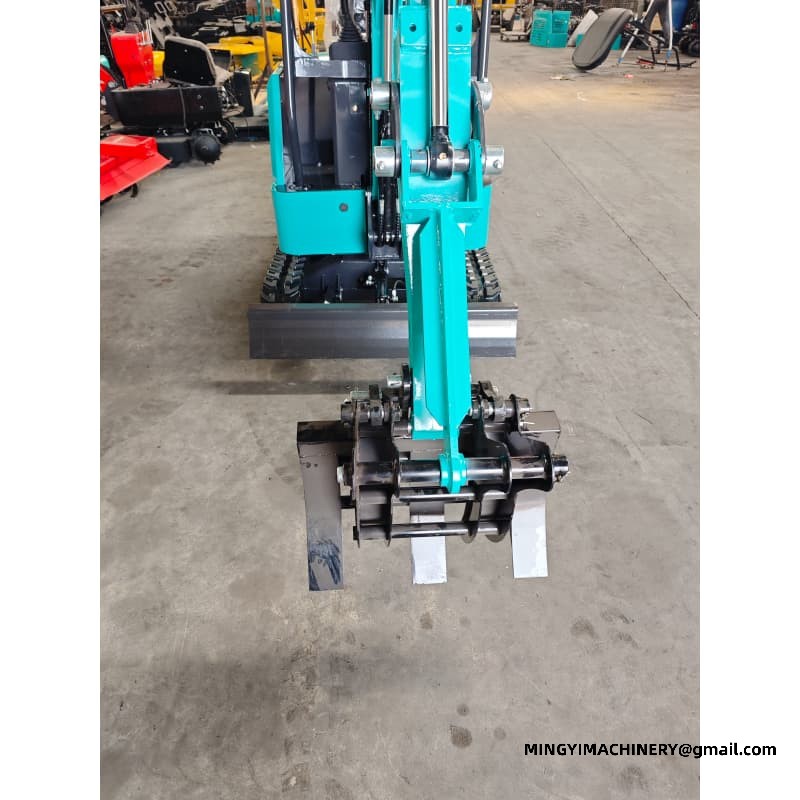
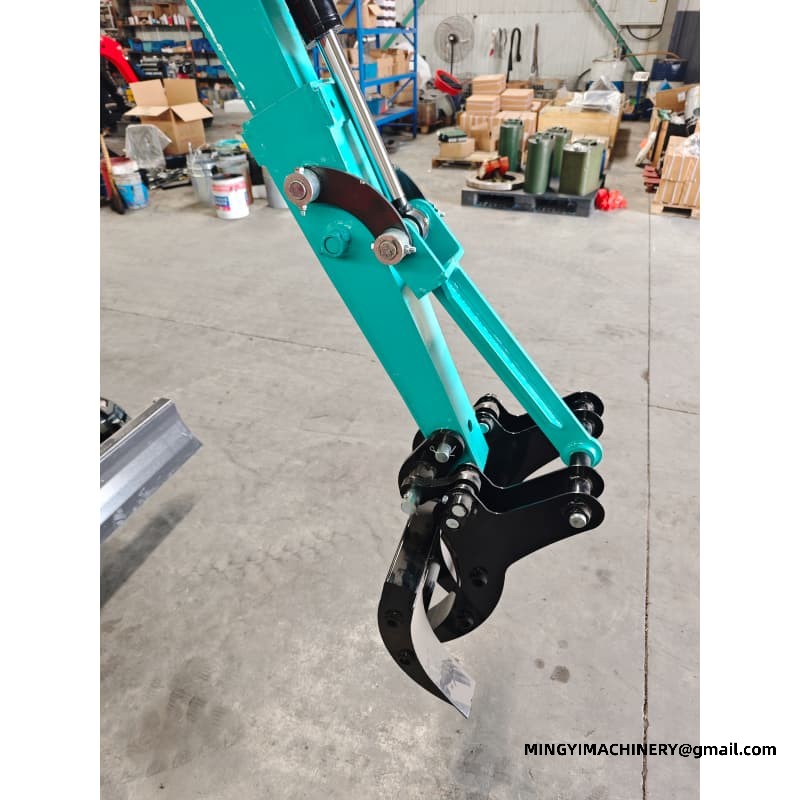
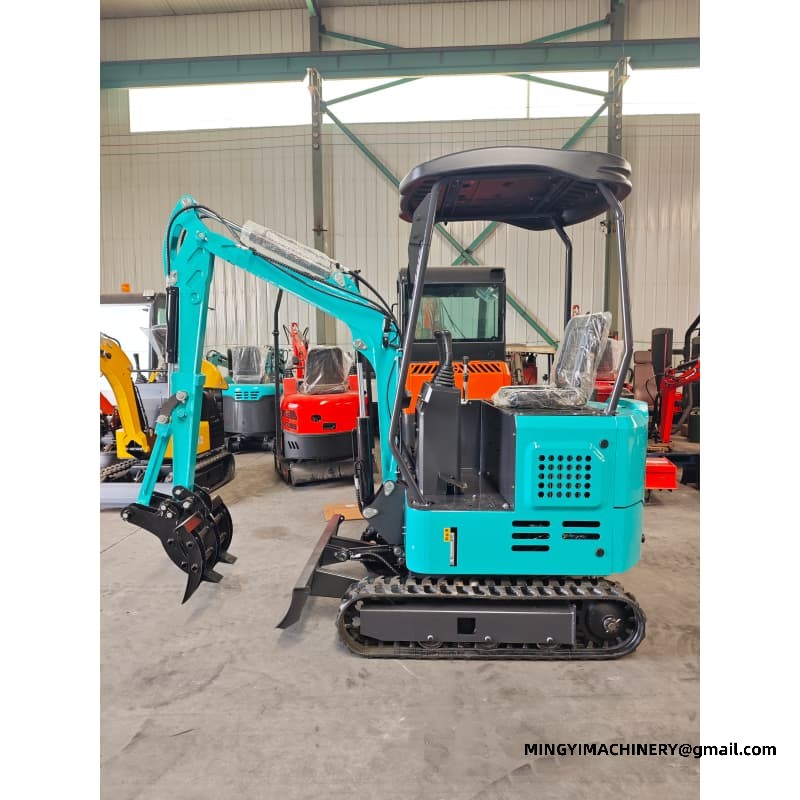
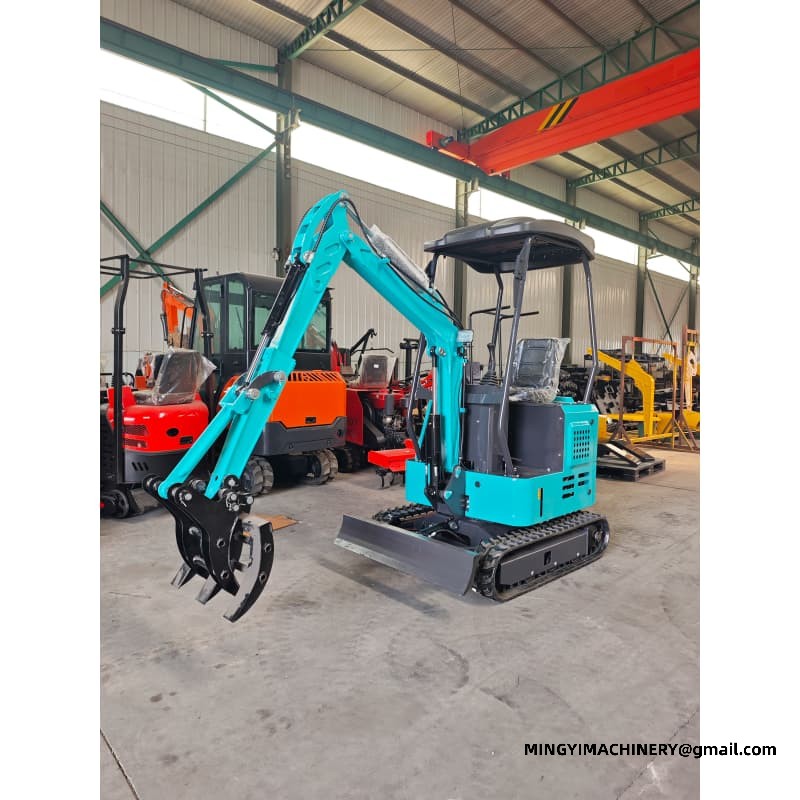
Reference specification — mini excavator range 12W 30-2W 15L 20-2L Operating weight 1200 kg (2645.55 lb) 2700 kg (5952.48 lb) 1400 kg (3086.47 lb) 1900 kg (4188.78 lb) Transport size (L×W×H) 2200 × 930 × 2250 mm 3000 × 1100 × 2700 mm 2200 × 930 × 2250 mm 2600 × 1300 × 2344 mm Max digging depth 1630 mm (64.17 in) 2200 mm (86.61 in) 1700 mm (66.93 in) 2100 mm (82.68 in) Max digging height 2750 mm (108.27 in) 3000 mm (118.11 in) 2750 mm (108.27 in) 2880 mm (113.39 in) Max dumping height 1960 mm (77.17 in) 2000 mm (78.74 in) 1960 mm (77.17 in) 2100 mm (82.68 in) Max digging radius 2900 mm (114.17 in) 3800 mm (149.61 in) 2900 mm (114.17 in) 3215 mm (126.57 in) Max digging distance 2100 mm (82.68 in) 3050 mm (120.08 in) 2300 mm (90.55 in) 2460 mm (96.85 in) Minimum turning radius 1300 mm (51.18 in) 1750 mm (68.9 in) 1450 mm (57.09 in) 1587 mm (62.48 in) Travel speed 3 km/h (1.86 mph) 7 km/h (4.35 mph) 3 km/h (1.86 mph) 5 km/h (3.11 mph) Gradeability 30° 30° 30° 30° Fuel consumption 1-1.3 L/h (0.264—0.343 gal) 2-3 L/h (0.528—0.793 gal) 1-1.3 L/h (0.264—0.343 gal) 2-3 L/h (0.528—0.793 gal) Fuel tank capacity 10 L (2.64 gal) 16 L (4.23 gal) 10 L (2.64 gal) 16 L (4.23 gal) Hydraulic oil tank 16 L (4.23 gal) 20 L (5.28 gal) 16 L (4.23 gal) 18 L (4.76 gal) Dozer blade lift height 180 mm (7.09 in) 230 mm (9.06 in) 180 mm (7.09 in) 180 mm (7.09 in) Dozer blade drop depth 210 mm (8.27 in) 280 mm (11.02 in) 210 mm (8.27 in) 210 mm (8.27 in)
Q. What is the machine in that duty used for?
A. The compact class exists for the jobs in between - too much for hand tools, too tight or too short for a full-size machine. Trenching on Monday, loading and grading through the week, fence posts and drainage to finish - the attachment set specifications the work. For general site applications the practical route is to send the job list to the factory and let the build sheet answer it - which is exactly what this page invites.
Q. What can I expect from a compact excavator in a normal week?
A. Trenching one day, loading and grading the next, fence posts and drainage through the rest - one machine, one trailer, one operator, and the attachment set specifications the work.
Q. What support follows the sale?
A. Spare-part kits, wear items and service documentation ship with the programme, and the parts team works from the serial plate to match components exactly. Warranty and support terms for the general site order are confirmed in writing before the machine leaves.
Planning the season around the unit on the job
Workload is rarely even across the year, and the machine should be specified for the busy weeks. A machine built for the work sized only for the average month will be the limiting factor exactly when the work is worth the most.
Handover and getting familiar with the equipment in service
Operators who come from a different machine need a short conversion. The controls on the excavator follow the usual pattern, but the response, the sightlines and the stopping distance are learned by doing rather than by reading.
E-mail : sales@mingycn.com
LINE ( ID ): mingyicn
Related pages
small crawler digger · micro excavator for indoor digging · Wheel Loader for Agriculture: Gate Widths, Sheds and Wagons · Mini Excavators









