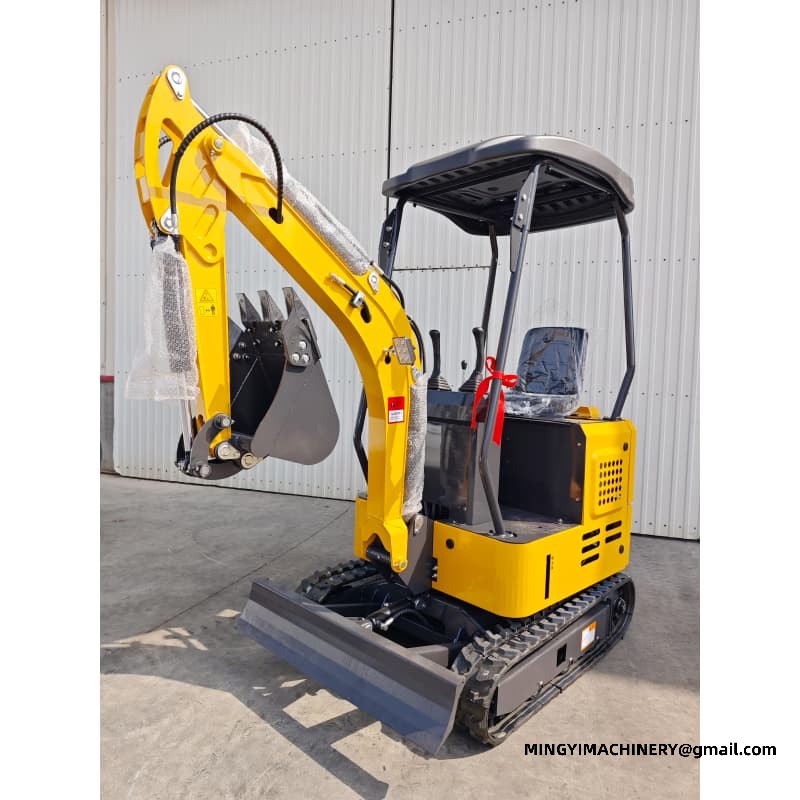
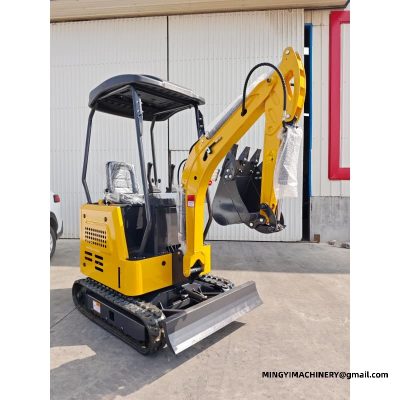
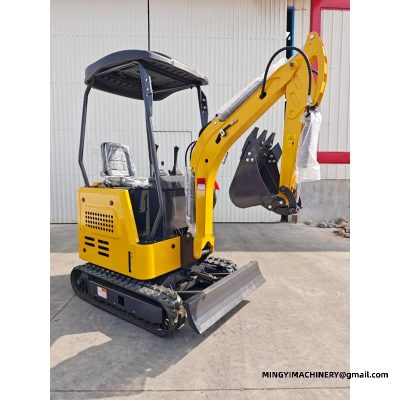
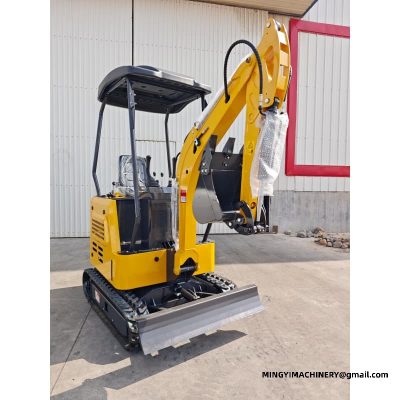
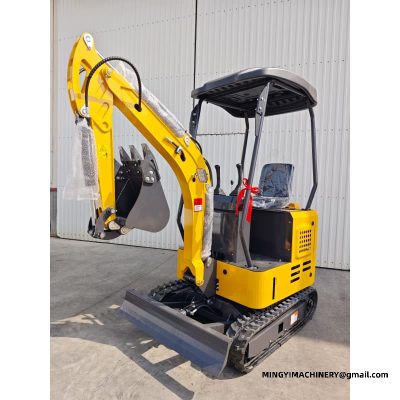
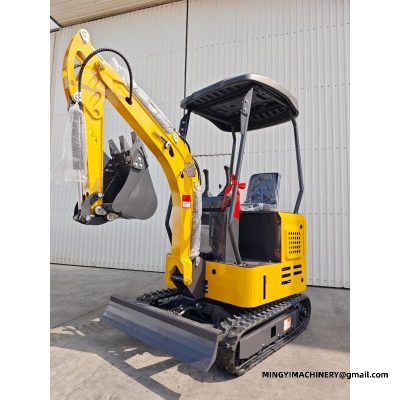
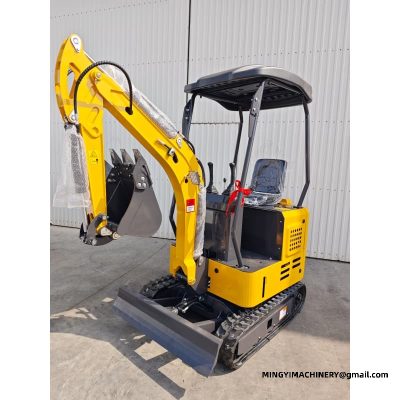
At the smallest end of the range, work is limited not by digging force but by the width of the opening the machine must pass through. MINGYI micro excavators are built for those jobs, entering gardens, interiors and orchard rows where nothing larger fits.
These units strip floors indoors, dig service channels in finished rooms, work nursery beds and clean out small ponds. The build is confirmed to the buyer's access limits at the ordering stage and recorded against the machine.
The jobs only a micro unit reaches
Interior renovation, courtyard landscaping and greenhouse work share one constraint: the doorway or gate defines the machine. The micro excavator passes through, then works a full slewing cycle in the room or bed it enters.
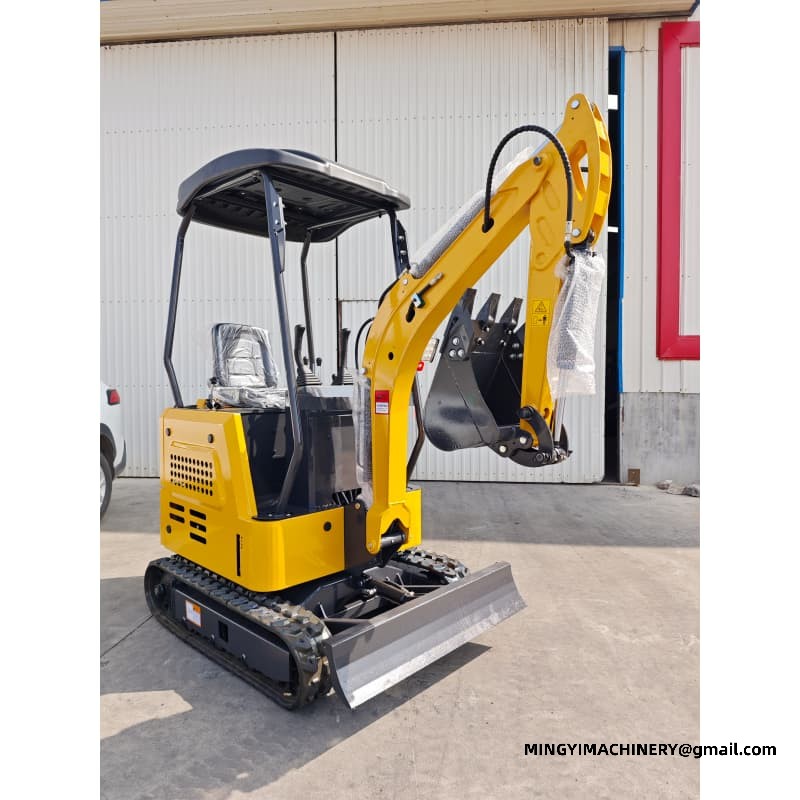
On small holdings the same machine digs post holes, clears ditches and levels bed soil with the attachment set sized for its carrier class. Rubber tracks protect paved and planted surfaces as it moves between the work areas.
Specifying a micro machine with MINGYI
Buyers state the narrowest opening and the headroom of the working area, and the configuration, canopy or cab, track type and tool package is fixed against those numbers. The build is then recorded against the machine for parts support.
The attachment set for this class runs to small buckets, a breaker for floor work, an auger for fencing and a tilting bucket for finishing. Spare parts and service information ship with the unit, which matters for machines working inside occupied buildings.
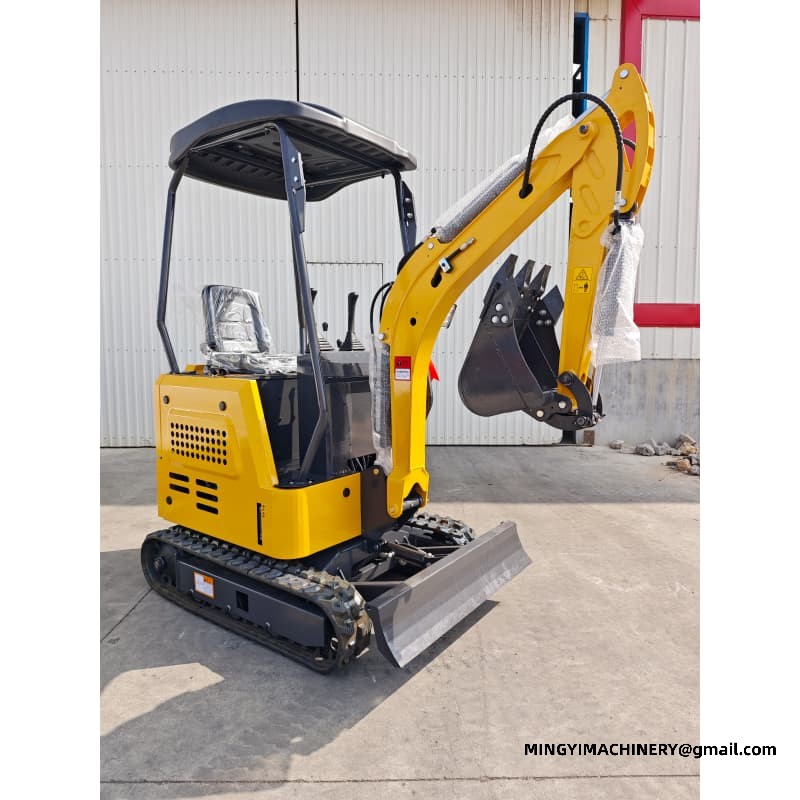
A micro excavator is chosen for where it can go rather than how much it can lift. MINGYI checks the buyer's access limits and indoor or garden scope, then builds the machine to that envelope.
Engine options behind micro excavator for indoor digging Two buyers can order the same this class of machine and receive different engines. The decision is rarely about peak power; it is about which parts counter is closest to the site and which engine the local mechanic already knows. Engine choice is also an emissions and documentation question for some markets. Listing the available units with the excavator enquiry lets the factory confirm what can be supplied and documented for the destination country. Interior and light demolition with micro excavator for indoor digging Interior demolition is an access and a weight question. The unit in daily use that fits through a doorway and works on a suspended floor does jobs that would otherwise be done by hand or by a larger machine that cannot enter. Breaking out a floor slab, a wall footing or a concrete step is routine work for a machine of this size with a breaker. The machine is small enough to work inside and heavy enough to run the tool at a practical rate. Hydraulic circuits on a micro excavator for indoor digging Auxiliary hydraulic lines are what let a machine drive a tool rather than only a bucket. The equipment on site specified with the right circuits and flow runs a breaker or an auger without an add-on power pack bolted to the frame. Flow and pressure are matched to the tool, not to the machine size. Asking for the attachment list first means the machine itself leaves the factory with circuits that suit the heaviest tool the buyer intends to run. Specifying micro excavator for indoor digging against a job list The practical way to specify is to write the job list first: the narrowest access, the deepest trench, the heaviest tool and the surfaces the machine must cross. The model in question is then matched to those four numbers. Buyers who skip this step either over-buy or under-buy. The machine in that duty specified only from machine size tends to arrive without the coupler, the circuits or the track type the work actually needs. Landscaping and ground care with micro excavator for indoor digging Grass cutting heads, rakes and tillers extend the unit on the job into ground care. The same carrier that digs a border in spring can cut and clear the same area later in the season. On soft landscape work the surface is the constraint. A machine built for the work on rubber tracks crosses turf without stripping it, which is why the same jobs are not given to a wheeled machine. Export packing and shipping of micro excavator for indoor digging Machines leave the factory prepared for container or flat rack shipment. The equipment in service is normally shipped with the attachment set and the spare parts list agreed in advance so the container is planned once. Buyers who import regularly plan the spare parts with the machine. The excavator ordered with a wearing-parts kit arrives ready to work rather than ready to wait for the first service interval. Working this class of machine through the seasons Weather decides which days are productive. Rain turns some ground unusable and cold changes how the unit in daily use starts and warms up, so planning the wet months around maintenance is more useful than planning around output. Heat and dust are as limiting as rain. Air intake condition and cooling cleanliness decide how a machine of this size behaves in a dry season, and both are checked in a minute rather than repaired later. Lifting and material handling with the equipment on site Stability changes with reach. A load the machine itself handles close in becomes a different proposition at full extension, so the working radius belongs in the plan before the lift rather than during it. Ground condition under the machine is part of every lift. Soft or uneven support is the common factor in handling incidents, and checking it takes less time than recovering the model in question that has settled. Getting the machine in that duty through a narrow gap The first question on most job lists is whether the machine can reach the work at all. The unit on the job is chosen against the narrowest point on the route - a garden gate, a doorway, a gap between two walls - because a machine that arrives and then cannot pass loses a day, not an hour. Access decides the machine before output does. With a machine built for the work the limiting dimension is usually the widest point on the way in, so measuring the gate, the corridor and the turning space first saves a wasted delivery and a second visit. Track choice for the equipment in service Undercarriage selection is a ground question, not a preference question. The excavator running on finished paving needs rubber; the same machine on demolition rubble or rock wears rubber quickly, so steel with rubber blocks becomes the better answer over a full season. Track type changes what the machine can cross and what it leaves behind. Buyers specify rubber for lawns, driveways and municipal work, and steel with rubber blocks for sites where sharp material would cut a rubber belt in a week. Working on slopes and uneven ground with this class of machine Slope work is a stability question before it is a traction question. Knowing the gradient the unit in daily use is rated for, and working across rather than straight up where the ground allows, removes most of the risk. Planning the direction of travel helps. Working so that the a machine of this size is stable under load and not required to turn on a slope is a decision made before the job starts, not a correction made during it. Trenching work with the equipment on site Service trenches are the most common reason the machine itself is hired. Water, sewage, cable and gas runs are narrow, shallow and often close to existing services, which is exactly the work a full-size machine cannot do safely. Trench quality depends on the bucket width and the operator, not on machine size. The model in question with a narrow bucket and a swing boom cuts a clean run along a boundary without disturbing the ground either side of it. Specification data for the machine in that duty Where the unit on the job is being specified for a job list, the table below gives the factory figures that matter most: what the machine weighs, how deep and how far it works, and what it measures on a trailer. Figures are factory figures and are confirmed on the build sheet for a machine built for the work. Where a job sits between two models, the larger machine usually takes less time than the smaller one spends on rework. Loading practice matters as much as the numbers. The equipment in service is driven up ramps under its own power with the boom lowered and the tracks aligned, and secured at the points the manufacturer specifies. Detachable components reduce transport length. The excavator built with a removable arm section or a folding step fits a shorter trailer and may avoid an oversize movement permit.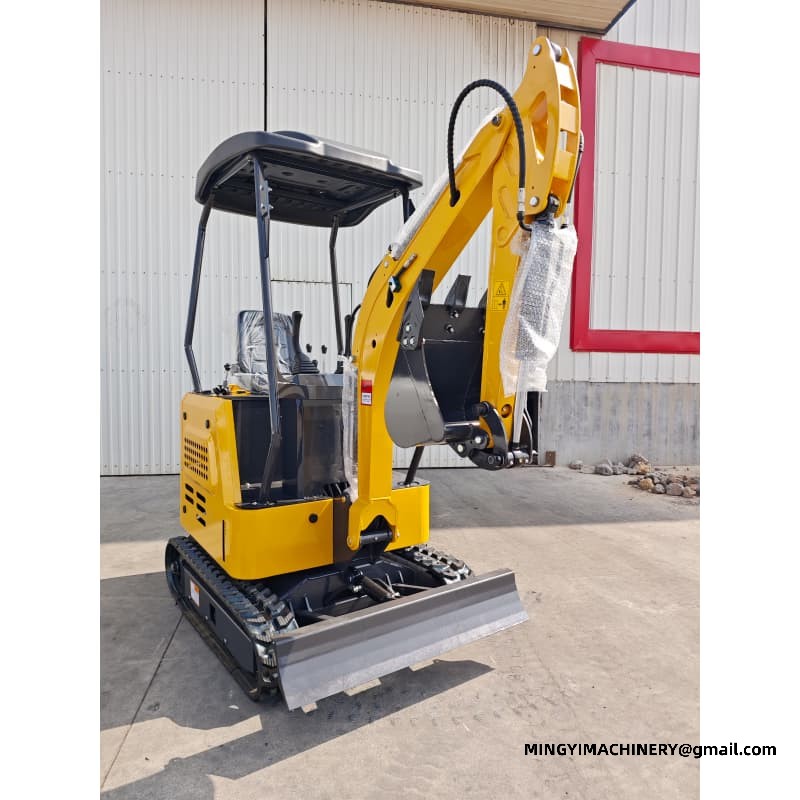
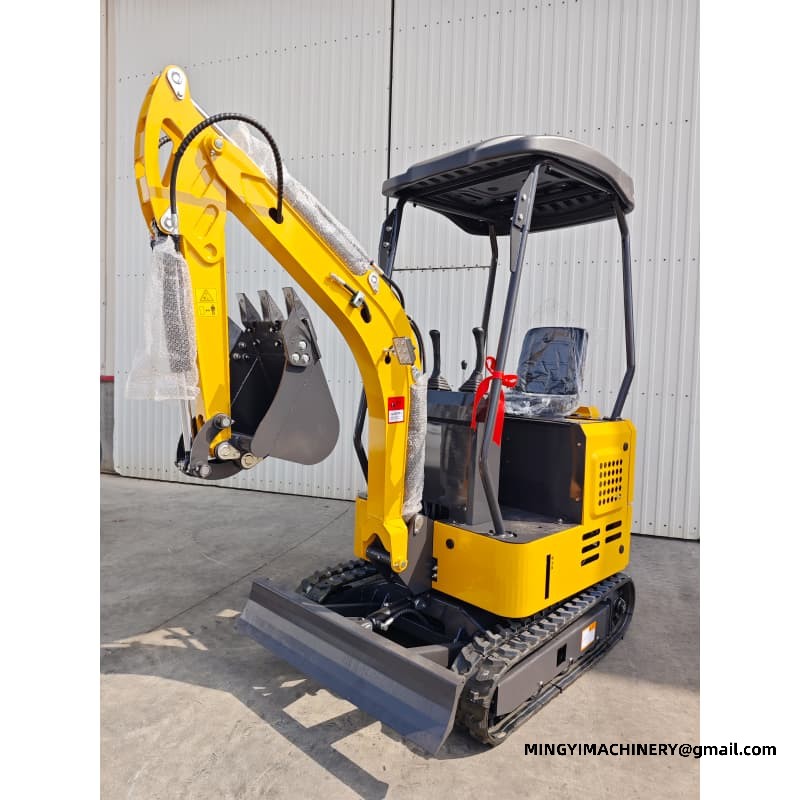
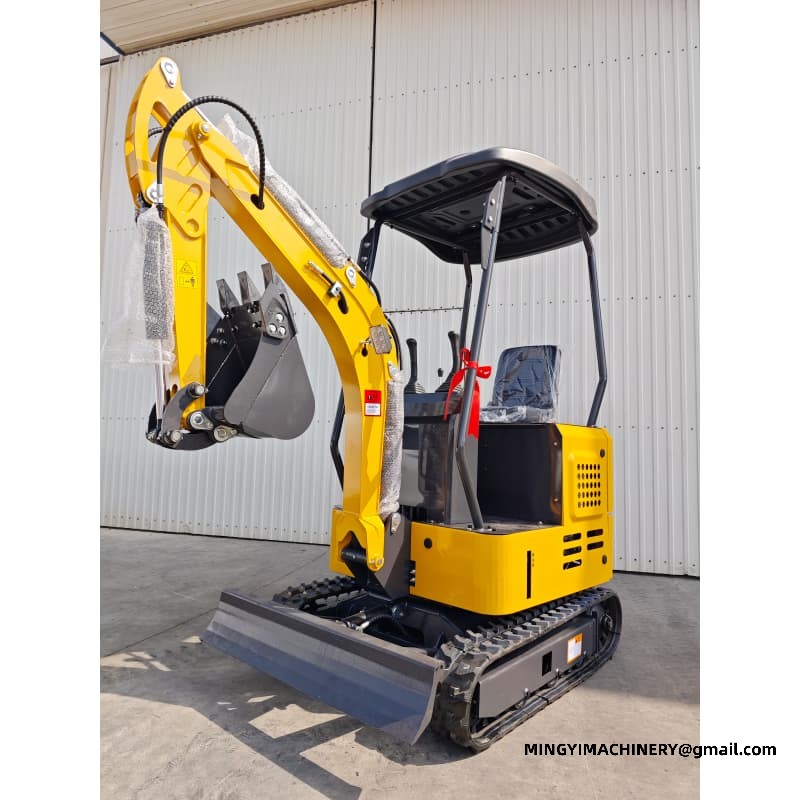
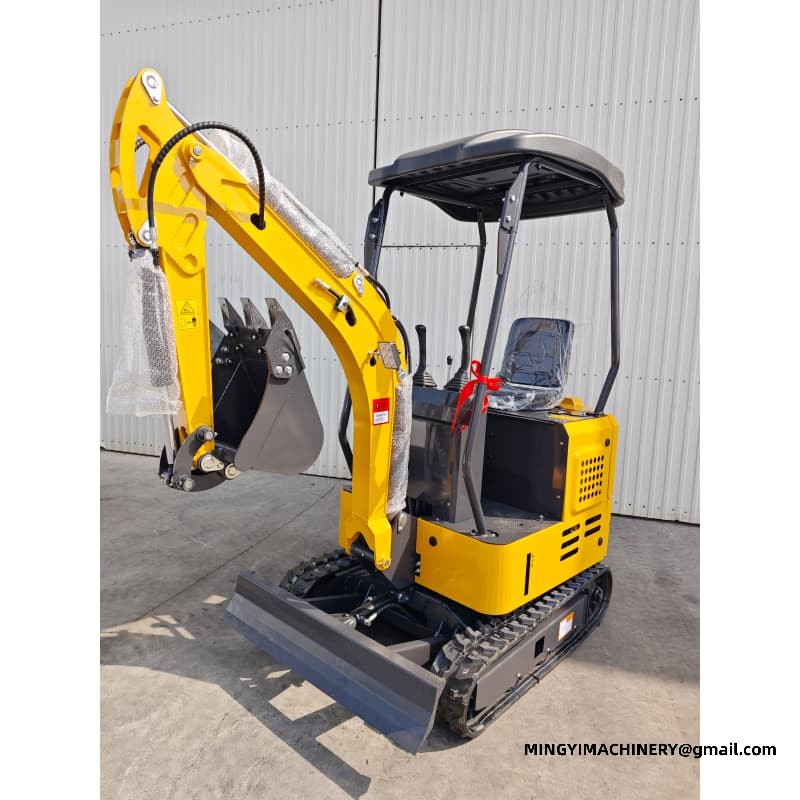
Reference specification — mini excavator range 09W 20-1W 30-1W 09L Operating weight 1100 kg (2425.08 lb) 1800 kg (3968.32 lb) 2900 kg (6393.41 lb) 1100 kg (2425.08 lb) Transport size (L×W×H) 1800 × 750 × 1970 mm 2550 × 1100 × 2200 mm 3000 × 1250 × 2780 mm 2300 × 720 × 1870 mm Max digging depth 1250 mm (49.21 in) 1800 mm (70.87 in) 2200 mm (86.61 in) 1400 mm (55.12 in) Max digging height 2800 mm (110.24 in) 2820 mm (111.02 in) 3400 mm (133.86 in) 2800 mm (110.24 in) Max dumping height 1700 mm (66.93 in) 2050 mm (80.71 in) 2400 mm (94.49 in) 1880 mm (74.02 in) Max digging radius 2570 mm (101.18 in) 3050 mm (120.08 in) 4000 mm (157.48 in) 2490 mm (98.03 in) Max digging distance 1869 mm (73.58 in) 2300 mm (90.55 in) 2800 mm (110.24 in) 2000 mm (78.74 in) Minimum turning radius 1000 mm (39.37 in) 1450 mm (57.09 in) 2000 mm (78.74 in) 1400 mm (55.12 in) Travel speed 3 km/h (1.86 mph) 5 km/h (3.11 mph) 5 km/h (3.11 mph) 3 km/h (1.86 mph) Gradeability 30° 30° 30° 30° Fuel consumption 1-1.3 L/h (0.264—0.343 gal) 2-3 L/h (0.528—0.793 gal) 2-3 L/h (0.528—0.793 gal) 1-1.3 L/h (0.264—0.343 gal) Fuel tank capacity 8 L (2.11 gal) 16 L (4.23 gal) 16 L (4.23 gal) 8 L (2.11 gal) Hydraulic oil tank 16 L (4.23 gal) 18 L (4.76 gal) 20 L (5.28 gal) 16 L (4.23 gal) Dozer blade lift height 180 mm (7.09 in) 180 mm (7.09 in) 420 mm (16.54 in) 180 mm (7.09 in) Dozer blade drop depth 210 mm (8.27 in) 210 mm (8.27 in) 210 mm (8.27 in) 210 mm (8.27 in)
Q. What is this class of machine?
A. Access decides whether a compact excavator is on the job at all: gates, doorways, basements, elevator rooms and rows between benches set hard limits on width and tail radius. Retractable frames narrow for the passage then widen for stability, so nothing is given up once the machine is through. MINGYI builds the 08, 12 and 18 models covering the 0.8 to 6 tonne class, and the unit in daily use is where that range meets indoor digging.
Q. How does the machine get through a narrow opening?
A. Retractable or variable-width frames narrow for the passage then widen for stability, and zero tail swing keeps the counterweight inside the track line. Measure the gap first, then match the class - the smallest machines pass where a wheelbarrow would struggle.
Q. What support follows the sale?
A. Spare-part kits, wear items and service documentation ship with the programme, and the parts team works from the serial plate to match components exactly. Warranty and support terms for the indoor digging order are confirmed in writing before the machine leaves.
Hot, humid and dusty conditions around a machine of this size
Heat and dust shorten service intervals rather than machine life. In these conditions the filters on the equipment on site need attention more often, and the cooling surfaces need to be kept clear to hold the working temperature.
Fuel, oil and fluid quality for the machine itself
Fluid quality is a storage problem before it is a machine problem. Water and sediment in a drum will find the injection system of the model in question eventually, and a settling period is nothing compared with a pump.
E-mail : sales@mingycn.com
LINE ( ID ): mingyicn
Related pages
mini excavator for sale by model · mini excavator for first-time buyers · Wheel Loader for Material Handling: Forks, Grapples and Circuits · Mini Excavators









