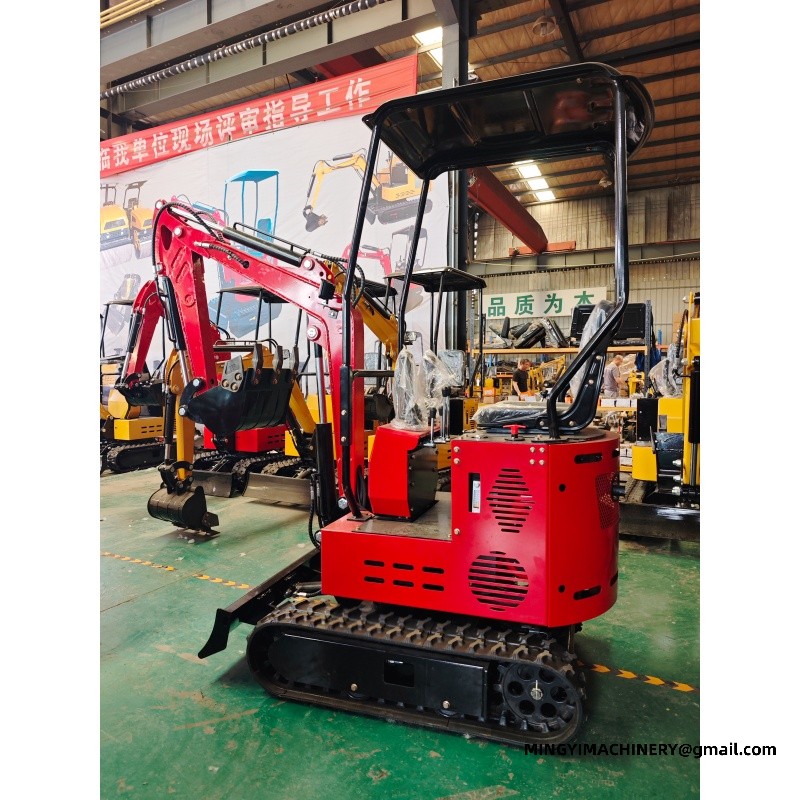
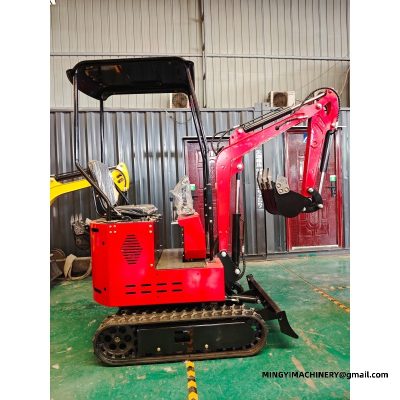
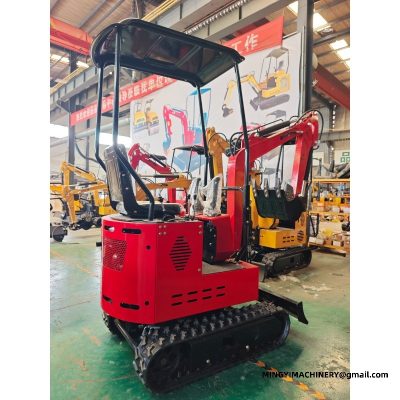
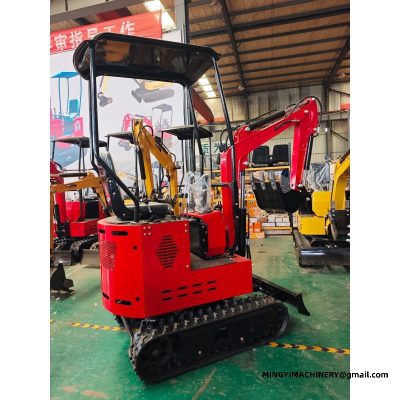
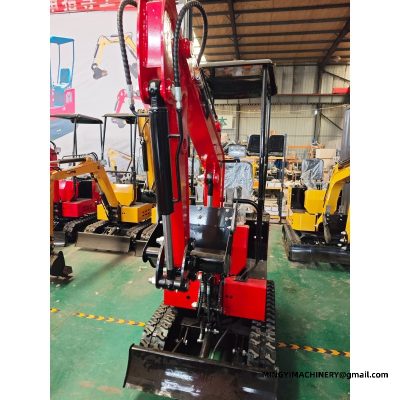
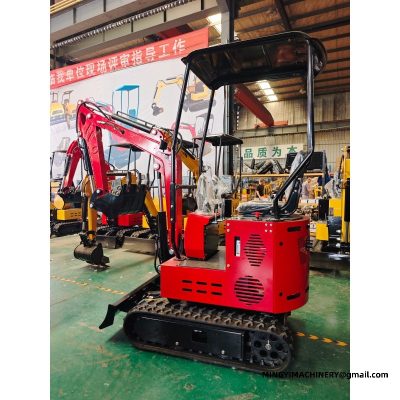
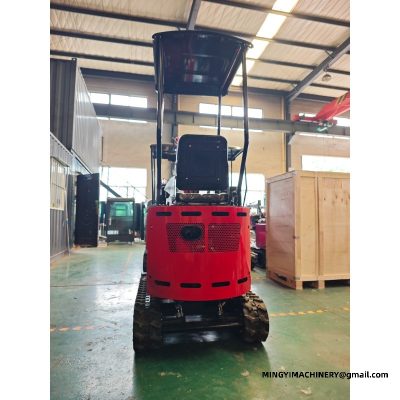
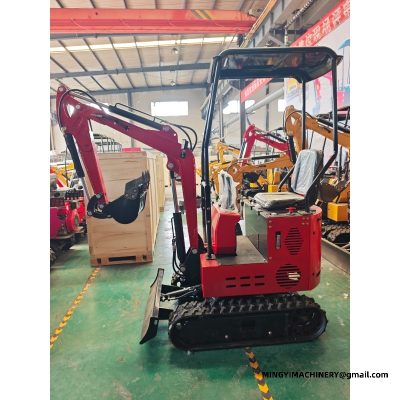
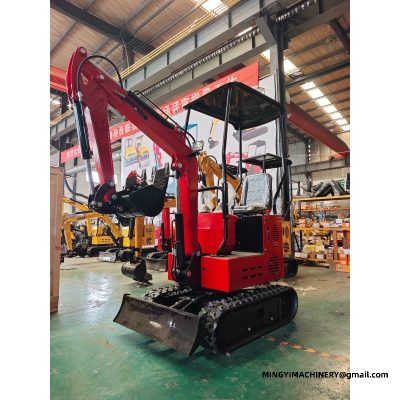
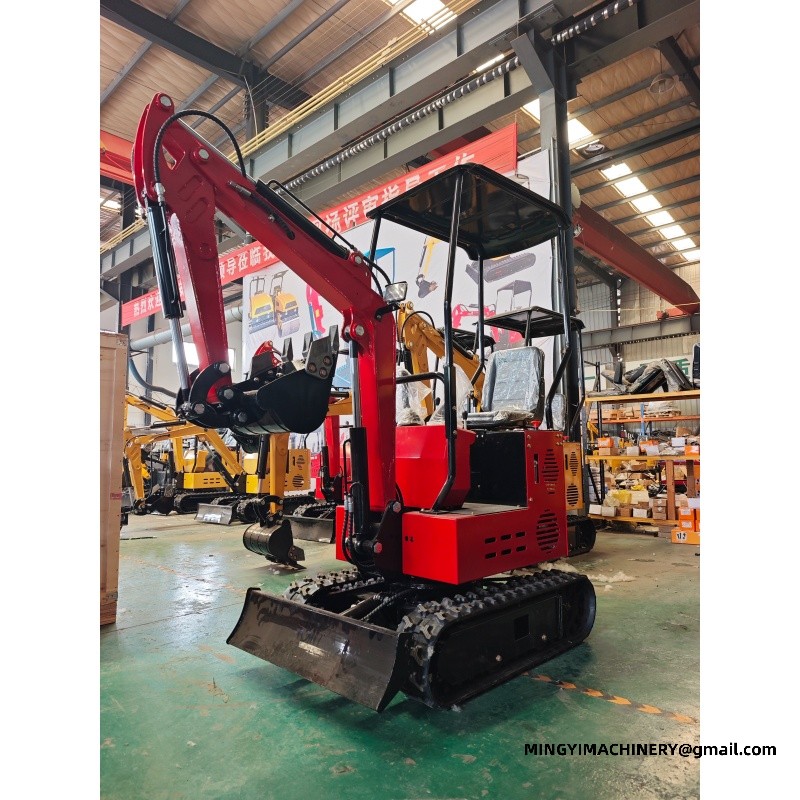
A household yard asks for occasional excavation rather than daily production: a new drainage line, a pond cleaned out, a patio base levelled. The MINGYI the excavator is the machine sized for those recurring private jobs.
It travels through gates, works between planted beds and leaves the lawn in a state that recovers, on rubber tracks that protect the surfaces it crosses. The configuration is confirmed to the property's layout at the ordering stage.
Yard jobs the small machine handles
Digging for drainage and irrigation runs, footings for garden walls and sheds, and clearing silted ponds are the core tasks. The auger drills holes for posts and pergola footings, and the tilting bucket finishes soil and gravel surfaces around the garden.
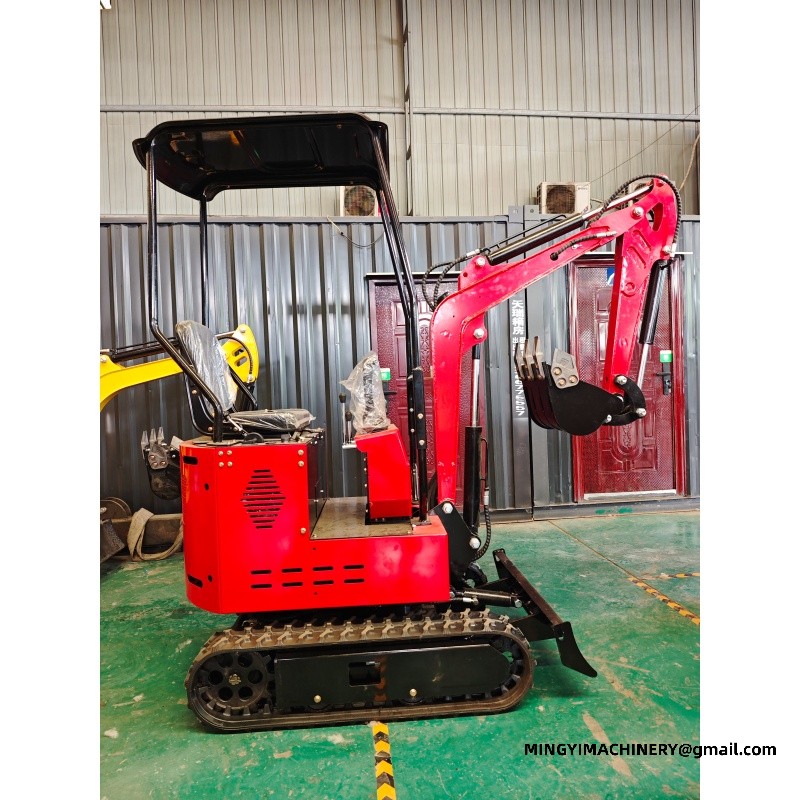
Seasonal cleanups bring out the rake and grab attachments for leaves, brush and pruned material. Because the jobs are occasional, the machine's simplicity matters more than its working speed between tool changes.
Buying a yard machine from MINGYI
Buyers state the gate widths, the surface types and the jobs on the list, and the machine class, track type and attachment set are fixed against that description. The build is recorded against the unit when the order is placed.
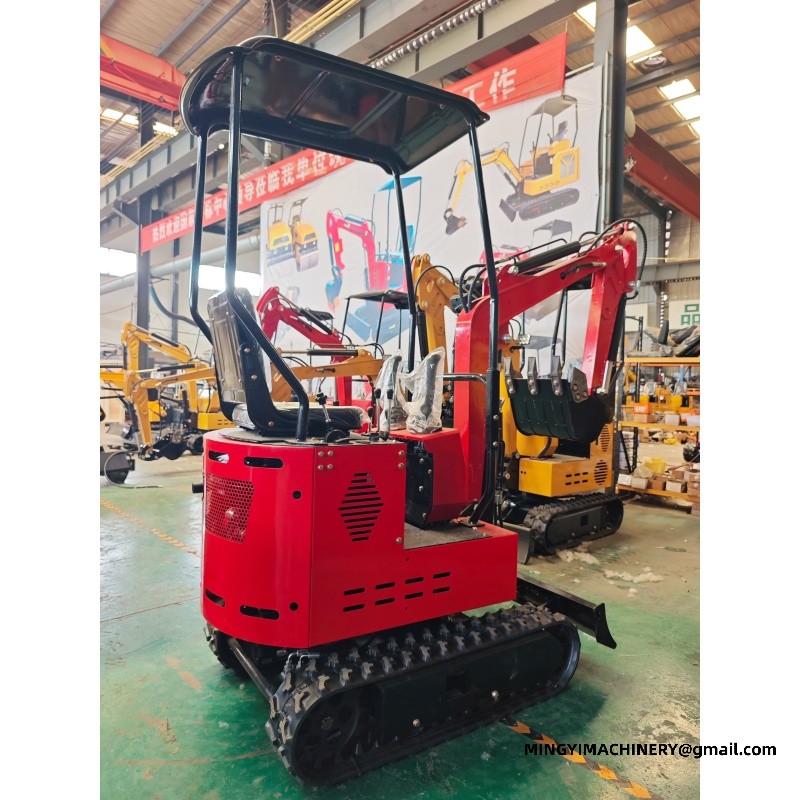
Spare parts and service information ship with the excavator, which suits owners who maintain the machine themselves between seasonal rounds of work. The attachment package usually stays small: general and narrow buckets, an auger and a rake.
A yard machine is judged by how little disturbance it leaves behind and how easily it reaches the work. MINGYI reviews the property layout and job list with the buyer and configures the excavator to that household scope.
Landscaping and ground care with small excavator for yard work Landscape contractors use this class of machine for planting holes, pond excavation, grading and retaining work. The machine is light enough to cross finished lawn and narrow enough to work between established trees. On soft landscape work the surface is the constraint. The unit in daily use on rubber tracks crosses turf without stripping it, which is why the same jobs are not given to a wheeled machine. Working a small excavator for yard work through the seasons Weather decides which days are productive. Rain turns some ground unusable and cold changes how a machine of this size starts and warms up, so planning the wet months around maintenance is more useful than planning around output. Seasonal planning smooths the workload. Machines that are busy for a few months and idle for the rest benefit from a service slot in the quiet period, and the equipment on site prepared in the off-season starts the busy months reliably. Parts, service and support for small excavator for yard work Engine parts availability usually drives the engine choice. The machine itself built with an engine the local network already carries is serviced from stock rather than from an international order. Remote support is handled by video. The model in question fault can often be diagnosed on a walk-around call with the panel open, which is faster than waiting for a visit and avoids shipping a part that is not needed. Specifying small excavator for yard work against a job list Buyers who skip this step either over-buy or under-buy. The machine in that duty specified only from machine size tends to arrive without the coupler, the circuits or the track type the work actually needs. Useful information to send with an enquiry includes working width, required digging depth, ground conditions and the attachment set. Those four items let the factory specify the unit on the job that fits rather than a generic build. Track choice for small excavator for yard work Rubber tracks suit paved and landscaped ground because they spread the machine weight and leave the surface intact. Steel tracks with rubber blocks are specified where the ground is rougher or the working day is longer, and the choice can be made per machine rather than accepted as a factory default. Track type changes what the machine can cross and what it leaves behind. Buyers specify rubber for lawns, driveways and municipal work, and steel with rubber blocks for sites where sharp material would cut a rubber belt in a week. Hiring versus owning a small excavator for yard work The choice follows the hours. Work that fills a few weeks a year is usually better hired, while a machine built for the work that would be on site most weeks starts to justify ownership once the transport and booking time is counted. Availability is part of the decision. Owning the equipment in service means it is there on the day the ground is ready; hiring means competing for the same machine at the same time as everyone else in the season. Hydraulic circuits on the excavator Flow and pressure are matched to the tool, not to the machine size. Asking for the attachment list first means this class of machine leaves the factory with circuits that suit the heaviest tool the buyer intends to run. Hydraulic specification is easier to settle at build time than to correct later. The unit in daily use delivered without auxiliary lines can still dig, but every additional tool becomes a retrofit project. Matching a machine of this size to ground conditions Soft ground is a flotation problem, not a power problem. The equipment on site on wide rubber tracks crosses lawn, sand and cultivated soil that would stop a narrower machine or a wheeled unit of the same capacity. Hard and abrasive ground reverses the specification. On rock, demolition rubble or sharp gravel, steel tracks with rubber blocks on the machine itself survive conditions that cut a rubber belt quickly. Municipal and public works with the model in question Municipal crews work on streets, footpaths and parks where the public is present. The machine in that duty is specified because it occupies little space, works inside a small exclusion zone and can be moved on a standard trailer. Drainage repair, tree planting, footway reconstruction and cemetery work are all within the range of the unit on the job. The jobs are small individually and continuous across the year. Working a machine built for the work in confined spaces Clearance above matters as much as around. Door heights, pipework and overhead services set the limit for the equipment in service indoors, and measuring them first avoids a machine that arrives and cannot be used. Ventilation is the other indoor constraint. Running the excavator inside a closed structure needs air movement, and that is a planning item rather than something to discover after the first hour. What owners should plan for beyond the class of machine Purchase decision is the visible part of the effort. Fuel, filters, tracks or tyres, the operator and the transport between sites are the items that decide what the unit in daily use actually demands over a few seasons, and they are worth listing before the order. Downtime is the hidden line item. A machine of this size waiting on a part earns nothing while it stands, so parts availability and service access belong in the plan as much as fuel does. Working near live services with the equipment on site Digging near water, gas and cable is a precision job. The machine itself is used here because the operator can work in short controlled cuts and because the machine can be positioned without driving over the run being exposed. The risk on utility work is not machine power but machine placement. The model in question that fits the working width leaves the surrounding ground undisturbed, which keeps the trench stable and the reinstatement small. Specification data for the machine in that duty Where the unit on the job is being specified for a job list, the table below gives the factory figures that matter most: what the machine weighs, how deep and how far it works, and what it measures on a trailer. Every value shown is as built for a machine built for the work; options such as cab, side swing or a telescopic undercarriage change the transport dimensions and are confirmed at order stage. The specification that rents best is usually the simplest one to explain at the counter. The equipment in service with rubber tracks, a canopy and a coupler covers the majority of weekend and short-term hires. Fleet buyers also weigh transport. The excavator that a customer can tow on a normal licence and a standard trailer is a hire that does not need a delivery truck, which changes how often it goes out.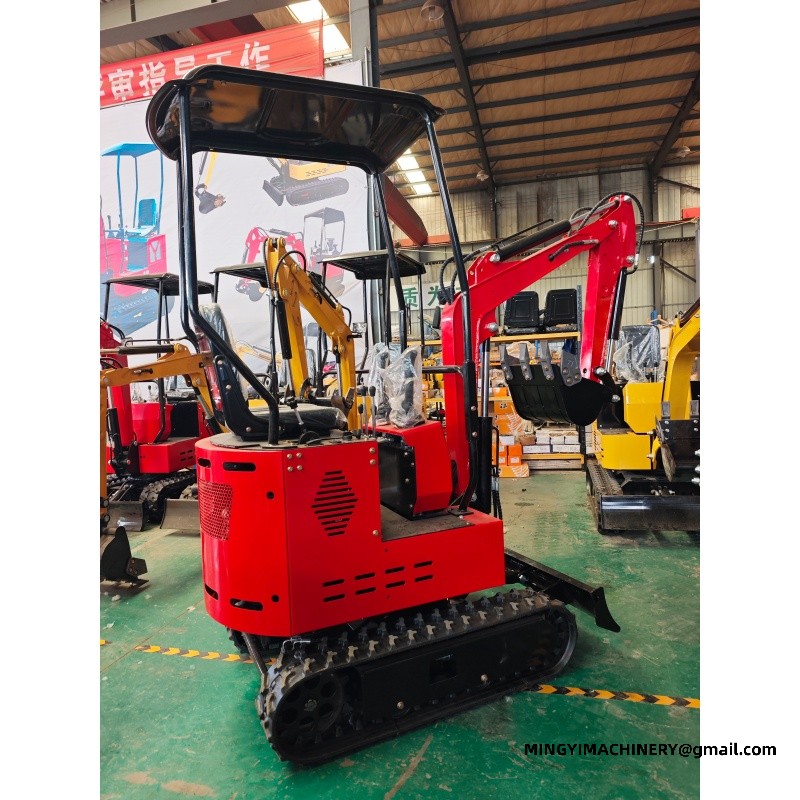
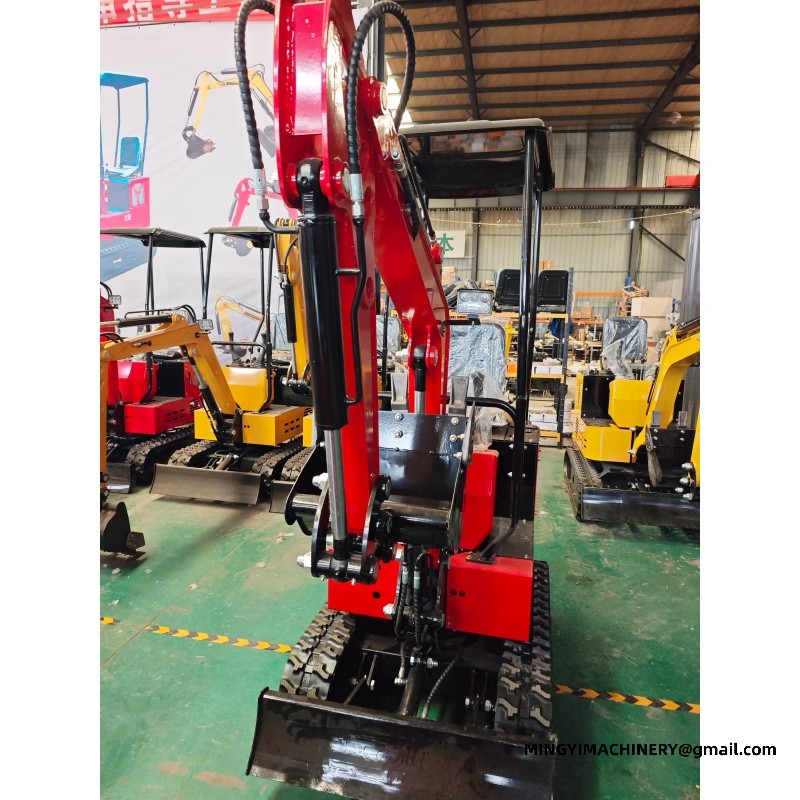
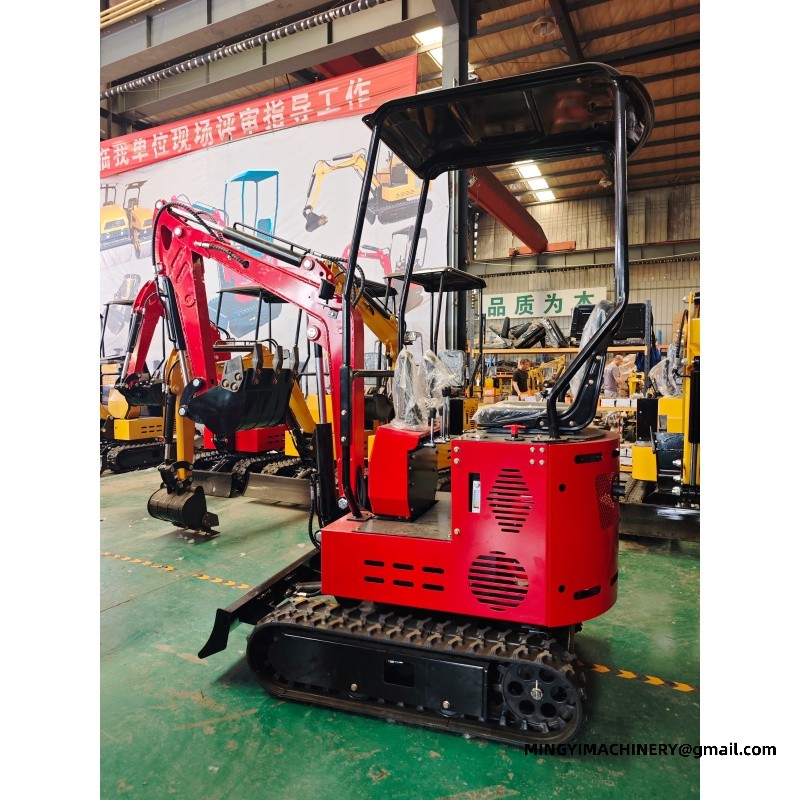
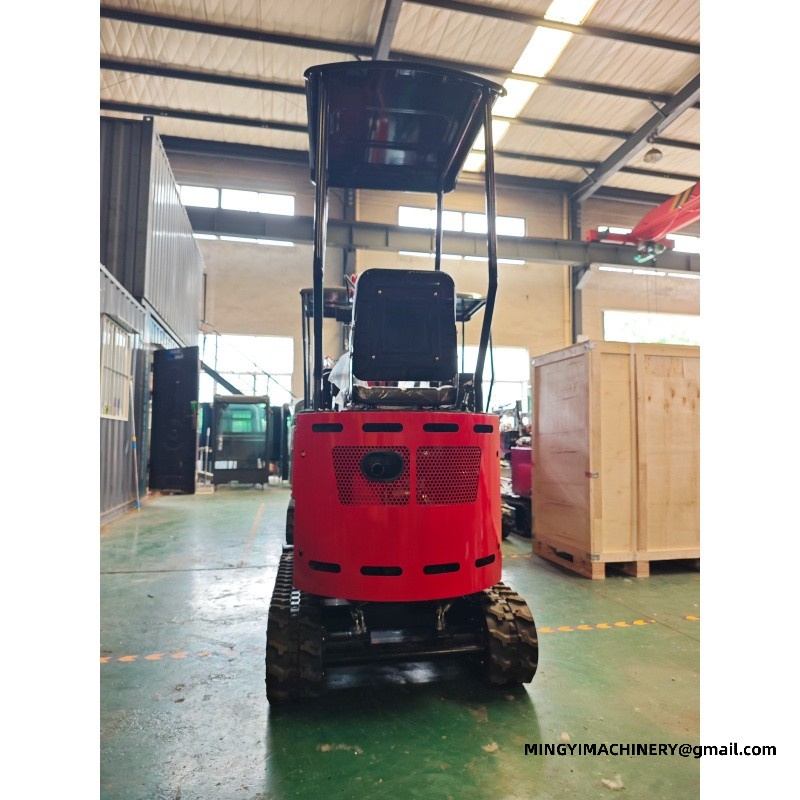
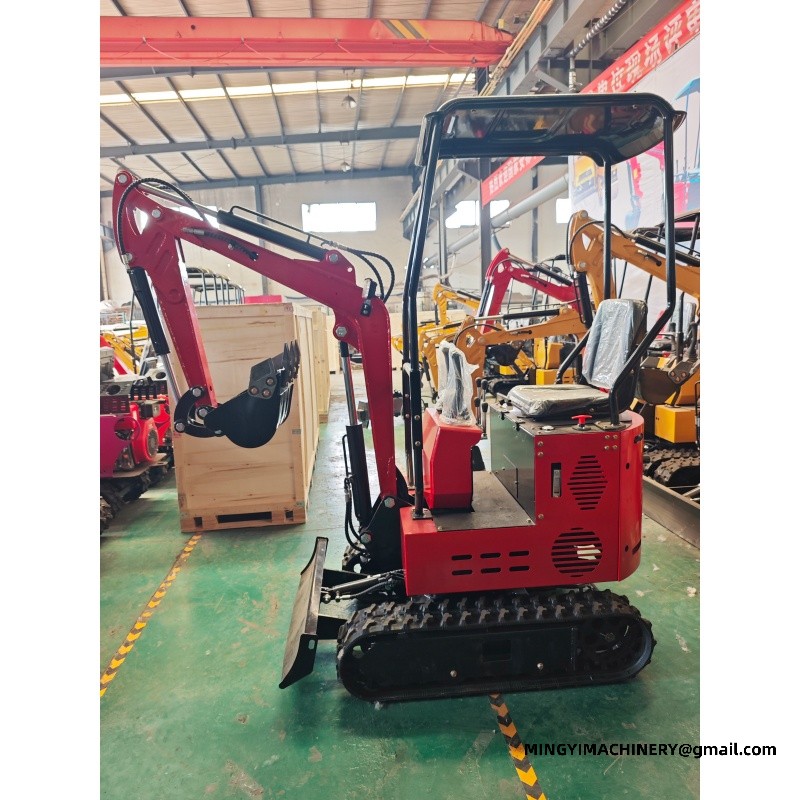
Reference specification — mini excavator range 20-1WL 30-1W 09L 15L Operating weight 1900 kg (4188.78 lb) 2900 kg (6393.41 lb) 1100 kg (2425.08 lb) 1400 kg (3086.47 lb) Transport size (L×W×H) 2550 × 1100 × 2200 mm 3000 × 1250 × 2780 mm 2300 × 720 × 1870 mm 2200 × 930 × 2250 mm Max digging depth 1800 mm (70.87 in) 2200 mm (86.61 in) 1400 mm (55.12 in) 1700 mm (66.93 in) Max digging height 2820 mm (111.02 in) 3400 mm (133.86 in) 2800 mm (110.24 in) 2750 mm (108.27 in) Max dumping height 2050 mm (80.71 in) 2400 mm (94.49 in) 1880 mm (74.02 in) 1960 mm (77.17 in) Max digging radius 3050 mm (120.08 in) 4000 mm (157.48 in) 2490 mm (98.03 in) 2900 mm (114.17 in) Max digging distance 2300 mm (90.55 in) 2800 mm (110.24 in) 2000 mm (78.74 in) 2300 mm (90.55 in) Minimum turning radius 1450 mm (57.09 in) 2000 mm (78.74 in) 1400 mm (55.12 in) 1450 mm (57.09 in) Travel speed 5 km/h (3.11 mph) 5 km/h (3.11 mph) 3 km/h (1.86 mph) 3 km/h (1.86 mph) Gradeability 30° 30° 30° 30° Fuel consumption 2-3 L/h (0.528—0.793 gal) 2-3 L/h (0.528—0.793 gal) 1-1.3 L/h (0.264—0.343 gal) 1-1.3 L/h (0.264—0.343 gal) Fuel tank capacity 16 L (4.23 gal) 16 L (4.23 gal) 8 L (2.11 gal) 10 L (2.64 gal) Hydraulic oil tank 18 L (4.76 gal) 20 L (5.28 gal) 16 L (4.23 gal) 16 L (4.23 gal) Dozer blade lift height 180 mm (7.09 in) 420 mm (16.54 in) 180 mm (7.09 in) 180 mm (7.09 in) Dozer blade drop depth 210 mm (8.27 in) 210 mm (8.27 in) 210 mm (8.27 in) 210 mm (8.27 in)
Q. Who chooses this class of machine?
A. Compact excavators win work by being there: small enough to reach the job, strong enough to finish it. The limit is reach and lift, not willingness: within its envelope the compact machine holds a full-size work rate. Read the unit in daily use together with the engine, track and attachment pages: jobs around yard work are decided by how those choices line up, not by any single number on the sheet.
Q. Where does the compact class stop making sense?
A. When the jobs need full-size reach or mass digging for weeks on end - within its envelope, though, the compact machine holds a work rate that surprises first-time buyers.
Q. How do I get a specification?
A. Send the model, the destination and the attachment list by email or LINE - the channels listed just below this section. The reply covers the specification, lead time, packing and freight in one document, with the yard work build sheet attached.
Pre-delivery inspection before a machine of this size leaves the shop
The last hour before packing is the best time to find a fault. Running the equipment on site through its full working cycle, checking for leaks under load and confirming that the controls match the specification avoids a conversation across time zones later.
Cold weather and winter care for the machine itself
Winter is hard on rubber and on seals as much as on the engine. Parking the model in question under cover, keeping the tracks or tyres off standing water and checking the hoses for cracking are all part of the season.
E-mail : sales@mingycn.com
LINE ( ID ): mingyicn
Common operator mistakes with small excavator for yard work
Most early damage comes from three habits, namely working with the wrong attachment angle, carrying loads too high and skipping the walk-around.
Over-greasing is as unhelpful as under-greasing, because sealed bearings and belts do not benefit from it.
Related pages
small excavator for road maintenance · orchard mini digger with swing boom · Compact Wheel Loader: Choosing Between the Two Entry Builds · Mini Excavators









