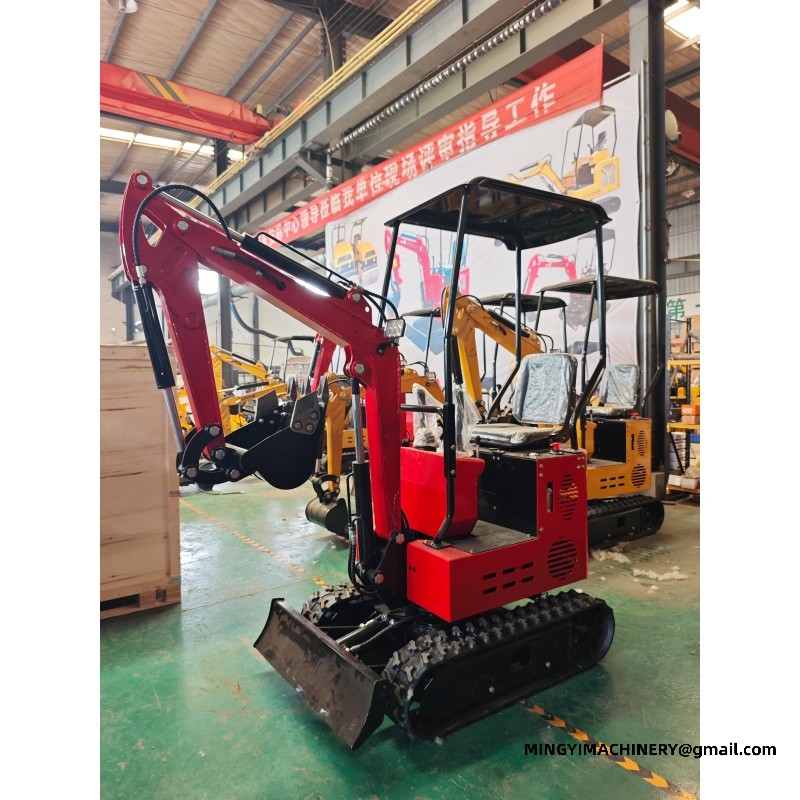
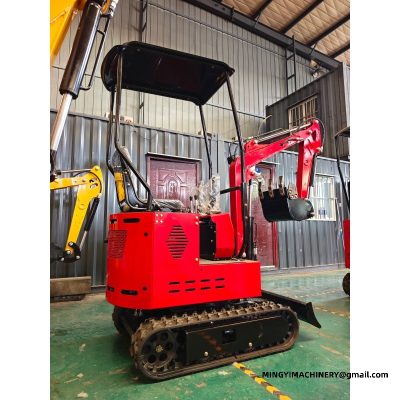
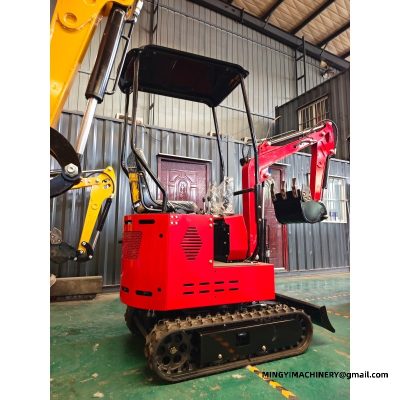
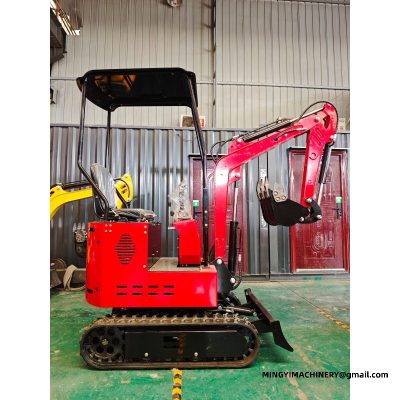
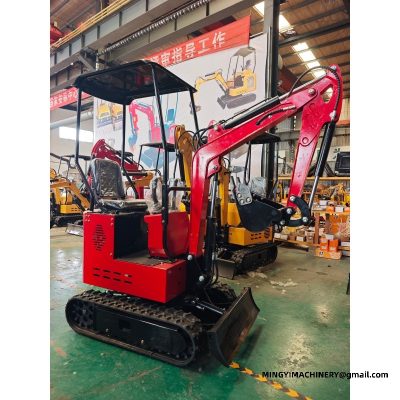
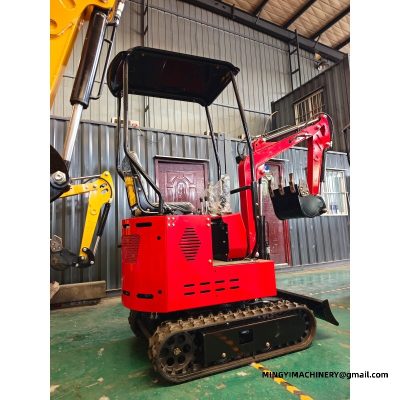
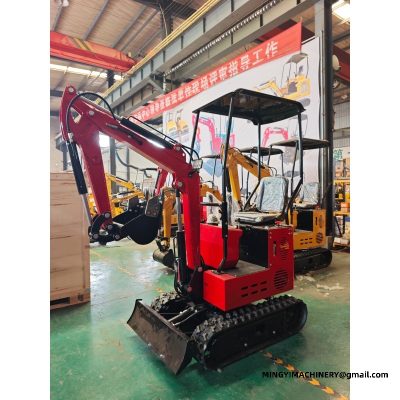
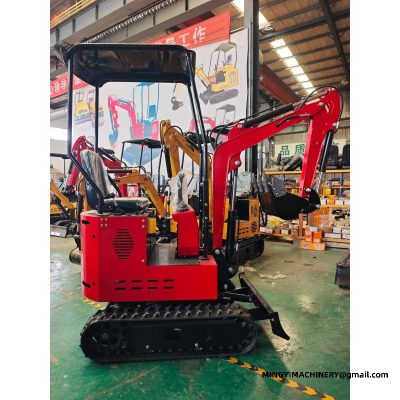
A swing boom lets a compact excavator dig offset from its own track line, so the machine can work along an orchard row or beside a wall without moving for every cut. MINGYI builds mini diggers with a swing boom for this kind of planted ground.
In an orchard this matters because the machine must stay in the alley between the trees while the digging happens in the row or at the trunk line.
Why a swing boom suits orchard work
Trees, trellis posts and irrigation lines leave little room to position a machine, and a swing boom lets the operator reach the dig from a standing position in the alley. The boom offsets to either side, so the machine does not have to track over the root zone.
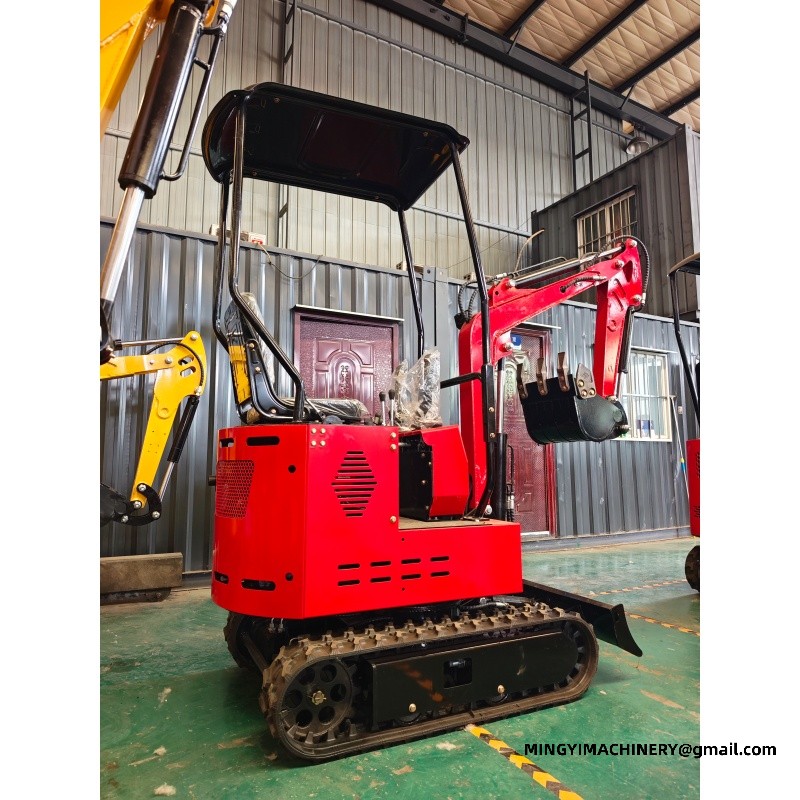
The same movement helps when shaping a terrace or cleaning a drainage run along the row, since the cut follows the line of the orchard rather than the line of the machine.
Digging and cultivation between the rows
With a swing boom the excavator can open planting pits, clear roots and maintain the drainage at the row while keeping the undercarriage on firm ground. Rubber tracks are the usual choice to limit damage to the orchard floor.
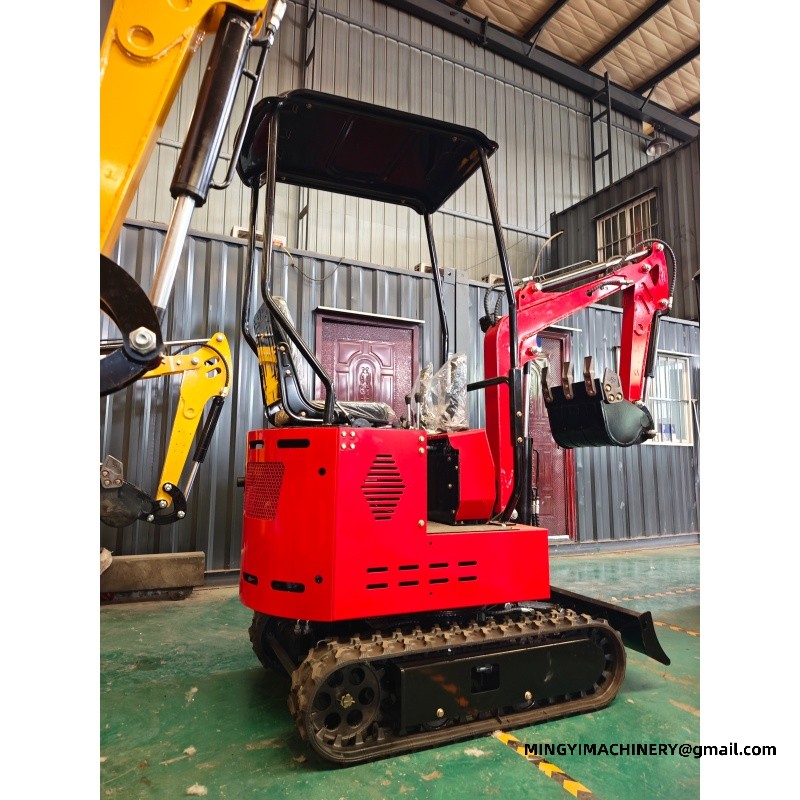
Where the orchard also needs cultivation, a rotary tiller or soil loosener can be carried on the same machine, and these are ordered together. MINGYI records the setup so the boom and the attachments are built to match.
For orchard work with a swing boom, tell MINGYI the row width, the digging task and the ground, and the factory will confirm the machine and attachments that keep to the row.
Orchard, vineyard and farm use of orchard mini digger with swing boom Orchard and vineyard work is carried out between rows. The excavator with a narrow chassis and a swing boom works down the row without damaging the trees, which is the reason a full-size machine is not used at all. Ditching, fertilising and drainage on farmland suit this class of machine because the work is spread over a large area in short bursts. The machine travels behind a pickup and works where it stops. Operator technique for orchard mini digger with swing boom Output on a compact machine comes from placement rather than power. An experienced operator keeps the unit in daily use working inside the swing arc, positions once and digs a full run instead of repositioning for every bucket. Stability is the third. A machine of this size working across the tracks rather than over the corners keeps the machine steady and the undercarriage loaded evenly, which shows up as track life at the end of the season. Boom configuration for orchard mini digger with swing boom A swing boom lets the machine dig parallel to its tracks without repositioning, which is what makes trenching beside a wall or a fence practical. On the equipment on site this is often the option that decides whether a job is possible at all. Detachable boom sections are used where transport length matters. The machine itself that has to travel on a standard trailer can be built so the arm comes off for the road and goes back on at the site. Hydraulic circuits on a orchard mini digger with swing boom Auxiliary hydraulic lines are what let a machine drive a tool rather than only a bucket. The model in question specified with the right circuits and flow runs a breaker or an auger without an add-on power pack bolted to the frame. Flow and pressure are matched to the tool, not to the machine size. Asking for the attachment list first means the machine in that duty leaves the factory with circuits that suit the heaviest tool the buyer intends to run. Quick coupler practice on orchard mini digger with swing boom A quick coupler is the single option that changes how a machine is used day to day. Fitted to the unit on the job, it turns an attachment change from a two-person workshop job into a task the operator does alone in minutes. For a fleet that shares attachments between machines, a common coupler standard matters more than the coupler brand. A machine built for the work that picks up the same tools as the larger machines keeps the rack usable across the yard. Canopy or enclosed cab on a orchard mini digger with swing boom A canopy keeps the machine light and the operator aware of the surroundings, which suits short jobs in warm weather. A fully enclosed cab is specified where rain, dust or cold are part of the working year, and it can be added to the equipment in service as a retrofit rather than only at build time. Enclosure also changes noise and dust exposure. A sealed cab on the excavator keeps dust out on dry sites and lets the machine work through weather that would otherwise stop a canopy machine for the day. Parts, service and support for this class of machine Support after delivery is a parts question. Wearing items for the unit in daily use - filters, belts, track components, bucket teeth and pins - are the items a buyer should plan to hold before the first service interval. Engine parts availability usually drives the engine choice. A machine of this size built with an engine the local network already carries is serviced from stock rather than from an international order. Attachments that turn the equipment on site into several machines The base machine is a carrier; the tool on the end of the arm decides the task. The machine itself fitted with a toothed bucket digs, and the same machine with a breaker, an auger or a grab does work that would otherwise need a second unit on site. Most of the daily variety on the model in question comes from the attachment rack rather than from the machine itself. Bucket, breaker, auger, ripper, rake and grab cover the large majority of the work a contractor will see. Getting the machine in that duty through a narrow gap The first question on most job lists is whether the machine can reach the work at all. The unit on the job is chosen against the narrowest point on the route - a garden gate, a doorway, a gap between two walls - because a machine that arrives and then cannot pass loses a day, not an hour. Access decides the machine before output does. With a machine built for the work the limiting dimension is usually the widest point on the way in, so measuring the gate, the corridor and the turning space first saves a wasted delivery and a second visit. Export packing and shipping of the equipment in service Machines leave the factory prepared for container or flat rack shipment. The excavator is normally shipped with the attachment set and the spare parts list agreed in advance so the container is planned once. Buyers who import regularly plan the spare parts with the machine. This class of machine ordered with a wearing-parts kit arrives ready to work rather than ready to wait for the first service interval. Lifting and material handling with the unit in daily use Lifting with a machine built to dig needs a plan. The load, the radius and the ground under the equipment on site all matter, and the safe figure is the one on the chart rather than the one that looks possible. Stability changes with reach. A load a machine of this size handles close in becomes a different proposition at full extension, so the working radius belongs in the plan before the lift rather than during it. Specification data for the machine itself Buyers comparing the model in question usually start from four numbers - weight, digging depth, reach and transport width - because those are the ones that decide whether the machine can be delivered and whether it can do the job once it is there. Every value shown is as built for the machine in that duty; options such as cab, side swing or a telescopic undercarriage change the transport dimensions and are confirmed at order stage. Distributors and rental fleets usually need the machine to look like theirs. Paint, decals, seat colour and attachment branding can be specified on the unit on the job at build time rather than applied after import. Customisation also covers the specification sheet. A fleet buyer may want every machine built for the work delivered with the same coupler, the same engine and the same tool kit so training and parts stock stay simple.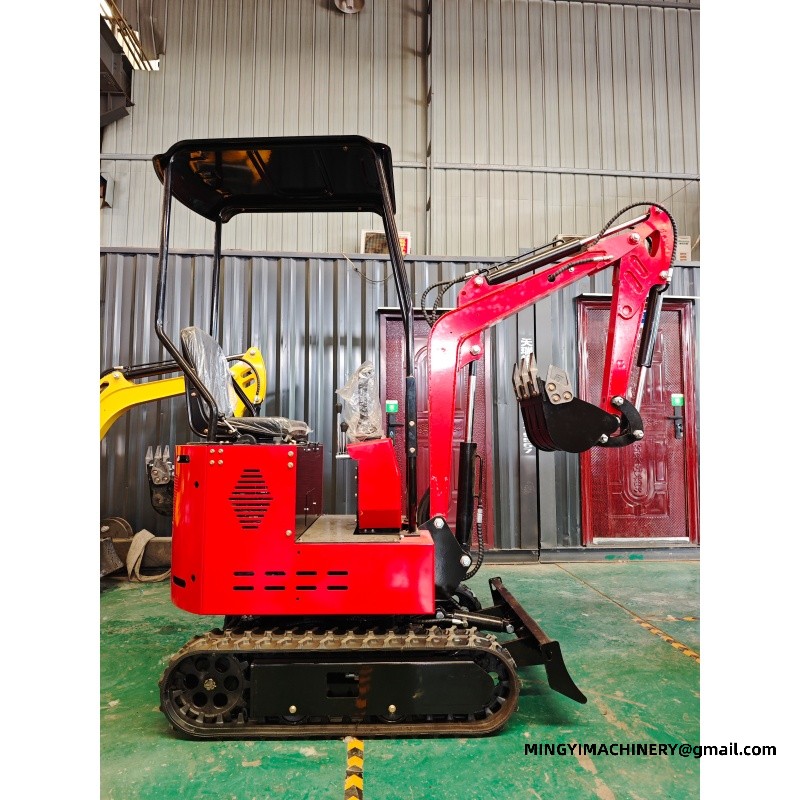
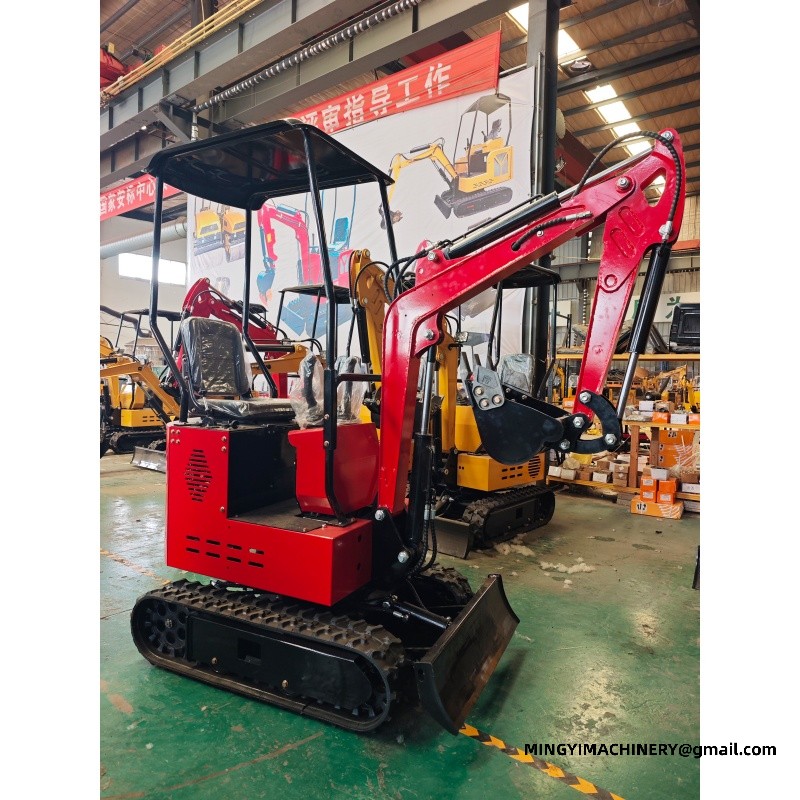
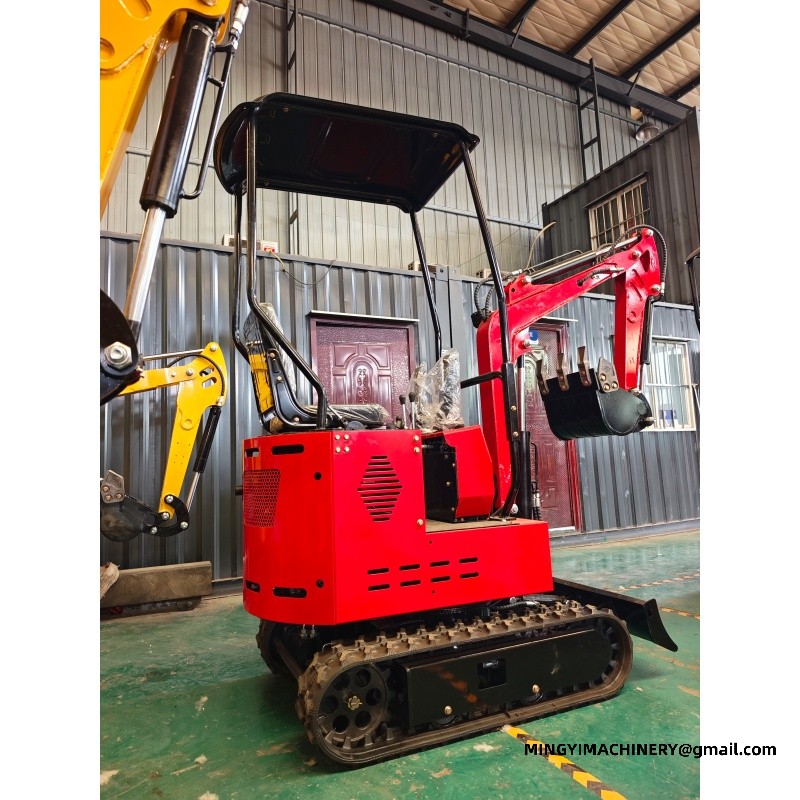
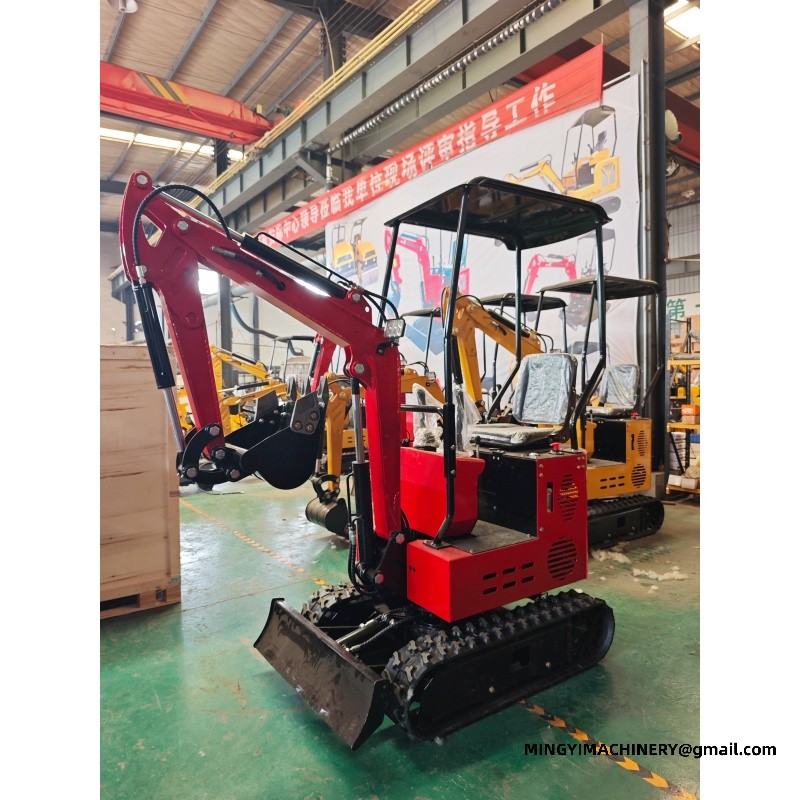
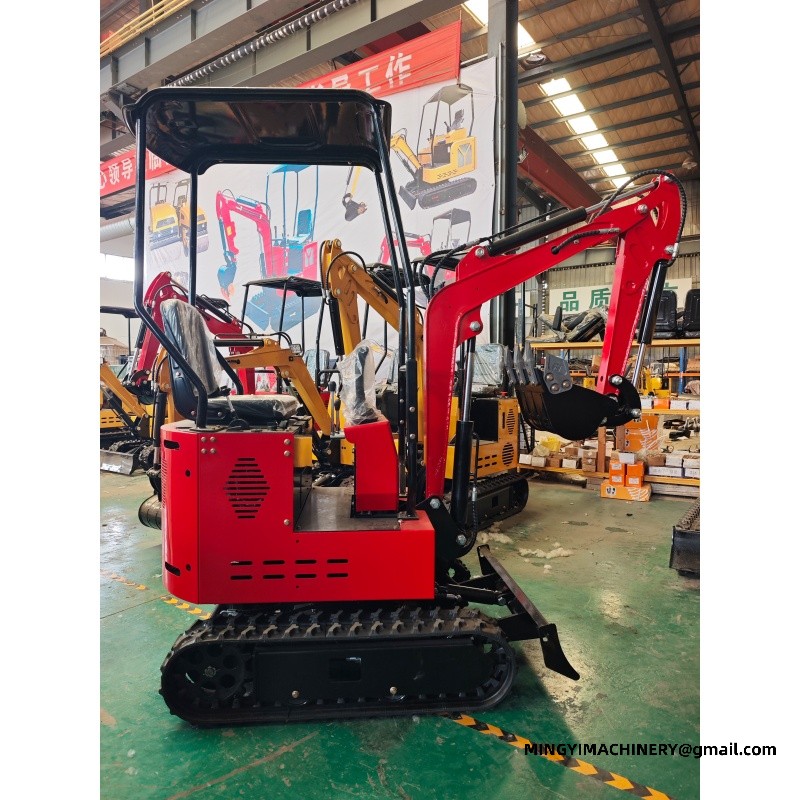
Reference specification — mini excavator range 09W 20-1W 09L 12L Operating weight 1100 kg (2425.08 lb) 1800 kg (3968.32 lb) 1100 kg (2425.08 lb) 1200 kg (2645.55 lb) Transport size (L×W×H) 1800 × 750 × 1970 mm 2550 × 1100 × 2200 mm 2300 × 720 × 1870 mm 2200 × 930 × 2250 mm Max digging depth 1250 mm (49.21 in) 1800 mm (70.87 in) 1400 mm (55.12 in) 1700 mm (66.93 in) Max digging height 2800 mm (110.24 in) 2820 mm (111.02 in) 2800 mm (110.24 in) 2600 mm (102.36 in) Max dumping height 1700 mm (66.93 in) 2050 mm (80.71 in) 1880 mm (74.02 in) 1800 mm (70.87 in) Max digging radius 2570 mm (101.18 in) 3050 mm (120.08 in) 2490 mm (98.03 in) 2900 mm (114.17 in) Max digging distance 1869 mm (73.58 in) 2300 mm (90.55 in) 2000 mm (78.74 in) 2300 mm (90.55 in) Minimum turning radius 1000 mm (39.37 in) 1450 mm (57.09 in) 1400 mm (55.12 in) 1450 mm (57.09 in) Travel speed 3 km/h (1.86 mph) 5 km/h (3.11 mph) 3 km/h (1.86 mph) 3 km/h (1.86 mph) Gradeability 30° 30° 30° 30° Fuel consumption 1-1.3 L/h (0.264—0.343 gal) 2-3 L/h (0.528—0.793 gal) 1-1.3 L/h (0.264—0.343 gal) 1-1.3 L/h (0.264—0.343 gal) Fuel tank capacity 8 L (2.11 gal) 16 L (4.23 gal) 8 L (2.11 gal) 10 L (2.64 gal) Hydraulic oil tank 16 L (4.23 gal) 18 L (4.76 gal) 16 L (4.23 gal) 16 L (4.23 gal) Dozer blade lift height 180 mm (7.09 in) 180 mm (7.09 in) 180 mm (7.09 in) 180 mm (7.09 in) Dozer blade drop depth 210 mm (8.27 in) 210 mm (8.27 in) 210 mm (8.27 in) 210 mm (8.27 in)
Q. What is the equipment in service?
A. The boom decides where the bucket works while the carrier stays put - across a wall, along a trench line, or over a row of crop. Offset and swing designs dig along walls and kerbs with the carrier square to the work, protecting both the machine and the structure. Read the excavator together with the engine, track and attachment pages: jobs around swing boom are decided by how those choices line up, not by any single number on the sheet.
Q. Does boom geometry change digging control?
A. It changes the load path, not the precision: longer reach trades some lift at the tooth for working envelope, which is why reach pages are read next to the attachment list before a build is confirmed.
Q. Which models does MINGYI build?
A. The 08, 12 and 18 models cover the 0.8 to 6 tonne class with engine, track, cab and attachment options across the range - dealer programmes can mix models in one shipment, and each swing boom machine is confirmed on its own build sheet.
Cold weather and winter care for this class of machine
Cold exposes weak batteries, thick oil and water in the fuel. Preparing the unit in daily use for winter means the right grade of oil, a battery in good condition and fuel that will not wax in the tank overnight.
Wear items and spares worth holding for a machine of this size
Holding spares is about downtime rather than the shelf itself. The question for the equipment on site is not how large the part is but how long the machine sits while it is found, and a small shelf answers that better than a fast courier.
E-mail : sales@mingycn.com
LINE ( ID ): mingyicn
Related pages
multipurpose backyard mini excavator · movable compact construction digger · Wheel Loader for Sale: Builds, Options and Container Planning · Mini Excavators









