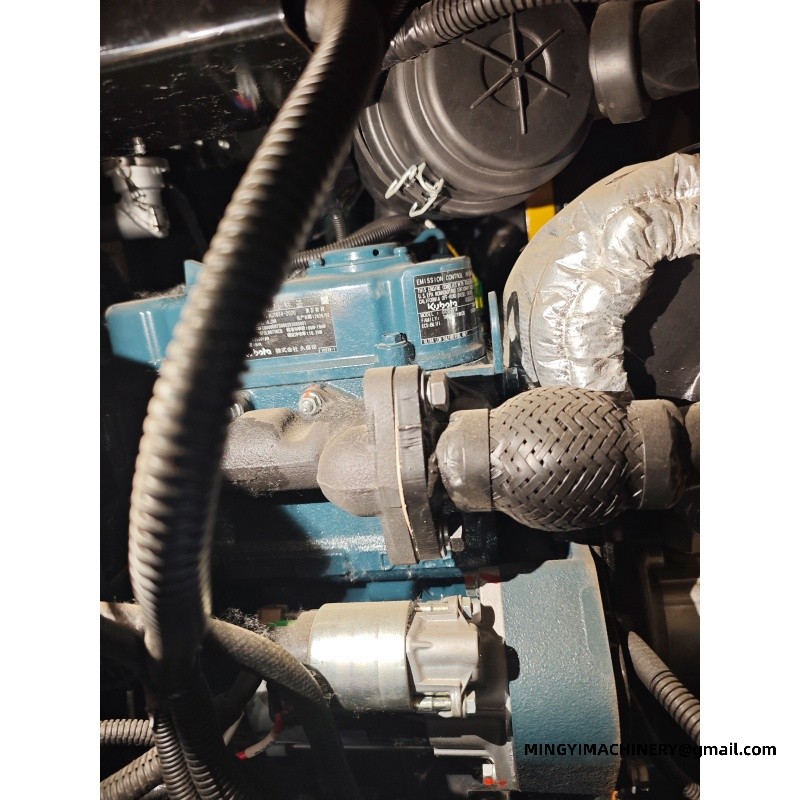
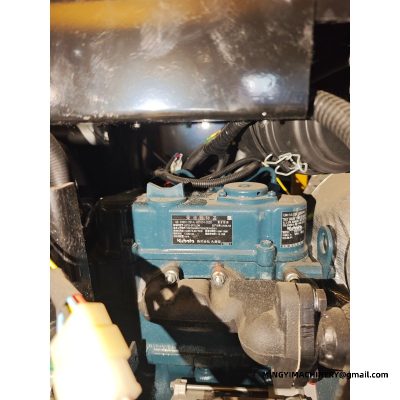
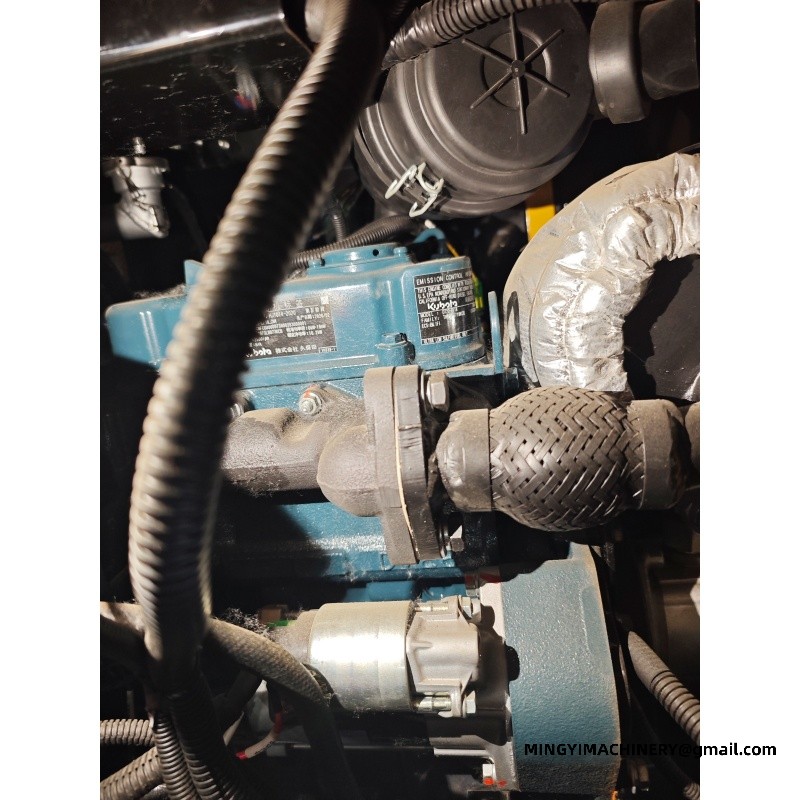
The Kubota D902 is one of the engine options offered on MINGYI compact excavators, and it is a common specification for buyers who want a well established industrial diesel in the smaller machines in the range.
The engine is matched to the hydraulic package at the order, so the machine's performance, its service points and its attachment capability are set around the same choice. Buyers who already run Kubota equipment in their region often specify it for that reason.
Why the D902 suits a mini excavator
A compact excavator spends its day starting and stopping, running under load for short periods while the operator repositions and then settling back to idle. An engine designed for industrial duty handles that cycle better than one intended for steady running.
The D902 is also a familiar unit in the small plant market, which affects the practical side of ownership. A buyer whose local workshop already knows the engine will find service easier than with a less common alternative.
Engine options across the MINGYI range
MINGYI offers a range of engines so the machine can be matched to the market it is sold into. Alongside the Kubota D722 and Kubota D902, buyers can specify YANMAR, Changchai, Laidong, Runtong, YARMAX, Youpu 2V80 or Youpu 195.
The decision is usually made on local service support rather than on the engine alone. Where parts and trained attention are widely available for one make, that make becomes the sensible specification for a fleet.
Choosing the Kubota D902 at the ordering stage ties the rest of the machine to that decision, from the hydraulic settings to the service list. It is a practical choice for a compact excavator that will be supported in the field.
Hydraulic circuits on a mini excavator kubota d902 engine Auxiliary hydraulic lines are what let a machine drive a tool rather than only a bucket. The excavator specified with the right circuits and flow runs a breaker or an auger without an add-on power pack bolted to the frame. Hydraulic specification is easier to settle at build time than to correct later. This class of machine delivered without auxiliary lines can still dig, but every additional tool becomes a retrofit project. Acceptance checks when a mini excavator kubota d902 engine arrives A function check before the machine goes to work is worth the hour. Running through the controls, the travel and the attachment circuit on the unit in daily use confirms it is set up as specified and ready for the site. Documentation should arrive with the machine. Parts list, service schedule and any certificates for a machine of this size are what the workshop needs later, and they are much easier to obtain at delivery than in month six. Track choice for mini excavator kubota d902 engine Rubber tracks suit paved and landscaped ground because they spread the machine weight and leave the surface intact. Steel tracks with rubber blocks are specified where the ground is rougher or the working day is longer, and the choice can be made per machine rather than accepted as a factory default. Undercarriage selection is a ground question, not a preference question. The equipment on site running on finished paving needs rubber; the same machine on demolition rubble or rock wears rubber quickly, so steel with rubber blocks becomes the better answer over a full season. Working near live services with mini excavator kubota d902 engine Digging near water, gas and cable is a precision job. The machine itself is used here because the operator can work in short controlled cuts and because the machine can be positioned without driving over the run being exposed. Utility crews specify the model in question with a narrow bucket and good visibility for exactly this reason: the machine has to stop at the service, not at the edge of the operator's view. Attachments that turn mini excavator kubota d902 engine into several machines The base machine is a carrier; the tool on the end of the arm decides the task. The machine in that duty fitted with a toothed bucket digs, and the same machine with a breaker, an auger or a grab does work that would otherwise need a second unit on site. Attachment lists are best written before delivery. Specifying the unit on the job with the tools the job list needs avoids the work and delay of adding hydraulics later, and a quick coupler makes the swap a few minutes instead of a workshop job. Orchard, vineyard and farm use of mini excavator kubota d902 engine Orchard and vineyard work is carried out between rows. A machine built for the work with a narrow chassis and a swing boom works down the row without damaging the trees, which is the reason a full-size machine is not used at all. Farms also use the equipment in service for general maintenance - clearing a watercourse, repairing a track, loading a spreader. One carrier with a few attachments covers most of the jobs that would otherwise wait for a contractor. Working on slopes and uneven ground with the excavator Slope work is a stability question before it is a traction question. Knowing the gradient this class of machine is rated for, and working across rather than straight up where the ground allows, removes most of the risk. Ground that looks level often is not. The unit in daily use crossing a filled trench, a soft edge or a hidden void behaves differently from one on undisturbed ground, and those are the places worth walking before driving. Daily checks and maintenance on a machine of this size Daily maintenance on the equipment on site is a short list: engine oil level, coolant, track tension, hydraulic oil level and a look at the hoses. Ten minutes at the start of the shift prevents most of the failures that stop a machine. Greasing is the second item. The slew ring, the boom and arm pins and the bucket linkage on the machine itself take grease daily in dusty work, and the intervals shorten further when the machine is used in water or mud. Parts, service and support for the model in question Support after delivery is a parts question. Wearing items for the machine in that duty - filters, belts, track components, bucket teeth and pins - are the items a buyer should plan to hold before the first service interval. Engine parts availability usually drives the engine choice. The unit on the job built with an engine the local network already carries is serviced from stock rather than from an international order. Landscaping and ground care with a machine built for the work Landscape contractors use the equipment in service for planting holes, pond excavation, grading and retaining work. The machine is light enough to cross finished lawn and narrow enough to work between established trees. Grass cutting heads, rakes and tillers extend the excavator into ground care. The same carrier that digs a border in spring can cut and clear the same area later in the season. OEM and fleet customisation of this class of machine Distributors and rental fleets usually need the machine to look like theirs. Paint, decals, seat colour and attachment branding can be specified on the unit in daily use at build time rather than applied after import. Documentation can be prepared to suit the importer. Manuals, parts books and decal sets for a machine of this size can be supplied with the buyer's own branding where the order size justifies it. Hiring versus owning the equipment on site The choice follows the hours. Work that fills a few weeks a year is usually better hired, while the machine itself that would be on site most weeks starts to justify ownership once the transport and booking time is counted. Ownership brings obligations that hiring does not. Storage, servicing, insurance and an operator are the items to set against the hire rate before deciding which way the model in question should be supplied. Specification data for the machine in that duty The figures below are the factory figures for the models most often matched to the unit on the job. They are the numbers to check against the site: the depth the work needs, the reach from one position, and the width of the narrowest point on the route in. Figures are factory figures and are confirmed on the build sheet for a machine built for the work. Where a job sits between two models, the larger machine usually takes less time than the smaller one spends on rework. Seasonal planning smooths the workload. Machines that are busy for a few months and idle for the rest benefit from a service slot in the quiet period, and the equipment in service prepared in the off-season starts the busy months reliably. Heat and dust are as limiting as rain. Air intake condition and cooling cleanliness decide how the excavator behaves in a dry season, and both are checked in a minute rather than repaired later.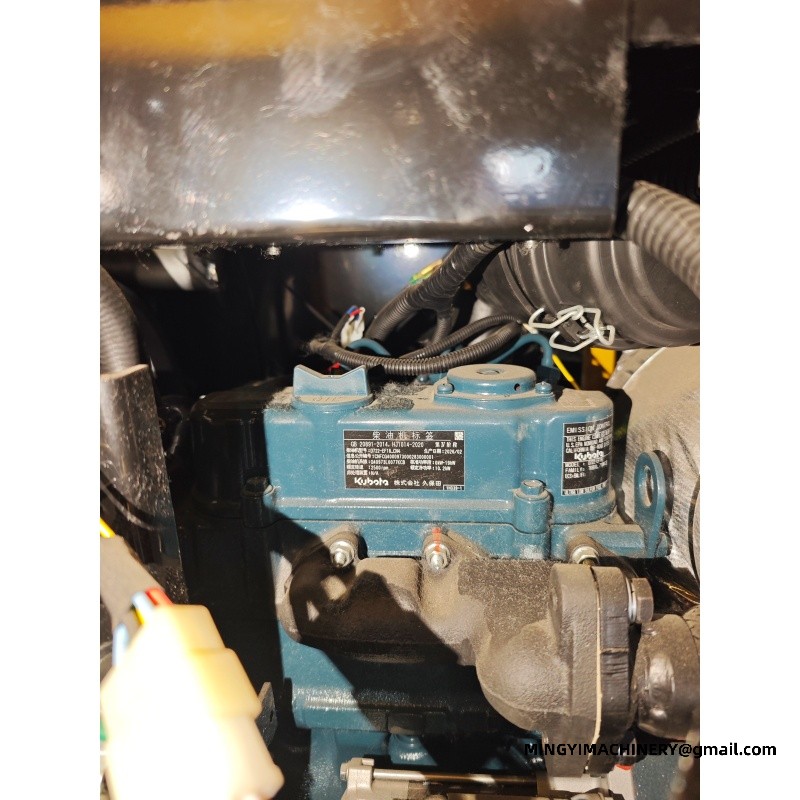
Reference specification — mini excavator range 09W 20-3W 15L 25L Operating weight 1100 kg (2425.08 lb) 1900 kg (4188.78 lb) 1400 kg (3086.47 lb) 2200 kg (4850.17 lb) Transport size (L×W×H) 1800 × 750 × 1970 mm 2550 × 1100 × 2200 mm 2200 × 930 × 2250 mm 3000 × 1300 × 2700 mm Max digging depth 1250 mm (49.21 in) 1800 mm (70.87 in) 1700 mm (66.93 in) 2300 mm (90.55 in) Max digging height 2800 mm (110.24 in) 2820 mm (111.02 in) 2750 mm (108.27 in) 3100 mm (122.05 in) Max dumping height 1700 mm (66.93 in) 2050 mm (80.71 in) 1960 mm (77.17 in) 2050 mm (80.71 in) Max digging radius 2570 mm (101.18 in) 3050 mm (120.08 in) 2900 mm (114.17 in) 3900 mm (153.54 in) Max digging distance 1869 mm (73.58 in) 2300 mm (90.55 in) 2300 mm (90.55 in) 3100 mm (125.05 in) Minimum turning radius 1000 mm (39.37 in) 1450 mm (57.09 in) 1450 mm (57.09 in) 1800 mm (70.87 in) Travel speed 3 km/h (1.86 mph) 5 km/h (3.11 mph) 3 km/h (1.86 mph) 7 km/h (4.35 mph) Gradeability 30° 30° 30° 30° Fuel consumption 1-1.3 L/h (0.264—0.343 gal) 2-3 L/h (0.528—0.793 gal) 1-1.3 L/h (0.264—0.343 gal) 2-3 L/h (0.528—0.793 gal) Fuel tank capacity 8 L (2.11 gal) 16 L (4.23 gal) 10 L (2.64 gal) 16 L (4.23 gal) Hydraulic oil tank 16 L (4.23 gal) 18 L (4.76 gal) 16 L (4.23 gal) 18 L (4.76 gal) Dozer blade lift height 180 mm (7.09 in) 180 mm (7.09 in) 180 mm (7.09 in) 230 mm (9.06 in) Dozer blade drop depth 210 mm (8.27 in) 210 mm (8.27 in) 210 mm (8.27 in) 280 mm (11.02 in)
Q. Who chooses this class of machine?
A. The engine decides how a compact digger behaves all day: the power curve, the service intervals and the way it holds revs when the hydraulics load up. Across the 0.8 to 6 tonne class MINGYI builds as the 08, 12 and 18 models, the engine is a choice rather than a fixed fit. The unit in daily use is one of the pages buyers land on when comparing machines for Kubota d902 engine, and the factory treats it as a specification conversation rather than a catalogue line.
Q. What keeps an engine healthy on a compact digger?
A. Clean fuel and honest service intervals. Compact machines run at high load in dusty places, so filters and oil do the heavy lifting - follow the manual schedule and watch the air filter on dry sites, and the engine outlives the rest of the machine.
Q. What support follows the sale?
A. Spare-part kits, wear items and service documentation ship with the programme, and the parts team works from the serial plate to match components exactly. Warranty and support terms for the Kubota d902 engine order are confirmed in writing before the machine leaves.
Documents that travel with a machine of this size
A clear parts book saves more time than any other document. When the equipment on site needs a replacement, the illustration and the part number are what turn a phone call into a shipment instead of a description.
Fuel, oil and fluid quality for the machine itself
Most engine trouble starts with what went into the tank. Clean fuel, stored properly and filtered before it reaches the model in question, prevents more downtime than any other single habit an owner can adopt.
E-mail : sales@mingycn.com
LINE ( ID ): mingyicn
Related pages
small household excavator for soil digging · compact excavator for building projects · Wheel Loader for Mining: Cooling, Tyres and Abrasive Ground · Mini Excavators









