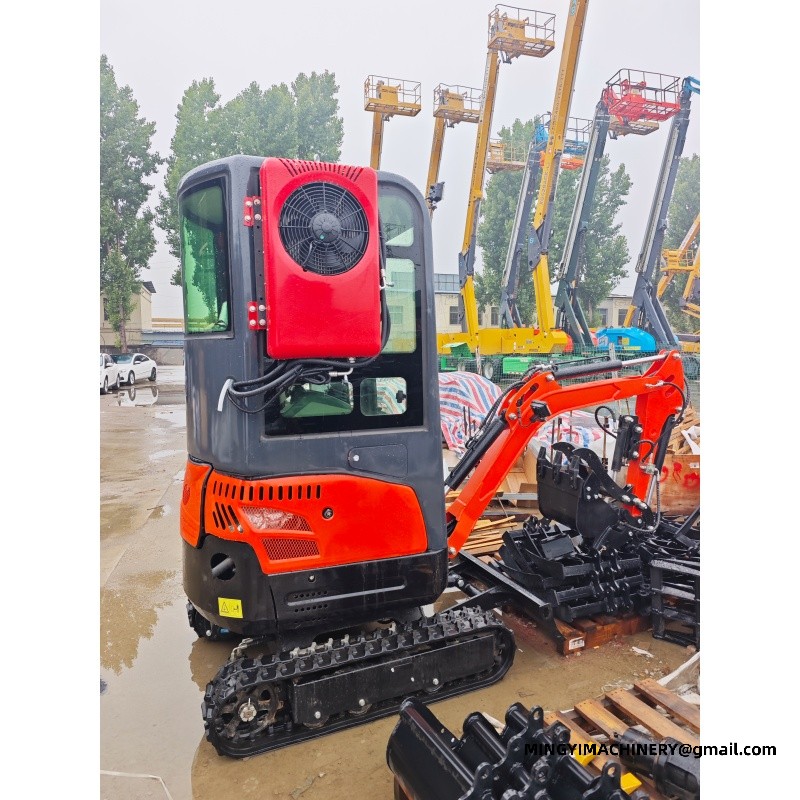
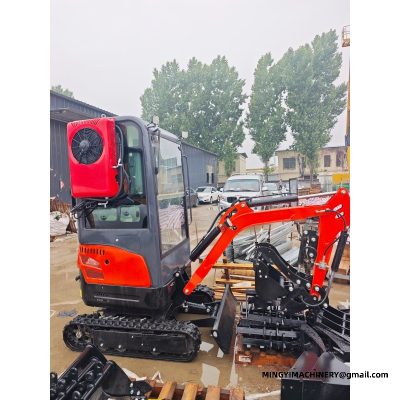
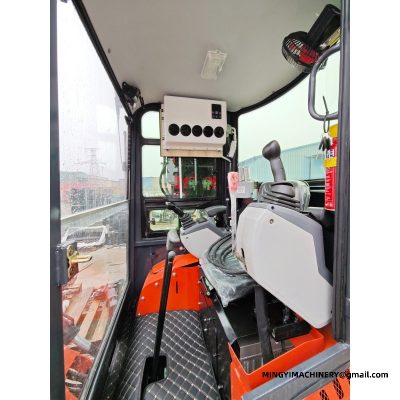
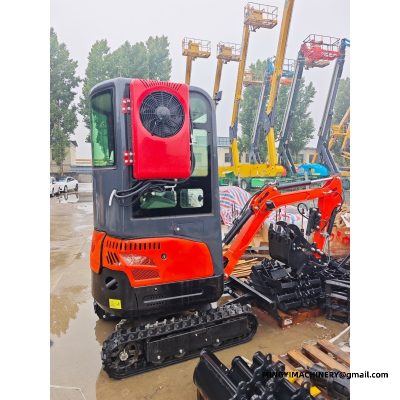
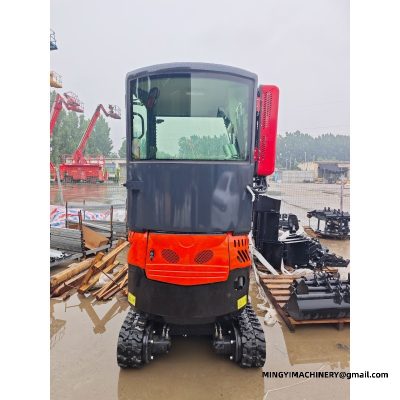
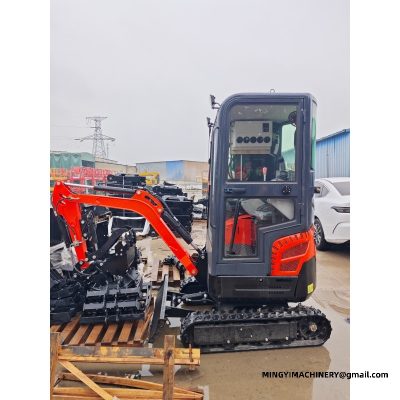
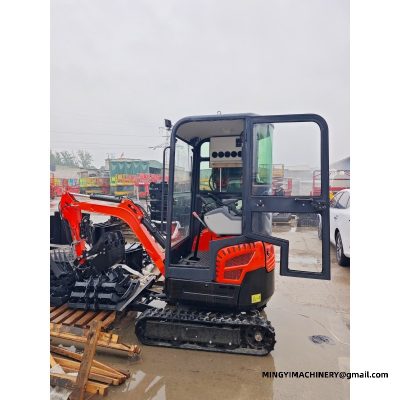
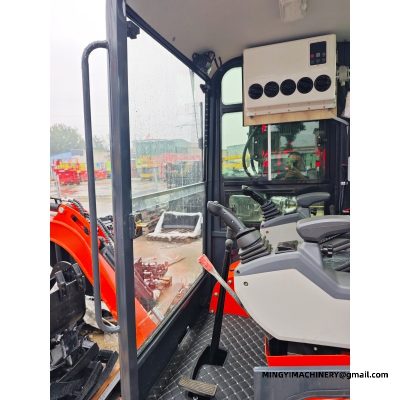
Some sites are defined by what the machine cannot do rather than by what it must do. A rear garden with a single gate, a basement with a low entry or a raised terrace beside a house all rule out anything but the narrowest compact crawler excavator.
MINGYI builds compact machines with a narrow undercarriage and a short tail swing, so the unit can pass through a restricted opening and then work without the rear counterweight crossing the line of a wall or a boundary.
Access limits on confined sites
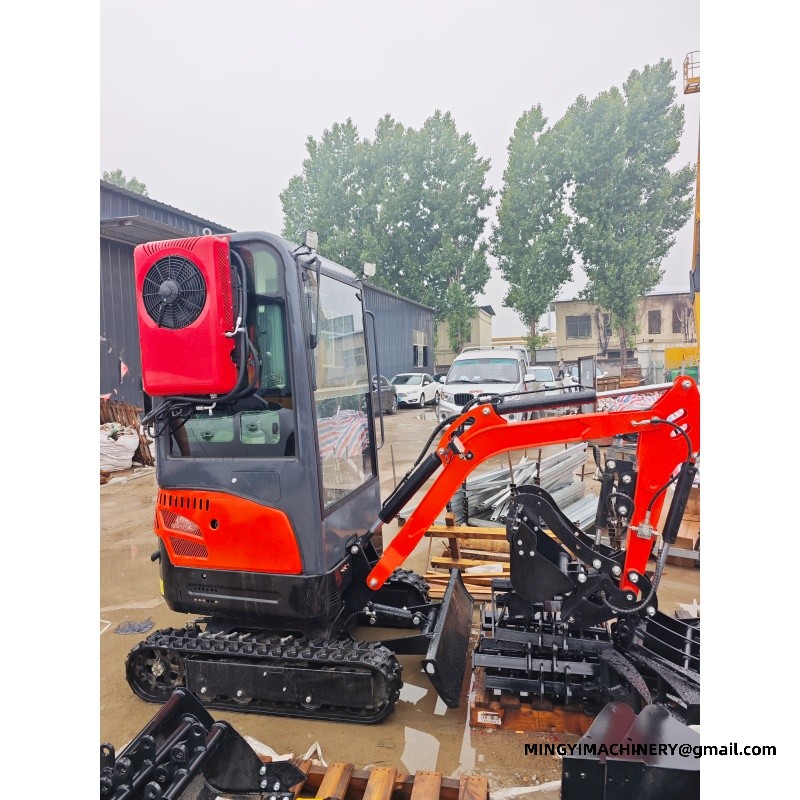
The size is decided at the narrowest point on the route, not at the working area. Measuring the gate, the doorway and any turn on the path tells the buyer which class will actually reach the work, and often the answer is smaller than expected.
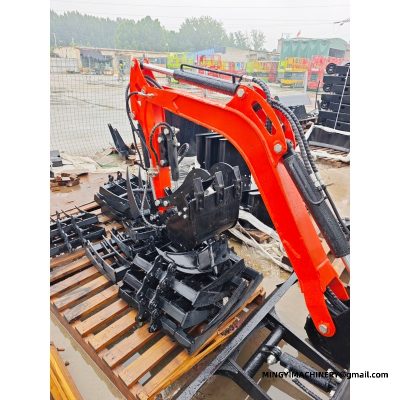
Once the machine is inside, space to set down attachments disappears. That makes a quick coupler more valuable than usual, because the operator can change between tools without leaving the seat or finding room for a second bucket on the ground.
Working methods for a space saving excavator
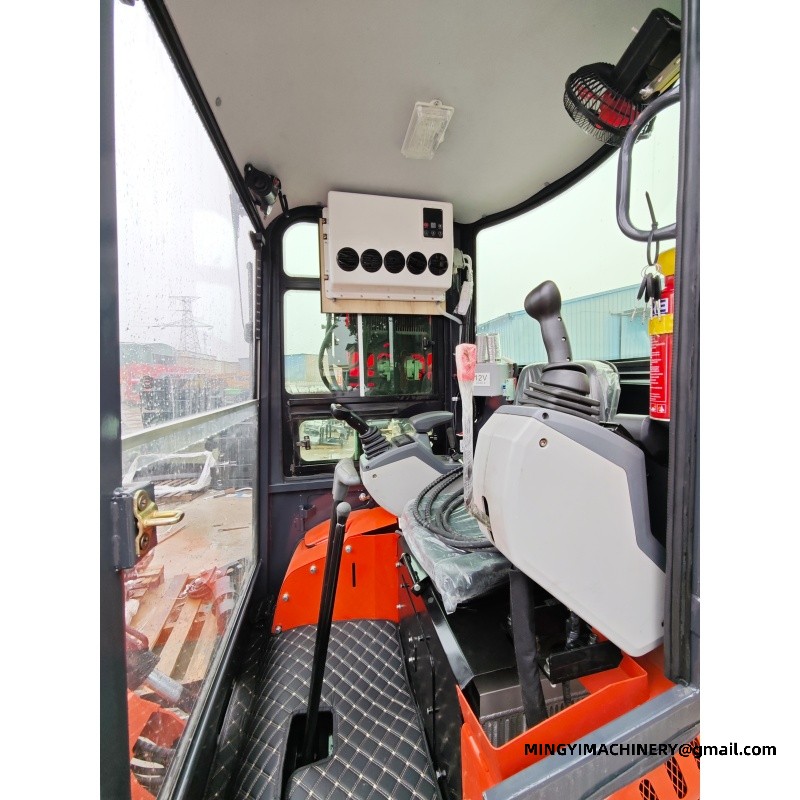
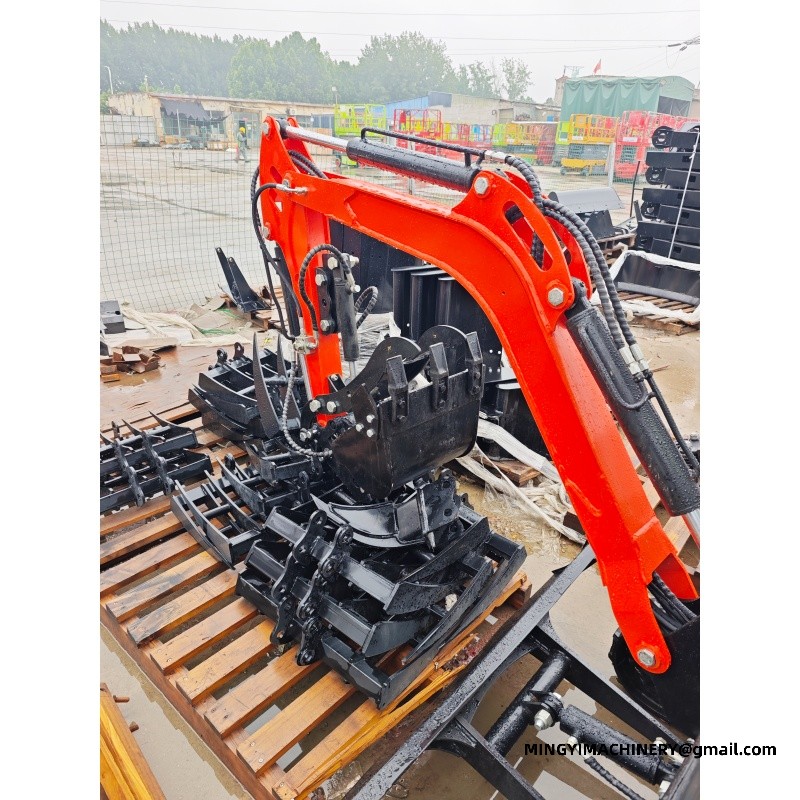
On a tight site the machine often has to dig, stockpile and load from one position without the ability to turn freely. A swing boom lets the operator reach to either side of the tracks, which is what allows a narrow machine to cover a wider working area.
Spoil usually has to be carried out through the same restricted entry. A compact machine paired with a small dumper, and a skeleton bucket to separate stone from fines, keeps the material moving without piling it against the building.
For confined sites, the machine is chosen for the opening it can pass and the swing it can make inside. A compact crawler excavator specified against the real access, with a coupler and a short attachment list, reaches work a larger machine never sees.
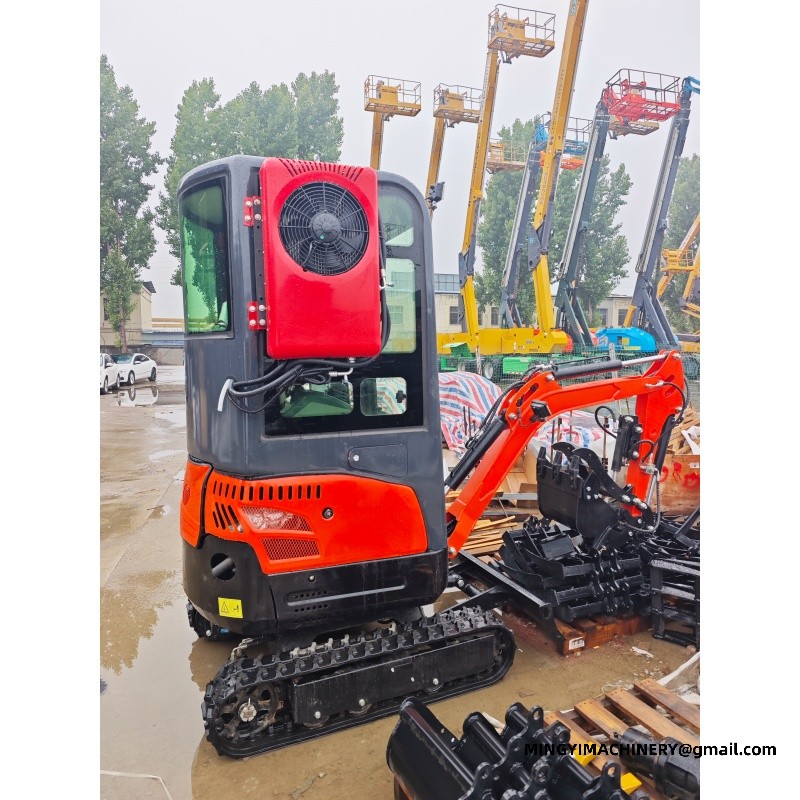
Track choice for compact crawler excavator for tight sites Rubber tracks suit paved and landscaped ground because they spread the machine weight and leave the surface intact. Steel tracks with rubber blocks are specified where the ground is rougher or the working day is longer, and the choice can be made per machine rather than accepted as a factory default. Track type changes what the machine can cross and what it leaves behind. Buyers specify rubber for lawns, driveways and municipal work, and steel with rubber blocks for sites where sharp material would cut a rubber belt in a week. Orchard, vineyard and farm use of compact crawler excavator for tight sites Ditching, fertilising and drainage on farmland suit the excavator because the work is spread over a large area in short bursts. The machine travels behind a pickup and works where it stops. Farms also use this class of machine for general maintenance - clearing a watercourse, repairing a track, loading a spreader. One carrier with a few attachments covers most of the jobs that would otherwise wait for a contractor. Hiring versus owning a compact crawler excavator for tight sites Availability is part of the decision. Owning the unit in daily use means it is there on the day the ground is ready; hiring means competing for the same machine at the same time as everyone else in the season. Ownership brings obligations that hiring does not. Storage, servicing, insurance and an operator are the items to set against the hire rate before deciding which way a machine of this size should be supplied. Working on slopes and uneven ground with compact crawler excavator for tight sites Slope work is a stability question before it is a traction question. Knowing the gradient the equipment on site is rated for, and working across rather than straight up where the ground allows, removes most of the risk. Planning the direction of travel helps. Working so that the machine itself is stable under load and not required to turn on a slope is a decision made before the job starts, not a correction made during it. Acceptance checks when a compact crawler excavator for tight sites arrives Delivery day is the best time to find a problem. Checking the specification against the order, the fluid levels, the fasteners and any transport damage while the machine in that duty is still on the trailer is faster than claiming later. Documentation should arrive with the machine. Parts list, service schedule and any certificates for the model in question are what the workshop needs later, and they are much easier to obtain at delivery than in month six. Lifting and material handling with a compact crawler excavator for tight sites Stability changes with reach. A load the unit on the job handles close in becomes a different proposition at full extension, so the working radius belongs in the plan before the lift rather than during it. Ground condition under the machine is part of every lift. Soft or uneven support is the common factor in handling incidents, and checking it takes less time than recovering a machine built for the work that has settled. Running the equipment in service in a rental fleet The specification that rents best is usually the simplest one to explain at the counter. The excavator with rubber tracks, a canopy and a coupler covers the majority of weekend and short-term hires. Fleet buyers also weigh transport. This class of machine that a customer can tow on a normal licence and a standard trailer is a hire that does not need a delivery truck, which changes how often it goes out. Working near live services with the unit in daily use The risk on utility work is not machine power but machine placement. A machine of this size that fits the working width leaves the surrounding ground undisturbed, which keeps the trench stable and the reinstatement small. Utility crews specify the equipment on site with a narrow bucket and good visibility for exactly this reason: the machine has to stop at the service, not at the edge of the operator's view. Specifying the machine itself against a job list The practical way to specify is to write the job list first: the narrowest access, the deepest trench, the heaviest tool and the surfaces the machine must cross. The model in question is then matched to those four numbers. Buyers who skip this step either over-buy or under-buy. The machine in that duty specified only from machine size tends to arrive without the coupler, the circuits or the track type the work actually needs. Boom configuration for the unit on the job A swing boom lets the machine dig parallel to its tracks without repositioning, which is what makes trenching beside a wall or a fence practical. On a machine built for the work this is often the option that decides whether a job is possible at all. Detachable boom sections are used where transport length matters. The equipment in service that has to travel on a standard trailer can be built so the arm comes off for the road and goes back on at the site. Specification data for the excavator The figures below are the factory figures for the models most often matched to this class of machine. They are the numbers to check against the site: the depth the work needs, the reach from one position, and the width of the narrowest point on the route in. Every value shown is as built for the unit in daily use; options such as cab, side swing or a telescopic undercarriage change the transport dimensions and are confirmed at order stage. Power unit selection is settled against the service network the buyer already uses. MINGYI offers Kubota D722, Kubota D902, YANMAR, Changchai, Laidong, Runtong, YARMAX, Youpu 2V80 and Youpu 195, so a fleet running one brand of engine can keep the same filters, the same parts supplier and the same mechanic. Two buyers can order the same a machine of this size and receive different engines. The decision is rarely about peak power; it is about which parts counter is closest to the site and which engine the local mechanic already knows.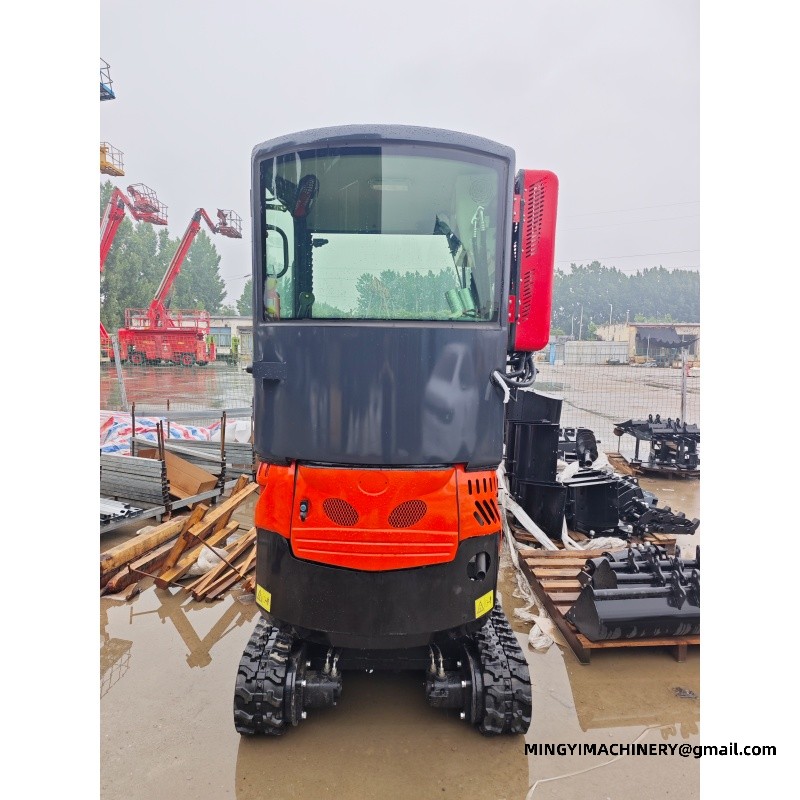
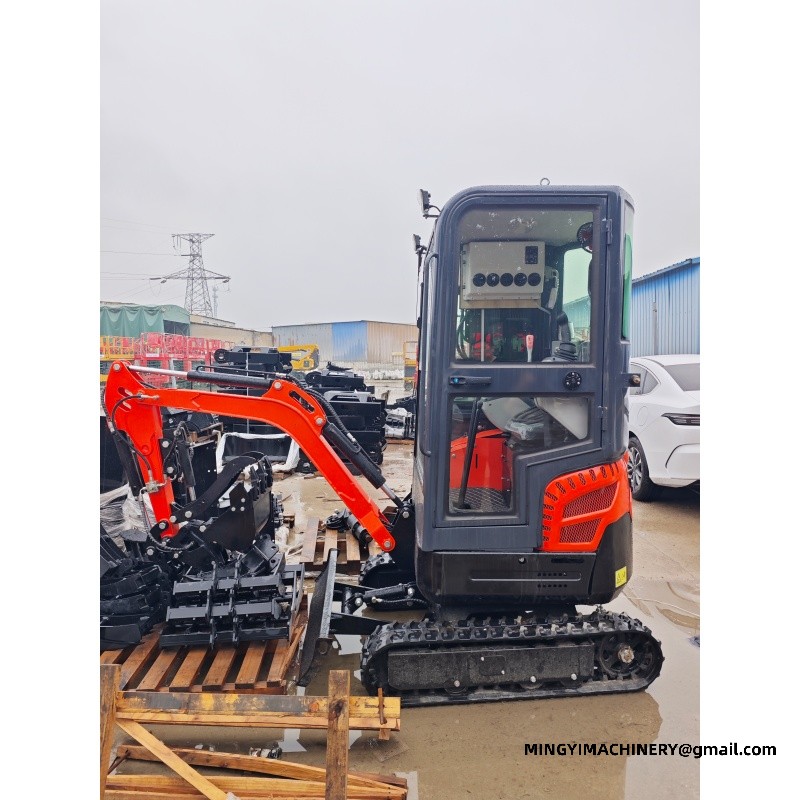
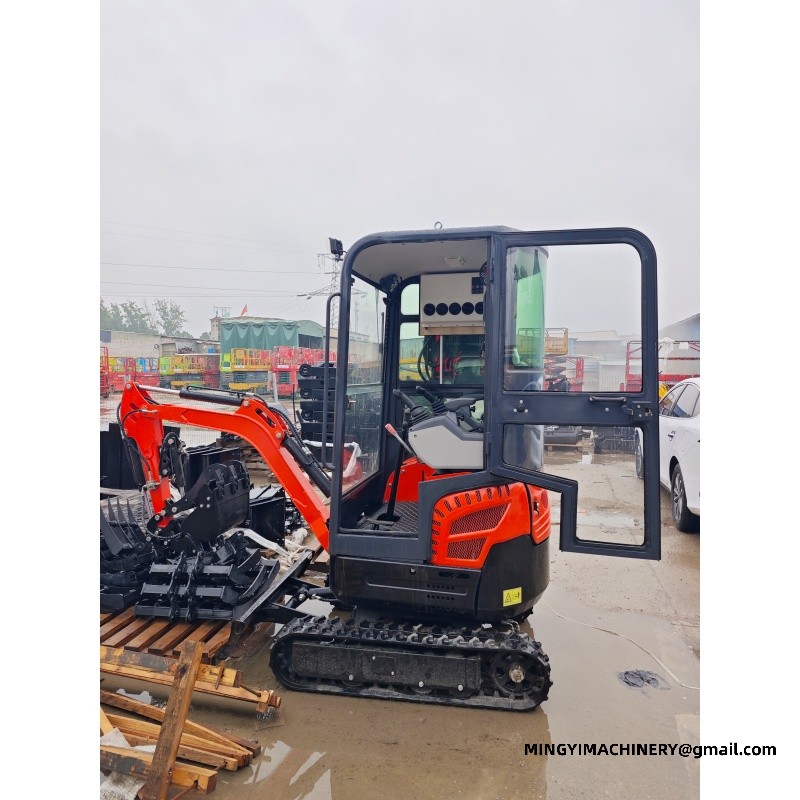
Reference specification — mini excavator range 09W 12W 13W 20-3W Operating weight 1100 kg (2425.08 lb) 1200 kg (2645.55 lb) 1300 kg (2866.01 lb) 1900 kg (4188.78 lb) Transport size (L×W×H) 1800 × 750 × 1970 mm 2200 × 930 × 2250 mm 2200 × 930 × 2250 mm 2550 × 1100 × 2200 mm Max digging depth 1250 mm (49.21 in) 1630 mm (64.17 in) 1630 mm (64.17 in) 1800 mm (70.87 in) Max digging height 2800 mm (110.24 in) 2750 mm (108.27 in) 2750 mm (108.27 in) 2820 mm (111.02 in) Max dumping height 1700 mm (66.93 in) 1960 mm (77.17 in) 1960 mm (77.17 in) 2050 mm (80.71 in) Max digging radius 2570 mm (101.18 in) 2900 mm (114.17 in) 2900 mm (114.17 in) 3050 mm (120.08 in) Max digging distance 1869 mm (73.58 in) 2100 mm (82.68 in) 2100 mm (82.68 in) 2300 mm (90.55 in) Minimum turning radius 1000 mm (39.37 in) 1300 mm (51.18 in) 1300 mm (51.18 in) 1450 mm (57.09 in) Travel speed 3 km/h (1.86 mph) 3 km/h (1.86 mph) 3 km/h (1.86 mph) 5 km/h (3.11 mph) Gradeability 30° 30° 30° 30° Fuel consumption 1-1.3 L/h (0.264—0.343 gal) 1-1.3 L/h (0.264—0.343 gal) 1-1.3 L/h (0.264—0.343 gal) 2-3 L/h (0.528—0.793 gal) Fuel tank capacity 8 L (2.11 gal) 10 L (2.64 gal) 10 L (2.64 gal) 16 L (4.23 gal) Hydraulic oil tank 16 L (4.23 gal) 16 L (4.23 gal) 16 L (4.23 gal) 18 L (4.76 gal) Dozer blade lift height 180 mm (7.09 in) 180 mm (7.09 in) 180 mm (7.09 in) 180 mm (7.09 in) Dozer blade drop depth 210 mm (8.27 in) 210 mm (8.27 in) 210 mm (8.27 in) 210 mm (8.27 in)
Q. What are the equipment on site?
A. The whole point of the smallest classes is presence - a digging machine that reaches work nothing bigger can enter. Measure the doorway, gate or stairwell first, then match the machine to the gap - the smallest classes pass where a wheelbarrow would struggle. For tight sites applications the practical route is to send the job list to the factory and let the build sheet answer it - which is exactly what this page invites.
Q. Is a micro machine still worth buying?
A. If the work is behind a single gate or down a stairwell, yes - it is the only machine that reaches the job at all. Pair it with the attachment set and it specifications like a bigger machine on small sites.
Q. What support follows the sale?
A. Spare-part kits, wear items and service documentation ship with the programme, and the parts team works from the serial plate to match components exactly. Warranty and support terms for the tight sites order are confirmed in writing before the machine leaves.
Later additions and retrofits on the machine itself
An added function should pay for itself quickly. Whether the model in question gains a different bucket, a hydraulic service or a protection package, the test is the number of days a year it is actually used.
Keeping a service record for the machine in that duty
A written record is worth more than a good memory. Dates, hours and the parts fitted on the unit on the job turn a guess about the next service into a fact, and they are the first thing a buyer asks to see.
A second operator for a machine built for the work
A machine that only one person can use is a single point of failure. Training a second operator on the equipment in service takes a day and removes the dependency that otherwise governs holidays, illness and busy weeks.
E-mail : sales@mingycn.com
LINE ( ID ): mingyicn
Visibility and blind spots around compact crawler excavator for tight sites
Mirrors, cameras and a signal person cover what the seat cannot. Walk the route before the first load and mark the corners where sight is lost.
A machine working in a yard with people on foot needs a rule about who moves first, agreed before the shift rather than during it.
Related pages
small digger for hard rock breaking · corrosion resistant mini excavator · Hydraulic Wheel Loader: Cylinders, Pumps and Circuit Options · Mini Excavators









