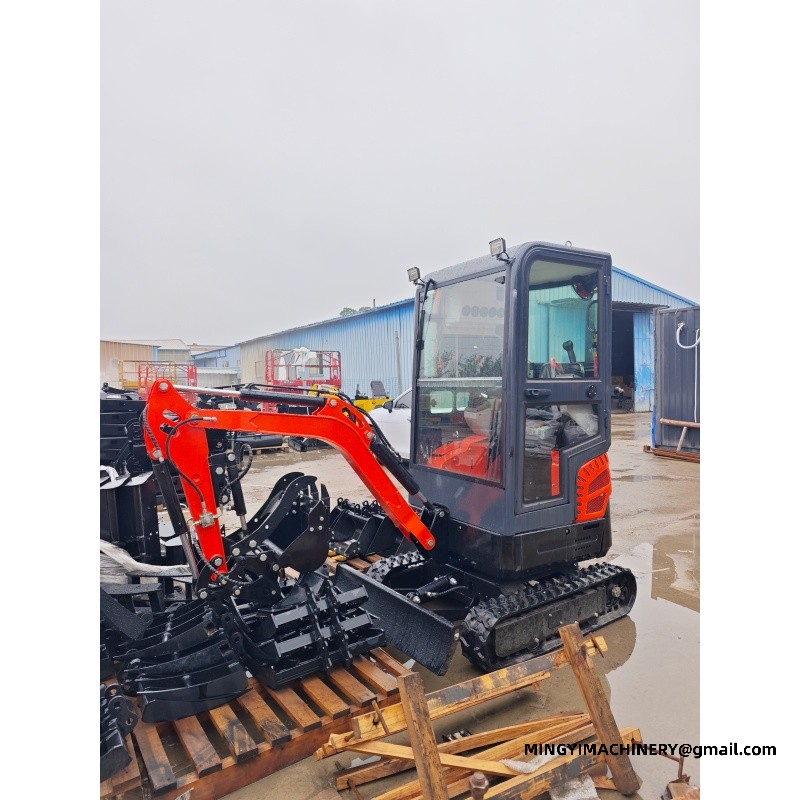
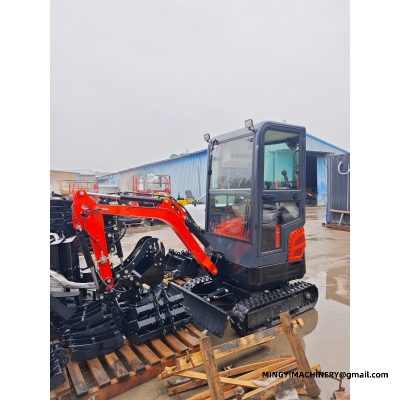
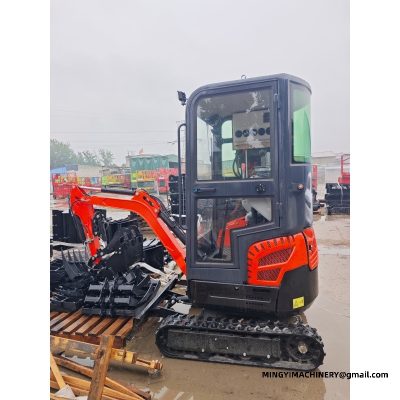
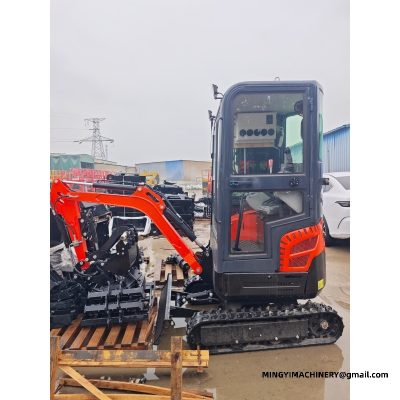
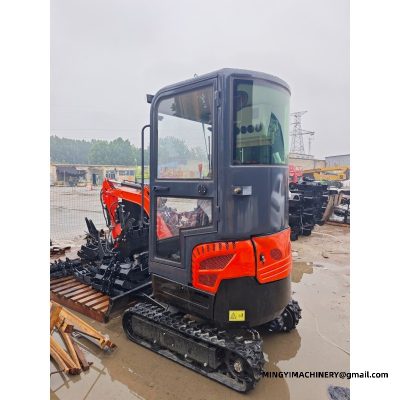
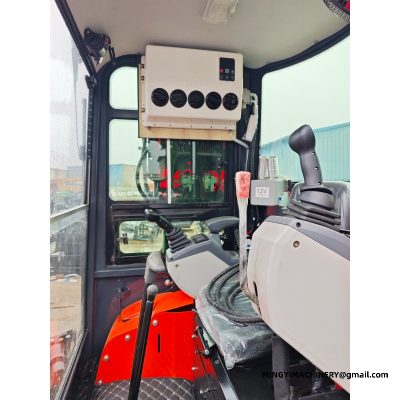
Breaking hard rock or concrete with a compact excavator is a job for the attachment as much as the machine, since the breaker hammer does the work once the carrier holds it in position. MINGYI builds small diggers used for rock breaking with hammer attachments.
In rocky ground the machine also has to stay stable under the repeated impact of the hammer, which puts the focus on the undercarriage and the hydraulic supply.
Breaking rock with a hammer attachment
A breaker hammer fitted to the mini excavator delivers repeated blows into the rock or concrete until it fractures, after which the bucket removes the broken material. The operator keeps the machine steady and works across the face rather than forcing the tool.
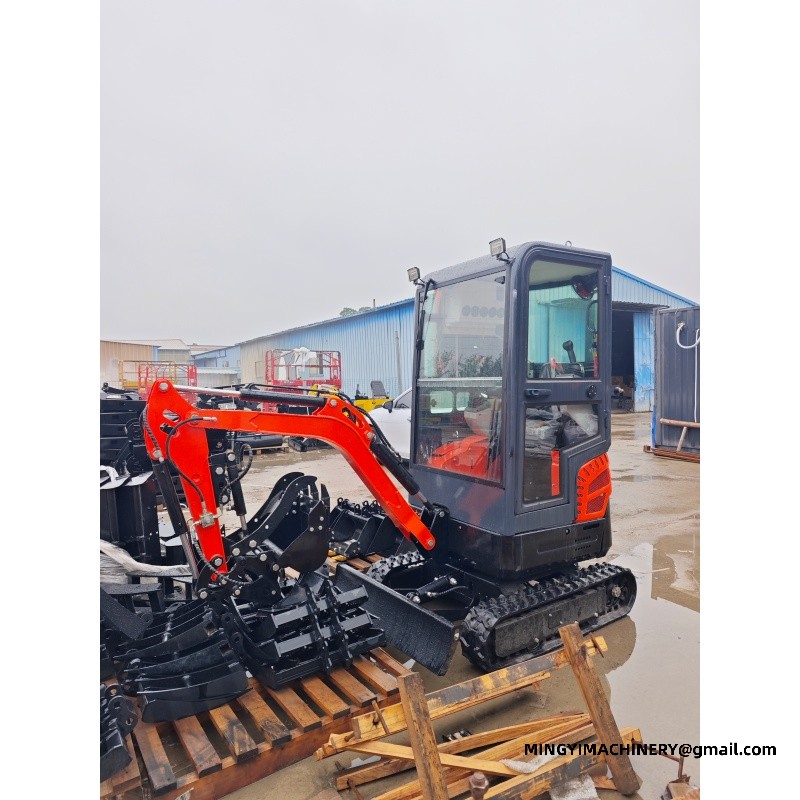
Where the material has to be reduced further, a crusher hammer can be used on the same carrier. Both attachments are ordered with the machine so the hydraulic flow and mounting suit the tool.
Keeping the carrier stable on hard ground
Repeated hammer work puts stress through the boom and undercarriage, so a machine that sits firmly on the ground is easier to use. Steel tracks with rubber blocks give a solid footing on rock and rough ground while limiting surface damage.
Hard rock also wears bucket teeth and cutting edges quickly, so these parts are kept in stock and replaced as they wear. Replacement parts are matched to the configuration of the machine.
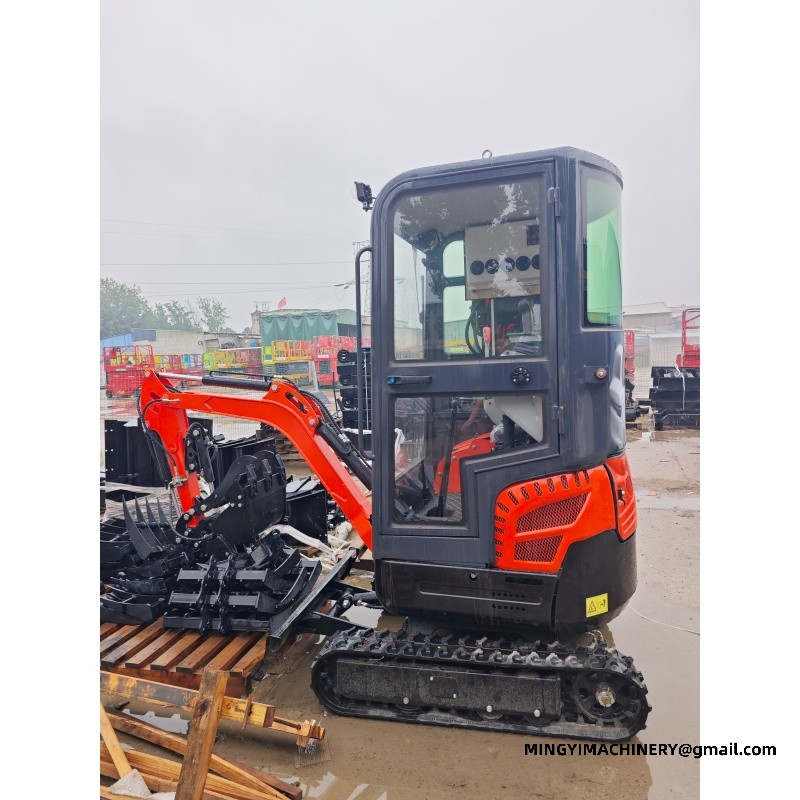
For rock breaking, a buyer should describe the material, the breaking task and the ground, and MINGYI will confirm a small digger along with the hammer and bucket to suit it.
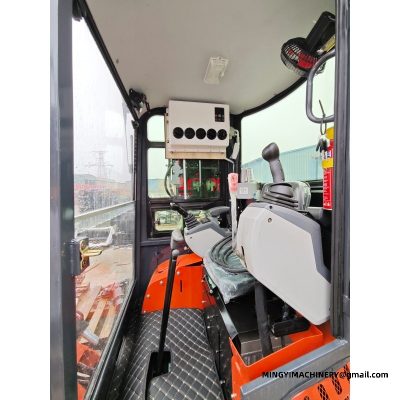
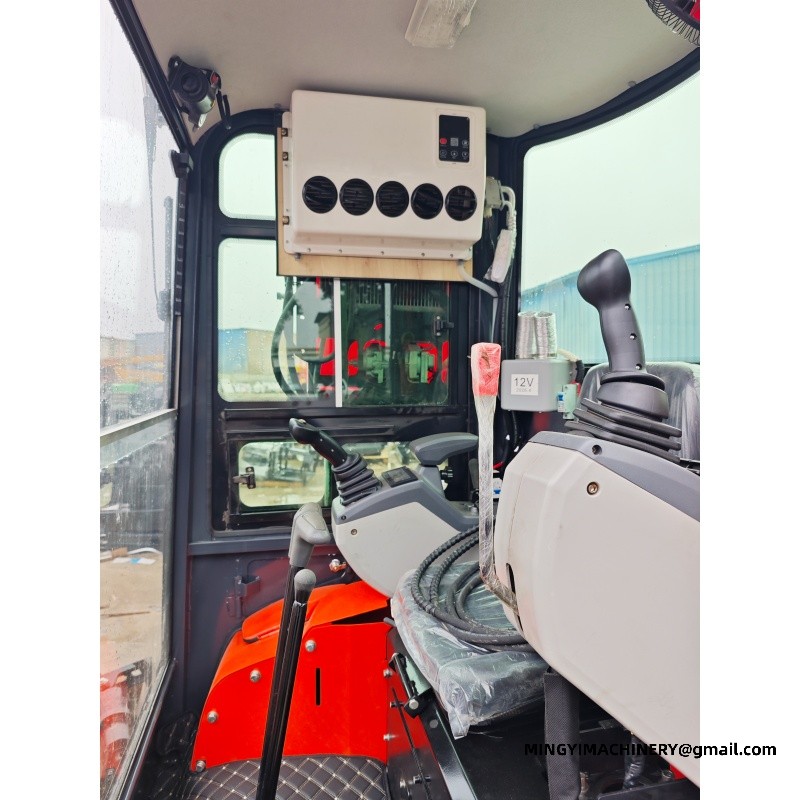
Track choice for small digger for hard rock breaking Undercarriage selection is a ground question, not a preference question. The excavator running on finished paving needs rubber; the same machine on demolition rubble or rock wears rubber quickly, so steel with rubber blocks becomes the better answer over a full season. Track type changes what the machine can cross and what it leaves behind. Buyers specify rubber for lawns, driveways and municipal work, and steel with rubber blocks for sites where sharp material would cut a rubber belt in a week. Attachments that turn small digger for hard rock breaking into several machines The base machine is a carrier; the tool on the end of the arm decides the task. This class of machine fitted with a toothed bucket digs, and the same machine with a breaker, an auger or a grab does work that would otherwise need a second unit on site. Most of the daily variety on the unit in daily use comes from the attachment rack rather than from the machine itself. Bucket, breaker, auger, ripper, rake and grab cover the large majority of the work a contractor will see. Running small digger for hard rock breaking in a rental fleet Rental fleets buy for utilisation, not for a single job. A machine of this size with a quick coupler and a common attachment standard is hired more often because it suits more of the calls that come in. Fleet buyers also weigh transport. The equipment on site that a customer can tow on a normal licence and a standard trailer is a hire that does not need a delivery truck, which changes how often it goes out. Parts, service and support for small digger for hard rock breaking Support after delivery is a parts question. Wearing items for the machine itself - filters, belts, track components, bucket teeth and pins - are the items a buyer should plan to hold before the first service interval. Remote support is handled by video. The model in question fault can often be diagnosed on a walk-around call with the panel open, which is faster than waiting for a visit and avoids shipping a part that is not needed. Canopy or enclosed cab on a small digger for hard rock breaking A canopy keeps the machine light and the operator aware of the surroundings, which suits short jobs in warm weather. A fully enclosed cab is specified where rain, dust or cold are part of the working year, and it can be added to the machine in that duty as a retrofit rather than only at build time. The cab decision follows the climate and the hours. Operators working a full shift in the unit on the job benefit from a sealed cab with wipers and heating; operators stepping on and off every few minutes usually prefer the canopy for the visibility and the quick exit. Getting small digger for hard rock breaking through a narrow gap The first question on most job lists is whether the machine can reach the work at all. A machine built for the work is chosen against the narrowest point on the route - a garden gate, a doorway, a gap between two walls - because a machine that arrives and then cannot pass loses a day, not an hour. Access decides the machine before output does. With the equipment in service the limiting dimension is usually the widest point on the way in, so measuring the gate, the corridor and the turning space first saves a wasted delivery and a second visit. Working near live services with the excavator Digging near water, gas and cable is a precision job. This class of machine is used here because the operator can work in short controlled cuts and because the machine can be positioned without driving over the run being exposed. Utility crews specify the unit in daily use with a narrow bucket and good visibility for exactly this reason: the machine has to stop at the service, not at the edge of the operator's view. Working a machine of this size through the seasons Weather decides which days are productive. Rain turns some ground unusable and cold changes how the equipment on site starts and warms up, so planning the wet months around maintenance is more useful than planning around output. Heat and dust are as limiting as rain. Air intake condition and cooling cleanliness decide how the machine itself behaves in a dry season, and both are checked in a minute rather than repaired later. What owners should plan for beyond the model in question Purchase decision is the visible part of the effort. Fuel, filters, tracks or tyres, the operator and the transport between sites are the items that decide what the machine in that duty actually demands over a few seasons, and they are worth listing before the order. The useful comparison is demand per working hour, not demand per machine. The unit on the job that works more hours a year spreads its standing takes over more output, which is why utilisation usually matters more than the invoice figure. Hydraulic circuits on a machine built for the work Auxiliary hydraulic lines are what let a machine drive a tool rather than only a bucket. The equipment in service specified with the right circuits and flow runs a breaker or an auger without an add-on power pack bolted to the frame. Flow and pressure are matched to the tool, not to the machine size. Asking for the attachment list first means the excavator leaves the factory with circuits that suit the heaviest tool the buyer intends to run. Specification data for this class of machine Buyers comparing the unit in daily use usually start from four numbers - weight, digging depth, reach and transport width - because those are the ones that decide whether the machine can be delivered and whether it can do the job once it is there. Every value shown is as built for a machine of this size; options such as cab, side swing or a telescopic undercarriage change the transport dimensions and are confirmed at order stage. Interior demolition is an access and a weight question. The equipment on site that fits through a doorway and works on a suspended floor does jobs that would otherwise be done by hand or by a larger machine that cannot enter. Breaking out a floor slab, a wall footing or a concrete step is routine work for the machine itself with a breaker. The machine is small enough to work inside and heavy enough to run the tool at a practical rate.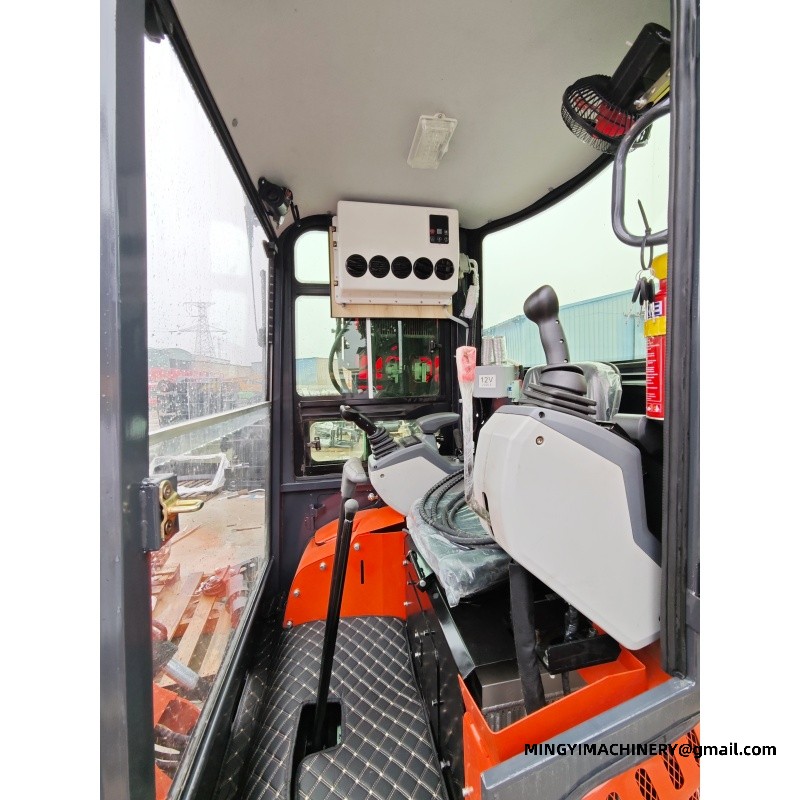
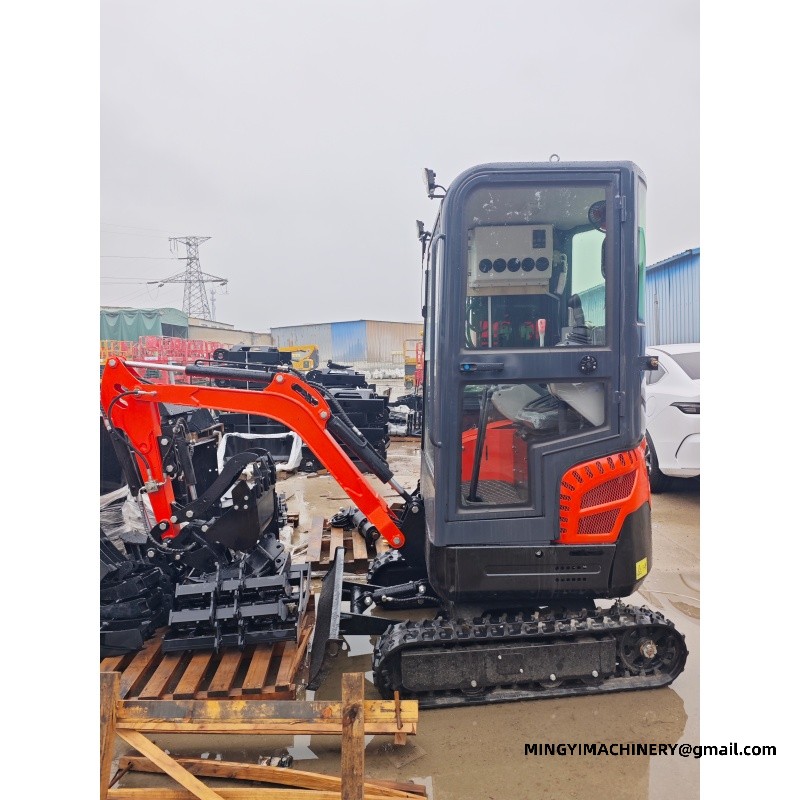
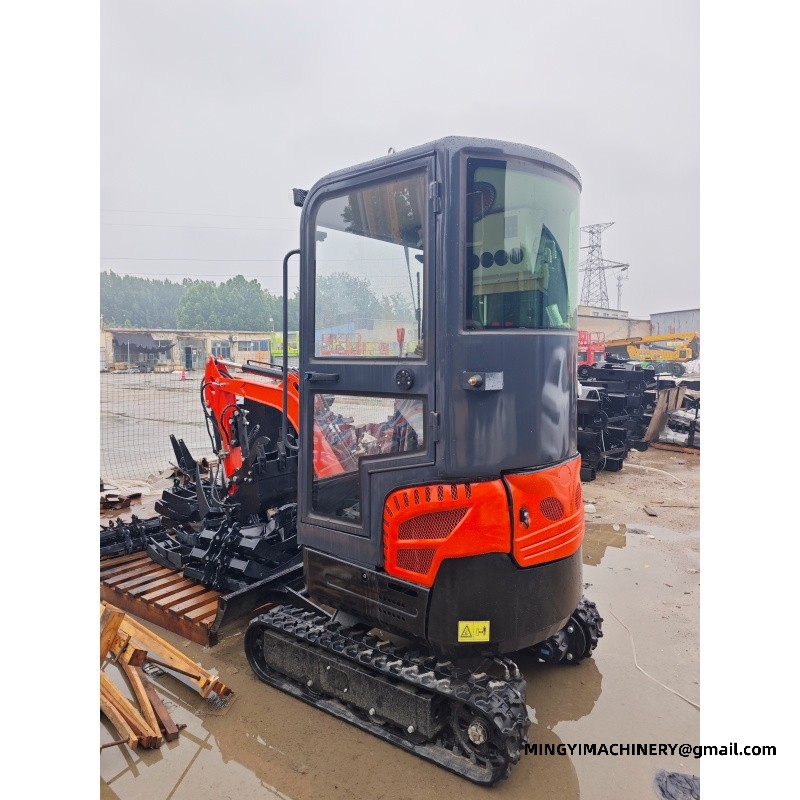
Reference specification — mini excavator range 13W 15L 20-2L 30-2L Operating weight 1300 kg (2866.01 lb) 1400 kg (3086.47 lb) 1900 kg (4188.78 lb) 2400 kg (5291 lb) Transport size (L×W×H) 2200 × 930 × 2250 mm 2200 × 930 × 2250 mm 2600 × 1300 × 2344 mm 2800 × 1500 × 2500 mm Max digging depth 1630 mm (64.17 in) 1700 mm (66.93 in) 2100 mm (82.68 in) 2200 mm (86.61 in) Max digging height 2750 mm (108.27 in) 2750 mm (108.27 in) 2880 mm (113.39 in) 2900 mm (114.17 in) Max dumping height 1960 mm (77.17 in) 1960 mm (77.17 in) 2100 mm (82.68 in) 2100 mm (82.68 in) Max digging radius 2900 mm (114.17 in) 2900 mm (114.17 in) 3215 mm (126.57 in) 3330 mm (131.1 in) Max digging distance 2100 mm (82.68 in) 2300 mm (90.55 in) 2460 mm (96.85 in) 2700 mm (106.3 in) Minimum turning radius 1300 mm (51.18 in) 1450 mm (57.09 in) 1587 mm (62.48 in) 1555 mm (61.22 in) Travel speed 3 km/h (1.86 mph) 3 km/h (1.86 mph) 5 km/h (3.11 mph) 7 km/h (4.35 mph) Gradeability 30° 30° 30° 30° Fuel consumption 1-1.3 L/h (0.264—0.343 gal) 1-1.3 L/h (0.264—0.343 gal) 2-3 L/h (0.528—0.793 gal) 2-3 L/h (0.528—0.793 gal) Fuel tank capacity 10 L (2.64 gal) 10 L (2.64 gal) 16 L (4.23 gal) 16 L (4.23 gal) Hydraulic oil tank 16 L (4.23 gal) 16 L (4.23 gal) 18 L (4.76 gal) 18 L (4.76 gal) Dozer blade lift height 180 mm (7.09 in) 180 mm (7.09 in) 180 mm (7.09 in) 230 mm (9.06 in) Dozer blade drop depth 210 mm (8.27 in) 210 mm (8.27 in) 210 mm (8.27 in) 280 mm (11.02 in)
Q. What is the model in question?
A. The attachment story on a compact digger is about earning across trades: one carrier, one trailer, and a quick coupler that swaps tools in about a minute. A digger that only digs competes with shovels; a digger with the right working set competes for whole jobs. MINGYI builds the 08, 12 and 18 models covering the 0.8 to 6 tonne class, and the machine in that duty is where that range meets hard rock breaking.
Q. How do I know which attachment my machine can run?
A. Compare the carrier hydraulic flow with what the attachment asks for, and the lifting moment with what it weighs at full reach. Lower-flow carriers still run buckets, rakes and mechanical tools; hungry attachments call for the high-flow option, and MINGYI confirms the pairing before the order ships.
Q. Does MINGYI supply attachments with the machine?
A. Yes - buckets, breakers, augers, rakes and the rest of the working set ship with the carrier, matched to the hydraulic flow and the coupler. For hard rock breaking the package is confirmed on the build sheet, so machine and tools arrive together and start work together.
Commissioning the unit on the job on site
The machine should be introduced to the site as well as the operator. Walking the route a machine built for the work will take, noting the soft spots and the turns, prevents the kind of first-day incident that has nothing to do with the machine.
Planning the season around the equipment in service
Downtime is simplest when it is planned. Booking the service for the excavator in the quiet part of the season takes nothing from the schedule, while the same work in the busy weeks gives up a day of output every time.
E-mail : sales@mingycn.com
LINE ( ID ): mingyicn
Night work and lighting on small digger for hard rock breaking
Night work changes the job more than most specification lines do, because light coverage, glare and shadow decide how much of the site the operator can actually read.
Reflective markings on the machine help everyone else on site, and they are simple to add and easy to replace.
A lighting check belongs at the start of every night shift, together with a look at the warning beacon and the brake lights.
Related pages
corrosion resistant mini excavator · snow removal compact mini digger · Compact Wheel Loader: Access, Track Width and Small-Frame Builds · Mini Excavators









