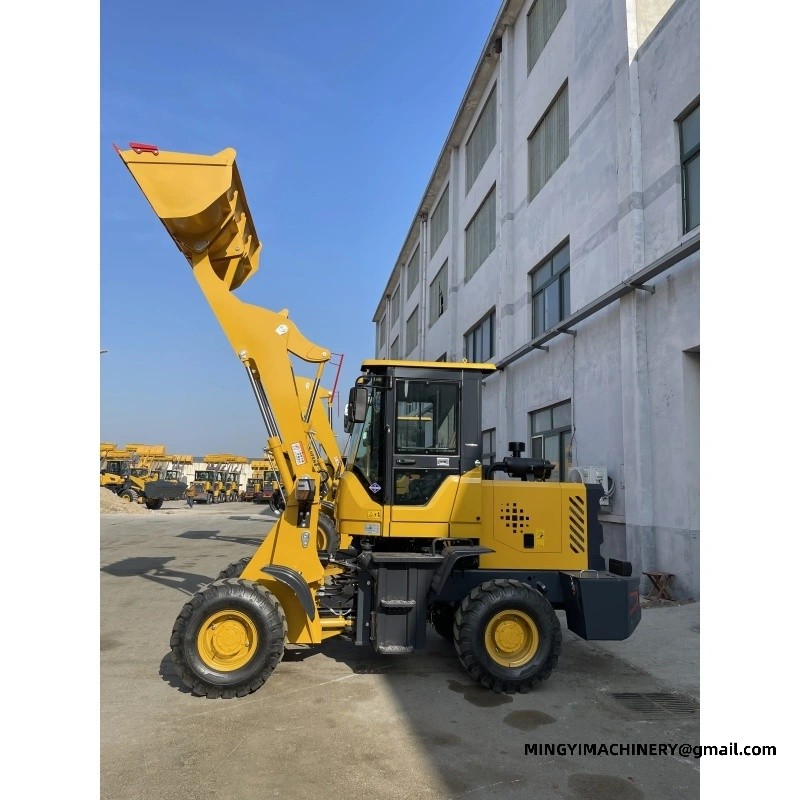
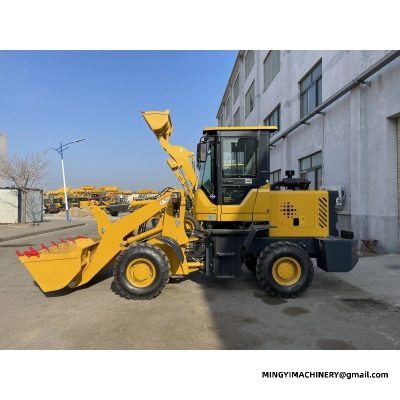
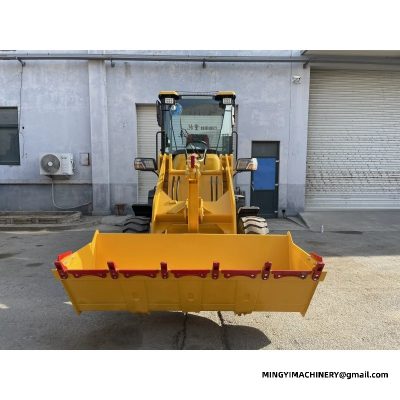
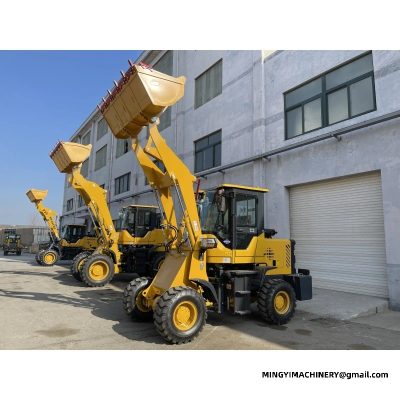
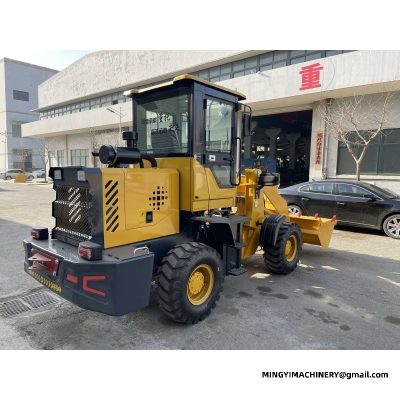
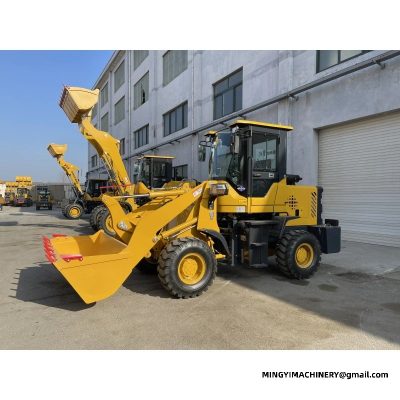
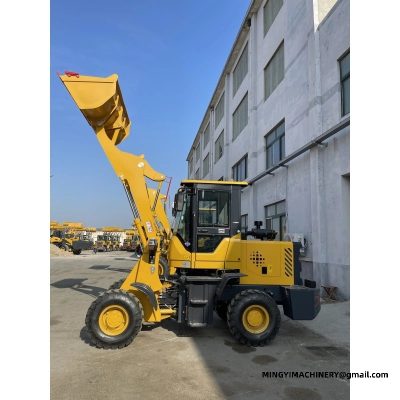
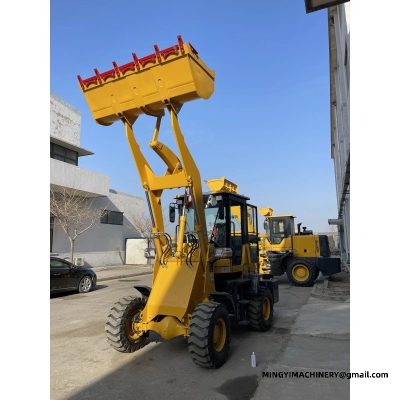
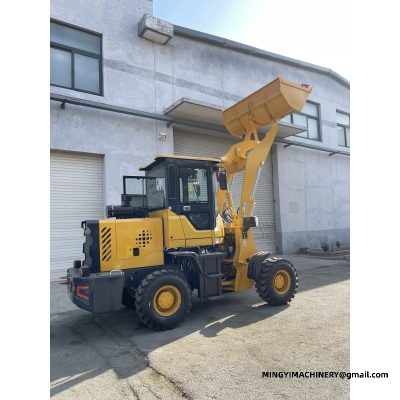
What separates a compact wheel loader that is still tight at year five from one that is loose at year two is visible on the specification sheet, if you know which row to read. It is not the engine and it is not the bucket. It is the rear hinge plate — 20 mm on the heavy-duty 3.2 m small-frame wheel-side reduction wheel loader against 20 mm on the heavy-duty 3.5 m small-frame wheel-side reduction wheel loader — and the cross-member behind it, 30 mm against 30 mm. Add the boom wall, 25 mm against 25 mm, and you have the frame story. The rest of this page covers the hydraulic, cooling, axle and delivery decisions that follow.
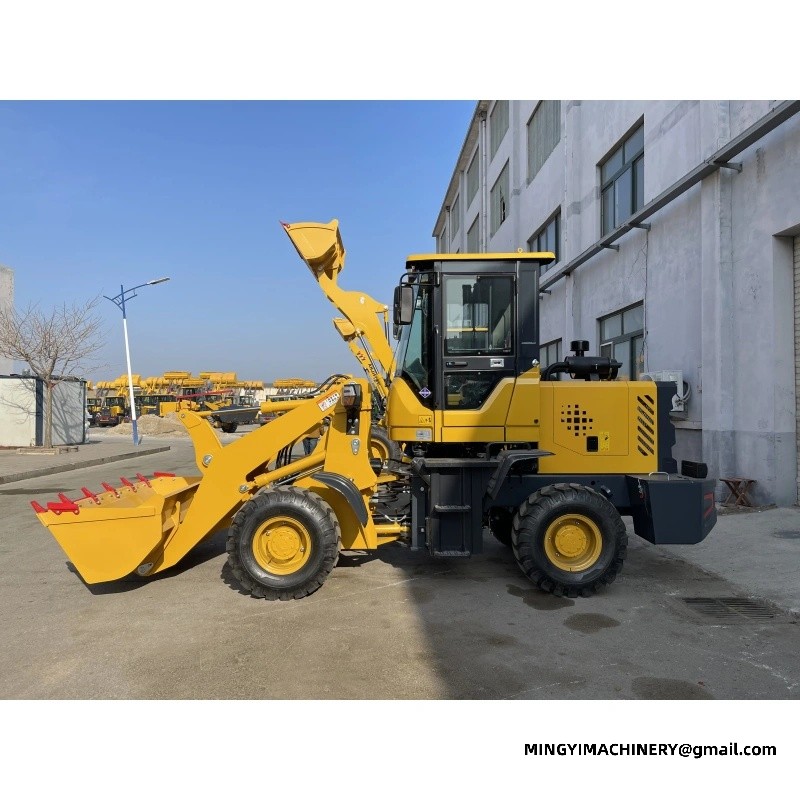
A battery specification is really an engine specification in disguise. 60 Ah (490 engine); 80 Ah (4102 turbo engine) tells you what the engine needs to turn over, and where two figures are listed it tells you the build is offered with more than one engine. The larger figure is the turbo; the smaller, the naturally aspirated option.
Match that to how the machine will be used. Continuous duty — one start, one long shift — is easy on a battery. Intermittent duty — yard work where the engine is stopped every time the operator gets out — is the hard case, and it is where the higher rating earns its keep. The rest of the electrical load is modest, so cranking is what the 60 Ah (490 engine); 80 Ah (4102 turbo engine) figure is really buying.
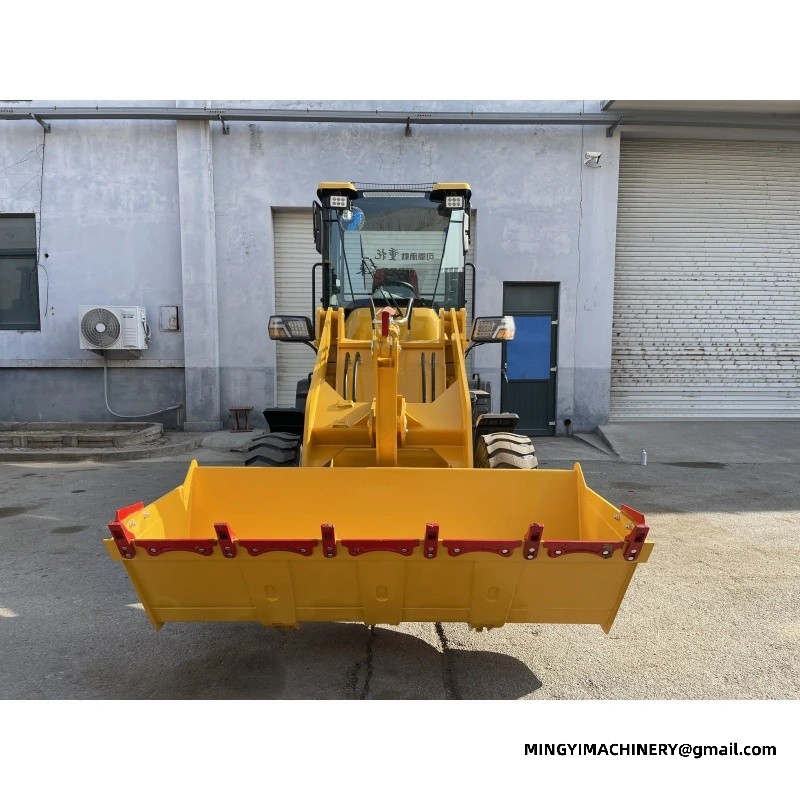
Work out how many passes fill the body, then work backwards. A body that takes four passes from a 0.4 m³ bucket will take three from 0.52 m³, but only if the machine can clear the board, and that is the part people get wrong. The heavy-duty 3.8 m small-frame wheel-side reduction wheel loader reaches 3.8 m; the light-duty 3.8 m medium-frame wheel-side reduction wheel loader reaches 3.8 m. If the board sits between those two figures, the capacity comparison is academic.
The second check is whether the machine can dump without striking. Dump height is measured at the bucket edge with the arm at full lift, so the clearance you actually have is that figure less the height of the material crest. On the heavy-duty 3.8 m small-frame wheel-side reduction wheel loader the arm is 2.61 m and the spacing between the arms is 890 mm; a longer arm with a wider spacing tips a bucket cleanly instead of rolling it off the corner.
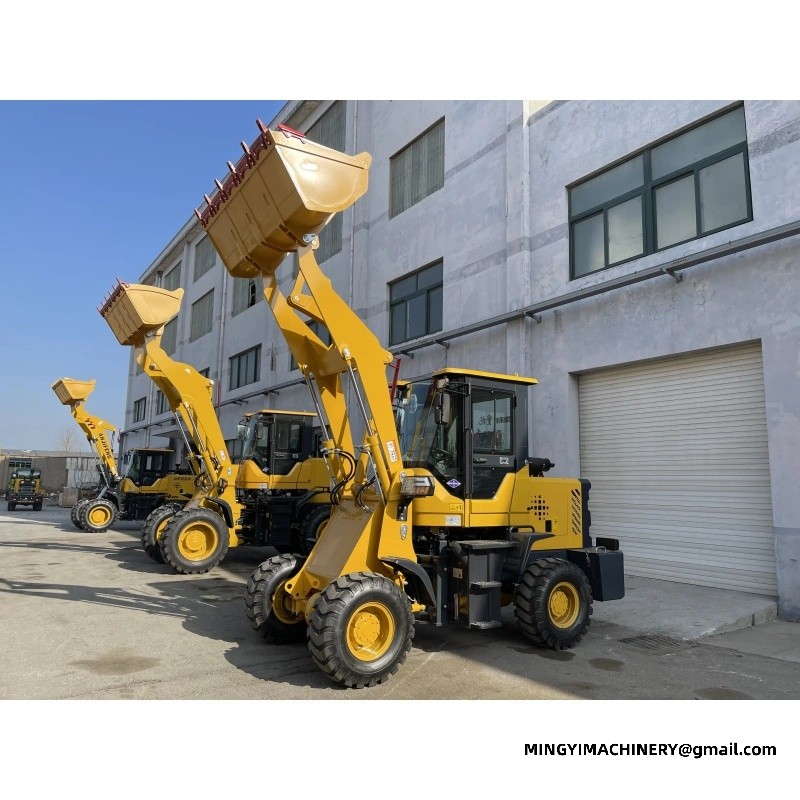
Battery capacity appears in the table as 60 Ah (490 engine); 80 Ah (4102 turbo engine) for the heavy-duty 4.2 m small-frame wheel-side reduction wheel loader and 80 Ah for the light-duty 3.8 m medium-frame wheel-side reduction wheel loader. On builds with two engine options the two figures track the engines: the naturally aspirated unit cranks on less, the turbo needs more, and the 24 V system exists precisely because cranking a turbo diesel at minus ten needs the extra headroom.
What buyers should confirm before dispatch is not the capacity but the condition and the connections. Machines ship with batteries disconnected and boxed, so the first start is also the first check of every terminal. On the heavy-duty 4.2 m small-frame wheel-side reduction wheel loader that pack feeds the 4100 core (490 engine); 4105 core (4102T engine) cooling circuit's fan drive and the instrument cluster; on the light-duty 3.8 m medium-frame wheel-side reduction wheel loader it feeds 4105 core and the same cluster. A marginal earth shows up as a slow crank in winter and as gauge flicker in summer.
| Specification extract — light-duty 3.5 m medium-frame wheel-side reduction wheel loader | |
|---|---|
| Bucket capacity | 0.52 m³ |
| Dump height | 3.5 m |
| Track width | 1.6 m |
| Boom arm thickness | 30 mm |
| Boom arm width | 430 mm |
| Boom arm length | 2.63 m |
| Boom arm centre distance | 900 mm |
| Cross-member thickness | 45 mm |
| Front hinge plate thickness | 45 mm |
| Rear hinge plate thickness | 30 mm |
| Rear frame section | 300 mm high x 800 mm wide |
| Hydraulic cylinders | centre cylinder 60 / side cylinder 50 |
| Fuel tank | 70 L (75# large tank) |
| Battery | 80 Ah |
| Front wheel to counterweight | 4.3 m |
| Radiator | 4105 core |
| Work pump | 2063 pump |
| Travel pump | 25 pump |
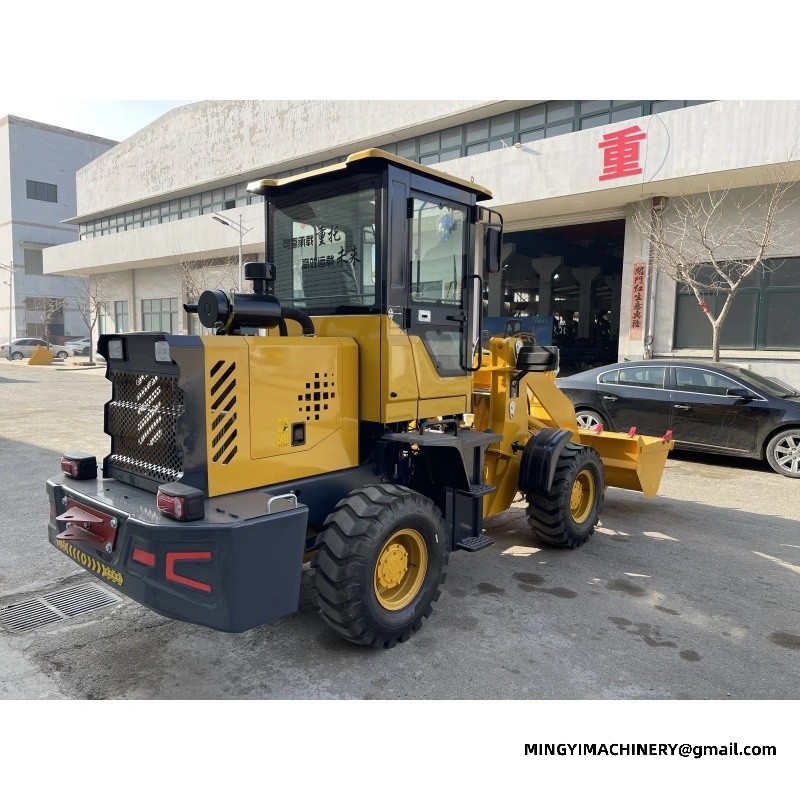
Two dimensions decide whether a loader is usable on a given site: the 4.1 m front-to-counterweight length of the heavy-duty 3.2 m small-frame wheel-side reduction wheel loader against the 4.3 m of the light-duty 4.2 m medium-frame wheel-side reduction wheel loader, and track width at 1.5 m (wheel-side reduction axle); 1.45 m (Isuzu axle) against 1.6 m. Everything else on the sheet — engine, pump, cylinder bore — matters only after the machine fits.
The pairing matters too. A 0.4 m³ bucket lifted to 3.2 m on a 4.1 m footprint is a different machine in practice from a 0.52 m³ bucket at 4.2 m on 4.3 m, even where the track figures are close. Where access is tight, take the shorter machine and accept the extra pass; where the ground is open, take the longer one and take the stability it buys with the 30 mm rear hinge plate.
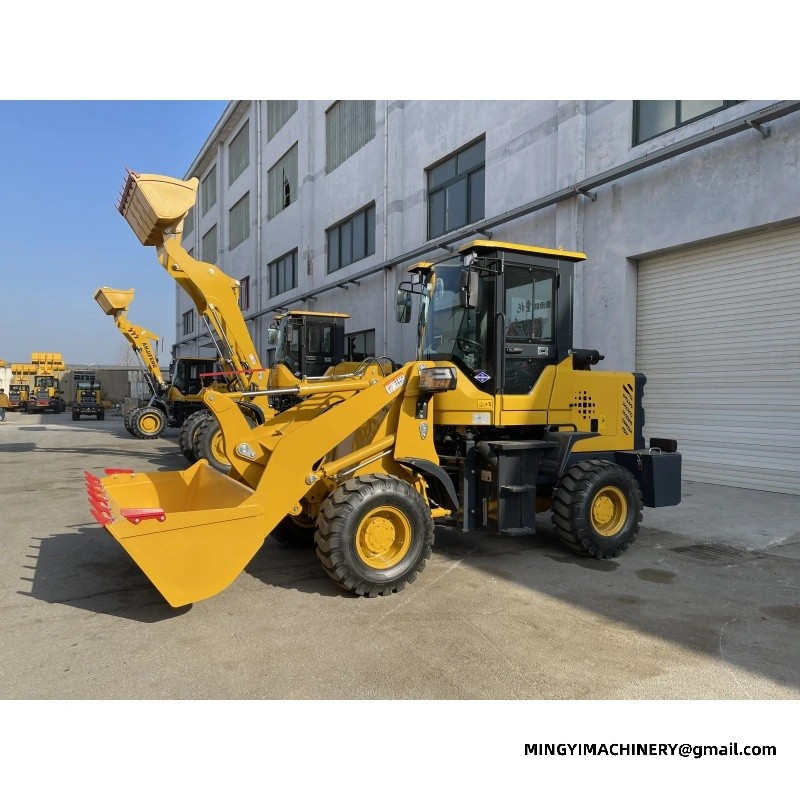
An articulated loader turns by bending in the middle, and the hinge is where that bending happens. Front plate 30 mm, rear plate 20 mm. The front is the thicker of the two on every build in the range, because it carries the boom and the payload directly, while the rear carries the engine and the counterweight through every steering movement and is sized for the twisting those movements produce rather than for the weight alone.
Pin wear is how hinges fail, and it shows up as a machine that wanders and a steering that feels vague. The cross-member is what prevents it: 30 mm holding the two sides of the frame at a fixed distance so the pins stay square. Compare 30 mm on the heavy-duty 4.2 m small-frame wheel-side reduction wheel loader and the difference in plate thickness starts to make sense — they are specified together, not separately.
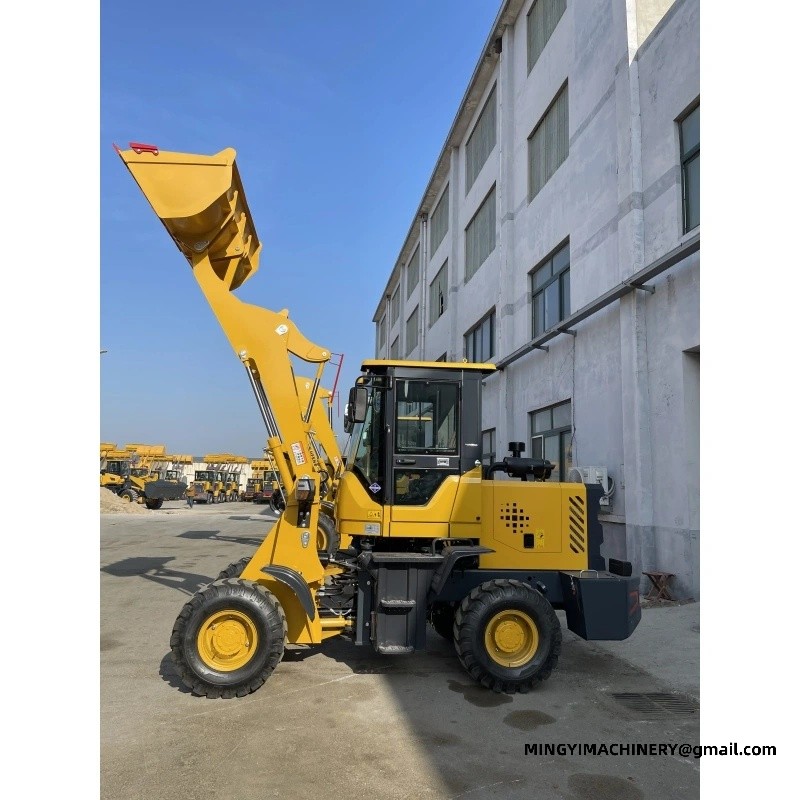
Three takes dominate ownership: fuel, downtime and the residual value of the machine when it is sold. Fuel is set by duty and tank planning — 64.7 L (75# small tank) on the heavy-duty 3.2 m small-frame wheel-side reduction wheel loader, 64.7 L (75# small tank) on the heavy-duty 3.5 m small-frame wheel-side reduction wheel loader. Residual value is set by whether the frame is still tight, which is set by the 20 mm and 20 mm rear hinge plates and the 30 mm and 30 mm cross-members.
Downtime is the lengthy one, and it is usually caused by the simplest components: a hose on the centre cylinder 45 / side cylinder 45 circuit, a blocked 4100 core (490 engine); 4105 core (4102T engine) core, a flat battery from a machine that sat on the dock. None of them is a reason to buy a bigger machine, and all of them are reasons to keep a small spares box. plan for filters, hoses and a cutting edge per year, and for pins and bushes every second year.
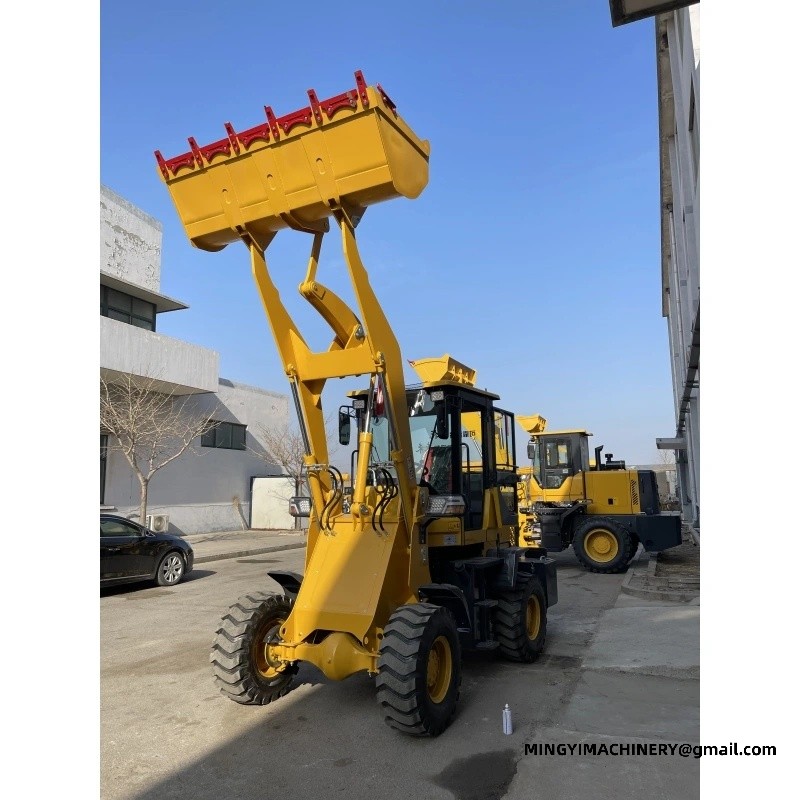
Keep the delivery photographs and the specification sheet with the machine. Bucket 0.4 m³, dump height 3.2 m, cylinders centre cylinder 45 / side cylinder 45, pump 40 pump (490 engine); 1045 pump (4102 turbo engine), track 1.5 m (wheel-side reduction axle); 1.45 m (Isuzu axle): a buyer who can verify five figures against the machine will pay for the certainty.
The frame figures do the rest. 30 mm and 20 mm hinge plates, 30 mm cross-member, 280 mm high x 800 mm wide rear section. Two machines of the same age and hours can be worth materially different amounts on those four rows alone, because they tell the buyer how much life is left in the part that is most lengthy to put right.
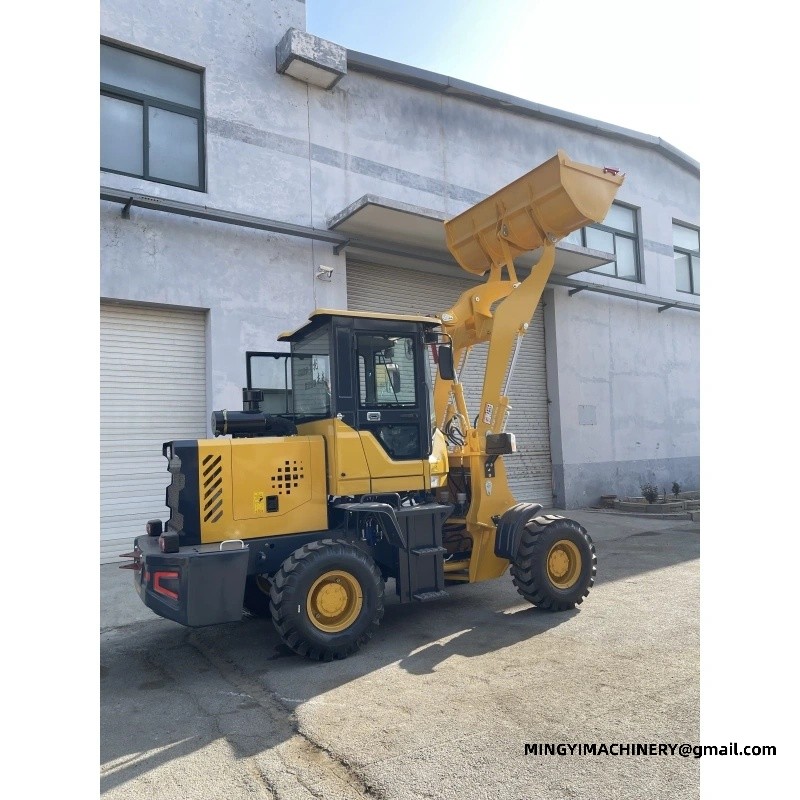
Every unit leaves the factory knock-down: booms and counterweights loose, tanks removed, batteries boxed and disconnected. Because rear frame sections stay within the 280 mm high x 800 mm wide to 300 mm high x 800 mm wide band across the range, two to three loaders ship in one forty-foot container.
What arrives is a machine plus a commissioning job. On the light-duty 3.8 m medium-frame wheel-side reduction wheel loader that means fitting the 2.9 m boom to the 900 mm mounts, torquing the 45 mm hinge pins, filling the 70 L (75# large tank) tank and the 4105 core cooling system, and connecting the battery. On the light-duty 4.2 m medium-frame wheel-side reduction wheel loader the same sequence applies with 2.9 m, 45 mm, 70 L (75# large tank) and 4105 core. Allow a day per machine, and allow for the fact that the battery will have sat for weeks.
Which axle should a compact wheel loader be built with?
Match it to the ground. Track runs 1.5 m (wheel-side reduction axle); 1.45 m (Isuzu axle) on the heavy-duty 3.8 m small-frame wheel-side reduction wheel loader and 1.6 m on the light-duty 4.5 m medium-frame wheel-side reduction wheel loader; wheel-side reduction for soft or rutted surfaces, the Isuzu-pattern axle for hard, level ground.
What does commissioning a compact wheel loader involve?
Fit the 2.61 m boom to the 890 mm mounts, torque the hinge pins, fill the 64.7 L (75# small tank) tank and the 4100 core (490 engine); 4105 core (4102T engine) circuit, and connect the battery. Allow a day per machine.
What should the first service on a compact wheel loader cover?
Torque the hinge pins, grease the 890 mm boom mounts, check the centre cylinder 45 / side cylinder 45 cylinder connections and the 4100 core (490 engine); 4105 core (4102T engine) cooling circuit, then re-check the build figures.
Which compact wheel loader build suits quarry or stockpile work?
The heavy build with the raised core: a 0.52 m³ bucket, 30 mm rear hinge plate, 45 mm cross-member and the 4105 core radiator for fines and dust.
How much reach does the boom of a compact wheel loader give?
Boom length is 3.15 m on the heavy-duty 4.2 m small-frame wheel-side reduction wheel loader and 3.35 m on the light-duty 4.5 m medium-frame wheel-side reduction wheel loader. Length buys reach and takes stability, so match it to the height you actually have to clear.
How does a compact wheel loader differ from a skid steer?
Articulated steering and a 4.1 m front-to-counterweight length give the loader reach and a smoother ride on rough ground; a skid steer turns in its own length but carries less, higher effort per tonne moved.
Can a compact wheel loader be used for snow clearance?
Yes, with a snow tool specified against the boom section — 430 mm on the heavy-duty 3.5 m small-frame wheel-side reduction wheel loader — and the third circuit ordered if the tool is hydraulically actuated.
Whether the duty is farm, site or stockpile, the compact wheel loader choice comes back to ground, board height and cycle count. Tell us those three and the build follows: axle, radiator, cylinder set and the 0.4 m³ or 0.4 m³ bucket to suit.
Handover and getting familiar with Compact Wheel Loader: Access, Track Width and Small-Frame Builds
Operators who come from a different machine need a short conversion. The controls on Compact Wheel Loader: Access, Track Width and Small-Frame Builds follow the usual pattern, but the response, the sightlines and the stopping distance are learned by doing rather than by reading.
A second operator for Compact Wheel Loader: Access, Track Width and Small-Frame Builds
Shared machines need shared habits. Two operators on Compact Wheel Loader: Access, Track Width and Small-Frame Builds should do the same daily checks in the same order, because the check that one person skips is the check that eventually matters.
Fuel, oil and fluid quality for Compact Wheel Loader: Access, Track Width and Small-Frame Builds
Contamination is easier to prevent than to cure. Keeping the filler caps sealed, the funnels clean and the containers closed around Compact Wheel Loader: Access, Track Width and Small-Frame Builds is unglamorous work that shows up as reliability later.
Contact MINGYI Machinery for the current wheel loader lineup, configuration options and a formal specification for your market. E-mail: sales@mingycn.com | LINE (ID): mingyicn
Small Wheel Loader: Where the Compact Builds Earn Their Keep · Wheel Loader for Sale: How to Read a Specification Before You Sign · Wheel Loader for Aggregate Yard: Fines, Dust and Stockpiles · Loaders









