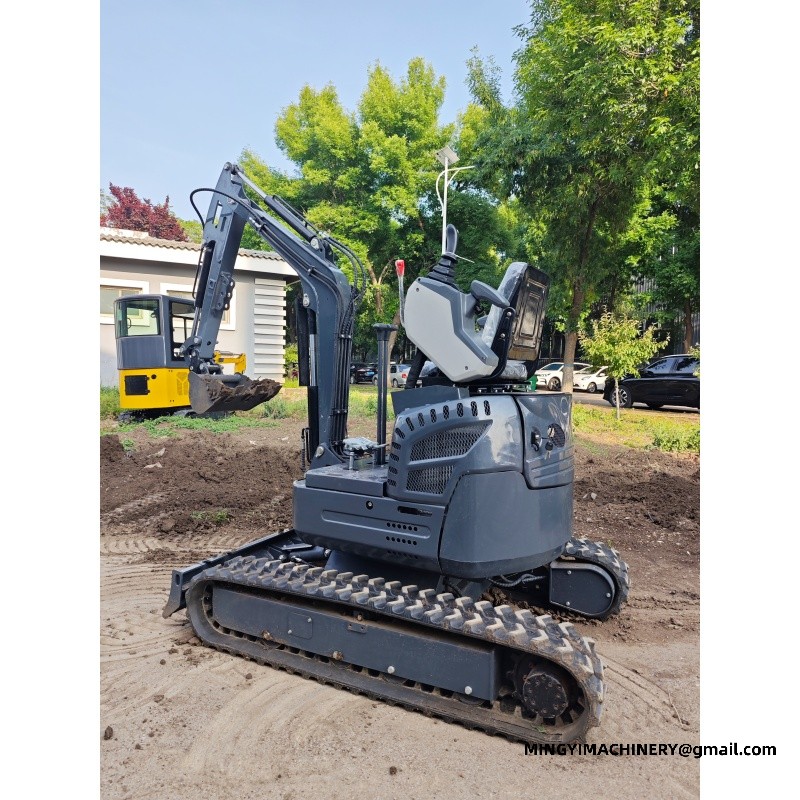
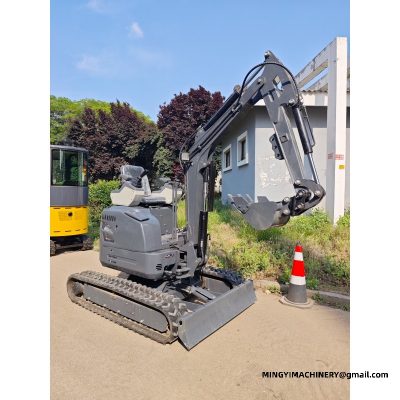
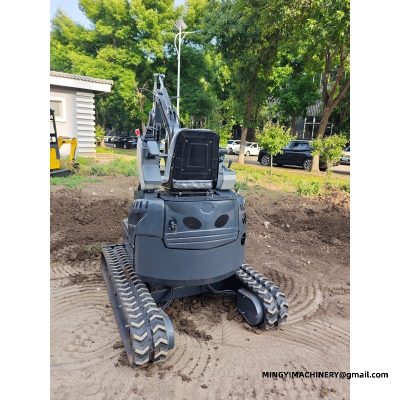
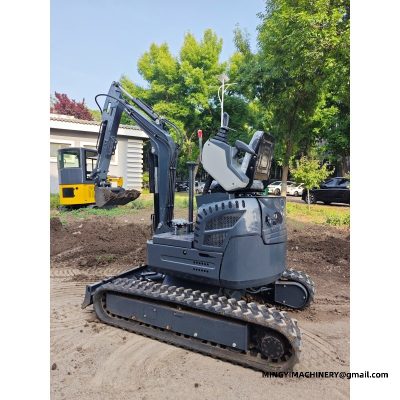
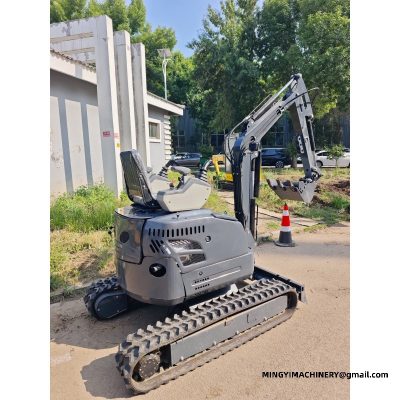
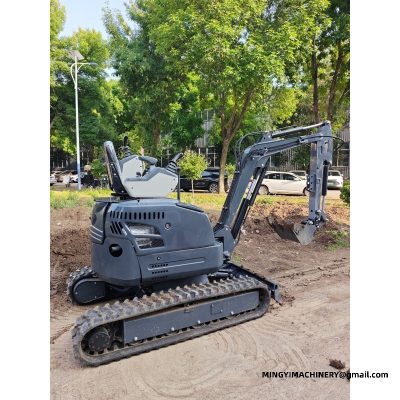
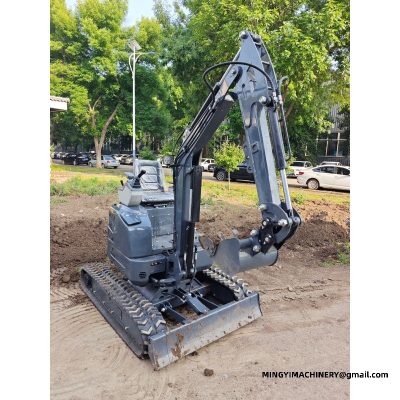
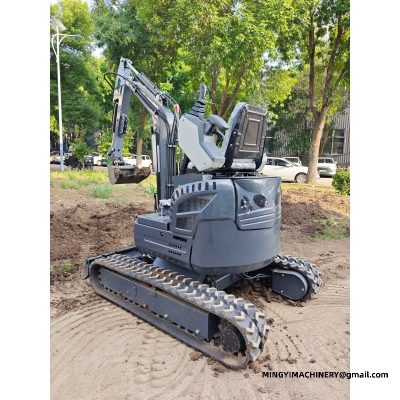
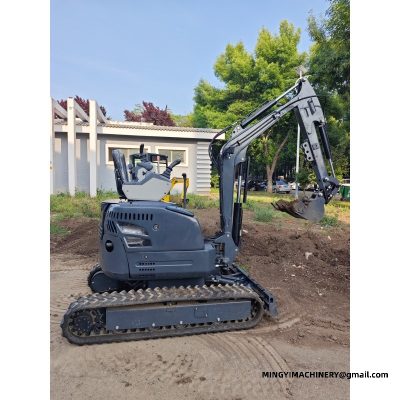
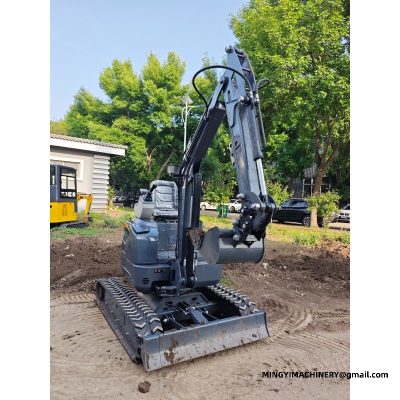
A house foundation is a small excavation with a tight tolerance. The trench has to sit on the right line, reach a consistent depth and leave the ground beneath it undisturbed, because everything above the slab depends on that base.
Compact excavators in the 1 to 3.5 tonnes class are widely used for this stage of domestic building. MINGYI produces these machines to order, so the bucket width and track type can be matched to the foundation design and the access on the plot.
Digging footings for a house or extension
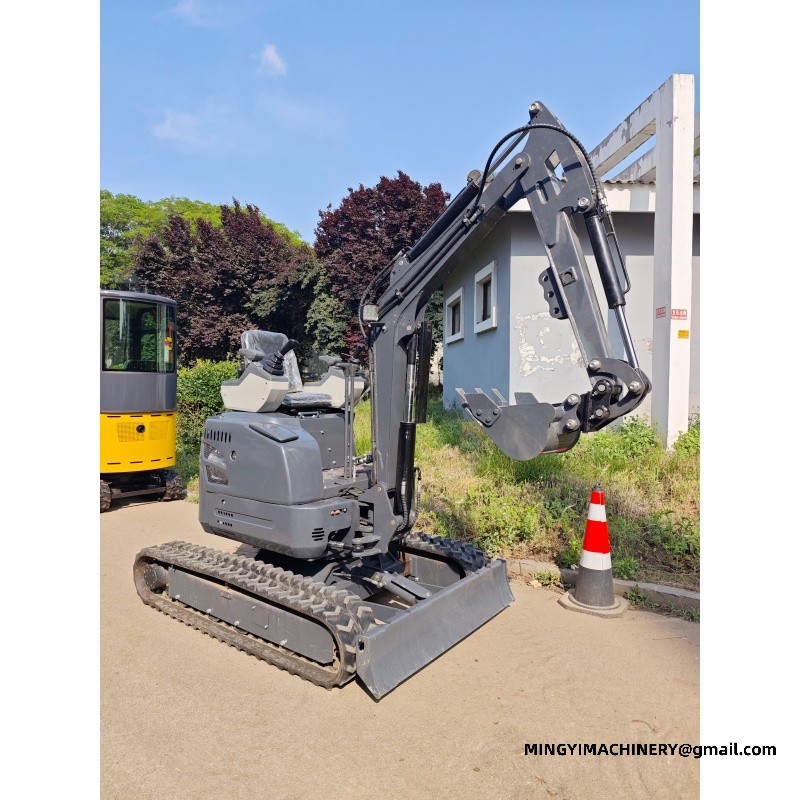
Work starts from the setting-out, and the operator follows a line rather than a trench edge. A bucket matched to the footing width produces a trench that needs little trimming, which matters where the concrete is scheduled soon after the dig.
Depth is checked along the run as the machine moves, because a variable invert level means extra concrete to bring the base back to line. Working in short passes makes it easier to hold the level than cutting the whole trench in one movement.
Access around a new build
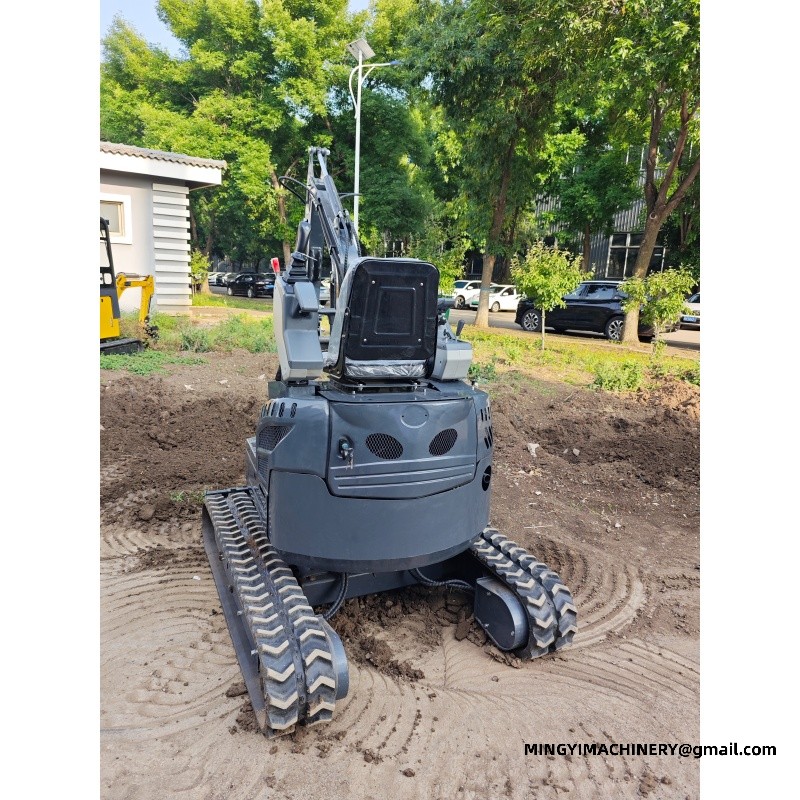
Plots are often tight, with a boundary wall or a mature tree limiting how the machine can approach. An offset boom and a short tail allow the cut to be made alongside an obstruction while the tracks stay clear of the excavation.
Spoil has to be kept close enough to backfill later but far enough not to surcharge the trench. Rubber tracks are commonly chosen on domestic plots because the machine crosses existing paving and driveways on the way in.
House foundations are where a small machine earns its accuracy. A compact excavator specified around the footing width and the access to the plot cuts the trench to level and leaves the groundworks gang a base they can build on directly.
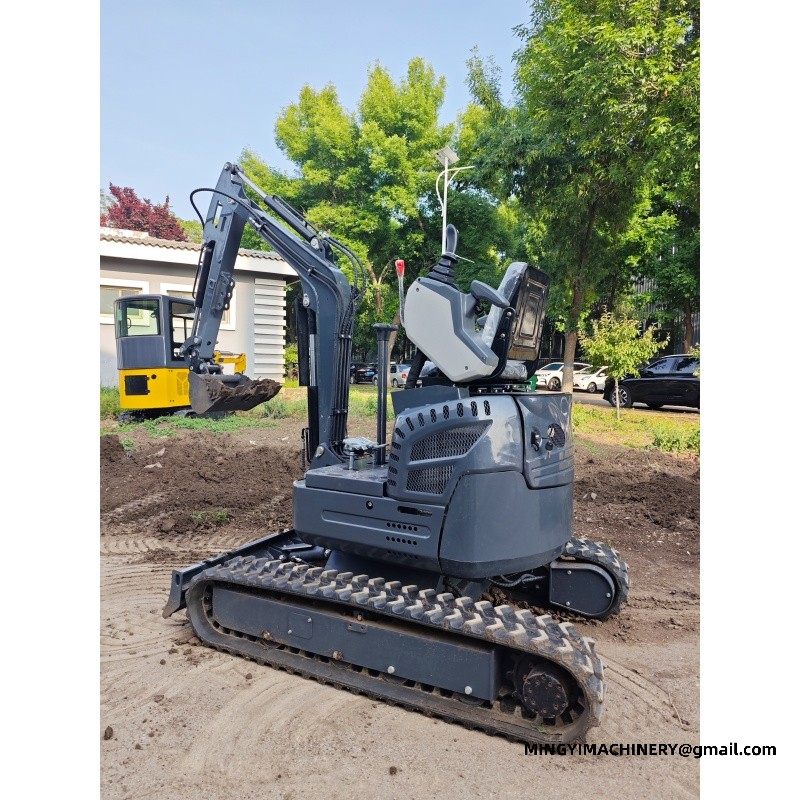
Working on slopes and uneven ground with compact excavator for house foundations Ground that looks level often is not. The excavator crossing a filled trench, a soft edge or a hidden void behaves differently from one on undisturbed ground, and those are the places worth walking before driving. Planning the direction of travel helps. Working so that the this class of machine is stable under load and not required to turn on a slope is a decision made before the job starts, not a correction made during it. Working a compact excavator for house foundations in confined spaces Clearance above matters as much as around. Door heights, pipework and overhead services set the limit for the unit in daily use indoors, and measuring them first avoids a machine that arrives and cannot be used. Ventilation is the other indoor constraint. Running a machine of this size inside a closed structure needs air movement, and that is a planning item rather than something to discover after the first hour. Noise, dust and working near occupied buildings Enclosure and machine condition both reduce noise. The equipment on site with intact panels, sound mounts and a maintained exhaust is measurably quieter than the same machine with loose guards, and the difference matters on restricted sites. Dust control is often part of the same conversation. Water, timing and work sequence reduce what leaves the site, and agreeing them in advance keeps the machine itself working rather than stopped after a complaint. What owners should plan for beyond the compact excavator for house foundations Purchase decision is the visible part of the effort. Fuel, filters, tracks or tyres, the operator and the transport between sites are the items that decide what the model in question actually demands over a few seasons, and they are worth listing before the order. Downtime is the hidden line item. The machine in that duty waiting on a part earns nothing while it stands, so parts availability and service access belong in the plan as much as fuel does. Road and paving work for compact excavator for house foundations Patching and reinstatement favour a machine that can work in a lane closure. The unit on the job occupies less road than a full-size excavator, which reduces the traffic management needed and the length of the closure. Breaking out a failed slab and backfilling the same hole in one visit is normal work for a machine built for the work. The breaker and the bucket come off the same coupler, so the road is reopened the same day. Daily checks and maintenance on compact excavator for house foundations Daily maintenance on the equipment in service is a short list: engine oil level, coolant, track tension, hydraulic oil level and a look at the hoses. Ten minutes at the start of the shift prevents most of the failures that stop a machine. Track tension is the item most often neglected. The excavator run with slack tracks wears the undercarriage and can throw a track on a turn; run too tight, the same components wear from the other direction. Municipal and public works with this class of machine Municipal crews work on streets, footpaths and parks where the public is present. The unit in daily use is specified because it occupies little space, works inside a small exclusion zone and can be moved on a standard trailer. Drainage repair, tree planting, footway reconstruction and cemetery work are all within the range of a machine of this size. The jobs are small individually and continuous across the year. Trailering and moving the equipment on site Transport weight and width decide whether a machine needs a specialist haulier. The machine itself sized to travel on a standard plant trailer behind a suitable vehicle moves with the crew rather than on a scheduled low loader. Loading practice matters as much as the numbers. The model in question is driven up ramps under its own power with the boom lowered and the tracks aligned, and secured at the points the manufacturer specifies. Trenching work with the machine in that duty Service trenches are the most common reason the unit on the job is hired. Water, sewage, cable and gas runs are narrow, shallow and often close to existing services, which is exactly the work a full-size machine cannot do safely. Depth control matters more on service work than speed. A machine built for the work working beside live services is chosen because it can be placed precisely and stopped instantly, which is what the job actually requires. Export packing and shipping of the equipment in service Machines leave the factory prepared for container or flat rack shipment. The excavator is normally shipped with the attachment set and the spare parts list agreed in advance so the container is planned once. Export documentation, decals and paint are settled before packing. Asking for them with the this class of machine order avoids a second handling session and keeps the machine on the booked vessel. Interior and light demolition with the unit in daily use Breaking out a floor slab, a wall footing or a concrete step is routine work for a machine of this size with a breaker. The machine is small enough to work inside and heavy enough to run the tool at a practical rate. Dust, debris clearance and floor loading all argue for a compact machine indoors. The equipment on site spreads its weight over a wider track footprint than a wheeled machine of similar capacity. Specification data for the machine itself Where the model in question is being specified for a job list, the table below gives the factory figures that matter most: what the machine weighs, how deep and how far it works, and what it measures on a trailer. These are the reference figures for the machine in that duty. MINGYI confirms the final build sheet, including engine and attachment choices, against the destination and the job list before production. Rubber tracks suit paved and landscaped ground because they spread the machine weight and leave the surface intact. Steel tracks with rubber blocks are specified where the ground is rougher or the working day is longer, and the choice can be made per machine rather than accepted as a factory default. Track type changes what the machine can cross and what it leaves behind. Buyers specify rubber for lawns, driveways and municipal work, and steel with rubber blocks for sites where sharp material would cut a rubber belt in a week.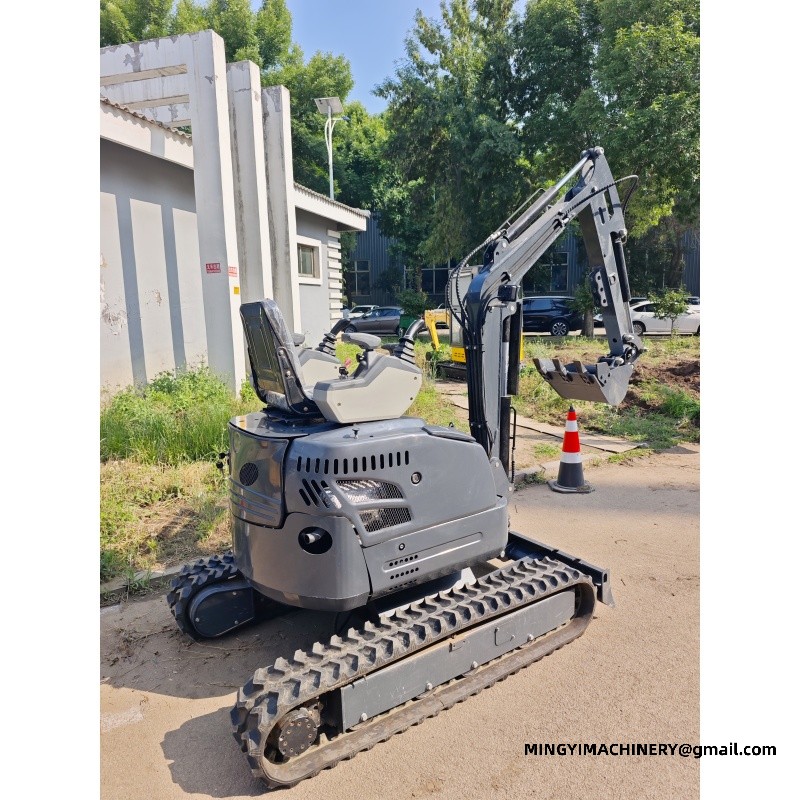
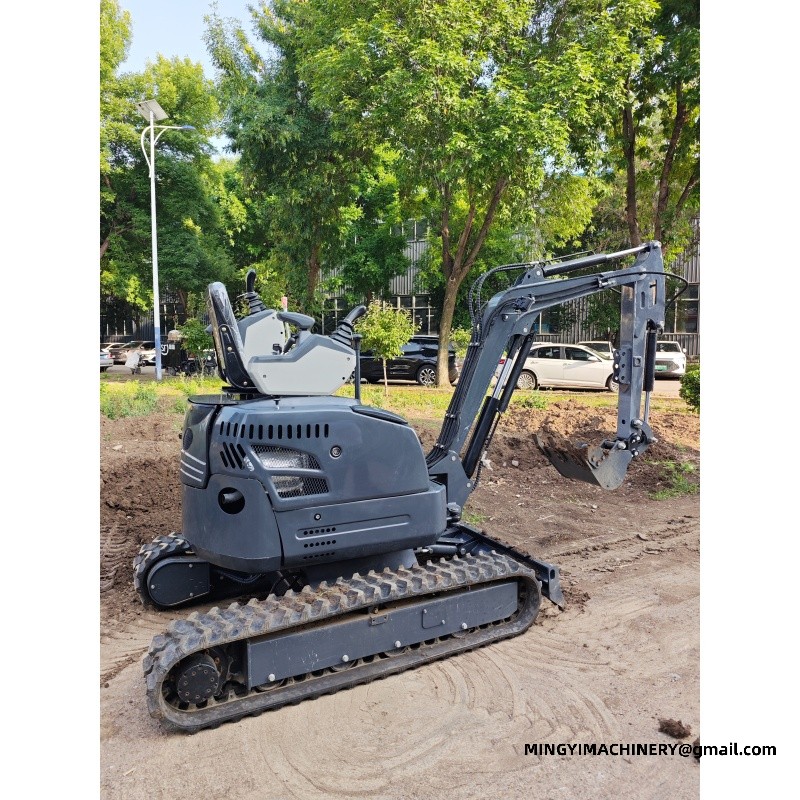
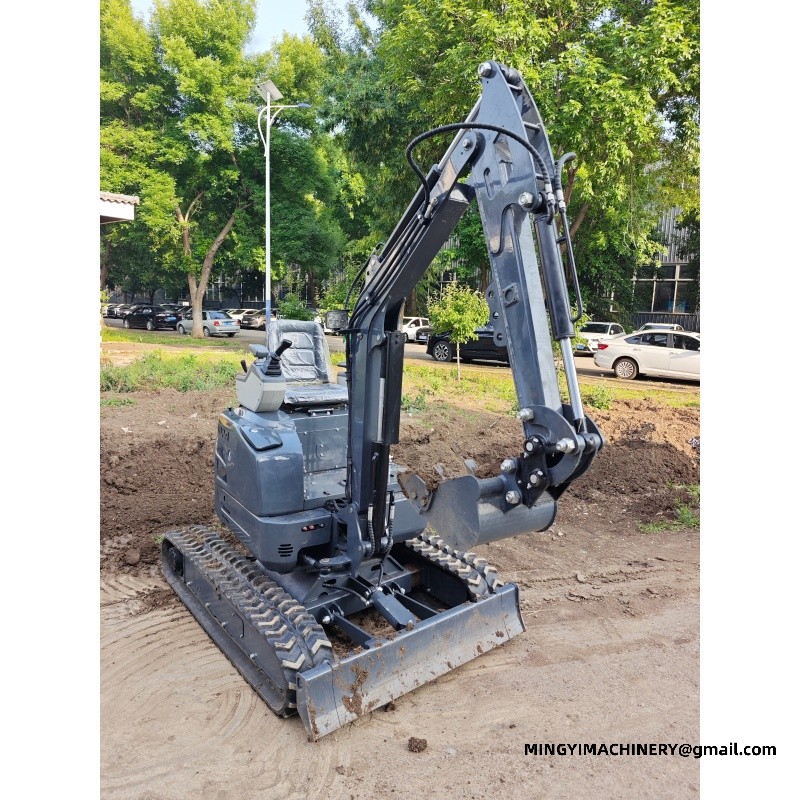
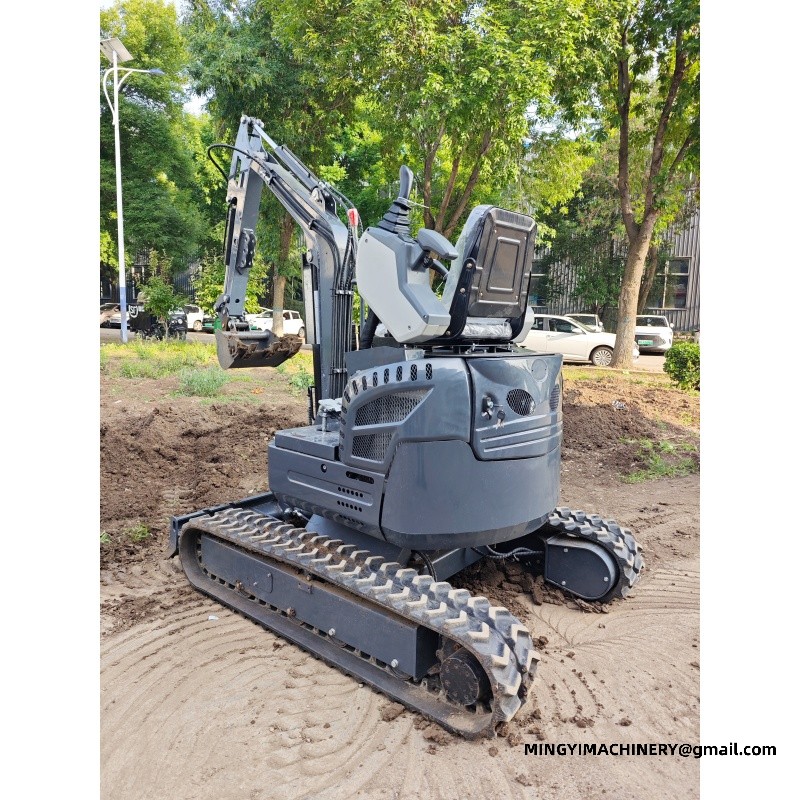
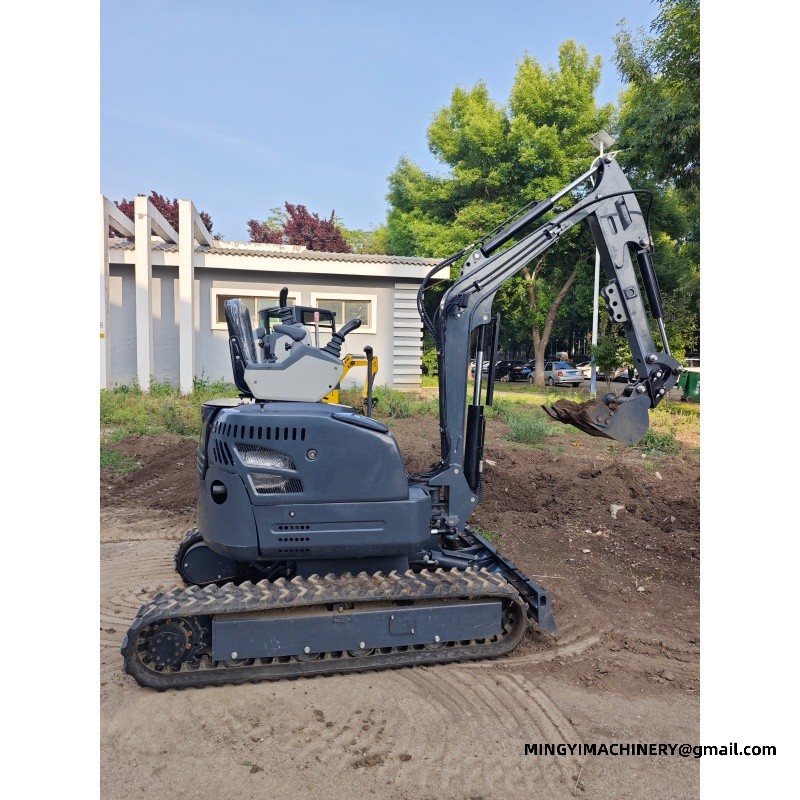
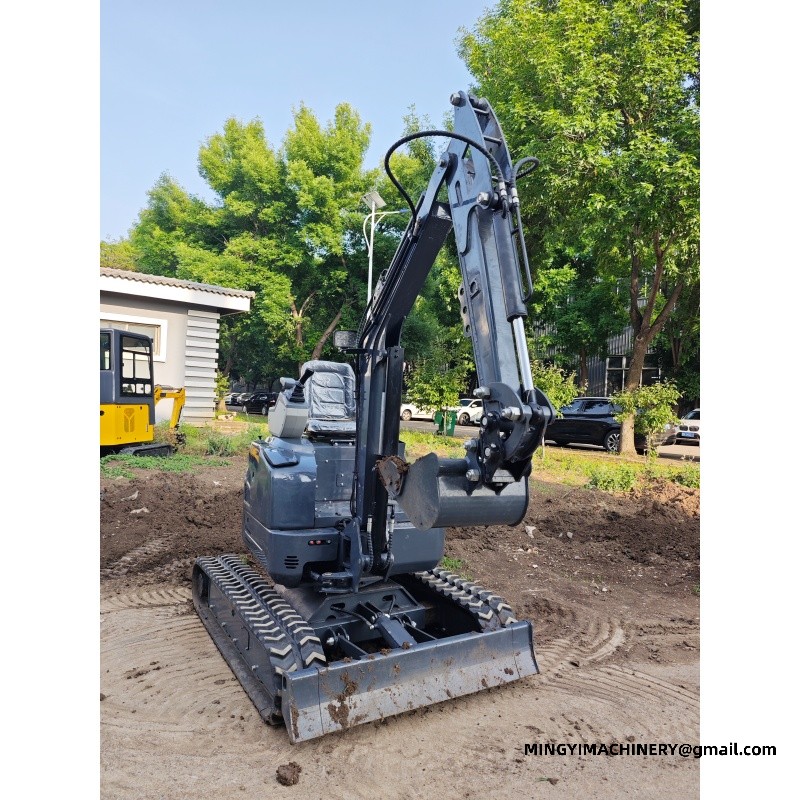
Reference specification — mini excavator range 09L 15L 25L 30-2L Operating weight 1100 kg (2425.08 lb) 1400 kg (3086.47 lb) 2200 kg (4850.17 lb) 2400 kg (5291 lb) Transport size (L×W×H) 2300 × 720 × 1870 mm 2200 × 930 × 2250 mm 3000 × 1300 × 2700 mm 2800 × 1500 × 2500 mm Max digging depth 1400 mm (55.12 in) 1700 mm (66.93 in) 2300 mm (90.55 in) 2200 mm (86.61 in) Max digging height 2800 mm (110.24 in) 2750 mm (108.27 in) 3100 mm (122.05 in) 2900 mm (114.17 in) Max dumping height 1880 mm (74.02 in) 1960 mm (77.17 in) 2050 mm (80.71 in) 2100 mm (82.68 in) Max digging radius 2490 mm (98.03 in) 2900 mm (114.17 in) 3900 mm (153.54 in) 3330 mm (131.1 in) Max digging distance 2000 mm (78.74 in) 2300 mm (90.55 in) 3100 mm (125.05 in) 2700 mm (106.3 in) Minimum turning radius 1400 mm (55.12 in) 1450 mm (57.09 in) 1800 mm (70.87 in) 1555 mm (61.22 in) Travel speed 3 km/h (1.86 mph) 3 km/h (1.86 mph) 7 km/h (4.35 mph) 7 km/h (4.35 mph) Gradeability 30° 30° 30° 30° Fuel consumption 1-1.3 L/h (0.264—0.343 gal) 1-1.3 L/h (0.264—0.343 gal) 2-3 L/h (0.528—0.793 gal) 2-3 L/h (0.528—0.793 gal) Fuel tank capacity 8 L (2.11 gal) 10 L (2.64 gal) 16 L (4.23 gal) 16 L (4.23 gal) Hydraulic oil tank 16 L (4.23 gal) 16 L (4.23 gal) 18 L (4.76 gal) 18 L (4.76 gal) Dozer blade lift height 180 mm (7.09 in) 180 mm (7.09 in) 230 mm (9.06 in) 230 mm (9.06 in) Dozer blade drop depth 210 mm (8.27 in) 210 mm (8.27 in) 280 mm (11.02 in) 280 mm (11.02 in)
Q. What are the unit on the job?
A. Roadside and municipal jobs are small in size and large in number: kerbs, gutters, retaining walls, reinstatement after utility work. Reinstatement quality - the part the public judges - comes from the grading and compaction tools that run on the same carrier. Read a machine built for the work together with the engine, track and attachment pages: jobs around house foundations are decided by how those choices line up, not by any single number on the sheet.
Q. What matters most on roadside work?
A. Stability at the trench edge and a boom that reaches the line while the carrier stays off the carriageway. Reinstatement quality - the part the public judges - comes from the grading and compaction tools running on the same carrier.
Q. Which models does MINGYI build?
A. The 08, 12 and 18 models cover the 0.8 to 6 tonne class with engine, track, cab and attachment options across the range - dealer programmes can mix models in one shipment, and each house foundations machine is confirmed on its own build sheet.
A second operator for the equipment in service
Shared machines need shared habits. Two operators on the excavator should do the same daily checks in the same order, because the check that one person skips is the check that eventually matters.
Later additions and retrofits on this class of machine
Retrofitting is limited by the base machine. Before anything is added to the unit in daily use the hydraulic flow, the mounting interface and the stability allowance have to be checked, because those limits are what decide what is sensible.
Pre-delivery inspection before a machine of this size leaves the shop
The last hour before packing is the best time to find a fault. Running the equipment on site through its full working cycle, checking for leaks under load and confirming that the controls match the specification avoids a conversation across time zones later.
E-mail : sales@mingycn.com
LINE ( ID ): mingyicn
Related pages
mini crawler digger for park greening · towable compact mini excavator · Construction Wheel Loader: Truck Board Heights and Cycle Work · Mini Excavators









