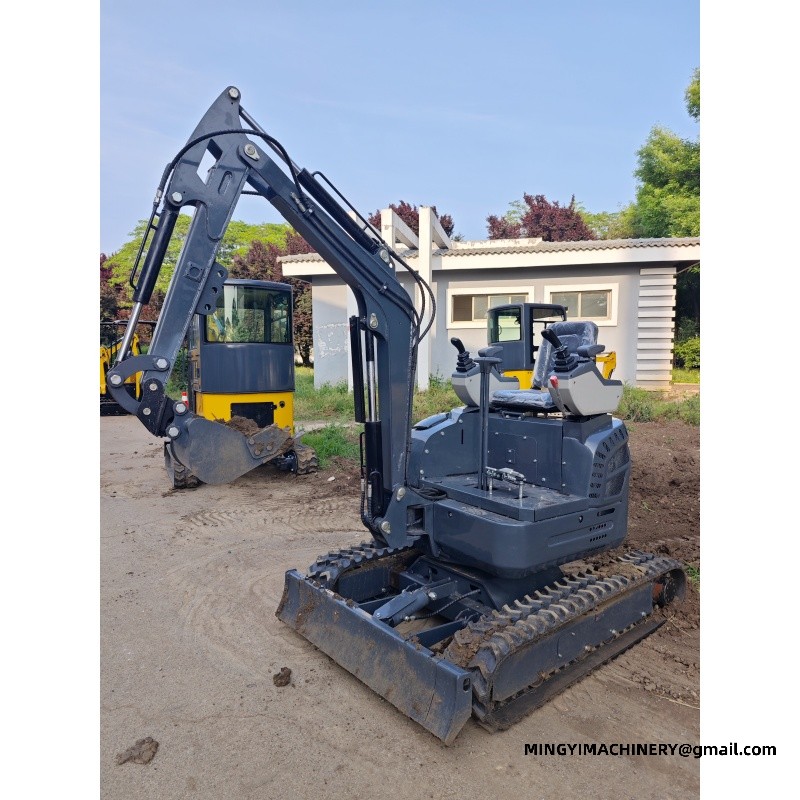
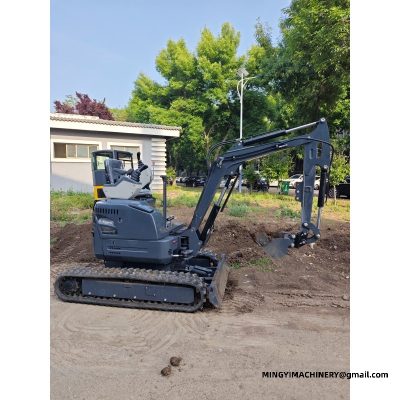
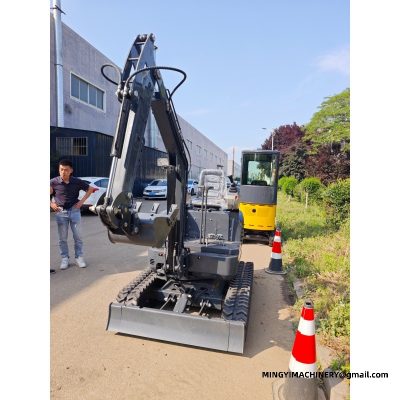
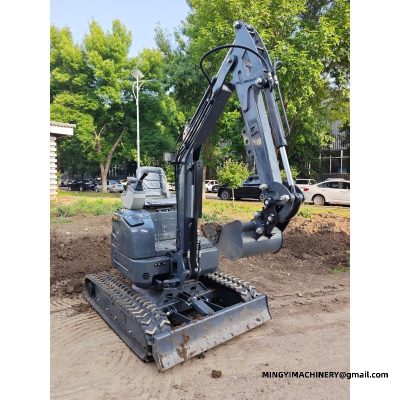
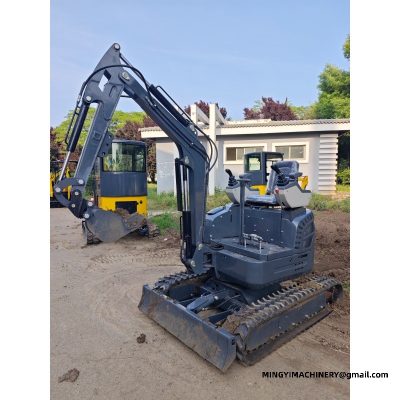
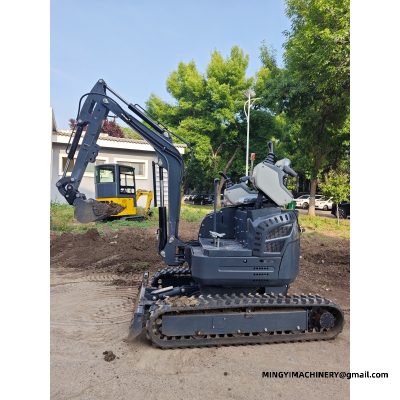
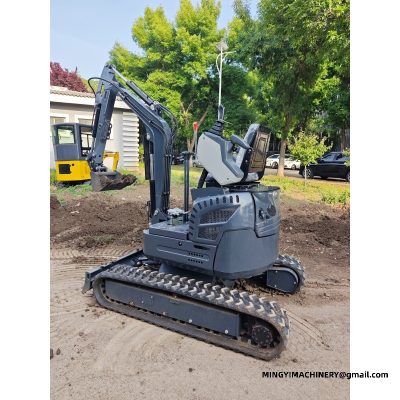
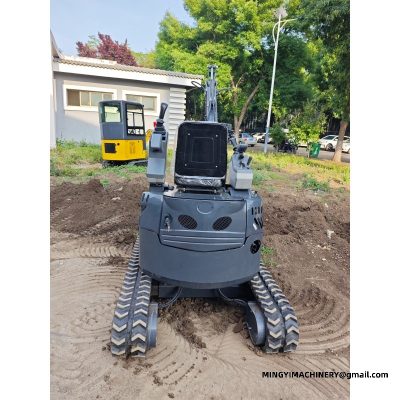
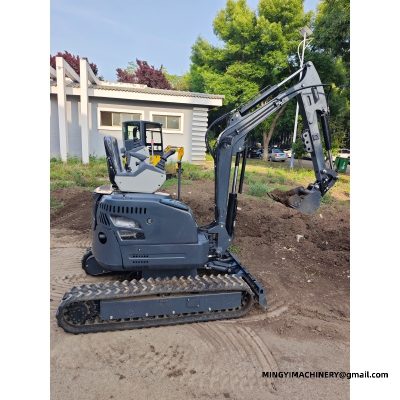
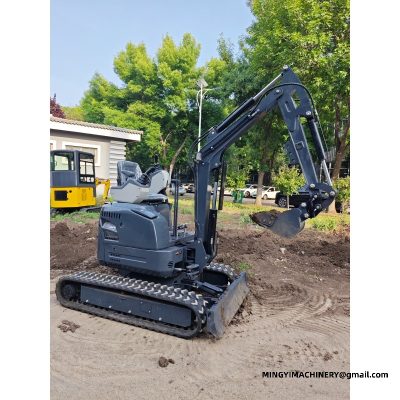
Park and streetscape projects combine planting with finished surfaces, paths, lawns and existing trees. The digging has to happen without marking the ground around it, and there is usually no room for a large machine. A compact crawler digger fits both constraints.
MINGYI builds compact excavators to order for municipal and landscaping buyers. Rubber tracks, a narrow bucket and a grading bucket are the usual specification, with a thumb added where stone and old root material has to be lifted.
Park greening work and low ground pressure
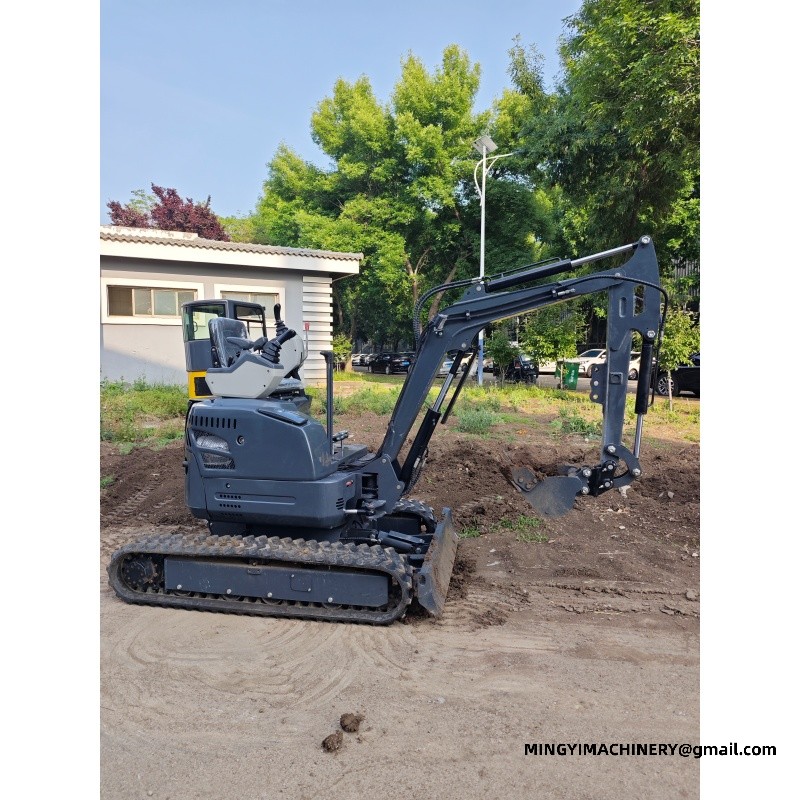
Low ground pressure is the reason compact machines are used on parkland. Rubber tracks spread the load and leave grass and paving largely intact, so a project can proceed without closing the area to the public for longer than necessary.
Access is the other constraint. Parks are full of narrow gaps between trees, benches and walls, and a compact machine can be set close to the planting bed rather than reaching in from a distance.
Planting and turf protection on parkland
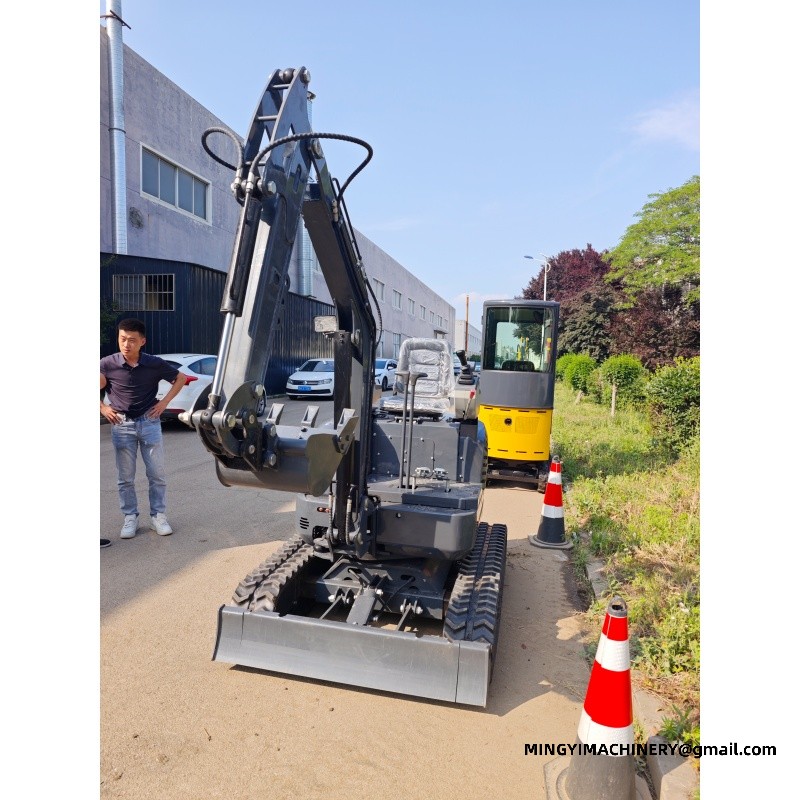
Tree pits, shrub beds and seasonal planting all need soil work in confined spaces. A narrow bucket opens pits and trenches cleanly, while a grading bucket levels the bed and spreads mulch after planting.
Protecting turf matters as much as the digging. Working from matting, keeping passes short and using rubber tracks avoids the deep ruts that need repair once the planting is finished.
Park greening asks for a machine that digs cleanly and leaves little behind. MINGYI supplies compact crawler excavators built to order for this kind of work.
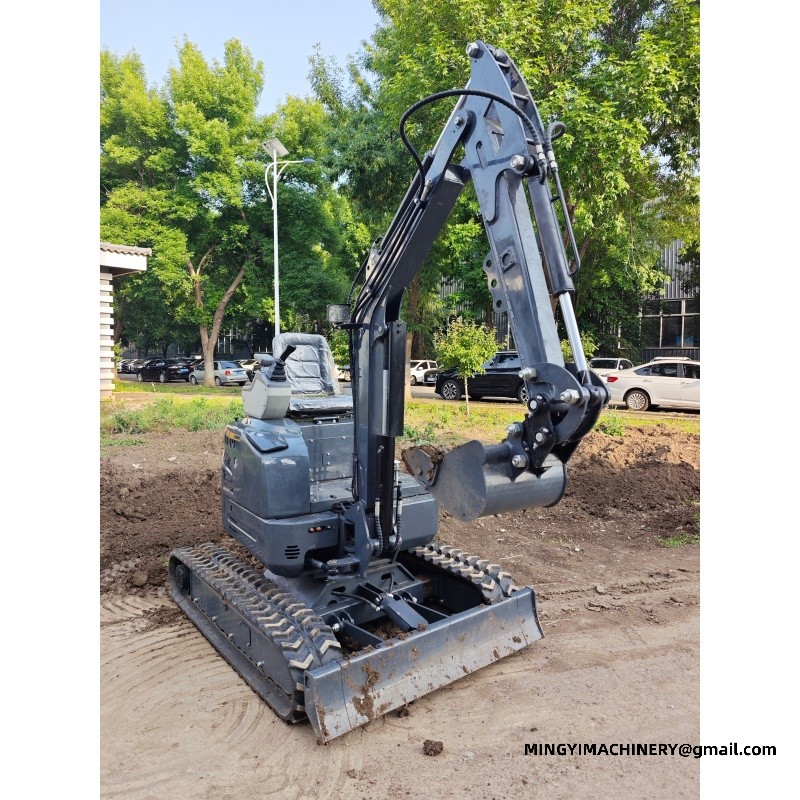
Acceptance checks when a mini crawler digger for park greening arrives Delivery day is the best time to find a problem. Checking the specification against the order, the fluid levels, the fasteners and any transport damage while the class of machine is still on the trailer is faster than claiming later. A function check before the machine goes to work is worth the hour. Running through the controls, the travel and the attachment circuit on the excavator confirms it is set up as specified and ready for the site. Lifting and material handling with a mini crawler digger for park greening Stability changes with reach. A load the unit in daily use handles close in becomes a different proposition at full extension, so the working radius belongs in the plan before the lift rather than during it. Ground condition under the machine is part of every lift. Soft or uneven support is the common factor in handling incidents, and checking it takes less time than recovering a machine of this size that has settled. OEM and fleet customisation of mini crawler digger for park greening Customisation also covers the specification sheet. A fleet buyer may want every machine itself delivered with the same coupler, the same engine and the same tool kit so training and parts stock stay simple. Documentation can be prepared to suit the importer. Manuals, parts books and decal sets for the equipment on site can be supplied with the buyer's own branding where the order size justifies it. Boom configuration for mini crawler digger for park greening A swing boom lets the machine dig parallel to its tracks without repositioning, which is what makes trenching beside a wall or a fence practical. On the model in question this is often the option that decides whether a job is possible at all. Extended and offset boom configurations change reach and working range. The machine in that duty with a longer arm reaches further but lifts less at full extension, so the specification is set against the deepest and furthest point on the job list. Parts, service and support for mini crawler digger for park greening Engine parts availability usually drives the engine choice. The unit on the job built with an engine the local network already carries is serviced from stock rather than from an international order. Remote support is handled by video. A machine built for the work fault can often be diagnosed on a walk-around call with the panel open, which is faster than waiting for a visit and avoids shipping a part that is not needed. Engine options behind mini crawler digger for park greening Power unit selection is settled against the service network the buyer already uses. MINGYI offers Kubota D722, Kubota D902, YANMAR, Changchai, Laidong, Runtong, YARMAX, Youpu 2V80 and Youpu 195, so a fleet running one brand of engine can keep the same filters, the same parts supplier and the same mechanic. Two buyers can order the same the equipment in service and receive different engines. The decision is rarely about peak power; it is about which parts counter is closest to the site and which engine the local mechanic already knows. Trenching work with the excavator Trench quality depends on the bucket width and the operator, not on machine size. This class of machine with a narrow bucket and a swing boom cuts a clean run along a boundary without disturbing the ground either side of it. Depth control matters more on service work than speed. The unit in daily use working beside live services is chosen because it can be placed precisely and stopped instantly, which is what the job actually requires. Operator technique for a machine of this size Output on a compact machine comes from placement rather than power. An experienced operator keeps the equipment on site working inside the swing arc, positions once and digs a full run instead of repositioning for every bucket. The second habit is tool discipline. Running the machine itself with the right bucket width for the trench means less spoil, less reinstatement and a cleaner job than a wide bucket and a lot of trimming. Interior and light demolition with the model in question Interior demolition is an access and a weight question. The machine in that duty that fits through a doorway and works on a suspended floor does jobs that would otherwise be done by hand or by a larger machine that cannot enter. Dust, debris clearance and floor loading all argue for a compact machine indoors. The unit on the job spreads its weight over a wider track footprint than a wheeled machine of similar capacity. Quick coupler practice on a machine built for the work Couplers are specified early because they affect the arm and the hydraulic kit. Adding one to the equipment in service after delivery means new pins, new hoses and a fitment session; adding it at build time is a line on the sheet. For a fleet that shares attachments between machines, a common coupler standard matters more than the coupler brand. The excavator that picks up the same tools as the larger machines keeps the rack usable across the yard. Matching this class of machine to ground conditions Soft ground is a flotation problem, not a power problem. The unit in daily use on wide rubber tracks crosses lawn, sand and cultivated soil that would stop a narrower machine or a wheeled unit of the same capacity. Hard and abrasive ground reverses the specification. On rock, demolition rubble or sharp gravel, steel tracks with rubber blocks on a machine of this size survive conditions that cut a rubber belt quickly. Specification data for the equipment on site The figures below are the factory figures for the models most often matched to the machine itself. They are the numbers to check against the site: the depth the work needs, the reach from one position, and the width of the narrowest point on the route in. Figures are factory figures and are confirmed on the build sheet for the model in question. Where a job sits between two models, the larger machine usually takes less time than the smaller one spends on rework. Ditching, fertilising and drainage on farmland suit the machine in that duty because the work is spread over a large area in short bursts. The machine travels behind a pickup and works where it stops. Farms also use the unit on the job for general maintenance - clearing a watercourse, repairing a track, loading a spreader. One carrier with a few attachments covers most of the jobs that would otherwise wait for a contractor.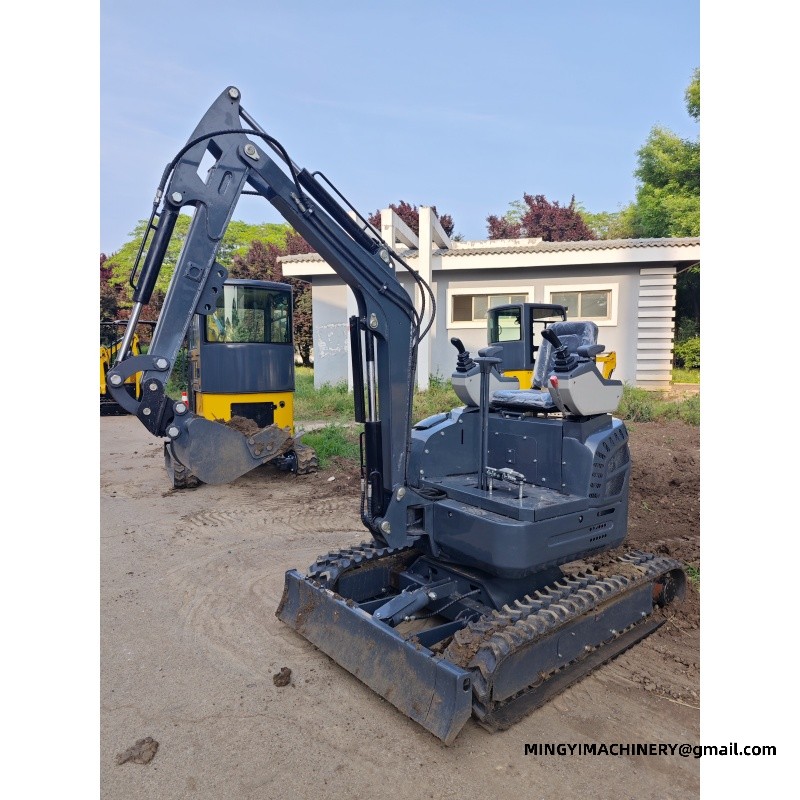
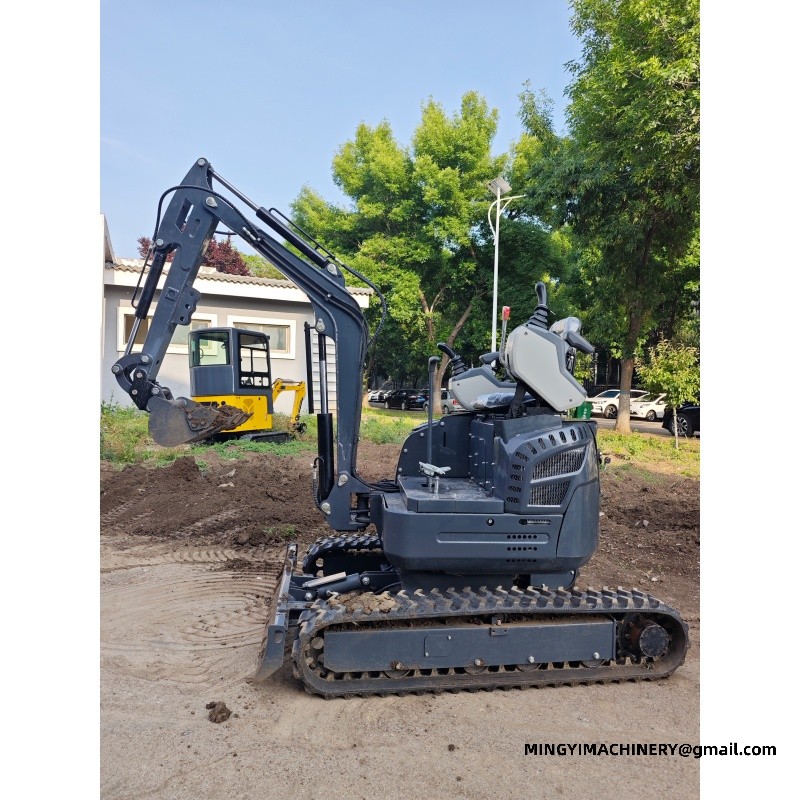
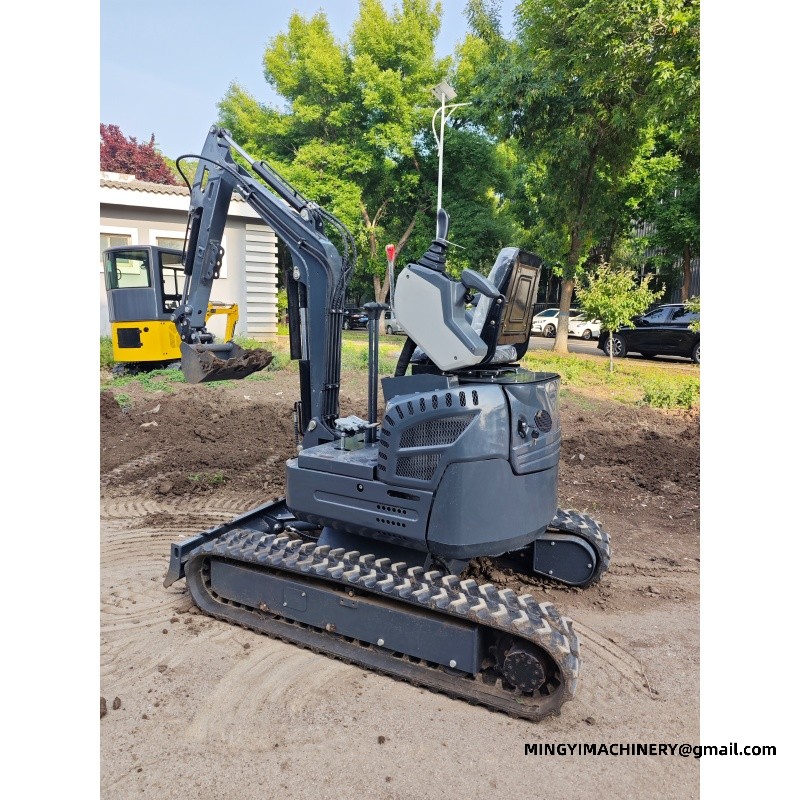
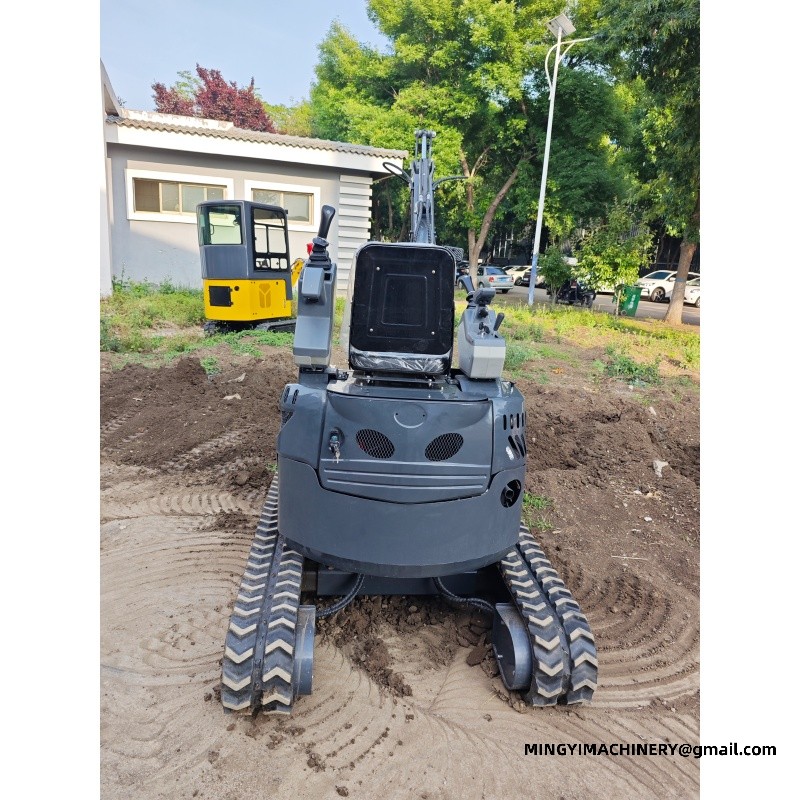
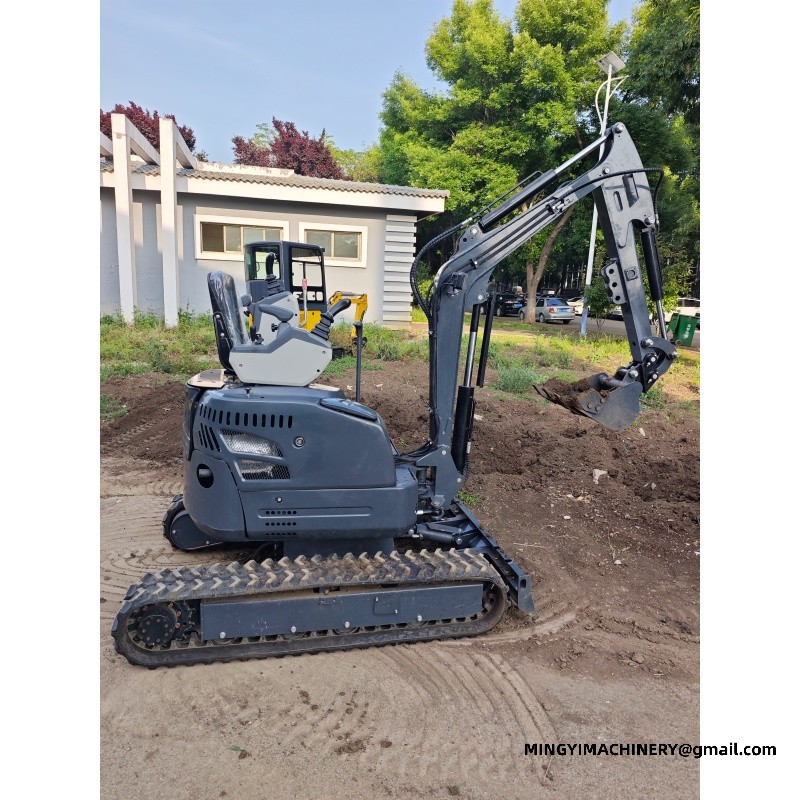
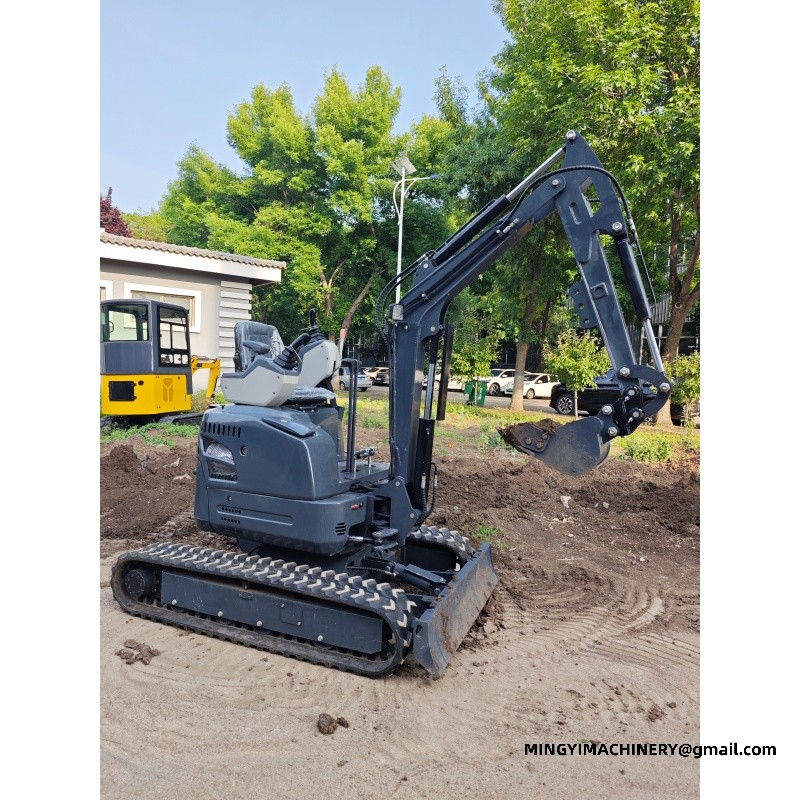
Reference specification — mini excavator range 12W 15W 20-1WL 09L Operating weight 1200 kg (2645.55 lb) 1400 kg (3086.47 lb) 1900 kg (4188.78 lb) 1100 kg (2425.08 lb) Transport size (L×W×H) 2200 × 930 × 2250 mm 2200 × 930 × 2250 mm 2550 × 1100 × 2200 mm 2300 × 720 × 1870 mm Max digging depth 1630 mm (64.17 in) 1630 mm (64.17 in) 1800 mm (70.87 in) 1400 mm (55.12 in) Max digging height 2750 mm (108.27 in) 2750 mm (108.27 in) 2820 mm (111.02 in) 2800 mm (110.24 in) Max dumping height 1960 mm (77.17 in) 1960 mm (77.17 in) 2050 mm (80.71 in) 1880 mm (74.02 in) Max digging radius 2900 mm (114.17 in) 2900 mm (114.17 in) 3050 mm (120.08 in) 2490 mm (98.03 in) Max digging distance 2100 mm (82.68 in) 2100 mm (82.68 in) 2300 mm (90.55 in) 2000 mm (78.74 in) Minimum turning radius 1300 mm (51.18 in) 1300 mm (51.18 in) 1450 mm (57.09 in) 1400 mm (55.12 in) Travel speed 3 km/h (1.86 mph) 3 km/h (1.86 mph) 5 km/h (3.11 mph) 3 km/h (1.86 mph) Gradeability 30° 30° 30° 30° Fuel consumption 1-1.3 L/h (0.264—0.343 gal) 1-1.3 L/h (0.264—0.343 gal) 2-3 L/h (0.528—0.793 gal) 1-1.3 L/h (0.264—0.343 gal) Fuel tank capacity 10 L (2.64 gal) 10 L (2.64 gal) 16 L (4.23 gal) 8 L (2.11 gal) Hydraulic oil tank 16 L (4.23 gal) 16 L (4.23 gal) 18 L (4.76 gal) 16 L (4.23 gal) Dozer blade lift height 180 mm (7.09 in) 180 mm (7.09 in) 180 mm (7.09 in) 180 mm (7.09 in) Dozer blade drop depth 210 mm (8.27 in) 210 mm (8.27 in) 210 mm (8.27 in) 210 mm (8.27 in)
Q. Who chooses a machine built for the work?
A. Landscaping is finishing work: prepare beds, level ground, move trees - then leave a surface the client is happy to look at. Plan the dig so the machine treads where the hard surface will be, and lay boards where the ground is soft. For park greening applications the practical route is to send the job list to the factory and let the build sheet answer it - which is exactly what this page invites.
Q. Can it move trees and shrubs?
A. With a thumb or a tree-moving grab, yes: open the root ball, lift, set it in the prepared hole in one motion - the attachment doing the work of a crew, which is why landscape contractors keep a compact excavator on the trailer.
Q. What about colours and branding?
A. OEM colours and decals are part of the build: private-label machines carry the buyer brand on the standard MINGYI platform, and the park greening order confirms colours, marks and documents before production starts.
Documents that travel with the equipment in service
Keeping the documents together is part of ownership. The manual, the service record and the build sheet for the excavator belong in one folder, and the machine is easier to sell later when that folder is complete.
Keeping a service record for this class of machine
A written record is worth more than a good memory. Dates, hours and the parts fitted on the unit in daily use turn a guess about the next service into a fact, and they are the first thing a buyer asks to see.
Moving a machine of this size between sites
A machine that works on one site still has to reach the next. The overall dimensions and the operating weight of the equipment on site decide what trailer or truck is needed, and that decision belongs before the job is booked.
E-mail : sales@mingycn.com
LINE ( ID ): mingyicn
Planning utilisation for mini crawler digger for park greening
Keeping one machine as the planned spare is simpler than scheduling around an unplanned stop in the middle of a programme.
Hours per month tell more than hours in total, and they show whether a second machine or a second operator is the real constraint.
Related pages
towable compact mini excavator · solid frame small digger · Mining Wheel Loader: Cooling, Traction and Frame Specification · Mini Excavators









