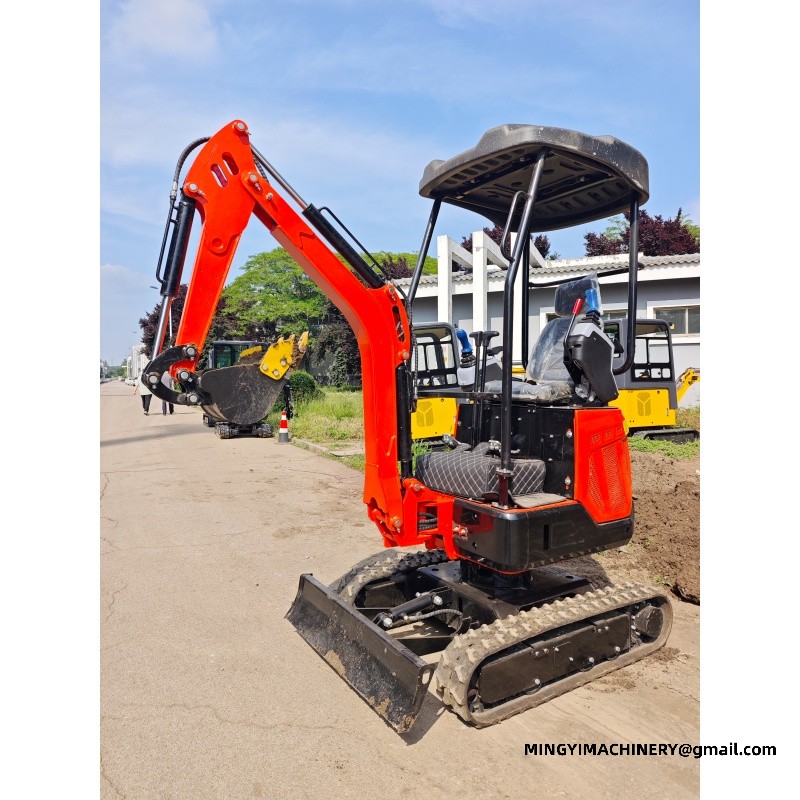
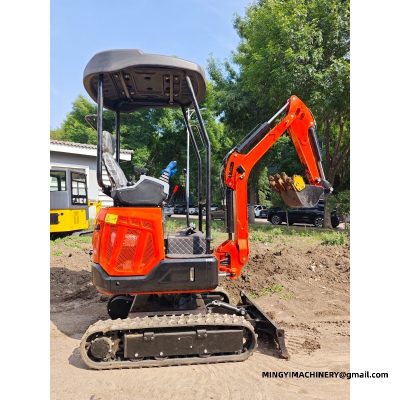
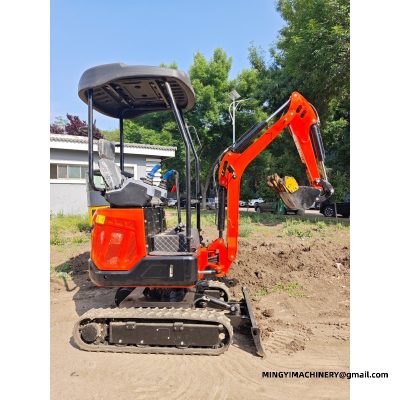
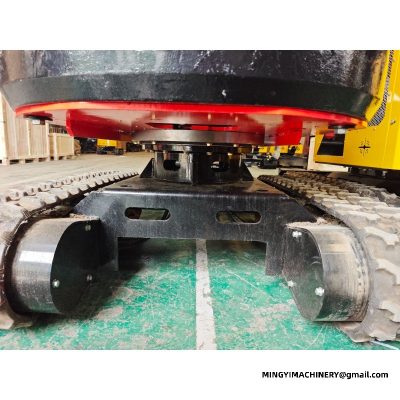
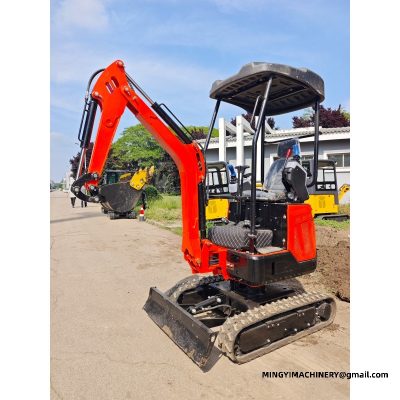
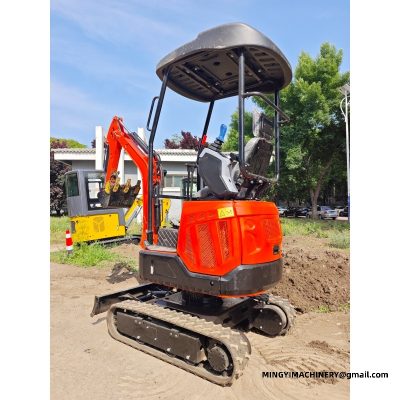
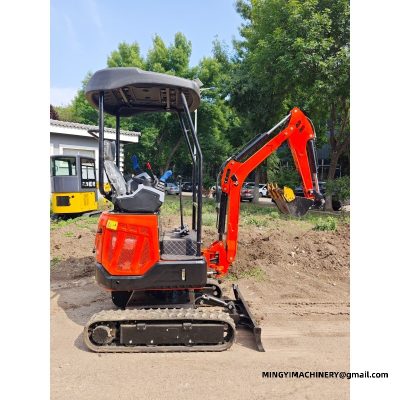
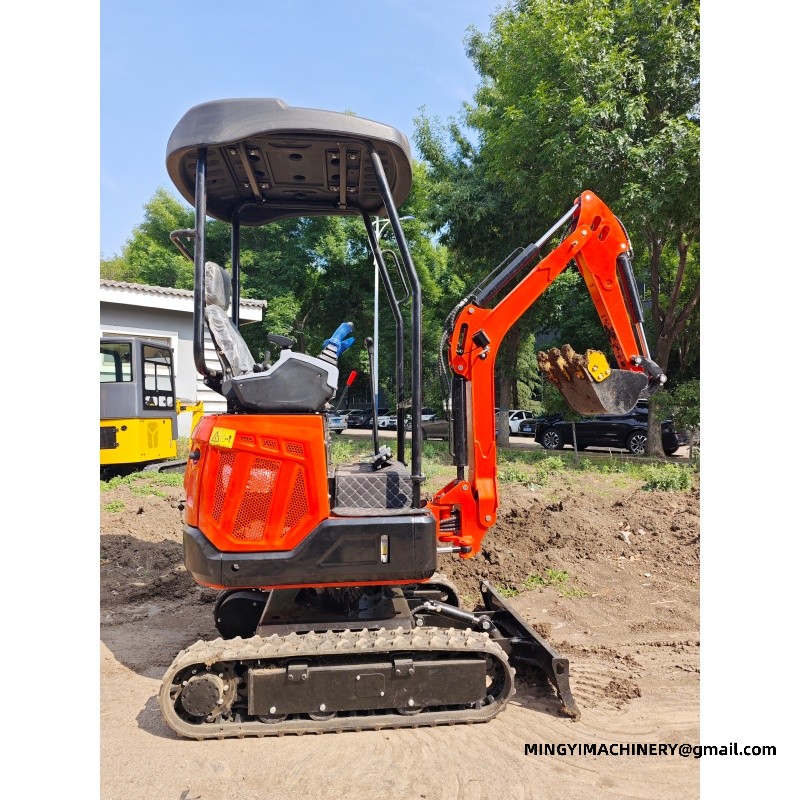
Noise limits where and when a machine can work, particularly on residential streets, near schools and hospitals, and inside buildings. MINGYI builds compact excavators used in these noise sensitive settings, where a small muffled machine is easier to keep within local limits.
Reducing noise comes from the engine and its enclosure as much as from the way the machine is operated, so the configuration is planned around the site.
What makes a compact excavator quieter
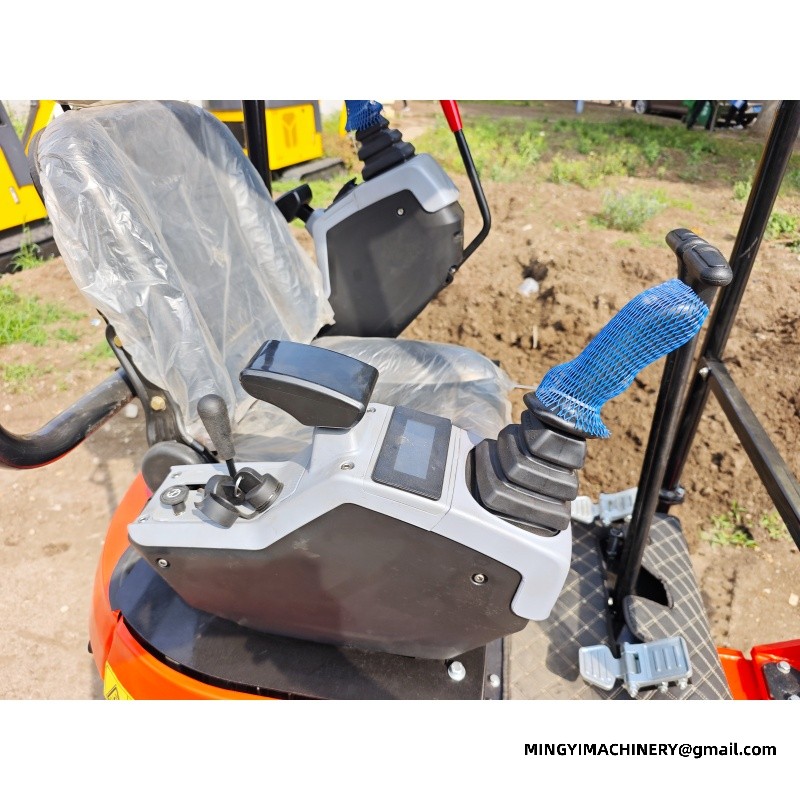
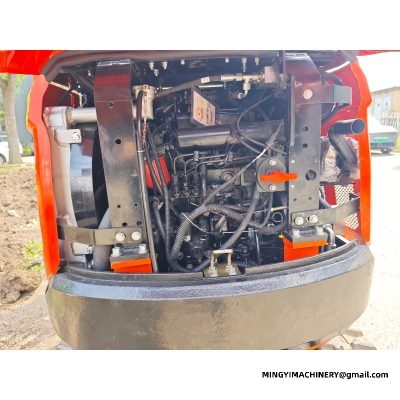
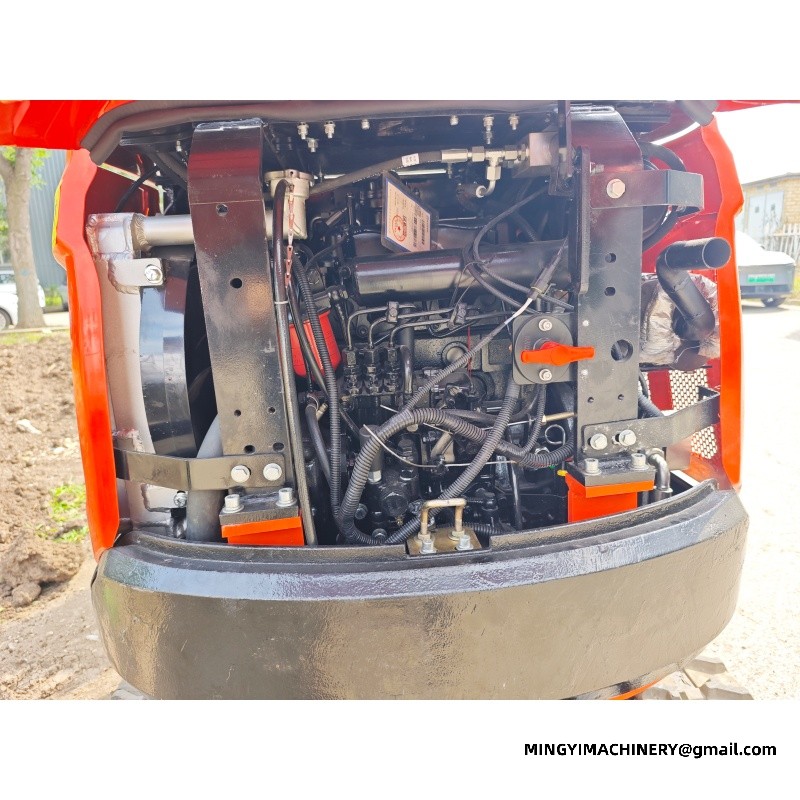
An enclosed engine bay with sound insulation reduces the noise a machine puts out, and a small diesel engine generally runs quieter than a larger unit doing the same job. A properly maintained exhaust system also keeps noise down as the machine ages.
Operation matters too: steady digging, avoiding unnecessary revving and switching the engine off between cuts all lower the level around the site. An enclosed cab also protects the operator from the noise of the work.
Working where noise is restricted
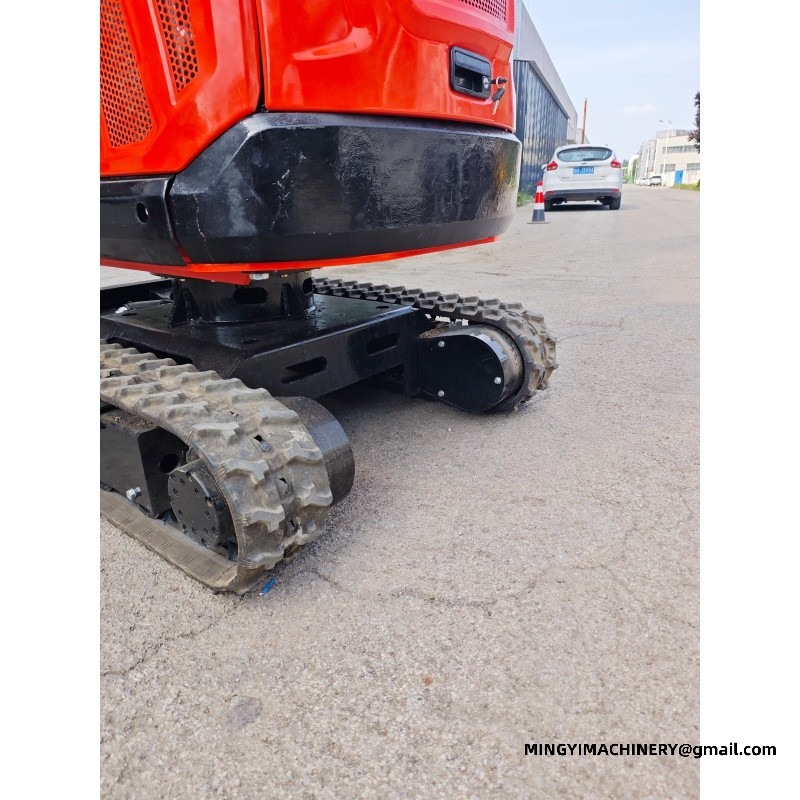
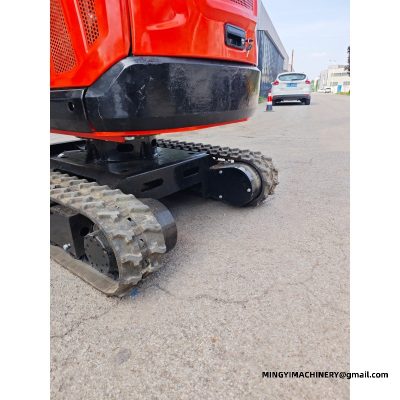
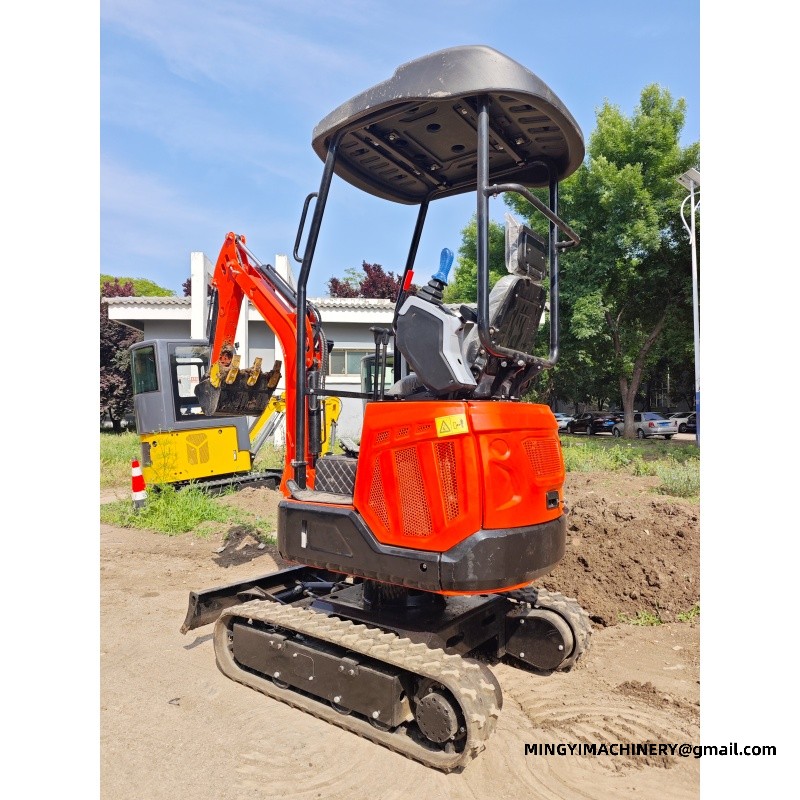
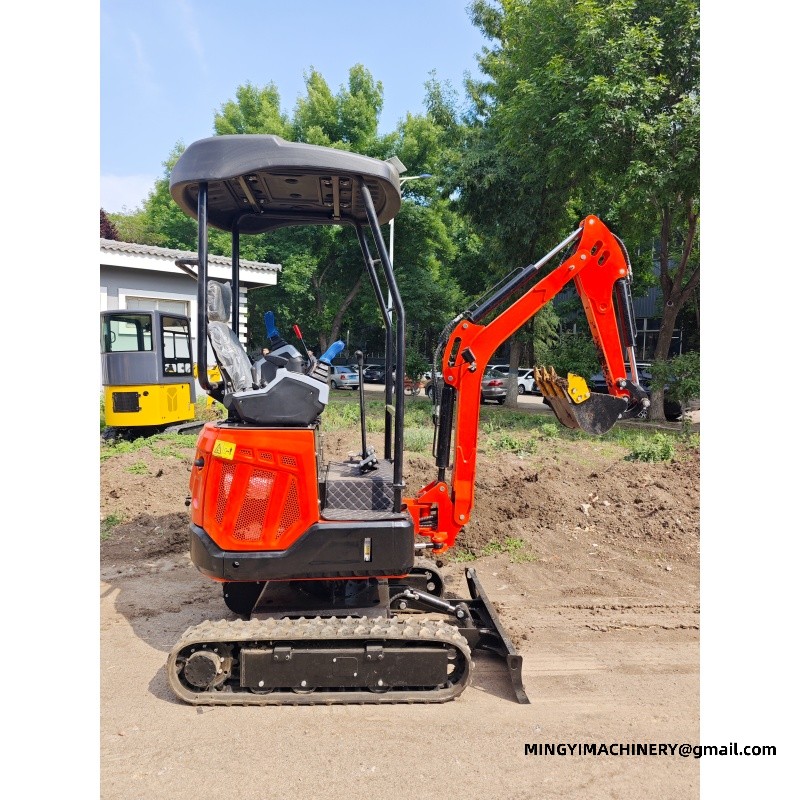
On residential or indoor jobs the machine is often a compact unit that can be brought in and run in short, well planned shifts. Rubber tracks reduce the rumble that steel tracks make when the machine travels.
Buyers should tell the factory about the site, since the engine and canopy or cab choice can be matched to the setting. MINGYI records the configuration so the machine is built for that use.
For noise sensitive work, describe the site and the hours of work to MINGYI, and the factory will confirm an engine and enclosure that keep the small excavator suitable for the location.
Daily checks and maintenance on low noise small excavator Daily maintenance on the excavator is a short list: engine oil level, coolant, track tension, hydraulic oil level and a look at the hoses. Ten minutes at the start of the shift prevents most of the failures that stop a machine. Track tension is the item most often neglected. This class of machine run with slack tracks wears the undercarriage and can throw a track on a turn; run too tight, the same components wear from the other direction. Running low noise small excavator in a rental fleet The specification that rents best is usually the simplest one to explain at the counter. The unit in daily use with rubber tracks, a canopy and a coupler covers the majority of weekend and short-term hires. Fleet buyers also weigh transport. A machine of this size that a customer can tow on a normal licence and a standard trailer is a hire that does not need a delivery truck, which changes how often it goes out. Operator technique for low noise small excavator Output on a compact machine comes from placement rather than power. An experienced operator keeps the equipment on site working inside the swing arc, positions once and digs a full run instead of repositioning for every bucket. The second habit is tool discipline. Running the machine itself with the right bucket width for the trench means less spoil, less reinstatement and a cleaner job than a wide bucket and a lot of trimming. OEM and fleet customisation of low noise small excavator Customisation also covers the specification sheet. A fleet buyer may want every machine in that duty delivered with the same coupler, the same engine and the same tool kit so training and parts stock stay simple. Documentation can be prepared to suit the importer. Manuals, parts books and decal sets for the model in question can be supplied with the buyer's own branding where the order size justifies it. Working near live services with low noise small excavator Digging near water, gas and cable is a precision job. The unit on the job is used here because the operator can work in short controlled cuts and because the machine can be positioned without driving over the run being exposed. The risk on utility work is not machine power but machine placement. A machine built for the work that fits the working width leaves the surrounding ground undisturbed, which keeps the trench stable and the reinstatement small. Engine options behind low noise small excavator Power unit selection is settled against the service network the buyer already uses. MINGYI offers Kubota D722, Kubota D902, YANMAR, Changchai, Laidong, Runtong, YARMAX, Youpu 2V80 and Youpu 195, so a fleet running one brand of engine can keep the same filters, the same parts supplier and the same mechanic. Two buyers can order the same the equipment in service and receive different engines. The decision is rarely about peak power; it is about which parts counter is closest to the site and which engine the local mechanic already knows. Track choice for the excavator Rubber tracks suit paved and landscaped ground because they spread the machine weight and leave the surface intact. Steel tracks with rubber blocks are specified where the ground is rougher or the working day is longer, and the choice can be made per machine rather than accepted as a factory default. Track type changes what the machine can cross and what it leaves behind. Buyers specify rubber for lawns, driveways and municipal work, and steel with rubber blocks for sites where sharp material would cut a rubber belt in a week. Lifting and material handling with this class of machine Lifting with a machine built to dig needs a plan. The load, the radius and the ground under the machine of this size all matter, and the safe figure is the one on the chart rather than the one that looks possible. Ground condition under the machine is part of every lift. Soft or uneven support is the common factor in handling incidents, and checking it takes less time than recovering the unit in daily use that has settled. Parts, service and support for the equipment on site Engine parts availability usually drives the engine choice. The machine itself built with an engine the local network already carries is serviced from stock rather than from an international order. Remote support is handled by video. The model in question fault can often be diagnosed on a walk-around call with the panel open, which is faster than waiting for a visit and avoids shipping a part that is not needed. Noise, dust and working near occupied buildings Enclosure and machine condition both reduce noise. The machine in that duty with intact panels, sound mounts and a maintained exhaust is measurably quieter than the same machine with loose guards, and the difference matters on restricted sites. Dust control is often part of the same conversation. Water, timing and work sequence reduce what leaves the site, and agreeing them in advance keeps the unit on the job working rather than stopped after a complaint. Trenching work with a machine built for the work Trench quality depends on the bucket width and the operator, not on machine size. The equipment in service with a narrow bucket and a swing boom cuts a clean run along a boundary without disturbing the ground either side of it. Depth control matters more on service work than speed. The excavator working beside live services is chosen because it can be placed precisely and stopped instantly, which is what the job actually requires. Working on slopes and uneven ground with this class of machine Ground that looks level often is not. The unit in daily use crossing a filled trench, a soft edge or a hidden void behaves differently from one on undisturbed ground, and those are the places worth walking before driving. Planning the direction of travel helps. Working so that the a machine of this size is stable under load and not required to turn on a slope is a decision made before the job starts, not a correction made during it. Specification data for the equipment on site Buyers comparing the machine itself usually start from four numbers - weight, digging depth, reach and transport width - because those are the ones that decide whether the machine can be delivered and whether it can do the job once it is there. Figures are factory figures and are confirmed on the build sheet for the model in question. Where a job sits between two models, the larger machine usually takes less time than the smaller one spends on rework. Ditching, fertilising and drainage on farmland suit the machine in that duty because the work is spread over a large area in short bursts. The machine travels behind a pickup and works where it stops. Farms also use the unit on the job for general maintenance - clearing a watercourse, repairing a track, loading a spreader. One carrier with a few attachments covers most of the jobs that would otherwise wait for a contractor.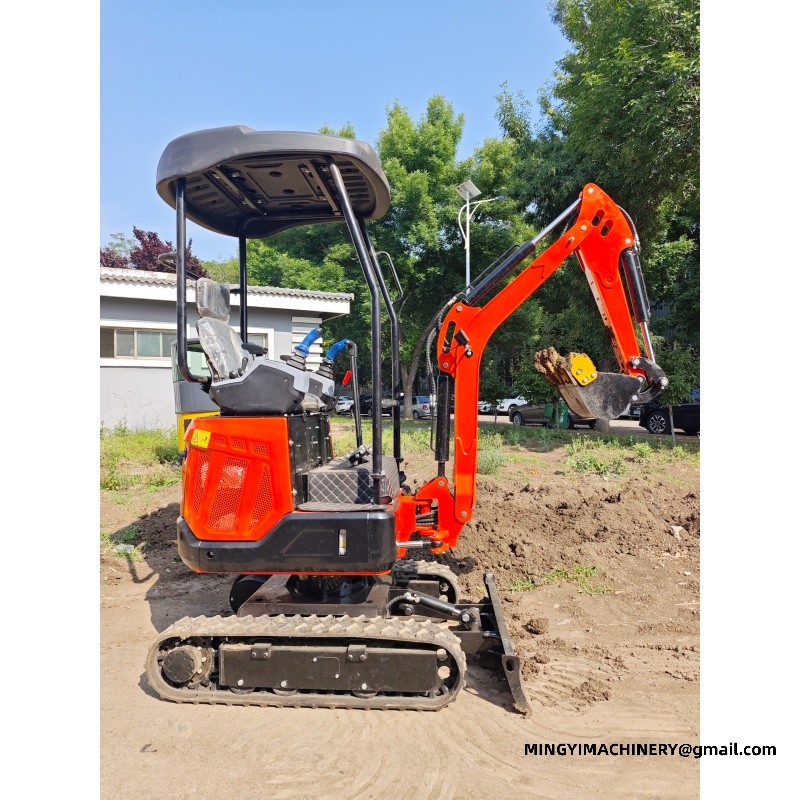
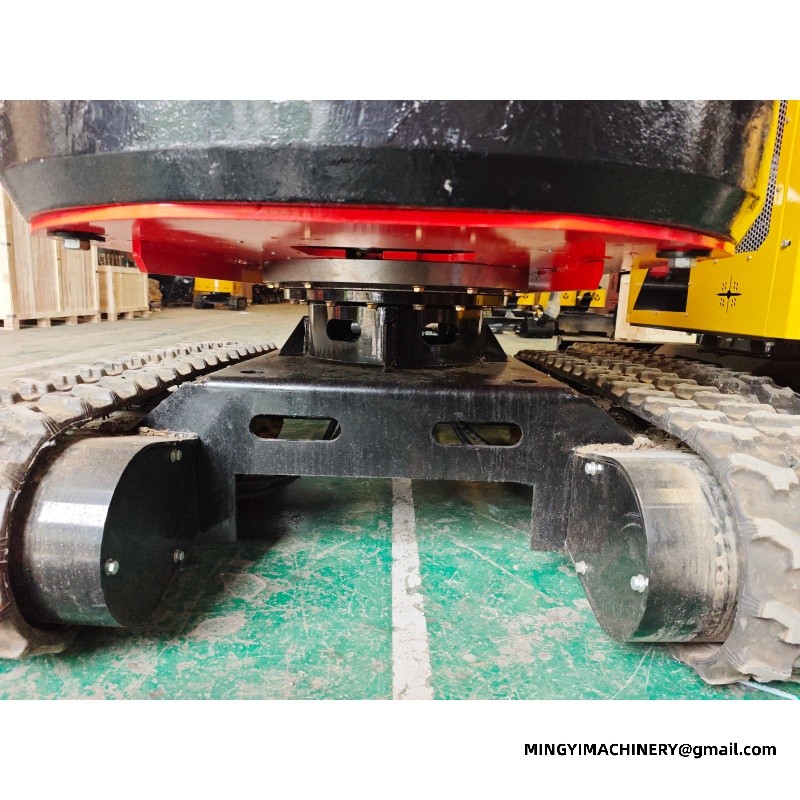
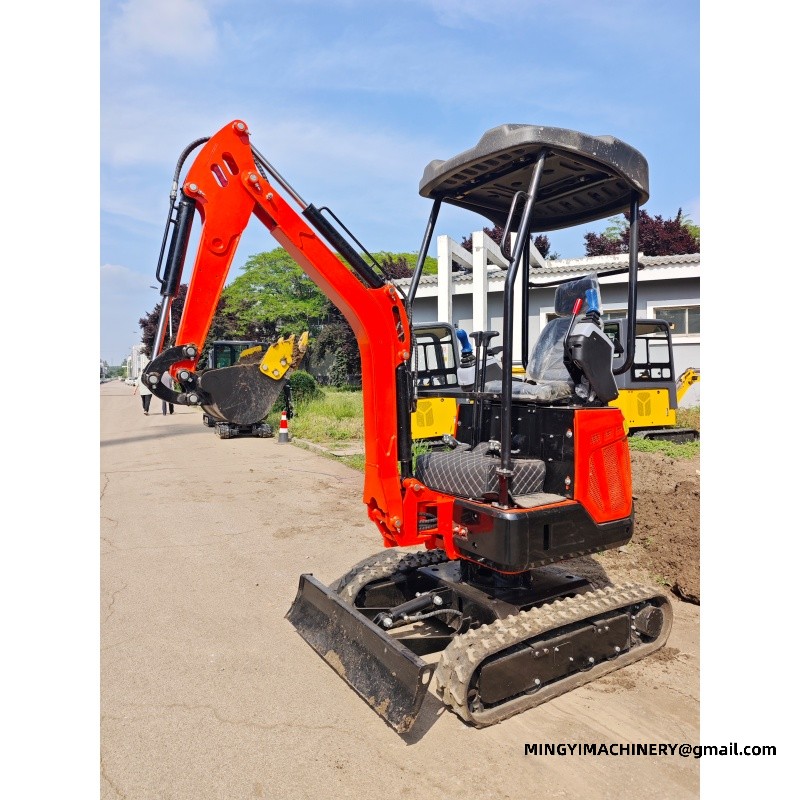
Reference specification — mini excavator range 09W 12W 30-2W 30-2L Operating weight 1100 kg (2425.08 lb) 1200 kg (2645.55 lb) 2700 kg (5952.48 lb) 2400 kg (5291 lb) Transport size (L×W×H) 1800 × 750 × 1970 mm 2200 × 930 × 2250 mm 3000 × 1100 × 2700 mm 2800 × 1500 × 2500 mm Max digging depth 1250 mm (49.21 in) 1630 mm (64.17 in) 2200 mm (86.61 in) 2200 mm (86.61 in) Max digging height 2800 mm (110.24 in) 2750 mm (108.27 in) 3000 mm (118.11 in) 2900 mm (114.17 in) Max dumping height 1700 mm (66.93 in) 1960 mm (77.17 in) 2000 mm (78.74 in) 2100 mm (82.68 in) Max digging radius 2570 mm (101.18 in) 2900 mm (114.17 in) 3800 mm (149.61 in) 3330 mm (131.1 in) Max digging distance 1869 mm (73.58 in) 2100 mm (82.68 in) 3050 mm (120.08 in) 2700 mm (106.3 in) Minimum turning radius 1000 mm (39.37 in) 1300 mm (51.18 in) 1750 mm (68.9 in) 1555 mm (61.22 in) Travel speed 3 km/h (1.86 mph) 3 km/h (1.86 mph) 7 km/h (4.35 mph) 7 km/h (4.35 mph) Gradeability 30° 30° 30° 30° Fuel consumption 1-1.3 L/h (0.264—0.343 gal) 1-1.3 L/h (0.264—0.343 gal) 2-3 L/h (0.528—0.793 gal) 2-3 L/h (0.528—0.793 gal) Fuel tank capacity 8 L (2.11 gal) 10 L (2.64 gal) 16 L (4.23 gal) 16 L (4.23 gal) Hydraulic oil tank 16 L (4.23 gal) 16 L (4.23 gal) 20 L (5.28 gal) 18 L (4.76 gal) Dozer blade lift height 180 mm (7.09 in) 180 mm (7.09 in) 230 mm (9.06 in) 230 mm (9.06 in) Dozer blade drop depth 210 mm (8.27 in) 210 mm (8.27 in) 280 mm (11.02 in) 280 mm (11.02 in)
Q. Who chooses a machine built for the work?
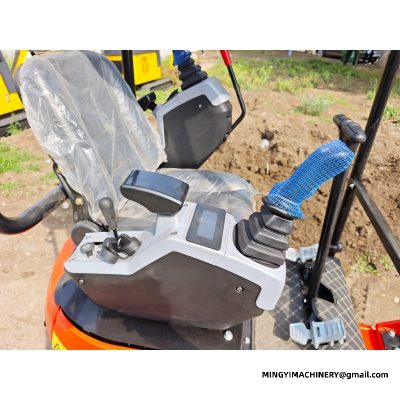
A. Control quality is what separates a compact excavator that fights the operator from one that finishes the day with clean trench walls. Load sensing keeps the flow where the work is; pilot levers give the finesse that trench walls and grading finish demand. MINGYI builds the 08, 12 and 18 models covering the 0.8 to 6 tonne class, and the equipment in service is where that range meets low noise.
Q. What do pilot controls change in practice?
A. Finesse: the operator meters boom and bucket instead of switching them, which shows in trench walls, grading finish and fatigue at the end of the shift.
Q. Which models does MINGYI build?
A. The 08, 12 and 18 models cover the 0.8 to 6 tonne class with engine, track, cab and attachment options across the range - dealer programmes can mix models in one shipment, and each low noise machine is confirmed on its own build sheet.
Wear items and spares worth holding for the excavator
The parts that stop a machine are rarely the parts that are hardest to find. Filters, belts, seals and the ground engaging tools on this class of machine are easy to hold and slow to replace, which is why they belong on the shelf rather than on an order.
Later additions and retrofits on the unit in daily use
An added function should pay for itself quickly. Whether a machine of this size gains a different bucket, a hydraulic service or a protection package, the test is the number of days a year it is actually used.
Pre-delivery inspection before the equipment on site leaves the shop
The last hour before packing is the best time to find a fault. Running the machine itself through its full working cycle, checking for leaks under load and confirming that the controls match the specification avoids a conversation across time zones later.
E-mail : sales@mingycn.com
LINE ( ID ): mingyicn
Related pages
long service life mini digger · mini excavator and compact digger · Construction Equipment Loader: Sizing for Site and Yard Work · Mini Excavators









