Basement and lower level demolition is done in conditions that rule out most machines. The entry is tight, the ceiling is low and the work is close to the fabric of the building, so the carrier has to be small and controllable.
MINGYI micro excavators are built for that scale of site. Ordered to suit the access and the task, they can work inside a confined space and remove the material without damaging the structure around it.
Reaching and working inside a basement
The route in decides the machine. A compact carrier that fits a stair access or a lift opening can be taken to the work rather than the work being cut up and carried out, which changes what the job takes.
Once inside, a swing boom lets the operator work along a wall and turn in a short arc, which is what a basement floor allows. The machine stays clear of the structure while it breaks and lifts.
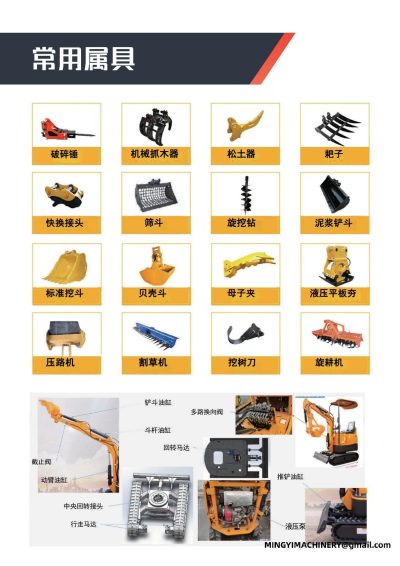
Attachments for confined demolition
A breaker hammer breaks the floor or a partition, and a narrow bucket lifts the debris to the removal point. Fitting both through a quick coupler keeps the work moving in a space too small for extra plant.
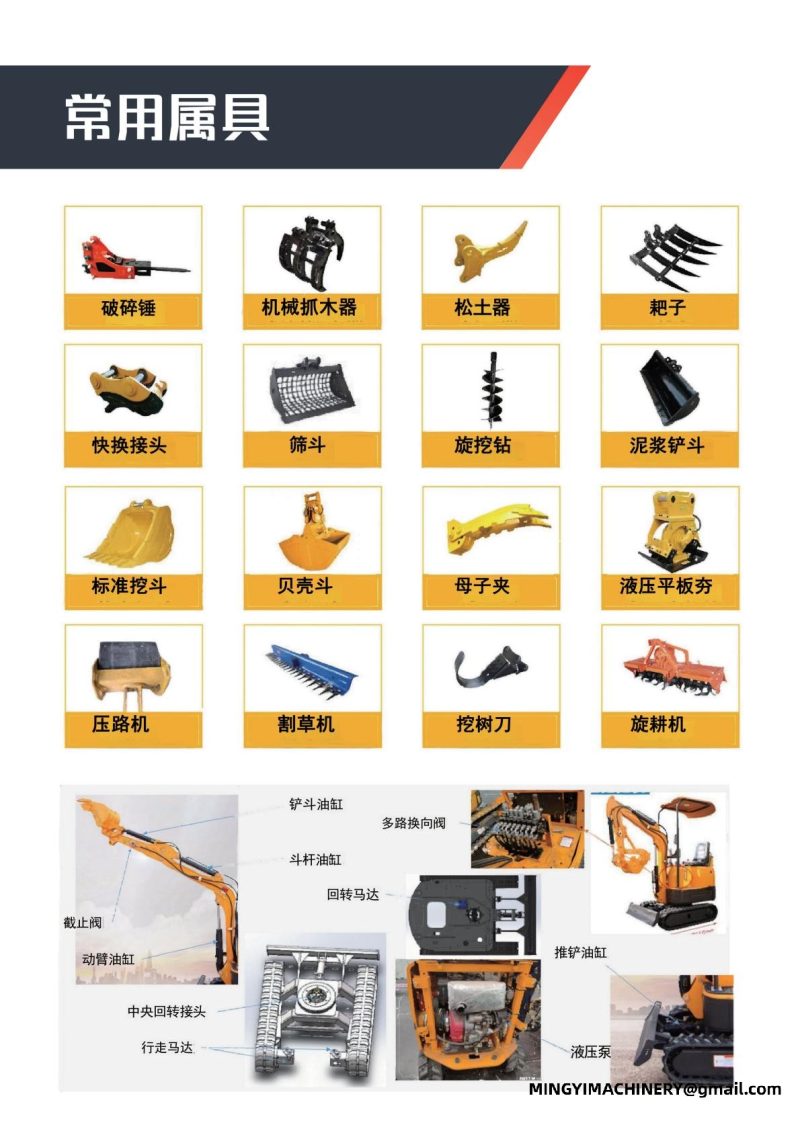
Because the carrier is light, the machine can be moved into position and set up quickly. The configuration, including the attachments and the coupler, is agreed at ordering.
Machine size, attachments and coupler are the decisions a basement job turns on. Settling them in advance is what lets a micro carrier reach, break and clear within a space too small for anything larger.
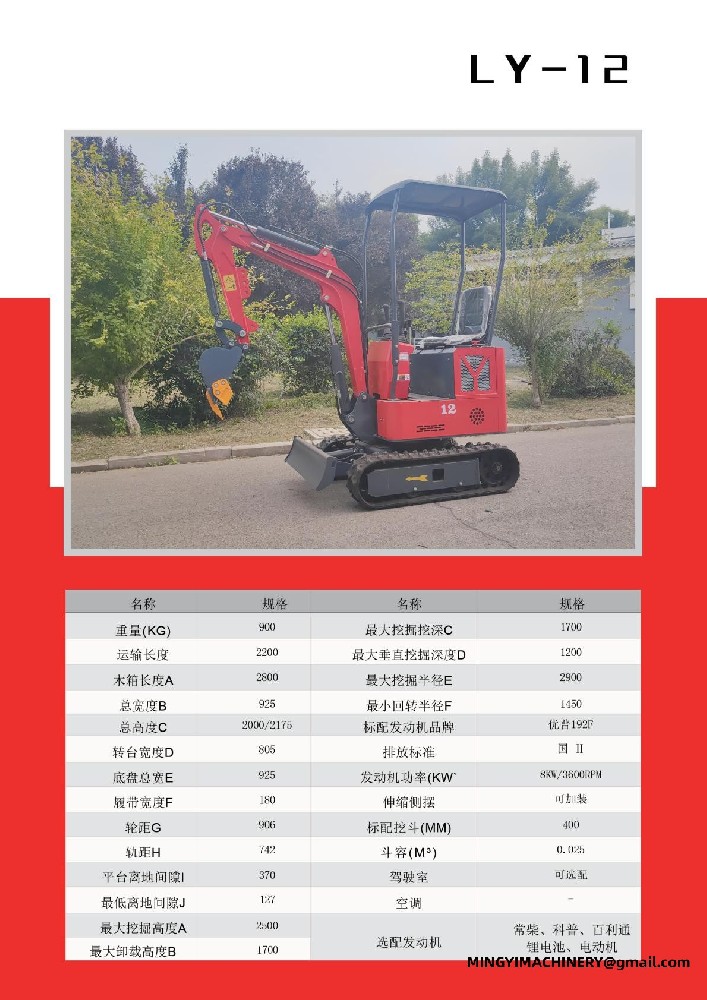
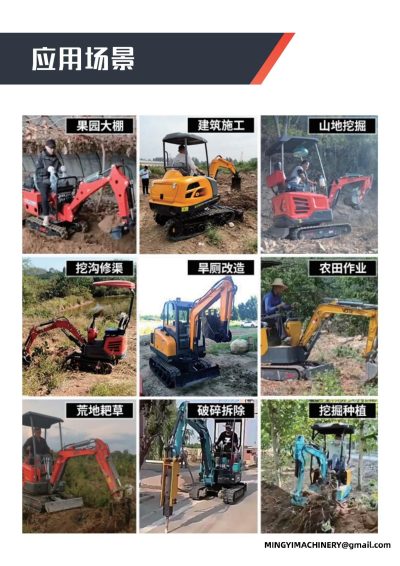
Hydraulic circuits on a micro excavator for basement demolition Flow and pressure are matched to the tool, not to the machine size. Asking for the attachment list first means the excavator leaves the factory with circuits that suit the heaviest tool the buyer intends to run. Hydraulic specification is easier to settle at build time than to correct later. This class of machine delivered without auxiliary lines can still dig, but every additional tool becomes a retrofit project. Working a micro excavator for basement demolition through the seasons Weather decides which days are productive. Rain turns some ground unusable and cold changes how the unit in daily use starts and warms up, so planning the wet months around maintenance is more useful than planning around output. Seasonal planning smooths the workload. Machines that are busy for a few months and idle for the rest benefit from a service slot in the quiet period, and a machine of this size prepared in the off-season starts the busy months reliably. Road and paving work for micro excavator for basement demolition Patching and reinstatement favour a machine that can work in a lane closure. The equipment on site occupies less road than a full-size excavator, which reduces the traffic management needed and the length of the closure. Breaking out a failed slab and backfilling the same hole in one visit is normal work for the machine itself. The breaker and the bucket come off the same coupler, so the road is reopened the same day. Municipal and public works with micro excavator for basement demolition Municipal crews work on streets, footpaths and parks where the public is present. The model in question is specified because it occupies little space, works inside a small exclusion zone and can be moved on a standard trailer. Drainage repair, tree planting, footway reconstruction and cemetery work are all within the range of the machine in that duty. The jobs are small individually and continuous across the year. Running micro excavator for basement demolition in a rental fleet The specification that rents best is usually the simplest one to explain at the counter. The unit on the job with rubber tracks, a canopy and a coupler covers the majority of weekend and short-term hires. Fleet buyers also weigh transport. A machine built for the work that a customer can tow on a normal licence and a standard trailer is a hire that does not need a delivery truck, which changes how often it goes out. Parts, service and support for micro excavator for basement demolition Engine parts availability usually drives the engine choice. The equipment in service built with an engine the local network already carries is serviced from stock rather than from an international order. Remote support is handled by video. The excavator fault can often be diagnosed on a walk-around call with the panel open, which is faster than waiting for a visit and avoids shipping a part that is not needed. Working near live services with this class of machine Digging near water, gas and cable is a precision job. The unit in daily use is used here because the operator can work in short controlled cuts and because the machine can be positioned without driving over the run being exposed. The risk on utility work is not machine power but machine placement. A machine of this size that fits the working width leaves the surrounding ground undisturbed, which keeps the trench stable and the reinstatement small. Attachments that turn the equipment on site into several machines Attachment lists are best written before delivery. Specifying the machine itself with the tools the job list needs avoids the work and delay of adding hydraulics later, and a quick coupler makes the swap a few minutes instead of a workshop job. Most of the daily variety on the model in question comes from the attachment rack rather than from the machine itself. Bucket, breaker, auger, ripper, rake and grab cover the large majority of the work a contractor will see. Acceptance checks when the machine in that duty arrives Delivery day is the best time to find a problem. Checking the specification against the order, the fluid levels, the fasteners and any transport damage while the machine built for the work is still on the trailer is faster than claiming later. A function check before the machine goes to work is worth the hour. Running through the controls, the travel and the attachment circuit on the unit on the job confirms it is set up as specified and ready for the site. Daily checks and maintenance on the equipment in service Daily maintenance on the excavator is a short list: engine oil level, coolant, track tension, hydraulic oil level and a look at the hoses. Ten minutes at the start of the shift prevents most of the failures that stop a machine. Track tension is the item most often neglected. This class of machine run with slack tracks wears the undercarriage and can throw a track on a turn; run too tight, the same components wear from the other direction. Quick coupler practice on the unit in daily use Couplers are specified early because they affect the arm and the hydraulic kit. Adding one to a machine of this size after delivery means new pins, new hoses and a fitment session; adding it at build time is a line on the sheet. For a fleet that shares attachments between machines, a common coupler standard matters more than the coupler brand. The equipment on site that picks up the same tools as the larger machines keeps the rack usable across the yard. Engine options behind the machine itself Power unit selection is settled against the service network the buyer already uses. MINGYI offers Kubota D722, Kubota D902, YANMAR, Changchai, Laidong, Runtong, YARMAX, Youpu 2V80 and Youpu 195, so a fleet running one brand of engine can keep the same filters, the same parts supplier and the same mechanic. Two buyers can order the same the model in question and receive different engines. The decision is rarely about peak power; it is about which parts counter is closest to the site and which engine the local mechanic already knows. Specification data for the machine in that duty Buyers comparing the unit on the job usually start from four numbers - weight, digging depth, reach and transport width - because those are the ones that decide whether the machine can be delivered and whether it can do the job once it is there. Every value shown is as built for a machine built for the work; options such as cab, side swing or a telescopic undercarriage change the transport dimensions and are confirmed at order stage. Output on a compact machine comes from placement rather than power. An experienced operator keeps the equipment in service working inside the swing arc, positions once and digs a full run instead of repositioning for every bucket. The second habit is tool discipline. Running the excavator with the right bucket width for the trench means less spoil, less reinstatement and a cleaner job than a wide bucket and a lot of trimming.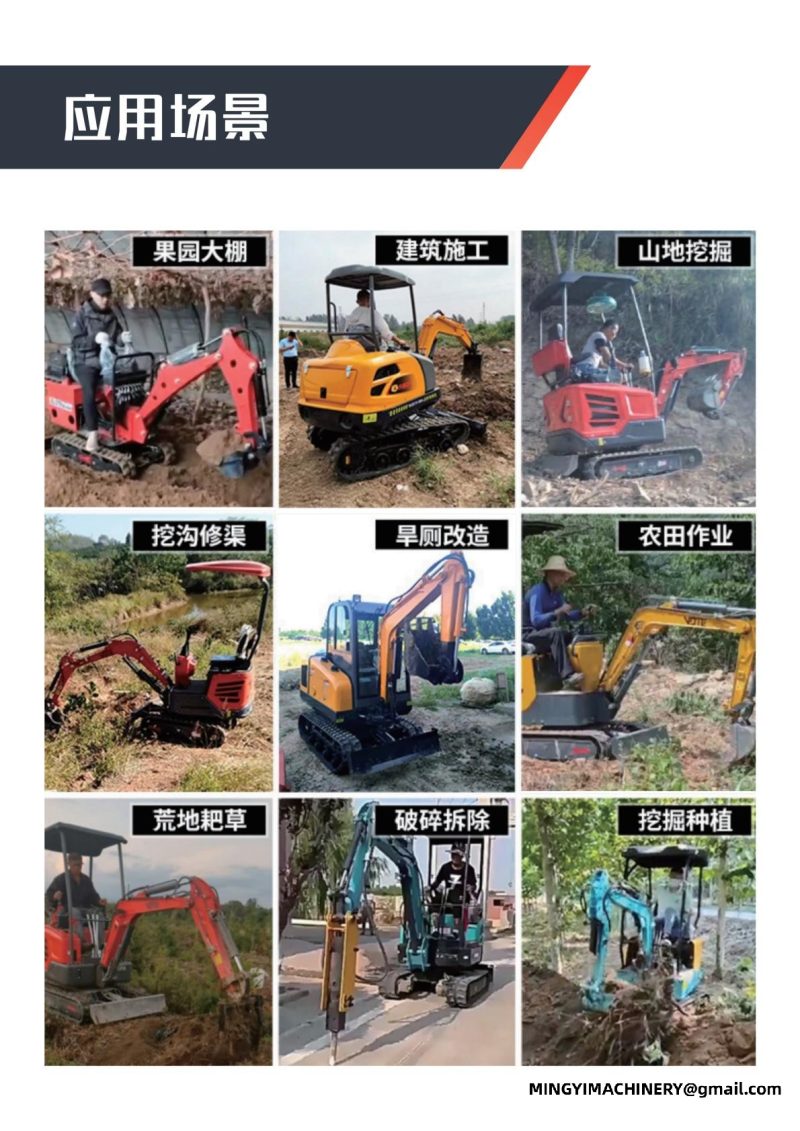
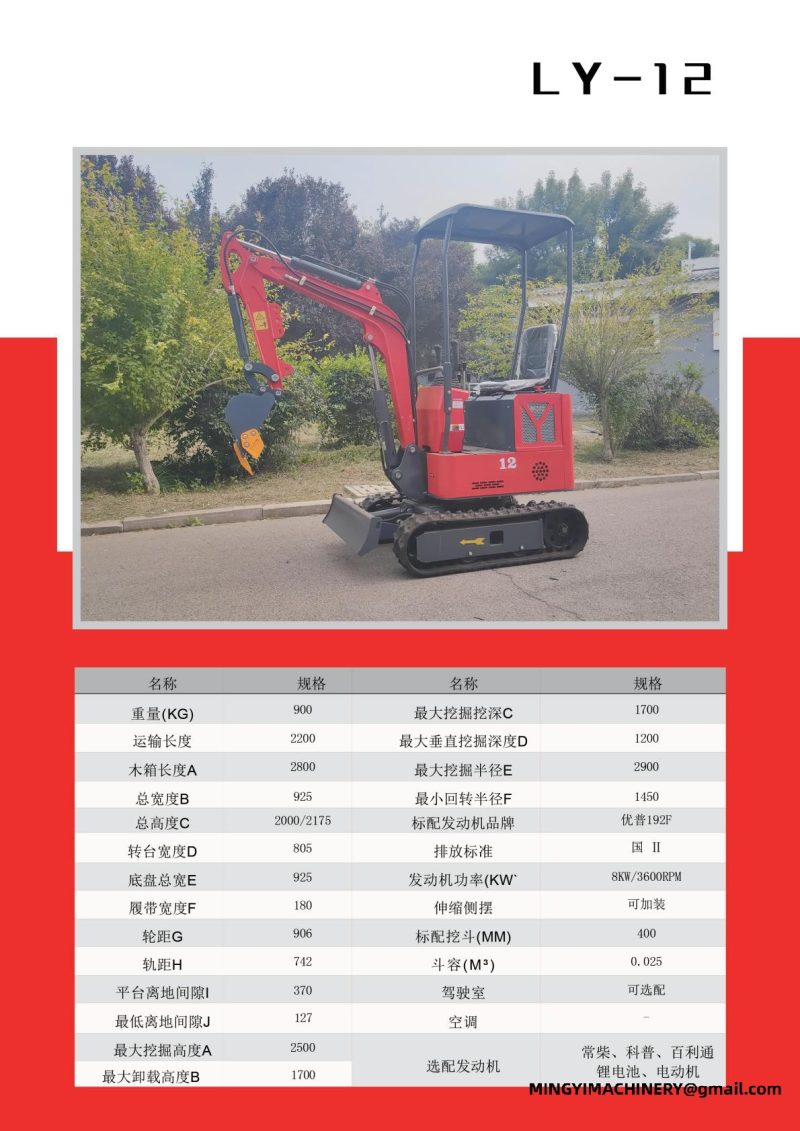
Reference specification — mini excavator range 09W 20-1WL 09L 15L Operating weight 1100 kg (2425.08 lb) 1900 kg (4188.78 lb) 1100 kg (2425.08 lb) 1400 kg (3086.47 lb) Transport size (L×W×H) 1800 × 750 × 1970 mm 2550 × 1100 × 2200 mm 2300 × 720 × 1870 mm 2200 × 930 × 2250 mm Max digging depth 1250 mm (49.21 in) 1800 mm (70.87 in) 1400 mm (55.12 in) 1700 mm (66.93 in) Max digging height 2800 mm (110.24 in) 2820 mm (111.02 in) 2800 mm (110.24 in) 2750 mm (108.27 in) Max dumping height 1700 mm (66.93 in) 2050 mm (80.71 in) 1880 mm (74.02 in) 1960 mm (77.17 in) Max digging radius 2570 mm (101.18 in) 3050 mm (120.08 in) 2490 mm (98.03 in) 2900 mm (114.17 in) Max digging distance 1869 mm (73.58 in) 2300 mm (90.55 in) 2000 mm (78.74 in) 2300 mm (90.55 in) Minimum turning radius 1000 mm (39.37 in) 1450 mm (57.09 in) 1400 mm (55.12 in) 1450 mm (57.09 in) Travel speed 3 km/h (1.86 mph) 5 km/h (3.11 mph) 3 km/h (1.86 mph) 3 km/h (1.86 mph) Gradeability 30° 30° 30° 30° Fuel consumption 1-1.3 L/h (0.264—0.343 gal) 2-3 L/h (0.528—0.793 gal) 1-1.3 L/h (0.264—0.343 gal) 1-1.3 L/h (0.264—0.343 gal) Fuel tank capacity 8 L (2.11 gal) 16 L (4.23 gal) 8 L (2.11 gal) 10 L (2.64 gal) Hydraulic oil tank 16 L (4.23 gal) 18 L (4.76 gal) 16 L (4.23 gal) 16 L (4.23 gal) Dozer blade lift height 180 mm (7.09 in) 180 mm (7.09 in) 180 mm (7.09 in) 180 mm (7.09 in) Dozer blade drop depth 210 mm (8.27 in) 210 mm (8.27 in) 210 mm (8.27 in) 210 mm (8.27 in)
Q. What is this class of machine?
A. Demolition work rewards control rather than raw power: break, sort and load without swinging into what has to stay standing. The coupler switches the machine from breaker carrier to loader between passes, which is what keeps a small demolition job worth taking on. For basement demolition applications the practical route is to send the job list to the factory and let the build sheet answer it - which is exactly what this page invites.
Q. Can it work indoors and in occupied buildings?
A. The zero-tail and indoor pages cover it: machines that pass through doorways, run at controlled noise and still break floor slabs. Strip-out in a basement is routine work for the smallest classes.
Q. How do I get a specification?
A. Send the model, the destination and the attachment list by email or LINE - the channels listed just below this section. The reply covers the specification, lead time, packing and freight in one document, with the basement demolition build sheet attached.
Hot, humid and dusty conditions around the unit in daily use
Dust is the enemy of every rotating joint. Keeping the radiator and the air intake of a machine of this size clean, and cleaning them before they are blocked rather than after, is what separates a machine that lasts from one that overheats.
Later additions and retrofits on the equipment on site
Retrofitting is limited by the base machine. Before anything is added to the machine itself the hydraulic flow, the mounting interface and the stability allowance have to be checked, because those limits are what decide what is sensible.
E-mail : sales@mingycn.com
LINE ( ID ): mingyicn
Related pages
turf-friendly rubber track mini excavator · variable width mini excavator · Wheel Loader for Construction Site: Board Heights and Turn Space · Mini Excavators









