Thumb Grapple Mini Excavator, Hydraulic Clamp Digger, Debris Handling Excavator
Clearing and demolition sites generate material that will not sit in a bucket: broken concrete, twisted timber, storm debris and mixed waste that must be picked, carried and loaded. A hydraulic thumb grapple fitted to a mini excavator grips these loads and turns clearing into a machine cycle.
MINGYI supplies grapple and clamp attachments matched to its compact carriers, specified with the machine's hydraulics at order. The result is a digger that digs like a digger and handles material like a handler.
Debris handling jobs the grapple covers
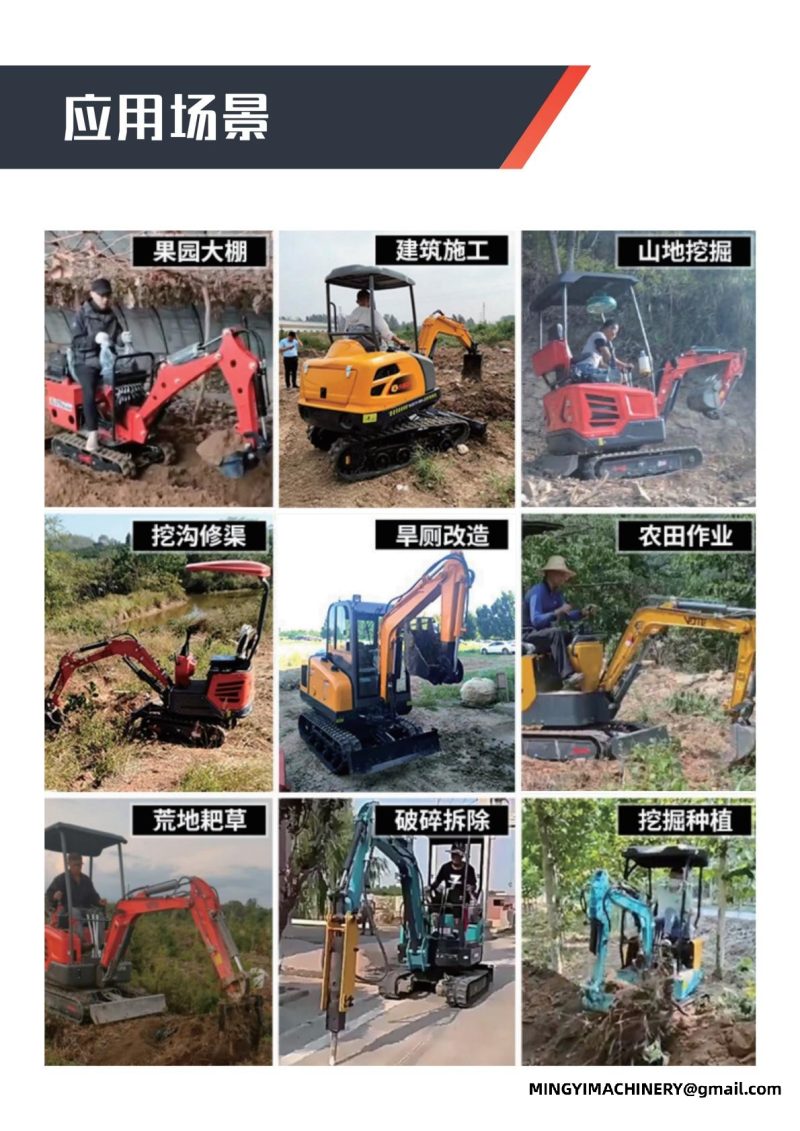
The working list includes storm clean-ups with fallen limbs, demolition strip-outs with mixed rubble and timber, farm clearance of prunings, and loading mixed waste to trucks or skips. Irregular loads are gripped rather than pushed, protecting both the material and the machine.
On urban clearance jobs the grapple sorts as it loads: timber to one heap, concrete to another, metal aside for recycling. Sorting at the grab is faster than sorting at the pile with hand tools.
Grapple options and machine matching
The grapple is matched to the carrier's class and hydraulic circuit at specification, so grip force and opening suit the machine. A quick coupler lets the grapple share the carrier with digging buckets through the day.
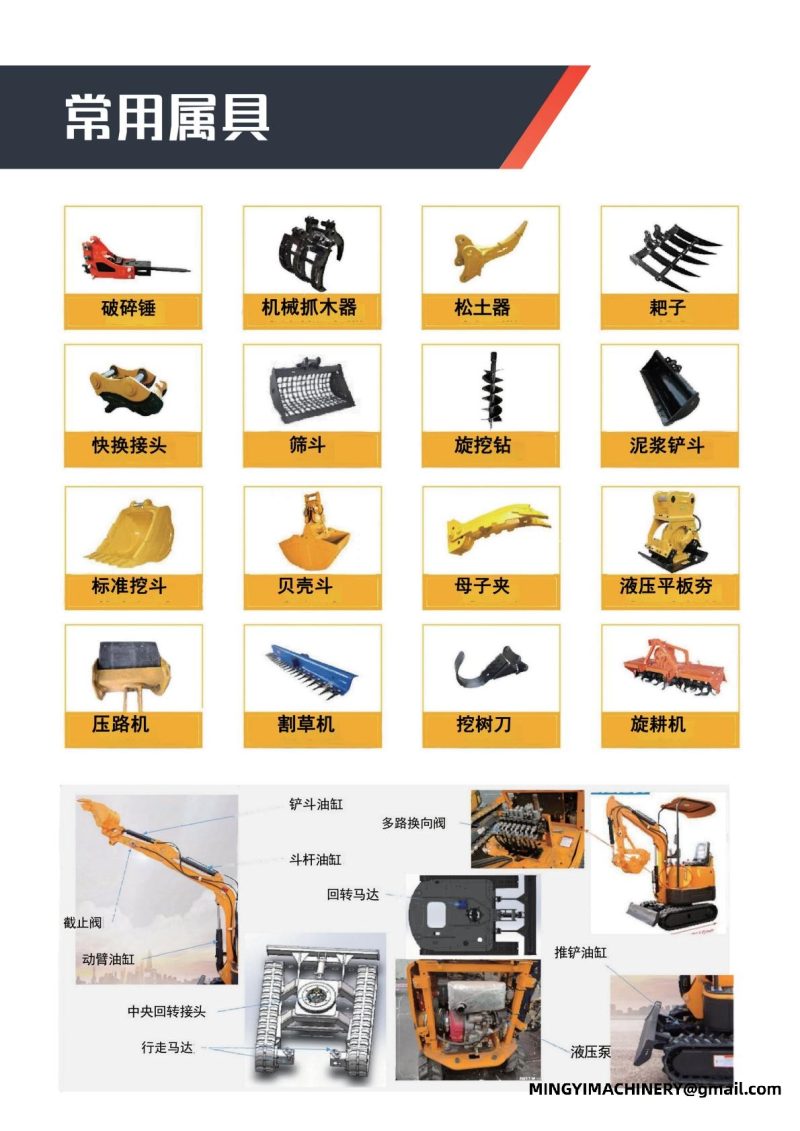
Ordering should describe the material mix you handle most: light green waste points towards one setup, heavy demolition rubble towards another. The specification is recorded against the machine, and the grapple travels with it, fitted or boxed as agreed.
Gripping is what turns a digging machine into a clearing machine. MINGYI matches the grapple to the carrier and the waste stream described by the buyer, so debris handling becomes part of the digger's day rather than a separate crew's.
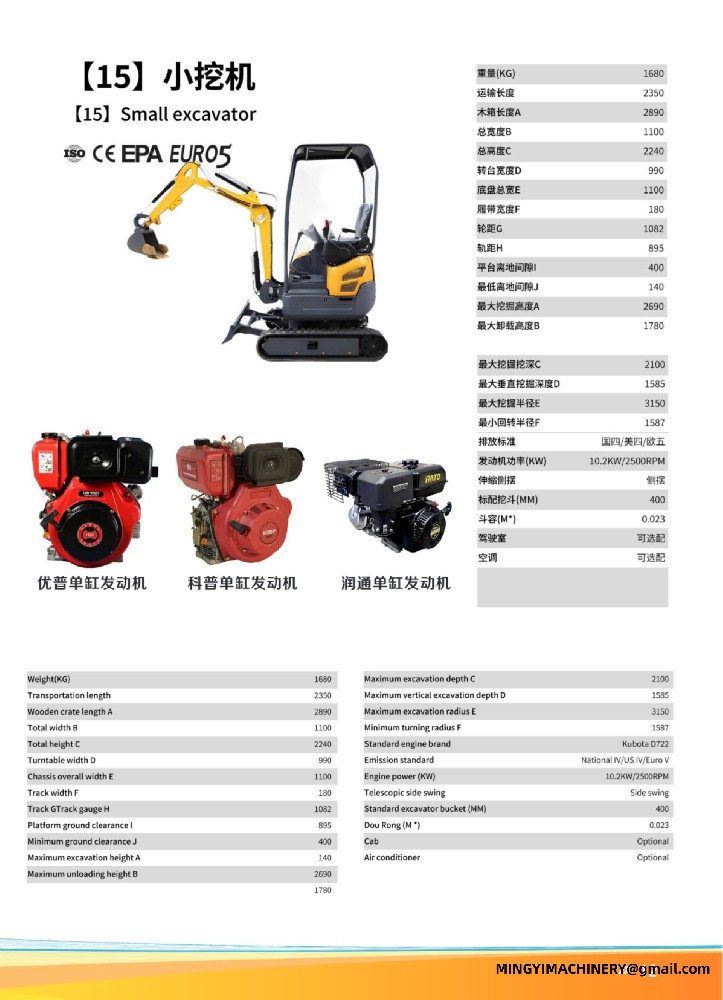
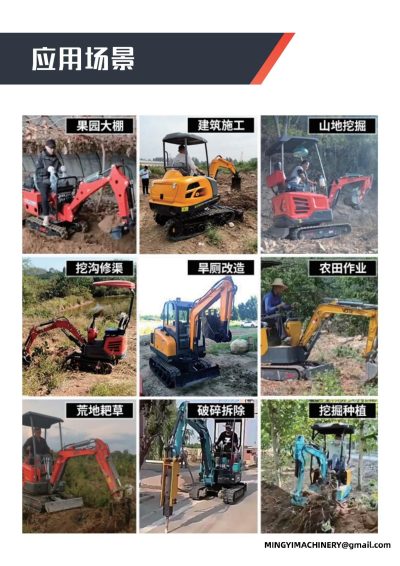
Hydraulic circuits on a thumb grapple mini excavator Flow and pressure are matched to the tool, not to the machine size. Asking for the attachment list first means the excavator leaves the factory with circuits that suit the heaviest tool the buyer intends to run. Hydraulic specification is easier to settle at build time than to correct later. This class of machine delivered without auxiliary lines can still dig, but every additional tool becomes a retrofit project. Export packing and shipping of thumb grapple mini excavator Machines leave the factory prepared for container or flat rack shipment. The unit in daily use is normally shipped with the attachment set and the spare parts list agreed in advance so the container is planned once. Export documentation, decals and paint are settled before packing. Asking for them with the a machine of this size order avoids a second handling session and keeps the machine on the booked vessel. Canopy or enclosed cab on a thumb grapple mini excavator The cab decision follows the climate and the hours. Operators working a full shift in the equipment on site benefit from a sealed cab with wipers and heating; operators stepping on and off every few minutes usually prefer the canopy for the visibility and the quick exit. Enclosure also changes noise and dust exposure. A sealed cab on the machine itself keeps dust out on dry sites and lets the machine work through weather that would otherwise stop a canopy machine for the day. Municipal and public works with thumb grapple mini excavator Municipal crews work on streets, footpaths and parks where the public is present. The model in question is specified because it occupies little space, works inside a small exclusion zone and can be moved on a standard trailer. Drainage repair, tree planting, footway reconstruction and cemetery work are all within the range of the machine in that duty. The jobs are small individually and continuous across the year. What owners should plan for beyond the thumb grapple mini excavator Purchase decision is the visible part of the effort. Fuel, filters, tracks or tyres, the operator and the transport between sites are the items that decide what the unit on the job actually demands over a few seasons, and they are worth listing before the order. Downtime is the hidden line item. A machine built for the work waiting on a part earns nothing while it stands, so parts availability and service access belong in the plan as much as fuel does. Trailering and moving thumb grapple mini excavator Transport weight and width decide whether a machine needs a specialist haulier. The equipment in service sized to travel on a standard plant trailer behind a suitable vehicle moves with the crew rather than on a scheduled low loader. Loading practice matters as much as the numbers. The excavator is driven up ramps under its own power with the boom lowered and the tracks aligned, and secured at the points the manufacturer specifies. Running this class of machine in a rental fleet The specification that rents best is usually the simplest one to explain at the counter. The unit in daily use with rubber tracks, a canopy and a coupler covers the majority of weekend and short-term hires. Fleet buyers also weigh transport. A machine of this size that a customer can tow on a normal licence and a standard trailer is a hire that does not need a delivery truck, which changes how often it goes out. Interior and light demolition with the equipment on site Interior demolition is an access and a weight question. The machine itself that fits through a doorway and works on a suspended floor does jobs that would otherwise be done by hand or by a larger machine that cannot enter. Dust, debris clearance and floor loading all argue for a compact machine indoors. The model in question spreads its weight over a wider track footprint than a wheeled machine of similar capacity. Daily checks and maintenance on the machine in that duty Daily maintenance on the unit on the job is a short list: engine oil level, coolant, track tension, hydraulic oil level and a look at the hoses. Ten minutes at the start of the shift prevents most of the failures that stop a machine. Track tension is the item most often neglected. A machine built for the work run with slack tracks wears the undercarriage and can throw a track on a turn; run too tight, the same components wear from the other direction. Working the equipment in service in confined spaces Clearance above matters as much as around. Door heights, pipework and overhead services set the limit for the excavator indoors, and measuring them first avoids a machine that arrives and cannot be used. Ventilation is the other indoor constraint. Running this class of machine inside a closed structure needs air movement, and that is a planning item rather than something to discover after the first hour. Working near live services with the unit in daily use Digging near water, gas and cable is a precision job. A machine of this size is used here because the operator can work in short controlled cuts and because the machine can be positioned without driving over the run being exposed. The risk on utility work is not machine power but machine placement. The equipment on site that fits the working width leaves the surrounding ground undisturbed, which keeps the trench stable and the reinstatement small. Orchard, vineyard and farm use of the machine itself Ditching, fertilising and drainage on farmland suit the model in question because the work is spread over a large area in short bursts. The machine travels behind a pickup and works where it stops. Farms also use the machine in that duty for general maintenance - clearing a watercourse, repairing a track, loading a spreader. One carrier with a few attachments covers most of the jobs that would otherwise wait for a contractor. Acceptance checks when the unit on the job arrives Delivery day is the best time to find a problem. Checking the specification against the order, the fluid levels, the fasteners and any transport damage while the equipment in service is still on the trailer is faster than claiming later. A function check before the machine goes to work is worth the hour. Running through the controls, the travel and the attachment circuit on a machine built for the work confirms it is set up as specified and ready for the site. Specification data for the excavator Where this class of machine is being specified for a job list, the table below gives the factory figures that matter most: what the machine weighs, how deep and how far it works, and what it measures on a trailer. Every value shown is as built for the unit in daily use; options such as cab, side swing or a telescopic undercarriage change the transport dimensions and are confirmed at order stage. Power unit selection is settled against the service network the buyer already uses. MINGYI offers Kubota D722, Kubota D902, YANMAR, Changchai, Laidong, Runtong, YARMAX, Youpu 2V80 and Youpu 195, so a fleet running one brand of engine can keep the same filters, the same parts supplier and the same mechanic. Two buyers can order the same a machine of this size and receive different engines. The decision is rarely about peak power; it is about which parts counter is closest to the site and which engine the local mechanic already knows.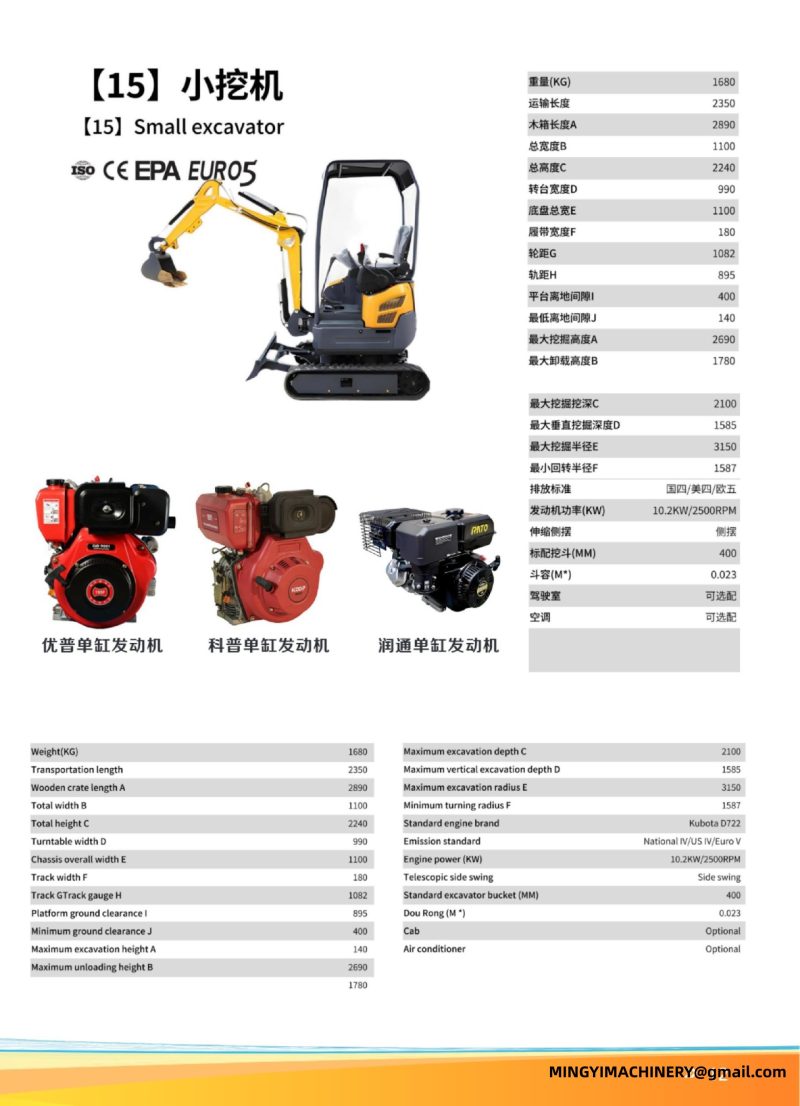
Reference specification — mini excavator range 12W 15W 20-1WL 20-2L Operating weight 1200 kg (2645.55 lb) 1400 kg (3086.47 lb) 1900 kg (4188.78 lb) 1900 kg (4188.78 lb) Transport size (L×W×H) 2200 × 930 × 2250 mm 2200 × 930 × 2250 mm 2550 × 1100 × 2200 mm 2600 × 1300 × 2344 mm Max digging depth 1630 mm (64.17 in) 1630 mm (64.17 in) 1800 mm (70.87 in) 2100 mm (82.68 in) Max digging height 2750 mm (108.27 in) 2750 mm (108.27 in) 2820 mm (111.02 in) 2880 mm (113.39 in) Max dumping height 1960 mm (77.17 in) 1960 mm (77.17 in) 2050 mm (80.71 in) 2100 mm (82.68 in) Max digging radius 2900 mm (114.17 in) 2900 mm (114.17 in) 3050 mm (120.08 in) 3215 mm (126.57 in) Max digging distance 2100 mm (82.68 in) 2100 mm (82.68 in) 2300 mm (90.55 in) 2460 mm (96.85 in) Minimum turning radius 1300 mm (51.18 in) 1300 mm (51.18 in) 1450 mm (57.09 in) 1587 mm (62.48 in) Travel speed 3 km/h (1.86 mph) 3 km/h (1.86 mph) 5 km/h (3.11 mph) 5 km/h (3.11 mph) Gradeability 30° 30° 30° 30° Fuel consumption 1-1.3 L/h (0.264—0.343 gal) 1-1.3 L/h (0.264—0.343 gal) 2-3 L/h (0.528—0.793 gal) 2-3 L/h (0.528—0.793 gal) Fuel tank capacity 10 L (2.64 gal) 10 L (2.64 gal) 16 L (4.23 gal) 16 L (4.23 gal) Hydraulic oil tank 16 L (4.23 gal) 16 L (4.23 gal) 18 L (4.76 gal) 18 L (4.76 gal) Dozer blade lift height 180 mm (7.09 in) 180 mm (7.09 in) 180 mm (7.09 in) 180 mm (7.09 in) Dozer blade drop depth 210 mm (8.27 in) 210 mm (8.27 in) 210 mm (8.27 in) 210 mm (8.27 in)
Q. What is the equipment on site used for?
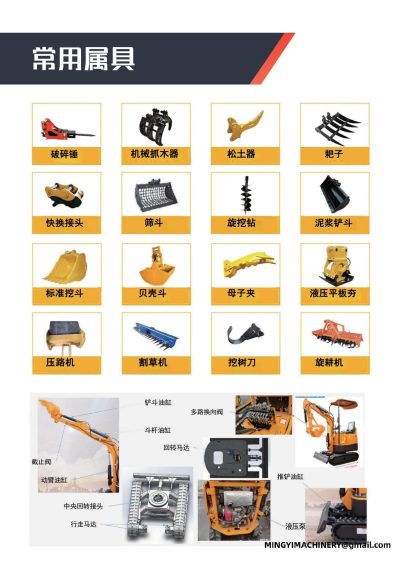
A. An attachment widens the range of jobs a single compact excavator can specification and win, which is why the working set matters as much as the base machine. The quick coupler makes the changeover a minute job at the trench edge, and mechanical tools need no hydraulic lines at all. MINGYI builds the 08, 12 and 18 models covering the 0.8 to 6 tonne class, and the machine itself is where that range meets thumb grapple.
Q. What does the attachment add to daily work?
A. Reach into jobs the bucket alone cannot specification: grading with a tilting bucket, clearing with a rake, drilling with an auger, lifting with a thumb. One carrier, several trades - the machine stays on site earning instead of waiting for a specialist.
Q. Does MINGYI supply attachments with the machine?
A. Yes - buckets, breakers, augers, rakes and the rest of the working set ship with the carrier, matched to the hydraulic flow and the coupler. For thumb grapple the package is confirmed on the build sheet, so machine and tools arrive together and start work together.
Hot, humid and dusty conditions around the model in question
Tropical operation is a specification question as much as a maintenance one. The cooling capacity, the sealing and the corrosion protection fitted to the machine in that duty are what make the difference once the ambient temperature rises.
Later additions and retrofits on the unit on the job
Most additions are easier to plan than to add. Hydraulic services, mounting brackets and electrical capacity on a machine built for the work are build items, and deciding them at the specification stage is far easier than doing it later.
E-mail : sales@mingycn.com
LINE ( ID ): mingyicn
Related pages
long reach high lift mini excavator · electric mini excavator options · China Wheel Loader Factory: How Each Model Is Built and Checked · Mini Excavators









