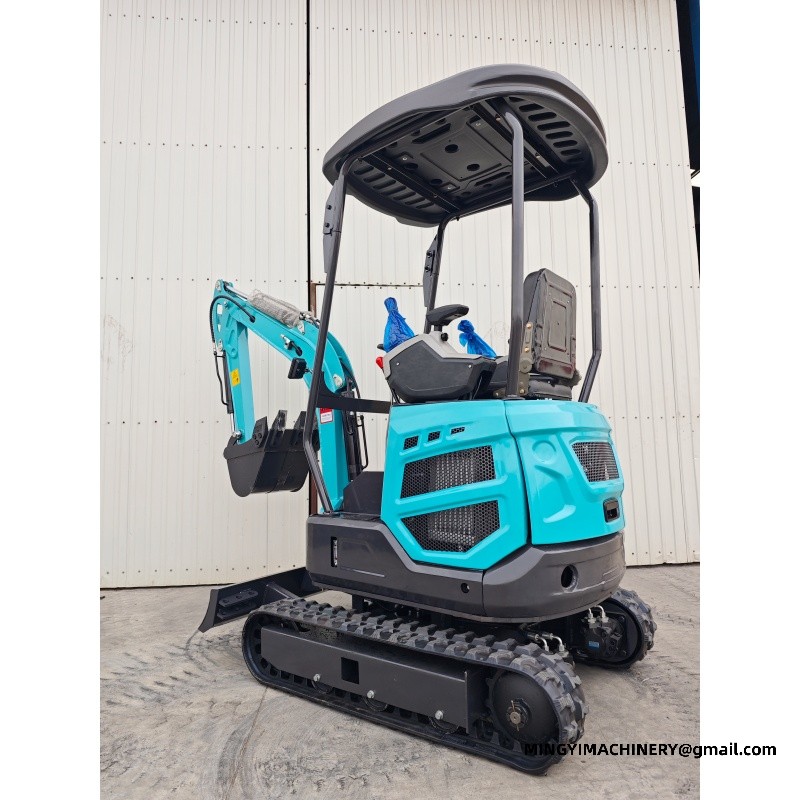
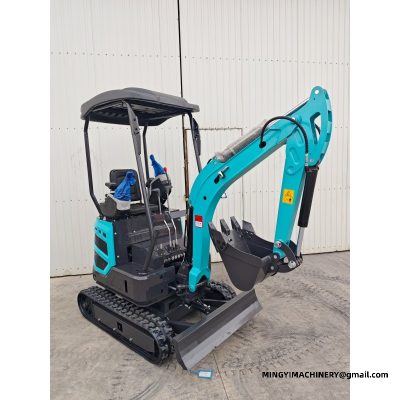
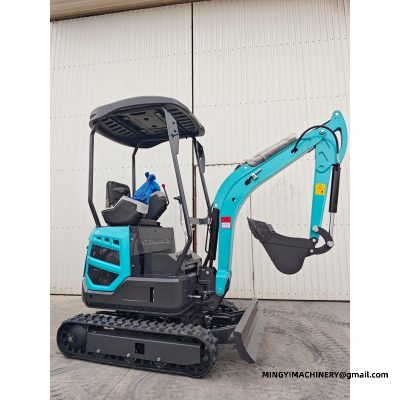
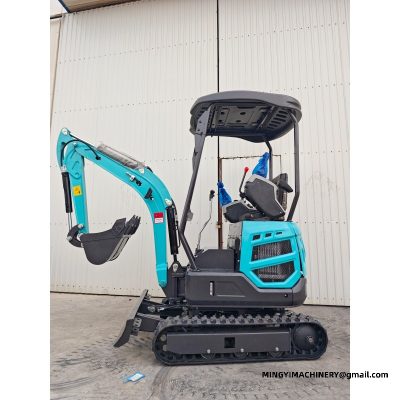
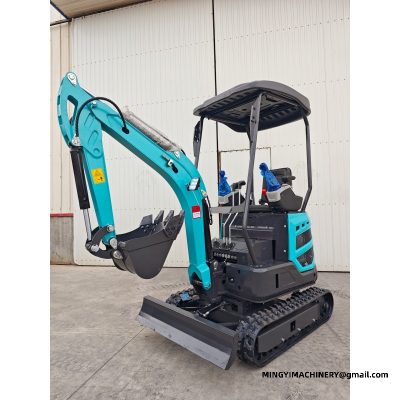
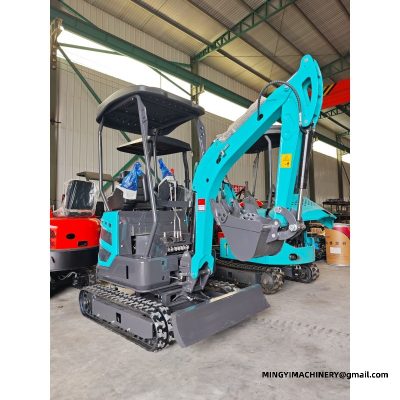
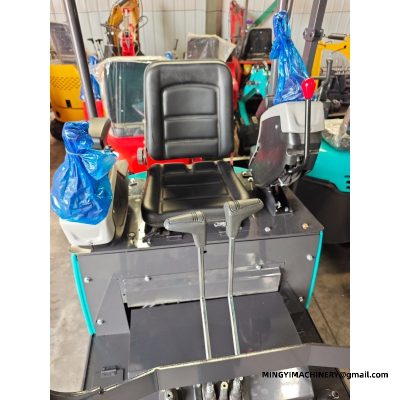
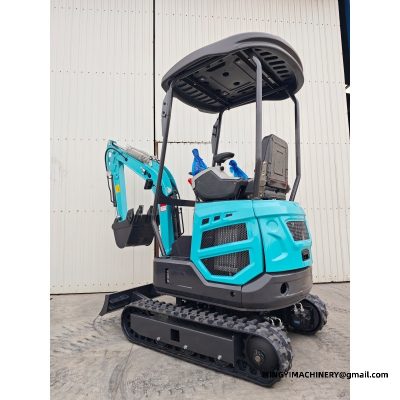
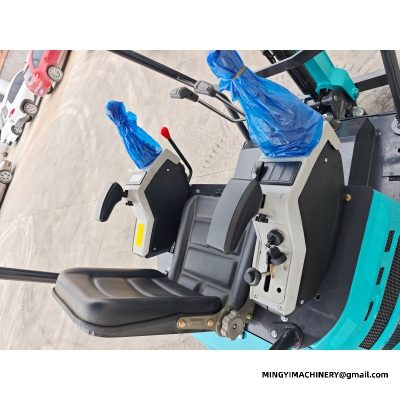
Outfitted with a premium tiltrotator system, allowing the bucket to spin 360 degrees and tilt 45 degrees, drastically speeding up complex grading and ditching tasks.
Between the dipper and the bucket there is room for a tool that changes both the angle and the heading of the work: the tiltrotator. The MINGYI tiltrotator digger carries this continuously rotating coupler, so buckets tilt to grade and slew to the cut line in one motion.
The tiltrotator sits between the quick coupler and the attachment, letting the tool face the trench wall, the slope or the corner without repositioning the tracks. It is ordered with the machine and recorded against the build.
Precision grading with a tiltrotator head
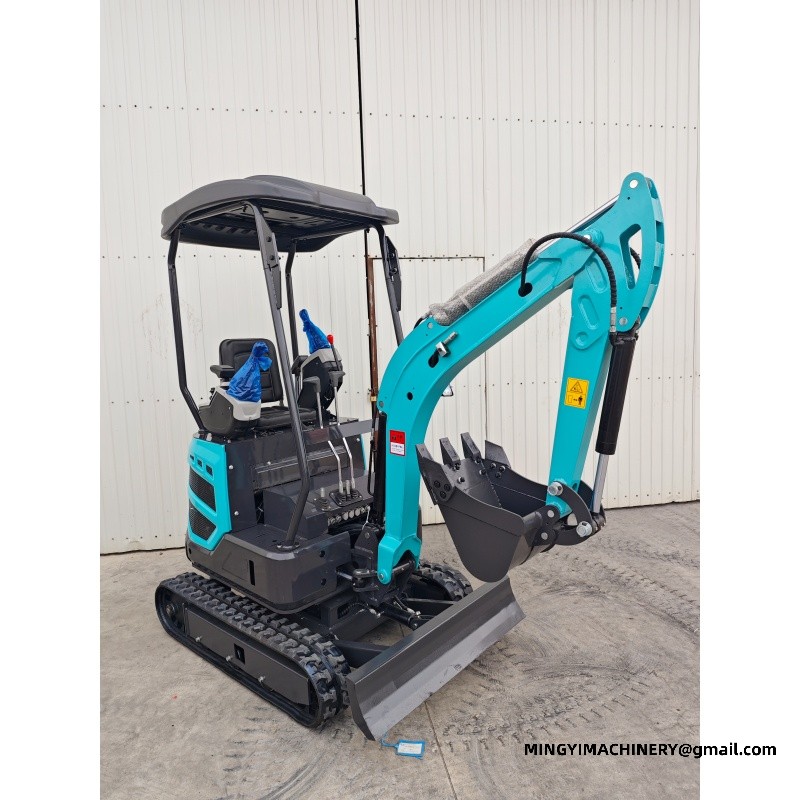
Grading a swale, shaping a ditch invert or trimming around a structure becomes a continuous operation when the bucket rotates to each face of the work. The operator follows the line while the tool adjusts, instead of squaring the machine for every angle change.
In utility trenches the rotating coupler trims the trench walls and beds the pipe line along the cut, and the tilt function grades the backfill layers to level. Confined corners that would stop a rigid setup are reached by rotating the tool into them.
Ordering the tiltrotator with a MINGYI carrier
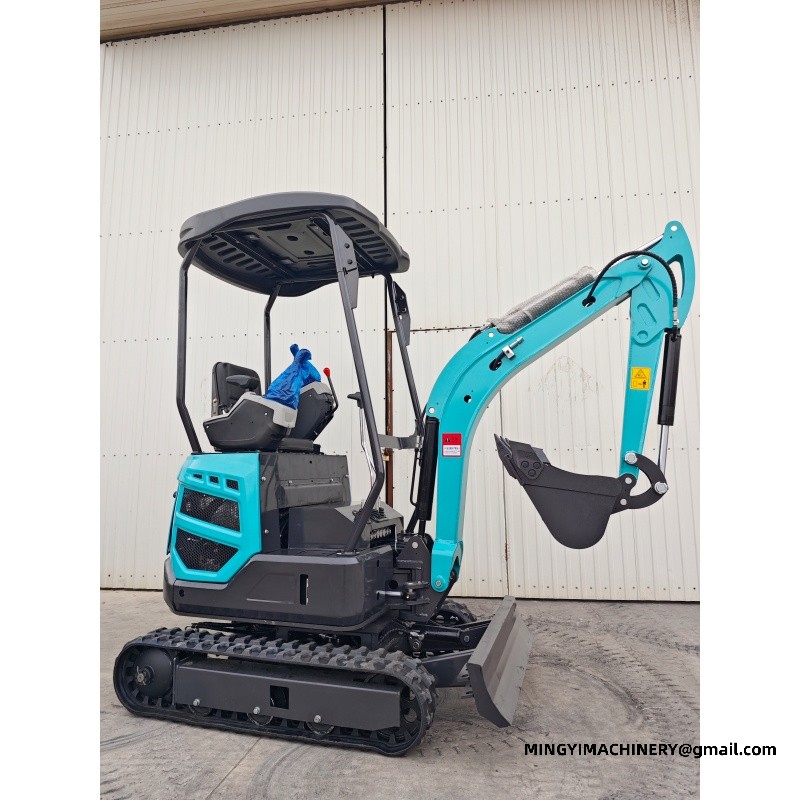
The tiltrotator is specified at the ordering stage with the machine class and the bucket set it will carry, and the configuration is recorded against the machine. Buyers confirm which attachments should couple through the rotator so the geometry matches.
Service information and the wear parts for the rotation and tilt circuits ship with the machine, and routine spares can be ordered alongside. MINGYI reviews the grading and trenching profiles in the buyer's work before fixing the package.
A tiltrotator turns a steady compact digger into a finishing tool for slopes, trenches and corners. MINGYI matches the rotating coupler and bucket set to the buyer's precision work at the ordering stage.
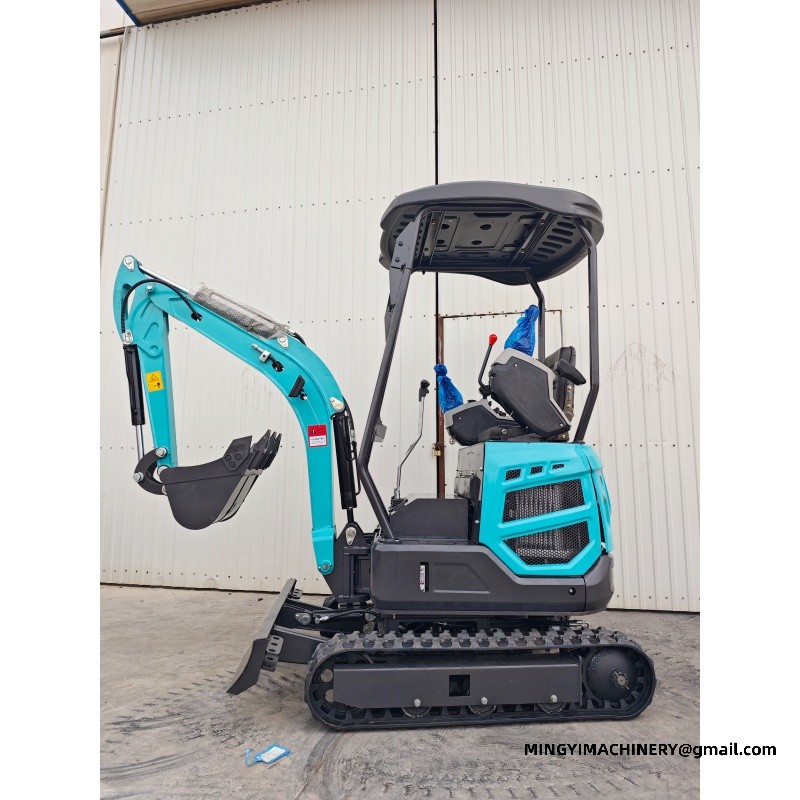
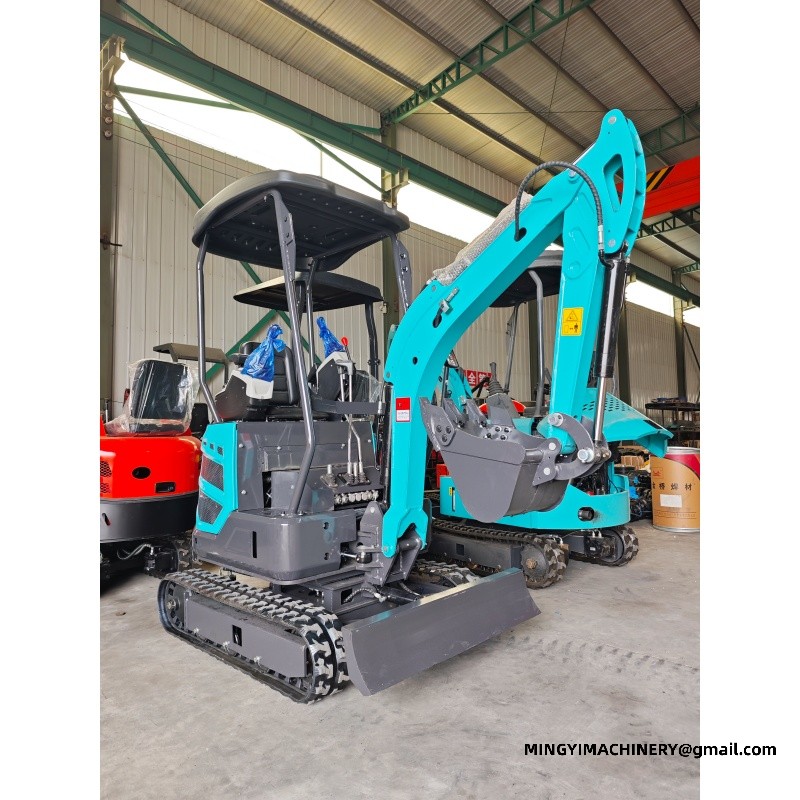
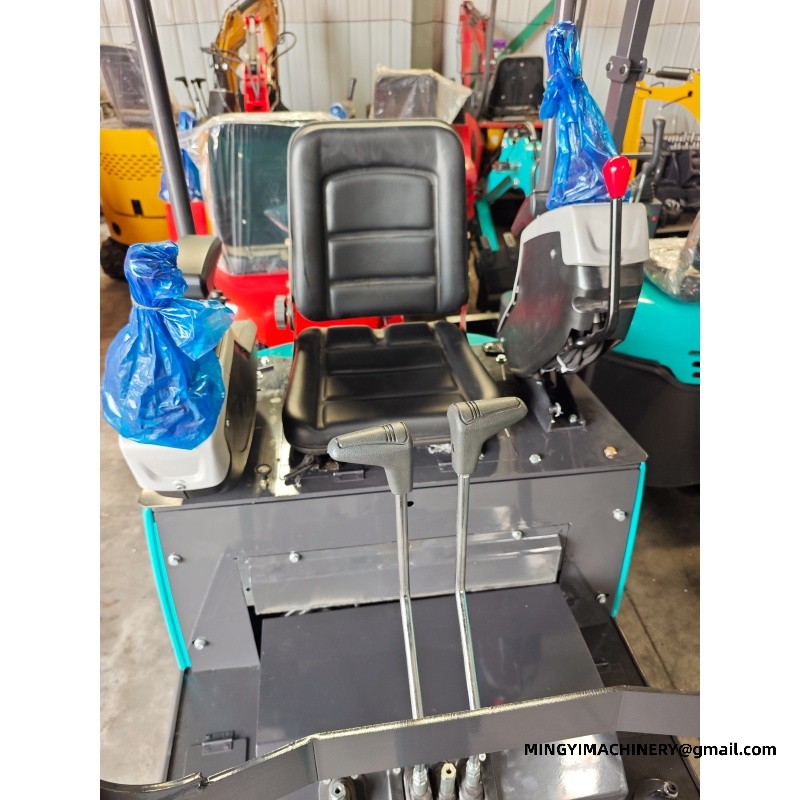
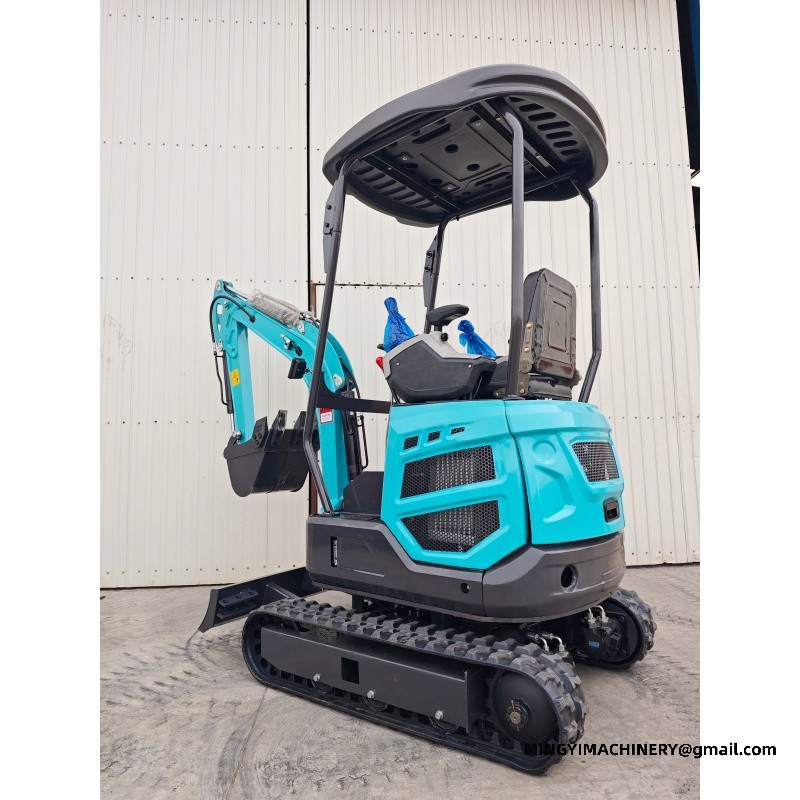
Export packing and shipping of full rotation tiltrotator digger Export documentation, decals and paint are settled before packing. Asking for them with the class of machine order avoids a second handling session and keeps the machine on the booked vessel. Buyers who import regularly plan the spare parts with the machine. The excavator ordered with a wearing-parts kit arrives ready to work rather than ready to wait for the first service interval. Lifting and material handling with a full rotation tiltrotator digger Lifting with a machine built to dig needs a plan. The load, the radius and the ground under the machine of this size all matter, and the safe figure is the one on the chart rather than the one that looks possible. Ground condition under the machine is part of every lift. Soft or uneven support is the common factor in handling incidents, and checking it takes less time than recovering the unit in daily use that has settled. Running full rotation tiltrotator digger in a rental fleet Rental fleets buy for utilisation, not for a single job. The equipment on site with a quick coupler and a common attachment standard is hired more often because it suits more of the calls that come in. The specification that rents best is usually the simplest one to explain at the counter. The machine itself with rubber tracks, a canopy and a coupler covers the majority of weekend and short-term hires. Interior and light demolition with full rotation tiltrotator digger Breaking out a floor slab, a wall footing or a concrete step is routine work for the model in question with a breaker. The machine is small enough to work inside and heavy enough to run the tool at a practical rate. Dust, debris clearance and floor loading all argue for a compact machine indoors. The machine in that duty spreads its weight over a wider track footprint than a wheeled machine of similar capacity. Working on slopes and uneven ground with full rotation tiltrotator digger Slope work is a stability question before it is a traction question. Knowing the gradient the unit on the job is rated for, and working across rather than straight up where the ground allows, removes most of the risk. Ground that looks level often is not. A machine built for the work crossing a filled trench, a soft edge or a hidden void behaves differently from one on undisturbed ground, and those are the places worth walking before driving. Boom configuration for full rotation tiltrotator digger Extended and offset boom configurations change reach and working range. The equipment in service with a longer arm reaches further but lifts less at full extension, so the specification is set against the deepest and furthest point on the job list. Detachable boom sections are used where transport length matters. The excavator that has to travel on a standard trailer can be built so the arm comes off for the road and goes back on at the site. Working this class of machine in confined spaces Clearance above matters as much as around. Door heights, pipework and overhead services set the limit for the unit in daily use indoors, and measuring them first avoids a machine that arrives and cannot be used. Ventilation is the other indoor constraint. Running a machine of this size inside a closed structure needs air movement, and that is a planning item rather than something to discover after the first hour. Orchard, vineyard and farm use of the equipment on site Orchard and vineyard work is carried out between rows. The machine itself with a narrow chassis and a swing boom works down the row without damaging the trees, which is the reason a full-size machine is not used at all. Farms also use the model in question for general maintenance - clearing a watercourse, repairing a track, loading a spreader. One carrier with a few attachments covers most of the jobs that would otherwise wait for a contractor. Working the machine in that duty through the seasons Weather decides which days are productive. Rain turns some ground unusable and cold changes how the unit on the job starts and warms up, so planning the wet months around maintenance is more useful than planning around output. Seasonal planning smooths the workload. Machines that are busy for a few months and idle for the rest benefit from a service slot in the quiet period, and a machine built for the work prepared in the off-season starts the busy months reliably. Landscaping and ground care with the equipment in service Landscape contractors use the excavator for planting holes, pond excavation, grading and retaining work. The machine is light enough to cross finished lawn and narrow enough to work between established trees. On soft landscape work the surface is the constraint. This class of machine on rubber tracks crosses turf without stripping it, which is why the same jobs are not given to a wheeled machine. Hiring versus owning the unit in daily use The choice follows the hours. Work that fills a few weeks a year is usually better hired, while a machine of this size that would be on site most weeks starts to justify ownership once the transport and booking time is counted. Availability is part of the decision. Owning the equipment on site means it is there on the day the ground is ready; hiring means competing for the same machine at the same time as everyone else in the season. Specification data for the machine itself Where the model in question is being specified for a job list, the table below gives the factory figures that matter most: what the machine weighs, how deep and how far it works, and what it measures on a trailer. These are the reference figures for the machine in that duty. MINGYI confirms the final build sheet, including engine and attachment choices, against the destination and the job list before production. Engine parts availability usually drives the engine choice. The unit on the job built with an engine the local network already carries is serviced from stock rather than from an international order. Remote support is handled by video. A machine built for the work fault can often be diagnosed on a walk-around call with the panel open, which is faster than waiting for a visit and avoids shipping a part that is not needed.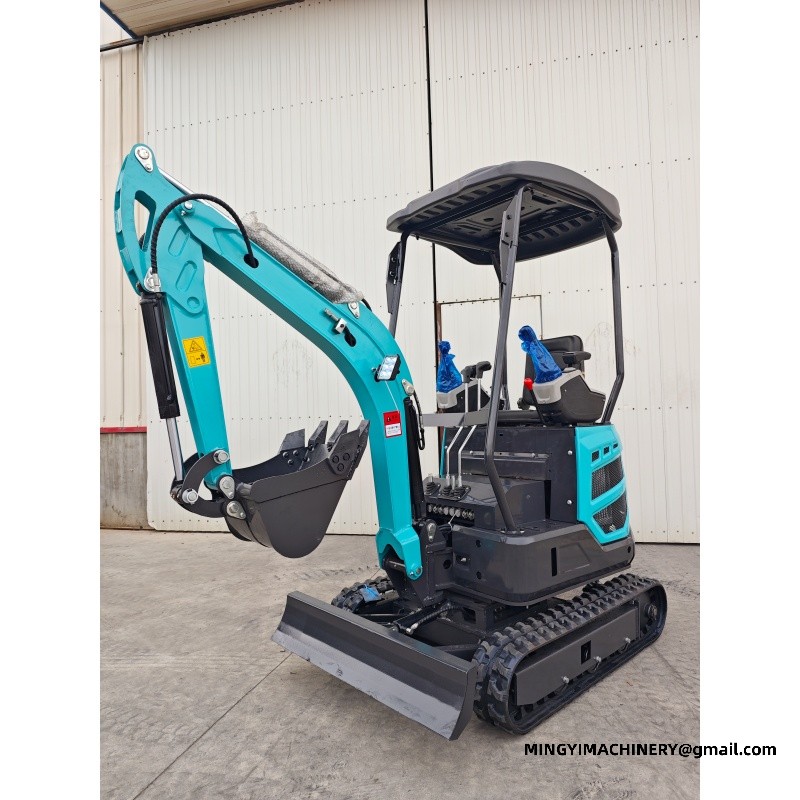
Reference specification — mini excavator range 12W 20-1WL 12L 30-2L Operating weight 1200 kg (2645.55 lb) 1900 kg (4188.78 lb) 1200 kg (2645.55 lb) 2400 kg (5291 lb) Transport size (L×W×H) 2200 × 930 × 2250 mm 2550 × 1100 × 2200 mm 2200 × 930 × 2250 mm 2800 × 1500 × 2500 mm Max digging depth 1630 mm (64.17 in) 1800 mm (70.87 in) 1700 mm (66.93 in) 2200 mm (86.61 in) Max digging height 2750 mm (108.27 in) 2820 mm (111.02 in) 2600 mm (102.36 in) 2900 mm (114.17 in) Max dumping height 1960 mm (77.17 in) 2050 mm (80.71 in) 1800 mm (70.87 in) 2100 mm (82.68 in) Max digging radius 2900 mm (114.17 in) 3050 mm (120.08 in) 2900 mm (114.17 in) 3330 mm (131.1 in) Max digging distance 2100 mm (82.68 in) 2300 mm (90.55 in) 2300 mm (90.55 in) 2700 mm (106.3 in) Minimum turning radius 1300 mm (51.18 in) 1450 mm (57.09 in) 1450 mm (57.09 in) 1555 mm (61.22 in) Travel speed 3 km/h (1.86 mph) 5 km/h (3.11 mph) 3 km/h (1.86 mph) 7 km/h (4.35 mph) Gradeability 30° 30° 30° 30° Fuel consumption 1-1.3 L/h (0.264—0.343 gal) 2-3 L/h (0.528—0.793 gal) 1-1.3 L/h (0.264—0.343 gal) 2-3 L/h (0.528—0.793 gal) Fuel tank capacity 10 L (2.64 gal) 16 L (4.23 gal) 10 L (2.64 gal) 16 L (4.23 gal) Hydraulic oil tank 16 L (4.23 gal) 18 L (4.76 gal) 16 L (4.23 gal) 18 L (4.76 gal) Dozer blade lift height 180 mm (7.09 in) 180 mm (7.09 in) 180 mm (7.09 in) 230 mm (9.06 in) Dozer blade drop depth 210 mm (8.27 in) 210 mm (8.27 in) 210 mm (8.27 in) 280 mm (11.02 in)
Q. What is the equipment in service used for?
A. The attachment story on a compact digger is about earning across trades: one carrier, one trailer, and a quick coupler that swaps tools in about a minute. The quick coupler makes the changeover a minute job at the trench edge, and mechanical tools need no hydraulic lines at all. MINGYI builds the 08, 12 and 18 models covering the 0.8 to 6 tonne class, and the excavator is where that range meets full rotation tiltrotator.
Q. What does the attachment add to daily work?
A. Reach into jobs the bucket alone cannot specification: grading with a tilting bucket, clearing with a rake, drilling with an auger, lifting with a thumb. One carrier, several trades - the machine stays on site earning instead of waiting for a specialist.
Q. How do I get a specification?
A. Send the model, the destination and the attachment list by email or LINE - the channels listed just below this section. The reply covers the specification, lead time, packing and freight in one document, with the full rotation tiltrotator build sheet attached.
Moving this class of machine between sites
A machine that works on one site still has to reach the next. The overall dimensions and the operating weight of the unit in daily use decide what trailer or truck is needed, and that decision belongs before the job is booked.
Storage and long idle periods for a machine of this size
A stored machine should be brought back carefully. Before the equipment on site returns to work the fluids, the brakes and the controls are checked, because months of standing change more than a weekend does.
Commissioning the machine itself on site
The first hour on site should be slow. Before the model in question is put to work the fluid levels are rechecked after transport, the fasteners are gone over and the machine is run light so that anything loosened in transit shows up early.
A second operator for the machine in that duty
Shared machines need shared habits. Two operators on the unit on the job should do the same daily checks in the same order, because the check that one person skips is the check that eventually matters.
E-mail : sales@mingycn.com
LINE ( ID ): mingyicn
Related pages
micro excavator for grave digging · mini excavator for swimming pool digging · Wheel Loader Factory China: 21 Builds, Three Frame Tiers · Mini Excavators









