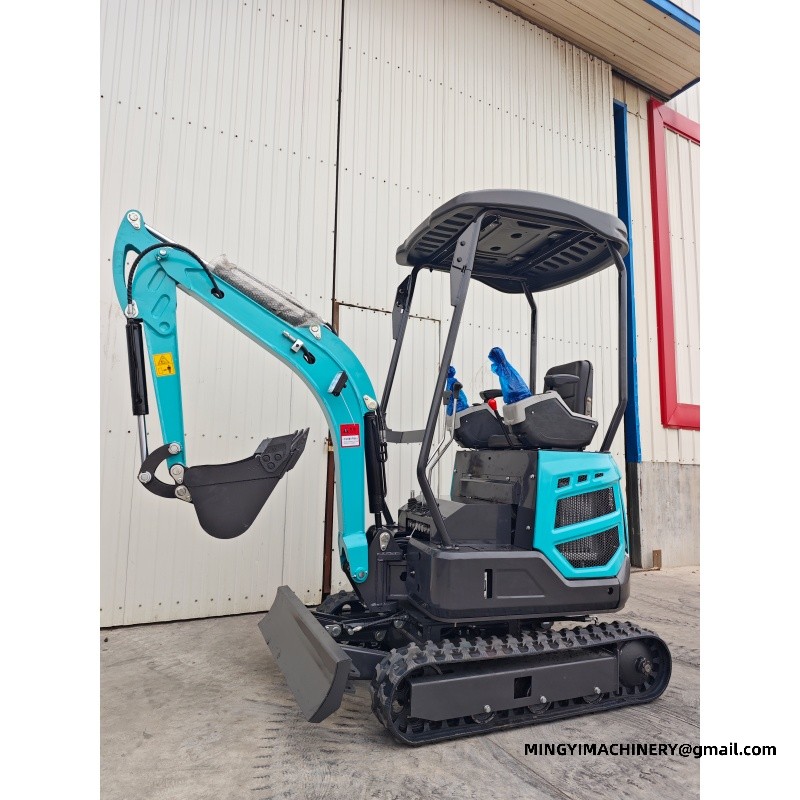
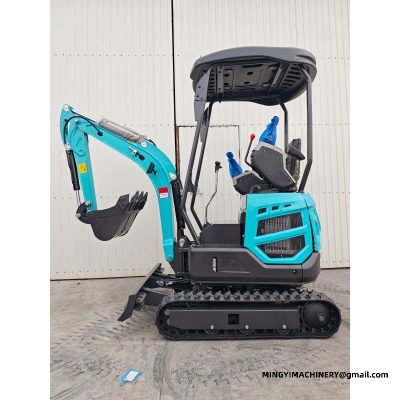
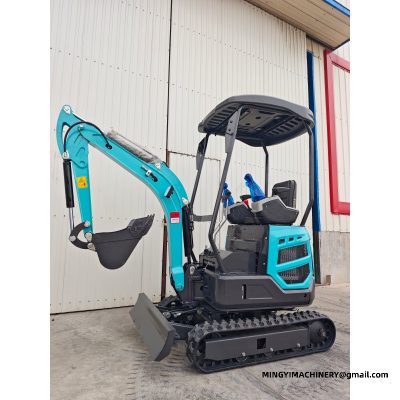
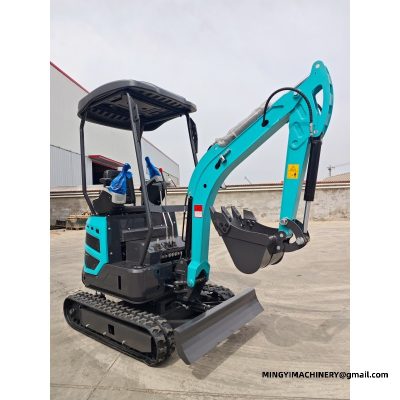
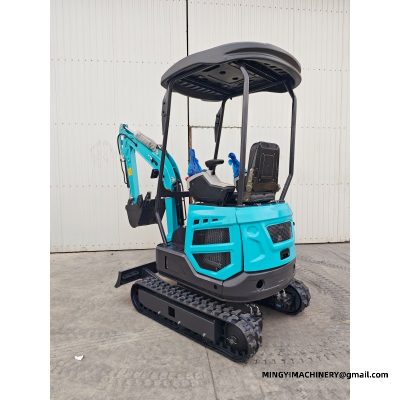
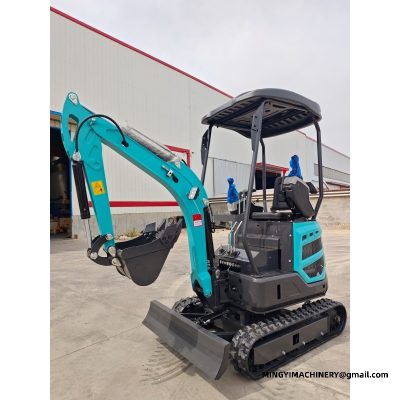
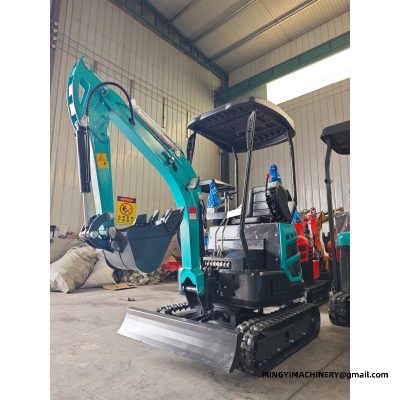
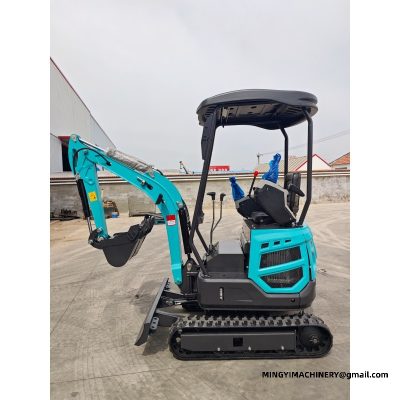
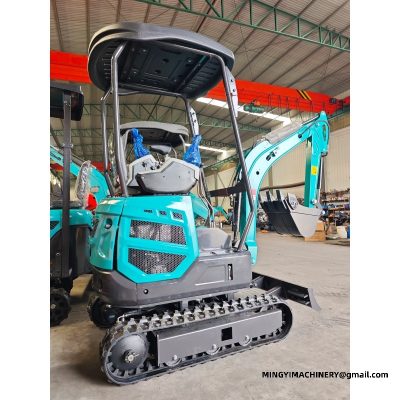
he ideal machine for residential pool builders. Easily navigates standard backyard gates to dig clean, deep pools without damaging existing property walls.
Digging a swimming pool in a back garden calls for a machine that can reach the plot, open a hole of the right shape and depth, and remove the spoil without wrecking the surrounding ground. MINGYI builds compact excavators used for residential pool excavation.
Access is usually the hardest part of the job, since the machine has to pass a house, a fence or a narrow side entrance before any digging starts.
Access and excavation for a backyard pool
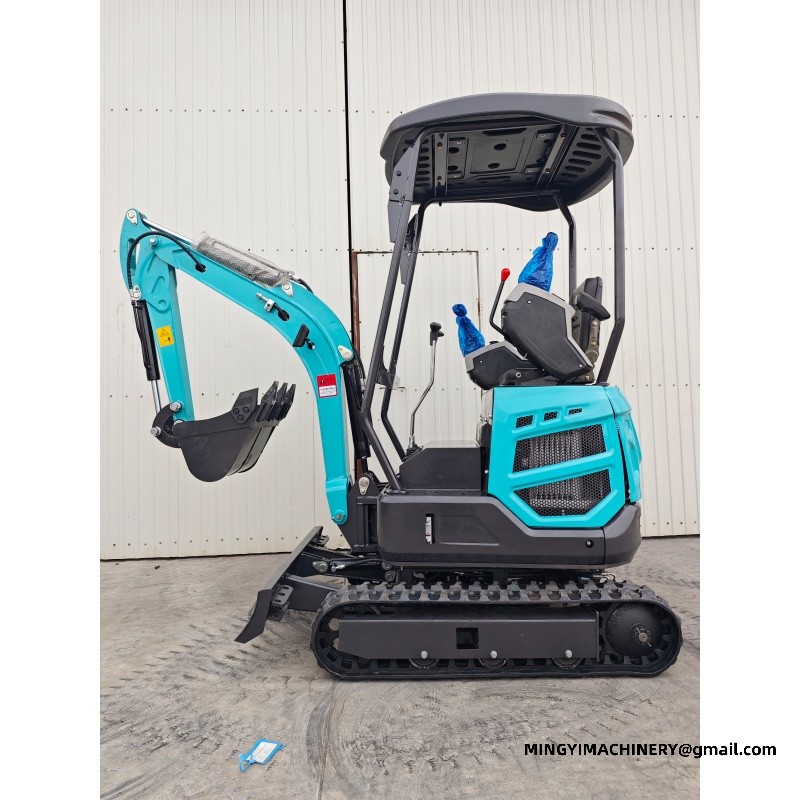
The working width of the machine is checked against the access route first, because if it cannot reach the plot nothing else matters. A compact excavator on rubber tracks can pass through a side gate and cross a finished lawn or drive with less damage.
Once on site the machine digs the pool shell to the shape and depth the plan sets out, working in stages and loading the spoil into a skip or onto a stockpile. A swing boom helps shape the walls and reach into corners.
Shaping the pool and clearing the spoil
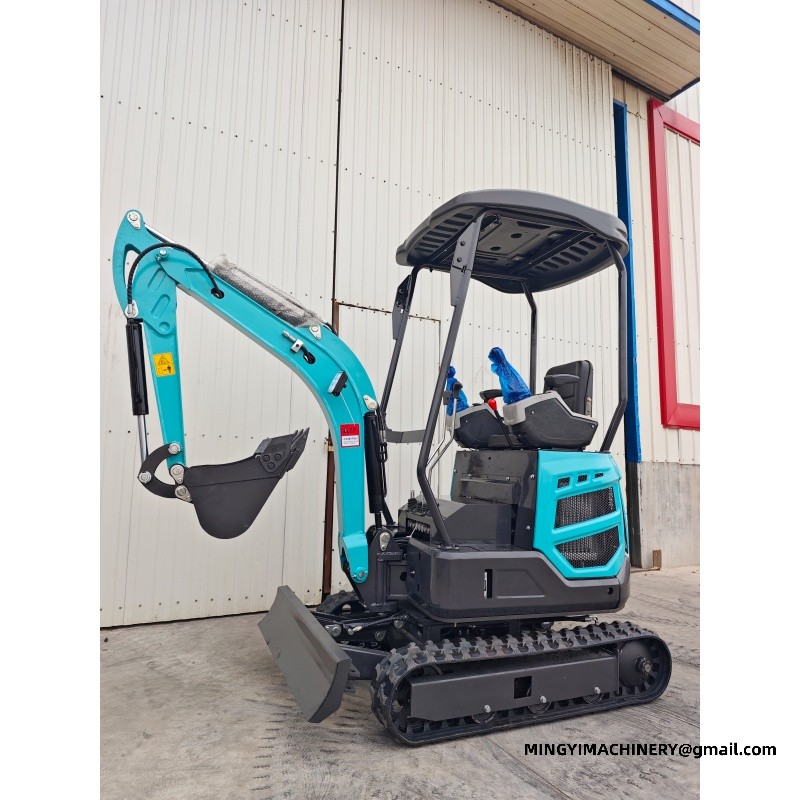
The pool walls and floor are cut to the levels shown on the drawing, so controlled digging matters more than speed. A bucket of the right width shapes the walls, and the same machine lifts and loads the excavated material away.
Where the pool sits on hard ground, a breaker hammer can open the rock or concrete before the bucket follows. MINGYI confirms the attachments with the buyer when the machine is ordered.
For swimming pool excavation, tell MINGYI the access route, the pool size and the ground, and the factory will confirm a mini excavator and attachments that fit the plot.
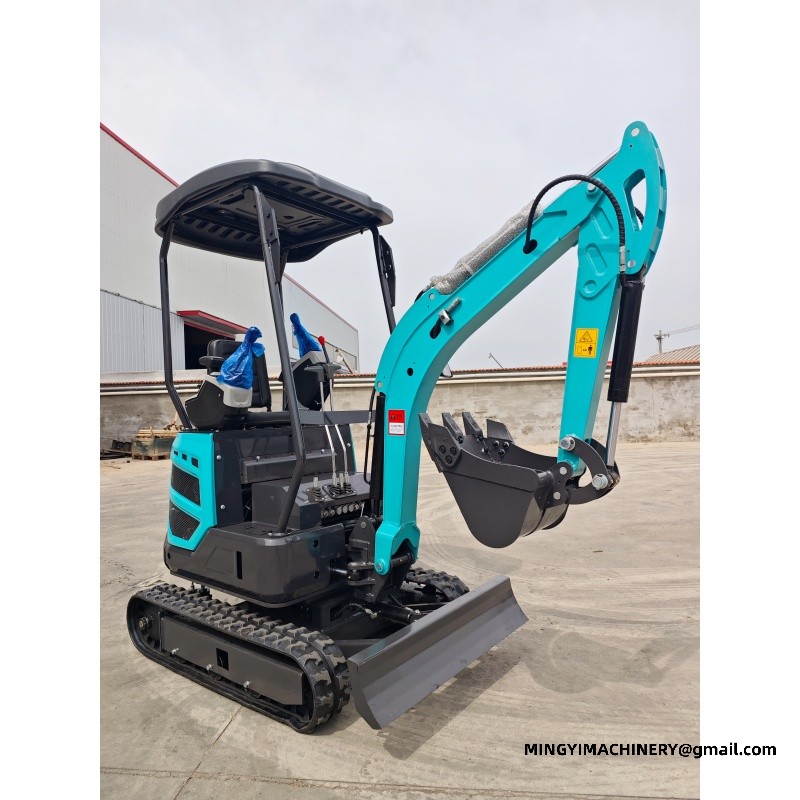
Noise, dust and working near occupied buildings Enclosure and machine condition both reduce noise. The excavator with intact panels, sound mounts and a maintained exhaust is measurably quieter than the same machine with loose guards, and the difference matters on restricted sites. Dust control is often part of the same conversation. Water, timing and work sequence reduce what leaves the site, and agreeing them in advance keeps this class of machine working rather than stopped after a complaint. Quick coupler practice on mini excavator for swimming pool digging A quick coupler is the single option that changes how a machine is used day to day. Fitted to the unit in daily use, it turns an attachment change from a two-person workshop job into a task the operator does alone in minutes. For a fleet that shares attachments between machines, a common coupler standard matters more than the coupler brand. A machine of this size that picks up the same tools as the larger machines keeps the rack usable across the yard. Acceptance checks when a mini excavator for swimming pool digging arrives Delivery day is the best time to find a problem. Checking the specification against the order, the fluid levels, the fasteners and any transport damage while the machine itself is still on the trailer is faster than claiming later. Documentation should arrive with the machine. Parts list, service schedule and any certificates for the equipment on site are what the workshop needs later, and they are much easier to obtain at delivery than in month six. Attachments that turn mini excavator for swimming pool digging into several machines The base machine is a carrier; the tool on the end of the arm decides the task. The model in question fitted with a toothed bucket digs, and the same machine with a breaker, an auger or a grab does work that would otherwise need a second unit on site. Most of the daily variety on the machine in that duty comes from the attachment rack rather than from the machine itself. Bucket, breaker, auger, ripper, rake and grab cover the large majority of the work a contractor will see. Working near live services with mini excavator for swimming pool digging The risk on utility work is not machine power but machine placement. The unit on the job that fits the working width leaves the surrounding ground undisturbed, which keeps the trench stable and the reinstatement small. Utility crews specify a machine built for the work with a narrow bucket and good visibility for exactly this reason: the machine has to stop at the service, not at the edge of the operator's view. Getting mini excavator for swimming pool digging through a narrow gap The first question on most job lists is whether the machine can reach the work at all. The equipment in service is chosen against the narrowest point on the route - a garden gate, a doorway, a gap between two walls - because a machine that arrives and then cannot pass loses a day, not an hour. Access decides the machine before output does. With the excavator the limiting dimension is usually the widest point on the way in, so measuring the gate, the corridor and the turning space first saves a wasted delivery and a second visit. Working on slopes and uneven ground with this class of machine Ground that looks level often is not. The unit in daily use crossing a filled trench, a soft edge or a hidden void behaves differently from one on undisturbed ground, and those are the places worth walking before driving. Planning the direction of travel helps. Working so that the A machine of this size is stable under load and not required to turn on a slope is a decision made before the job starts, not a correction made during it. Canopy or enclosed cab on the equipment on site A canopy keeps the machine light and the operator aware of the surroundings, which suits short jobs in warm weather. A fully enclosed cab is specified where rain, dust or cold are part of the working year, and it can be added to the machine itself as a retrofit rather than only at build time. The cab decision follows the climate and the hours. Operators working a full shift in the model in question benefit from a sealed cab with wipers and heating; operators stepping on and off every few minutes usually prefer the canopy for the visibility and the quick exit. Landscaping and ground care with the machine in that duty Grass cutting heads, rakes and tillers extend the unit on the job into ground care. The same carrier that digs a border in spring can cut and clear the same area later in the season. On soft landscape work the surface is the constraint. A machine built for the work on rubber tracks crosses turf without stripping it, which is why the same jobs are not given to a wheeled machine. Road and paving work for the equipment in service Road repair generates short, interrupted jobs - a patch, a drainage connection, a kerb line. The excavator is economical here because it travels on a small trailer and starts working minutes after arriving. Breaking out a failed slab and backfilling the same hole in one visit is normal work for this class of machine. The breaker and the bucket come off the same coupler, so the road is reopened the same day. Specification data for the unit in daily use Buyers comparing a machine of this size usually start from four numbers - weight, digging depth, reach and transport width - because those are the ones that decide whether the machine can be delivered and whether it can do the job once it is there. These are the reference figures for the equipment on site. MINGYI confirms the final build sheet, including engine and attachment choices, against the destination and the job list before production. Interior demolition is an access and a weight question. The machine itself that fits through a doorway and works on a suspended floor does jobs that would otherwise be done by hand or by a larger machine that cannot enter. Breaking out a floor slab, a wall footing or a concrete step is routine work for the model in question with a breaker. The machine is small enough to work inside and heavy enough to run the tool at a practical rate.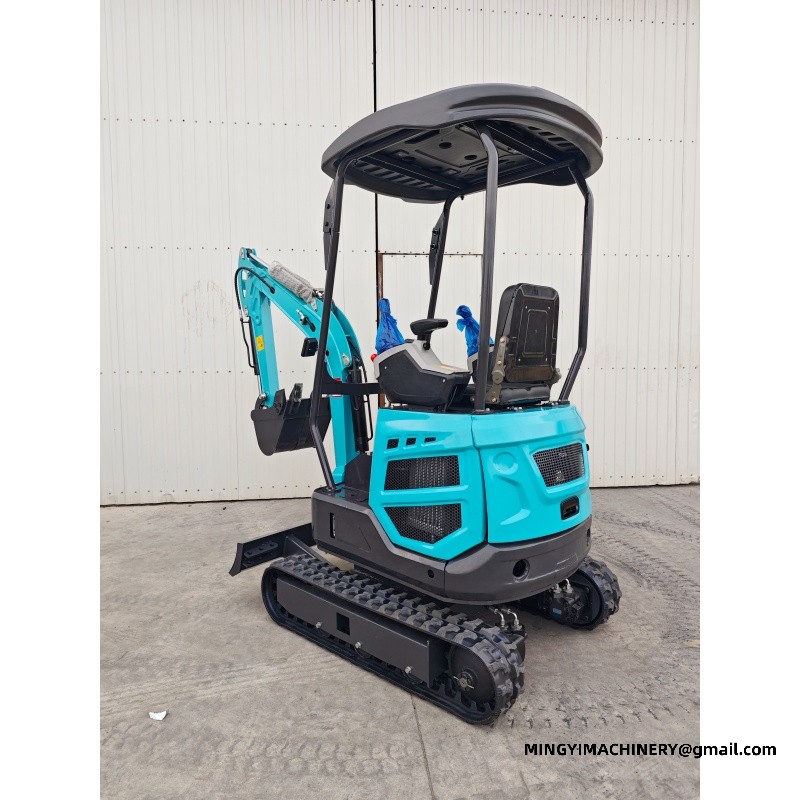
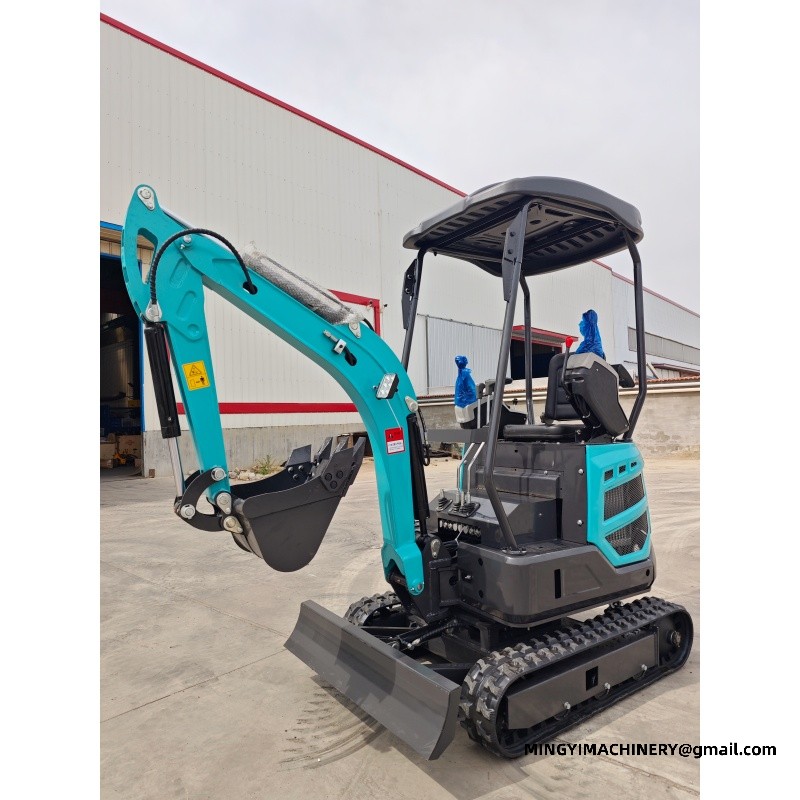
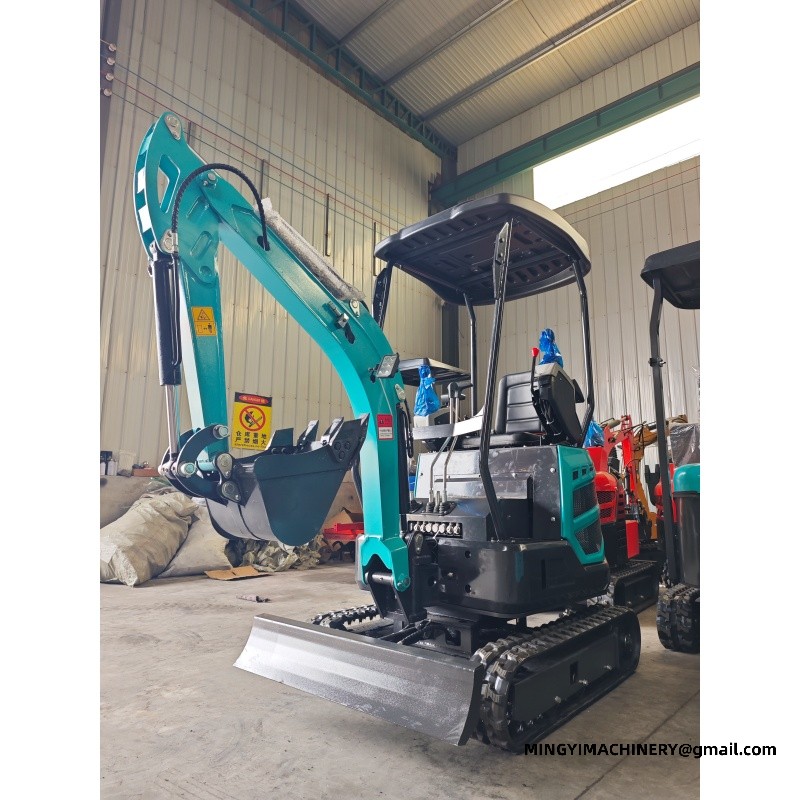
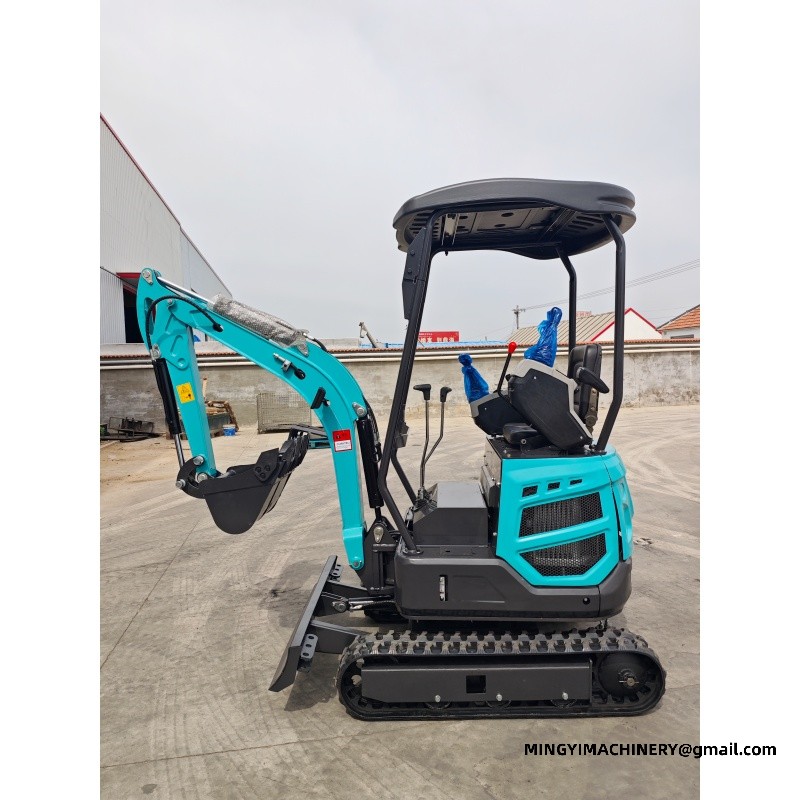
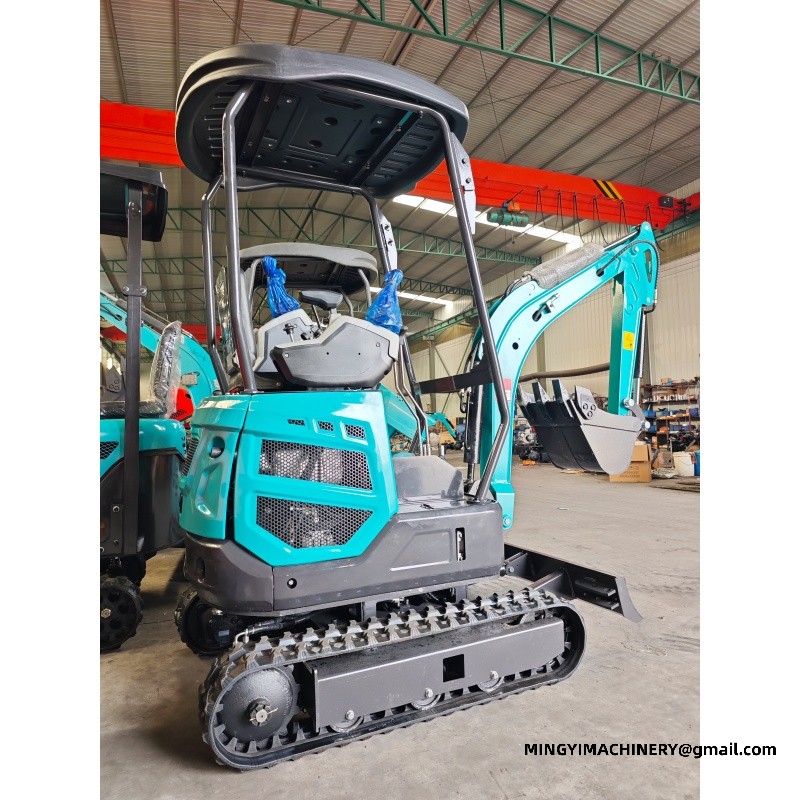
Reference specification — mini excavator range 20-1W 20-3W 15L 20-2L Operating weight 1800 kg (3968.32 lb) 1900 kg (4188.78 lb) 1400 kg (3086.47 lb) 1900 kg (4188.78 lb) Transport size (L×W×H) 2550 × 1100 × 2200 mm 2550 × 1100 × 2200 mm 2200 × 930 × 2250 mm 2600 × 1300 × 2344 mm Max digging depth 1800 mm (70.87 in) 1800 mm (70.87 in) 1700 mm (66.93 in) 2100 mm (82.68 in) Max digging height 2820 mm (111.02 in) 2820 mm (111.02 in) 2750 mm (108.27 in) 2880 mm (113.39 in) Max dumping height 2050 mm (80.71 in) 2050 mm (80.71 in) 1960 mm (77.17 in) 2100 mm (82.68 in) Max digging radius 3050 mm (120.08 in) 3050 mm (120.08 in) 2900 mm (114.17 in) 3215 mm (126.57 in) Max digging distance 2300 mm (90.55 in) 2300 mm (90.55 in) 2300 mm (90.55 in) 2460 mm (96.85 in) Minimum turning radius 1450 mm (57.09 in) 1450 mm (57.09 in) 1450 mm (57.09 in) 1587 mm (62.48 in) Travel speed 5 km/h (3.11 mph) 5 km/h (3.11 mph) 3 km/h (1.86 mph) 5 km/h (3.11 mph) Gradeability 30° 30° 30° 30° Fuel consumption 2-3 L/h (0.528—0.793 gal) 2-3 L/h (0.528—0.793 gal) 1-1.3 L/h (0.264—0.343 gal) 2-3 L/h (0.528—0.793 gal) Fuel tank capacity 16 L (4.23 gal) 16 L (4.23 gal) 10 L (2.64 gal) 16 L (4.23 gal) Hydraulic oil tank 18 L (4.76 gal) 18 L (4.76 gal) 16 L (4.23 gal) 18 L (4.76 gal) Dozer blade lift height 180 mm (7.09 in) 180 mm (7.09 in) 180 mm (7.09 in) 180 mm (7.09 in) Dozer blade drop depth 210 mm (8.27 in) 210 mm (8.27 in) 210 mm (8.27 in) 210 mm (8.27 in)
Q. Who chooses the machine in that duty?
A. Civil small-works crews need one compact machine that digs, lifts and places across a full shift of varied tasks, often next to live traffic. The quick coupler and a planned trailer keep the crew self-sufficient, with no traffic management beyond cones. The unit on the job is one of the pages buyers land on when comparing machines for swimming pool digging, and the factory treats it as a specification conversation rather than a catalogue line.
Q. How does one machine cover a day of small municipal works?
A. By swapping attachments at the kerbside: bucket to dig, grab to place kerbs, compaction wheel to reinstate. The coupler and a planned trailer keep the crew self-sufficient all shift.
Q. How do I get a specification?
A. Send the model, the destination and the attachment list by email or LINE - the channels listed just below this section. The reply covers the specification, lead time, packing and freight in one document, with the swimming pool digging build sheet attached.
Pre-delivery inspection before a machine built for the work leaves the shop
A machine should be inspected while it is still on our floor rather than after it lands. For the equipment in service that means the engine is run to temperature, the hydraulics are cycled through full travel, and every function is checked against the build sheet before the crate is closed.
Cold weather and winter care for the excavator
Starting is only the first problem. Until this class of machine reaches working temperature the hydraulic response is slower and the seals are stiffer, and warming the machine before asking for full output avoids unnecessary strain.
Wear items and spares worth holding for the unit in daily use
The parts that stop a machine are rarely the parts that are hardest to find. Filters, belts, seals and the ground engaging tools on a machine of this size are easy to hold and slow to replace, which is why they belong on the shelf rather than on an order.
E-mail : sales@mingycn.com
LINE ( ID ): mingyicn
Wear limits and replacement points on mini excavator for swimming pool digging
Track sag, tyre tread, cutting edges and bucket teeth all have stated limits, and the figures in the manual are the ones to work from.
Measuring at the same place each time turns a guess into a trend, and a trend is what tells a workshop when to order.
Related pages
cable trenching mini excavator · heavy lift compact excavator · Construction Wheel Loader: Dump Height Comes Before Capacity · Mini Excavators









