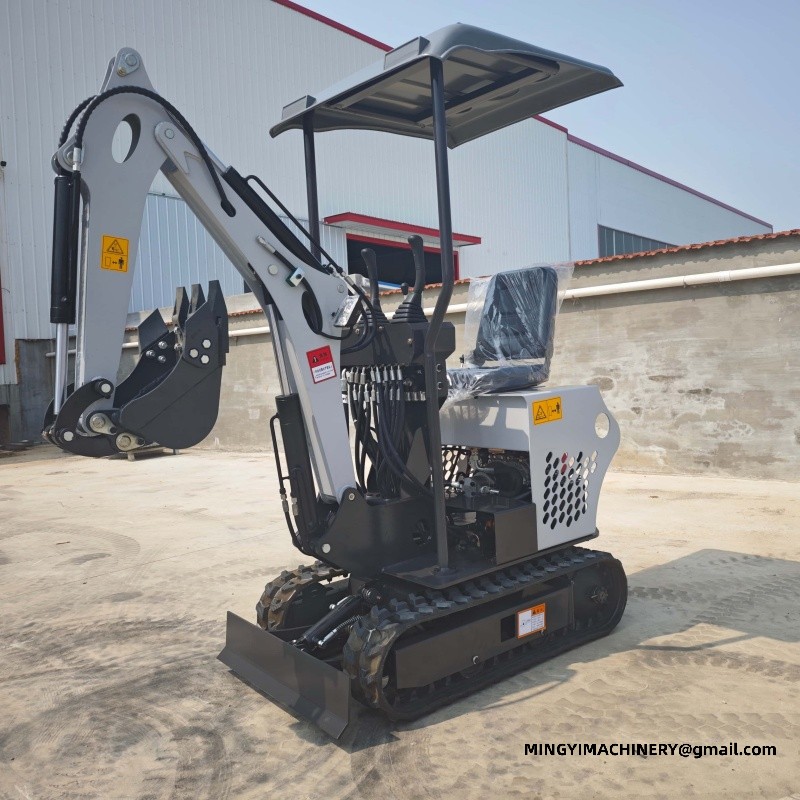
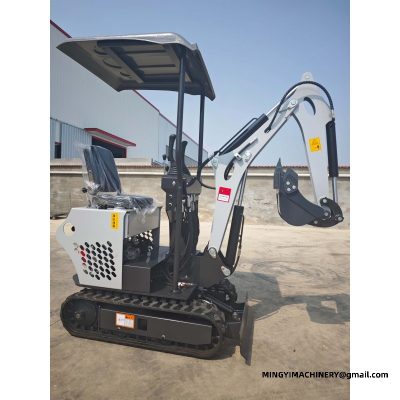
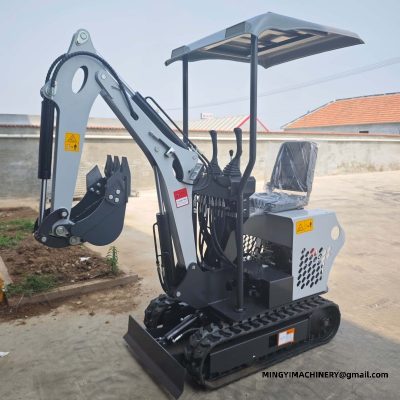
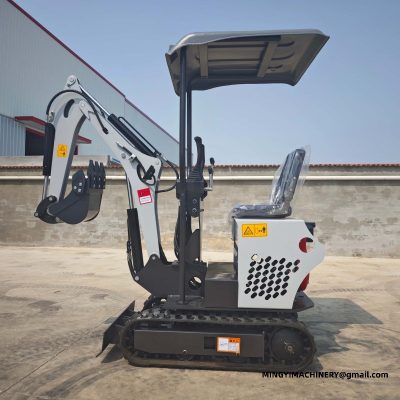
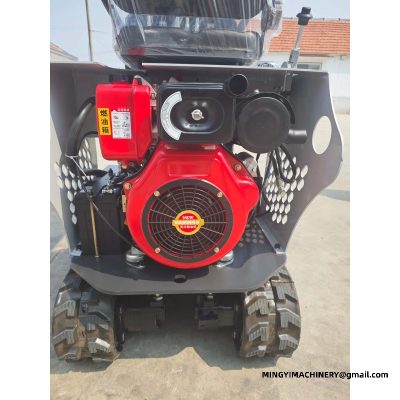
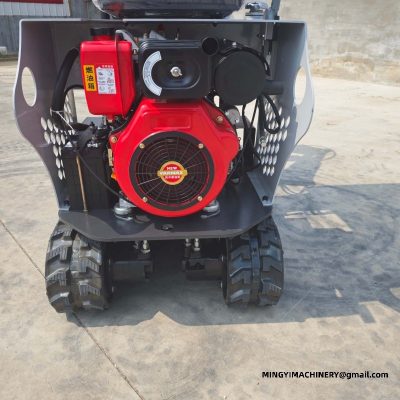
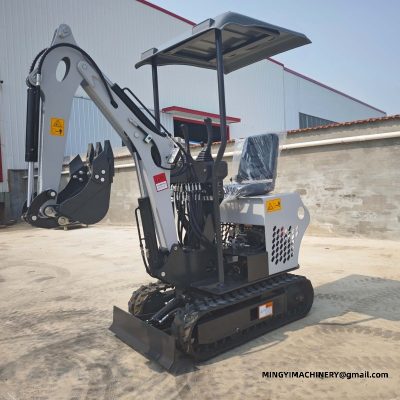
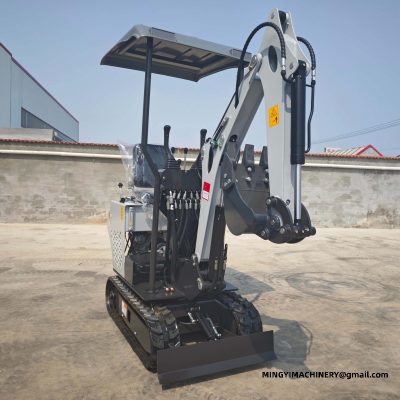
Buyers supplying the Australian market order mini excavators against local conditions: strong sun, wide residential blocks and long distances between jobs. MINGYI builds machines to order and configures them for the site conditions stated at purchase.
For Australian conditions the specification conversation usually covers cab protection and cooling, track choice for lawns and paved surfaces, and engine options suited to the buyer's support arrangements. This page sets out how those choices are made.
Configuring for Australian site conditions
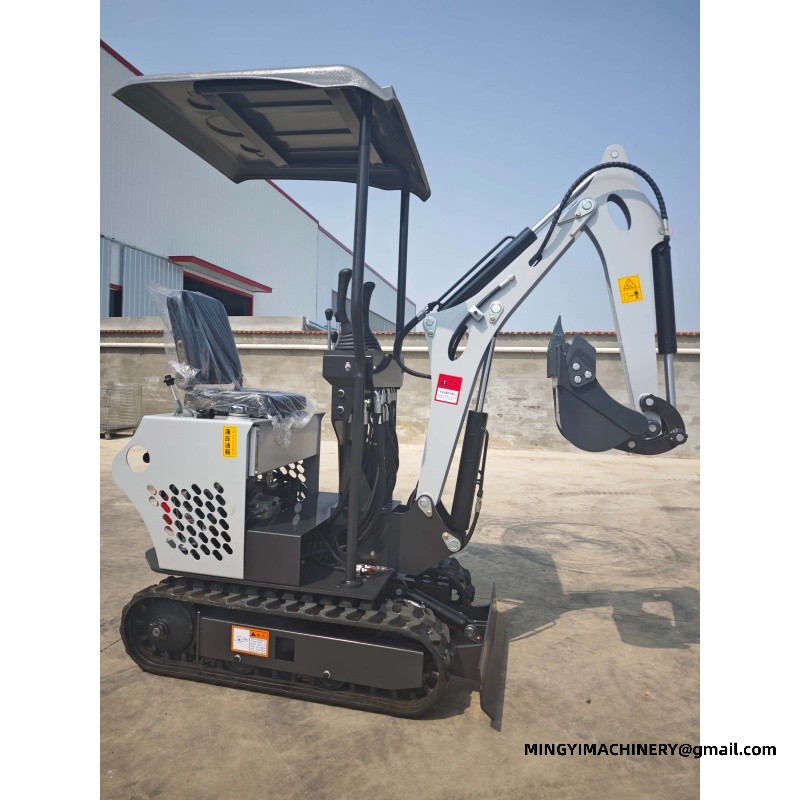
Sun and heat push many Australian orders toward enclosed cabins with air conditioning, which also filter dust on dry inland sites. Canopy builds remain popular where machines move constantly and weight matters.
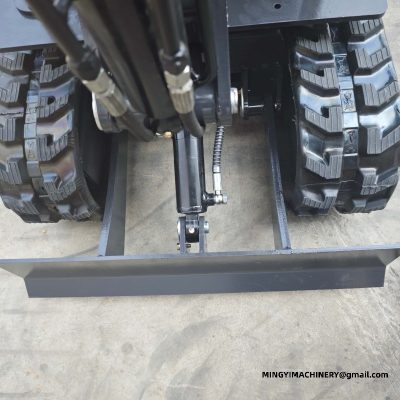
Residential landscaping and pool work argues for rubber tracks that cross driveways and turf without marking them. Rural buyers doing fencing, dam cleaning and access work more often specify steel tracks with rubber blocks for harder ground.
Ordering from MINGYI for the Australian market
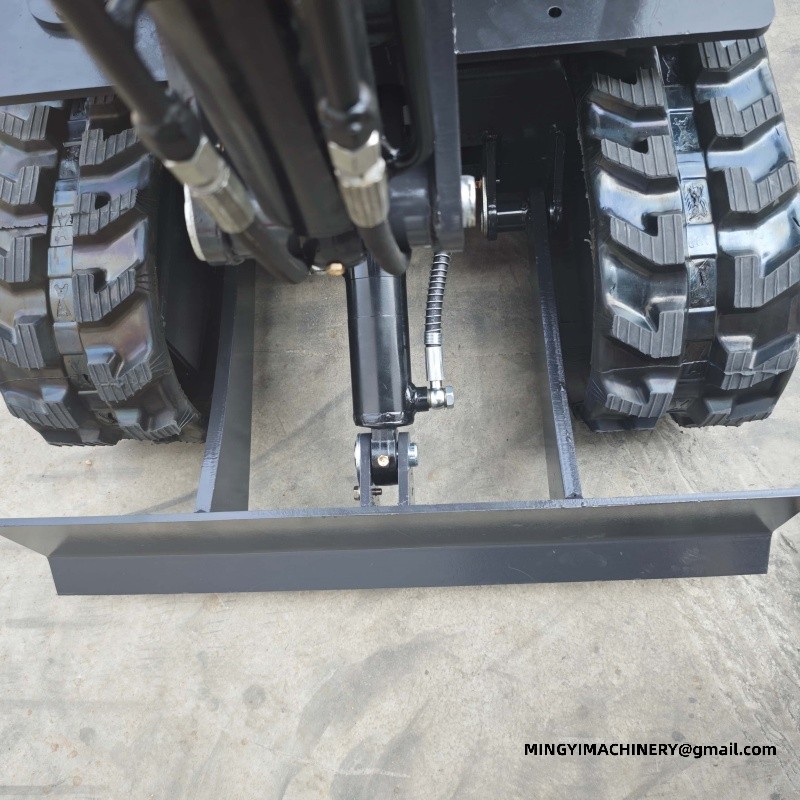
The order records the engine option, cab format, track type and hydraulic configuration against the build, and the machine is produced to that sheet. Buyers should state the intended work mix, urban landscaping, rural maintenance or contracting, so the specification follows the duty.
Fleet buyers can standardise their specification across repeated orders, which simplifies parts holding and operator familiarisation. Spare parts and service information accompany every machine shipped.
Australian conditions reward a machine specified for sun, space and surface protection. Set out the work the machine will face, and the build follows.
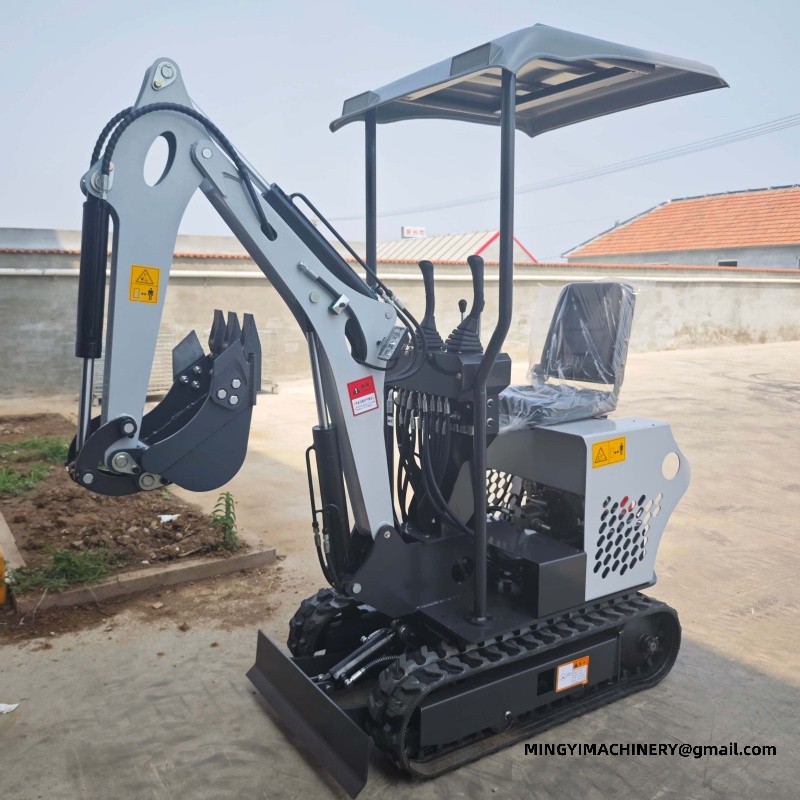
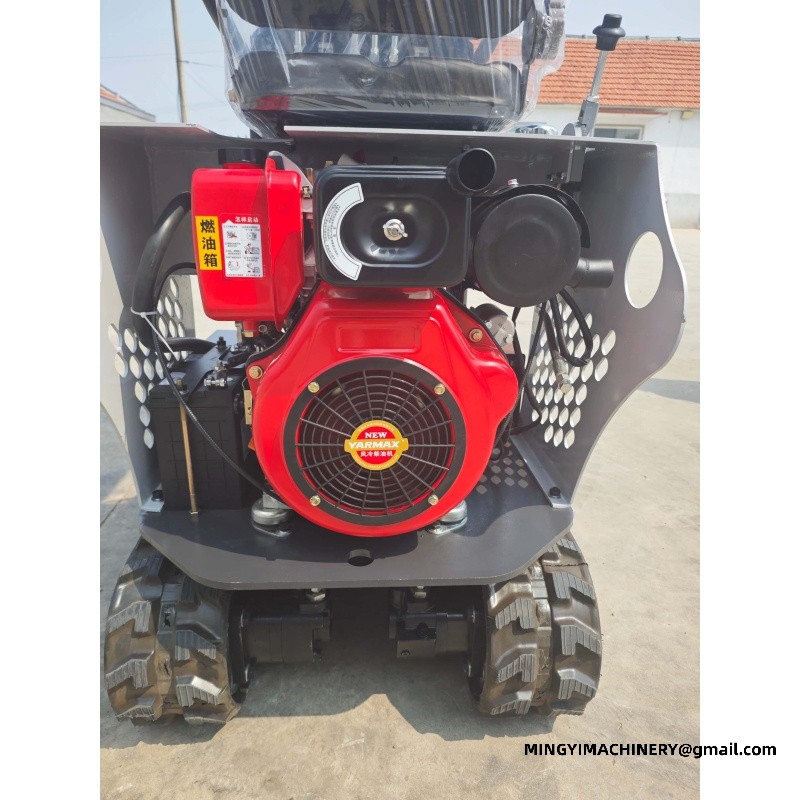
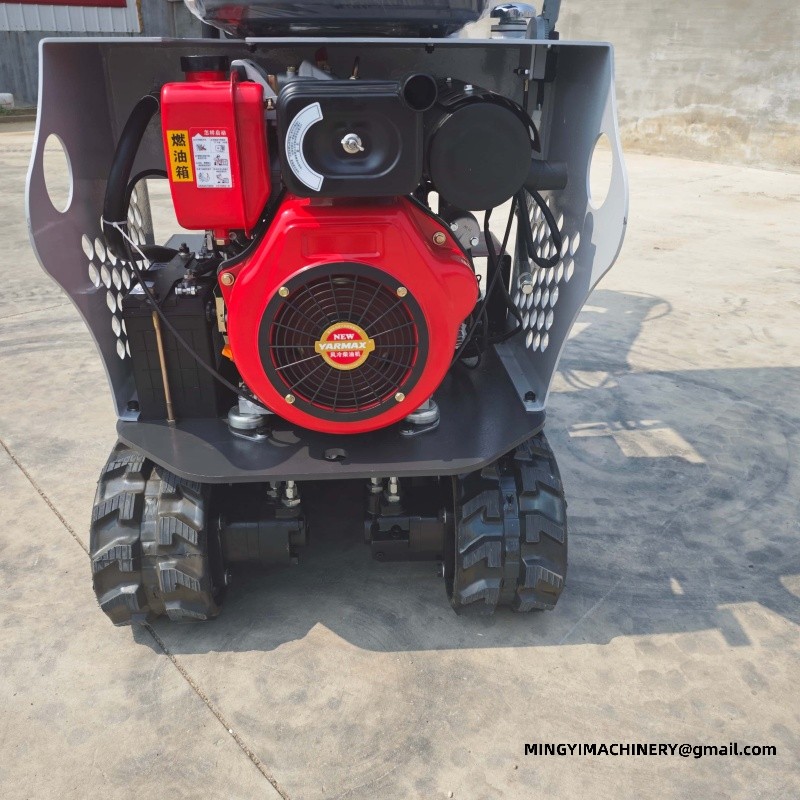
Hiring versus owning a mini excavator for australian sites The choice follows the hours. Work that fills a few weeks a year is usually better hired, while the excavator that would be on site most weeks starts to justify ownership once the transport and booking time is counted. Ownership brings obligations that hiring does not. Storage, servicing, insurance and an operator are the items to set against the hire rate before deciding which way this class of machine should be supplied. Trenching work with mini excavator for australian sites Service trenches are the most common reason the unit in daily use is hired. Water, sewage, cable and gas runs are narrow, shallow and often close to existing services, which is exactly the work a full-size machine cannot do safely. Depth control matters more on service work than speed. A machine of this size working beside live services is chosen because it can be placed precisely and stopped instantly, which is what the job actually requires. Engine options behind mini excavator for australian sites Power unit selection is settled against the service network the buyer already uses. MINGYI offers Kubota D722, Kubota D902, YANMAR, Changchai, Laidong, Runtong, YARMAX, Youpu 2V80 and Youpu 195, so a fleet running one brand of engine can keep the same filters, the same parts supplier and the same mechanic. Engine choice is also an emissions and documentation question for some markets. Listing the available units with the equipment on site enquiry lets the factory confirm what can be supplied and documented for the destination country. Operator technique for mini excavator for australian sites The second habit is tool discipline. Running the machine itself with the right bucket width for the trench means less spoil, less reinstatement and a cleaner job than a wide bucket and a lot of trimming. Stability is the third. The model in question working across the tracks rather than over the corners keeps the machine steady and the undercarriage loaded evenly, which shows up as track life at the end of the season. Running mini excavator for australian sites in a rental fleet Rental fleets buy for utilisation, not for a single job. The machine in that duty with a quick coupler and a common attachment standard is hired more often because it suits more of the calls that come in. The specification that rents best is usually the simplest one to explain at the counter. The unit on the job with rubber tracks, a canopy and a coupler covers the majority of weekend and short-term hires. Attachments that turn mini excavator for australian sites into several machines The base machine is a carrier; the tool on the end of the arm decides the task. A machine built for the work fitted with a toothed bucket digs, and the same machine with a breaker, an auger or a grab does work that would otherwise need a second unit on site. Attachment lists are best written before delivery. Specifying the equipment in service with the tools the job list needs avoids the work and delay of adding hydraulics later, and a quick coupler makes the swap a few minutes instead of a workshop job. Hydraulic circuits on the excavator Auxiliary hydraulic lines are what let a machine drive a tool rather than only a bucket. This class of machine specified with the right circuits and flow runs a breaker or an auger without an add-on power pack bolted to the frame. Hydraulic specification is easier to settle at build time than to correct later. The unit in daily use delivered without auxiliary lines can still dig, but every additional tool becomes a retrofit project. Interior and light demolition with a machine of this size Breaking out a floor slab, a wall footing or a concrete step is routine work for the equipment on site with a breaker. The machine is small enough to work inside and heavy enough to run the tool at a practical rate. Dust, debris clearance and floor loading all argue for a compact machine indoors. The machine itself spreads its weight over a wider track footprint than a wheeled machine of similar capacity. Working the model in question through the seasons Seasonal planning smooths the workload. Machines that are busy for a few months and idle for the rest benefit from a service slot in the quiet period, and the machine in that duty prepared in the off-season starts the busy months reliably. Heat and dust are as limiting as rain. Air intake condition and cooling cleanliness decide how the unit on the job behaves in a dry season, and both are checked in a minute rather than repaired later. Road and paving work for a machine built for the work Road repair generates short, interrupted jobs - a patch, a drainage connection, a kerb line. The equipment in service is economical here because it travels on a small trailer and starts working minutes after arriving. Patching and reinstatement favour a machine that can work in a lane closure. The excavator occupies less road than a full-size excavator, which reduces the traffic management needed and the length of the closure. Working near live services with this class of machine Digging near water, gas and cable is a precision job. The unit in daily use is used here because the operator can work in short controlled cuts and because the machine can be positioned without driving over the run being exposed. Utility crews specify a machine of this size with a narrow bucket and good visibility for exactly this reason: the machine has to stop at the service, not at the edge of the operator's view. Specifying the equipment on site against a job list The practical way to specify is to write the job list first: the narrowest access, the deepest trench, the heaviest tool and the surfaces the machine must cross. The machine itself is then matched to those four numbers. Useful information to send with an enquiry includes working width, required digging depth, ground conditions and the attachment set. Those four items let the factory specify the model in question that fits rather than a generic build. Specification data for the machine in that duty The figures below are the factory figures for the models most often matched to the unit on the job. They are the numbers to check against the site: the depth the work needs, the reach from one position, and the width of the narrowest point on the route in. Every value shown is as built for a machine built for the work; options such as cab, side swing or a telescopic undercarriage change the transport dimensions and are confirmed at order stage. Work near housing or occupied premises brings constraints that open sites do not. Start times, exhaust condition and how often the equipment in service needs to reverse are the practical limits that neighbours notice. Dust control is often part of the same conversation. Water, timing and work sequence reduce what leaves the site, and agreeing them in advance keeps the excavator working rather than stopped after a complaint.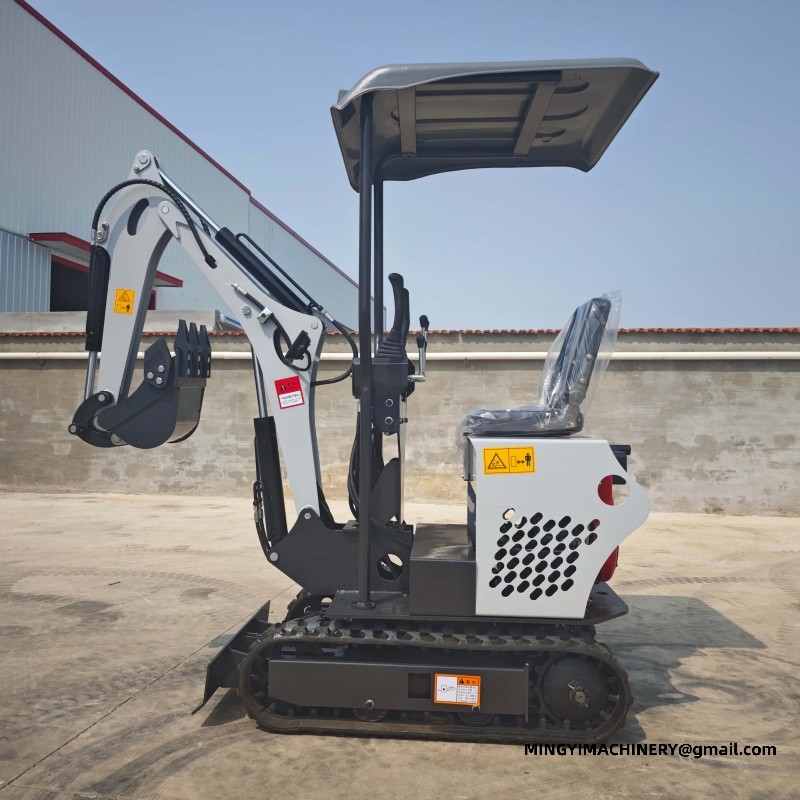
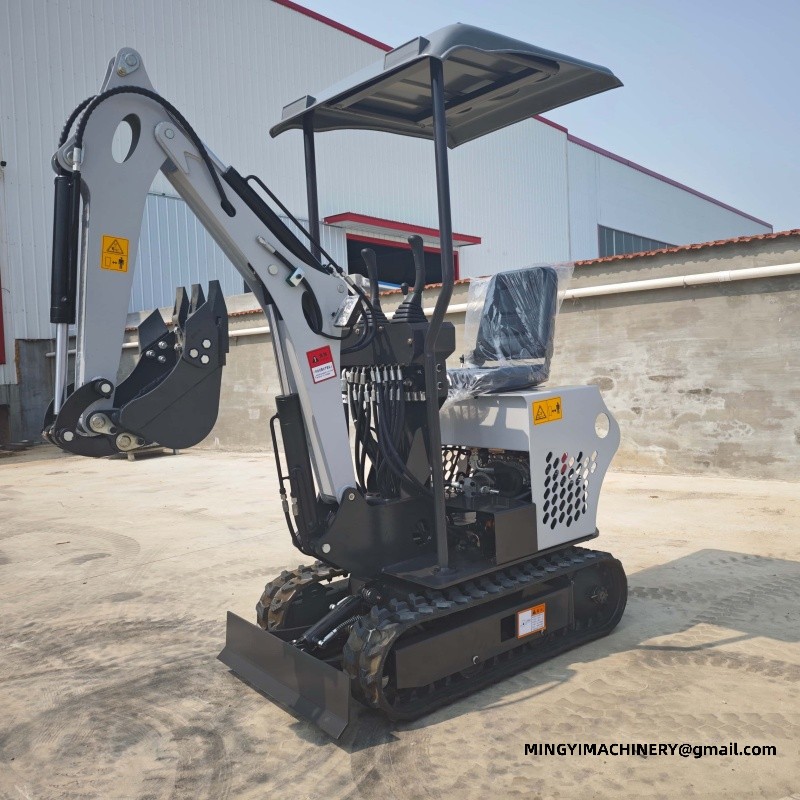
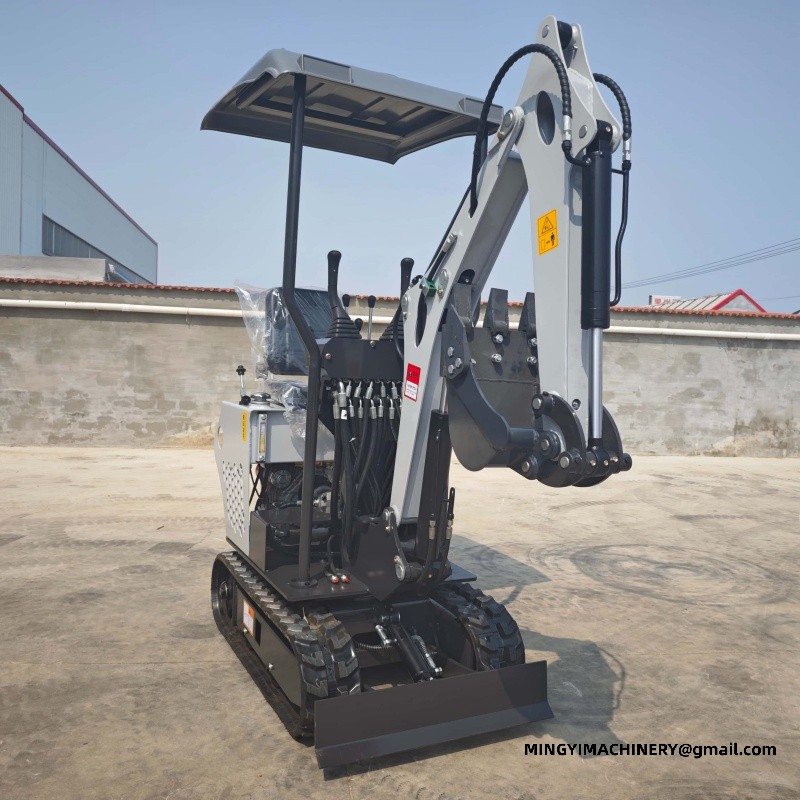
Reference specification — mini excavator range 12W 15W 09L 20-2L Operating weight 1200 kg (2645.55 lb) 1400 kg (3086.47 lb) 1100 kg (2425.08 lb) 1900 kg (4188.78 lb) Transport size (L×W×H) 2200 × 930 × 2250 mm 2200 × 930 × 2250 mm 2300 × 720 × 1870 mm 2600 × 1300 × 2344 mm Max digging depth 1630 mm (64.17 in) 1630 mm (64.17 in) 1400 mm (55.12 in) 2100 mm (82.68 in) Max digging height 2750 mm (108.27 in) 2750 mm (108.27 in) 2800 mm (110.24 in) 2880 mm (113.39 in) Max dumping height 1960 mm (77.17 in) 1960 mm (77.17 in) 1880 mm (74.02 in) 2100 mm (82.68 in) Max digging radius 2900 mm (114.17 in) 2900 mm (114.17 in) 2490 mm (98.03 in) 3215 mm (126.57 in) Max digging distance 2100 mm (82.68 in) 2100 mm (82.68 in) 2000 mm (78.74 in) 2460 mm (96.85 in) Minimum turning radius 1300 mm (51.18 in) 1300 mm (51.18 in) 1400 mm (55.12 in) 1587 mm (62.48 in) Travel speed 3 km/h (1.86 mph) 3 km/h (1.86 mph) 3 km/h (1.86 mph) 5 km/h (3.11 mph) Gradeability 30° 30° 30° 30° Fuel consumption 1-1.3 L/h (0.264—0.343 gal) 1-1.3 L/h (0.264—0.343 gal) 1-1.3 L/h (0.264—0.343 gal) 2-3 L/h (0.528—0.793 gal) Fuel tank capacity 10 L (2.64 gal) 10 L (2.64 gal) 8 L (2.11 gal) 16 L (4.23 gal) Hydraulic oil tank 16 L (4.23 gal) 16 L (4.23 gal) 16 L (4.23 gal) 18 L (4.76 gal) Dozer blade lift height 180 mm (7.09 in) 180 mm (7.09 in) 180 mm (7.09 in) 180 mm (7.09 in) Dozer blade drop depth 210 mm (8.27 in) 210 mm (8.27 in) 210 mm (8.27 in) 210 mm (8.27 in)
Q. What are the class of machine?
A. Buying from the factory shortens the chain between the production line and the working machine, and that is the whole idea of factory-direct supply. Mixed-model orders and staged deliveries are routine for dealer and importer programmes, with documents and inspection arranged with the order. Read the unit in daily use together with the engine, track and attachment pages: jobs around australian sites are decided by how those choices line up, not by any single number on the sheet.
Q. How are machines packed and shipped?
A. Complete units travel in containers on timber cradles; CKD packing parts the machine for volume. Documents, marks and routing follow the order, and the destination port decides the packing plan.
Q. Which models does MINGYI build?
A. The 08, 12 and 18 models cover the 0.8 to 6 tonne class with engine, track, cab and attachment options across the range - dealer programmes can mix models in one shipment, and each australian sites machine is confirmed on its own build sheet.
Wear items and spares worth holding for a machine of this size
Wear items are predictable once the machine has settled in. After the first service interval the pattern on the equipment on site is visible, and the parts that were replaced become the parts that are kept.
Packing, loading and shipment of the machine itself
How a machine travels decides how it starts on arrival. Securing the model in question against movement, protecting the exposed cylinders and keeping the battery and fluids in the right state for the voyage all belong to the packing list.
E-mail : sales@mingycn.com
LINE ( ID ): mingyicn
Planning utilisation for mini excavator for australian sites
Utilisation is decided in the planning office as much as on site, through the number of machines, the haul route and the order of the work.
A machine booked for a job it is too large for wastes capacity, while one that is too small loses the day to rework.
Related pages
mini excavator for north america · mini excavator for european conditions · Heavy Duty Wheel Loader: Hinge Plates and Cross-Member Steel · Mini Excavators









