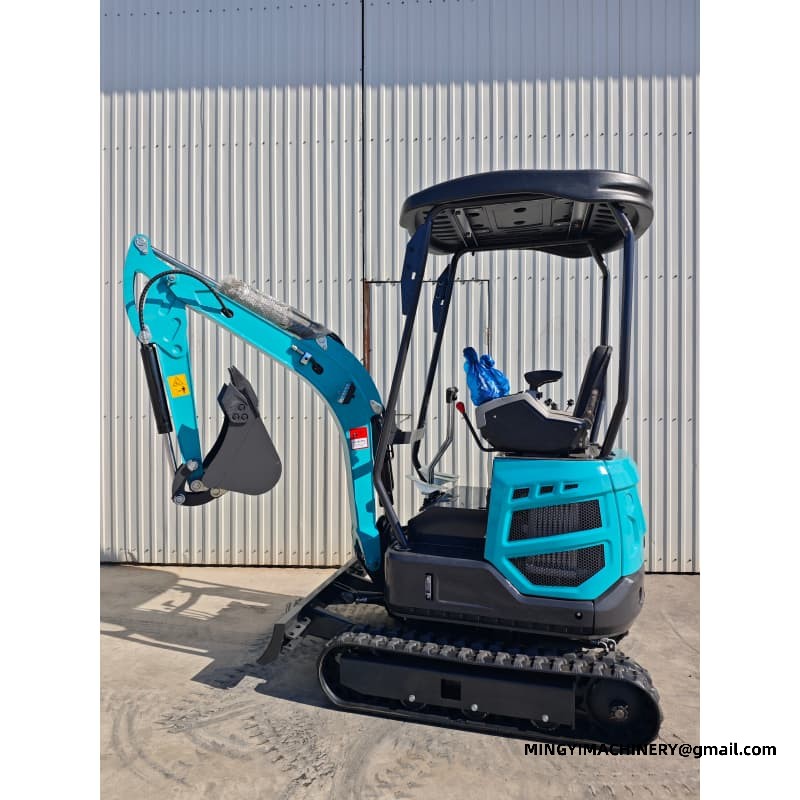
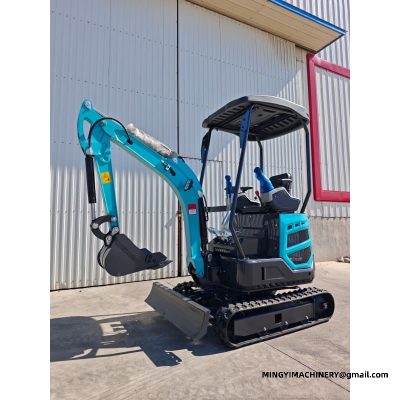
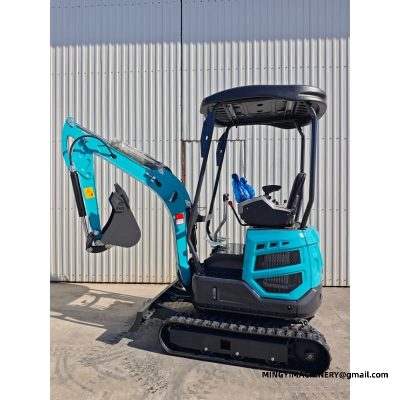
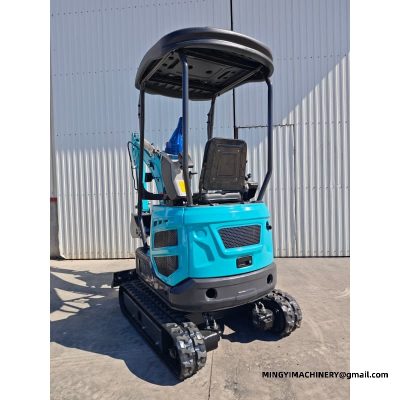
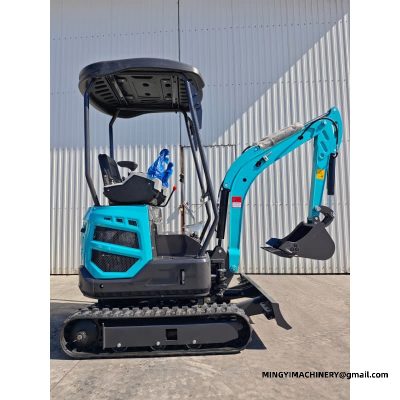
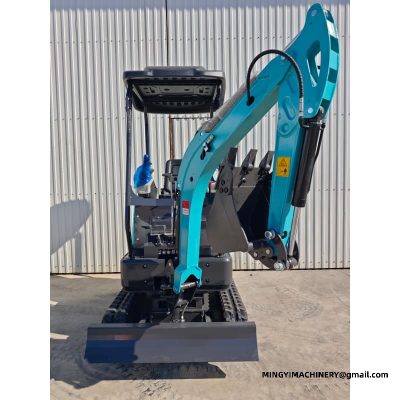
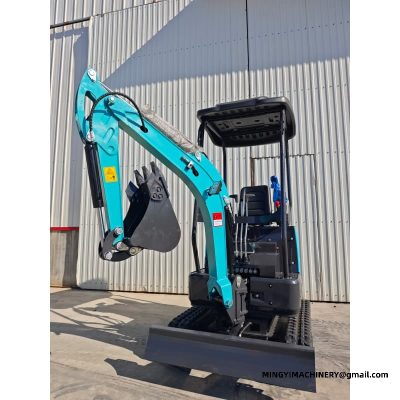
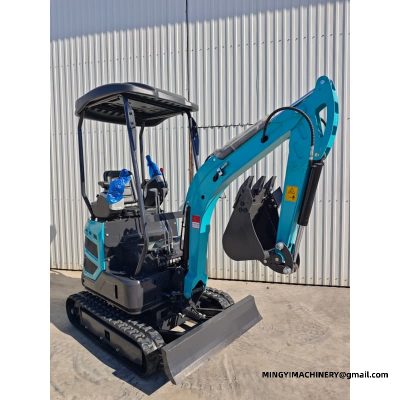
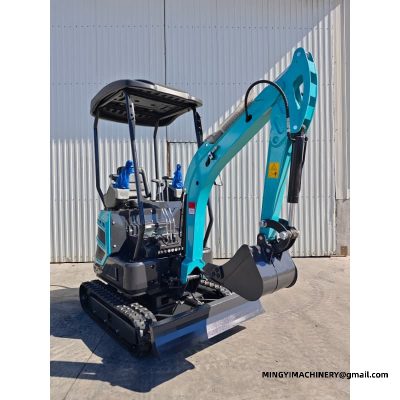
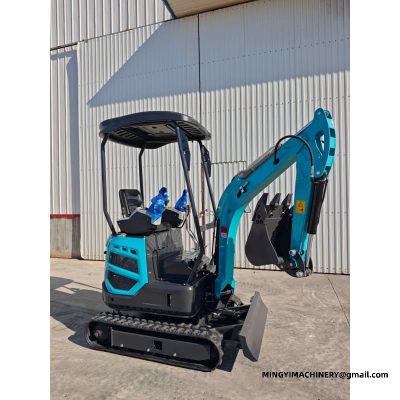
Renovation work happens around things that must not be damaged. Foundations are exposed beside an existing wall, a courtyard is dug up between a fence and a drain, and the machine has to work in a space where the neighbours are close.
MINGYI builds compact excavators to order for domestic work, with the emphasis on narrow access and careful ground contact rather than on capacity. Undercarriage and attachment set are agreed before the unit is built.
Mini excavators for household renovation
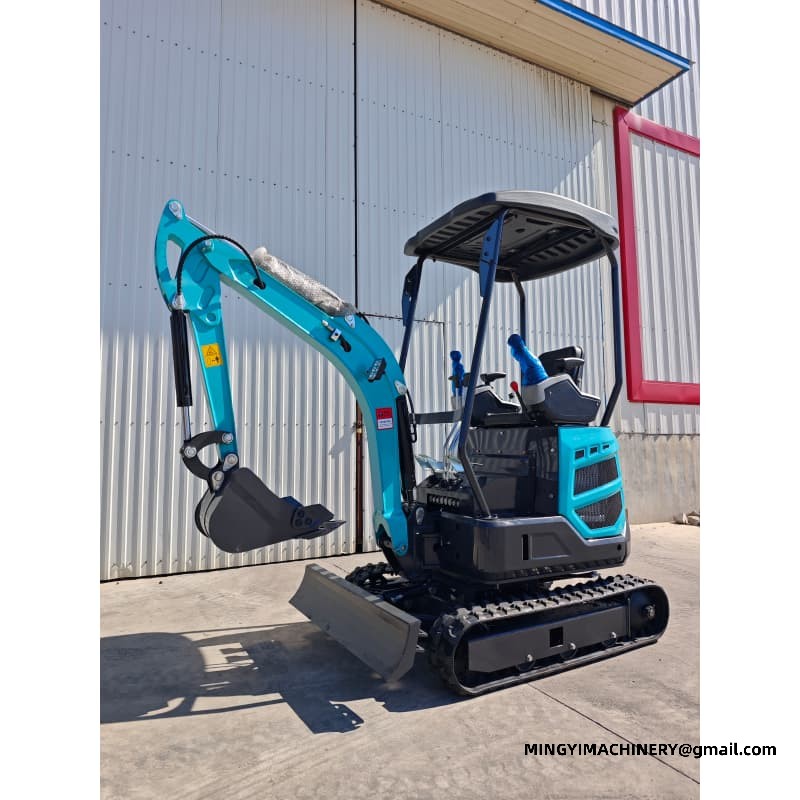
Domestic work is small in scale and tight in space. A compact machine can pass a side return, dig a footing for an extension and clear the spoil without a larger excavator ever fitting on site.
Control matters as much as size. Precise, smooth operation lets the operator trim around a manhole, a buried pipe or a garden wall without the sudden movement that damages services.
Indoor and courtyard work in occupied buildings
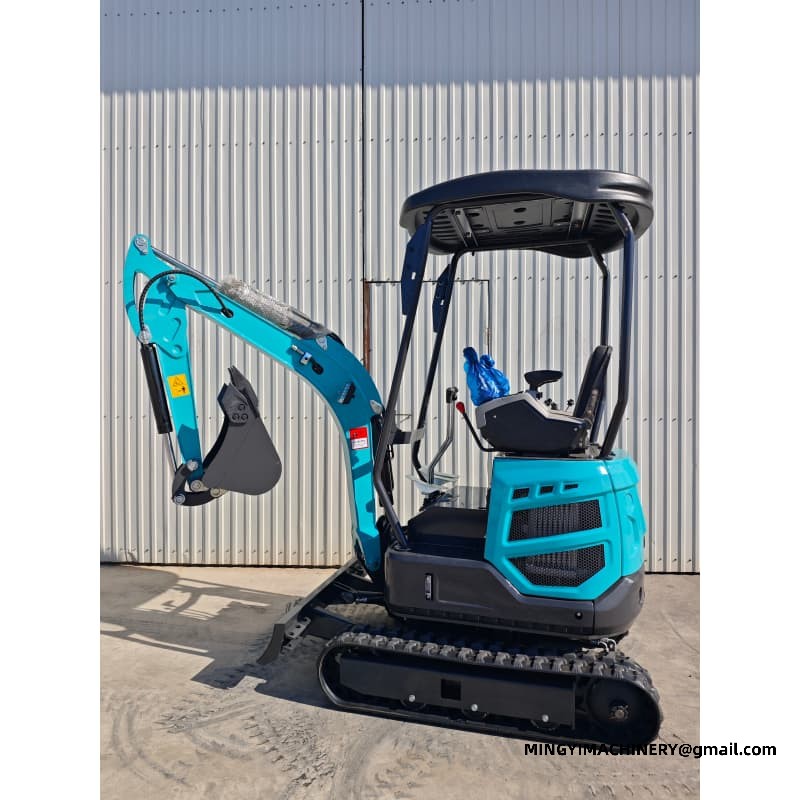
Some renovation work is genuinely indoor, where headroom is limited and the floor has to be protected. A low, narrow machine with rubber tracks can work inside a building and travel across finished surfaces between rooms.
For this kind of job the attachment list is kept short and specific: a narrow bucket, a breaker for concrete, and a grab for the spoil. Each item is matched to the machine and recorded so reorders fit.
Household renovation rewards a machine that is careful rather than powerful. A compact excavator specified for narrow access and finished surfaces does the work without the repair bill that a larger machine would bring.
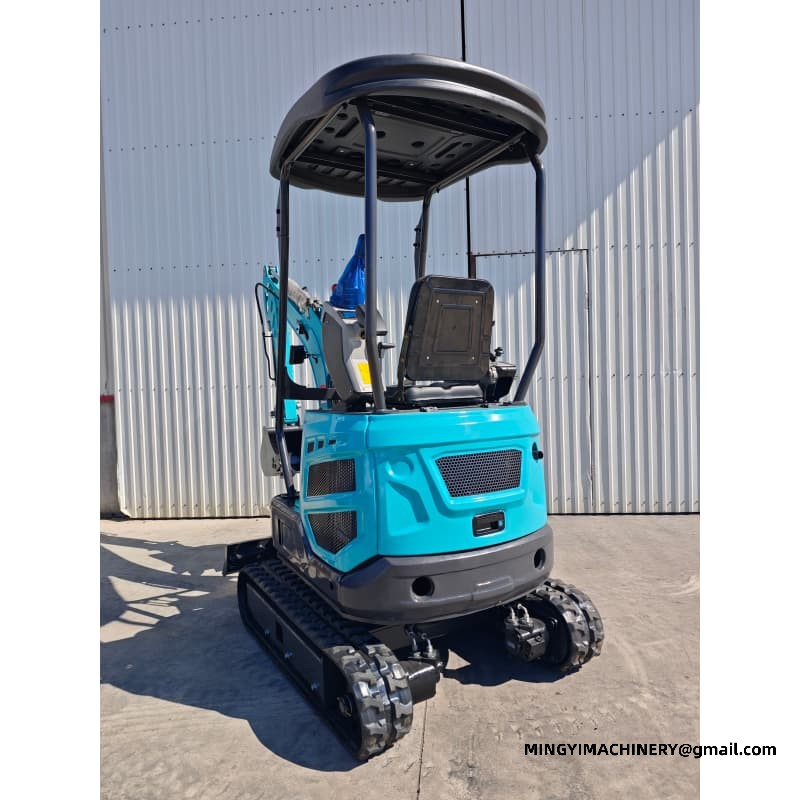
Track choice for mini excavator for household renovation Undercarriage selection is a ground question, not a preference question. The excavator running on finished paving needs rubber; the same machine on demolition rubble or rock wears rubber quickly, so steel with rubber blocks becomes the better answer over a full season. Track type changes what the machine can cross and what it leaves behind. Buyers specify rubber for lawns, driveways and municipal work, and steel with rubber blocks for sites where sharp material would cut a rubber belt in a week. Canopy or enclosed cab on a mini excavator for household renovation A canopy keeps the machine light and the operator aware of the surroundings, which suits short jobs in warm weather. A fully enclosed cab is specified where rain, dust or cold are part of the working year, and it can be added to this class of machine as a retrofit rather than only at build time. The cab decision follows the climate and the hours. Operators working a full shift in the unit in daily use benefit from a sealed cab with wipers and heating; operators stepping on and off every few minutes usually prefer the canopy for the visibility and the quick exit. Working a mini excavator for household renovation in confined spaces Confined sites are decided by dimensions. Overall width, tail swing and the space needed to work the arm are what let a machine of this size operate inside a building, between walls or in a courtyard. Clearance above matters as much as around. Door heights, pipework and overhead services set the limit for the equipment on site indoors, and measuring them first avoids a machine that arrives and cannot be used. Parts, service and support for mini excavator for household renovation Support after delivery is a parts question. Wearing items for the machine itself - filters, belts, track components, bucket teeth and pins - are the items a buyer should plan to hold before the first service interval. Remote support is handled by video. The model in question fault can often be diagnosed on a walk-around call with the panel open, which is faster than waiting for a visit and avoids shipping a part that is not needed. Working near live services with mini excavator for household renovation The risk on utility work is not machine power but machine placement. The machine in that duty that fits the working width leaves the surrounding ground undisturbed, which keeps the trench stable and the reinstatement small. Utility crews specify the unit on the job with a narrow bucket and good visibility for exactly this reason: the machine has to stop at the service, not at the edge of the operator's view. Trailering and moving mini excavator for household renovation Loading practice matters as much as the numbers. A machine built for the work is driven up ramps under its own power with the boom lowered and the tracks aligned, and secured at the points the manufacturer specifies. Detachable components reduce transport length. The equipment in service built with a removable arm section or a folding step fits a shorter trailer and may avoid an oversize movement permit. Working on slopes and uneven ground with the excavator Slope work is a stability question before it is a traction question. Knowing the gradient this class of machine is rated for, and working across rather than straight up where the ground allows, removes most of the risk. Planning the direction of travel helps. Working so that the unit in daily use is stable under load and not required to turn on a slope is a decision made before the job starts, not a correction made during it. Engine options behind a machine of this size Two buyers can order the same the machine itself and receive different engines. The decision is rarely about peak power; it is about which parts counter is closest to the site and which engine the local mechanic already knows. Engine choice is also an emissions and documentation question for some markets. Listing the available units with the equipment on site enquiry lets the factory confirm what can be supplied and documented for the destination country. Interior and light demolition with the model in question Interior demolition is an access and a weight question. The machine in that duty that fits through a doorway and works on a suspended floor does jobs that would otherwise be done by hand or by a larger machine that cannot enter. Breaking out a floor slab, a wall footing or a concrete step is routine work for the unit on the job with a breaker. The machine is small enough to work inside and heavy enough to run the tool at a practical rate. Quick coupler practice on a machine built for the work A quick coupler is the single option that changes how a machine is used day to day. Fitted to the equipment in service, it turns an attachment change from a two-person workshop job into a task the operator does alone in minutes. For a fleet that shares attachments between machines, a common coupler standard matters more than the coupler brand. The excavator that picks up the same tools as the larger machines keeps the rack usable across the yard. Noise, dust and working near occupied buildings Work near housing or occupied premises brings constraints that open sites do not. Start times, exhaust condition and how often this class of machine needs to reverse are the practical limits that neighbours notice. Enclosure and machine condition both reduce noise. The unit in daily use with intact panels, sound mounts and a maintained exhaust is measurably quieter than the same machine with loose guards, and the difference matters on restricted sites. Specification data for a machine of this size Buyers comparing the equipment on site usually start from four numbers - weight, digging depth, reach and transport width - because those are the ones that decide whether the machine can be delivered and whether it can do the job once it is there. Every value shown is as built for the machine itself; options such as cab, side swing or a telescopic undercarriage change the transport dimensions and are confirmed at order stage. Auxiliary hydraulic lines are what let a machine drive a tool rather than only a bucket. The model in question specified with the right circuits and flow runs a breaker or an auger without an add-on power pack bolted to the frame. Flow and pressure are matched to the tool, not to the machine size. Asking for the attachment list first means the machine in that duty leaves the factory with circuits that suit the heaviest tool the buyer intends to run.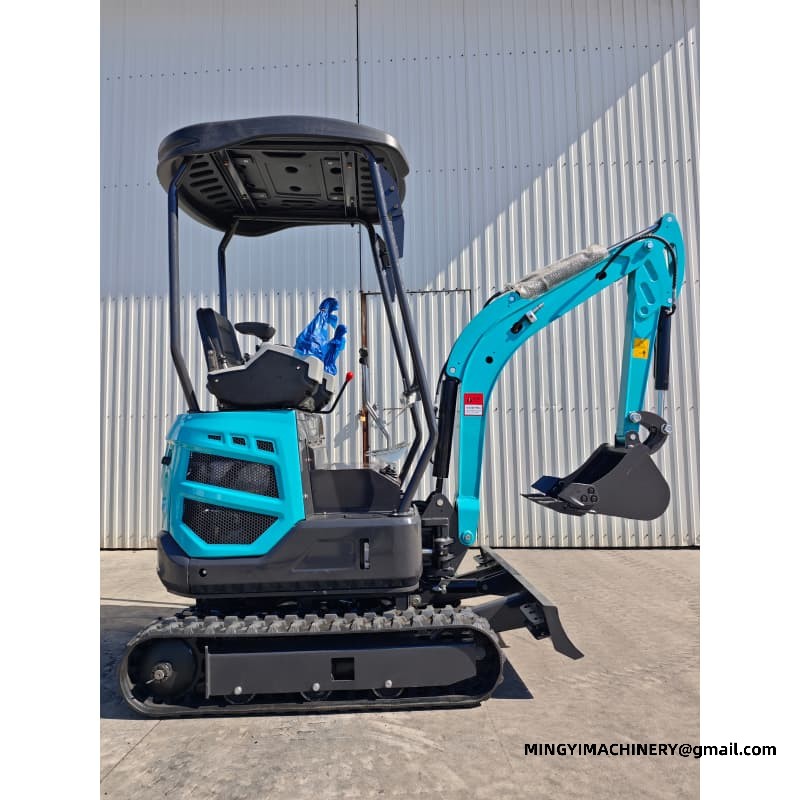
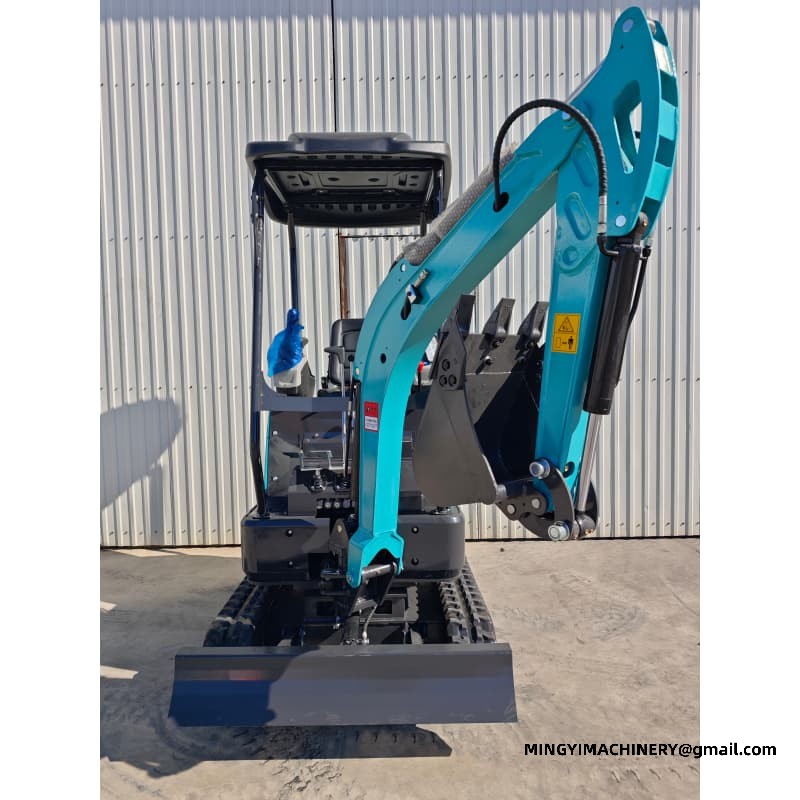
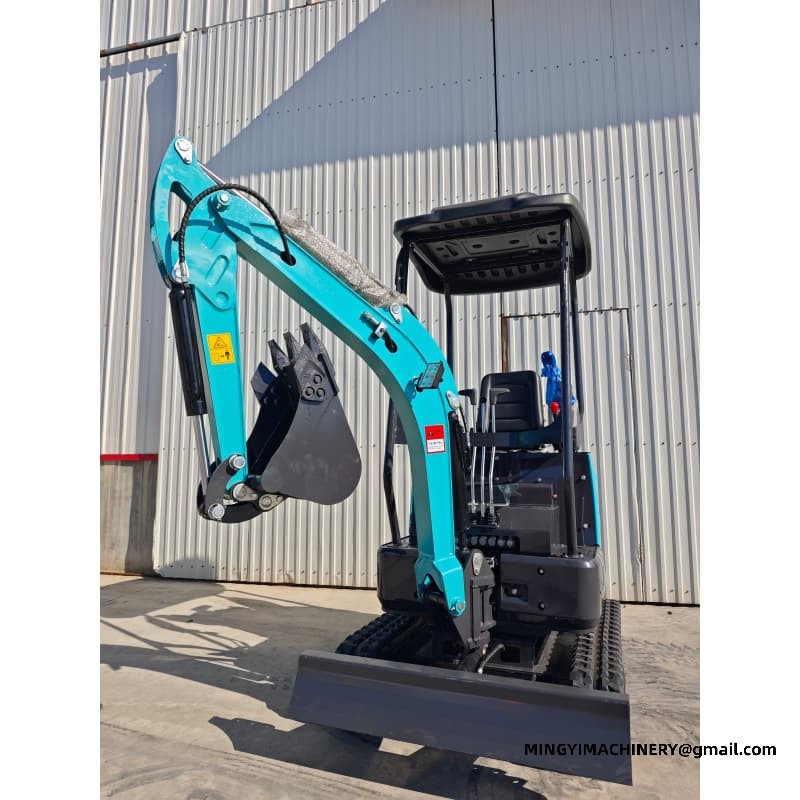
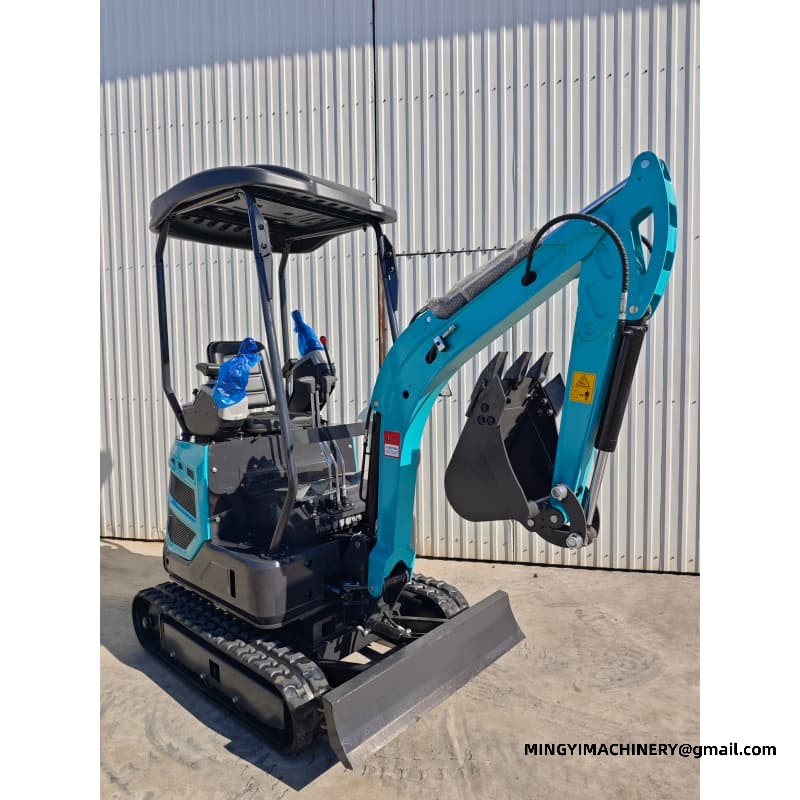
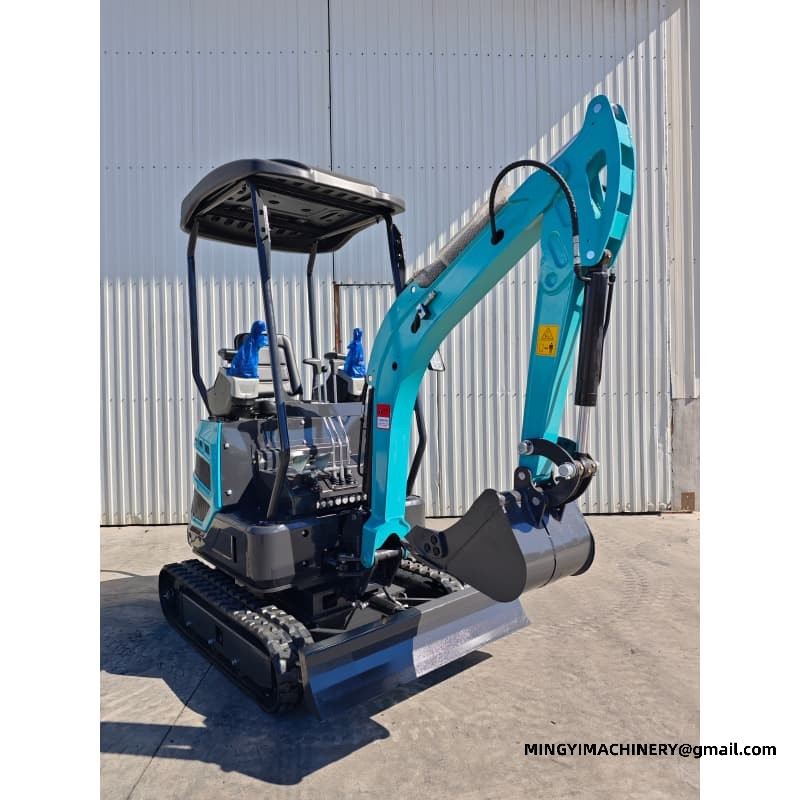
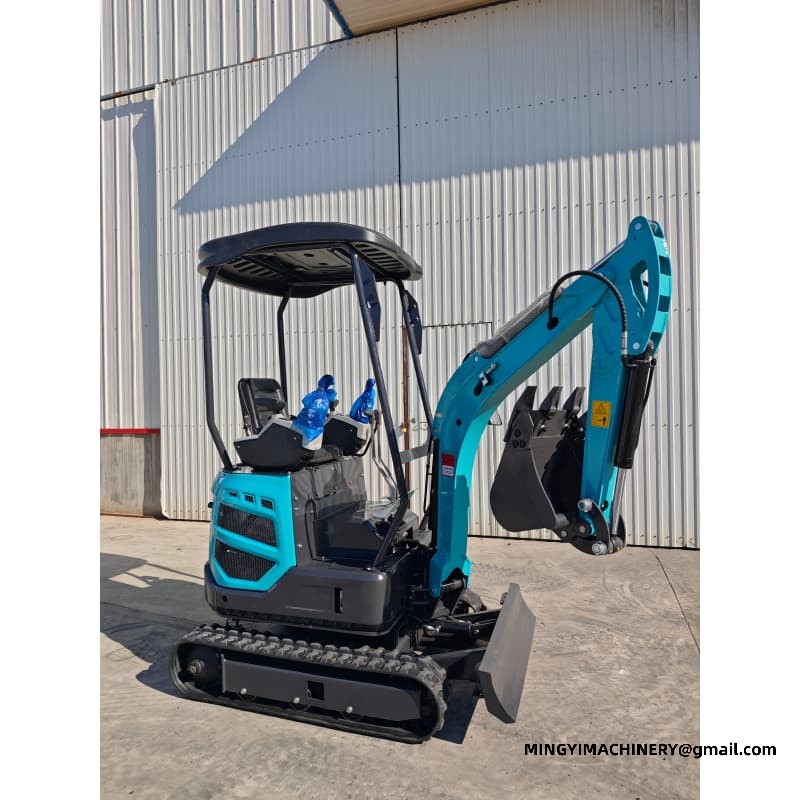
Reference specification — mini excavator range 09W 12W 15L 30-2L Operating weight 1100 kg (2425.08 lb) 1200 kg (2645.55 lb) 1400 kg (3086.47 lb) 2400 kg (5291 lb) Transport size (L×W×H) 1800 × 750 × 1970 mm 2200 × 930 × 2250 mm 2200 × 930 × 2250 mm 2800 × 1500 × 2500 mm Max digging depth 1250 mm (49.21 in) 1630 mm (64.17 in) 1700 mm (66.93 in) 2200 mm (86.61 in) Max digging height 2800 mm (110.24 in) 2750 mm (108.27 in) 2750 mm (108.27 in) 2900 mm (114.17 in) Max dumping height 1700 mm (66.93 in) 1960 mm (77.17 in) 1960 mm (77.17 in) 2100 mm (82.68 in) Max digging radius 2570 mm (101.18 in) 2900 mm (114.17 in) 2900 mm (114.17 in) 3330 mm (131.1 in) Max digging distance 1869 mm (73.58 in) 2100 mm (82.68 in) 2300 mm (90.55 in) 2700 mm (106.3 in) Minimum turning radius 1000 mm (39.37 in) 1300 mm (51.18 in) 1450 mm (57.09 in) 1555 mm (61.22 in) Travel speed 3 km/h (1.86 mph) 3 km/h (1.86 mph) 3 km/h (1.86 mph) 7 km/h (4.35 mph) Gradeability 30° 30° 30° 30° Fuel consumption 1-1.3 L/h (0.264—0.343 gal) 1-1.3 L/h (0.264—0.343 gal) 1-1.3 L/h (0.264—0.343 gal) 2-3 L/h (0.528—0.793 gal) Fuel tank capacity 8 L (2.11 gal) 10 L (2.64 gal) 10 L (2.64 gal) 16 L (4.23 gal) Hydraulic oil tank 16 L (4.23 gal) 16 L (4.23 gal) 16 L (4.23 gal) 18 L (4.76 gal) Dozer blade lift height 180 mm (7.09 in) 180 mm (7.09 in) 180 mm (7.09 in) 230 mm (9.06 in) Dozer blade drop depth 210 mm (8.27 in) 210 mm (8.27 in) 210 mm (8.27 in) 280 mm (11.02 in)
Q. What is the unit on the job?
A. Compact demolition is layered work - break the structure in passes, clutch the spoil with a thumb, load out, repeat - and the small machine keeps doing it indoors and beside occupied buildings. The coupler switches the machine from breaker carrier to loader between passes, which is what keeps a small demolition job worth taking on. For household renovation applications the practical route is to send the job list to the factory and let the build sheet answer it - which is exactly what this page invites.
Q. How does a small machine demolish safely?
A. By working in layers and sorting as it goes: break, clutch with the thumb, load out, repeat. Zero tail swing keeps the counterweight off the standing structure, and sequential strip-out protects the crew and the building that remains.
Q. Which models does MINGYI build?
A. The 08, 12 and 18 models cover the 0.8 to 6 tonne class with engine, track, cab and attachment options across the range - dealer programmes can mix models in one shipment, and each household renovation machine is confirmed on its own build sheet.
Moving a machine built for the work between sites
Loading is where most damage happens. Ramps, angle of approach and the condition of the ground under them matter more than the machine when the equipment in service is being loaded, and a careful driver is worth more than a fast one.
Documents that travel with the excavator
Keeping the documents together is part of ownership. The manual, the service record and the build sheet for this class of machine belong in one folder, and the machine is easier to sell later when that folder is complete.
Planning the season around the unit in daily use
Seasonal work rewards a machine that can change duty. Through the year a machine of this size may move from one task to another, and the attachment list should be chosen for the whole year rather than for the first job.
E-mail : sales@mingycn.com
LINE ( ID ): mingyicn
Related pages
mini digger for rural land development · mini excavator for road reinstatement · Wheel Loader Fork Attachment: Matching Forks to the Boom Section · Mini Excavators









