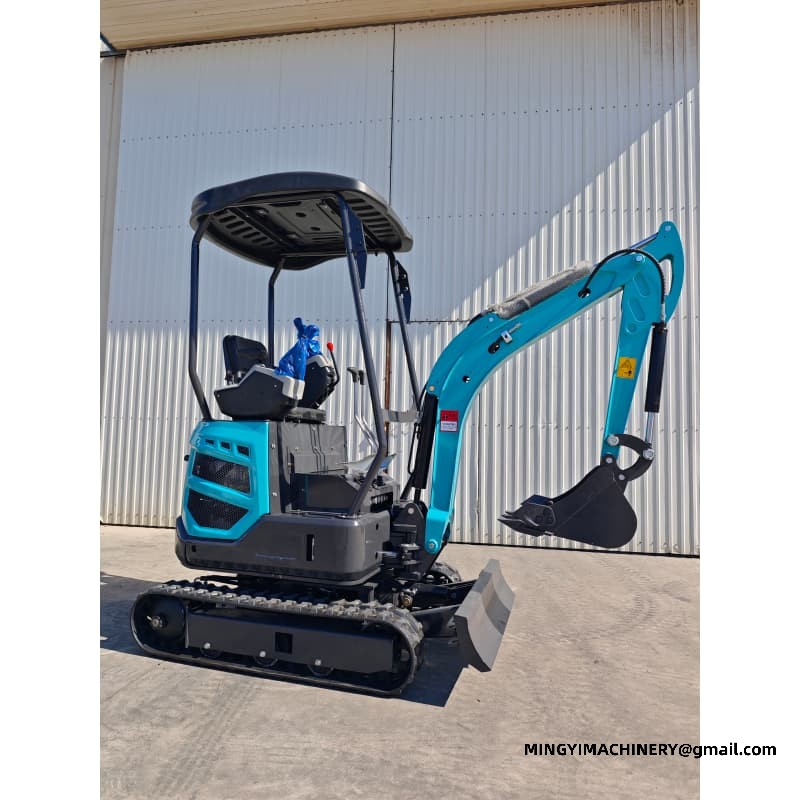
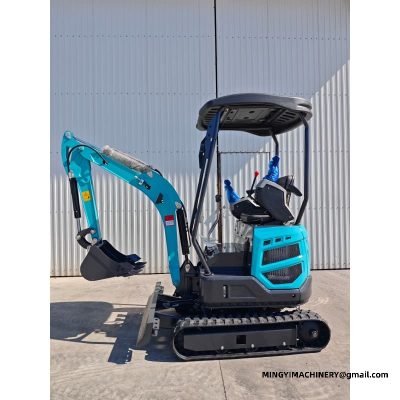
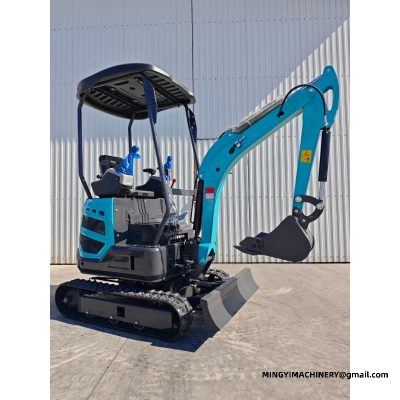
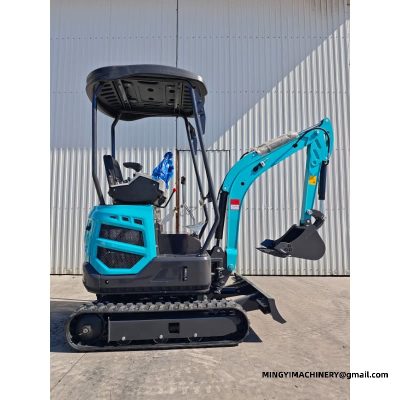
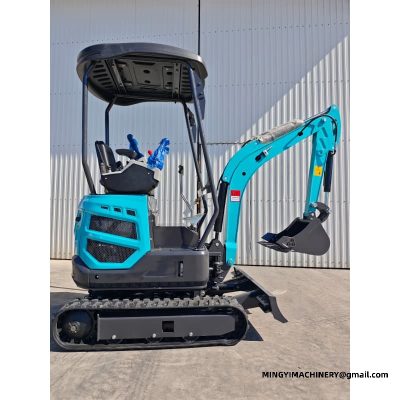
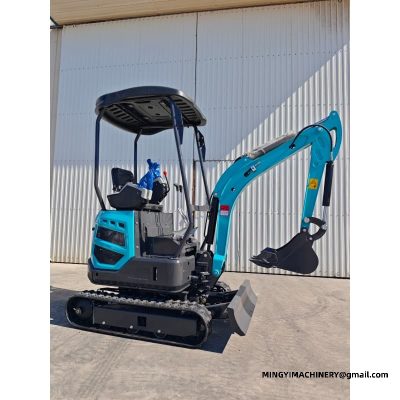
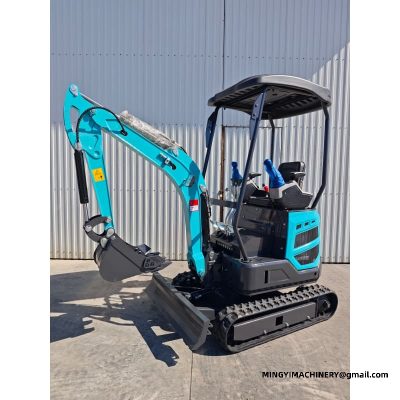
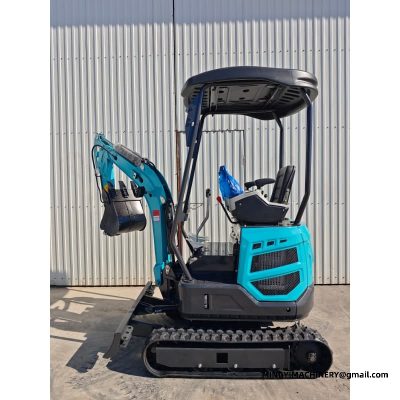
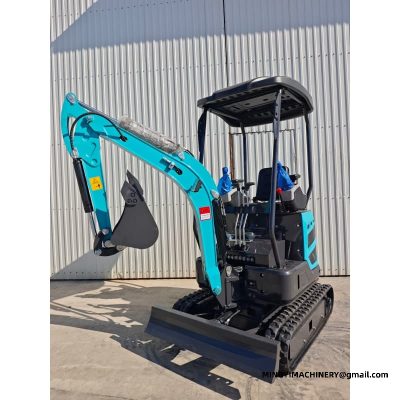
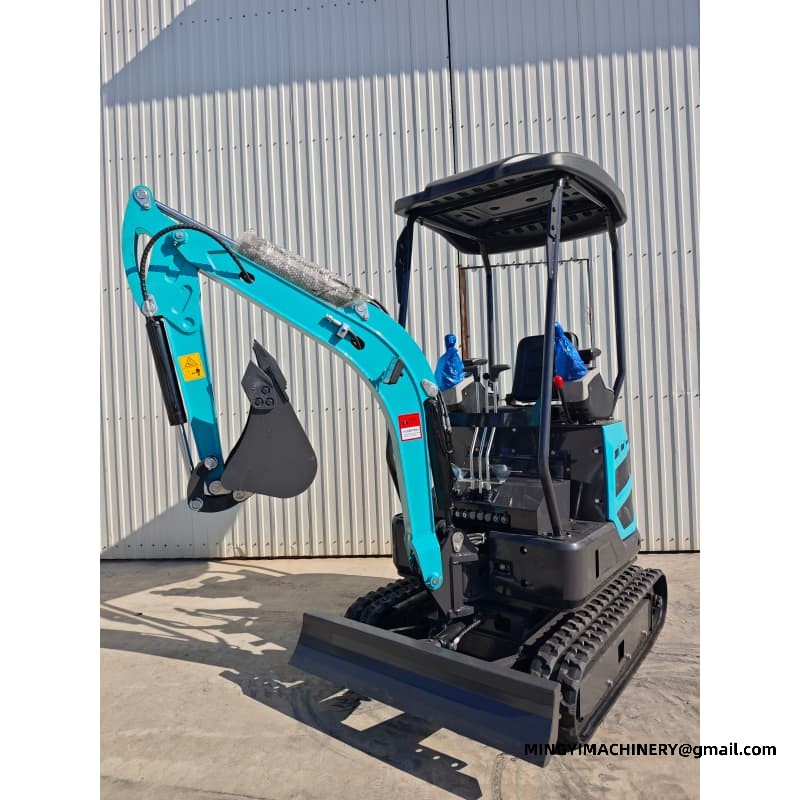
Rural land development, turning rough ground into workable land, runs on water control, access and shaping: ponds, ditches, tracks and terraces. The mini diggers MINGYI builds for this work are specified for long, varied days on unmade ground.
A rural development machine digs ponds and spillways, cuts field drainage and access tracks, clears scrub and stone, and works slopes that settled machines would refuse. The specification follows from the land and its conditions.
Land development work the digger carries
A typical season includes pond excavation and silt clearance, drainage runs across wet ground, access track cutting and repair, terrace building on sloping land and stump and root removal. Each job shifts the machine between digging, grading and attachment duty.
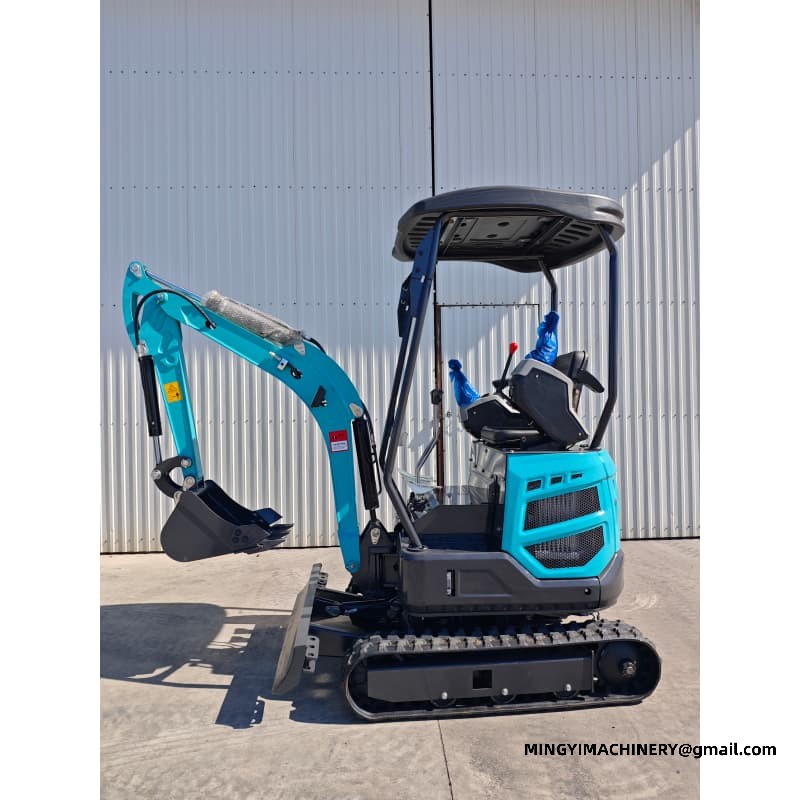
Buyers running these projects pair the carrier with a ripper for breaking hardpan, a tilting bucket for shaping, and grabs for the clearing half of the work. The quick coupler keeps the changes short, since the day's sequence rarely respects a single tool.
Ordering for a rural development programme
The ordering conversation covers the land itself: ground conditions, slopes and the project list, from which the class, tracks and hydraulic arrangement follow. Engine options, including Changchai, Laidong and YARMAX units, are agreed against the service arrangements the buyer can reach.
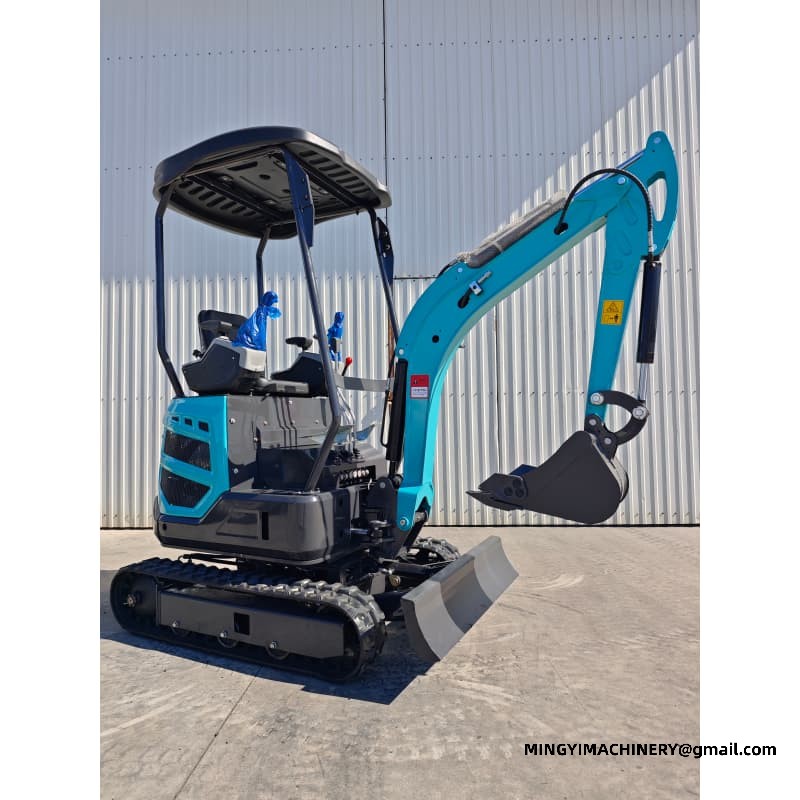
Each machine is produced against the agreed sheet and ships with spare parts and service information for the fitted specification. The build record keeps subsequent orders aligned as the programme grows.
Rural development is a sequence of water, access and shaping jobs, and one digger holds the sequence if ordered for the land in question. Specify against the ground, and the ground comes round.
Working a mini digger for rural land development in confined spaces Confined sites are decided by dimensions. Overall width, tail swing and the space needed to work the arm are what let the excavator operate inside a building, between walls or in a courtyard. Ventilation is the other indoor constraint. Running this class of machine inside a closed structure needs air movement, and that is a planning item rather than something to discover after the first hour. Specifying mini digger for rural land development against a job list The practical way to specify is to write the job list first: the narrowest access, the deepest trench, the heaviest tool and the surfaces the machine must cross. The unit in daily use is then matched to those four numbers. Buyers who skip this step either over-buy or under-buy. A machine of this size specified only from machine size tends to arrive without the coupler, the circuits or the track type the work actually needs. Track choice for mini digger for rural land development Rubber tracks suit paved and landscaped ground because they spread the machine weight and leave the surface intact. Steel tracks with rubber blocks are specified where the ground is rougher or the working day is longer, and the choice can be made per machine rather than accepted as a factory default. Undercarriage selection is a ground question, not a preference question. The equipment on site running on finished paving needs rubber; the same machine on demolition rubble or rock wears rubber quickly, so steel with rubber blocks becomes the better answer over a full season. Export packing and shipping of mini digger for rural land development Export documentation, decals and paint are settled before packing. Asking for them with the model in question order avoids a second handling session and keeps the machine on the booked vessel. Buyers who import regularly plan the spare parts with the machine. The machine itself ordered with a wearing-parts kit arrives ready to work rather than ready to wait for the first service interval. Hydraulic circuits on a mini digger for rural land development Auxiliary hydraulic lines are what let a machine drive a tool rather than only a bucket. The machine in that duty specified with the right circuits and flow runs a breaker or an auger without an add-on power pack bolted to the frame. Hydraulic specification is easier to settle at build time than to correct later. The unit on the job delivered without auxiliary lines can still dig, but every additional tool becomes a retrofit project. Orchard, vineyard and farm use of mini digger for rural land development Orchard and vineyard work is carried out between rows. A machine built for the work with a narrow chassis and a swing boom works down the row without damaging the trees, which is the reason a full-size machine is not used at all. Ditching, fertilising and drainage on farmland suit the equipment in service because the work is spread over a large area in short bursts. The machine travels behind a pickup and works where it stops. Noise, dust and working near occupied buildings Work near housing or occupied premises brings constraints that open sites do not. Start times, exhaust condition and how often the excavator needs to reverse are the practical limits that neighbours notice. Dust control is often part of the same conversation. Water, timing and work sequence reduce what leaves the site, and agreeing them in advance keeps this class of machine working rather than stopped after a complaint. Lifting and material handling with the unit in daily use Lifting with a machine built to dig needs a plan. The load, the radius and the ground under the equipment on site all matter, and the safe figure is the one on the chart rather than the one that looks possible. Stability changes with reach. A load a machine of this size handles close in becomes a different proposition at full extension, so the working radius belongs in the plan before the lift rather than during it. Road and paving work for the machine itself Road repair generates short, interrupted jobs - a patch, a drainage connection, a kerb line. The model in question is economical here because it travels on a small trailer and starts working minutes after arriving. Patching and reinstatement favour a machine that can work in a lane closure. The machine in that duty occupies less road than a full-size excavator, which reduces the traffic management needed and the length of the closure. Municipal and public works with the unit on the job Municipal crews work on streets, footpaths and parks where the public is present. A machine built for the work is specified because it occupies little space, works inside a small exclusion zone and can be moved on a standard trailer. Noise and surface protection matter on public work. The equipment in service on rubber tracks across paving, with a sealed cab for the operator, suits the conditions better than a larger tracked machine. What owners should plan for beyond the excavator The useful comparison is demand per working hour, not demand per machine. This class of machine that works more hours a year spreads its standing takes over more output, which is why utilisation usually matters more than the invoice figure. Downtime is the hidden line item. The unit in daily use waiting on a part earns nothing while it stands, so parts availability and service access belong in the plan as much as fuel does. Specification data for a machine of this size Where the equipment on site is being specified for a job list, the table below gives the factory figures that matter most: what the machine weighs, how deep and how far it works, and what it measures on a trailer. These are the reference figures for the machine itself. MINGYI confirms the final build sheet, including engine and attachment choices, against the destination and the job list before production. Seasonal planning smooths the workload. Machines that are busy for a few months and idle for the rest benefit from a service slot in the quiet period, and the model in question prepared in the off-season starts the busy months reliably. Heat and dust are as limiting as rain. Air intake condition and cooling cleanliness decide how the machine in that duty behaves in a dry season, and both are checked in a minute rather than repaired later.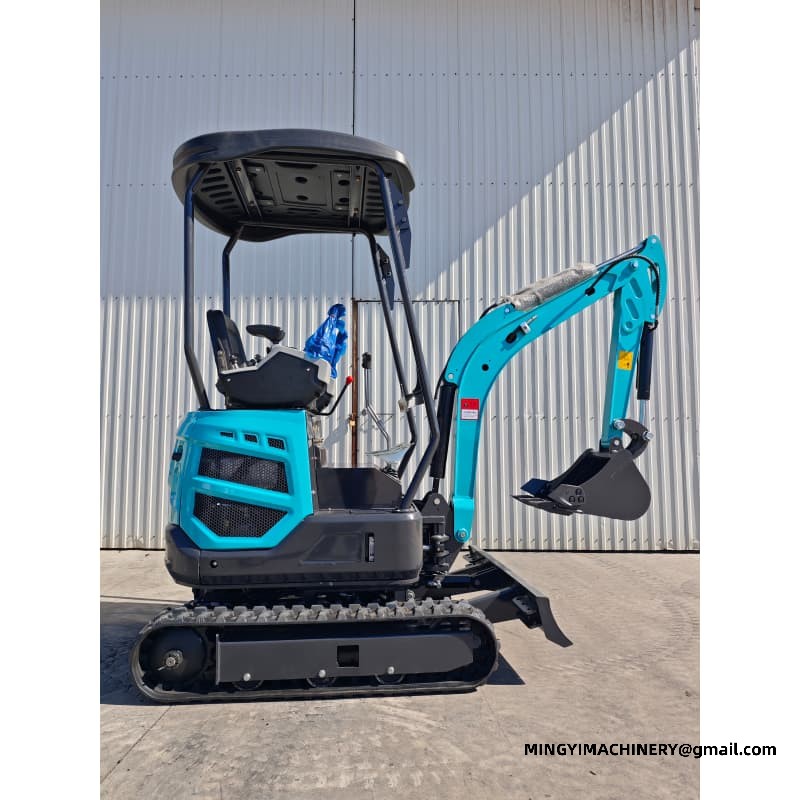
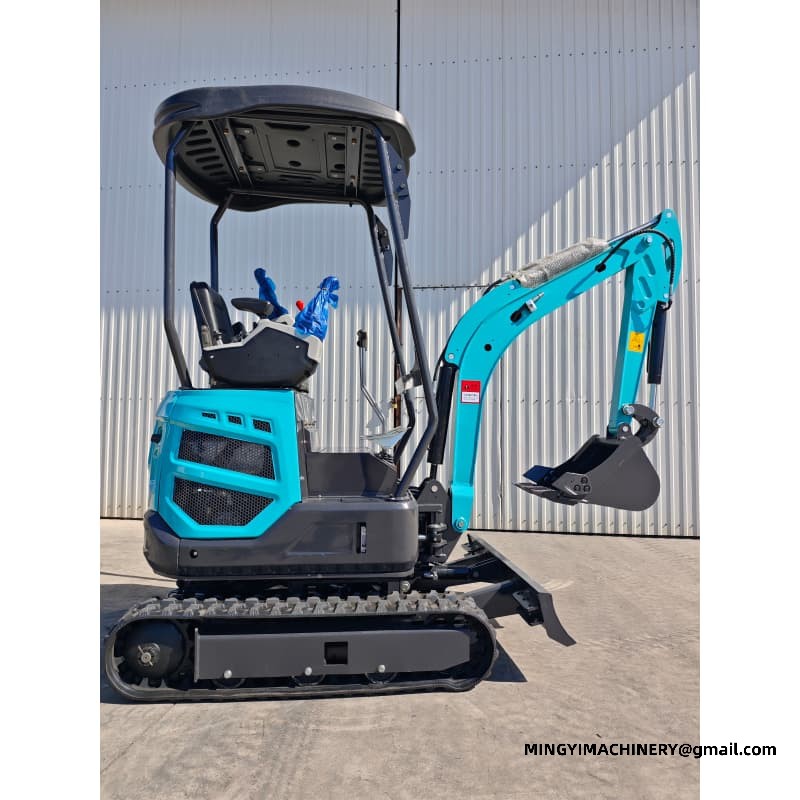
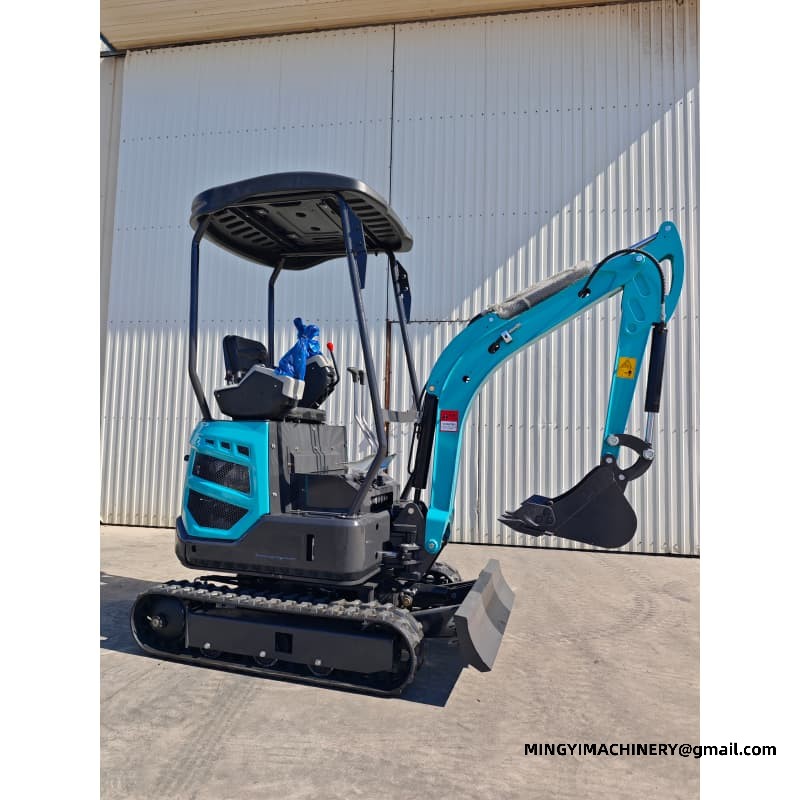
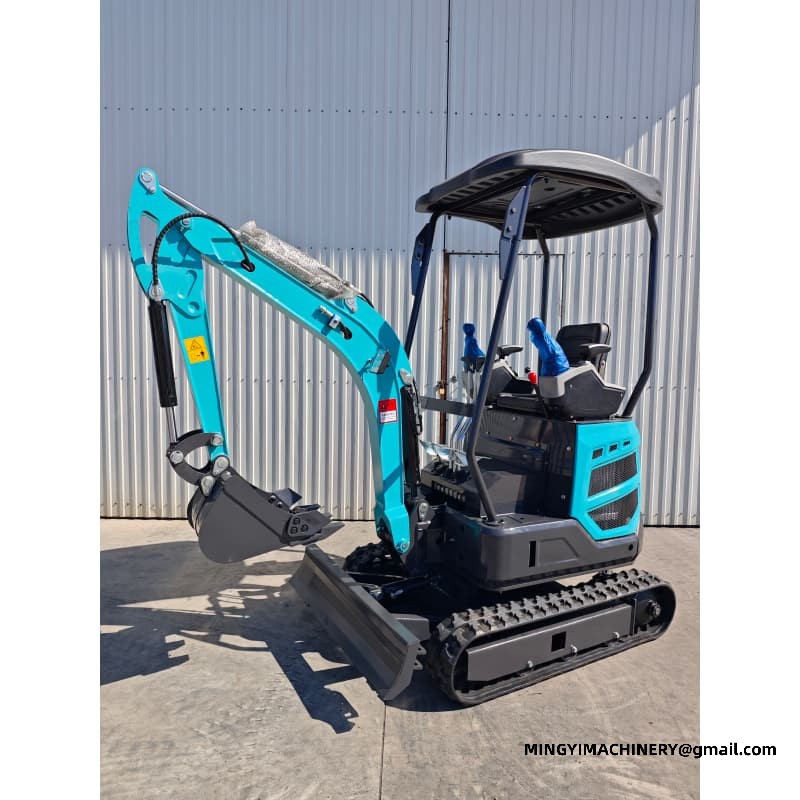
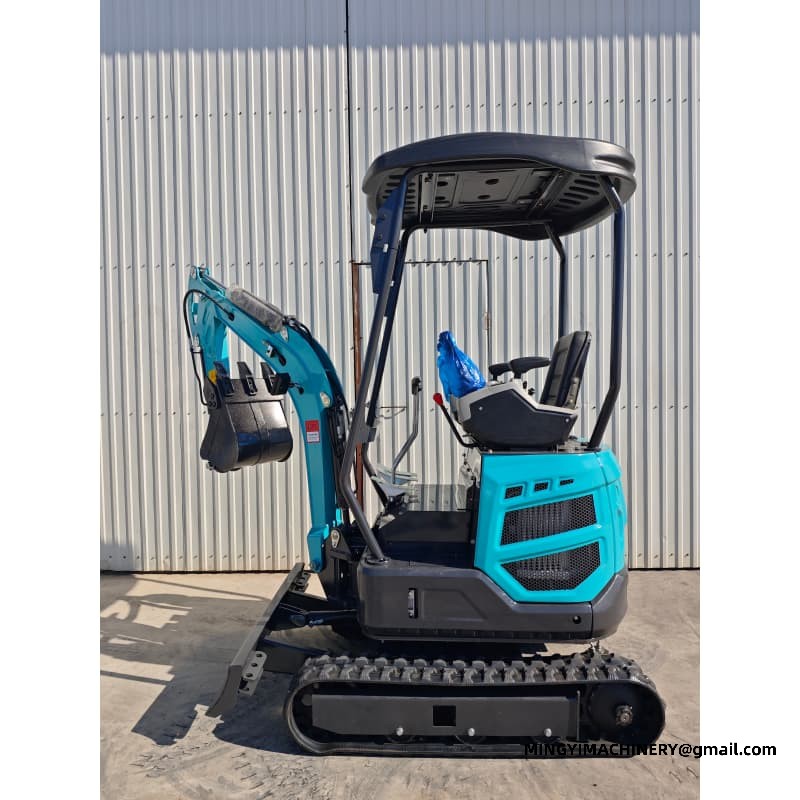
Reference specification — mini excavator range 12W 13W 20-3W 12L Operating weight 1200 kg (2645.55 lb) 1300 kg (2866.01 lb) 1900 kg (4188.78 lb) 1200 kg (2645.55 lb) Transport size (L×W×H) 2200 × 930 × 2250 mm 2200 × 930 × 2250 mm 2550 × 1100 × 2200 mm 2200 × 930 × 2250 mm Max digging depth 1630 mm (64.17 in) 1630 mm (64.17 in) 1800 mm (70.87 in) 1700 mm (66.93 in) Max digging height 2750 mm (108.27 in) 2750 mm (108.27 in) 2820 mm (111.02 in) 2600 mm (102.36 in) Max dumping height 1960 mm (77.17 in) 1960 mm (77.17 in) 2050 mm (80.71 in) 1800 mm (70.87 in) Max digging radius 2900 mm (114.17 in) 2900 mm (114.17 in) 3050 mm (120.08 in) 2900 mm (114.17 in) Max digging distance 2100 mm (82.68 in) 2100 mm (82.68 in) 2300 mm (90.55 in) 2300 mm (90.55 in) Minimum turning radius 1300 mm (51.18 in) 1300 mm (51.18 in) 1450 mm (57.09 in) 1450 mm (57.09 in) Travel speed 3 km/h (1.86 mph) 3 km/h (1.86 mph) 5 km/h (3.11 mph) 3 km/h (1.86 mph) Gradeability 30° 30° 30° 30° Fuel consumption 1-1.3 L/h (0.264—0.343 gal) 1-1.3 L/h (0.264—0.343 gal) 2-3 L/h (0.528—0.793 gal) 1-1.3 L/h (0.264—0.343 gal) Fuel tank capacity 10 L (2.64 gal) 10 L (2.64 gal) 16 L (4.23 gal) 10 L (2.64 gal) Hydraulic oil tank 16 L (4.23 gal) 16 L (4.23 gal) 18 L (4.76 gal) 16 L (4.23 gal) Dozer blade lift height 180 mm (7.09 in) 180 mm (7.09 in) 180 mm (7.09 in) 180 mm (7.09 in) Dozer blade drop depth 210 mm (8.27 in) 210 mm (8.27 in) 210 mm (8.27 in) 210 mm (8.27 in)
Q. Who chooses the unit on the job?
A. Agricultural digging protects the asset under the machine as much as the work in front of it: soil structure, roots and irrigation lines all decide how the digger is set up. Rubber tracks and a swing boom protect roots and irrigation lines while the carrier stays on the headland. A machine built for the work is one of the pages buyers land on when comparing machines for rural land development, and the factory treats it as a specification conversation rather than a catalogue line.
Q. Which farm jobs come first?
A. Drainage before the rains, trenching for water and power at planting, then clearing, grading and post-hole work through the season. One compact excavator with a bucket, an auger and a rake covers most of that calendar.
Q. What about colours and branding?
A. OEM colours and decals are part of the build: private-label machines carry the buyer brand on the standard MINGYI platform, and the rural land development order confirms colours, marks and documents before production starts.
Storage and long idle periods for the equipment in service
The battery and the fuel are the first things to suffer in storage. Preparing the excavator properly at the start of the idle period avoids the flat battery and the contaminated tank that greet an unprepared machine.
Cold weather and winter care for this class of machine
Starting is only the first problem. Until the unit in daily use reaches working temperature the hydraulic response is slower and the seals are stiffer, and warming the machine before asking for full output avoids unnecessary strain.
Hot, humid and dusty conditions around a machine of this size
Humidity attacks the parts that are not used. Storage in a damp climate means the equipment on site needs the exposed metal protected and the machine run regularly, because standing still does more damage than working.
E-mail : sales@mingycn.com
LINE ( ID ): mingyicn
Heat and hydraulic temperature in mini digger for rural land development
Oil that runs hotter than the design range loses its film strength, and the first symptom is usually slower, softer movement rather than a leak.
Continuous high-flow work in high ambient temperature is where a duty cycle helps, because a short pause every hour cools the system more than a long stop at midday.
Hoses age faster next to hot manifolds, so routing and clearance are checked at the same time as the oil level.
Related pages
mini excavator for road reinstatement · compact digger for narrow spaces · Wheel Loader Snow Blower: Hydraulic Circuits and Winter Duty · Mini Excavators









