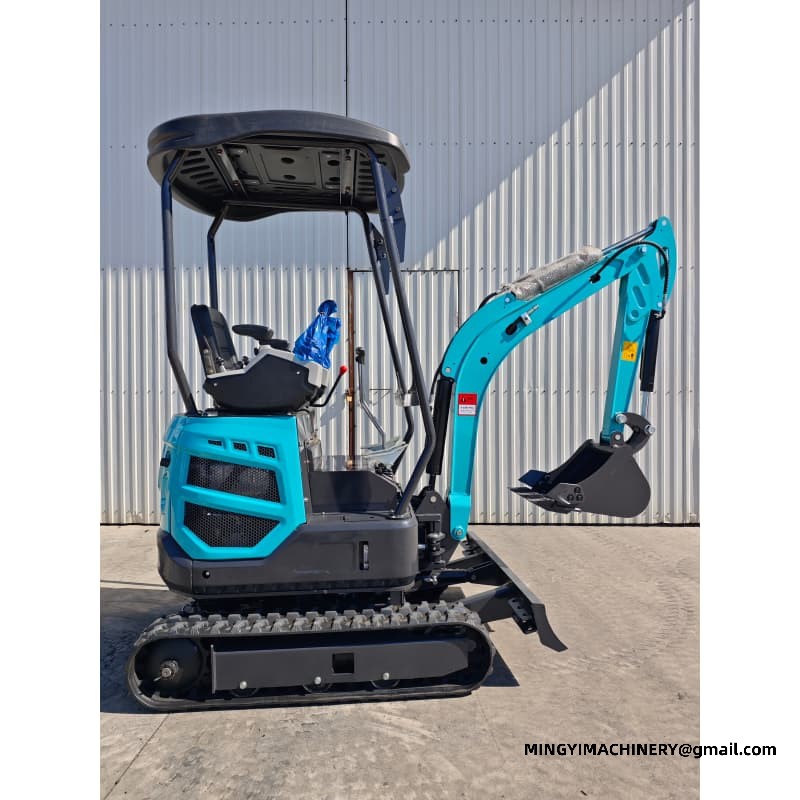
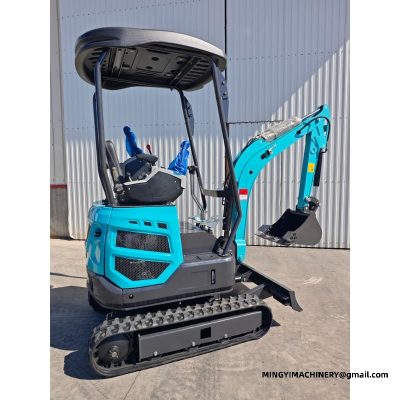
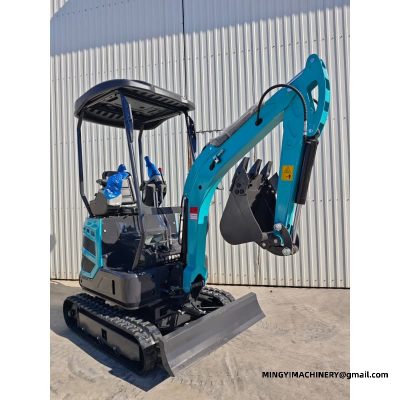
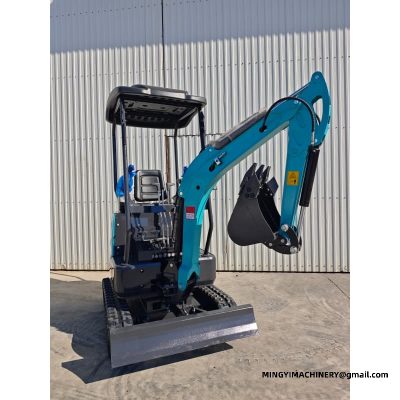
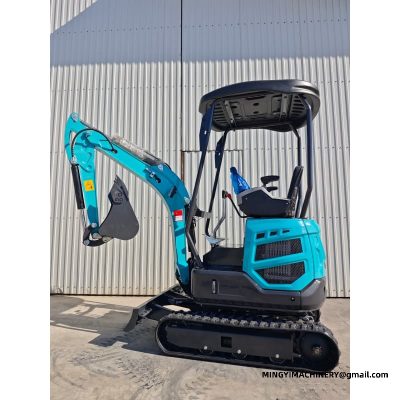
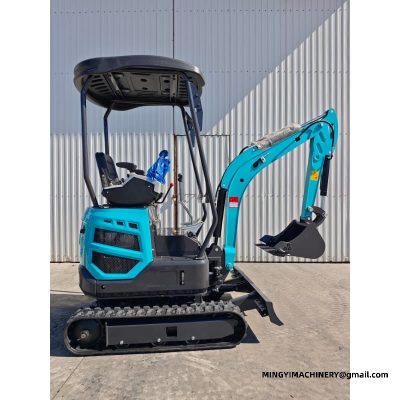
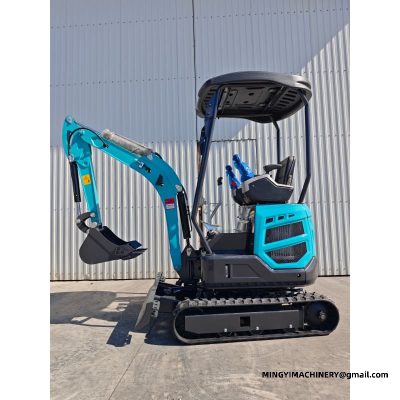
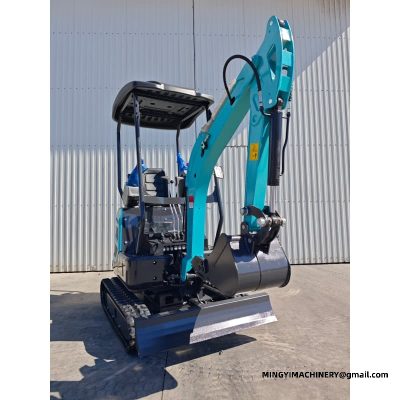
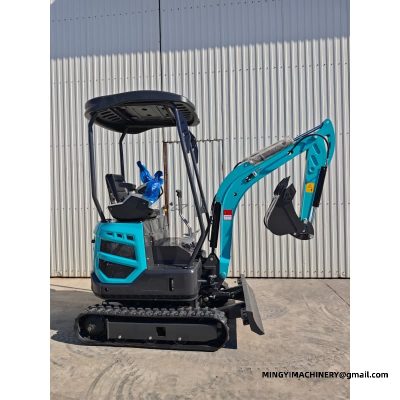
Narrow spaces are where plant either fits or goes home. Between buildings, inside yards, along boundary walls and under structures, the working envelope is fixed by the site, and the machine has to be selected inside it. The MINGYI compact digger range is built around that constraint.
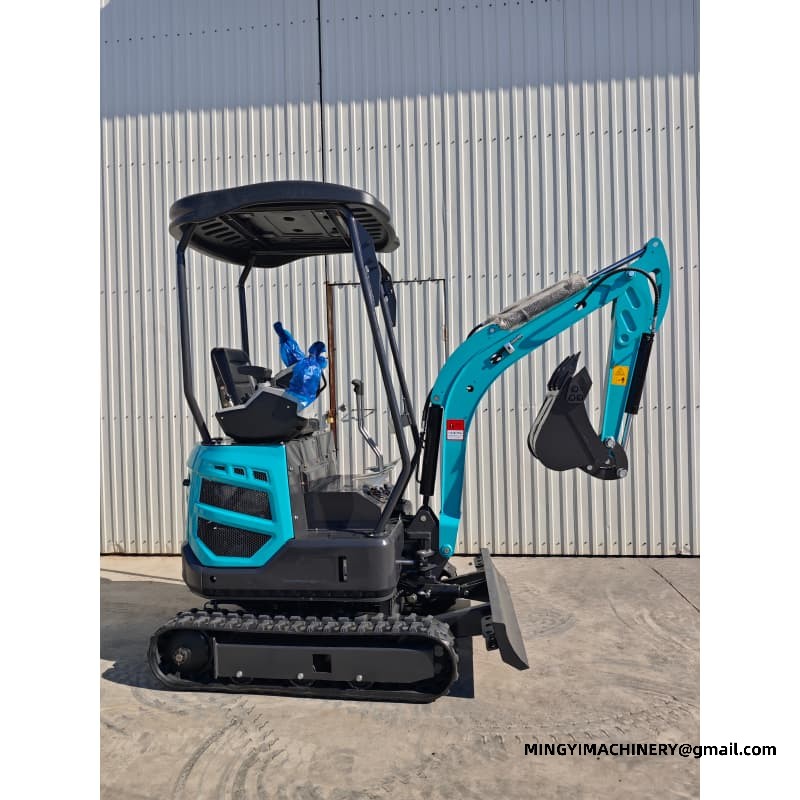
The diggers at the small end of the 0.8 to 6 tonnes range, including the 08 series, are the machines for this duty, combining short tail swing with a footprint that follows walls and openings. This page covers the space limited work and the configuration that suits it.
Working inside the envelope
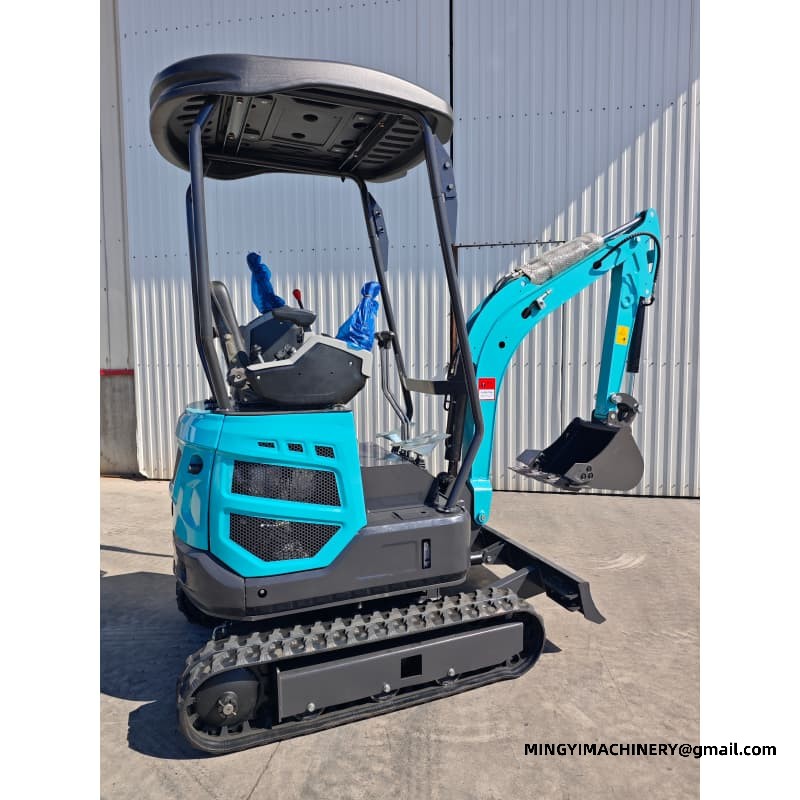
The machine digs foundation trenches in gaps between existing structures, clears and grades inside walled yards, and excavates for tanks and plant where the access is a single doorway. Under canopies and inside sheds it works with the boom close to the structure and the tail clear of the wall behind.
The same envelope limits show up outdoors: trenching between a boundary wall and a building line, digging in mature gardens between established planting, and working on footpaths where nothing wider is welcome. Short tail swing is what keeps the tail from striking whatever is behind.
Configuring a digger for tight sites
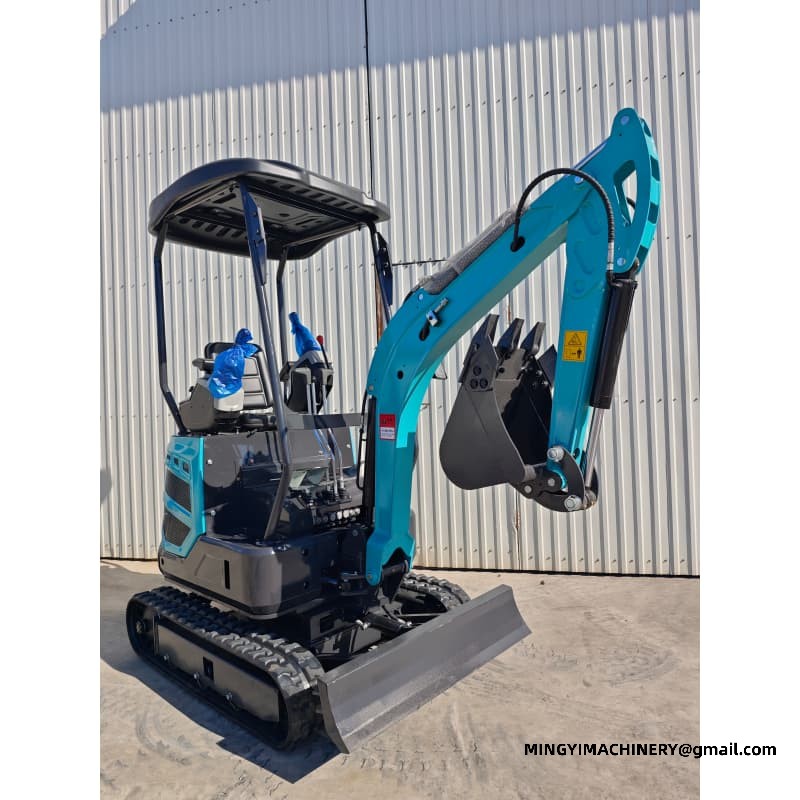
The specification starts with the two widths, retracted for access and extended for stability when working. The retractable undercarriage covers both, and it is confirmed at the ordering stage against the buyer measured access points. Rubber tracks protect the floors and paths the machine works over.
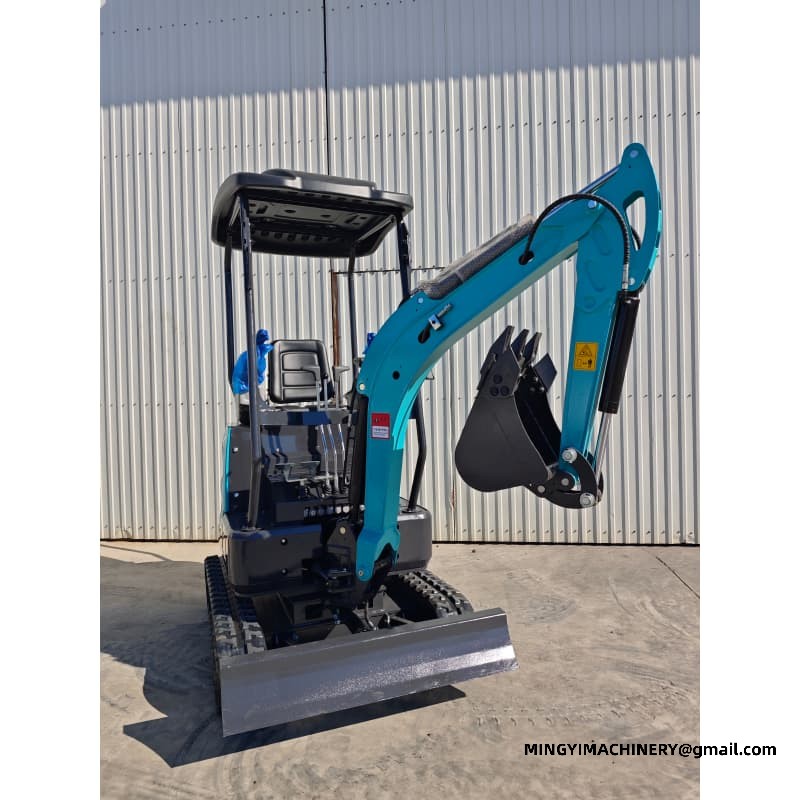
A swing boom extends the working reach without widening the machine, letting the arm work along walls while the body stays put. Buyers should also confirm the attachment list for the space, since buckets and breakers sized for full sized machines will not fit this working envelope.
Measure the space, the openings and the clearance behind the machine, and send the numbers with the job list. The compact configuration will be drawn from those dimensions and recorded against the build.
Running compact digger for narrow spaces in a rental fleet The specification that rents best is usually the simplest one to explain at the counter. The excavator with rubber tracks, a canopy and a coupler covers the majority of weekend and short-term hires. Fleet buyers also weigh transport. This class of machine that a customer can tow on a normal licence and a standard trailer is a hire that does not need a delivery truck, which changes how often it goes out. Working near live services with compact digger for narrow spaces Digging near water, gas and cable is a precision job. The unit in daily use is used here because the operator can work in short controlled cuts and because the machine can be positioned without driving over the run being exposed. The risk on utility work is not machine power but machine placement. A machine of this size that fits the working width leaves the surrounding ground undisturbed, which keeps the trench stable and the reinstatement small. Matching compact digger for narrow spaces to ground conditions Soft ground is a flotation problem, not a power problem. The equipment on site on wide rubber tracks crosses lawn, sand and cultivated soil that would stop a narrower machine or a wheeled unit of the same capacity. Hard and abrasive ground reverses the specification. On rock, demolition rubble or sharp gravel, steel tracks with rubber blocks on the machine itself survive conditions that cut a rubber belt quickly. What owners should plan for beyond the compact digger for narrow spaces Purchase decision is the visible part of the effort. Fuel, filters, tracks or tyres, the operator and the transport between sites are the items that decide what the model in question actually demands over a few seasons, and they are worth listing before the order. Downtime is the hidden line item. The machine in that duty waiting on a part earns nothing while it stands, so parts availability and service access belong in the plan as much as fuel does. Daily checks and maintenance on compact digger for narrow spaces Daily maintenance on the unit on the job is a short list: engine oil level, coolant, track tension, hydraulic oil level and a look at the hoses. Ten minutes at the start of the shift prevents most of the failures that stop a machine. Track tension is the item most often neglected. A machine built for the work run with slack tracks wears the undercarriage and can throw a track on a turn; run too tight, the same components wear from the other direction. Hydraulic circuits on a compact digger for narrow spaces Flow and pressure are matched to the tool, not to the machine size. Asking for the attachment list first means the equipment in service leaves the factory with circuits that suit the heaviest tool the buyer intends to run. Hydraulic specification is easier to settle at build time than to correct later. The excavator delivered without auxiliary lines can still dig, but every additional tool becomes a retrofit project. Working this class of machine through the seasons Weather decides which days are productive. Rain turns some ground unusable and cold changes how the unit in daily use starts and warms up, so planning the wet months around maintenance is more useful than planning around output. Seasonal planning smooths the workload. Machines that are busy for a few months and idle for the rest benefit from a service slot in the quiet period, and a machine of this size prepared in the off-season starts the busy months reliably. Working on slopes and uneven ground with the equipment on site Ground that looks level often is not. The machine itself crossing a filled trench, a soft edge or a hidden void behaves differently from one on undisturbed ground, and those are the places worth walking before driving. Planning the direction of travel helps. Working so that the model in question is stable under load and not required to turn on a slope is a decision made before the job starts, not a correction made during it. Parts, service and support for the machine in that duty Engine parts availability usually drives the engine choice. The unit on the job built with an engine the local network already carries is serviced from stock rather than from an international order. Remote support is handled by video. A machine built for the work fault can often be diagnosed on a walk-around call with the panel open, which is faster than waiting for a visit and avoids shipping a part that is not needed. Specifying the equipment in service against a job list Buyers who skip this step either over-buy or under-buy. The excavator specified only from machine size tends to arrive without the coupler, the circuits or the track type the work actually needs. Useful information to send with an enquiry includes working width, required digging depth, ground conditions and the attachment set. Those four items let the factory specify this class of machine that fits rather than a generic build. OEM and fleet customisation of the unit in daily use Customisation also covers the specification sheet. A fleet buyer may want every equipment on site delivered with the same coupler, the same engine and the same tool kit so training and parts stock stay simple. Documentation can be prepared to suit the importer. Manuals, parts books and decal sets for a machine of this size can be supplied with the buyer's own branding where the order size justifies it. Specification data for the machine itself Buyers comparing the model in question usually start from four numbers - weight, digging depth, reach and transport width - because those are the ones that decide whether the machine can be delivered and whether it can do the job once it is there. These are the reference figures for the machine in that duty. MINGYI confirms the final build sheet, including engine and attachment choices, against the destination and the job list before production. Municipal crews work on streets, footpaths and parks where the public is present. The unit on the job is specified because it occupies little space, works inside a small exclusion zone and can be moved on a standard trailer. Drainage repair, tree planting, footway reconstruction and cemetery work are all within the range of a machine built for the work. The jobs are small individually and continuous across the year.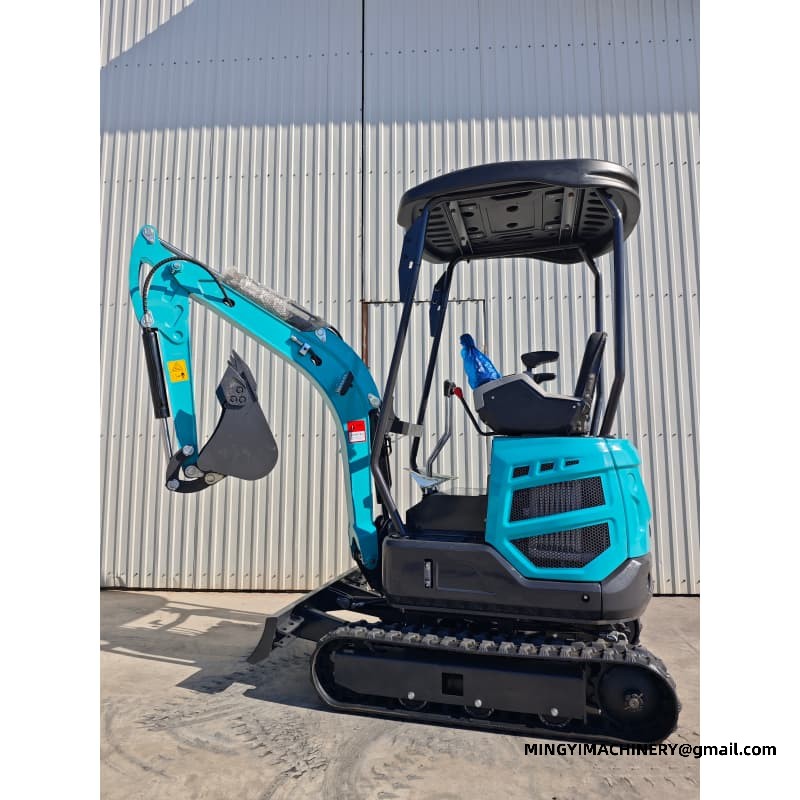
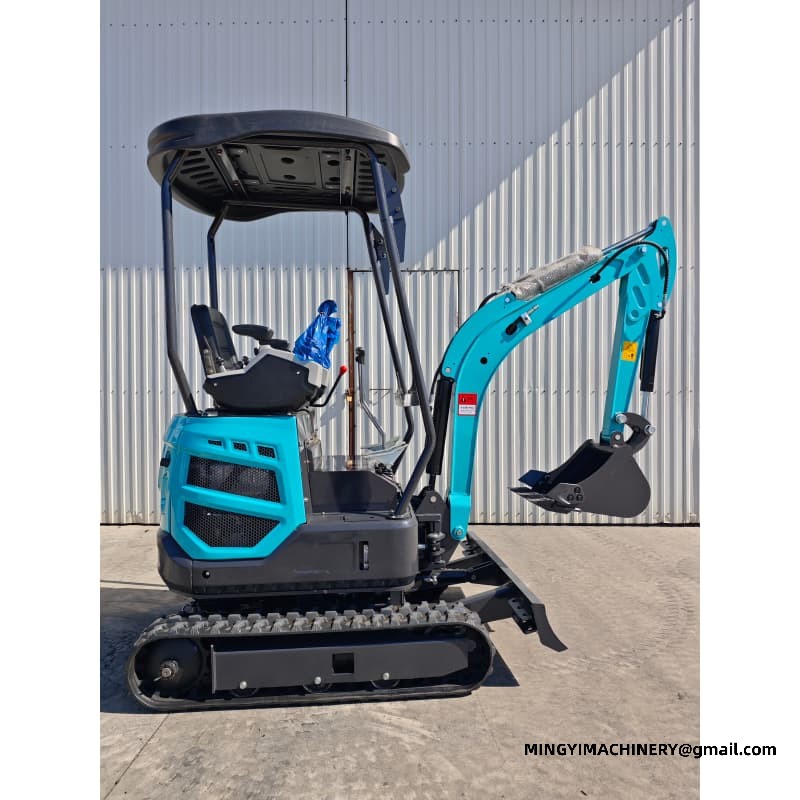
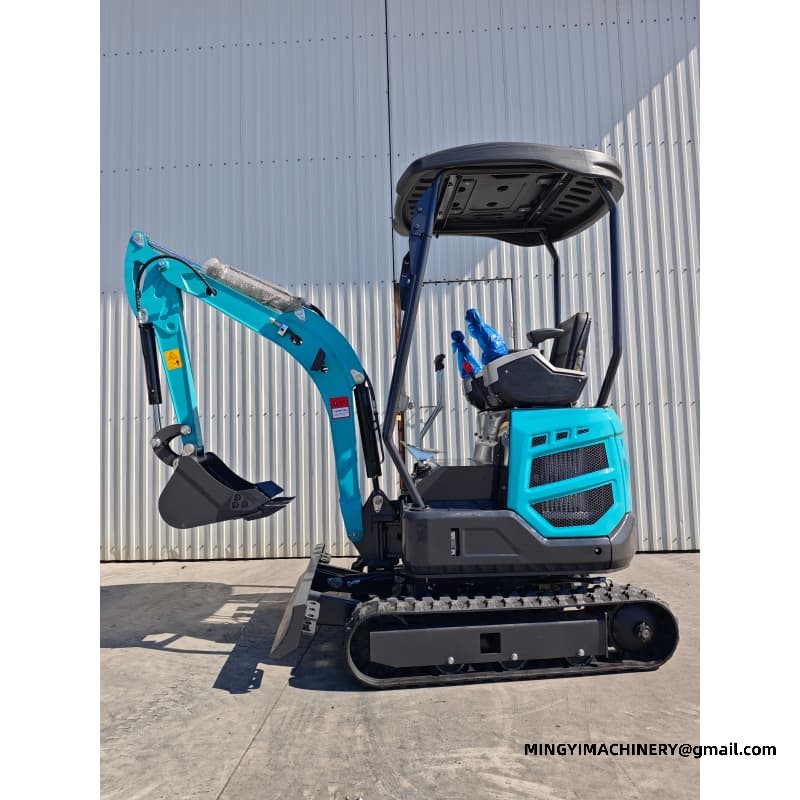
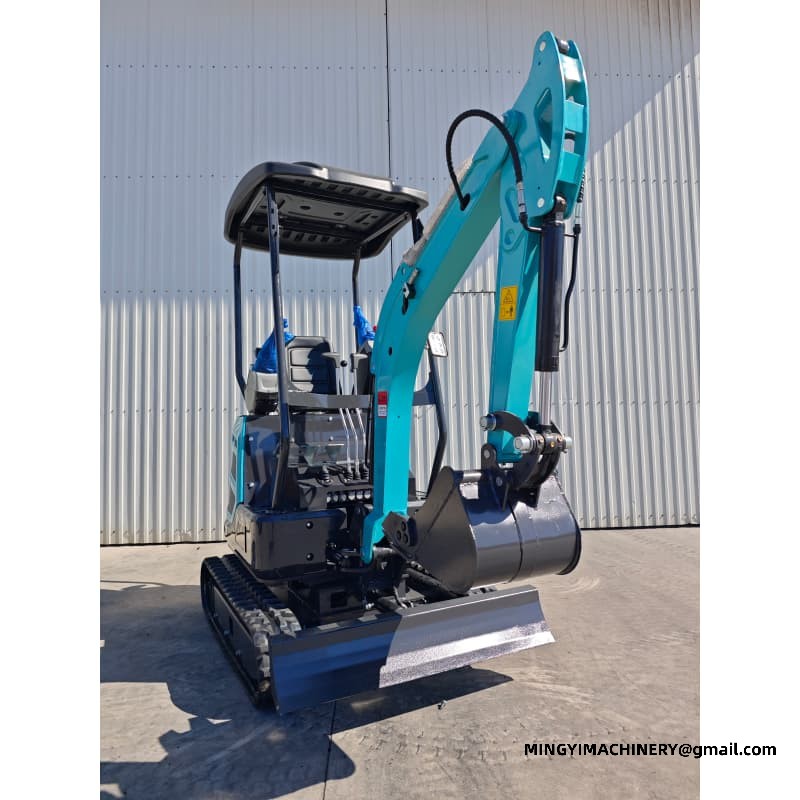
Reference specification — mini excavator range 09W 12W 20-1W 20-2L Operating weight 1100 kg (2425.08 lb) 1200 kg (2645.55 lb) 1800 kg (3968.32 lb) 1900 kg (4188.78 lb) Transport size (L×W×H) 1800 × 750 × 1970 mm 2200 × 930 × 2250 mm 2550 × 1100 × 2200 mm 2600 × 1300 × 2344 mm Max digging depth 1250 mm (49.21 in) 1630 mm (64.17 in) 1800 mm (70.87 in) 2100 mm (82.68 in) Max digging height 2800 mm (110.24 in) 2750 mm (108.27 in) 2820 mm (111.02 in) 2880 mm (113.39 in) Max dumping height 1700 mm (66.93 in) 1960 mm (77.17 in) 2050 mm (80.71 in) 2100 mm (82.68 in) Max digging radius 2570 mm (101.18 in) 2900 mm (114.17 in) 3050 mm (120.08 in) 3215 mm (126.57 in) Max digging distance 1869 mm (73.58 in) 2100 mm (82.68 in) 2300 mm (90.55 in) 2460 mm (96.85 in) Minimum turning radius 1000 mm (39.37 in) 1300 mm (51.18 in) 1450 mm (57.09 in) 1587 mm (62.48 in) Travel speed 3 km/h (1.86 mph) 3 km/h (1.86 mph) 5 km/h (3.11 mph) 5 km/h (3.11 mph) Gradeability 30° 30° 30° 30° Fuel consumption 1-1.3 L/h (0.264—0.343 gal) 1-1.3 L/h (0.264—0.343 gal) 2-3 L/h (0.528—0.793 gal) 2-3 L/h (0.528—0.793 gal) Fuel tank capacity 8 L (2.11 gal) 10 L (2.64 gal) 16 L (4.23 gal) 16 L (4.23 gal) Hydraulic oil tank 16 L (4.23 gal) 16 L (4.23 gal) 18 L (4.76 gal) 18 L (4.76 gal) Dozer blade lift height 180 mm (7.09 in) 180 mm (7.09 in) 180 mm (7.09 in) 180 mm (7.09 in) Dozer blade drop depth 210 mm (8.27 in) 210 mm (8.27 in) 210 mm (8.27 in) 210 mm (8.27 in)
Q. What are the equipment in service?
A. Zero tail swing, retractable frames and short-radius booms exist for one reason: to put a real digging machine through a gap and let it work at full rate on the other side. Inside a basement or behind a boundary the machine digs footings, breaks floors and grades the sub-base at rates hand work cannot touch. The excavator is one of the pages buyers land on when comparing machines for narrow spaces, and the factory treats it as a specification conversation rather than a catalogue line.
Q. What can such a small digger actually do?
A. More than its size suggests: inside a basement or behind a boundary it digs footings, breaks floors and grades the sub-base at rates hand digging cannot touch. The limit is reach and lift, not willingness.
Q. How do I get a specification?
A. Send the model, the destination and the attachment list by email or LINE - the channels listed just below this section. The reply covers the specification, lead time, packing and freight in one document, with the narrow spaces build sheet attached.
Later additions and retrofits on this class of machine
Retrofitting is limited by the base machine. Before anything is added to the unit in daily use the hydraulic flow, the mounting interface and the stability allowance have to be checked, because those limits are what decide what is sensible.
Cold weather and winter care for a machine of this size
Cold exposes weak batteries, thick oil and water in the fuel. Preparing the equipment on site for winter means the right grade of oil, a battery in good condition and fuel that will not wax in the tank overnight.
E-mail : sales@mingycn.com
LINE ( ID ): mingyicn
Wear limits and replacement points on compact digger for narrow spaces
Every wearing part has a measurable point where it should come off rather than be watched, and that point is published by the manufacturer.
Uneven wear usually points at alignment, pressure or a driving habit rather than at the part itself.
Related pages
mini crawler digger for earthmoving · mini excavator for soft landscape work · Wheel Loader Snow Pusher: Frame Loads and Cold-Weather Starting · Mini Excavators









